← All Of It with Alison Stewart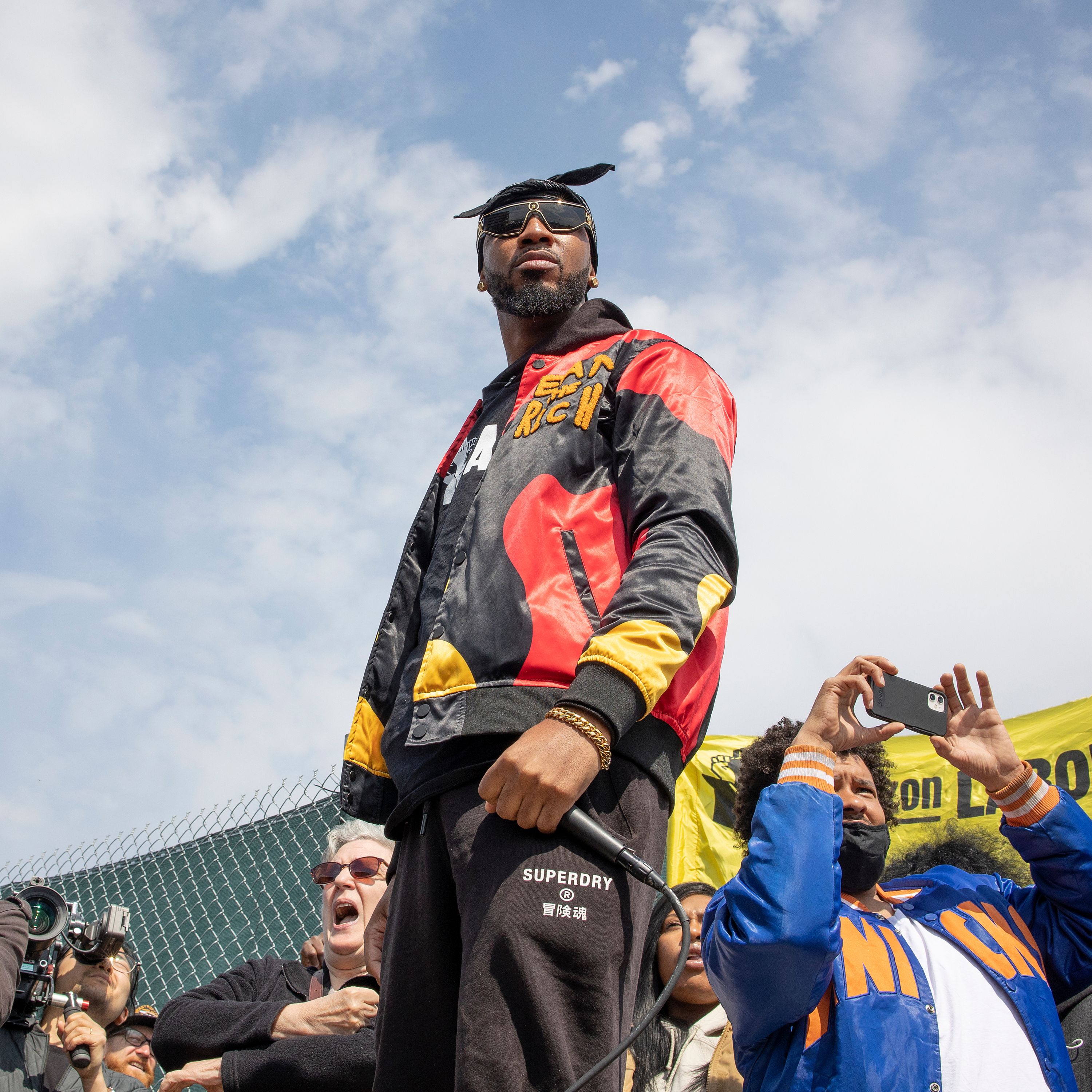
Loading summary
Transcript47 lines
- [00:00]
WNYC Studios Announcer
WNYC Studios is supported by Odoo. When you buy business software from lots of vendors, the costs add up and it gets complicated and confusing. Odoo solves this. It's a single company that sells a suite of enterprise apps that handles everything from accounting to inventory to sales. Odoo is all connected on a single platform in a simple and affordable way. You can save money without missing out on the features you need. Check out Odoo at O D O o dot com. That's O D O o dot com.
- [00:40]
Alison Stewart
This is all of it on wnyc. I'm Alison Stewart. If sometimes you find yourselves thinking, I'm just one person, how can I make a change in the world? Then you should think of Chris Smalls. He was a person who didn't like what he saw and slowly and steadily fought to make things right. And to do it, he went against one of the largest companies in America. In March 2020, workers walked out of Amazon's JFK8 fulfillment center warehouse on Staten Island. It occurred as workers were testing positive for Covid and the employees were protesting Amazon's lack of safety policies. The walkout laid the groundwork for the historic founding of the Amazon Labor Union in 2022, when workers from JFK8 voted to become the first unionized Amazon work in the United States. One of the co founders of the union who organized that walkout was former Amazon employee Chris Smalls. Chris has written a new memoir about his experience at JFK8, his organizing efforts, as well as his experience growing up. It's called when the Revolution Comes, A Fight for the Future of the Working Class. The book is out today. Chris Smalls is here with me now in studio. Chris, welcome to wnyc.
- [01:50]
Chris Smalls
Yeah, thank you for having me.
- [01:52]
Alison Stewart
All right, let's reflect back the past six years. So much has happened from organizing the walkout in 2020 to co founding the Amazon labor union. All the interviews, all the travel, just take a moment and look back and reflect on the past six years. What are you thinking about? What stands out to you?
- [02:13]
Chris Smalls
Well, number one, definitely time flies. It still seems like it was yesterday. And also that there's so much more to be done. You know, even though I've done so much already, it's still the beginning stages for me. And, you know, this being my first book, you know, people already saying, when you writing the next one, I'm like, you know, slow your roll. You know, we got some things to get accomplished here. So just looking back in retrospect, I'm really proud of where I come from and humbled that my community still supports me. My day ones, everybody that supported me when I walked out six years ago, they're still right by my side. And that's the best thing that I can ask for.
- [03:01]
Alison Stewart
It's interesting because the beginning part of the book, it talks about your life, and I find that really interesting up until the Amazon. Can I talk about that a little bit? You're a Jersey kid. You grew up in Hackensack. We. When you think about your childhood in Hackensack, what lessons did you learn that led you to become a leader later in life?
- [03:20]
Chris Smalls
Well, a lot of people that already read the book or read a couple of chapters into the book, they always bring up the part when I took on the bully in my elementary school because it was the first time I was recognized by a group of peers in a public setting, you know, taking on the school bully that was terrorizing the entire school for a year. And then all of a sudden, I had my day when he wanted to pick on me, and I defended myself, and, you know, I was punished for it. Ultimately, my school expelled me, but they allowed me to graduate. Walk across the stage. But if you remember going back to elementary classrooms, you got to go back and clean out your cubby at the end of the year. So when I walk back in the room and everybody started cheering and applauding, not just because I defeated the bully, but also because they really just missed my presence in the classroom. I was always a funny kid, class clown, so to speak. And my teachers loved me. I had my fifth grade teacher. I actually had her twice in elementary school, third grade, and then she was my fifth grade teacher as well. So just receiving that moment, it was, yeah, a pivotal moment for me. And also it just shows how I always cared about other people. In retrospect, I always tried to stand up for the little person because at the time, I saw what he was doing, I heard about it, and I didn't like it. And even as a kid, I always had that sentiment with me. So it carried on to my adulthood. And definitely when it comes to protecting workers and my colleagues at Amazon.
- [05:01]
Alison Stewart
Your mom was your primary caregiver? She worked in a union as a medical assistant while attending school.
- [05:08]
Interviewer 2
What did she instill in you about work?
- [05:11]
Chris Smalls
The funny thing is she never talked about being a part of the union. You know, she wasn't active as an organizer, but she was very much aware and vigilant of her contract because she actually fought for a contract change that happened with 1199. But what I actually saw my mom doing every day was more important. She would get up every single day and work hard, working two jobs, going to college and raising two boys. You know, me being the oldest. So I spent a number of time just observing how her lifestyle is. She's working early morning and then she comes back in the evening. She makes dinner and then rinse and repeat. And now that I'm adult, you know, and I'm doing some, you know, some of the similar things, especially when I had my children, it's like, wow, I was so unappreciative of the things she sacrificed.
- [06:15]
Interviewer 2
Were you a hard kid?
- [06:16]
Chris Smalls
I was occasionally. I was. I mean, the book tells you, you know, obviously there was some rebellious moments for me and yeah, you gotta be a little bit of rebellious to do the type of work that I'm doing.
- [06:28]
Interviewer 2
When you sat down and you thought about it before this all started, what did you consider the workplace to be? Was it just a place you went to make money? Was it just a place where you spent eight hours and you went out and had your life? What did you consider the workplace to be like?
- [06:43]
Chris Smalls
Well, Amazon's a unique place to work at. Those who work there, they understand it's pretty much like College 2.0. You know, there's thousands of people, a huge warehouse. You're meeting people from all different backgrounds. Me as an assistant Manager, I spent 60, 70 hours in that building. So they were extended family to me. You know, I spent more time with them than I did with my own family. So going to work wasn't just a paycheck for me. It was, it was more than that. It was special. I had still, to this day, some of my best friends still there. Some of the best people I know still work there. And, you know, I treated the job just like that. I wanted to never forget where I came from. I started off entry level. Even when I was promoted to an assistant manager, I never allowed the company to dictate how I would run my floor and operation. And that transpired to when they fired me, you know, you know, they fired one of their, pretty much one of their most popular employees. Even before all the media attention, I opened up three warehouses in the tri state area. I was very popular within the workforce. And the same way I look today, how I dress, how I talk, you know, how I move was the same way I moved in Amazon. So a lot of people really respected the fact that, you know, I was a people's person. And I never forgot, you know, forgot where I came from.
- [08:17]
Interviewer 2
How did you Decide to remain true to yourself. Because when this all started, somebody could have taken you said, look, put on a tie, put on a jacket, they'll take it seriously.
- [08:27]
Chris Smalls
They try.
- [08:27]
Alison Stewart
They did try.
- [08:28]
Interviewer 2
But what made you decide to be true to who you are?
- [08:31]
Chris Smalls
Well, I think representation is everything, you know. You know, even when I was invited to the White House, I was told, you know, certain things, but I said, I want to represent where I come from. You know, obviously urban community, low impoverished communities where Amazon sets up his shop representing black and brown representation, the culture, all of these things. Authentic coming. As authentic as I am breaking down these stigmas, you know, stigmas that's put on upon black men. We're not smart enough, we're not articulate enough.
- [09:11]
Alison Stewart
Ooh, the A word.
- [09:12]
Chris Smalls
Yeah, you know, you know, Amazon tried that. They tried to smear me, they tried to sign off. You know, Jeff Bezos signed off on this type of rhetoric. And for me, breaking down that stigma, like I don't have to look a certain way to talk about certain things and deliver a powerful message. That's always something that I stood on and still continue to stand on. And I think it's starting to really change the temperature on how organizing as a whole is being look looked upon on when it comes to the broader movement. You know, people really are appreciative that the fact that I am so authentic and I haven't changed who I am or, you know, try to conform to something else that I'm not.
- [09:55]
Alison Stewart
My guest is Chris Smalls, co founder and former president of the Amazon Labor Union, which successfully organized the first unionized Amazon workplace in the United States on Staten Island. He's the author of a new memo out today called when the Revolution Comes, A Fight for the Future of the Working Class. Before you started at Amazon, you put on different parties and stuff like that. The sign of a good successful party was when J.R. smith from Players Showed up, from NBA Player from New Jersey showed up. You really had to kind of hustle in the best way. How do you think that experience organizing those kind of events contributed to your efforts with the Amazon labor union?
- [10:37]
Chris Smalls
Oh, tremendously. You know, I'm fortunate enough. I'm not too young, I'm not too old. I'm in that millennium space where, you know, we, we lived before social media was what it is today. You know, there was no Instagram, there was no TikTok, you know, Twitter and all of these different handles. We had to talk to people when I grew up. We had to meet people where they were at. And the Skill sets that I developed from being an independent rapper back in my teen, young adult ages are the same skill sets that I carry till present day. Yeah, meeting people on the college campuses, handing out my flyers, promoting my parties and events, going to local shopping centers, local malls, things that people rarely do now because they order things online, that was my stomping grounds, you know, that was how, yeah, I developed relationships within my community and was able to successfully bring people together for my events. And, yeah, that is really what I leaned on when it came to organizing Amazon workers. I tried to make. Organizing is stressful, as we all know, but I tried to make it as fun as possible and, you know, bringing a bit of music, culture, fashion, you know, all of the things that, you know, we love. I try to incorporate that somehow, some way in the organizing efforts. And most importantly, talking to people face to face, not just one conversation, but several conversations over a period of time, that was how we were able to successfully, you know, earn the trust of our peers and build those type of relationships. Something that Amazon just could never calculate.
- [12:25]
Alison Stewart
Yeah. In the case when you worked for Amazon, you observed a way in which the company relied on what you called weaponized incompetence in the way it treated its workers. Could you give me an example of that?
- [12:37]
Chris Smalls
Yeah. You know, Amazon, Jeff Bezos himself wrote a letter a few years ago and where he called his workers industrial athletes. And, you know, when people read that who don't work at Amazon, they're like, oh, wow, these people are so strong and amazing. But, you know, people don't realize that when they order stuff from Amazon, they see the package being delivered by the one driver, delivery driver, but they don't see what happens behind the scenes. They don't see the fact that I'm working with, you know, people as young as 18, all the way up to, you know, 80 years old, that are, you know, put in these positions where they can potentially be killed. Injuries happen every day at this company. It's the number one company company for injuries in our country. And I seen ambulance pull up every other day, every week. And, you know, yeah, I used to tell my new hires, if you have a gym membership, you might want to cancel it because you're going to be doing 10 to 12 hours of calisthenics. So I just tried to once again do everything in my power, even when I worked at the company, to protect those around me. And that carried over to when they decided to martyr me by firing me during COVID And I used this platform still just to try to Amplify everybody's concerns and make sure that people are educated on and can make an ethical decision on where they consuming.
- [14:10]
Interviewer 2
As you began organizing, some workers you spoke with, and you write about this in the book, said they couldn't join because they had kids to support. They were really afraid to lose their jobs, understandably. What did you learn about the role that fear plays when you're involved in labor organizing?
- [14:28]
Chris Smalls
That's, that's their, their, their game plan. The corporations that spend millions of dollars in union busting. When we talking about just capitalism as a, as a whole, capitalism only works if you, you install fear. You create division and you create doubt. And you know, the same people that told me, you know, I have children, I said the same thing. You know, I'm like, me too. And I can't imagine my children growing up in a world where they get fired for speaking out about health and safety. And I don't want anybody to have to experience what I had to go through being, you know, publicly fired for speaking out. And still, you know, a lot of media attention that I garnish, you know, it comes with the good, the bad and the ugly. And I don't want my children to even go on social media and see some of the horrific things that we experience in society today. So I always think about that, you know, we're not just fighting for ourselves or the future. We're fighting for right now. And right now, you know, I ask myself, if I don't get up and do this work, who's going to do it?
- [15:48]
Alison Stewart
In the book, you talk about your father being incarcerated for much of your childhood. And you write, when you grow up loving an incarcerated person, it changes the way you think of almost everything. How so?
- [16:02]
Chris Smalls
Yeah, you know, well, number one, you know, there's a lot of stigmas about being raised in a single parent home, especially when it comes to being raised by a black woman. So, you know, I just hope that I made my mom and my pops proud. You know, I would never forget the last time we spoke when he was inside, when he heard my first interviews on prison radio, you know, and he was able to talk to his cellmates about his son who's doing these, you know, amazing activism on the outside. And I hope I was able to, you know, once again give him another perspective in life, you know, for when he does become free. And, you know, it's really about breaking down the systematic oppression that we all face. You know, mass incarceration, broken homes, broken families. And when I worked at Amazon, I saw a Lot of these individuals get hired there. You know, Amazon hires everybody. And, you know, once again, the reason why we wanted to create a union is to represent everybody. And I think that's the biggest thing, is unions are supposed to be the shield for the working class. That doesn't exclude anybody. And we have to sometimes take the brunt of the controversy. But I think ultimately, overall, it will improve everybody's quality of life, and I think that's my ultimate goal.
- [17:43]
Alison Stewart
Jeff Bezos was the honorary chair of the Met. Gal. This year. You were arrested at the event and charged with trespassing. You were held in jail for 24 hours. The Amazon labor union spoke out against you. What was your motivation? What was your goal that day at the Gatla?
- [18:00]
Chris Smalls
Yeah, to disrupt and to remind people that we still exist. You know, we won four years ago, and we didn't receive a bargaining order until April this year.
- [18:08]
Interviewer 2
Wow.
- [18:09]
Chris Smalls
So it's been over 1500 days, and the company has failed to negotiate. Even when I was the president for three years, they didn't want to come to the table. They still spend millions of dollars in court fees, federal judges, and courtrooms holding things up. And, yeah, you know, I had to remind people, since Jeff Bezos was coming, you know, 30, 40 minutes away from Staten island, there was no way I was gonna sit home and just sit back and do nothing. You know, that's absolutely not me. So I, you know, I did what I did not for my union per se, but it was for everybody. You know, spread awareness, plant the seeds, and it worked. You know, I didn't know what to expect, but I. When I did get out of jail the next day, and I saw how viral the moment went and how. How much attention it got, that's exactly what I planned. You know, I wanted to, you know, once again, open up the consciousness of those who may not be aware of what's going on and also what Amazon's involved in when it comes to this genocide as well.
- [19:15]
Alison Stewart
If you could sit down and have
- [19:16]
Interviewer 2
a conversation with Jeff Bezos, just the two of you, what would you talk with him about? Hmm.
- [19:22]
Chris Smalls
Well, I will probably have to discuss this with my union, but, you know, or just.
- [19:28]
Alison Stewart
Or man to man.
- [19:30]
Chris Smalls
Well, I don't know if talking would be my first initial thought, but I would obviously give him a piece of my mind about, you know, just the things he has done to not just myself, to other people that I've known over the years. And ultimately, I absolutely will tell him to do right by his employees, which is the bare minimum you know, pay your workers a fair share. Stop. You know, you know, using these talking points saying that, you know, I want to thank workers when you get to fly to space on your rocket, when we're not paying for that, we're paying with that, with our blood, sweat and tears, and also with our bodies. And also allow our union to have the right to organize, the right to a contract without union busting, without spending millions of dollars. You know, these are priorities for me to get my union the first contract.
- [20:34]
Alison Stewart
What would you do different with the hindsight that you have now?
- [20:40]
Chris Smalls
Actually, nothing much. You know, nothing's perfect. I'm not perfect. The growing pains that myself and my union have, you know, people got to understand we started something from scratch against a $2.2 trillion company. We didn't have no support. These labor unions didn't support us. Politicians didn't support us until we won. Then the bandwagon came and a lot of people compared us to unions that's been established for over 100 years. But we don't even have dues paying members. In my union, my union is very, very still much in its infancy stages. And we do not have the power that other unions have. And I think that comparison alone, it just miscategorized us, including me as a person. You know, people don't understand that this is something that's very unprecedented.
- [21:36]
Interviewer 2
The name of the book is when the Revolution Comes, A Fight for the
- [21:40]
Alison Stewart
Future of the Working Class.
- [21:42]
Interviewer 2
It is by Chris Smalls.
- [21:43]
Alison Stewart
Thanks for coming to the studio today.
- [21:44]
Chris Smalls
Yeah, thank you for having me.
- [21:46]
Dish Network Announcer
Tired of overpaying with DirecTV, Dish offers a reliable low price every month without surprises. Get the TV you love and start watching live sports news and the latest movies, plus your favorite streaming apps all in one place. Switch to DISH today and lock in the lowest price in satellite TV, starting at $89.99 a month with our two year price guarantee. Call 888 add dish or visit dish.com today.
- [22:16]
WNYC Studios Announcer
Whether it's news from around the world or the latest from your neighborhood, New Yorkers engage with WNYC studios for the information and connection they can only get from our programming. Be a part of that conversation through your business's support. Learn more at sponsorship wnyc. Org.