Loading summary
Transcript178 lines
- [00:00]
Progressive Insurance Announcer
All of it is supported by Progressive Insurance. Do you ever think about switching insurance companies to see if you could save some cash? Progressive makes it easy to see if you could save when you bundle your home and auto policies. Try it@progressive.com Progressive Casualty Insurance Company and affiliates. Potential savings will vary. Not available in all states. WNYC Studios is supported by Odoo. When you buy business software from lots of vendors, the the costs add up and it gets complicated and confusing. Odoo solves this. It's a single company that sells a suite of enterprise apps that handles everything from accounting to inventory to sales. Odoo is all connected on a single platform in a simple and affordable way. You can save money without missing out on the features you need. Check out Odoo at o d o o.com that's o d o o.com.
- [00:58]
Alison Stewart
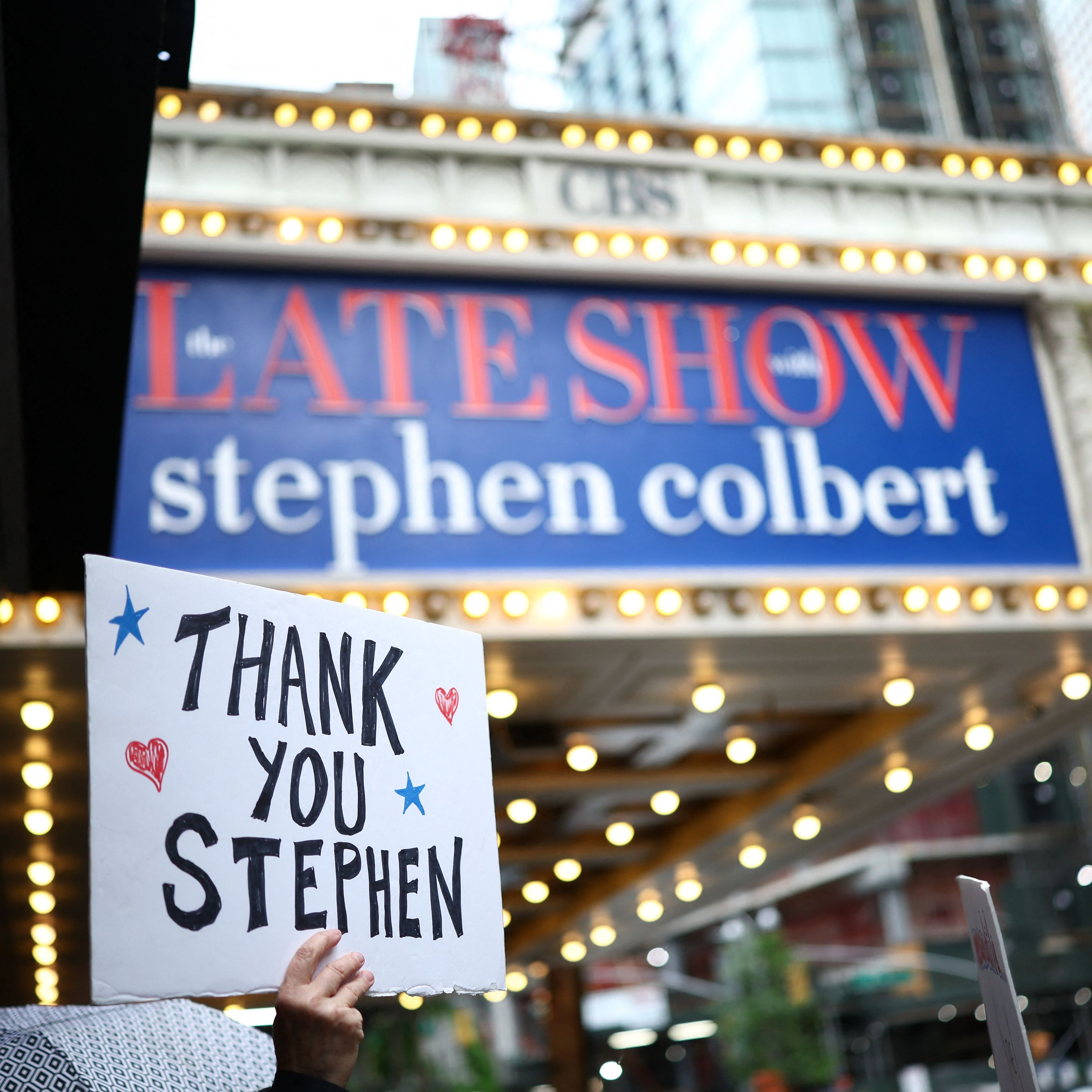
This is all of it on wnyc. I'm Alison Stewart. Hey, a quick programming note. The filmed musical Broadway adaptation of the Lost Boys earned 12 Tony nominations, tying it with Schmigadoon for the most nominated show this year. Coming up on the show tomorrow, two of its stars, actor Ali Louis Borsgi and L.J. benet, discuss their respective roles as the head of the vampire gang and the wayward teen. They seek to break into the fold. Then director Michael Arden and scenic designer Dane Laffrey, longtime collaboration collaborators, talk about building the production and it's spectacular set that's coming up in exactly 24 hours from now. Now let's get this hour started with a conversation about the end of the Late show and the future of Late Night tv. It has been one week since Stephen Colbert signed off of the final episode of the Late show, closing things out with some help from Paul McCartney, Elvis Costello and his former band leader John Batiste.
- [02:03]
Song Singers
You say yes, I say no. You say stop and I say go.
- [02:12]
Vladimir (Caller)
Go.
- [02:17]
Song Singers
Oh no, you say goodbye when I say hello.
- [02:25]
Ellison (Host/Interviewer)
Hello.
- [02:28]
Song Singers
I don't know why. Say goodbye, say hello.
- [02:33]
Alison Stewart
By now you've heard what led to this controversial finale. CBS's parent company, Paramount, merged with the media company Skydance in 2025. Around the same time, CBS announced that the Late show would not be renewed after Colbert's contract expired in 2026 and explained it as a quote, unquote, purely financial decision. Of course, many people saw the move as an effort to appease President Trump because the merger required FCC approval and Colbert was a frequent critic of the press. President as of last Thursday, Colbert is no longer the host of the Late Night show and the Late show itself no longer exists. Joining me now is James Panowic, the New York Times TV critic. He joins me to talk about the end of the Late show and the future of late night. Hey, James.
- [03:20]
James Panowic (New York Times TV Critic)
Hey, thanks, Alison.
- [03:21]
Alison Stewart
Hey, listeners, did you watch the final episode of the Late show with Stephen Colbert? What did you think about how he used the time? What are your thoughts on the end of the Late show and what does this mean for late night? Give us a call or you can text us at this number. 2124-339692-21243. WNYC. Okay, James, you've had a week, seven days to sit down and think about how Colbert ended his show. What did you think of the final episode?
- [03:48]
James Panowic (New York Times TV Critic)
You know, a thing that I really liked about it is that, you know, may have not had the most memorable monologue on the show ever or the most memorable interviews or whatever, but I liked how it leaned into the sort of weird, absurdist side of his comedy, you know, while also addressing the elephant in the room about his scandal.
- [04:14]
James Panowic (continued, possibly same as F)
And, and in its own way, it
- [04:18]
James Panowic (New York Times TV Critic)
felt, I mean this in a complimentary
- [04:20]
James Panowic (continued, possibly same as F)
way, sort of more like watching the
- [04:24]
James Panowic (New York Times TV Critic)
final episode of a kind of, you know, offbeat sitcom or comedy show, you know, as as much as a talk show, meaning, you know, there, there was this whole scripted bit about a hole in the space time continuum opening on the set to swallow the late show that was created by the logical impossibility of CBS canceling the most popular show in late night.
- [04:51]
James Panowic (continued, possibly same as F)
And it was, you know, weird in way that it was. It was. And I keep emphasizing the weirdness because I think, you know, we talk a
- [05:02]
James Panowic (New York Times TV Critic)
lot about Stephen Colbert as a political satirist in comic, you know, which he is.
- [05:07]
James Panowic (continued, possibly same as F)
He also has always been an improv comic with kind of an experimentalist, surrealist bent that in a way I think
- [05:17]
James Panowic (New York Times TV Critic)
he sometimes didn't get to indulge as much on the CBS Late show because he was sort of responding to this political emergency in America and really leaning
- [05:28]
James Panowic (continued, possibly same as F)
again into the politics of it. But here he kind of enlisted that in the service of, of a theme and a really, I thought, like kind of touching way of just metaphorically dealing with the ends of things, which has often been a theme in his comedy
- [05:46]
James Panowic (New York Times TV Critic)
and the more serious aspects of his show.
- [05:50]
James Panowic (continued, possibly same as F)
And, you know, like, he talked at last year's Emmy Awards about how, you
- [05:55]
James Panowic (New York Times TV Critic)
know, he thought that he was going to make a, a late night comedy show about love.
- [06:00]
James Panowic (continued, possibly same as F)
And it ended up being a late
- [06:02]
James Panowic (New York Times TV Critic)
night comedy show for various reasons about loss. And he ended up Making a finale about loss in a way that I
- [06:09]
James Panowic (continued, possibly same as F)
thought was, you know, pretty effective.
- [06:11]
Alison Stewart
It's been interesting.
- [06:11]
Ellison (Host/Interviewer)
He's known for almost a year that the show is going to end.
- [06:16]
James Panowic (New York Times TV Critic)
Yeah.
- [06:16]
Ellison (Host/Interviewer)
What was interesting to you about the way he chose to use his last few weeks?
- [06:23]
James Panowic (continued, possibly same as F)
You know, I don't think it was
- [06:27]
James Panowic (New York Times TV Critic)
surprising necessarily, but I thought it was notable that he didn't really go, you know, scorched earth either on the Trump administration or on CBS for canceling his show and the questionable circumstances around it, you know, probably because I think he
- [06:48]
James Panowic (continued, possibly same as F)
didn't need to, you know, obviously, you
- [06:51]
James Panowic (New York Times TV Critic)
know, this was the subtext of the show for a year at this point,
- [06:57]
James Panowic (continued, possibly same as F)
you know, and, and also I think, because he, I think he wanted the
- [07:05]
James Panowic (New York Times TV Critic)
ending of this thing that he'd worked on to mean something more, you know,
- [07:09]
James Panowic (continued, possibly same as F)
and again, you know, to repeat myself
- [07:11]
James Panowic (New York Times TV Critic)
a little bit, that felt sort of foreshadowed by his remarks at the Emmys last year, you know, which, which he, he closed, if I'm remembering correctly, with a, with a paraphrase of let's Go Crazy by Princess. We said, if the elevator tries to bring you down, go crazy and punch a higher floor. You know, And I think this was kind of his effort to, you know,
- [07:32]
James Panowic (continued, possibly same as F)
like, be sort of joyously defiant, you know, And I think a lot of the kind of, you know, harsher attacks over the last few weeks of his
- [07:45]
James Panowic (New York Times TV Critic)
show were sort of left to a
- [07:47]
James Panowic (continued, possibly same as F)
lot of the guests wishing him off.
- [07:49]
James Panowic (New York Times TV Critic)
You know, I think, I believe it was Bruce Springsteen who said he was the first guy to lose his show because the President doesn't have a sense of humor.
- [07:54]
Ellison (Host/Interviewer)
Yeah.
- [07:55]
James Panowic (New York Times TV Critic)
Or something like that, that sort of thing.
- [07:57]
Ellison (Host/Interviewer)
David Letterman was one of his, his final guests. And Letterman came over and did the Late Show. It started in 1993 after being on NBC for a while. And he said this as we, as
- [08:11]
David Letterman (Clip)
we all understand, you can take a man's show, you can't take a man's voice. So that's the good news of me.
- [08:18]
Ellison (Host/Interviewer)
What was the impact of that statement coming especially from David Letterman?
- [08:22]
James Panowic (New York Times TV Critic)
I mean, you know, David Letterman, for one, is, you know, the, the, the, the, the all time great of late night in many people's minds, certainly probably in mine. I think him giving Stephen Colbert his endorsement by handing off the show to
- [08:42]
James Panowic (continued, possibly same as F)
him was, you know, quite a statement at the time. And I think that, you know, his backing him up at his ending said something because, you know, David Lyman, for
- [08:53]
James Panowic (New York Times TV Critic)
one thing, he's not only become this sort of grand old statesman of TV and late night tv. He is somebody who knew a thing or two about, you know, losing shows, having famously lost the Tonight show to Jay Leno and about going to war with one's own corporations and bosses. He kind of set the blueprint for that, you know, and we kind of called back to that when, you know, he and Colbert resurrected an old David Letterman bit and threw objects off the top of the building onto a copy of the CBS eye logo,
- [09:28]
James Panowic (continued, possibly same as F)
you know, so, you know, to me, David Letterman
- [09:34]
James Panowic (New York Times TV Critic)
understood that there is always an element of rebellion to comedy. Doesn't necessarily have to be political, although it can be. Doesn't necessarily have to be corporate, although it can be.
- [09:50]
James Panowic (continued, possibly same as F)
But comedy is an irritant that rubs
- [09:53]
James Panowic (New York Times TV Critic)
against, that pushes against something.
- [09:57]
James Panowic (continued, possibly same as F)
And I think that that was sort of a compliment for Stephen Colbert to have made a loud enough noise that you could imagine somebody wanting to silence it and that it was a notable silence once he left the air.
- [10:16]
Alison Stewart
I'm speaking to New York Times chief TV critic James Ponowazic about the end of the Late show with Stephen Colbert. Today is a one week mark of its final episode and we're taking your calls. Or you can call our text at WNYC to weigh in on Colbert and late night. Did you watch his show? What are your hopes or fears for the future of late night? Our number is 2124-3396-9221-2433. WNYC. Let's talk to Vladimir who's calling from West Orange. Hey Vladimir, thank you for taking the time to call, all of it. You're on the air.
- [10:48]
Vladimir (Caller)
Hey, thanks for taking my call. You know, it's, it's, it's unfortunate, Ed. And as the gentleman from New York Times is mentioning, you know, there's always a passing of the torch between
- [11:05]
Jim (Caller from Brick Township)
the
- [11:05]
Vladimir (Caller)
late night show talk show hosts. But what we're seeing today isn't a passing of the torch, but rather a president who is censoring the right. For these individuals to have a show, for the SEC to become involved in something that has historically been an American tradition, political satire, comedy, late night comedy, it's part of what makes our society meshed together with different differing opinions of Republican, Democrat, right and left. It's never been the responsibility of the president to become so involved that he has the power to oversee and shut down a show. And that's essentially what we're seeing today, right? Stephen Colbert, you know, he was a funny guy. And whether you like him or not, it's not so much that he's leaving, but it's the fact that the FCC has become involved and it's the power that we're seeing today.
- [12:13]
Ellison (Host/Interviewer)
Thank you. I'm gonna. I'm gonna dive in there because I do wanna get to Jim in Brick Township, New Jersey, who's got a similar
- [12:20]
Alison Stewart
perspective or sort of dovetailing perspective.
- [12:23]
Ellison (Host/Interviewer)
Jim, go ahead.
- [12:25]
Jim (Caller from Brick Township)
Yeah, it's a bad, sad day for the United States. Just in the overarching picture of how CBS has been eviscerated, it's no longer the news agency it once was. They put in Bari Weiss and, well, there's just been. She's not even a journalist. And I would just say the other corporate thing to look at it, I mean, was the way it was attempted to cancel or remove Kimmel. But the protest was focused, rightly so, against Disney. But as Kimmel joked on the show when they had the Force Five and the other comedians came on in the last week that Paramount is not in the same position to be boycotted. And there's other corporate things the guests can talk about. But this administration is so scarily fascistic leaning and comfortable.
- [13:21]
Ellison (Host/Interviewer)
You know what? I'm going to dive in here because I do want to play that clip from Kimmel. Let's listen.
- [13:26]
Jimmy Kimmel (Clip)
Late Night is in a bit of a weird spot right now. Spoiler alert. And people questioning its future. I've been asked this question more like three times over the last ten months in various interviews. Like, they go, like, make a case for late night. I'm like, what do you mean? And I go, like, make a case for it. Like, why should it continue to exist? I'm like, people like it. I enjoy doing it.
- [13:48]
Vladimir (Caller)
But
- [13:50]
Jimmy Kimmel (Clip)
why would you say that? Make a case for Late Night?
- [13:54]
Jimmy Kimmel (continued Clip)
Well, I would say that in my. Well, I look at the figures and the fact of the matter is, more people are watching late night television now than. And I know everybody gets crazy than when Johnny Carson. Well, now, obviously Johnny Carson had a lot of people watching one show, but we have a lot of shows with like 30,000 people watching each one, right? And it adds up. And people watch us on YouTube now and people have a lot of different options and yet they still, they keep coming to us. And I will tell you, when I got knocked off the air for a few days, people, thank you. People press the hi hat. People canceled. People canceled Disney. Why is it,
- [14:40]
Song Singers
why,
- [14:42]
Jimmy Kimmel (continued Clip)
why aren't you people canceling Paramount? Because you didn't have it in the first place.
- [14:48]
Ellison (Host/Interviewer)
What do you make of Jimmy's comment there?
- [14:53]
James Panowic (continued, possibly same as F)
Yeah, you can talk about the financial
- [14:56]
James Panowic (New York Times TV Critic)
troubles of Late Night and Ratings or whatever. The fact is nobody exerts government influence against a genre of programming that is irrelevant. That doesn't matter. If the president is complaining about a kind of broadcasting and celebrating when it goes off the air, it's hard to say that it has no effect or relevance in our society.
- [15:23]
James Panowic (continued, possibly same as F)
And you know, look to the comments
- [15:25]
James Panowic (New York Times TV Critic)
which, you know, I, I, I totally get.
- [15:28]
James Panowic (continued, possibly same as F)
Like, you know, Donald Trump has every
- [15:31]
James Panowic (New York Times TV Critic)
right to complain about programming he doesn't like communities. If he wants to be the Stadler and Waldorf of, you know, broadcast television and you know, tweet, tweet his comments on true social.
- [15:41]
James Panowic (continued, possibly same as F)
Past presidents have complained about their coverage, have complained about entertainers, etc. You know, that's one thing once you are bringing the powers and pressures of
- [15:50]
James Panowic (New York Times TV Critic)
the federal government to bear, whether it's through regulation or through financial leverage.
- [15:56]
James Panowic (continued, possibly same as F)
As you know, it's not just me saying that, you know, Brendan Carr has
- [16:00]
James Panowic (New York Times TV Critic)
talked about using the sort of bully pulpit and pressures of, you know, the fcc.
- [16:07]
James Panowic (continued, possibly same as F)
That's just not healthy for a democracy, for society. And you know, yeah, it probably sounds
- [16:15]
James Panowic (New York Times TV Critic)
kind of highfalutin to say not healthy
- [16:18]
James Panowic (continued, possibly same as F)
for a democracy when you're talking about late night comedy programs. But you know, it ain't just gonna be late night comedy programs if you
- [16:24]
James Panowic (New York Times TV Critic)
start going down that road.
- [16:26]
Alison Stewart
Let's talk to Ethan who's calling from Hollywood. Hey Ethan, thanks for calling all of it.
- [16:31]
Ethan (Caller from Hollywood)
Hi, thank you. The thing that I noticed about his last show, and I will commiserate with anybody and their feelings about his being canceled and the political zeitgeist, but he was also so gracious and grateful for the 11 years that he's had that he and his crew have had. And that did not go unmentioned. And I thought that was really lovely and so intrinsic to his character. And then I heard that he actually wrote this great congratulatory note to Byron Allen saying, you know, congratulations and was very gracious about that and he said, wsjani, we're here to see this. And I just think all of those things are also part of Colbert's character. And he'll be back. His voice will be back, I'm sure.
- [17:16]
Alison Stewart
Ethan, thanks for calling in. Yeah, for people who don't know, CBS has leased this time splot to Byron Allen. And for people who don't remember Byron
- [17:25]
Ellison (Host/Interviewer)
Allen, will you explain who he is
- [17:27]
Alison Stewart
and what this leasing is about?
- [17:30]
James Panowic (New York Times TV Critic)
Byron Allen is a comic comedian slash, more importantly, entrepreneur who has created this,
- [17:40]
James Panowic (continued, possibly same as F)
you know, gold mine franchise of. Stand up comedy shows that I want to make sure.
- [17:50]
James Panowic (New York Times TV Critic)
I'm not getting the title on, but I believe that this, this one, Comics Unleashed, he has an arrangement with CBS to take over the time slot that was previously occupied by the Late Show.
- [18:05]
James Panowic (continued, possibly same as F)
And you know, it's been like great for him.
- [18:10]
James Panowic (New York Times TV Critic)
You know, kudos to him for his, it's really like mind boggling financial success
- [18:17]
James Panowic (continued, possibly same as F)
that he's had in creating this, this franchise. Certainly got nothing against, you know, comedians, comedy specials or whatever. But, but you know, I do think to that point, you know, we've been
- [18:28]
James Panowic (New York Times TV Critic)
talking about what does it mean that Colbert in particular has gone off the air, that the Late Show. It's also important to remember, I think one sort of unsettling thing about this
- [18:41]
James Panowic (continued, possibly same as F)
is that it's not like when NBC
- [18:46]
James Panowic (New York Times TV Critic)
kicked Conan off the Tonight show and gave it back to Jay Leno or somebody retires and somebody else takes over, somebody's pushed out.
- [18:53]
James Panowic (continued, possibly same as F)
It's just the Late show went off
- [18:55]
James Panowic (New York Times TV Critic)
the air and there was nothing in its place, which is to say nothing. Not another late night show. One of these sort of like great.
- [19:03]
James Panowic (continued, possibly same as F)
And one of the few remaining kind of mass media gathering places that serve a lot of audiences and interests, you know, is just, is just gone, you know, and you can, you know, talk
- [19:23]
James Panowic (New York Times TV Critic)
about it as business and talk about the ratings and the evolution of TV
- [19:27]
James Panowic (continued, possibly same as F)
or whatever, but it's just a loss. You know, I, I just think as you know, TV and CBS is just kind of a little less after this. Again, no offense to Byron Allen.
- [19:40]
Ellison (Host/Interviewer)
Well, Byron Allen told NPR that for his ethos for comics, Unleashed has always been, quote, don't do anything political. Do you think that'll work?
- [19:53]
James Panowic (continued, possibly same as F)
Well, you know, financially if it's got
- [19:55]
James Panowic (New York Times TV Critic)
lower overhead, it will not necessarily need to do as well in the ratings to work. So, you know, it's like, what is work?
- [20:04]
James Panowic (continued, possibly same as F)
Will it be funny?
- [20:05]
James Panowic (New York Times TV Critic)
Maybe will, you know, people talk about it the next morning?
- [20:09]
James Panowic (continued, possibly same as F)
Probably not too much. Will CBS net out better financially than they would have producing an expensive late show? Maybe. But I think the important question is here is, is, you know, is the,
- [20:23]
James Panowic (New York Times TV Critic)
you know, that sort of decision just
- [20:25]
James Panowic (continued, possibly same as F)
stay out of politics stuff, you know, kind of the smarter finance, you know,
- [20:30]
James Panowic (New York Times TV Critic)
the smarter television ratings business decision.
- [20:34]
James Panowic (continued, possibly same as F)
And for a lot of TV history, it was, you know, traditionally we would
- [20:38]
James Panowic (New York Times TV Critic)
have, you know, Johnny Carson, Jay Leno, they made jokes about politics on their shows. But their thing was, you know, were
- [20:44]
James Panowic (continued, possibly same as F)
equal opportunity offenders, we give it to both sides, etc. They didn't have political points of view
- [20:49]
James Panowic (New York Times TV Critic)
like Stephen Colbert did.
- [20:51]
James Panowic (continued, possibly same as F)
And if you were judging by the standards of tv back in that day, you would have assumed that Stephen Colbert would have spent the last decade just
- [21:02]
James Panowic (New York Times TV Critic)
getting whipped in the ratings by Jimmy Fallon, who is much less pointedly political and much more trying to be for everybody.
- [21:09]
James Panowic (continued, possibly same as F)
But you know, I cannot overemphasize that for most of his run he has been both the most political and the
- [21:16]
James Panowic (New York Times TV Critic)
most popular show on, you know, on broadcast tv.
- [21:20]
James Panowic (continued, possibly same as F)
So, you know, well, will comics unleash do? Well, it might do gangbusters. I don't think that would necessarily be
- [21:26]
James Panowic (New York Times TV Critic)
because it tries to avoid any kinds of political comedy.
- [21:31]
Ellison (Host/Interviewer)
Let's talk to Artie, who's calling from Queens. Hey Artie, thanks for holding. You're on the air.
- [21:36]
Artie (Caller from Queens)
Thank you very much for taking my call. Good afternoon to you both. I think when you said weirdness earlier, because I did see Stephen's last show much to an extent, Ernie Kovacs was considered weird so much. And my feeling is that I hope television does not become from Johnny Carson and Jack Parr and all the others and to. And Saturday Night Live we were forgetting because I can remember Charles, Charles and Heston reading a letter that someone sent criticizing Saturday Night Live and he admitted, I wrote this letter and I'm saying to go from all of that to Jesse Waters, who is not a comedian and you know, and to go to. Which it may do all right. But no, I do not think Byron Allen show is going to be gang buses because it's comic setting up comic with plain you how the wife left me, the kids and the dog and that type of thing. Thank you. Good night. So, yeah, I hope it doesn't become a waste, a wasteland. I hope it still has a bite to it is really all I wanted to say. And Colbert, I wish him the best of luck.
- [22:43]
Ellison (Host/Interviewer)
Thank you so much for calling in. You know, Colbert, he went on the day after the show. He went on local public television in Monroe, Michigan. Did you catch any of his performance?
- [22:58]
James Panowic (continued, possibly same as F)
Oh, I. Absolutely.
- [22:59]
James Panowic (New York Times TV Critic)
Cause if I can share a little known fact with you that I didn't
- [23:02]
James Panowic (continued, possibly same as F)
really write about in my New York
- [23:05]
James Panowic (New York Times TV Critic)
Times stuff because it seemed too personally indulgent.
- [23:07]
James Panowic (continued, possibly same as F)
I'm from Monroe, Michigan.
- [23:08]
James Panowic (New York Times TV Critic)
Are you really from Monroe, Michigan?
- [23:12]
James Panowic (continued, possibly same as F)
And so when he first did this
- [23:16]
James Panowic (New York Times TV Critic)
little under the radar Practice late show from Monroe, Michigan on public access in 2015 and then when he comes back after he gets canceled and does it
- [23:24]
James Panowic (continued, possibly same as F)
the next day, this is the most uncanny experience of my life watching this. It's like some sort of weird dream you have when you've stayed up too
- [23:34]
James Panowic (New York Times TV Critic)
late and been working too much and your Work comes to your hometown for some reason.
- [23:41]
James Panowic (continued, possibly same as F)
So I can say all the stuff
- [23:45]
James Panowic (New York Times TV Critic)
about, you know, the, the, the old tradition of muskrat eating, you know, is,
- [23:50]
James Panowic (continued, possibly same as F)
is, is true, although very limited. I've never had muskrat, but it, it was just, you know, it was brilliant in, in some ways. I, I kind of thought, you know, hometown buys aside, that it was, you
- [24:05]
James Panowic (New York Times TV Critic)
know, kind of a pure express
- [24:09]
James Panowic (continued, possibly same as F)
offbeat comedy sensibility than you can really do on a, you know, a mass media broadcast network show. And it makes me look forward to whatever it is that he ends up doing next, you know, in addition to the fact that, you know, it was really something to see Stephen Colbert and
- [24:31]
James Panowic (New York Times TV Critic)
Jack White taste testing the chili dogs of my, of my childhood.
- [24:37]
Alison Stewart
That's an amazing story. Thank you for sharing that with us. It's so interesting. I mean, what do you think Colbert's gonna do next? He's gonna become one of the video podcast, but it's a really, a talk show kind of hosts or. What do you expect from him? What would you like to see him do?
- [24:55]
James Panowic (continued, possibly same as F)
I think that would be, you know, a good bet. You know, I, I, you know, I
- [24:59]
James Panowic (New York Times TV Critic)
know that, that next he is writing another Lord of the Rings movie for Peter Jackson, which, if you know anything about Stephen Colbert, he is actually one of the world's biggest JRR Tolkien obsessives,
- [25:12]
James Panowic (continued, possibly same as F)
speaks Elvish, really knows his stuff around. So there is that. I would not at all be surprised to see him in that kind of podcast space, number one, because it's very hot right now. Jon Stewart has transitioned well to that. I think that in this media environment,
- [25:37]
James Panowic (New York Times TV Critic)
if he wants to do another talk show after two odd decades of doing this, he'd probably much rather be in a setting and he has the stature to do it where he is more wholly in control.
- [25:53]
James Panowic (continued, possibly same as F)
But I also feel, I'm somebody who
- [25:56]
James Panowic (New York Times TV Critic)
watched him in Strangers with Candy on Comedy Central back in the 90s.
- [26:02]
James Panowic (continued, possibly same as F)
I'd love to see him have a
- [26:03]
James Panowic (New York Times TV Critic)
chance to do some comedy.
- [26:07]
James Panowic (continued, possibly same as F)
Comedy as, as well, you know. And, you know, you can do that
- [26:11]
James Panowic (New York Times TV Critic)
and run a talk show. So, yeah, you multitask.
- [26:15]
Alison Stewart
We're talking about late night. Last question. Which threat is more real, the political threat or the financial threat or the viewership threat?
- [26:27]
James Panowic (New York Times TV Critic)
You mean to the talk genre in general?
- [26:33]
James Panowic (continued, possibly same as F)
Yeah, I think, you know, the political threat could come and go.
- [26:36]
James Panowic (New York Times TV Critic)
The, the, the business decline is something that's been going on for years and years and years, and that's going to continue.
- [26:43]
James Panowic (continued, possibly same as F)
You know, it is true, however dubious
- [26:46]
James Panowic (New York Times TV Critic)
you are of the convenient timing of
- [26:48]
James Panowic (continued, possibly same as F)
CBS's announcement that these are expensive shows that don't pull in the kind of money that they used to because of
- [26:56]
James Panowic (New York Times TV Critic)
media fragmentation and changes in the business business.
- [26:58]
James Panowic (continued, possibly same as F)
So, you know, they got to figure out, you know, some way to do that as, as far as viewership is concerned, there are still viewers and listeners
- [27:08]
James Panowic (New York Times TV Critic)
for this kind of genre, you know.
- [27:11]
James Panowic (continued, possibly same as F)
You know, like you said, they're listening
- [27:14]
James Panowic (New York Times TV Critic)
to and watching podcasts. They're on streaming, they're on, you know, basic cable.
- [27:20]
James Panowic (continued, possibly same as F)
There is Jimmy Kimmel, I think, made
- [27:23]
James Panowic (New York Times TV Critic)
very, very good point that if you're
- [27:24]
James Panowic (continued, possibly same as F)
looking at, at the aggregate audience for
- [27:27]
James Panowic (New York Times TV Critic)
this kind of stuff, there's a lot and there's a lot of interest. There is still just a lot of
- [27:31]
James Panowic (continued, possibly same as F)
media out there that's just, you know,
- [27:32]
James Panowic (New York Times TV Critic)
people talking to other people and being funny about it or whatever.
- [27:38]
James Panowic (continued, possibly same as F)
It's just possible that, you know, now
- [27:41]
James Panowic (New York Times TV Critic)
that we're no longer in the era of just three major broadcast networks owning
- [27:46]
James Panowic (continued, possibly same as F)
everything, you know, you're you, you can't
- [27:49]
James Panowic (New York Times TV Critic)
go back to Johnny Carson's Tonight show anymore.
- [27:52]
Ellison (Host/Interviewer)
Chief TV critic for the New York Times and the pride of Monroe, Michigan, James Paniwasic. Thanks for joining us.
- [28:01]
James Panowic (New York Times TV Critic)
Thanks a lot, Ellison.
- [28:03]
Maggie Smith (Poet and Host of Slowdown)
Hi, I'm Maggie Smith, poet and host of the Slowdown. Each weekday I share a poem and a moment of reflection, helping you turn listening into a daily ritual. It's five minutes to slow down, pay attention, and begin the day with intention. Find it in your favorite podcast app and make the Slowdown your new daily poetry practice.