Loading summary
Transcript81 lines
- [00:00]
Progressive Insurance Announcer
WNYC Studios is brought to you by Progressive Insurance. Here's a helpful fact you might not know yet. Drivers who switch and save with Progressive save over $900 on average. Pop over to progressive.com, answer some questions and you'll get a quick quote with discounts that are easy to come by. In fact, 99% of their auto customers earn at least one discount. Visit progressive.com and see if you can enjoy a little cash back. Progressive Casualty Insurance Company and affiliates national average 12 month savings of $946 by new customers surveyed who saved with Progress Progressive between June 2024 and May 2025. Potential savings will vary.
- [00:45]
Alison Stewart
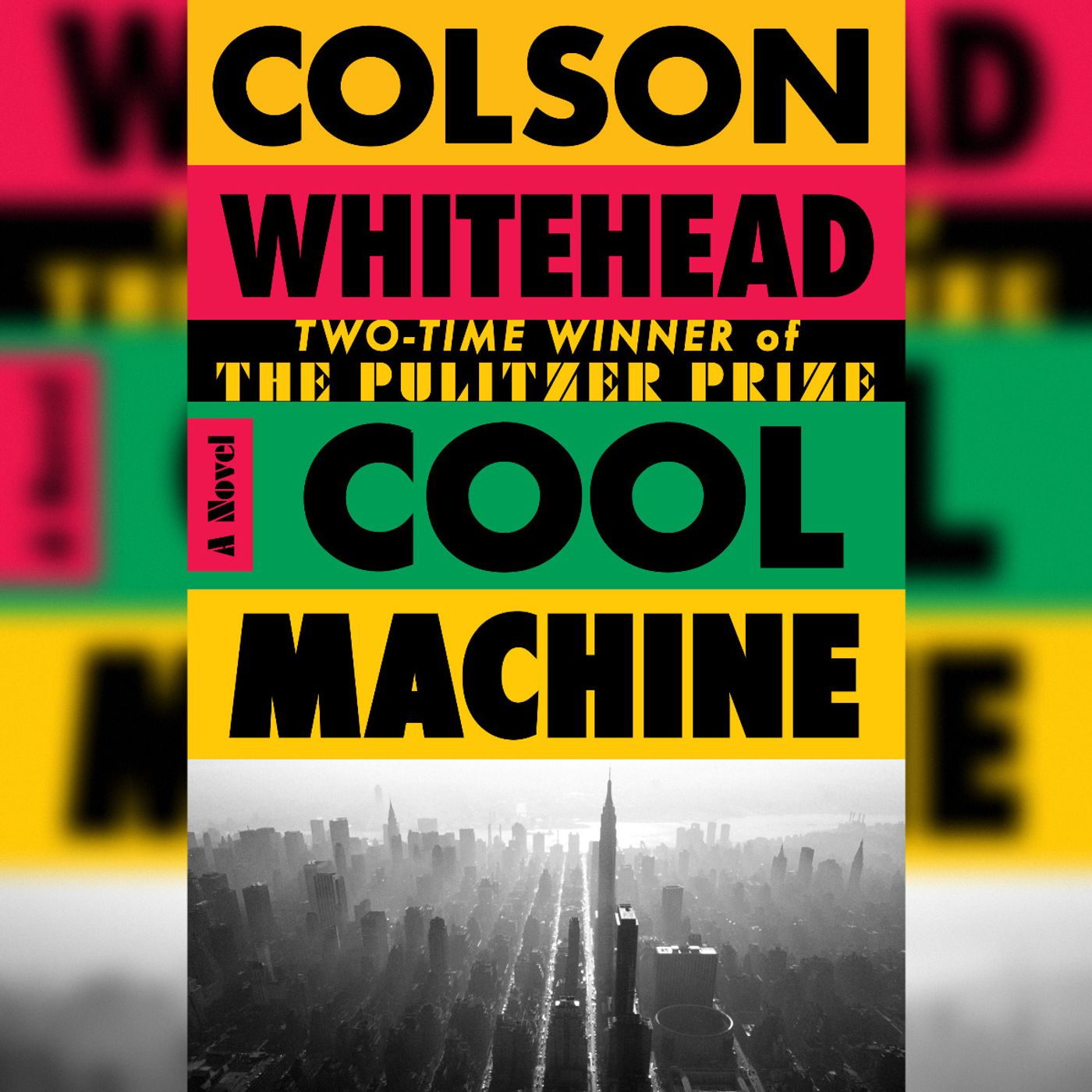
This is all of it. I'm Alison Stewart live from the WNYC Studios in soho. Thank you for sharing part of your day with us. I'm really grateful that you're here. On today's show we'll hear a live performance from the band Fat Boy Wilson and the Ripleys. And later in the show we'll hear music from Steve Martin and Alison Brown, who brought their ban to the studio. That's the plan. So let's get this started with Cool Machine. Much like how Colson Whitehead had one last book in his Harlem Trilogy to complete complete, his central character in the series, Ray Carney, just couldn't resist one last job. The setting is early 1980s New York. Wall street is booming. Yuppies abound. Mayor Koch is asking, how am I? And New Yorkers are tuning in to watch live at 5 with Chuck and Sue. An older Ray Carney lives on Strivers Row with his wife Elizabeth, and his furniture business on 125th and Morningside. But as straight as Carney presents himself, he's still an occasional fence. The street is still active. The envelopes still move. This time around, Kearney becomes an active heist participant. And as he gets deeper into the job, which literally takes him into the depths of unused tunnels under Grand Central, he wrestles with existential questions about what he values. He's facing, quote, the void, as one accomplice calls it. You have to read Cool Machine to see if Carney finds his answers. The book was published yesterday and author Colson Whitehead is in studio now. It is nice to see you in person.
- [02:21]
Colson Whitehead
Yes, how do you do?
- [02:22]
Alison Stewart
I'm doing well. The book begins in 1981. Ray Carney. He's been interviewed after winning Northeast Regional Dealer of the Month in a magazine and furniture magazine. How would you describe Ray Carney's state of mind when we meet him at the beginning of Cool Machine he settled.
- [02:39]
Colson Whitehead
You know, we first met him in 1959 in Harlem Shuffle. He was his late twenties opening his furniture store and now it's 81. He's middle aged. The store is going fine. His fencing career is going fine as well. Little secret, his kids are in school, moved away, empty nester. And now the question is, what's next? Who am I now after I've accomplished everything I wanted to set out to do?
- [03:07]
Alison Stewart
So this is set in 1980s New York. You're a born and raised New Yorker. What do you remember about life in New York in the early 80s?
- [03:15]
Colson Whitehead
I think going back and thinking about the book, what I've put in the book. It was just a great time to be Young. There's a 1983 section that takes place in Lower east side in the East Village. And I would go take the subway down from the Upper west side and go to Bleecker Bob's, buy records, buy Susie Nabansi T shirts and it was a real expedition. I was too young to go to the clubs.
- [03:40]
Alison Stewart
But you had an older sister who was really into it.
- [03:43]
Colson Whitehead
Yes, if you're an artist, definitely it helps to have a cool older sister. So I'd walk by her room and she's playing Gang of Four in the Clash. She would take us to repertory movie houses to see like Rebel Without a Cause and stuff like that. And so it was a great, great time to be, to find your cultural self, your cultural awakening.
- [04:01]
Alison Stewart
Who was a person or an instance in that time that really shaped you as a writer?
- [04:08]
Colson Whitehead
Oh, you know, I started off reading Stephen King and Arthur C. Clarke and a lot of fantasy fiction. And then I think junior year of high school I read Crime and Punishment and you know, and that made a big impression. And then definitely 100 years of solitude, senior year of high school. And I had loved. I'd been inspired by fantasy literature. And here was a guy who was a Nobel Prize winner, a highbrow author who was using the tools of fantasy and magic realism for literary fiction. So that was a big awakening.
- [04:43]
Alison Stewart
There are so many great references in this book to 80s New York. Koch, how am I doing? Chuck and sue, live at 5. The no radio signs on Cars. What was your favorite 80s niche reference to work into the book and why?
- [04:57]
Colson Whitehead
Well, I love the no radio signs. It's definitely an artifact of 80s and 90s New York. If you don't know, people would break into your car and so you'd have portable radios that you would take with you Benzie boxes. And then people would still break in think there's a radio. So people would write signs that say, no radio. Don't break in. And different characters have different responses to that. Carney thinks it's a sign of weakness and capitulation to have a no radio sign. That's saying, basically, just attack me. Pepper, his crony, thinks that it's a break of the code. The prey should not talk to the predator. So it's breaking the lines of conduct. So going back to that time, really, it was just really, really fun.
- [05:47]
Alison Stewart
It's interesting because there are references here that New Yorkers would get, and then there are references that only black New Yorkers are likely to get. I fell out of my chair when you mentioned John Acheson.
- [05:57]
Colson Whitehead
Sure. Yes.
- [05:59]
Alison Stewart
If, you know, you know, are those moments meant as extra or Easter eggs for people? Is it okay for people if they don't necessarily get those parts?
- [06:08]
Colson Whitehead
Sure. I mean, I was researching John Atchison is not really on Google, but there's actually a Times article from the 80s about hairdressers. But yeah, I mean, you don't have to get every reference from the context. You understand it. But those markers are realism, you know, these are real people who are living in a city that you recognize. I want to get it right.
- [06:31]
Alison Stewart
I had to wait for many hours for my mom to get a John Atchison.
- [06:33]
Colson Whitehead
Let me tell you, my mom was always there. Yes.
- [06:37]
Alison Stewart
My guest is Pulitzer Prize winning author Colson Whitehead. We're discussing his new book, Cool Machine. It follows Harlem furniture salesman Ray Carney and his associate Pepper as they navigate the criminal underworld of the Earth, 1980s New York. Cool Machine is the third and final in his Harlem trilogy. Colson has a book event with with Garden State Author talks in Montclair. That's tonight. And he'll be at Union Square and Barnes and Noble on August 3rd. Wanted to get that out there. At this point, Ray, he's kind of. He's an ankh, as the kids would say. He's got some thoughts on graffiti. How do you imagine Ray feels about the state of 1980s New York?
- [07:15]
Colson Whitehead
I think he recognizes the need for change and the constant change, but also there's an essential New York character that he's a part of. And so he understands that there's this dynamic process. He's a part of it. But there's an essential New York character that never goes away and can't be defeated.
- [07:32]
Alison Stewart
I'm interested because on the surface it seems like he has it all. He's got this good family, a home, yet he seems drawn back to Criminal life. He curses his father, a criminal, he said, for putting it in his blood. Is Ray a case of environment versus nature.
- [07:47]
Colson Whitehead
I think in the first two books I'm wrestling with that question. And now there's a problem of an integrated self. You know, I think he's reconciled a lot of these different warring parts of himself. And the question is, who will he be for the next couple of decades? And that question keeps coming up in the book, posed by different people. Who are you now? Who do you want to be? Who will you be next? And that question is always hanging there.
- [08:10]
Alison Stewart
Why does Carney always seem to get in trouble when Elizabeth is out of town?
- [08:15]
Colson Whitehead
He asked that question himself. No one's watching. And that, you know, that evil part of him, that criminal part of him wants to be expressed. And so he does find himself pursued by mobsters, indulging in heists when his wife goes out of town. Personally, I just, like, take a gummy and watch some sci fi movies. But that's what Carney. But this is what Carney does.
- [08:38]
Alison Stewart
In your mind, does Elizabeth know about Carney's double life?
- [08:43]
Colson Whitehead
She winks. You know, I found a genealogist, did research on my family and found, like, the first instance of, I think, a whitehead in a newspaper. And it was Augustus, Georgia, 1906. And the headline, it was, drunken Negro Shoots Landlord. So I guess my great, great grandfather didn't want to pay the rent. You know, the guy wasn't killed. And so I told my sister about this, and she's like, oh, well, you know, our grandpa actually ran moonshine for the mob from Canada. And I was like, what? I'm writing a crime novel. I have to use this. Blah, blah, blah. So I went to my mother, I was like, did you know this story about grandpa? And she was like, I know nothing about that. But everyone did a little something those days. I think everyone has, like, their side hustle, their way of getting by into the middle class. And so I think Elizabeth understands that Carney is not always on the up and up, but he's a good man.
- [09:38]
Alison Stewart
When I got your book, there were these two sentences that I read to everybody. I said, this is going to be a good ride, and I want to read them to you and ask you about them. It's on page seven. And you wrote, it's in the furniture store. There's a woman in the furniture store. And the sentence says, the Spanish lady galumphed between the ottomans. I love that.
- [09:59]
Colson Whitehead
Right?
- [10:00]
Alison Stewart
It sets the scene. It tells you what's going on. Did you Observe this person. Or was this a person of your imagination? Or did it just was a scene setting moment.
- [10:11]
Colson Whitehead
It's made up. But I've galumped. I've seen people galumphed. You want to establish their tone. It's a slangy voice established at a furniture store that I know what I'm talking about and Carney knows what he's talking about. So hopefully all these sentences are working on different registers.
- [10:26]
Alison Stewart
What do moments like that help you out, help you out as a writer? When you have one sentence that kind of she goes away, we don't hear from her again.
- [10:34]
Colson Whitehead
I feel in control, like I know what the world is and so I can bend the rules, I can go in different places. Once I've established a level of reality and mastery over the story and the reader hopefully trusts me.
- [10:48]
Alison Stewart
Did you spend time in Harlem looking at where Ray's store would have been, figuring out details for the story or they. Purely imagination.
- [10:55]
Colson Whitehead
I lived there until I was in kindergarten, so obviously didn't have that many memories. So I would do location scouting and just walk up and down during the pandemic. I was writing Crook Manifesto and I remember just walking the deserted streets of Harlem and Washington Heights and I'm thinking, oh, is that where Carney's office is? That's a depressing street. Maybe that's his childhood home. Oh, I would dump a body there if I had to, you know, in a pinch. So I'm always, you know, trying to find places that connect with the themes. And if it's a sunny day or overcast day, I might pick a different building. It's really just that, oh, interesting that how I'm feeling and vibing that day.
- [11:35]
Alison Stewart
We're talking to Colson Whitehead discussing his new book, Cool Machine. At some point in the book, Carney sees what he deems to be the most beautiful coffee table he's ever seen. There's a reoccurring quote in the book that reads, it's harder to find a good coffee table than it is to fall in love. What is it about Carney and coffee tables and me?
- [11:55]
Colson Whitehead
You know, he's not necessarily a stand in for me, but that's definitely part of my personality. For years I would say it's harder to find a coffee table than it is to fall in love. And then one day my wife said, stop saying that, it's really insulting. And I was like, you have a good point. So I gave it to Ray. But his fascination with furniture is a recurring joke. You know, he'll be in a gunfight or chased by mobsters. And he'll stop to consider the make of the carpet or the make of the sofa. The action slows down and it's a little moment of humor.
- [12:29]
Alison Stewart
How much research did you have to do into furniture?
- [12:33]
Colson Whitehead
You have to immerse yourself. So really I wrote a book about elevator inspector. So I went to the library and got passing the elevator inspector exam. You know, took out that book. In this case, I wanted to get the language of 50s furniture catalogs. No matter what interest you have, somebody else has it and it's put on Pinterest. So if you go to Pinterest, you can find complete furniture catalogs. And I'm always stealing slang and nouns and adjectives. So I would just read these catalogs and read about the champagne finish on the couch and. And hopefully use that to furnish Carney's conception of what a furniture world is.
- [13:18]
Alison Stewart
One of our producers wants to know, did you go incognito into furniture stores and pose as a customer?
- [13:24]
Colson Whitehead
I don't like to do research in person. The more I can do at home, I'm happier. I am. When you go outside, there's too many people. I don't like people.
- [13:39]
Alison Stewart
I knew you were going to say that. We'd love to get you to read a little bit from your book. What are we going to read?
- [13:46]
Colson Whitehead
It's the first page, and it's 1981, and we're setting the stage. The city that year was true to its personality as malformed across the centuries. A monstrous entity powered by innate miseries, operated by brute will and held together by pluck, fury and rebar. It had been flat broke and now clambered from the crater of debt one mucky handhold at a time. Crime, in its ingenuity, devised new permutations daily, making every citizen a victim or a witness. New arrivals poured in hourly, as if there were room, multiplying the local varieties of sadness and perseverance and outnumbering those who'd scurried to the suburbs or fled their last humiliation. It was dirty and sick and plain spoken in its threats. How am I doing? The mayor asked on his rounds, barking like one of the mangy seals installed at the decrepit and neglected Central Park Zoo. A real dump. It was his trademark. Everybody needs a gimmick. How am I doing? The same as everyone else. Tired, banged up, but staggering forth somehow.
- [14:57]
Alison Stewart
That was Colson Whitehead, reading from his new book, the Cool Machine. We'll have more on all of it. You're listening to all of it on wnyc. I'm Alison Stewart. My guest is Pulitzer Prize winning author Colson Whitehead. We're discussing his new book, Cool Machine. It follows Harlem furniture salesman Ray Carney and his associate Pepper as they navigate the criminal underworld of early 1980s New York. Cool Machine is the third and final final in his Harlem trilogy. Colson has a book event with Garden State Author talks in Montclair tonight. And he'll be at Union Square at Barnes and Noble on August 3rd. Carney, he's a fence. He kind of gets involved with Uncle Rich. A longtime Harlem legend. Rich calls Ray a cool machine. What do you mean by that?
- [15:53]
Colson Whitehead
I like those two words. They sound, well, cool. It's a line from a song by the Birthday Party, which is Nick Cave's first band. The song is called Release the Bats. It has. It's very surreal. Doesn't make a sense, but he keeps repeating the phrase cool machine. And I was, you know, different phrases were auditioning for titles for the book and that stuck with me. Uncle Rich calls him a cool, calls Carney a cool machine. He keeps his cool under pressure. He's operating at a very high level sophistication. So it seemed to fit him and the general tenor of the book as
- [16:30]
Alison Stewart
part of the heist that they get involved with. It goes everywhere. It's back to a robbery in Los Angeles. I don't wanna give away too much, but as a writer, how do you plan out a heist? Because it's quite detailed.
- [16:43]
Colson Whitehead
It's very detailed. You don't wanna get letters saying, actually that alarm system was not made until 1965 or 75. So I spent a lot of time getting it right. I think I walked through it logically. How would I do it? Not that I can hoist 50 pounds of equipment and rappel down a building, but you try to make it realistic and fun and it shows a different side of the characters.
- [17:11]
Alison Stewart
It's interesting because track 61 plays an important part in this story. It's underneath Grand Central. That's right. Or goes underneath Waldorf.
- [17:21]
Colson Whitehead
It goes from Grand Central to the Waldorf about six blocks. And it was a short five block spur line and basically used for presidents. You could come from D.C. incognito and then go to your suite at the Waldorf. There's an elevator that would take you from underground. And I heard about that on Gothamist or something, some New York website. And I thought, that's a good vehicle for a heist.
- [17:47]
Alison Stewart
It's a good vehicle for a heist. We'll leave it that there sort of the bigger picture, the sort of deeper picture of this book is Carney asking himself, what do you value? What's really worth stealing? Why are these questions that are gnawing at him or at you?
- [18:04]
Colson Whitehead
At this point, it's, you know, it's been a thousand pages. You know, I'm trying to wrap things up and put the first two books into clarity. He's been on this criminal journey, a journey of self discovery. And at the end of the day, there's a lot of question like, who are you? He's been tested in various ways. He's tested other people. The city has tested him. He survived. But who will he be? Who is he actually, deep down? And so that's what I'm trying to get at.
- [18:33]
Alison Stewart
Were those questions you asked yourself during the Pandemic?
- [18:38]
Colson Whitehead
I felt, you know, I mean, I had a purpose. I was writing, you know, and usually I knock off around two or three, but because I couldn't leave the house, I had an extra stint from four to seven. So I felt very at peace in my work. I think I was writing about the 1970s during the pandemic and that was a time of calamity in the city. But at the same time artists were working. It was the birth of hip hop and punk and disco and New York salsa. So it was great. A lot of creative energy, even though the city was very depressed. So I felt very connected to a living New York spirit, if that makes sense. It sounds odd, but I felt very focused during it.
- [19:19]
Alison Stewart
It's interesting hearing you talk about that. I thought about a time of rebellion. Not necessarily rebellion, but this. Like you would do what you wanted
- [19:28]
Colson Whitehead
to do at the time and find a new language. You're casting off what came before. And circumstances have forced you to use your wits and your creativity to forge a new self in a new city.
- [19:40]
Alison Stewart
It's interesting. There are so many things. Subtitles in the subtitle sub text in this book. A lot of New York history is in this book, especially Donald Manus and the Parking Violations Bureau scandal of the 80s. The tabloids were all over it. What was it about this particular scandal that made you want to include it in the story?
- [20:01]
Colson Whitehead
It was 1986 and I was 15 or 16 and really starting to read newspapers, papers in a different. In a deeper way. My parents always bought like the Times and the Post and Daily News and Newsday. So we had all these newspapers around. And I remember just being. He was the Queensborough president, incredibly corrupt, ended up killing himself. And it was one of the first big, huge scandal of the Koch administration. And so I was coming to consciousness as someone in New York City, and I didn't understand how it worked. And so when I was casting about for different pegs for chapters, when should this take place? Or what's a good year? That has always stayed with me as a kind of mystery of not understanding how the city works, but knowing everything is really corrupt. And I think that's one of the lessons of this trilogy.
- [20:54]
Alison Stewart
What did you want to examine in this book about the way generations sort of embrace New York? Because you have Pepper, who's sort of an uptown guy. He meets the Lower east side art girl. They tried to work together. It was an interesting combination.
- [21:13]
Colson Whitehead
Pepper is very vital in the first two books. In this one, he's 65. He doesn't necessarily take a beating as well as he did, and other people are replacing him. So there's a younger generation. And he doesn't understand these Negroes with their flare trousers and their big Afros, like, what are you doing? He definitely does not understand hip hop and graffiti. So the same way that the city is changing and buildings are rising and falling, you know, the Twin Towers and its different incarnations keep coming up in the book. Human generations are coming and going, and so that's what I'm trying to represent.
- [21:48]
Alison Stewart
We're talking to Colson Whitehead discussing his new book, Cool Machine. Now that you're on the other side of this trilogy of Harlem Shuffle, Crook Manifesto and Cool Machine, were you nostalgic writing these books?
- [22:03]
Colson Whitehead
I felt just very connected. I mean, I think really coming through the pandemic, I love the city more than I ever have in a really corny way. I think narrating that ebb and flow and that dynamism of the city has really sort of clarified my feelings. I'm definitely ready to say goodbye and do something different. It was eight years, which is like the longest I've ever worked on something. A lot of words, you know, a lot of words in one book. If you do a trilogy, it's even three times as many words, apparently. But I had a vision for who Carney is and what the city is. And that, you know, guided me.
- [22:38]
Alison Stewart
How did the series challenge you as a writer?
- [22:41]
Colson Whitehead
I think you definitely want to. With the trilogy, you want to nail the landing. And there's so many different characters I wanted to say goodbye to in a proper way, you know, follow through on all the themes that I've. I starred in the Harlem Shuffle and continued in Crook Manifesto, and I'm A Gen X, er, obviously. And my UR trilogy is the Star wars trilogy. And there's a lot of lessons there in sticking the landing. You know, Star wars is great and then Empire is better and then Return is like, sucks, because the Ewoks you want to go. If you're doing a trilogy, Star wars and then Empire, then Empire plus, like, it's Empire. But Chewbacca has a love scene or something. Like you want to push the envelope and really bring it home. So that's basically what Cool Machine is. It's like Chewbacca has a love scene.
- [23:32]
Alison Stewart
When you say stick the landing, all I can think is Nadia Comanic. Like, yes, yes, Gen X completely. You dedicate the book to New York Effin City. That's what I can say on the radio. What keeps you enamored or interested in this city?
- [23:50]
Colson Whitehead
I think if I got it right, I would stop writing about it, but I haven't got it right yet. So my first book, the Intuitionist, is kind of allegorical New York Zone 1 is a post apocalyptic zombie New York, and that's kind of like utopian New York because everyone's dead, so there's no line at Whole Foods or to get a cab. And this is like a realistic depiction. So I keep trying different strategies and attacking the city in different ways and maybe one day I'll get it right.
- [24:19]
Alison Stewart
With your next book, is it going to be set in New York?
- [24:22]
Colson Whitehead
There's a couple of pages, but I don't want to do the whole New York book again. But it does start in New York City.
- [24:30]
Alison Stewart
This was in this New Yorker article, and people have probably asked you about it, but I'm going to go ahead and ask anyway. On a bench at 93rd and Broadway, there's a plaque that reads Colson Whitehead's Office.
- [24:40]
Colson Whitehead
So Broadway, Big Boulevard. There's a greenway in the middle and there are benches. Usually there's some decrepit character urinating or something in the benches. But definitely during the pandemic, I would sit and rest, get out of the house and sit on the bench near my neighborhood. And I talked about getting a bench that says Colson Whitehead's Office. Of course, I'm too lazy, so my wife did it for my birthday. And if you go to 93rd and Broadway, you can inhale the aroma of Colson Whitehead's office.
- [25:13]
Alison Stewart
Get a Pinkberry right there.
- [25:15]
Colson Whitehead
Yes, there's usually a dead pigeon or something there.
- [25:19]
Alison Stewart
Is there something in this book that you want people to spend an extra five seconds thinking about? A reference, a scene something that you worked really hard on or you just are like, you really think nails it?
- [25:31]
Colson Whitehead
No, I mean, I think at the end of the Uncle Rich section, the narrator is speckling about New York City mystics and people who are attuned to the city in a special way. They can see the grid behind the grid. And I think all of us have our secret New York that no one else can really see. And I think if I can share my weird New York with you, you can hopefully see yours in it as well. So there are different, a lot of different moments like that where I'm hoping I'm doing my job.
- [26:03]
Alison Stewart
My guest has been Colson Whitehead. His new book is called Cool Machine. Colson has a book event with Garden State Author Talks in Montclair tonight and it's at Union Square Barnes and Noble on August 3rd. Thank you for coming into the studio.
- [26:17]
Colson Whitehead
My pleasure.
- [26:18]
Alison Stewart
Blowing ad budget on metrics that look great till the CFO sees them. That's bullspend and marketers are calling it out in Dashboard Confessions.
- [26:28]
Colson Whitehead
I remember telling my boss it'll be
- [26:30]
Alison Stewart
good for the brand when leads were slow.
- [26:34]
Colson Whitehead
Yeah, it wasn't.
- [26:35]
Alison Stewart
Cut The Bull Spend LinkedIn lets you target by company, job title and More. Advertise on LinkedIn. Spend $250 on your first campaign and get a $250 credit. Go to LinkedIn.com campaign terms and conditions apply.
- [26:48]
Progressive Insurance Announcer
What if your drive was fueled with more like more protection for more time on the road? Shelby Power Nitro plus provides more protection for longer lasting engines, so it helps keep your engine running like new for whatever drive is ahead. Shelby Power Nitro plus engine performance that lasts compared to minimum detergent gasoline with continuous use of Shelby Power Nitro plus and gasoline direct injection engines, actual effects and benefits may vary. See Shell Us More Protection for more information.