← All Of It with Alison Stewart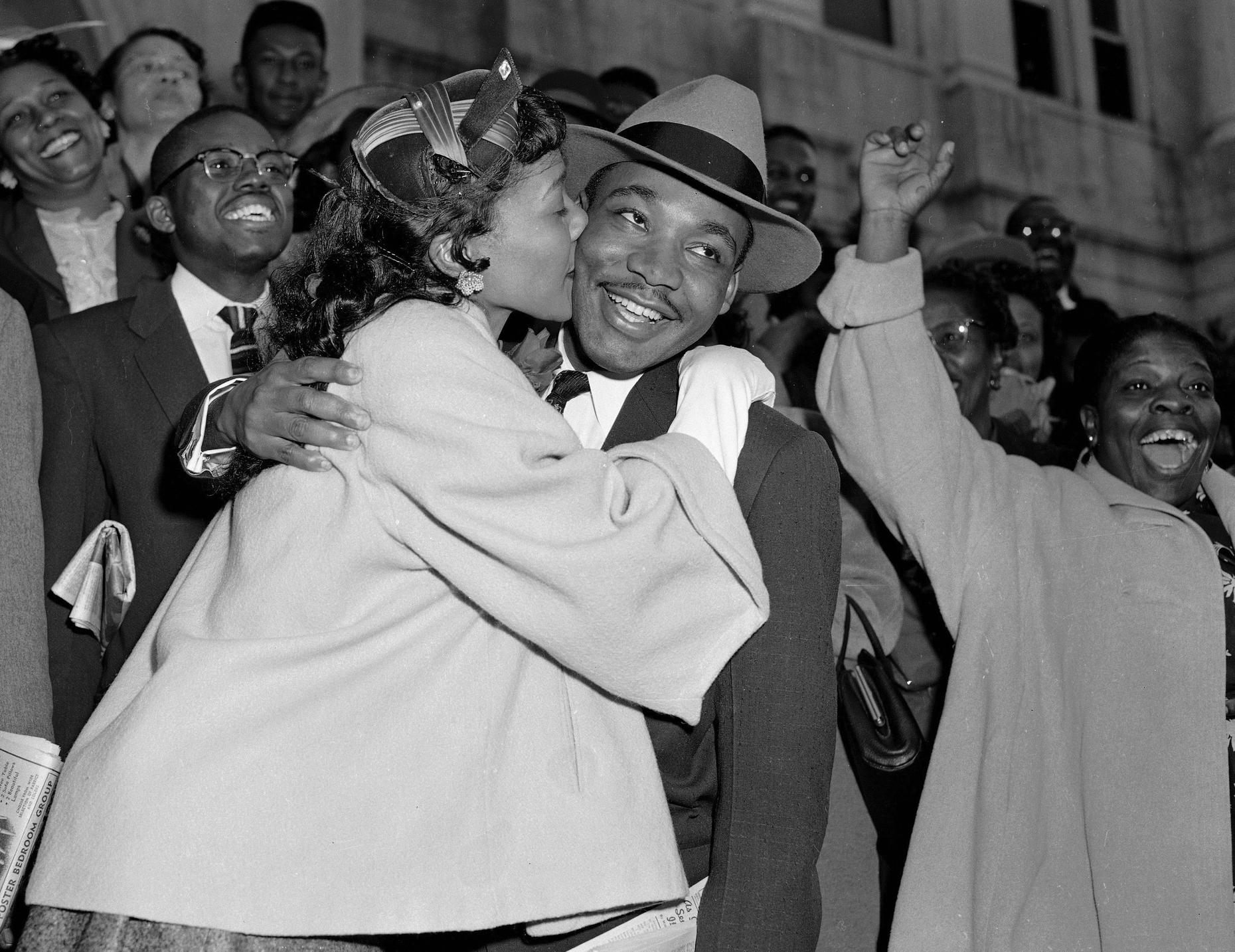
All Of It with Alison Stewart
Coretta Scott and MLK's Civil Rights Work in Montgomery (Full Bio)
00:16:06
Our June Full Bio selection was King: A Life, the first comprehensive account of Martin Luther King Jr. in three decades, written by Jonathan Eig.
Loading summary
Transcript29 lines
- [00:00]
Commercial Announcer
Suffering from dry, tired, irritated eyes. Don't let dry eyes win. Use Sustain Pro. It hydrates, restores and protects dry eyes for up to 12 hours. Sustain Pro Triple Action Dry Eye Relief.
- [00:16]
Jonathan Eig
Listener Support WNYC Studios.
- [00:36]
Alison Stewart
This is all of it. I'm Alison Stewart. And on we go with our Martin Luther King Day Full Bio conversation with Jonathan Eig. Full Bio is a Deep Dive series we do every month around a newly released biography. Today we're discussing the book King A Life. Before the break, we were talking about the inner circle of trusted advisors that King leaned on through his organizing and activism work in Montgomery, Alabama, that included Ralph Abernathy, Ella Baker and Bayard Rustin. Now we're going to hear about another of Dr. King's closest confidants, his wife, Coretta, and the path that led them to Montgomery as it became the focal point of the civil rights movement. Let's get back into my conversation with Martin Luther King, Jr. Biographer Jonathan I've Coretta Scott grew up in and around.
- [01:26]
Interviewer/Host
Marion, Alabama, a small town of about 3,000 people.
- [01:30]
Alison Stewart
She was one of three children.
- [01:31]
Interviewer/Host
She went to Antioch College. She went on to a music conservatory in Boston.
- [01:37]
Alison Stewart
What was going on in Coretta Scott's.
- [01:39]
Interviewer/Host
Life before she met mlk?
- [01:43]
Jonathan Eig
Coretta Scott was a couple years older than mlk, and she was a very serious young woman. She had gone to Antioch College, which was a white college college that accepted black students, but primarily white. And she had been very active there on campus in social movements. She protested a barber shop that wouldn't cut black hair. She fought with the university because they wouldn't let black students teach do student teaching in white schools. She was more of an activist at that point than mlk, and I think that's a big part of what attracted King to Coretta when they met for their first date. I think he was blown away by the fact that she had been involved in all of these protests already because he hadn't done anything yet. He'd been focused on his schooling and he had not been a part of any organized protests. So I think that Coretta that's what separated Coretta, because King had a lot of dates with a lot of beautiful, intelligent women, but none who had the resume that Coretta had.
- [02:38]
Interviewer/Host
We actually found a 1960 WNYC interview where the interviewer asked Coretta Scott King to describe her first impressions of mlk.
- [02:48]
Coretta Scott King (archival audio)
Well, I had known some things about him before we met, so I suppose I had some preconceived ideas. First. I knew he was a minister and I knew he was studying at Boston University for his doctorate. And I had been told that he was a very fine and promising young man and a very nice person. So I had these things in my mind when I met him. I thought he was a very fine person, a nice person, a likable person. When we had had a chance to talk and get to know each other a little, I thought he was very nice. And, of course, I think it was almost. I wouldn't say exactly, a love at first sight, but we liked each other, I think, a great deal. And we seemed to have had a great deal in common.
- [03:45]
Interviewer/Host
You know, in the clip, she was said, oh, he was nice enough, and we were friendly and we had a lot in common. It's sort of interesting because they were married for so long. But we'll talk about this later. He was not faithful. What do you think was the glue of their marriage?
- [04:04]
Jonathan Eig
I think the glue was the movement. I talked to Harry Belafonte about this a lot. Belafonte thought that they kind of had, like, a business partnership and that they loved each other and trusted each other and relied on each other. But Belafonte thought that King never got over his love of Betty Moitz, the white girl that he dated at Crozer, and that he loved Coretta in a different way and that sometimes it felt a little bit dry to him and that. That may have been a function of her personality, but there's no question that King respected her. Her ambition, her intelligence, and her passion for justice. And that was really what I think kept them together more than anything else. And then, of course, you know, their. Their kids and their love for their kids that they shared. But. But in the beginning, and certainly in the early days, I think the glue was. There was the struggle for justice. One of the things that I often think about is that when King won the Nobel Prize, it was Coretta who said, you know, we now have a greater responsibility to fight not just for justice in America, but all over the world. And to think about things like world peace and hunger, poverty, because the Nobel Prize gives us a greater sense of responsibility. She saw that as something that they both had to work up, live up to.
- [05:22]
Alison Stewart
My guest is Jonathan Eig. The name of the biography is King A Life. Coretta Scott and Martin Luther King, Jr. Marry in June of 1953. What did Coretta have to give up to become Mrs. Martin Luther King, Jr.
- [05:40]
Jonathan Eig
Coretta gave up a lot. First of all, most obviously, her singing career. She really wanted to be a concert singer, and she wanted to use her voice to raise awareness and to raise money for social causes. And that became, it became clear once she decided that she would marry King and move to the south, that that wasn't going to happen. There was no way she could have a concert career while raising a family, being the, the, the, the, the, the, the pastor's wife and raising children in the Deep South. So she shifted for a little while, thinking that maybe she'd become a music teacher, that she could give piano lessons and voice lessons, but even that she didn't have time for and had to sacrifice over. You know, I found recordings that Coretta made while working on her first memoir just after her husband's death. And in these recordings she says over and over, and that too I had to accept. And that too I had to accept. And then once she came to realize that her husband was not faithful, that too she had to accept. And she discovered that very early, even before they were married, when they were engaged, she discovered that he was still seeing another woman. And she says even then that she had to learn to accept that.
- [06:48]
Alison Stewart
The Kings moved to Montgomery, Alabama, where MLK accepted a position as a pastor at Dexter Avenue Baptist Church. What was it about the congregation and Montgomery that appealed to a then 25 year old MLK?
- [07:06]
Jonathan Eig
Once again, King broke from his father. His father said, don't go to Dexter. It's lily white and uptight. He said that it wasn't white, of course, but it was a black church. But it had a reputation for being very conservative and being, you know, sort of hoity toity. And that's where the, the black college professors all attended. And Daddy King thought it was, it was too snobby for his son. But you know, Dexter had a reputation for being a powerful church where, where great ideas were exchanged, where people challenged authority. The prior minister there, Vernon Johns, was a, was a legend and he, he liked to make even his own congregation uncomfortable, pushing them to really think about what they could and should be doing to change the society in which they were living. So I think King was really drawn to that. It was a big prominent church with a great reputation. And of course he didn't know that he was about to find himself in the center of this great storm of protest.
- [08:10]
Alison Stewart
Well, what did they see in him, this church? He's a young guy.
- [08:15]
Jonathan Eig
Yeah, he's a kid. And some of the, some of the church elders thought he was too young and that there was no way that anybody was going to respect this kid. It didn't help that he was, you know, five, six and a half and looked like he was about 17 years old. But he. He quickly earned their respect because he was such a beautiful speaker and so brilliant. Combining you know, philosophy with religion, I think they were really moved just by the power of his intellect more than anything else. And he was. He was just absolutely charming. He. He made the rounds. He got to know people. He shot pool with the teenagers and went backyard barbecues and learned people's names and really just seemed to be a great listener. That's one of the things we forget about King, even when he becomes this great leader of the civil rights movement, when he's, you know, got the pressure of the world on his shoulders. He's a great listener, and he's. He's a leader who understands and wants to. Wants to work with other people, not boss them around.
- [09:09]
Alison Stewart
The kings move to Montgomery in August of 1954. So this is two months after Brown versus Board of Education struck down school segregation. What impact would that ruling about schooling have on King's early trajectory as a civil rights leader? Even before he was a civil rights leader.
- [09:32]
Jonathan Eig
Yeah, even before he's a leader, A couple of big things happen that seem to create this momentum that will soon affect his life. First of all, as you said, Brown versus Board of education is an earthquake that rattles America that says change is coming whether you like it or not. And all over the south, white segregationists are trying to figure out how they can preserve the power structure, preserve their all white schools, even if it means shutting down public schools in some cases. And black people are thinking, okay, the government agrees with us. Segregation is wrong. How do we keep fighting for more? How do we keep fighting for more integration? At the same time, roughly just shortly after Emmett Till is murdered in Mississippi, and the images of his body and his funeral really shock America and again, force or compel a lot of black people to think that this is a moment where we can. We can fight for change. And one of those people who happens to hear a lecture about Emmett Till is Rosa Parks, a young activist and seamstress in Montgomery who is ready to help lead that fight. And it just so happens that Montgomery becomes the epicenter of the next big protest. And that emerges when people decide that they're not going to take the treatment on those buses that, you know, Rosa Parks refuses to get up from her bus seat. And Montgomery decides it's time to boycott those buses and to send a message that we're not going to take it anymore.
- [11:01]
Interviewer/Host
Let's give people a picture of Montgomery. At this moment, you quote a black newspaper from 1953. And this is the quote. Montgomery is fast taking the lead as Alabama's most enlightened city. What was it about Montgomery, Alabama, that would have a newspaper, make that, say that, write that about it, and made it a fertile place for the civil rights movement to take root.
- [11:28]
Jonathan Eig
Well, Alabama had been one of the great or most horrendous states in the country when it came to enslavement. At one point, you know, the vast majority of the state had been made up of enslaved people. So by the time the 1950s come around, there are some signs of progress. You know, one of the minor league baseball teams is integrated, and some cities in Alabama are experimenting with integration of the buses. And there's a sense that Montgomery is perhaps a little bit more progressive than place like Birmingham just down the road a bit. And that fuels hopes. I think the fact that there are some small signs of progress in Montgomery really helped set the way, Pave the way for the Montgomery bus boycott. Because when the community decides to organize, there's already a sense that the machinery is in place, that we know how to motivate people, that. That we've got the potential here. There are several strong black leaders and NAACP and other activists who have been fighting for voting rights, who've been fighting to try to integrate the buses in the schools, and that they're ready to really make a big commitment to come together and to really see if they can get everybody to refuse to ride those buses after Rosa Parks arrest.
- [12:47]
Alison Stewart
It's interesting to think, though, that at this moment of the bus boycott, MLK wasn't really a leader in the movement. You even write that in 1955, he was looking for other positions. He'd gone to interview for a role at Dillard. His first daughter had been born just a few weeks before. Rosa Parks wouldn't move from her seat on the bus. Then the bus boycott began. Initially, how did he get involved with the bus boycott at all?
- [13:18]
Jonathan Eig
This is one of those great moments in history when you think about what might have been. Because King was very close to accepting a job out of town. He was thinking about moving to New Orleans. And then this bus boy begins, and they're looking for somebody who will step up as the official spokesman. They're not even asking for someone to lead the movement. They're just looking for somebody to stand up and give the big speech on the first day to see if people are ready to do this thing. And they turn to King not because he's the most famous or the most, you know, the Bravest or the smartest guy in town. It's because he's new and he hasn't made any enemies yet. And they figure that maybe there won't be too much division, that people from different churches and different parts of town might all be willing to listen to this guy. And most people in town don't even know who he is at that point. Most black people are coming together to hear him speak for the first time. And this is really the moment when King finds his voice, finds his real identity. But he's not even sure he wants the job. He has a panic attack, like, a few minutes before he has to give this speech because he's just really not sure what he's doing or whether he's doing the right thing.
- [14:24]
Interviewer/Host
This led to a moment that Martin Luther King has described as the moment that God called him to lead. How did he describe it?
- [14:35]
Jonathan Eig
He finds out that he's going to be speaking at Holt Street Baptist Church. And as I mentioned, he's got, you know, just minutes to prepare, and he has a panic attack. Now he's got even less time to prepare. He rushes to this church with just a few notes sketched about what he might say. And as he gets there, traffic blocks him. He has to get out, you know, half a mile from the church and start walking. And it's only then that he realizes that this traffic is because the church is packed. There are thousands in the. In the seats, in the aisles and the rafters, and thousands more spilling out onto the streets. There are our workers setting up loudspeakers so the people outside this. Outside the church can hear, too. And King has to wedge his way into the church and gets up there to make this speech and has never faced an audience like this before. And that's when he really finds his. His. His way, his voice, he says. He begins by saying, we're here for serious business, and we're here to find out whether the Constitution of the United States means something. We're here to find out if the words contained in the Bible are really true and that we have an opportunity to prove to America that America is capable of embracing true democracy, embracing true justice. And if we are wrong, the Constitution is wrong. If we are wrong, God Almighty is wrong. And the crowd just explodes. They have never heard anything like this. And in that moment, King really becomes the leader and becomes not just the leader of this bus boycott in Montgomery, but becomes a voice for a generation.
- [16:10]
Alison Stewart
We will be back in a moment with more highlights from my conversation with Jonathan Eig about his MLK biography, King A Life. When we return, we'll HEAR how the FBI harassed Dr. King, how he shaped his thoughts about the war in Vietnam, plus how his ideas have carried through to today. Stay with us.
- [16:28]
WNYC Sponsorship Announcer
Since WNYC's first broadcast in 1924, we've been dedicated to creating the kind of content we know the world needs. In addition to this award winning reporting, your sponsorship also supports inspiring storytelling and extraordinary music that is free and accessible to all. To get in touch and find out more, visit sponsorship.wnyc.org.