← All Of It with Alison Stewart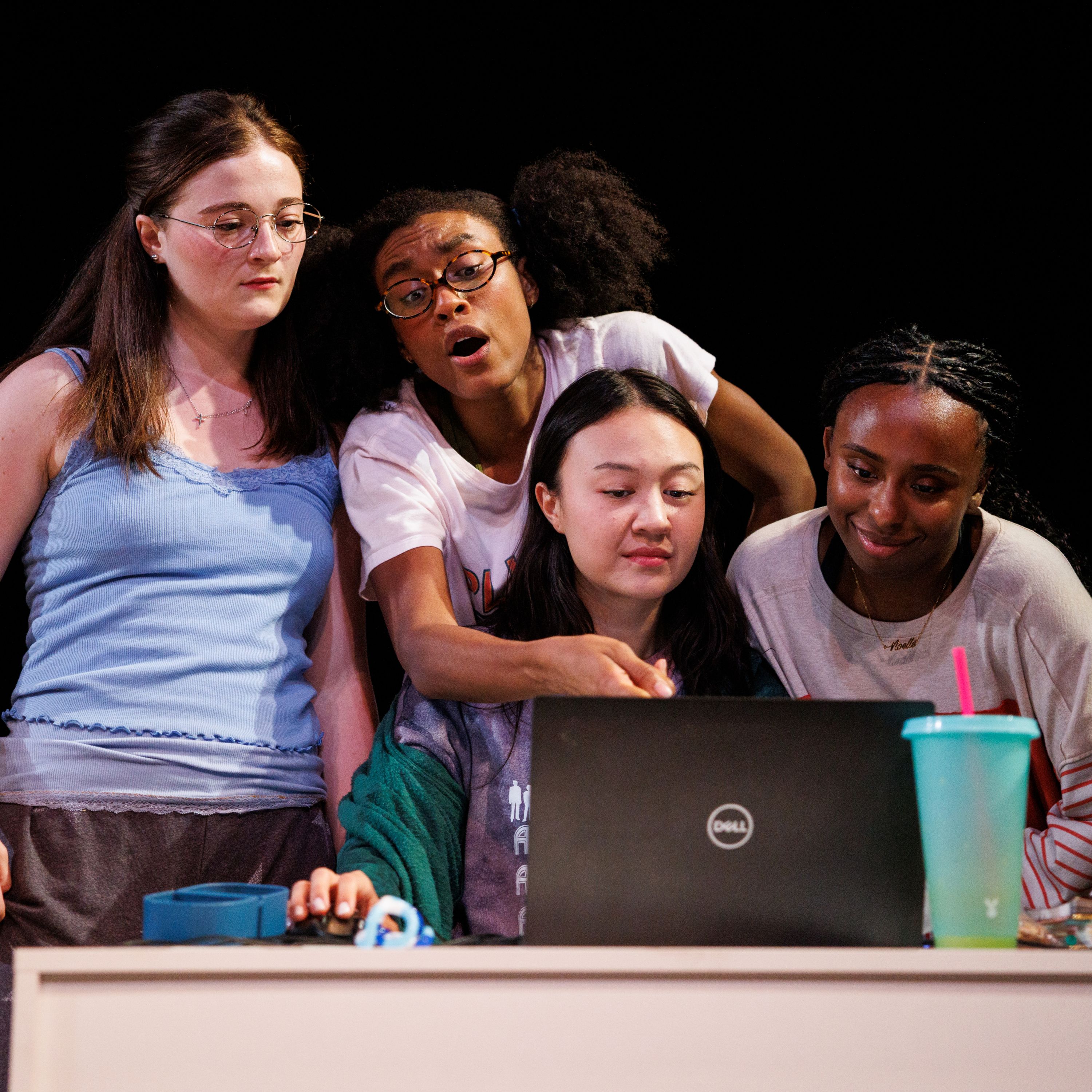
Loading summary
Transcript71 lines
- [00:00]
A
All of it is supported by Memorial Sloan Kettering Cancer Center. In a small, groundbreaking clinical trial, 100% of participants with a specific type of rectal cancer saw their tumors disappear using immunotherapy alone. Researchers at MSK are now studying this approach in cancers of the stomach, liver and more, and a majority of tumors are disappearing. For MSK Giving Day, all gifts will be tripled. Learn more@msk.org all of it.
- [00:36]
B
This is all of It. I'm Alison Stewart live from the WNYC studios in soho. Thank you for spending part of your day with us. I'm really grateful that you're here. On today's show, actor and comedian Michelle Buteau will be here in studio to talk about the final season of her Netflix comedy drama series, Survival of the Thickest. We'll talk about a new documentary, bang My Box, the Robin Byrd Story, with its director, along with Robyn Bird herself, who will take your calls. And we'll talk about moms dealing with the stresses of parenthood by getting high with Sarai Levy, who wrote about it in the Atlantic. That's the plan. So let's get this started with the new play dad, Don't Read this. It is 2014. It is Ohio and adults are on the periphery. Sometimes accidentally, Mal can hear her parents muffled voices arguing in the other room, sometimes on purpose, as Mal tells us as she's holding papers and announces to her father, dad, don't read this. Written by playwright Elias Smith, the play dad, Don't Read this takes us to a place in Mal's bedroom where sleepovers happened and emotions are revealed. For the next 95 minutes, we're involved in the four girls lives and the lives of their sims, an online game with characters they can control, which tells us a lot about who they are and what they are going through in real life. Amalia Yu stars as Mal. She was excellent in the Broadway run of John Proctor is the villain. Hi, Amalia.
- [02:10]
A
Hi.
- [02:10]
C
Thanks for having me again.
- [02:12]
B
And the play was written by Elias Smith. You may have seen her work last year. She wrote Grief Camp. It's nice to see you.
- [02:17]
D
Thank you for having us.
- [02:19]
B
Don't dad, Don't Read this is playing at the Greenwich House Theater and it's a New York Times critics pick. Alaia, I heard this play took its name from something that involved your dad. You told your dad not to read a certain thing. What was it?
- [02:34]
D
That is true. In general, the play is fictional. But I started writing this play actually when I was in college and I was home for Thanksgiving break and I wanted to print it, and I had no idea what the play was gonna be, just that it was gonna be a bunch of teenage girls. And when I sent it to my dad to print, I put dad, don't read this on the front of it. And then there were a series of other pages that continued on, saying, dad, stop reading this. You're very evil if you continue to read this. And so as I developed the play further, I felt that somehow those pages had become integral to what the play was.
- [03:08]
B
Amalia, how is Mal described in the script?
- [03:13]
C
She. What does it actually say in the script?
- [03:17]
D
Probably, I think something about doing a bad job of being chill, probably. Oh, yeah, yeah, yeah.
- [03:22]
C
It says. I. It says, Mal's really trying to tone it down.
- [03:28]
B
Ooh, that's interesting.
- [03:29]
D
Yeah.
- [03:30]
B
What made that interesting for you as an actor, really trying to tone it down?
- [03:35]
C
Well, I think it's often just artistically interesting to see what happens in the body when you're trying to push something down, opposed to bringing something up. Like, I think it's a lot more compelling to watch someone try not to cry or try not to laugh than laugh or cry. So to be given this character who is supposed to be toning it down, means that you gotta start at a really. At a really big place and then figure out how to. How to tone it down.
- [04:09]
B
Alaia, what ages are the girls, and why'd you pick 2014?
- [04:14]
D
They are six. All of them are 16, verging on 17. I picked 2014 because that's the age that I was in 2014. And again when I started writing it now, five plus years ago, I was just writing about the thing that felt the most alive to me, which was having conversations with my friends in my basement. But over the course of writing it, it has become a period piece, and it now is really interesting for me to reflect on the things that have changed for teenagers between 2014 and now.
- [04:47]
B
Like what?
- [04:47]
D
Well, technology is a huge one. The central technological element in the play is the Sims, which is a computer game. And kids do still play the Sims, but there are also a lot of other ways to be online. And I also think we've had a lot of other conversations about identity and sexuality and things that to be a teenager in 2014 in Ohio. I don't want to make us sound like Hicks, but there was a really different conversation. And I think the lack of articulacy around a lot of these things is really intriguing to me as a writer.
- [05:29]
B
Amalia, in the first few moments of the play, you're Reading by the side of the stage. And you make a lot of eye contact during this portion of it because you're saying, dad, don't read this. And you go on to explain why he shouldn't read this. What do you see in those first few moments of the play, and how does that set up the character for you?
- [05:49]
C
I get to have a really close relationship to the audience in this play in a way that I've never had before. And so it's kind of like I get to meet the audience as they're meeting me in the first few moments of the play, because I look out and see how many seats are filled. I see if there's anybody that I know. I see if there's anyone who I might want to pick on in the audience, anyone who might look like they're gonna be a little more understanding, a little less understanding. Yeah, it's really fun to get to stare back at all the people who are staring at me. I rarely get to do that, I might add.
- [06:32]
D
Also, we actually changed the opening moments of the play during previews at our last run. Yeah. Amalia used to have a direct conversation with dad as teenage Mal. And my amazing director, Chloe Claudel, remembered that a much older version of the script had started with the direct address to dad from older Mal. And we felt like we really needed that in order to land the end of the play. But Amalia is such an extraordinary actor and collaborator, and so these conversations were really live. And it was really fun to get to evolve the script in that way. But the opening that you saw the other night is different from the opening that we had a couple months ago.
- [07:10]
B
That's really interesting because you started at St. Luke's Theater and you moved over to Greenwich House. What other changes have been made?
- [07:18]
D
I think I would say the most significant one, actually, is the staging at St. Luke's it was in the round. It was extremely intimate. It was in a church basement, so it felt like we were in someone's basement. And Greenwich House is a real theater. It's very high. The setup is more proscenium. And I think both versions of the play were interesting and different. One felt a little more like you were in the Sleepover with them. And the Greenwich House version, now there's a little more of a sense of there's some uneasy watching that the audience gets to do.
- [07:52]
B
Oh, that's interesting. How is it different for you playing in the Greenwich House as opposed to St. Luke's Theater?
- [07:58]
C
Yeah, at St. Luke's it was much more intimate. I mean, whenever I would look to a castmate on stage, I could see the faces of other audience members behind them because we were below. Like, everyone was looking down upon us or straight ahead at us. And now at Greenwich House, it almost feels like we're in. We're in more of a void because the people are below us. It's really, it's really interesting. It, it definitely, like, adds to the sense of isolation. Now at Greenwich House, a new play
- [08:32]
B
called dad, Don't Read this takes place during a series of teenage sleepovers, and it reveals the emotions of four high school girls. I'm talking to its playwright, Elias Smith. Am I it right, Aaliyah. Aaliyah. I'm sorry? Aaliyah Smith as well as Amalia. You. I said that right?
- [08:47]
C
Oh, yeah.
- [08:48]
B
Okay, Aaliyah. Okay, I'll get that Right. Amalia. What's going on with Mal?
- [08:53]
C
When we meet her, Mal has been absent from lunch at school and has not been telling her friends what she's up to and slowly starts missing more and more lunches and classes and is kind of just not around. And her parents are fighting and she's not really eating and she's spending a lot of her time controlling her. Her beloved Sims on her laptop in her room.
- [09:26]
B
There are three other girls in the play. Let's go through them each. Could you give us a snapshot of Sophie?
- [09:34]
D
Sophie is a former evangelical elementary school girl. She's working through a lot. I mean, all of these characters are working through difficult inner life things because they're teenagers. She has a complicated relationship to her family. Yeah. And then the other two are Leda and Noelle. Lyda is a sort of strange and extraordinary person who often gets a little bit picked on by the other characters. And that sort of comes to a head at one point. And then we have Noelle, who is starting to branch out socially a little bit.
- [10:20]
B
How does Mal feel about these three girls in her life? Does she have a best friend in the group? Does she not necessarily want somebody to be there, but they're always there. I'm sort of curious what she thinks.
- [10:32]
C
What's funny is I think maybe those. I think that is the same person. I think Mal's longest time friend Leda is also the one that she sort of feels is holding her back a little bit. And I think that she does have immense love and care and adoration for every single one of these girls. And we talked about it extensively. Like we, we had the, the joy of getting to do like a week long workshop up in the Berkshires with the Barnett Lee before we started real rehearsals and we, we really got into the nitty gritty of each of these girls relationships and like where did they meet, how old were they? Like what did they bond over? Like what were like the snacks that they shared. So I think Lita, Lita is, is the one that Mal has been like Mal's closest confidant but has also kind
- [11:30]
D
of,
- [11:33]
C
has also kind of revealed a lot of Mal's deepest insecurities about herself.
- [11:40]
B
It's interesting because Leah, they. Did I say it right? Because these sleepovers, they reveal like moments of bonding, moments of really awful behavior. What was special about sleepovers that you wanted to capture?
- [11:57]
D
Oh, so many things. I mean I think in general when I think about being a teenager I feel that the stakes of everyday life are so high and it is a relief to not go through life that way as an adult. But in some ways I sort of miss that. Just the intensity of every interaction. And so when I think back to these sleepovers that I had growing up, I feel like that's where I figured out who I was. There's just so much time you talk so late into the night and everybody is very emotional and you know, desperate to be interesting and smart and correct and yeah, I think also when you're in high school you spend so much time with your friends in a way that friendship is very important to me as an adult but you just don't have that kind of duration with other people.
- [12:54]
B
What's the role of adults in dad? Don't read this.
- [12:58]
D
There are no adults on stage there. We have a little bit of a Charlie Brown situation with sort of off stage voices and the other. I mean, you know, there are teachers that are referenced. There are a number of plot points that hinge around outside interactions. But we really wanted it to feel like it was a sort of wonderland of youth and they are the only people who have access to it. And then we, the audience get to sort of peer in and figure out what kind of relationship we have to them.
- [13:30]
B
Yeah, I'm trying to figure out through your Charlie Brown reference, Mal. Mal hears her parents sort of in the next room and it's really muffled and you kind of, you get the sense that they're fighting and then you're like, oh, they're fighting. What does that do to her daily life to know that her parents are in the next room fighting?
- [13:47]
C
I think she's trying to ignore it most of the time. It's kind of like, I think it's almost become like white noise to her. Like this almost drone in the background of her life that stops and starts. And I think it's embarrassing when her friends are over and it's happening and there's a part of the play where Mal is not there and her parents are fighting and there's two of her friends in her room, and they're like, what should we go home? What are we supposed to do? And then Mal walks back in as if nothing. As if nothing is wrong. So it's definitely a pushing it down, pushing it away until it becomes too much to bear.
- [14:31]
B
Now, Mal's also a theater kid, and we noticed this from the shirts that she wears. She wears a Chorus Line shirt. You went to LaGuardia High School?
- [14:38]
C
Oh, yeah.
- [14:40]
B
What. How did your access to being in theater when you were that age? What were you able to access that you used in Mal?
- [14:49]
C
Oh, my goodness. I mean, I have been more of like a closeted theater kid my whole life. I don't always let on the amount of information I know.
- [14:59]
A
Okay.
- [14:59]
D
Amalia is really cool. And so it took me a long time to discover that she's pretty deep in on the musical theater knowledge.
- [15:07]
B
Oh, that's funny.
- [15:08]
C
Like, we would be. Someone would mention cats, and then during tech, I would just start. Start singing Skimbollum. Yeah. In a sort of word perfect rendition. We have a lot of Camelot references.
- [15:21]
B
There are a lot of Camelot in
- [15:22]
C
Dad, Don't Read this, which I. Which is very dear to me and I love. I think it's great. And it's. It's. What's fun about Mal is that she, you know, we have such different childhoods. Like, I grew up in New York City, was able to have access to theater from such a. Was able to be around other people who saw going to the theater as, like, a cool thing to do and a cool thing to pursue. And it's for Mal, something that continues her, like, othering of herself and by other people. But I love that she's unapologetic about that. Like, she doesn't mind when her friends come in and she's listening to it. She's proud of it. Proud of her. Her theater nerdiness.
- [16:15]
B
A new play called dad, Don't Read this takes place during a series of teenage sleepovers and reveals the emotions of four high school girls. It's playing at the Greenwich Theater. I'm talking to actor Amalia Yu and Aaliyah Smith, who wrote the play let's talk about the Sims. It's this electronic for people that know it's electronic game where you simulate life experiences. It's an important part of the show. It's been around for a while. By the time we get to 2014, what role did you want it to play in these girls lives?
- [16:48]
D
You know, people have asked me a couple times when the Sims entered the play and I actually can't remember, but I think at some point I started to realize, well, first of all, I spent a lot of time playing the Sims as a teenager. But when you write a play, you kind of are playing the Sims. You're like, I'm gonna have this character cross to the couch now and say this line. Oh, that's funny. Yeah. And it's a sort of fun control exercise in the same way that playing the Sims is. But I think when you're the experience of being a teenager, I feel is one of realizing that everybody else has a lot going on internally and that whatever you think is happening to you is happening for everybody else. And when you're playing the Sims, you don't have to reckon with any of that. You're sort of go, and the Sims you can just manipulate. And so I think the juxtaposition between how much Mal would like to be doing that to her friends, who are all people with their own inner lives and needs and desires, and how delightful it can be to do in the Sims, it felt really right for the play to be staging both of those things at the same time.
- [17:59]
B
It's interesting because there was one reviewer and doing research that I read and he said, you know, I don't know about teenage girls. Like they can be so mean and then the next time they meet up they're like, hey, what's up? And he said, he acknowledged that he wasn't a teenage girl. So he wasn't sure if that was the way it was. What do you hope that non teenage girls can get out of this play, Amalia?
- [18:23]
C
Oh, well, I think we've all been young people and I think that the reason so many of these plays about youth are so magnetic to audiences of all ages is because when our brains are forming is when we become the people who we're gonna be for the rest of our lives and experiences that we have with our friends in the basement, whether, you know, whatever gender we identify as shapes us for the rest of our lives. And the things that we hear when we're that like, if we have one, you know, there are things that like my friends, when I was 15, would say, like one thing about something and I'd be like, oh, so that is a rule. That is a new law in my life that this one person said once, and I am going to take that to the. Like, I'm gonna have that in my mind for the rest of my life. And I think regardless of how you grew up, there is something really universal about that time in your life and how it speaks to you now. And I think a lot of people. I think a lot of adults who have come to see the show have told me, like, it reminds them of their youth, no matter, like, whether or not it was in 2014 or. Or, like, the 50s or the 60s. And, yeah, I think. I think people. People find also a lot of, like, catharsis in watching these people be at their low, difficult and uncomfy time.
- [20:01]
B
It's interesting, Aliyah, because the play doesn't follow the simple format of setup, problem resolution. And the girls, they talk over each other. First of all, what was that like to write?
- [20:15]
D
Really fun. I mean, it was also really fun to rehearse. I once again, have to call out our amazing director, Chloe, who was so rigorous about. These are the times when it's actually okay if we lose stuff. And these are the lines that we need to make sure we hear. And the actors were we. The times where the lines overlap, they're pretty meticulously choreographed. The actors were very patient with us about the different ways that we needed to expose some text and not others. But it's fun to write text that moves at the pace of young girl chatter.
- [20:49]
B
What did the director, Chloe Claudel, tell you during those scenes, those scenes where you're talking over each other?
- [20:57]
C
Well, what Aaliyah said is so right. Chloe was so thoughtful in helping us know when we need to be heard by the audience or when our chatter can be, you know, at a slightly lower volume, because it's just. It's there and it's important to us, but it doesn't necessarily need to be heard by the audience. One of the best things that Chloe told us all was that we just have to try and make each other break on stage as much as possible. Like, make each other laugh. Like, don't worry about laughs from the audience. Like, just be there with each other on stage and love each other and make each other laugh, and that's the most important thing.
- [21:39]
B
You also have Amelia Long soliloquies, I guess, is the best way to put it.
- [21:44]
D
Right.
- [21:44]
B
And they're read with a certain urgency. First of all, what did you think when you looked at the page and said, I have to say all that?
- [21:51]
C
Yeah, I said, oh, no. I said, that is a lot of words for me to memorize. But I was very, I was very happy to do so. I mean, I told Aaliyah when we first started talking about this project, I was like, anything you write on a piece of paper, I will get up on a stage and say it. It doesn't matter what it is. And it was, I mean, it was very intimidating, but now it's just like muscle memory at this point.
- [22:21]
B
What was your goal with the soliloquies, Aliya?
- [22:24]
D
Well, I will add, and then I'll answer that. Amalia, that really, really fast one, she does it every night before the show. I've heard her warming up doing it. It's very impressive. What was my goal with those? I think Mal is a pretty flawed character. I find her sympathetic, but she also does a lot of pretty horrible things in the play. And I think I felt it was important for her, her own relationship to the audience that we can see evolve over the course of the play. And then also, and this sort of goes back to your other earlier question about the ways that it can connect to people who aren't teenage girls or former teenage girls. The play is really a play about pain and the way that people respond to that. And so I think it was exciting for me to be able to move through different amounts of pain and mental illness and that that trajectory really happens through the monologues.
- [23:24]
B
The play is called dad, Don't Read. This is at the Greenwich House Theater. I've been speaking with actor Amalia Yu and playwright Elias Smith. Thank you so much, Aliyah. Aliyah Smith. Thank you so much.
- [23:35]
D
I have such many pronunciations. Thank you so much for having us.
- [23:38]
C
Thank you for having us. Now at McDonald's, get an $8 McChicken or a $9 McDouble FIFA World cup meal deal. They come with small fries, a soft drink, four piece McNuggets and one of nine legendary cups at participating McDonald's for a limited time while supplies last.
- [23:53]
D
All rights reserve 2026 McDonald's at FIFA World Cup 2026.