← All Of It with Alison Stewart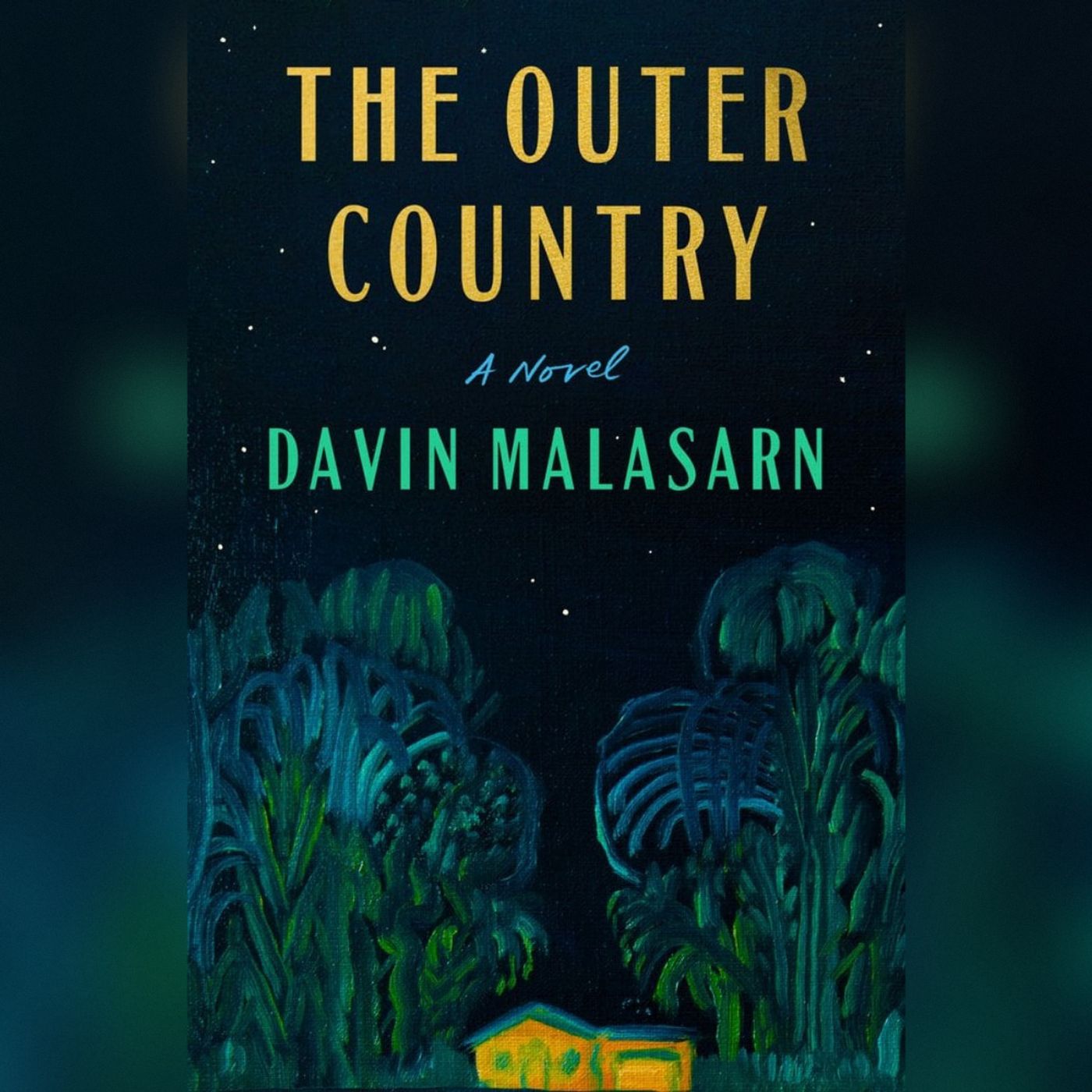
Loading summary
Transcript42 lines
- [00:00]
Davin Malasarn
Foreign.
- [00:09]
Alison Stewart
You're listening to all of it on wnyc. I'm Alison Stewart. We finish out this hour with a novel that follows a real life story. It follows the deeply hidden tensions between two estranged sisters across two countries, Thailand and the United States, throughout decades of both of their lives. It's titled the Outer Country. Set in a Modestucco house in la, the story unravels after sisters Manda and Sirupan are reunited for the birth of Sirupan's son, Ben. Manda loves her nephew stepping in as a bonus parent. However, Manda and Sirupan clash over their thoughts on parenting once Ben starts displaying certain mannerisms, like dancing and singing while wearing a blanket as a skirt. Manda secretly requests the help of a monk who performs a Buddhist exorcism on the boy. This event leads to years of confusion and Ben as he tries to confront his past and family issues. The Outer country is out now. Author Davin Malasaran is a scientist turned writer and co founder of the Granum Foundation, a nonprofit dedicated to supporting writers. Yay. He also hosts the Artist Statement podcast. Davin, thank you so much for joining us.
- [01:19]
Davin Malasarn
Hey, Alison, thanks a lot for having me.
- [01:21]
Alison Stewart
You mentioned that what happened to Ben in the novel is something that actually happened to you as a child. How much did you understand what was happening in the moment?
- [01:31]
Davin Malasarn
Yeah, I didn't understand very much at all. I had, you know, the experience of the ceremony being performed on me, but I don't think I even knew what it meant. And afterwards, I remember for weeks I would kind of go to bed and will myself to forget the experience. And I did. Eventually the memory was repressed and it came back to me in my late 20s. And so only after, you know, many years did I start to reconstruct exactly what happened.
- [02:04]
Alison Stewart
Was writing this book part of your processing it?
- [02:08]
Davin Malasarn
I did a lot of work on my own before I wrote the book, and that was sort of, for me. When I wrote this book, I think it was more about understanding my family and, you know, the people who made the decision to do that. So in a way, it was an exercise to understand the other and to get out of my own head and really just appreciate that everyone has their own good intentions, even if the outcome is not necessarily good.
- [02:41]
Alison Stewart
I wanted to start with our conversation about the fact that you were in scientific research and now you're the author of a fiction novel. First of all, what drew you to the world of science?
- [02:53]
Davin Malasarn
You know, I always was interested in science. My mom was a nurse. My aunt was a Chemistry teacher. And so I think I just had that love of nature and the details of life early on. So I always studied science, especially biology, but I also was always expressing myself. So as a kid, I was painting and I was writing, you know, dumb little plays and just always finding ways to create art as well.
- [03:21]
Interviewer 2
Was writing a novel one of your long term goals?
- [03:25]
Davin Malasarn
Not for a long time. When I was a student, I actually was. I don't think I was a good writer. I definitely didn't enjoy writing. I spent most of my time trying to figure out what the teachers wanted me to write. And I don't think that's a good approach. Right. When I was a senior in high school, I had this wonderful English teacher. And for one of the exercises, she had us write about our hometown. And for the first time, I just, I wrote emotionally. I wasn't overthinking it. I just put on the page what I felt. And it was the first time I got praise from a teacher. And I finally realized all this time, you know, they've only been trying to get us to express ourselves and to put our thoughts on the page authentically. And so after that happened, then I was like, oh, this is actually really fun. I do want to write. And I went to college with that in mind and I started taking creative writing classes.
- [04:25]
Interviewer 2
What did you learn about your own voice and your own style through writing this first novel?
- [04:31]
Davin Malasarn
I've done a lot of writing before this book, so in a way, I had a lot of years to practice and figure out my voice. I. I think I don't use a lot of bells and whistles. I try to just, you know, get the language down as plainly and as emotionally as I can. I don't know if that'll change over time, but for now, I think, you know, I think my writing is very plain and straightforward.
- [05:00]
Interviewer 2
And you don't mean plain like boring plain, but just very simple.
- [05:04]
Davin Malasarn
Yeah, yeah. You know, I'm not the one that's trying to find the $10,000 word. You know, I just want it. Whatever I feel that's what I want to get down on the pa
- [05:14]
Interviewer 2
how did your approach to writing change from the first draft of this book, early draft of the book, to the finished draft? Did you do outline? Did you write on pieces of paper, on napkins? When you had an idea, how did it come to you? And then how did you translate it into an official book?
- [05:29]
Davin Malasarn
Yeah, I'm a very loose writer and I had mentors who kind of encouraged that. So there was a lot of free Writing, you know, like you said, writing on envelopes and napkins and just getting whatever was inside my head on the page as quickly as possible. That happened for a long time. And the first iteration of this book was told from the point of view of the aunt, Aunt Manda. And only after I had sort of the entire story from her point of view did I start to experiment and incorporate the other family members. And I had mentors and advisors who said that that was actually filling out the story more. So this became, you know, this polyphonic multi perspective novel.
- [06:15]
Interviewer 2
A debut novel follows multiple generations of a family split between Thailand and the United States. It's called the Outer Country. Author Davin Malasarn is here to discuss. All right. It revolves around these two sisters, Manda and Sirupon. What's their sibling dynamic?
- [06:32]
Davin Malasarn
Yeah, so it changes when they are living in Thailand. The eldest sister, Manda is sort of ruling the roost. She's there to protect the younger siblings. She protects them from bullies. She kind of defends them whenever they get in trouble. She has a lot of friends and she's just sort of the popular one. Then there's Seraphan, who's the next eldest. And she's the really obedient one. She's always very kind. She always volunteers to do the chores, wash the dishes, help with dinner. And so there is that dynamic of Manda being on top and Sirupan being the quiet one in second place. Then comes the big decision. Their parents have enough money to send only one of them over to America, which they call the outer country. And of course Manda thinks it's going to be her. But when the decision is made, they pick Siropan instead. And so that really flips the dynamic. Everything, all of the energy is invested in Sir Pon to get her ready to go on this trip. She goes to nursing school. She goes to Bangkok to do an initial internship and then she goes to Los Angeles. Meanwhile, Manda's sort of left behind and she's learning about this through letters. She's learning about Srirapan falling in love and getting married and having a child. And only after Siropan has sort of established herself in America is Manda allowed to go over. She has some things going on at home which she's trying to avoid. So she's happy to leave. But she also is going to America without that solid footing that Siropan had. And Manda's primary purpose, the way it's presented to her, is to help raise the boy. Ben.
- [08:24]
Alison Stewart
Yeah. How does Manda feel about becoming an aunt to Ben?
- [08:28]
Davin Malasarn
I think so. Before she comes to America, she is a teacher. And so she's used to having a lot of students. And I think she really likes that when she comes to America. I'm not sure what she thinks in those early days, but the day she arrives is the day that Ben is born. And I think immediately she's enamored and she falls in love with Ben. And so he becomes this, you know, really central figure in her life and in terms of her purpose.
- [09:00]
Alison Stewart
Devin, I'm gonna ask you to read a little bit from your book. You wanna set this up for us?
- [09:05]
Davin Malasarn
Sure. So, as I mentioned, in the beginning, Ben is born. And they're in this household of four with the mother, Seraphan, the father, Cameron, and this aunt Manda. And so, you know, a few months have passed and now we're hearing a little bit about Sirupan and her reflections. Siropan splayed the baby naked on the changing table. Her face was grim. She warmed the bell of her stethoscope with her breath and pressed it to Ben's chest. What could it be this time? Congestive heart failure? Is that it? Look at these swollen arms. Look at these thighs and ankles. Ben giggled against her gentle pinches. A mound of bubbles pushed up past his lower lip. Are you choking? That must be where my keys have gone. She dabbed his mouth, thumped him between the shoulder blades with a flat of her hand. Each day was another batch of dire diagnoses. Everything that was cute about him transformed into a symptom. It was a game they played. Whenever Sirapan put on her uniform in preparation for work, she used her fake fears to push away the real fear that came from abandoning him. Since her maternity leave ended, she worried she hadn't prepared the others to take proper care of Ben. But she told herself she had to relax. And she had to trust. After all, Cameron could fly Ben through the house, spinning around corners and dipping into dark rooms. With surprising agility, Manda treated Ben as if he were her star pupil. She carried him out to the new garden populated by the seeds she brought over from Pet Bouri. She explained to Ben the intricate processes of photosynthesis and nitrogen fixation. Complicated pathways Sirupan no longer remembered. On top of that, Cameron and Manda would be together. She would help him, and he would help her.
- [11:15]
Alison Stewart
That's Davin Malassarn reading from his book, the Outer Country. So Manda thinks she's doing the right thing because there's this moment when Ben Wraps a blanket around his waist like a skirt and starts dancing. Which concerns Manda. What are her fears?
- [11:36]
Davin Malasarn
She has come from an experience of having a gay student in Thailand when she was still a teacher. And he was bullied while he was there. And, you know, some. Some bad consequences came from that. So when she sees Ben, she's worried that he might have to go through the same thing her student went through. On top of that, she's in a new world, right? She doesn't know much about America except that there are a lot of forces opposing her and opposing the family. And so I think in one sense, she just wants to make sure he doesn't have any more struggles than he's already going to have. So she makes the decision to find this monk to perform this ceremony and try to, you know, quote, unquote, fix him.
- [12:32]
Alison Stewart
Ben's father goes along with this exorcism ceremony, but isn't as decisive about it as Manda is. Why does he go along with it?
- [12:43]
Davin Malasarn
Ben? So Ben's father, Cameron, was one of the last characters that sort of illuminated themselves for me. And the way I see him is he doesn't have a lot of self esteem. I think he has some love, but he's also battling with his own inner demons. That positions him to not be very authoritative when it comes to parenting. And so he can be easily swayed. He's a traditionalist. So I. I don't think he wants Ben to be gay. And so he's willing to sort of follow Manda's lead, you know, to turn his son straight again. So even though his own wife is not on board, he thinks he's doing the right thing.
- [13:33]
Interviewer 2
The exorcism scene is deeply traumatic for Ben. How did you think about representing that experience with care?
- [13:42]
Davin Malasarn
I had a lot of drafts in trying to get that right, and they evolved over the years. I've actually written this many times. I think for me, the key was to report as much of it as I could objectively and get the details without sort of infusing my own judgment on it at the same time, you know, each chapter is told from the point of view of a different character. And so I was able to put Manda's emotions and her perspective into this because we're seeing the first time it happens, we're seeing it through her point of view, and she can kind of inject her own fears into it, even though she was the one that made this happen.
- [14:34]
Interviewer 2
It's interesting. Ben starts experiencing side effects after this. Although he's perfectly healthy Leaving doctors to believe it's psychological. How did you want to explore how traumatic experiences manifest themselves in the body?
- [14:49]
Davin Malasarn
That was really interesting to me. And, you know, like you said, this is based on my true experiences. And so mostly I just wanted to, you know, share what I had been through. It is interesting to me to think of this boy getting sick in a way, in a sense, for no reason. Right. Even he can think back on the ceremony and say, well, nothing physically harmed me. It was scary, but I was not actually hurt. And yet he becomes sick. And I think the sickness is a real thing. It's not like he's forcing himself to do it, but something about the mystery of the ceremony and the anxiety that comes up afterwards, the questions, and maybe even his own understanding that something was wrong, even if he doesn't know what it was. All those psychological elements come together and they have to manifest in the body. Or if they don't, then I guess we're all, you know, then we just store it in our bodies. So it's part of his struggle to kind of release that tension and that trauma in whatever way he knows to. As a young boy.
- [16:13]
Interviewer 2
What do you hope people think about when they finish reading their book, your book?
- [16:20]
Davin Malasarn
Sometimes I say that this book is sort of a lesson in forgiving. I wrote it, you know, with each of the family member perspectives to try to understand them better and to sympathize with them better. And I think at a time when, you know, this country is very polarized on so many different topics, hopefully this book is a reminder that we should keep listening to each other and strive to understand everyone's full story, because we bring those full stories into the decisions we make.
- [16:55]
Interviewer 2
It's your debut novel. What advice would you give to people out there working on their own debut?
- [17:04]
Davin Malasarn
I would say I often remind myself that this is just one step along the journey. And I think that readers understand that. I'm always trying to battle this idea of I can't let this go until it's perfect. It's never going to be perfect. And so, you know, at some point you have to call it done and release it out into the world. And then you get to go back and work on something else, and hopefully that will be better.
- [17:33]
Alison Stewart
The name of the novel is the Outer Country. It's by author David Melisarne. Thank you for joining us.
- [17:40]
Davin Malasarn
Thank you so much.
- [17:42]
Alison Stewart
And that is all of it for today. Tomorrow we'll have a Mother's Day extravaganza here on all of it. I'm Al Alison Stewart, I appreciate you listening and I appreciate you. I'll meet you back here next time.
- [17:57]
AT&T Advertiser
WNYC Studios is supported by AT&T Summer. It's when we share more time, more memories and More photos and at ATT the iPhone 17 Pro is your summer essential. Its center stage front camera auto adjusts the frame to fit everyone into group selfies. Right now at, at and t, you can get iPhone 17 Pro for $0 with eligible iPhone trade in any condition required. Trade in of iPhone 15 excluding iPhone 16e and 17e required eligible plan terms and restrictions apply. Subject to change. Visit att.com iPhone or visit an AT&T store for details.
- [18:35]
LifeLock Advertiser
You're great at protecting your data, but lots of places could still expose you to identity theft.
- [18:40]
AT&T Advertiser
I thought it was safe.
- [18:41]
LifeLock Advertiser
If that happens, LifeLock gives you a US based restoration agent who will stick by your side from start to finish. Phone calls, filing documentation, preparing insurance claims. Your agent handles it all. In fact, we're so confident restoration is guaranteed for your money back. Isn't it nice to have someone like that on your side? Save up to 40% your first year at lifelock.com Pandora terms apply.