← All Of It with Alison Stewart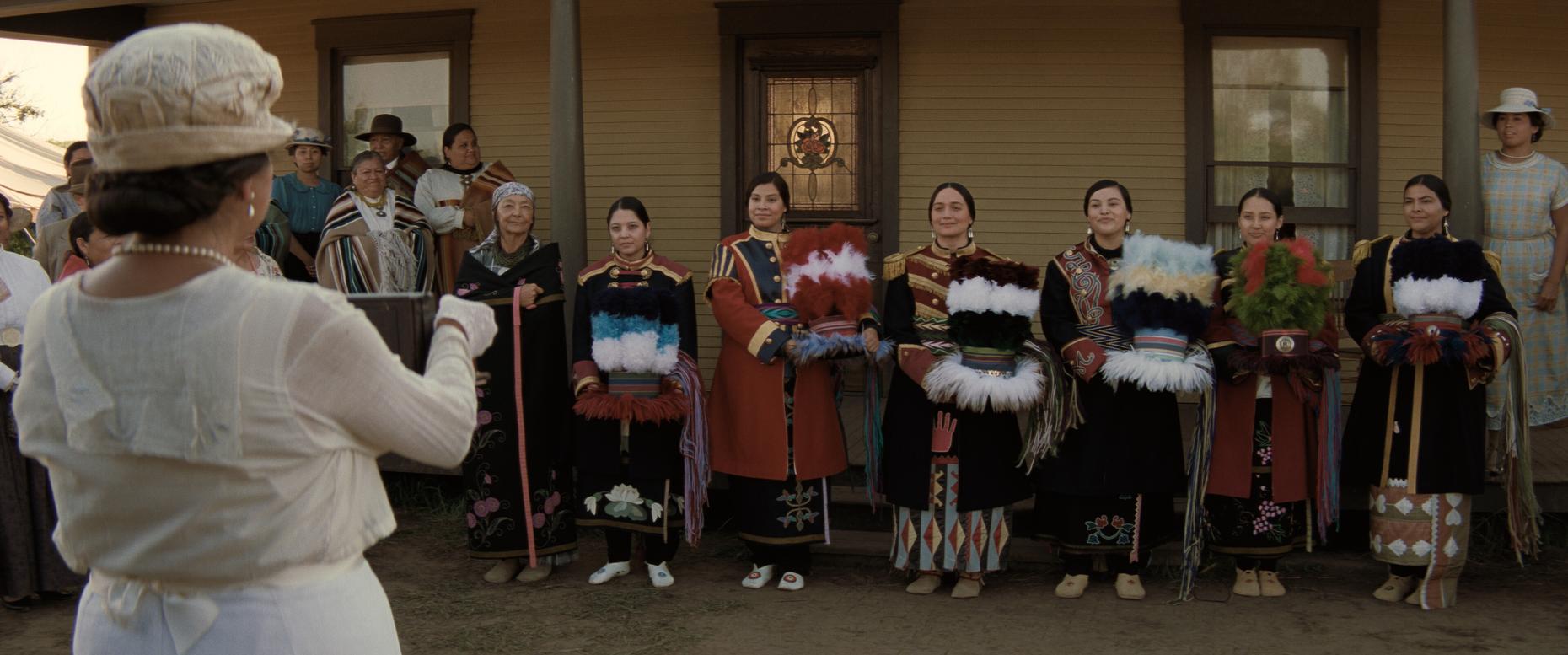
All Of It with Alison Stewart
Designing the Period-Accurate Costumes for 'Killers of the Flower Moon' (The Big Picture)
00:26:18
We speak with the costume designer of 'Killers of the Flower Moon' as part of our series, The Big Picture.
Loading summary
Transcript31 lines
- [00:04]
Jacqueline West
Listener support WNYC Studios.
- [00:18]
Alison Stewart
This is all of it from wnyc. I'm Alison Stewart. Every year we celebrate the creative people behind the camera who are nominated for Academy Awards. We call the series the big Picture. Costume designer Jacqueline West's role on Killers of the Flower Moon was an exercise in both design and deep research. The film about the systemic, systematic decimation of the prosperous indigenous Osage nation required hundreds of costumes that expressed the traditions of the families as well as their wealth. The Osage in this period were the richest people per capita in the world. Jacqueline turned to written accounts, images and even silent home movies from 1920s Osage Nation. She brought in Osage advisors and examined a long held family heirlooms for inspiration. Jacqueline also had to design the look for the white men who robbed the Osage of their money and their lives. The more evil the axe, the finer the clothing. All of this work earned her an Oscar nomination for best costume design, her fifth nomination. She's also the creative mind behind the costumes for Dune and upcoming Dune two. Jacqueline west joins me now to discuss her work on Killers of the Flower Moon. Jacqueline, nice to meet you.
- [01:26]
Jacqueline West
Nice to meet you. Can I see you?
- [01:29]
Alison Stewart
I can. You can turn your camera on and we can wave at each other. I'll start questions and if your camera turns on, fantastic. If it doesn't, we'll work with that.
- [01:40]
Jacqueline West
Okay.
- [01:41]
Alison Stewart
For any project you take on, as I mentioned, you've been nominated for five.
- [01:45]
Interviewer
Oscars for your work on Quills, the Revenant, Dune, the Curious Case of Benjamin Buttons. But for any film that you take.
- [01:51]
Alison Stewart
On after you read the script, what.
- [01:54]
Interviewer
Are your first steps?
- [01:58]
Jacqueline West
I actually follow the old Edith Head dictate to read a script at least seven times. And I do that religiously. When I first started working with Philip Kaufman, I. I was reading her life and she said, you have to know the characters inside out before you even start to dress them. So I do that and I really try to get under their skin and dress them from the inside out. If you do that, I find that they actually dress themselves. But when I told. When Philip Kaufman asked me to do quills, I said, I can't do that. I'm a fashion designer. I'm a thoroughly modern Millie. That's a big period piece, right? And. And he said you were an art historian. He said, you run this huge company, you know, multinational company. He said, if you can do that, could do this. He said. He said, I know you can do this. And so I said, okay, I'll try. And I happened to be reading her biography. And she gave me that tip. And then my husband said, listen. He said, just find out who these characters are. Then you just take them shopping in that period and they'll pick their own clothes. And that's how I've always done every movie since.
- [03:24]
Interviewer
When you meet the actors, does that shift your thought process at all? I mean, when you see. When you meet a Lily Gladstone, you meet a Leonardo DiCaprio, when you get a sense of who they are physically, does that factor in?
- [03:39]
Jacqueline West
Only. Only in the fit. It really doesn't. Doesn't affect my choices because really, before I ever see the actors, I've been showing the director all of my ideas for dressing these characters. And after all, costumes are the bridge between the actor and the character. And these I work because I work with such great directors, they hire consummate actors. And these actors, if they know that you have really done your homework and, and really put a lot, a lot of thought into. Into who these characters are, they trust you and they want to hear your thoughts. Brad Pitt once told me on Benjamin Button that I was a method costume designer, that I really did dress him from the inside out. And as soon as he put the clothes on, he went back in time. And that's the biggest compliment you can get as a designer. But I've never had a problem with an actor. Not, you know, I think I. Phil Kaufman said I was his secret weapon because I was a psychologist beyond being a designer. And I'm. I'm good at talking to actors and. And getting their thoughts on their characters. And sometimes I'll. I'll add things that I might not have thought of in talking to an actor, a different piece of clothing, some kind of little detail. I know with Ana, East Nin and Henry and June, I put a handkerchief in her purse with an A on it, she said. Maria de Madeira said every time she opened her purse, she felt like an East Nin, seeing that little tiny A embroidered on her hanky. So sometimes you can give actors a little detail that will reveal their inner riches. But, yeah, I. Things don't change so much because I've been before and I even see an actor I've put so much work into. I've even usually started making the clothes for them to try when they come to their first fitting. And then I just, you know, talk with them. And it's amazing how, when they'll put on period clothing, because I do mostly period film, they change how they stand. You can see their whole body language changes. You can see them Become the character. And it's thrilling.
- [06:07]
Interviewer
My guest is Jacqueline West. She is nominated for best costume design for Killers of the Flower Moon. What resources were available to you, Jacqueline, in your research process regarding the Osage apparel during the 1920s?
- [06:21]
Jacqueline West
Well, first of all, I just started. My husband was a photojournalist, and we were at our house in Deadwood, South Dakota. And there's magnificent library there, the Carnegie Library in Deadwood, which has amazing, amazing section on all the plains nations. So I went there. My husband started doing a lot of Internet research. Marianne Bower sent me home movies. She's Marty's. She's a producer on this film. And Marty's archivist, Jack Fisk, the production designer, and I have done 10 movies together. We started exchanging all kinds of research back and forth, back and forth. I would send him, like the arch. As you drive into Hale's ranch, there's a big arch which is a replica of the arch going in, which is a ranch in Wyoming, the Annenberg Ranch. It's called Ranch A. And that it was built at exactly the same time Hales ranch would have been built in Oklahoma. And I sent him a picture of the arch which appears in the movie. We. We've always shared everything we find. I took a lot of pictures for Jack of old clapboard churches on the plains because Deadwood's also on the Great Plains, and we share everything. He'd send me beautiful pictures of because he was already in Oklahoma when I started my research in Deadwood. And he'd send me things that people in his department that were Osage were sharing with him. And then when I got to after I took screen grabs from all these incredible home movies that the Osage had generated. Home movies at that time were. Were $1,800aminute. So only the Osage and the Royal Family in England could make home movies.
- [08:13]
Alison Stewart
Wow.
- [08:15]
Jacqueline West
And so I did, you know, hundreds of screen grabs. When I got to Oklahoma, I already had 2,000 pieces of research. But something beautiful happened. I met Addie Roanhorse, who's the great. The granddaughter of Henry Roan, the native Osage, who is shot in the red car and with the long, long hair. And William Ballou played him, and he's brilliant. And that was her great grandfather. And she sent me photos from his trips, like to Colorado Springs to the east coast, to different places in Europe, these travel photos of him that Marty actually reproduced in the movie. And none of us had ever seen if Addie Roanhorse hadn't shared those. So then I started asking all the young Osage people working on the film, if they had family pictures, and they all started. We made a whole wall of actual people that were involved in the reign of terror. And it was just magnificent what they shared. Then we did a trunk show, and people started bringing things. It was during High Covid, so we couldn't have people come into the offices that weren't tested. So I did a. I had the idea of having a trunk show, of having people drive through our parking lot at the airplane hangar where our wardrobe was, and they'd open up their trunks of their cars, and they would have magnificent pieces of Osage silver wabankas, armbands, tie slides, wonderful Osage women's shirts, wrap skirts, ribbon work blankets, original Pendletons. They shared everything with us. It was magnificent. And it also gave the people a sense of, you know, being included in this project that was telling a story that up until the David Graham book, they hadn't even wanted to talk about among themselves. It was such a, you know, horrific thing to face about their past. But it was cathartic for them, I think, sharing all these things with us that would possibly and probably would end up in the film. And did.
- [10:38]
Alison Stewart
What's a detail or a piece of.
- [10:42]
Interviewer
Cloth or a piece of jewelry that you saw during that trunk show, during that opportunity where you had to really see the original pieces that influenced a costume or a moment in the film?
- [10:55]
Jacqueline West
I think it was the blanket that Molly wears under her wedding coat with the hand on. It just really struck me it was so old. It was a hundred years old and maybe more, because these items were also passed down from grandmothers. But there was a wonderful ribbon work blanket with embroidery and applique on it. And it gave me the idea for Molly. This skirt that Molly wears under her wedding coat, it was so beautiful that the workmanship, the detail, it was like the forbidden, forbidden stitch in Chinese culture. It was just magnificent. And I have on other films portrayed planes tribes in the Revenant woodland tribes in the New World. But I'd never seen work like this. It was definitely unique to the Osage. And so much of their art is unique to them. You don't see it. They were all purchasing. All the planes tribes were purchasing the same things from the fur traders. French ribbon, French moire silk calicoes trade wool with the stripes on them, German silver, Czechoslovakian beads for their beadwork. But they used it and appropriated into their. Their tribal culture in a unique way that none of the other tribes did. So I was so thrilled to see these authentic pieces. I'd seen them in museums that I'd gone to. Like, they have things at the Autry and the Osage Museum in Oklahoma. But to see it right there and be able to touch it and hold it meant so much to me. And their. Their absolute reverence for these items from their past and their. Their desire to share them with me was so moving. But I think that piece really stands out in my mind.
- [13:12]
Alison Stewart
My guest is Jacqueline West. She is nominated for best costume design for Killers of the Flower Moon. We'll have more with Jacqueline after a quick break. This is all of it. You are listening to all of it on wnyc. My guest is Jacqueline West. She is nominated for best costume design for Killers of the Flower Moon. This conversation is part of our series the Big Picture, where we celebrate people who make these movies, what they are, the folks who work behind the scenes, behind the camera. You know, I've been doing the series for a few years now. Jacqueline and I interviewed Luis Cicchietta about Nightmare Alley. And he said something to me that has stuck with me for years. And he talked about how one small detail, how he obsessed about a button because he realized how huge a button can be on screen. And that was one of the details. He was just so focused on what was a detail like that that might seem small to the average person, but you as a costume designer, as a professional, realize you have to pay special attention to because people might see it 12ft high on a screen.
- [14:26]
Jacqueline West
Oh, you're talking about something small. But for me, it wasn't something small. It was the blankets of the O. They meant everything to me, and they mean everything to the Oage, because they're not just blankets. They were made by Pendleton. And Pendleton recreated the actual blankets that they had sold to the Osage, particularly the same stripes, the same color palette. I was looking at everything in black and white. You have to understand, because that's what my research was. It wasn't. There weren't color photographs from then. They were tinted photographs sometimes. But those aren't always. You know, you can't rely on them for the accuracy of the actual item. But they actually reproduced the exact stripes, the exact geometric patterns in the exact colors from their archives. And they recreated their label from 1920s and the teens for me in these blankets and sent me hundreds of them. But once we had them, we had to hire Osage women and use our own workshop to put the right. The right nuance in the. In the fringe, in the yarn fringe on the. On the blankets. That was always that was attached after the fact by the Oage. And every woman and every family had their own kind of. It's almost like macrame design that they used to put this fringe on the blankets. But beyond that, something you don't see in photographs. And those blankets were floor to ceiling on the screen. So they are quite featured. And though they're, you know, maybe what, 7ft by 7ft, something like on the screen, they're so huge. And I had to translate black and white into color. And I had to photograph these different blankets that they'd send to see how. Where I was going to put them and who. Whom I was going to put them on and which ones, how they would register shooting them in color with and translating that color into those black and white photographs. So that became a huge issue. And for me, the blankets weren't blankets. For Molly, in the scene where she goes and gets her allotment from her guardian or asks for more money from her guardian, that's armor to me. Julia o', Keefe, my Osage consultant, referred to the blankets as the Osage mink coats. But they were very, very treasured and expensive then. Pendleton blankets, but as they are now. But to me, it was more than a blanket. It was to show that they were really Osage. It's, you know, the women were often called blankets by the white people, but they really wore them with pride. And how they wore them is something I had to really count on. My Osage consultant, Julia o', Keefe, who's brilliant for. Because you wear your blanket a different way, depending what the situation is. You wear it differently in church than you would if you were going to talk to your guardian. You wear it differently at a picnic, like when they're watching the shinny games and all the sisters are on a blanket, which is one of my favorite shots movie they. They're all wearing their blanket differently, and it reveals a character, something about their personality. And Julie was brilliant at being my guide through that detail because I knew these blankets were going to be so enormous on the screen and so much almost a character in themselves.
- [18:25]
Interviewer
The Osage were some of the wealthiest people in the world during this period. How did you want to dress Molly, Lily Gladstone's character, who is a very wealthy woman, even though she isn't particularly wearing anything flashy. What is a sign of her wealth through her costuming?
- [18:42]
Jacqueline West
Well, I think the number of pieces that she has in her wardrobe. We made her a closet in her house that Jack built out on the plains. And I put many different blouses so she could go to her wardrobe and after she go to the closed rehearsal. And by what she was doing and the feeling of the scene, kind of get dressed out of her own closet. But what she felt really suited how she felt in that scene, doing that activity. So many skirts and mini blouses. Also, though she wore moccasins always when she was in her home with her family, with her mother, with her children. She. When she went into town, very, very expensive handmade French shoes from the period which I had actually made for her in Italy. But she. Her. Her wardrobe was modest because the Osage didn't flaunt their wealth. It was more in the number of pieces she had and the quality of the fabric and the silks and the satins that I. Of the shirts I put her in. But she always wore her ball and cone earrings. She always wears her wabonka pins. And there's a tell in the movie because she wears two. And the two meant she's married, she's been married. And that was like a little tell that she'd been married before, which Leo wouldn't have known about Leo's character. He wouldn't have known that until Hale tells him she'd been married before. So that was a little tell. But all of her Osage pieces were, of course, beautifully, beautifully handcrafted, but nothing flashy because she was not that kind of person. She was the traditional sister embracing her Osage ancestors. So I particularly never wanted to get. Put her in anything flashy, but she had the best of everything. She has many different blankets that she wears on different occasions. The color palette changes from a light and rather joyous palette to very. Gets darker as the movie darkens, as the story darkens and she's being betrayed. But, yes, I didn't show her wealth so much in her clothes. I think you see it in her attitude and her acting more than her clothes.
- [21:15]
Interviewer
And you see the difference in attitudes with what her sister wears.
- [21:19]
Jacqueline West
Yes, exactly. So I treated the sis. The various sisters, Minnie and Rita and Anna. Anna's like a. Like the buttons on a suit. You know, the top one always, middle one sometimes, bottom one never. And Molly was always traditional. She never breaks out of tradition and doesn't ever embrace 1920s clothes except for her shoes when she goes into town. Then the other sisters are degrees of 1920s clothing, almost flappers, but with more Osage pieces on them. You know, they all. They wear their blankets always over their clothes. They. They keep with. They keep with tradition a little bit more than Anna, who's a Thoroughly Modern Millie. She never wears Osage clothing and all of her jewelry is very luxe. You see her wealth in her bespoke silk dresses and her expensive coral and onyx jewelry and her beautiful cloche hats. It's quite. I used Natasha Rambova, Valentino's wife, as my inspiration for her.
- [22:51]
Alison Stewart
Before we go, I think we do have to ask about the costuming for Leonardo DiCaprio's character. Ernest, who's a bit of a bumpkin when he shows up, adapts quite well to fine clothing. How did you want to translate the change in him and his character and his financial status through his clothing?
- [23:12]
Jacqueline West
Well, I figure when we see him, yeah, he's the bumpkin, but he's also a doughboy coming back from World War I, you know, and he is a bit disheveled. And he meets with his uncle and his uncle, you know, realizes he's only thing he could probably do with his war injury is drive a cab. And hopefully he'll get involved with some rich Osage people by doing this and help the whole, you know, family deceit to more money. And he, he probably orders him a Sears and Roebuck mail order suit to drive that cab. But it's nothing luxury. It's very, you know, mail order off the rack. And as he meets Molly, he transitions. First she gives him a very expensive, very expensive Stetson hat. And then by the time he marries her, he has a bespoke suit. You know, she's probably taken him to her tailor in Pawhuska. And for that I used Tom Mix, who was, I thought, a great tell for somebody with money living in Pawhuska, as Tom Mix did in the early 20s, but also being a Western star. And that would be the relativity to Uncle William Hale, who has a cattle, and to keep him in a real Western look, but make it quite fancy and it's almost dandyish. You know, his. His suits are very, very Westernized, you know, almost fancy cowboy attire. So, yeah, he gets this gets more and more expensive looking wardrobe as the, as the movie progresses. His boots, I actually copied from a bespoke pair of Tom Mix boots that were made in South Dakota at a boot company that still exists. And the owner is a friend of mine. He's a rancher in South Dakota. And he made those boots for Leo. He had the blocks from those boots. Wow, that's a lot of Leo's hats. And Bob De Niro's hats also came from Weather Hat Company, which goes back to 1911 in Belle Fourche, South Dakota. They made all of John Wayne's hats for the early Tom, early John Ford movies. And they, they made all this stuff for me and they've become friends of my husband and me by us living there.
- [26:02]
Interviewer
Jacqueline west is nominated for best costume design for Killers of the Flower Moon. Jacqueline, thank you so much for being with us.
- [26:11]
Jacqueline West
Oh, thank you for having me. And thanks for the great questions.
- [26:14]
Interviewer
And that is all of it for this week. I'm Alison Stewart. I appreciate you listening and I appreciate you. I will meet you back here next time.
- [26:27]
Narrator/Announcer
Our state has changed a lot in the last 140 years. We know because MultiCare has been here guided by a single purpose, making our communities healthier. That comes from making courageous decisions, partnering with local communities to grow programs and services, and expanding healthcare access to those who need it most. Together, we're building a healthier future. Learn more@mycare.org Since WNYC's first broadcast in 1924, we've been dedicated to creating the kind of content we know the world needs. In addition to this award winning reporting, your sponsorship also supports inspiring storytelling and extraordinary music that is free and accessible to all. To get in touch and find out more, visit sponsorship.wnyc.org.