← All Of It with Alison Stewart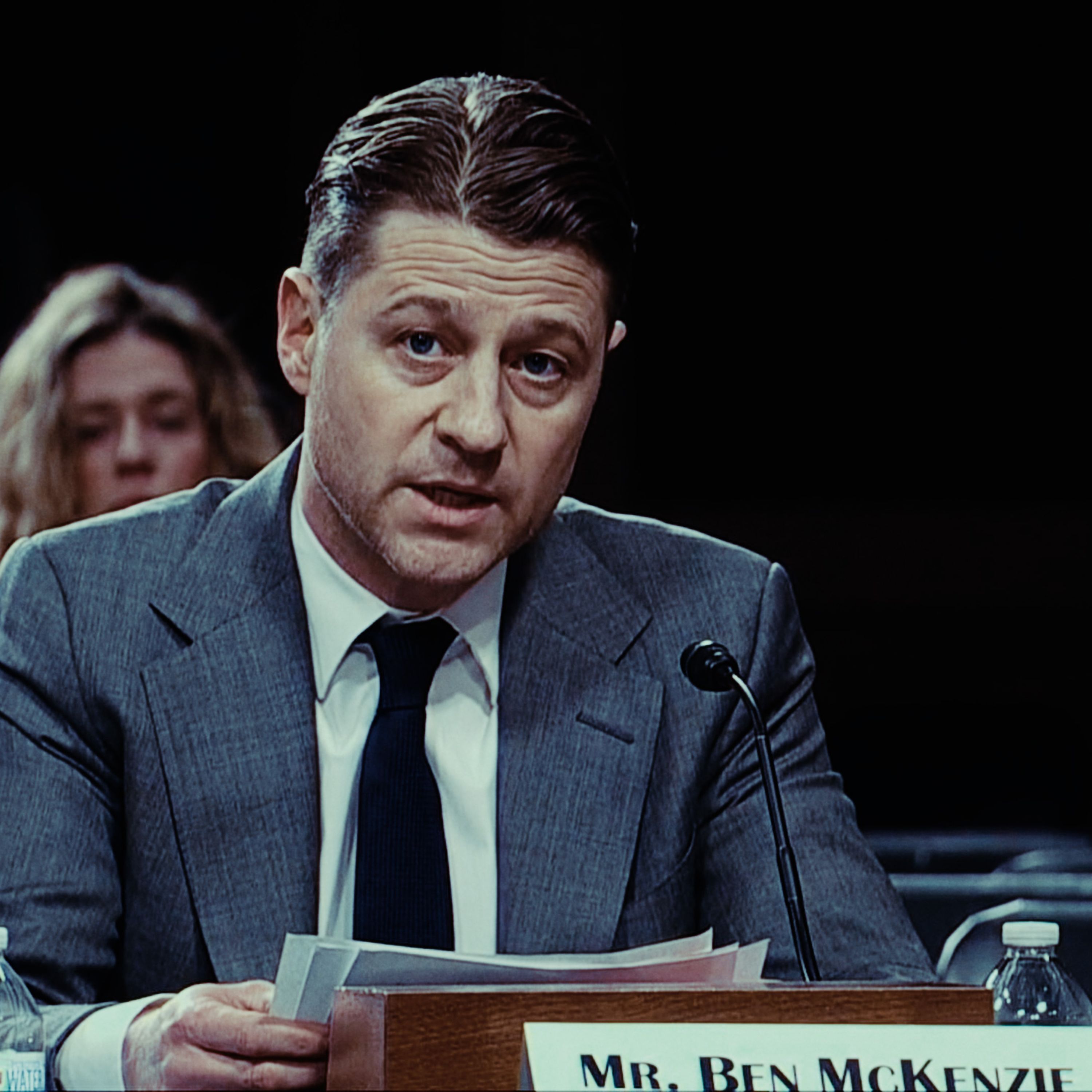
Loading summary
Transcript51 lines
- [00:00]
A
Now is your time to get into a new Dr. Horton home by taking advantage of its national red tag sales event going on right now through Sunday, May 3rd. Stop by any of its participating communities and find select red tag homes at Incredible Pricing. So whether you're buying your first home or looking for an upgrade, you don't want to miss the red tag sales event going on right now. Discover the Dr. Horton Difference. Tap your screen now or visit Dr. Horton.com Dr. Horton, America's builder and equal Housing Opportunity Builder.
- [00:38]
B
This is all of it. I'm Alison Stewart live from the WNYC studios in soho. Thank you for sharing part of your day with us. I'm really grateful that you're here on today's show. We'll preview the New York Public Library's World Literature and Arts Festival, which kicks off this Wednesday. And George Motts joins us to discuss Hamburger America, his state by state guide to the best places in the United States to get a burger. That's the plan. So let's get this started with Everyone is lying to you for Money. In the 16 years since Bitcoin's release, the world of cryptocurrency has seen extreme highs, a certain degree of idealism and incredible hype, but also extreme lows. With billions of dollars lost and prison sentences for some of the crypto world's most influential people, the documentary Everyone is Lying to you for Money follows my guest Ben McKenzie as he tries to figure out what's behind cryptocurrency and why people are putting money in it. You might recognize Ben as an actor, but the truth is he was an economics major at the University of Virginia. When he first heard about cryptocurrency, he was left scratching his head. He started down the rabbit hole trying to to understand it. This journey took him from rubbing elbows with Sam Bankman Fried before he was sent to prison to a village in El Salvador that's being displaced to build a quote unquote crypto city. To his staring at a computer screen just trying to make sense of it all. He's directed Everyone is Lying to you for Money. The doc is a little bit gonzo, a little bit of punk, and it's actually pretty funny. Not funny for a film about the financial system. Everyone is Lying to you for Money will be in theaters this Friday. You can catch an advanced screening at IFC center tonight with an extended introduction from be. He's also doing a series of sold out Q and A sessions. So let's get into it with Ben McKenzie. Hi, Ben.
- [02:35]
C
Hi, Alison thanks for having me.
- [02:36]
B
Let me ask you a question. Going all the way back. What drew you to getting a degree in economics from uva?
- [02:42]
C
Ooh, good question. I didn't know what I was doing. I was 18 years old. We were just chatting earlier about your son who's going off to college. And I feel like this is a common theme. I didn't know what I wanted to study. My father's a lawyer. I figured I'd get a degree in things that would vaguely prevent. Prepare me for law school. So I studied international relations, which at University of Virginia they call foreign affairs. Very sexy. And economics. And I studied economics because. Not because I'm good at math, because I'm not good at math, which kept me from being an economist, but because I was fascinated by human behavior. If you think about economics really is the popular perception is as dry and mathematical. But in actuality, there's a whole field of economic economics called behavioral economics. How do people behave? Behave both individually and in groups. And surprise, surprise, we're not, quote unquote rational. We do a lot of things that don't really quite make a lot of sense in terms of like, you know, statistically improving our chances of success. And so cryptocurrency fell beautifully into this sort of field that I. That I love. And specifically the sort of true crime of it all as well, was sort of appealing to me.
- [03:54]
B
All right. You're the grandson of one of the founders of the Corporation for Public Broadcast and a UT professor. Your parents, as you said, a lawyer. Your uncle's a Pulitzer Prize winning playwright. You come from good stock, put it that way. What did you learn your household about asking questions?
- [04:09]
C
Ooh, that it's okay to. Yeah, yeah. We try and teach our kids that as well. That not only is it okay, of course it's what you need to do, especially when you don't understand something. And yeah, I remember we had wonderful conversations around the dining room table. My father's an attorney, my mother's a poet. My two brothers and I, we would discuss argue over whatever was in the news that day. And my father was quite. And mother quite patient with us. But yeah, just the permission to do so is, I think, how it starts.
- [04:47]
B
This started with your friend Dave. Tell us a little bit about Dave.
- [04:51]
C
Sure. Dave has been a buddy since college. We met doing theater together. Dave. In the mid 2000s, there was online poker was becoming a thing. And you could gamble with real money online. And Dave was really into it. And I liked playing poker. Cause I was single, I was living In Los Angeles, I had a poker table in my house where I played games with my friends. But I didn't do it online because as I asked Dave, where are you sending the money? And Dave was like, ah, yeah, I wonder. It turns out you were sending the money to the same Caribbean countries where the crypto companies were headquartered, including ftx. So basically, Dave was really into stuff like that. Dave had also. I'm sorry, I hate slagging him off because he's a good friend, he's a good guy, but he gave me terrible financial advice. When I was in my 20s, I'd made a little money on TV and he had talked to some guy at a wedding who said, you got to put money into the stock that had produced synthetic blood. It wasn't Theranos, but it was some precursor scam kind of thing. Anyway, we put money in, we both lost it. Dave came back to me in 2020 and he's like, you got to buy Bitcoin. And I was like, dave, I'm not doing it, but explain it to me. And he couldn't explain it to me.
- [06:10]
B
What made it so attractive to him? Cryptocurrency.
- [06:13]
C
I mean, honestly, if you wanted the like, 10 sentence, 10 second synopsis of crypto, it's a get rich quick scheme. I mean, it really is. It becomes. Because crypto, because owning it doesn't represent ownership of anything that exists in the real world. It's just lines of code stored on ledgers called blockchains. It's a strange investment. So you're really sort of investing in the story of crypto. And so I have come to think of crypto as really a projection of the hopes and dreams of all of these different investors. Some of them will win, some of them will make money. Really, the ones that got in early have made a lot of money, which, if you believe it's a Ponzi scheme, multi level marketing scheme. That's one of the aspects of a Ponzi scheme and a multi level marketing scheme. But most people are going to lose. It's a little bit like playing cards in Vegas. You know, if you're playing poker at a table, you might want a hand. Allison, I might win a hand, but if you win, it's coming out of my pocket and vice versa. And as we play the game, the house is taking the rake. They're taking a tiny little bit amount of money to facilitate the game. So could you win in Las Vegas? Of course you could win, but if you play long enough, on average, you're losing because how else do they keep the lights on at the casino? And crypto is like Vegas. Without the drinks, the dinner or the show, there's no entertainment value. I would argue you're just sitting in front of a computer screen betting that the price of this or that crypto is going to go up or down. Nothing wrong with that per se if it's regulated correctly. I mean, it's not a productive use of capital. You're not doing anything that's additive to the world. You know, for you to win, someone else has to lose. So it's called a zero sum game in economics, but not necessarily wrong. But crypto is doing that through companies headquartered in the Caribbean with very loose regulation. The celebrities were selling it in 2020, 2021 in particular. So I just had a bad feeling that this was not going to end well.
- [08:11]
B
As you started this project, what questions did you have? And then how did those questions evolve?
- [08:18]
C
Yeah, I mean, at the beginning I had every question, what is it? What does it do? How does it work? I was originally stumped by, well, is it a currency? I mean, it says it's a currency, but it's not being used like a currency. I mean, Dave wasn't buying stuff with Bitcoin. He was putting money into it, hoping to make money off of it through no work of his own. That's an investment. I mean, quite plainly. It's actually, you know, I mean, there's a very broad test for what constitutes an investment of security under American law. And yet somehow crypto had been classified as a commodity. And so it wasn't really abiding by the same rules. So that was the first question. What is it? How does it work? I had questions about the technology, which we can talk about if you want, but the technology, which was sort of pitched as this new frontier of cryptography and somehow it was the future of money. The technology is really old. Blockchain has been around since 1991. So it's a 35 year old technology. You'll notice that blockchain isn't used really outside of cryptocurrency. It's very hard to find companies or organizations that use it because it doesn't work very well. What it does have is an ability to obscure your identity, so you're able to transact without anyone knowing who you are transacting with. It is a ledger, it is a record, and it's not anonymous, it's pseudonymous. Am I saying that word correctly? I never can say that word correctly. We don't know who Controls what account, but there is a record of the transactions. So who would that appeal to? I mean, quite frankly, it would appeal to criminals. Could you use crypto for good? Of course. But if you're trying to obscure your identity, most of the time, that's for criminal activity.
- [10:02]
B
We're talking about the documentary Everyone is Lying to you for Money, from director Ben McKenzie. I wanted to point out something that I thought was really interesting. You say this conversation about cryptocurrency feels like a, quote, generational hallucination. What social and historical factors do you think made this generation particularly susceptible to cryptocurrency?
- [10:27]
C
I think the Internet, of course, to state the obvious. But crypto really can't exist without the Internet. And then the pandemic. The pandemic further isolated us on an individual level from each other. And we were spending so much time on our phones and devices, you know, trying to have connection with people, but not in a. In a. Not irl, as the kids say. And it's much easier to perpetuate a scam online than it is in person. You can fake people and companies and all that online. It's very difficult to fake actual buildings and actual physical human beings that you meet in person. And so scams, you know, have proliferated in the age of the Internet. And with the pandemic, people also had money to spend because the government was. That's why we named the book that this film is based on, Easy Money, because the government printed an enormous amount of money and sent people, which they should have done in the abstract. That's the correct thing to have done. We can argue over how they did it, which wasn't necessarily great, but people had money to spend. They're alone. These young guys in particular don't have a lot going on because they can't maybe hang out with their friends or whatever. And so they gamble with it. The guys do. In particular. Crypto's a very male heavy, very bro. Very bro. Like, 42% of men 18 to 29 have invested in cryptocurrency. Almost half. That's a huge number.
- [11:52]
B
Big number.
- [11:52]
C
Yeah. But most of them are just gambling, right? They're just kind of like what Dave was doing. They have a little extra money and they're gambling. And, you know, we can argue over whether that's like a good thing or a bad thing. It's not on net. I would argue a very good thing, but it's not the worst thing in the world. What is bad about it is that some of the guys get addicted to it because it's very addictive. The markets never shut off. You can gamble on your phone in seconds. And obviously the money, that's the real money that's put in by the regular people, the retail customers, provides the liquidity for the thing to have value so the criminals can use it for their own ends. So that's, you know, sort of the. The other side of it. But yeah, I would say the Internet and the pandemic were really sort of, are really important to understand how crypto took off.
- [12:37]
B
Part of the excitement about Bitco was hinged on the argument that our financial system is broken. Right. How was cryptocurrency supposed to fix capitalism?
- [12:49]
C
Right. I mean, the argument is great because it's very simple. It says, do you think our regulated system stinks? And everyone raises their hand. And then it says, well, bitcoin fixes this. And it's the second part that's obviously the part where this light of hand occurs. I mean, I guess the. All this started with a thing called the White Paper, a bitcoin white paper, which is basically just an academic document that was dropped on the Internet in 2008. And it outlined a way, this was the height of the subprime crisis, and it outlined a way in which people could send something of value, some sort of currency, directly without the banks very appealing idea. I mean, the banks were even more unpopular than they usually are at that time, understandably. And so bitcoin sort of developed this and cryptocurrency more broadly developed this sort of reputation as this sort of democratized, decentralized system where you are going to be able to own your own money, the government wasn't going to be able to take it away from you, and, and you would become rich too. I think so many of the things that it claimed have just already been shown to be blatantly not true. First of all, it's not decentralized if when it starts to go down as it did in 2022, which I document in the movie, if it starts to crash, you realize all the companies are connected to each other and they start folding because they've been betting, you know, they've been in financial relationships with each other, they've been leveraged to the hilt. And so it's not decentralized. And in terms of the democratized part, I mean, I think one. One thing that really has to be pointed out with cryptocurrency is if the money doesn't come from the government, crypto makes this argument the sort of libertarian argument that we want to free money from the dead hand of state. Well, first of all, I mean, we do live in a democracy. Like, I know it's maybe not exactly a perfect democracy, but we live in a democracy. But second, if the money doesn't come from the government, where does it come from? They don't like to talk about this. But the answer when it comes to cryptocurrency is corporations. It's World Liberty Financial and Donald Trump and his coins. But it's also true of bitcoin. The majority of the bitcoin that are mined today, the new coins that are created are mined through multi billion dollar corporations, many of which are publicly traded. And so if the idea of corporations issuing their own money seems like a good idea to you, then okay. But I think for the majority of the public, that sounds like a terrible idea because we're already upset at how much control corporations have over our lives. And so to give them control over our monetary system seems like a really, really bad idea. It's also a bad idea in the sense that we've tried it before. In the 19th century, there was what's called the free banking era. We were trying to expand west and provide credit. West was like Michigan at the time. And banks were allowed to issue their own notes, their own currencies, as long as they held a certain amount of state bonds. It was also called the wildcat banking era because you were allowed one chapter of your, of your bank. And so you would often set it up as far away from your depositors as possible, where the wildcats roamed. And once you had the real money, what's to stop you with running off with it? So there was a lot of fraud. The system was very unstable and basically, ultimately it was scrapped. And we realized we needed a central bank to ensure that this currency would be stable. So one of the deepest ironies of crypto to me is it kept saying it's the future of money. It's actually the past of money. And we've tried it before and it hasn't worked.
- [16:36]
B
It's amazing. In the documentary, you go to El Salvador and you also. It was wild. You had an interview with Sam Bankman Fried now the disgraced FTX. He's been convicted, 25 years in prison. When you first got, when you, when you first realized that he would talk to you, what did you think?
- [16:59]
C
I couldn't believe it. I couldn't believe it. I mean, I wrote this book with Jacob Silverman, journalist, and in our Twitter file profiles it said writing a book on crypto and fraud, like, we were not hiding the ball. It was right there. And yet he agreed pretty much immediately to an interview on camera with no preconditions. And I was like, Jacob and I were like, you know, like grabbing each other, like, what. What is he doing? Is he. Is he really going to do this? And I kept thinking I was going to pull out of last minute or whatever. Anyway, he didn't. I've since come to understand perhaps what might have been going on. Obviously, I will never know. But I spoke to an expert on fraud who wrote a wonderful book, Lying for Money, Dan Davis, about the psychology of fraudsters. And their psychology is quite different from other criminals. They're not generally violent criminals. They don't commit violent crimes. And they think of themselves as legitimate businessmen. And they often start out as legitimate businessmen. I mean, Bernie Madoff, a perfectly legitimate businessman, created a payment for Order Flow, which is a system that the financial markets use, and then decided to create an investment company. And that's when he got himself in trouble. But with Sam, he had this mathematical background, mit. His parents were our professors of law at Stanford. Very erudite, educated guy, clearly very good analytically with math, with numbers, and had worked at Jane street, this storied Wall street firm, and then all of a sudden entered in the crypto market and had made a fortune. So the story sort of made sense. The story, oh, he's just as wonderkind California golden boy and this brilliant, incredibly futuristic thing called cryptocurrency, which nobody really understands or very few people understood. So the story made sense, the marketing pitch made sense. But if you looked under the hood, none of it did. But in terms of why he agreed to be interviewed, I think not only did Sam think at the time or rationalize at the time that he was a legitimate businessman, he still says it. He's still saying from prison. No, no, you don't understand. I wasn't insolvent. I just didn't have the money at the time. Which begs the question, does he understand the word solvency? But he still thinks that he's innocent. These guys, and it is generally men, they rationalize and self justify their behavior sort of endlessly. So the question of, like, did they know, like, you can't accidentally commit fraud, Right? You can only do it intentionally. So they have to square that by, I think, presenting themselves as upstanding members of the community.
- [19:51]
B
Let's listen to a little bit of your interview with him. This is from the documentary Everyone is Lying to you for Money. This is Sam Bankman, fried and Ben
- [19:59]
C
McKenzie, how much have you donated to politicians? So I. I don't remember the late.
- [20:11]
B
I can get back to you.
- [20:11]
C
I don't remember the latest figure I'll put on my head. Is there like a round number? Ballpark, I think. I think that, you know, in the tens of millions is where total political contributions have been so far.
- [20:28]
B
So you really need to. Okay, got.
- [20:29]
C
Yeah.
- [20:30]
B
And the PR person swoops in.
- [20:32]
C
Thank you.
- [20:33]
B
That was kind of interesting. Why did you ask that question?
- [20:36]
C
Because Sam was making, like I mentioned before, they want to be seen as good guys. He was donating a ton of money to charitable causes, but he was also spending a lot of time on Capitol Hill and putting a lot of money into political campaigns. And outwardly he was an avowed Democrat and he donated massive sums to Biden and various other Democrats, like $40 million. And so it was strange when I asked him, how much have you donated to politicians? The question I'd asked him before is, how much have you donated to charitable causes? And he was happy to talk about that. But then I asked him about the politicians that he really, as you could hear, really couldn't answer, really had a hard time answering, couldn't look me in the eye. It was very obvious that he was uncomfortable. And I couldn't figure out at the time why, because that would have been. That was public record. You could search for that. But what it turned out, once he was arrested, we kind of got the full picture, which is that Sam was actually running a straw donor scheme, $100 million straw donor scheme, using his employees as cutouts to donate to the Republicans. And one of his colleagues, that charge was dropped eventually against Sam. But one of his colleagues is in jail right now, Ryan Salem, doing seven and a half years for making a little illegal political contributions. So Sam was playing both sides, as would be smart if you were trying to get legislation through Congress. But it was interesting that he didn't. It felt like he didn't want to lie to me, you know, he didn't want to tell me something that wasn't true.
- [21:58]
B
It's interesting because Sam Bankman Fried has agreed to help authorities go after the celebrities that have.
- [22:06]
C
Yeah, I haven't seen this. This just happened.
- [22:08]
B
Yeah, it's really interesting. I'll read this to you. Fallen cryptocurrency entrepreneur Sam Bankman Fried, currently serving a 25 year prison sentence for fraud, has agreed to cooperate with a class action lawsuit against celebrities who promoted his FTAX crypto exchange. The lawsuit targets big names like Tom Brady, Giselle Bundchen, Shaquille o' Neal and Larry David, alleging they are responsible for around 11 billion in losses to American consumers. And that's a big part of your documentary about how people with fame pitch this to people. Why did that bother you so much?
- [22:41]
C
Because it was clear they didn't know what they were talking about. Yeah, I mean, I might not have known a lot about cryptocurrency and blockchain when I fell into it, but I did have a degree in economics and I am an actor who lies for a living, so I do have a relatively good BS detector. I felt like I could tell when people were lying to some degree. It was pretty clear that Matt Damon and Larry David and Tom Brady didn't know anything about it either. And there's a massive distinction between a celebrity hawking a consumer product, like, you know, soap or car or whatever, versus hawking a financial product. You know, a financial product. You're actually not supposed to do it. It's technically illegal to give financial advice if you're not a licensed financial advisor. But I mean, I guess just the obvious was like, what were these guys paid in? I'm pretty sure they're paid in dollars. So they're paid in do to take your dollars and turn them into something else that's felt morally and ethically not just questionable, but wrong. You shouldn't be doing that.
- [23:37]
B
And another part of the documentary, which is really fascinating was you leveraging your own fame to get into places. People recognize you as Ryan ATWOOD from the O.C.
- [23:46]
C
yes.
- [23:47]
B
And you use it for a while. You're sort of like, yeah, yeah, yeah. But after a while you realize, this is my in.
- [23:52]
C
Yeah. It's my superpower. Yeah.
- [23:55]
B
How was it helpful to you?
- [23:56]
C
It's so helpful because it did two things. First is, you know, they think they know you from tv, Right. They, oh, he's Ryan Atwood or Commissioner Gordon or whatever. But also they don't. They underestimate you. Right. Ryan Allwood isn't going to ask me a probing question on cryptocurrency. I'm way smarter than that guy. He's. He's just an actor. Well, we actors are smart as well. And we have. We all contain multitudes. Yeah. It's such a gift to be given access, first of all, and then secondly, to be underestimated. It's just. It's exactly what you want as an interviewer. Right. If the interview you think is going to be adversarial and you need to kind of like get something out of them. So, yeah, it was very, very advantageous to be Ryan Howard from the OC
- [24:46]
B
you did some fine acting, by the way.
- [24:47]
C
Thank you very much. I appreciate that.
- [24:50]
B
How did this go over at home? We see your home life a little bit and how it sort of infiltrated you. Like you became a little obsessed.
- [24:56]
C
Yeah, a little. Yeah. No, I was very, very obsessed. Which is funny because, you know, it's sort of the same obsession, but on the other side as the Crypto bros who are obsessed with it but believing it's gonna change their lives for the better, the irony was not lost on me, I would say. I have an incredibly patient and gracious wife, Morena. Really? Really. She just. I have a hard time letting things go. When I'm really into something, I just sort of go all in. And she could tell how important it was to me, even though I don't think it was really a subject that interested her initially. And for my children, I think it was just very confusing, you know, with Daddy's bringing a camera into the house. And it was interesting to talk. One of them wanted to be in the movie. One of them very much didn't. So he's not. But, you know, just on a personal level, this kind of serves as a document of this time in our lives. So for me personally, it has a lot of meaning because the movie is following my journey down the rabbit hole. And most of it's about cryptocurrency and the scams and the fraud, but you see little glimpses of my own life. So for me, it's very meaningful.
- [26:11]
B
The name of the film is Everyone Is Lying to youo for money from Ben McKenzie. They should follow you on Instagram for more updates about screenings.
- [26:19]
C
Y. Yes, everyone is Lying film on Instagram. And we have a website, everyoneislying.com which has all of the film information. We're playing at the IFC Center. There's still tickets tonight, nine o' clock for that show. And then we're playing the rest of the week. And we're also at the Alamo Drafthouse, Brooklyn, starting later this week.
- [26:34]
B
Ben, thanks for joining us.
- [26:35]
C
Thank you, Alison.
- [26:37]
A
Now is your time to get into a new Dr. Horton home by taking advantage of its national red tag sales event going on right now through Sunday, May 3rd. Stop by any of its participating communities and find select red tag homes at incredible prices. So whether you're buying your first home or looking for an upgrade, you don't want to miss the red tag sales event going on right now. Discover the Dr. Horton difference. Visit Dr. Horton.com Dr. Horton, America's builder and equal housing opportunity builder.
- [27:07]
C
A KFC tale in the pursuit of flavor, the Colonel made his $10 Tuesday bucket so full with eight pieces of juicy, crispy chicken or tenders that it might just last you till Wednesday day. If you've got that kind of self control. I mean, some people want leftovers, others are more into right nowers. The Colonel lived so we could chicken 10 bucks 8 pieces. One big deal with KFC $10 Tuesdays. Prices and participation may vary. Taxes, tips and fees extra.