Loading summary
Transcript58 lines
- [00:09]
A
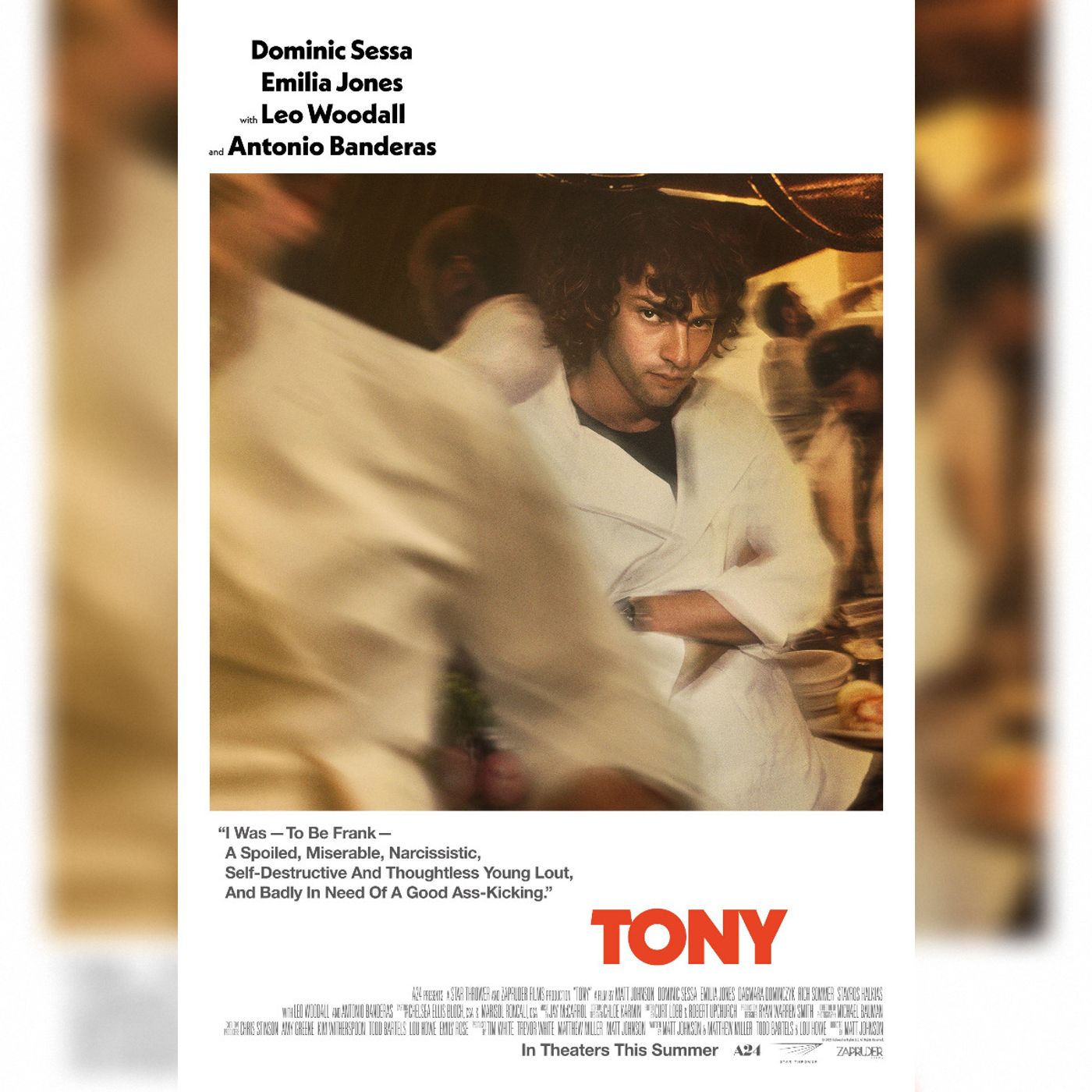
You're listening to all of it on wnyc. I'm Alison Stewart. Anthony Bourdain graduated from the Culinary Institute of America. That is the final location in the new film Tony. The movie starts in 1975, 20 minutes down the road at Vassar College where he's enrolled. 19 year old Tony dreams of becoming an author but is rejected from a prestigious college writing fellowship. So he decides to lie about it. Tony lies a lot in these early days. Sometimes to save face, sometimes to feel worthy of attention. Tony winds up on Cape Cod where a co ed he has pined for is spending her summer. He finds work in a restaurant kitchen where his new boss takes the impulsive young man under his wing, introducing him to the world of food and teaching him a lesson in integrity. Dominic Necessa. Excuse me. Dominic Sessa is playing Anthony Bourdain. You may remember him from his breakout role in the Holdovers. He joins me now in studio. It's really nice to meet you.
- [01:07]
B
Nice to meet you. Thanks for having me here.
- [01:09]
A
So Anthony Bourdain, well known writer, well known chef, a television presence. But this story takes place before he's famous, right? How do you approach playing someone who's really still trying to become himself?
- [01:24]
B
Uh, well, I mean Matt Johnson, who directed the movie, him and I, the first time we met, we really focused a lot on like talking about our own childhoods. I mean even, even, you know, my life right now, I'm kind of, I guess the character I play in the movie is about 19 years old and I'm 23 now, so I'm like pretty, pretty close to that level of impressionable youthfulness, you know. But Matt and I really connected on this time in our life specifically. And I think that's what excited us most about it. I mean we, it was fun for us to talk about, you know, memories, you know, for him, memories when he was about my age and going through high school and for myself and I mean we really connected and related on a lot of those experiences and it just kind of felt like a perfect way to use this story and incorporate a lot of our own history into it because we didn't, you're right. Like this was before he was famous and before his life was like really heavily documented and he was, you know, under the limelight release. So for us we were like, this is kind of the perfect time to make a movie about this person's life because nobody really knows about it, you know.
- [02:53]
A
Yeah, you're thinking about what a 19 year old Tony Bourdain is like. But he's a 19 year old. Yeah. Like, what's universal about Tony's story?
- [03:01]
B
Yeah, I mean, I think the idea of kind of being thrust into this really chaotic and crazy, scary environment with these like, crazy characters, you know, like these pirates almost that he's working in the kitchen with.
- [03:19]
A
Oh, that's such a good description.
- [03:20]
B
Yeah, yeah, yeah. I mean, yeah, I think that's when Matt was casting all of the, you know, the, the kitchen crew. He was like, I want that to feel like a pirate ship. So. And yeah, Stavros is definitely. And Leo. Yeah, very much like pirates. But yeah, I think that that experience is, is, is relatable for a lot of people, especially for me. Like, I think we all kind of have that moment when we're young and whether it's coming out of college or it's like it's your first job first, like kind of responsibility. It's. It's scary. And, and you're, you're sort of. Yeah, you're masking who. Your true identity in a lot of ways. You're kind of pretending to be an adult. Um, so I thought that was really relatable, especially for me. Like, I, When I think about how I got involved in acting in the first place, like, I was just kind of doing something because I had to like, fill a requirement in school really, you know, and it was, it was nerve wracking and it was the first time I had hung out with people like that, like theater kids, you know, and I didn't, I don't know, I really had to step outside of myself and, and, and lead with integrity. I couldn't hide anymore, you know, I had to be myself in order to be successful and earn respect, you know.
- [04:46]
A
What were you doing at school before acting?
- [04:48]
B
Well, I mean, I, I played a lot of hockey growing up and that was kind of, I guess the reason I went. I went to boarding school in the first place. Like, I wanted to be, you know, get better at hockey and be successful doing that. There's. But I ended up, you know, like, I don't know, the only way that I was able to kind of connect and make friends was. Was doing theater. You know, it was, it, it brought so much to me out. I, I don't know if I even necessarily thought about getting better at it or like, you know, continuing after high school. It was kind of just a way for me to connect with people and kind of have a sense of individualism in a place like that. But I, you know, before then I didn't know what I wanted to do. All I was concerned with was getting good grades.
- [05:34]
A
Graduating.
- [05:35]
B
Yeah, and graduating. Like I thought as long as, as long as like I do well in school, something will kind of work itself out, you know, and I was, I was lost in the sense of security and comfortability in that. And I don't know, I'm really grateful that I did find acting because I don't know really where that would have, where I would have been led otherwise because I think about when I was a senior and I did do well in school, but even with that, I never, I never really thought outside of like my schoolwork and what I wanted to do for myself and what I, what I was passionate about. And I really only felt that in acting, in theater. So I'm like really lucky I keep can do that now.
- [06:18]
A
Yeah, it's amazing. It sounds like your experience was really authentic with you found sort of your authentic self.
- [06:24]
B
Of course. Yeah, I mean you have to, you know, I think it's a requirement.
- [06:31]
A
We're talking to Dominic Sessa. He's starring as a young Anthony Bourdain in the new biopic. It's out Friday, August 7th. It's titled Tony. You know, it takes place in the 70s. No cell phones, no cameras, taking your picture every two minutes. How did that help you understand him a little bit, that era of the 70s, him growing up in that era?
- [06:55]
B
Well, I mean.
- [06:57]
A
Or the character you.
- [06:58]
B
Yeah, yeah, I mean just in the, I guess like. Yeah, when you mentioned like no cell phones, you're much more receptive to, to people and the things going on around you. And it's one of my favorite moments in the movie where he kind of. Tony lands in Provincetown off of the, the ferry and he's just kind of looking around, you know, and he's seeing all these people and, and this new place for the first time. And yeah, it is, it is interesting and I don't know if people really notice that or, or if, or how noticeable that is in a, in a movie, like a period movie from the 70s where you just see people walking around with their heads up and not like, you know, on their phones, that sort of thing. But uh, yeah, I mean also the 70s thing, like I think people, young people, you know, 18, 19 year olds, 20 year olds were, were treated a lot older than they are now. You know, like, I think, I think, you know, for better or for worse, we kind of take care of our young people a lot more than maybe they did. Like, he's runs away from home, his Parents are kind of like, you know, where the heck are you? And that's. Yeah, yeah, yeah, exactly. Like, that's. That's the extent of them, you know, trying to find him. And, like, he's able to go into a bar and, like, get drinks and, like, get drunk at that age. Like, it's kind of. You have a different level of responsibility and you don't have the same level of nurture around you. Yeah, And I think that's. That adds to a lot of, obviously, what he's going through at the time.
- [08:35]
A
One of the early scenes in the film, he's at Vassar College. You guys filmed at Vassar?
- [08:39]
B
Yeah, no, we didn't. We weren't able to go to the actual campus. It was. It was some school that they, like, always used for, like, you know, put in school here.
- [08:49]
A
So you go to Vassar and you're sort of talking to your professors about this fellowship you want, and you sound. It sounds like he's making it up on the spot.
- [09:00]
B
Yeah, yeah. It's very like. Yeah.
- [09:04]
A
What does that tell us about him? Because it's one of the first times we see him being Tony in quotes.
- [09:12]
B
I mean, it's. It's something that I feel is really, you know, is alive in myself, especially at this age. But, like, young men trying to deceive, you know, the people around them for status that they don't necessarily deserve or they haven't earned yet. You know, I think I was really good, especially in college and in high school at, like, just making stuff up and, like, you know, just getting by that way and, like, listening in class to, like, what other kids were saying about something and then just sort of rewording it and getting by, you know, through that. And I think that's essential. Yeah, it's like, where this character starts. He starts in a place of this false sense of confidence, you know, and going through the world thinking that they know everything. And. And it makes for a really kind of fragile person overall. And. And you see how easily, you know, once he finds himself in this kitchen environment, how easily he's stripped and broken down. You know, he has zero defense when it's like he's actually faced with these. These real people who have, like, seen the world and experienced real things. And, you know, he. He tries, but he's immediately shut down by the characters in the kitchen.
- [10:33]
A
What's the difference with how Tony sees himself versus the reality of Tony? Because that's a big part of the story.
- [10:42]
B
Yeah, I mean, I think. I mean, I think that's that's really the. The challenge with the character and what they're going through is that he's not. I don't think he ever really believes this thing that he's putting on. And, and this, this. I don't know, this, this idea that he's trying to portray, that he's going to be the next, you know, great American novelist. And this is his reality. I think at his core, he understands the truth, but he doesn't. He doesn't want to face it, you know, And I think that's. That's what makes you relate and feel for someone like this. Like, even when they come off as this, this, I don't know, sort of brash, arrogant piece of crap, like, what makes you feel for them is that underneath all of that, the real person is this. This trying, searching young human, you know, who is wanting so badly to earn respect and be seen in. In a positive light, but doesn't know how to do it yet. And it requires opening up to other people and receiving other people to find that.
- [11:57]
A
Let's listen to a clip from Tony. This is about one of the early days when you're in the kitchen. Let's listen and we can talk about it on the other side.
- [12:09]
B
You know, I can cook, too. Excuse me? Kid says he's a cook. Chef.
- [12:15]
A
Yeah.
- [12:15]
B
Wonderful. I'm not a cook. I'm a writer. I said I could cook. Oh, I'm sorry. I didn't understand that. Shut the up. My dad's like, one of the best chefs in New Jersey. Oh, your dad. Why didn't you say so? Whatever.
- [12:31]
A
I love the way you say I'm a writer.
- [12:33]
B
Yeah, yeah, yeah, yeah. Hard R. Yeah, I'm a writer. Yeah, yeah. It's like, so cringe when you hear it like that, you know, it's interesting,
- [12:43]
A
though, because he's washing dishes when he shows up at this restaurant. We won't explain why he shows up at this restaurant. What does being a dishwasher teach him about humility?
- [12:55]
B
I mean. Well, I remember when I first started washing dishes when I was, like, 13, and I remember just kind of being like, shocked by how gross it actually was. And like, you're, you're. There's. It's. It's like the end of this. This kind of beautiful thing, you know, this, this beautiful exchange that. That you have when you go to a restaurant where you walk in and you decide what you want to eat. And then, you know, these. You. You trust this group of people to kind of prepare it for you in a healthy and safe way, and then, you know, you share it and. And, you know, whatever the circumstances, whether it's like a breakup or like. Like a first date or whatever is going on as the dishwasher, you're receiving the back end of all of that. And I think it's. Yeah, it's a great metaphor for life.
- [13:54]
A
The cinematographer for Tony was a cinematographer for one battle after another.
- [13:59]
B
Yeah. Yeah. Mike Bauman is amazing. Yeah.
- [14:02]
A
What did you learn from him?
- [14:05]
B
I mean, he really is a master at kind of. I mean, he makes us all look so good, you know, like, that's like. I mean, we're all grateful for him for that, but, you know, especially in working with Matt and Matt kind of having a very, I don't know, sort of free guerrilla style almost, you know, film filmmaking in his. In the past with his other movies, and Mike Bauman being more of like a, I don't know, classical filmmaker in the way he shoots things. It was cool to, I don't know, just see, like, that collaboration between them and. And it wasn't like he was dominating the space and how he thought the movie would look like. He's really a master at, like, meeting the director where they're at and their vision and. And being able to communicate that. And like, you know, Matt was just able to work with us, really, you know, which it just made it easier for all of us. Like, Matt could focus on the performance and working with the actors, and we just trusted Mike to make everything look
- [15:08]
A
good in the film. I won't explain why you get doused with water, but you get doused with water.
- [15:14]
B
Yeah.
- [15:14]
A
A lot.
- [15:15]
B
Oh, yeah, a lot.
- [15:17]
A
How many times did you get soaked on set, do you remember?
- [15:20]
B
Like, 20 to 30, probably. Somewhere in there. Yeah.
- [15:23]
A
Was it cold? Yeah.
- [15:25]
B
Yes, it was cold. It wasn't. Yeah, I don't think it was warm. It was definitely cold. But it was good because it was hot outside. It was really hot. So I think most people, like, everybody was kind of jealous of me on set. I was finally getting to cool off, you know?
- [15:40]
A
Antonio Banderas plays the chef who eventually becomes Tony's mentor. What did you learn from him? He's a veteran actor about working on film.
- [15:51]
B
I mean, I just. I'm always really interested in the types of questions these. These actors ask. Like these, you know, these really, I don't know, accomplished, veteran, decorated performers. Like, they. Because, you know, like, I never know, like, what to ask. I'm always. I'm always going up to. To Matt or the director and just being like, okay, I Think this feels right or, you know, I. I don't know, like, kind of. Kind of framing things in a. In the wrong way, you know, and rather than. Rather than just asking questions about it, I think that that is something I've always noticed and especially with Antonio, like, he never came in with, like, all right, I think it should be this way. I think maybe I could do this. Like, for the most part, he would come in and just. Just ask questions about things he didn't. Didn't understand yet fully and seeing Matt's perspective on it. And I think that's really how. I don't know. I mean, I think that's why he's so good. And I think that's something I definitely took away and maybe better at not just working with directors, but also your. Your castmates as well. Like, and that's. That's how he approached me. And, And I was really grateful for that. Like, him giving me that kind of level of respect and attention and not telling me, like, all right, this is how it's going to be. Like, this is what we're going to do. Like, I'm, you know, I'm really young, green actor, and he's asking me, like, what I think and, you know, what, how I feel about the scene. And I think that's what makes him really good at his job.
- [17:26]
A
Also, it taught you it's okay to be vulnerable, to ask a dumb question.
- [17:29]
B
Yeah, yeah, exactly.
- [17:30]
A
Or there's no dumb question.
- [17:31]
B
Yeah, yeah, of course. He was never. He was never. He was never afraid of being told no. You know, like, he. He was just constantly trying to find it and was, you know, was able to put his shame aside.
- [17:42]
A
Yeah, you're really good in the film.
- [17:44]
B
Oh, thanks. Very kind.
- [17:46]
A
I've been talking to actor Dominic Sessa. He stars as a young Anthony Bourdain in the new biopic Tony. It's out this Friday. Thanks for coming by the studio.
- [17:54]
B
Thanks for having me. Try Angel Soft for your tushy. It's made by Angels. Soft and strong. Budget friendly. The choice is cheap, simple. Pick up a pack today.
- [18:07]
A
Angel Soft.
- [18:08]
B
Soft and strong. The snack wrap plus Caesar sauce equals extra crispy chicken Caesary greatness. Sounds delicious. Caesar sauce at McDonald's for a limited time.