← All Of It with Alison Stewart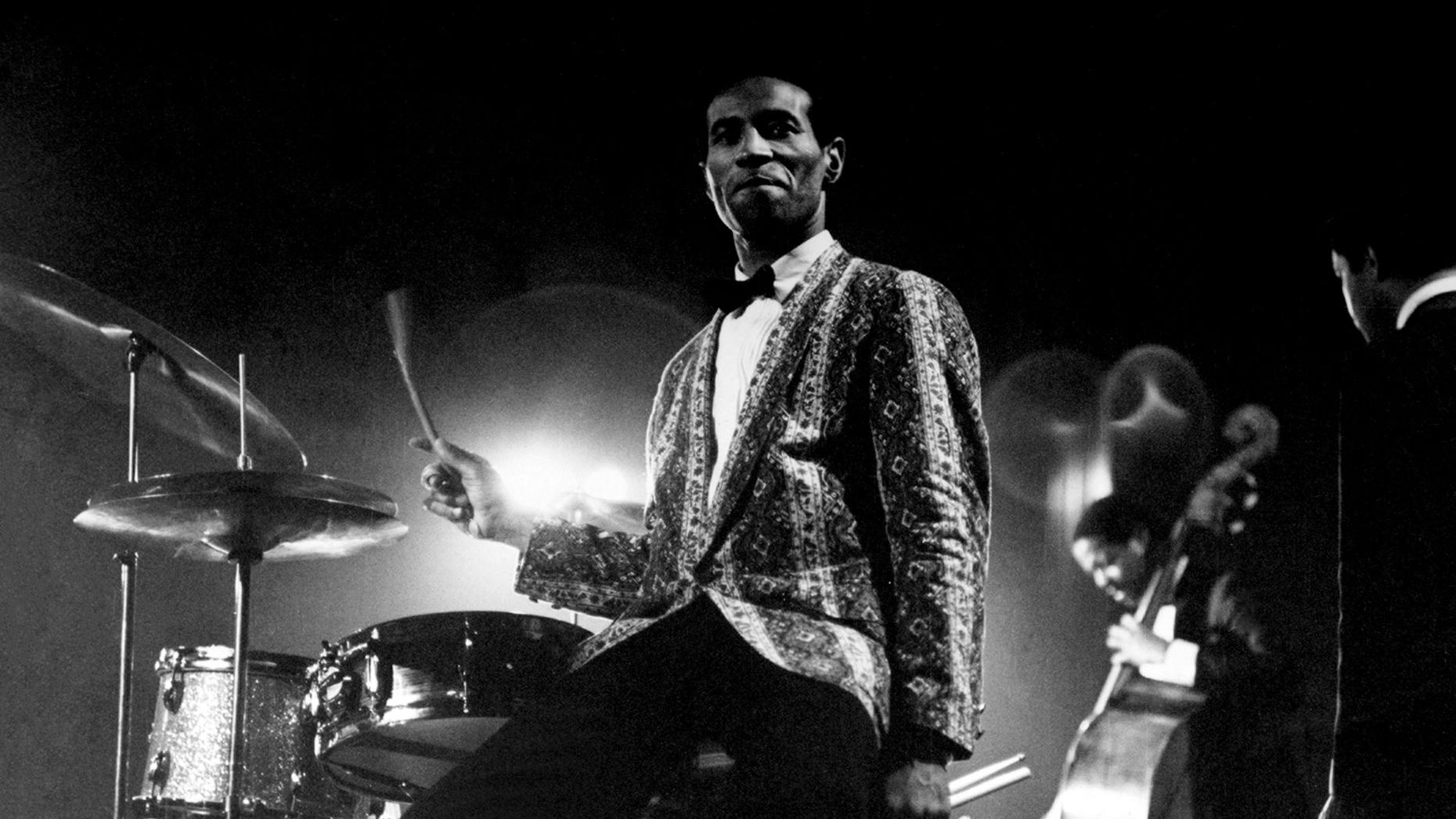
All Of It with Alison Stewart
Drummer Max Roach Turns 100
00:23:25
Max Roach turns 100 today, and we're celebrating his birthday and looking forward to some local centennial concerts in our area.
Loading summary
Transcript81 lines
- [00:00]
Michael's Party Store Announcer
Attention party people. You're officially invited to the party Shop at Michael's where you'll find hundreds of new items starting at $0.99 with an expanded selection of party wear, balloons with helium included on select styles, decorations and more. Michaels is your one stop shop for celebrating everything from birthdays to bachelorette parties and baby showers to golden anniversaries. Visit Michaels store or michaels.com today to supply your next party.
- [00:27]
McDonald's Customer
I'm going to put you on, nephew.
- [00:29]
Raul Roach
All right, unc.
- [00:30]
Nasheet Waitz
Welcome to McDonald's.
- [00:30]
Alison Stewart
Can I take your order, miss?
- [00:32]
McDonald's Customer
Been hitting up McDonald's for years. Now it's back. We need snack wraps. What's a snack wrap? It's the return of something great. Snack wrap is back. There's a reason Chevy trucks are known for their dependability. It's because they show up no matter the weather, push forward no matter the terrain and deliver. That's why Chevrolet has earned more dependability awards for trucks than any other brand in 2025, according to J.D.
- [00:54]
Nasheet Waitz
Power.
- [00:54]
McDonald's Customer
Because in every Chevy truck, like every Chevy driver, dependability comes standard. Visit Chevy.com to learn more. Chevrolet received the highest total number of awards among all trucks in the J.D. power 2025 U.S. vehicle Dependability Study Awards based on 2022 models. Newer models may be shown. Visit J.D. power.com awards for more details. Chevrolet together. Let's drive.
- [01:13]
Alison Stewart
Oh my gosh. Have you been to Marshalls lately? They have all the brand name and designer pieces you love, but without the jaw dropping price tags. Alright, so here's the truth. You should never have to compromise between quality and price. And at Marshall's, you don't have to. Marshalls believes everyone deserves access to the good stuff and that's why their buyers hustle around the clock. To make it happen for you, visit a Marshalls store near you or shop online@marshalls.com this is all of it from WNYC. I'm Alison Stewart. Max Roach was born 100 years ago today in coastal North Carolina. And when he was a young boy, his family moved to Bed Stuy where he grew up playing music in the church, the legend goes. When he was 18, he was asked to step in one night for the drummer of the Duke Ellington Orchestra. And soon Roach found himself alongside some of the greats like Charlie Parker and Dizzy Gillespie. Roach created his own lane, reimagining what drumming could be. He is remembered as one of the greats. This month there are centennial concerts planned, including two at Jazz at Lincoln center and also one at NJ Pack. That's a modern take on one of Roach's most important, important works, we insist Max Roach's Freedom Now Suite from 1960, recorded with the exceptional singer Abbey Lincoln, to whom he was married for eight years. Here's a composition from the album Freedom Day. Whisper, listen Whisper, listen Whisper say we're free Rumors flying Must be lying can it really be? Can conceive it can't believe it but that's what they say Slave no longer Slave no longer this is Freedom Day Freedom Day It's Freedom Day Throw those shackling chains away Everybody that I see Says it's really true we're free this January 26th, the Freedom now suite celebrating Matt's Roach centennial Concert has happened at the New Jersey Performing arts Center at 8pm Joining me now to celebrate Max Roach's centennial birthday is Nasheed Wait, drummer and musical director of the NJ Pack concert. Thank you for being with us.
- [03:53]
Nasheet Waitz
My pleasure.
- [03:54]
Alison Stewart
And Raul Roach, Max Roach's son. So nice to meet you.
- [03:57]
Raul Roach
Nice to meet you as well. Thank you so much.
- [03:59]
Alison Stewart
So, Max, your dad was born in coastal North Carolina, as we mentioned, 1924. Obviously it's a centennial. How did your father talk about Brooklyn, though? I think most people think about him and Bed Stuy?
- [04:13]
Raul Roach
Well, he loved it. And he continued to be connected to the community which was most important to him and the Bed Stuy community throughout his life. Working with young people, working with new musicians. I think he cherished and spoke often about. And I know a ton of stories, but stories from that era. But it's really what educated him. You know, he. He started playing at Concord Baptist Church in Bed Stuy, our family church for a few, many generations, and was a part of the Drum and bugle corps. That's how he picked up his instrument. And then he went on to just go to all the clubs as a young person, like 13, 14, sneaking in the clubs. And the club owners in Brooklyn would let him in so he could listen to all these great musicians. And so very fondly he thought of his. What he felt was not his birthplace, but definitely his home was bed stock Brooklyn.
- [05:14]
Alison Stewart
Was there any conversation in the family about or any attachment to the south at all?
- [05:19]
Raul Roach
Oh, yeah. We went there every two years for. You know, the great story about the south is my father's grandfather, my great, great, great grandfather, one of the greats, right? Founded, Founded a town, Newland Township, in 1840, before the Civil War. Black man who bought his freedom and his wife's freedom and his brother's freedom in Barbados and emigrated to North Carolina. It's a very Strange story, but true. And that town still exists. There's only two roads. It's a farm community. All of my grandmother's, my father's mother's parent family lives on one line, the Saunders. And the other road is Roaches. And so we have a lot of double cousins. But yeah, they're doing a Max Roach Day down there. They're really bringing out the bells. They put up a mural and doing concerts and a series of lectures down there. Max Roach Day. And they're doing a Max Roach Festival in April, which there'll be details available on MaxRoach.com There you go.
- [06:27]
Alison Stewart
Do you, as an adult, do you have a sense of why your folks or your dad took you down there every couple years?
- [06:35]
Raul Roach
Wow, that's such a great question. You know, I think for him it was about connecting to community, about connecting to roots. You know, everything for him was about, you know, being, celebrating the ancestors and whether that be in the south or in Africa, he developed that connection, studied that connection and engaged with that connection throughout his life.
- [07:01]
Alison Stewart
Nasheed, let's bring in the conversation. So your father was a percussionist who played with Max Roach?
- [07:06]
Nasheet Waitz
He certainly was, yeah.
- [07:07]
Alison Stewart
He was one of your mentors.
- [07:09]
Nasheet Waitz
Oh, definitely the first mentor.
- [07:11]
Alison Stewart
What do you remember about the first time you met Max Roach?
- [07:15]
Nasheet Waitz
You know, I don't remember the first time because it was like he was a member of the family.
- [07:19]
Alison Stewart
He was just always there.
- [07:20]
Nasheet Waitz
Yeah, it was like he was a member of the family from the beginning, to be quite honest. So I took a lot of those relationships and opportunities for granted as a younger person. As I get older, as I am now, I realized how precious that opportunity was.
- [07:36]
Alison Stewart
As you think about it as a professional musician, when you think about what his contribution has been and what made him unique, those are two different things. What made him unique. And then when you think about what his contribution was to drumming, well, I.
- [07:51]
Nasheet Waitz
Think they actually come hand in hand because what made him unique was also what he contributed. And what made him unique was not something that is unique. It's like a consistent work ethic. And also somebody who is dedicated to pushing the envelope and never resting on their laurels. And there were a lot of musicians who were like that. But in the world of quote unquote drumming, he's like tad about to other drummers. They look to him as like the top of the mountain because of the type of time that he put in to his work and the fact that he was dedicated to an original connection to the creative source. He preached that nonstop.
- [08:36]
Alison Stewart
Something so interesting you said. And it just sort of. It blew my mind for a minute because when I think about someone like Matrix, when I think about Matrix, I think talent and I think about the creative spirit. But you talked about the hard work he put in the time. Raoul, could you speak to that a little bit about the idea of you can have all the talent, you can have all the passion, but man, it comes down to work.
- [08:57]
Raul Roach
Absolutely. And he believed in it, trust me. All of my. Me and my siblings, all of us started working as soon as we could. He put us to work. But yeah, absolutely. He had a work ethic and he believed in the work ethic. And even though he had genius and talent and imagination for days eons, it really was about putting in the work and about expanding the boundaries. You know, his whole thing was not being locked in as a drummer, as a timekeeper, not having a front line and a back line, but making bebop, what they call bebop music, about a working together with equals and everyone had something to say. A very democratic art form, as he would say. So the work to him was, you know, it was the most important thing, I think, in his life, following his. And then everybody else came next, including his family. But he loved everybody. People and his family. Absolutely.
- [10:04]
Alison Stewart
We are discussing the centennial of Max Roach. He would have turned 100 today. There are all these Max Roach centennial concerts. There's one happening at NJPAC on January 26th at 8pm My guests are Nasheet Waitz and Raul Roach. So, Nasheet, you chose a song for us to hear. You wanted us to play equipoise from 1960.
- [10:23]
Nasheet Waitz
Oh, that was a Raoul's choice.
- [10:25]
Alison Stewart
That was Raul's choice.
- [10:25]
Nasheet Waitz
But that's a beautiful song, Stanley Calicomposition. Wonderful.
- [10:28]
Alison Stewart
Raul, why did you choose this one?
- [10:31]
Raul Roach
You know, during that period is when I began to come and spend more time with my dad, you know, with a musician who's on the road all the time. And one nighters. And I experienced that young. After I came out of college, I was Wynton Marsalis road manager for a brief period. And after six months, I was ready to stop. It's a hard life. Yeah, I'm going to be an executive, sit in a room and use my pen. That's it. But, you know, I think that, you know, what was important to him was making sure that he wasn't put in a box. The box of jazz, the box of drumming, the box of being a black man, a box of anything. He wanted to expand the boundaries. It was about freedom for him.
- [11:22]
Alison Stewart
Let's hear Equipoise.
- [11:52]
Raul Roach
Sa.
- [12:18]
Alison Stewart
What is something that you hear as a journey drummer about this technique and this song that you want people who aren't drummers to understand?
- [12:30]
Nasheet Waitz
There's always a commentary on texture, the juxtaposition of, you know, smooth and rough to just give. Use layman's terms so you can kind of. Everybody can understand it. Also like a, you know, a sense of time and how you can feel different parts of the beat before the, after the middle, and also dynamics in terms of how you accompany a melody, how you accompany that, how you accentuate certain passages in that melody. All of that is present and. And what Papa Max was doing right there.
- [13:16]
Alison Stewart
We're discussing the centennial of Max Roach. We'll have more after a quick break. This is all of it. This is all of it on wnyc. I'm Alison Stewart. We are celebrating Max Roach. He would have turned 100 today. It's his birthday. Joining us in the studio is his son, Raul Roach, as well as Nashee Waits, another very good drummer who was also. Maxwell was his mentor and friend of his family. I want to play a clip, Raoul, of your dad, because your dad was not fond of labels. You sort of alluded to that about boxes. He didn't really like the term jazz or bebop. This is a clip of him speaking about this, which was featured in a recent PBS documentary about him.
- [14:07]
Nasheet Waitz
Well, Janice is to me, a nickname. To me, it's synonymous to and things like that.
- [14:13]
McDonald's Customer
That's not the proper name for African American instrumental music.
- [14:25]
Nasheet Waitz
It never was.
- [14:26]
McDonald's Customer
A name that we as musicians gave.
- [14:28]
Alison Stewart
To.
- [14:30]
Nasheet Waitz
Was a name that just was given to it. So you're not a jazz musician? No, I'm an African American musician and.
- [14:36]
Raul Roach
That'S the kind of music that I play.
- [14:39]
Alison Stewart
What do you make of your dad's thoughts about that now that you're a person who's been in the music industry? Same for you, Nishit. You're a musician yourself. How do you relate to that thought process?
- [14:51]
Raul Roach
Well, I think, you know, it's tantamount to talking about not being labeled, not allowing other people to define you, but defining yourself. You know, essentially that's a. A core principle of freedom, is the ability to do that. And I think that statement embodies that.
- [15:08]
Alison Stewart
Yeah. How about for you, Nasheed, when you think about the labels we put around music?
- [15:13]
Nasheet Waitz
Well, I remember Max specifically commenting on that very word. And his, his sentiment was jazz is a four letter word. And he said, every time you use. I use that word when I'M negotiating a contract, the money goes down. Could be the same project, could be the same music. So there was a negative quality that was associated with the term that also had, you know, that also encapsulated in that is also the racist, the racism, you know, and any other isms that you would negatively categorize a people or a source of a culture, which is what that is. So he was definitely against that word and that label and what it represented, because like Raul was saying, it had a way of limiting the opportunity.
- [16:06]
Alison Stewart
I've heard it from modern jazz musicians as well, that they're not. The label's not something that they want to be associated with, that they want to be musicians.
- [16:14]
Nasheet Waitz
It wasn't originated by the creators as well. So that's another position that he was firm about because it didn't have a representation of the people who were creating the culture, who were from the culture. It was created by people who were on the outside looking in and finding a way to monetize it, commodify it. Yeah, exactly.
- [16:36]
Raul Roach
He talked about the etymology of the word. Jazz was a slang word in New Orleans that meant sex. And at that time, our music aside, us playing it for ourselves was only played, you get paid for the black musicians who played in the houses of ill repute in New Orleans. And so they would call it jazz music because these were jazz houses of sex. And so once he found that out, he, you know, understood that this was really something that was named by outsiders, their experience with it, and not by the creators of it.
- [17:16]
Alison Stewart
So the story goes, the big break came at 18 and he filled in as a drummer one night for the Duke Ellington Orchestra at the Paramount Theater. So to put this in context for people, nasheed, as an 18 year old kid, a drummer, what would that mean to a young drummer?
- [17:33]
Nasheet Waitz
Everything. Because Duke Ellington was, I mean, he's like the ambassador at that time. He's a star, you know, like one of the, one of the preeminent faces on the planet, you know, much less in the music. So for him to get that opportunity is comment on his, on his preparedness, because he wouldn't have got the opportunity if he wasn't ready to shine. And from that he just took off. From before that he was already ascending. But then that was, you know, when you, when you give, when you get those opportunities, he took full advantage.
- [18:08]
Alison Stewart
Did he ever talk about that night with you, Raoul?
- [18:11]
Raul Roach
Yeah, he talked about it a lot. Of course, he had a story. He said that his drummer, St. Catlett, I think, was drafted. So he was in New York, and he called the club owner in Brooklyn, a friend of his, and asked, do you know any drummers who can read music? He said, well, I know a kid. He sounds great. And then recommended dad. And he said he showed up and when he got to the bandstand. And he sat up high behind above the band and he got to the drums and there was no music in sight. So he was, like, freaked out. And then Duke was, of course. These guys are so sensitive and smart and prescient. He looked at him and saw his panic and said, don't worry. Keep one eye on the act and one eye on me and you'll do fine. And he said he made it through.
- [19:08]
Nasheet Waitz
Incredible. That's right.
- [19:10]
Alison Stewart
We are discussing Max Roach. Today would have been his hundredth birthday. My guests are Nasheet Wait and Raoul Roach. We're playing the song. Raul, what do you want people to know about this song?
- [19:20]
Raul Roach
My dad recorded this in a session with Clifford Brown five months after I was born. And it didn't come out on the original release. It came out as a alternate take in a later reissue of the record in the early 60s. So I never knew about it until I got older. And it was just. When I think about it now, you know, I just think about the fact that it was Christmas time and he loved me and he thought about me and he recorded a song after me. So I'm very happy about that.
- [19:57]
Alison Stewart
Let's hear it. Sam, that is Raul, of course, we mentioned in the intro, we insist. Max Roach's Freedom Suite, now released in 1960s and you're 60s. Excuse me. And y' all are reimagining it for this concert at njpac. Cassandra Wilson's gonna be there. Robbie Coltrane.
- [21:13]
Nasheet Waitz
Yes.
- [21:13]
Alison Stewart
Tell us a little bit more about this evening. What were your hopes for it? What are your dreams for it?
- [21:19]
Nasheet Waitz
My hopes and dreams are that we're able to. We're able to make an offering that is well received by the people. And I know there's some incredible musicians like Cassandra. And I believe this is gonna be the first time she's gonna have performed live in some years. So it's really special for us. We're very grateful that she agreed to be a part. Robbie Coltrane is going to be a part of it as well. Duduzu mcatini playing piano. Eric Revis, bass. I could talk about everybody, but it's a long list of folks and whatnot. And then there's also going to be the addition of Sonia Sanchez and Saul Williams.
- [21:57]
Alison Stewart
Oh, wow.
- [21:58]
Nasheet Waitz
As dealing with the spoken word and Allison Schatz offering the video so reimagined in a sense that that wasn't a component to the recording that was offered in 1960. But Max reimagined this piece quite a few times after that. And there was some transcript involved and there was some choirs and dancers involved. So it's been expanded several times. And this is just another rendition.
- [22:25]
Alison Stewart
When you think about this being your father's hundredth birthday, his centennial, what is something you'd want people to know about him as a man and as a father? We can watch documentaries about him. As a musician, we can hear his musicianship. But as a person, something you'd like people to know about Max Roach.
- [22:42]
Raul Roach
Well, I gotta tell you, I think, you know, he was such an incredible person. I mean, he was brilliant, he was smart, he was ferocious and fierce in his determination and his drive to stick with his muse and make things happen in the world. You know, my brother often quotes him as saying, it's hard out here and he worked hard to make things happen. As a father, I think it's a traveling musician, it can be difficult, you know, for my older siblings. You know, he was out all the time. I mean, you know, Monk's son, the lonely monk's son, told me that dad told him he was another student of dad, that before Clifford Brown died, they had 400 dates booked over the next two years. So he was always away when I came to live with him full time because I lived with my mother at time the as my older siblings did. And he married my twin sisters, Ioanne, Dara's mother. He took the professorship at the university. And I got to really see that part of him as a father every day. And so did my younger sisters and it was wonderful.
- [24:07]
Alison Stewart
The concert is this. It's on January 26th at 8pm it is the Max Rhodes Centennial Concert happening at NJPAC. My guests have been Nasheed Wait and Raul Roach. Thank you so much for for coming to the studio. We really appreciate it and sharing your stories.
- [24:22]
Raul Roach
Thank you so much for having us.
- [24:24]
Alison Stewart
Yeah, let's go out next time.
- [24:26]
Nasheet Waitz
Yes. 100.
- [24:27]
Alison Stewart
Happy birthday, dad.
- [25:07]
Michael's Party Store Announcer
Attention party people. You're officially invited to the party shop at Michael's where you'll find hundreds of new Items starting at 99 cents with an expanded selection of party wear balloons with helium included on select styles, decorations and more. Michaels is your one stop shop for celebrating everything from birthdays to bachelorette parties and baby showers to golden anniversaries. Visit Michaels store or michaels.com today. To supply your next party.
- [25:34]
McDonald's Customer
I'm gonna put you on, nephew.
- [25:35]
Raul Roach
All right, unc.
- [25:36]
Nasheet Waitz
Welcome to McDonald's.
- [25:37]
Alison Stewart
Can I take your order, miss?
- [25:38]
McDonald's Customer
I've been hitting up McDonald's for years. Now it's back. We need snack wraps. What's a snack wrap? It's the return of something great. Snack wrap is back.