← All Of It with Alison Stewart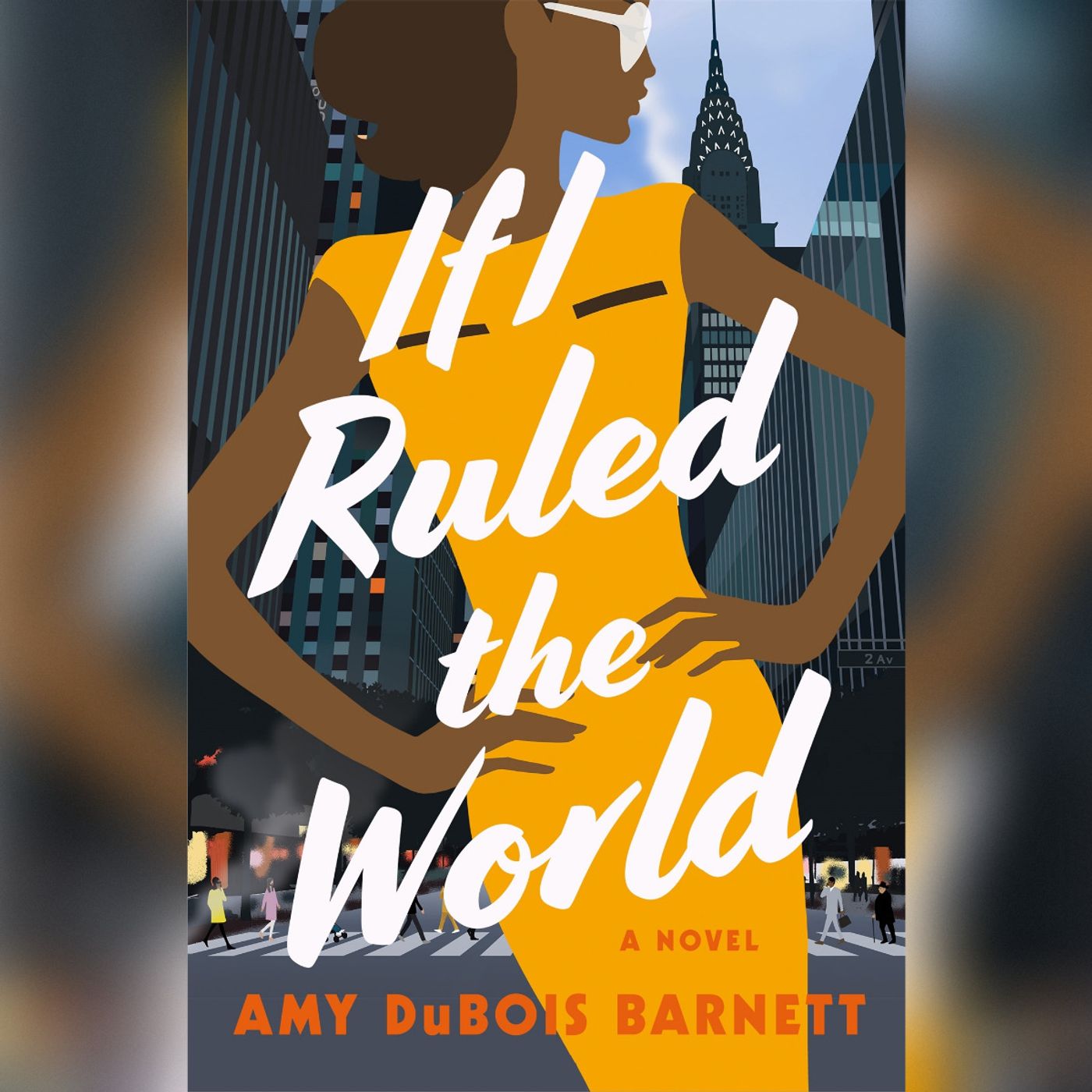
All Of It with Alison Stewart
Ebony Magazine's Former Editor-in- Chief Pens Debut Novel, ‘If I Ruled the World’
00:28:08
Loading summary
Transcript65 lines
- [00:01]
LinkedIn Advertiser
LinkedIn hiring pro can't predict the future, but it can help you feel confident about future hires. Because Hiring Pro combines real time insights and candidate Data from the LinkedIn network with the criteria you've set for your role to deliver you a list of top fit candidates. Businesses who use LinkedIn are 24% less likely to reopen a role in the next 12 months. Hire right the first time with LinkedIn hiring pro post a free job today@LinkedIn.com Pandora
- [00:31]
Redfin Advertiser
There's a difference between liking a house and actually getting it. Redfin is built to close that gap. Redfin agents close twice as many deals as other agents, so when you find a home you love, you're not a step behind when it's time to make an offer. That means less watching great homes disappear and more zeroing in on the one you'll actually end up calling home. Redfin helps turn saved listings into real addresses. Get started@redfin.com own the dream
- [01:00]
eBay Advertiser
before all the algorithm fed blah and the endless sea of dupes, shopping used to feel more fun. But here's a confession. Fashionistas. You can find that fun feeling again on ebay. It's not mindless scrolling. It's a fashion pursuit. And when you score that rare Adidas Collab or the Dior saddlebag you've been manifesting, it's a rush. Ebay has millions of pre loved finds from hundreds of brands backed by ebay. Authenticity guarantee eBay things people love.
- [01:39]
Alison Stewart
This is all of it on WNYC. I'm Alison Stewart. The year is 1999 and Nikki Rose is the only black member of the editorial staff of a prestigious New York City fashion magazine. She hopes one day to become editor in chief, but the industry is ruthless and competitive and she's made a couple of mistakes that will come back to haunt her. That is the plot of Amy Du Bois Barnett's debut novel, if I Ruled the World. Yes, that Amy Du Bois Barnett, who was a three time editor in chief at ebony, Honey and Teen People. Back to the book. We follow Nikki as she bounces back from what would have been a career ending mistake, sleeping with her boss who did not take the breakup well. Nikki buckles up, finds a new job as an editorial assistant and dives into her work. A world full of style, wealth, decadence, hip hop and more than a few unsavory characters. Some of them like her ex lover who is bent on destroying her career. If I Ruled the World is out now and it's already in development at Hulu. Author Amy Dubois Barnett joins me now to discuss. Hi, Amy.
- [02:43]
Amy Du Bois Barnett
Hi, Alison. I love your synopsis of my book.
- [02:46]
Alison Stewart
All right, all right. So this is set in the last year of the 1990s. Ah, I remember it well. What is unique about pop culture of the late 90s that you wanted to capture?
- [03:00]
Amy Du Bois Barnett
Oh, my gosh. I mean, this is one of the most important cultural eras of our time, and it's interesting that the 90s is having such a renaissance right now. So I've been watching that all over social media, the whole sort of, mom, what were you doing in the 1990s trend? But what was really interesting about this era was that it was the golden age of hip hop. You know, hip hop was really at its zenith of power, and you could feel that in New York City, where the book is set. You could feel the power, you could feel the influence, you could feel the money. And I was really excited to write about it because it was so unique, you know, was just a moment in time where, you know, mainstream culture and hip hop culture became almost indistinguishable. So writing about that era, I thought was really interesting. And I also want to write about it from a woman's point of view. You know, we've heard so much about this particular era from a man's point of view or from what was going on, you know, with men. But I thought it was interesting to write about it from a powerful, ambitious woman's point of view.
- [04:00]
Alison Stewart
Yeah. Help us understand what it was like for women, specifically black women, navigating the
- [04:05]
Amy Du Bois Barnett
media industry at that time, you know, the 1990s. I will say this. It was a load of fun. I mean, it was just a really long era, and it certainly was. I don't want to give the impression that it wasn't fun. I mean, it was such a sexy, glamorous time. And I had two hands in the air, as, you know, as did many of my colleagues. I mean, we were having a very good time. But beneath that sexy glamour, you know, lurked a lot of danger. You know, for women in particular, it was a perilous time. And, you know, it was a perilous time, I think, for women who were music industry adjacent, because there was so much rampant misogyny and sexual harassment and sexual violence that were going through culture at that time. And so we had to navigate that. And then for those of us who are working in media, you know, if we were working in predominantly mainstream or white spaces, we were navigating a lot of racism that people did not have self awareness around at that time. And so we were trying to figure out how to get our ideas heard, how to get our perspective understood and appreciated in those spaces.
- [05:15]
Alison Stewart
It's interesting. You can put your hands up in the air, but if you put your hands up too far, you felt a glass ceiling.
- [05:21]
Amy Du Bois Barnett
Ooh, nice one. That's the way I thought about it. That's exactly right. That's exactly right, yeah.
- [05:26]
Alison Stewart
You served as editor in chief of Teen People, Ebony and Honey, as well as deputy editor of Harper's Bazaar. What's a piece of that world that you knew you wanted to capture in this novel?
- [05:38]
Amy Du Bois Barnett
You know, the late 1990s were the heyday of magazines. And so this book is a love letter to the music industry. It's a love letter to hip hop that I, you know, with. With which I have a complicated relationship. And it's also a love letter to magazines, you know, because this was a time in which they were an incredibly powerful media platform. You know, a cover could make or break an artist or an actor. And I wanted to capture what it felt like to be a part of an industry that was so powerful, you know, and also so culturally important. I mean, we weren't just reflecting culture, we were making culture. And there was so much at stake. And so when you walked into those offices in Magazine World at that time, you felt the pressure because there was, again, there was so much at stake.
- [06:24]
Alison Stewart
I'm speaking with veteran media executives. Amy dubois Barnett. It's her debut novel following a young black editor as she navigates the cutthroat world of hip hop music and glamorous magazine series. Glamorous Magazine scene of the 1990s. It's called if I Ruled the World. Tell us what's going on with Nikki when we meet her.
- [06:45]
Amy Du Bois Barnett
So when we meet my protagonist, Nikki Rose, she is the only black editor at a high end fashion magazine. Think of maybe Vogue. And, you know, she desperately wants to be an editor in chief. You know, she's got powerful enemies. She's trying to navigate what it feels like to be in those all white spaces. And she eventually becomes the editor in chief of an urban women's music and lifestyle magazine called Sugar. And when she does that, you know, she's not really coming of age because she's an adult. When we meet her, she's 29, going into, you know, her, she's about to turn 30. But she's coming of power. She's coming of power within these institutions that are so culturally important. And as she's doing it, as she becomes editor in chief of Sugar, she's trying to figure out who she's willing to become and what she's willing to do in order to realize her dreams. She's trying to figure out how to find her voice. She's looking for true love and she's navigating all of the misogyny again that was absolutely rampant during that time. And so Nikki is a woman who makes a lot of mistakes, you know, but you root for her because she's really driven by purpose, she cares about her community, she's excellent at her job, and she goes on a journey that takes you to a place where she does ultimately find her voice.
- [08:06]
Alison Stewart
Would you read a little bit from your book if I Ruled the World?
- [08:09]
Amy Du Bois Barnett
Oh, sure. Let me read you a brief section for context. Lucinda is Nikki's boss at Stylist, which is that high end fashion magazine magazine I mentioned where she was working when we first meet her. And Teresa is her best friend. So I'm going to redo this section after Lucinda's Black Girls Don't Sell comment, I'd expanded my collection by adding entire magazines that featured black women. It didn't matter the topic or even the language. I would buy any magazine that put someone who looked like me or my mother on the COVID When I added sugar to the mix, I began to analyze each issue, slapping post it notes with scribbles over badly phrased story titles and design disasters, writing down ideas for issue themes, investigative features and possible covers. I kept everything in a large box, which I hauled out and placed on the coffee table in front of Teresa. Is there a severed head in there? Teresa asked, removing the lid from the box. What is all this stuff? Is it porn? Girl? Oh my God, will you just tell me what you think? I called over while I looked through my stack of local restaurant menus, settling on jerk chicken with rice and peas from our favorite Jamaican spot. You want a veggie roti? I asked. Mm was all I got back. She was deep into my notes on cover concepts. By the time I put in our order, Therese was on the floor, the box's contents surrounding her, and she had rifled through most of it. I had mentioned Sugar to her in passing, but this was a whole nother level. Nick, you put a lot of time into this. Teresa was staring at me hard. What are we doing here, girl? Don't ot I can't stop thinking about sugar. Their audience is it us, right? I mean, I think we deserve better. Well, better than what? Better than the way magazines treat us now, the few paltry pieces a year in Stylist about the flashiest black people in New York or LA are almost worse than nothing because they think they're being so inclusive. I'm sick of being trotted out at sales lunches and investor meetings when Park Avenue Pub wants to look like they give a crap. I flipped open an issue of Sugar and Better Than this too. Typos on every page and lame Q&As with background dancers counting as journalism. So Stylist thinks we're irrelevant and Sugar thinks we're stupid. Nikki hit the hill. Nikki hit the nail on the head. Exactly.
- [10:35]
Alison Stewart
That was.
- [10:36]
Amy Du Bois Barnett
That's a little extra sugar, maggots. Sugar, by the way, is the magazine, the urban women, women's music and lifestyle magazine where Nikki, my protagonist eventually becomes an editor in chief. And in that section she's looking through a box of inspiration. She's deciding what she wants to do next. Does she want to stay at Stylist, the high end fashion magazine, or does she want to go to Sugar magazine? And what would she do if she, if she did go over there and run Sugar?
- [11:03]
Alison Stewart
Well, it's interesting at the top of that section that you just read, there was an editor who said black girls don't sell magazines. They don't want to put a black girl on the COVID Did anyone ever say that to you?
- [11:15]
Amy Du Bois Barnett
Haha, that. So, you know, one of the burning questions that I get, you know, when I, when I talk about this book is how much of it is me? Is it, is it, you know, is, is the story me? And it's not my journey. Nikki, my protagonist, is very different. She's a very different character than I was at that time. But I did pull maybe four or five kind of, you know, moments from my life and I, and I appropriated them for the novel. And this is one of those moments. So that actually did happen to me at a different stage of life than it's happening to my protagonist. But it was an Italian gentleman who was running a fashion magazine that I worked for very, very early in my career and I was pitching somebody a black model for a cover and he just looks at me. He was smoking cigarettes in his office, which was illegal at the time, but he didn't care in his very, very shiny suit. And he's like, ah, Amy, black girls don't sell magazines. And it stuck with me all of these years.
- [12:20]
Alison Stewart
Oh, in that moment I can imagine you acted professionally, but what did you think when you heard that?
- [12:26]
Amy Du Bois Barnett
You know, I was in my mid-20s and I didn't have the skills, I didn't have the communication toolkit to really respond properly. So honestly, I didn't know what to say. I mean, I sort of weakly disagreed with him, you know, but it was one of those. Those myths that, that was pervasive, you know, in the magazine world at that time. You know, they, if they did put a black model on the COVID they would always do it in the January issue that was the skinniest and had the least expectations on the newsstand, you know, but the, the prevailing quote, unquote wisdom was that if you put a black woman on the COVID it was going to sell less than if you put a white woman on the COVID
- [13:06]
Alison Stewart
Nikki decides that she's going to at first that she's going to stay at the high end fashion machine magazine before going. What steps does she take to try to fit in at stylist initially?
- [13:20]
Amy Du Bois Barnett
So she is at this high end magazine where she's being recognized for, you know, her excellence as a journalist, but where her ideas are also at the same time being dismissed, particularly ones that relate to the black community. And so she's there, she's, you know, trying to dress like them. She eventually straightens her hair because she's trying to look more like them. She's putting forth ideas that are acceptable, you know, to the people around her, but all the while she feels dissatisfied. And she knows that there's a ceiling for her there. She's never going to realize her dream of becoming editor in chief. And so she's torn between staying at this prestigious magazine, you know, with this prestigious job, or should she leave and take a risk, you know, on a struggling urban magazine, you know, where she will also have to fit in and, you know, where we'll be much less prestigious, but where she will have an opportunity to realize her ultimate dream.
- [14:20]
Alison Stewart
And she also has parents who have thoughts.
- [14:26]
Amy Du Bois Barnett
Oh, Nikki's parents, I love them. So there was so much fun to write, you know, the sort of bumbling, kind of disheveled, you know, academia kind of, kind of folks that I wrote as her parents were so much fun and her mom in particular. So Nikki's mother is black and her father is white, he's Irish. And Nikki's mother is a woman of a certain age who really wants her daughter to be in a stable, secure field where she has the best opportunity to do well for herself. And so she's behaving in a way that many of us with black mothers understand where she's wanting her daughter to stay in a prestigious job, to not take risks, to marry a stable man. She's really advocating for her to have a life that she thinks is going to yield the most opportunity for her daughter to really kind of relax into something that she thinks represents what her daughter, how her daughter should be living.
- [15:33]
Alison Stewart
We're speaking with Amy Du Bois Barnett about her debut novel, if I Ruled the World. We'll have more after a quick break. This is all of it. This is all of it on wnyc. I'm Alison Stewart. We're talking about a new novel which follows a young black editor as she navigates the cut world of hip hop music and a glamorous magazine scene of the 1990s. Author Amy Du Bois Barnett is here to discuss her new book, if I Ruled the World. All right, initially in the book, you look at Nikki and you think she's messy.
- [16:17]
Amy Du Bois Barnett
She's so messy.
- [16:19]
Alison Stewart
She's so messy. She's trying to take control of her decisions, but she's messy from time to time. Why did you want your protagonist to not be a perfect person?
- [16:33]
Amy Du Bois Barnett
Well, who wants to read about a perfect person, Allison? I mean, that's just so boring. None of us are perfect. We've all made mistakes. You know, Nikki is particularly messy, and the mistakes that she makes are, you know, kind of particularly acute and striking and have a lasting impact on her that you will feel throughout the course of my book. But I wanted her to go on a journey. You know, I wanted readers to. To see this woman who was very imperfect, who was making vast errors in her personal life and in her professional life. And I wanted us to go with her as she becomes herself, as she really figures out how she wants to walk through the world, as she finds her own voice, as she becomes comfortable in her own skin, as she gets more confident. I thought it was important, important also to show people that you can make all these mistakes and come out on the other side. You know, I think that was actually a great lesson and the mistakes were fun. I mean, this is a page turner of a book. You know, I really wanted this book to be a fun read. And when you. When you read about what she's going through or what she decides to do in various moments, you're like, oh, my God. You know, I've told. People have told me, they've been like, yelling at my book, like, don't do it. And that makes for a good read.
- [17:52]
Alison Stewart
She leaves the fancy magazine stylist to go to Sugar. And she sort of has a. She has a mission for Sugar. But when she shows up, there's a question about whether she's black enough to be there. You know, she's been straightening her hair. She's wearing a certain kind of like, Ann Taylor ish suit. When she shows up, how did you want to reflect on those issues that still come up for people? Is someone black enough?
- [18:18]
Amy Du Bois Barnett
You know, I wanted to talk about race in a more nuanced way. And as I mentioned before, Nikki is biracial. She's, you know, she's a black woman. She identifies as black, but, you know, technically, she is biracial. And so when she enters certain spaces, you know, she is being asked to whether she's authentic enough. She's being asked to prove her blackness. You know, she's being asked, you know, whether or not she can properly represent, you know, Sugar magazine's urban black audience, you know, because of her background. And even though that's not how she feels about herself, you know, my protagonist was raised in Harlem. She went to Howard University for college. So even though she's not walking in thinking, like, oh, my gosh, like, I, you know, I'm not black enough for this space, you know, she is being asked to prove herself, and she's being asked to do so while she's acclimating herself to an urban culture that she has been a fan of, but she hasn't worked within. And so she's trying to navigate what it feels like to work adjacent to the hip hop music industry while she's being asked to prove her blackness. And this, for her, proves to be a very nuanced and complicated moment in her life.
- [19:34]
Alison Stewart
You mentioned that she's 29, and in your real life, you were just 30 years old when you took over.
- [19:41]
Amy Du Bois Barnett
Honey, that is true.
- [19:44]
Alison Stewart
Looking back, how prepared did you feel to take on that role?
- [19:49]
Amy Du Bois Barnett
I mean, I was terrified. You know, I was definitely scared. I was scared. But I had also been through a lot by that point. And it's part of what distinguishes me from my protagonist Nikki. You know, my mother passed away at a young age, and I learned a lot of lessons, you know, earlier than most people learned them. I'd already worked in finance. I'd worked in fashion. I'd gotten a master's degree in writing. And, you know, and I had worked in Essence. So, you know, when I was getting my graduate degree, you know, I won a short story, an award for a short story. And the person who presented me the award was the then editor in chief of Essence magazine, who kept in touch with me and offered me the role of fashion and beauty features editor winner. I graduated. And so I was coming from that into honey as editor in chief. And, you know, I had all these diverse experiences that really layered into who I was. And so I was more mature, I think, and more prepared, generally speaking, as a 30 year old. But I was still terrified because this was something I'd never done before in my life. And I was walking into a world that, that, you know, I, I didn't fully understand until I was inside of it.
- [21:11]
Alison Stewart
What did you tell yourself every day when you showed up for that job?
- [21:15]
Amy Du Bois Barnett
If not you, then who? That has been my mantra for so many times in my life. You know, when things were scary, when things were difficult, I've always recognized that I had a particular responsibility. I've always felt that at least that I, because of my background, because of the experience, the anomalous experiences I've had in my life, I always realized that I was really well suited to represent communities that I care about in a way that would give us as broad a voice as possible. And I knew that. I knew that when I was walking into the mainstream media outlets that I work for, I knew that when I was running the black and urban outlets, I was like, okay. On my most difficult days, I was like, amy, if not you, then who? This is your responsibility. And that kind of mission driven attitude toward my career really sustained me for many, for decades.
- [22:07]
Alison Stewart
My guest is Amy Dubois Barnett. The name of her novel is if I Ruled the World. One thing I did want to touch on the novel before we run out of time is that it deals with sort of a pattern of misogyny in media moguls.
- [22:22]
Amy Du Bois Barnett
Fill in the blanks.
- [22:24]
Alison Stewart
You can fill in the blanks. People who are listening. Without giving too much away, how did you want to explore the issues of sexual, sexual misconduct and how companies handled it back then?
- [22:36]
Amy Du Bois Barnett
I mean, you know, this novel, if I Ruled the World, is set in, you know, New York City in the late 1990s. And, you know, this was a time when there really wasn't a lot of recourse, you know, for the rampant, you know, sexual harassment and sexual violence and general misogyny that was threaded through, certainly the music industry, but also many, you know, parts of, of many industries, of course, you know, and obviously the media industry as well. And I wanted people to understand that it was a very nuanced time where it was so baked into the culture that a, we didn't really know there was anything wrong. We just kind of knew, okay, well, you know, this isn't great. And don't avoid that person. Don't, don't go and get into a limo with this, this guy. You know, don't, don't go into a dark corner with this guy over here. You know, we would just sort of tell each other these things, like, you know, just as, you know, sort of precautions. But did we. What were we going to do, report it to hr? There was no real kind of sort of general cultural hr, you know, for the things that would happen to us when we were sort of out in the streets and then we were in our professional environments. So many of these incidences at that time would be just dismissed as, okay, well, what really happened? Or, you know, were you, you know, I mean, you know, not to be reductive, but were you wearing something, you know, you know, sexy or, you know, and people just really didn't understand. I think we didn't have the self awareness at that time. We didn't even have the language at that time to really address these issues in the ways that we do today.
- [24:09]
Alison Stewart
Yeah, you have an HR scene in the book, and she's sort of like, well, what do you want me to do about it?
- [24:14]
LinkedIn Advertiser
Right.
- [24:15]
Amy Du Bois Barnett
Well, I mean, exactly. In the book, she's like, you know, this man is powerful. He's bringing this company so much money, right. The person that they're discussing, and the company doesn't want to touch him. And that has. I have seen that happen. I've seen that happen in real life where there is somebody who is a kind of renowned misogynist, who is a renowned, you know, has, you know, renowned sexual kind of harasser, but who has not, you know, who had not been, you know, certainly fired or even admonished by a company because he was generating so much revenue.
- [24:47]
Alison Stewart
When you sat down to write if I Ruled the World, you started writing this in your 30s.
- [24:53]
Amy Du Bois Barnett
I did. I started writing it when I was editor in chief of Teen People magazine, which I was. Which was right after Honeymoon magazine for me, my professional journey. And, you know, it was interesting. I was. I was so close to the era in which the book is set. I mean, I wrote about 100 pages, and there were 100 pages of, you know, a plucky young woman who wants to be editor in chief. And it was kind of a sort of a fun romp, if you will. But then I put the book aside, you know, for many years for a lot of reasons. In part because I didn't have the creative bandwidth as I was, you know, moving through my career to finish it. But then it just. The story wouldn't leave me. And then in 2023, it just all of a sudden felt really urgent. Like, I just, I really wanted to finish this book. And I had all of those years of perspective and insight, you know, to really write a different kind of a story. So it's still about a plucky, smart young woman who wants to be editor in chief, but I was able to layer it with much more perspective on the era and also what it feels like to be a woman going for your dreams. You're back to the kind of cost of ambition. What it feels like to try to maintain, you know, your friendships. What it feels like to try to maintain a, you know, a romantic relationship, you know, in the middle of the demands, you know, that you're. You're facing when you're going for something kind of huge in your professional life.
- [26:16]
Alison Stewart
So you're saying is, it's a better book because you.
- [26:19]
Amy Du Bois Barnett
It's a better book. It's a bit. Yes, it's a much better book now than it would have been if I'd finished it, you know, at, you know, in my. In my early 30s. So it's interesting. People ask me how long it took to write the book. I'm like, well, depending how you look at it, about a year and a half to two years or 18 years.
- [26:39]
Alison Stewart
I read somewhere that you, you listen to a lot of 90s R&B to kind of get in the mood to, to write this. What did you, what was your playlist like?
- [26:48]
Amy Du Bois Barnett
Oh, my God, my playlist was so, God, the 90s, like hip hop and R B were so good. I mean, I was listening to all kinds of, like, you know, Arrested Development and Jill Scott and Early J and, you know, Foxy Brown and Lil Kim and MC Light and Queen Latifah and Nas and Lauryn Hill. I mean, it was, you know, it was, it was. I mean, I'm still listening to that. I probably need to switch into a different kind of playlist because I'm. The next book I'm writing is. Is set in present day, so I should probably, probably switch now, but I can't. I can't get off of the 1990s hip hop and R B playlist that I've been on.
- [27:25]
Alison Stewart
So you're writing another book? I am.
- [27:27]
Amy Du Bois Barnett
I have a two book deal with my wonderful publisher, Flatiron. So, you know, in addition to working on the television adaptation of if I Ruled the World, you know, in partnership with Lee Daniels, set up at Hulu, I'm also writing the second book for Flatiron. And it's not a sequel, it is a totally different subject, will you?
- [27:48]
Alison Stewart
Like you said, are you listening to music to get in the spirit for that?
- [27:52]
Amy Du Bois Barnett
You're not yet. I'm still on my 90s playlist.
- [27:58]
Alison Stewart
What are you excited about seeing come to the screen when this book gets adapted for Hulu? When you really think about, like, what are you excited about seeing in real life? In real. In real. In real life, Yes.
- [28:14]
Amy Du Bois Barnett
I mean, the era, you know, when I was writing this book, you know, it's such a textured representation of the era. I really wanted my readers to feel what it was like to live in the 90s. You know, the music, the smells, the fashion, you know, all the sounds, like everything, you know, and I always envisioned it being on screen. Like when I was writing my scenes, I could see them playing out across my, across my mind. I just, I always knew it was supposed to be on screen. And now I can't wait for people to really see this authentic representation of what it was like to be in the music industry and adjacent to the music industry and in publishing, in magazines during the heyday of magazines in the 1990s as a black woman. I mean, it's, it's, you know, I, I'm, I'm. Cannot wait, honestly.
- [29:05]
Alison Stewart
The name of the book is if I Ruled the World. It is by Amy dubois Barnett. Thank you for making the time to talk to us.
- [29:14]
Amy Du Bois Barnett
I am so thrilled to be here. Alison, thank you so much.
- [29:19]
Alison Stewart
There's more all of it on the way. Riz Ahmed is the creator and star of a new series Bait, about a young actor trying to make it, but somehow he keeps getting in his own way. It's hilarious and cringe inducing. And coming up, he joins us in studio. That's coming up on all of it after the news.
- [29:38]
LinkedIn Advertiser
LinkedIn hiring pro can't predict the future, but it can help you feel confident about future hires because Hiring Pro combines real time insights and candidate Data from the LinkedIn network with the criteria you've set for your role to deliver you a list of of top fit candidates. Businesses who use LinkedIn are 24% less likely to reopen a role in the next 12 months. Hire right the first time with LinkedIn hiring pro post a free job today@LinkedIn.com Pandora.
- [30:09]
Amy Du Bois Barnett
Oh no, my coffee. Brawny here. New brawny 3 ply is now more absorbent. Wow. Got a clean shirt.
- [30:19]
Redfin Advertiser
Do you wear plaid?
- [30:21]
Alison Stewart
Some of the strongest.