← All Of It with Alison Stewart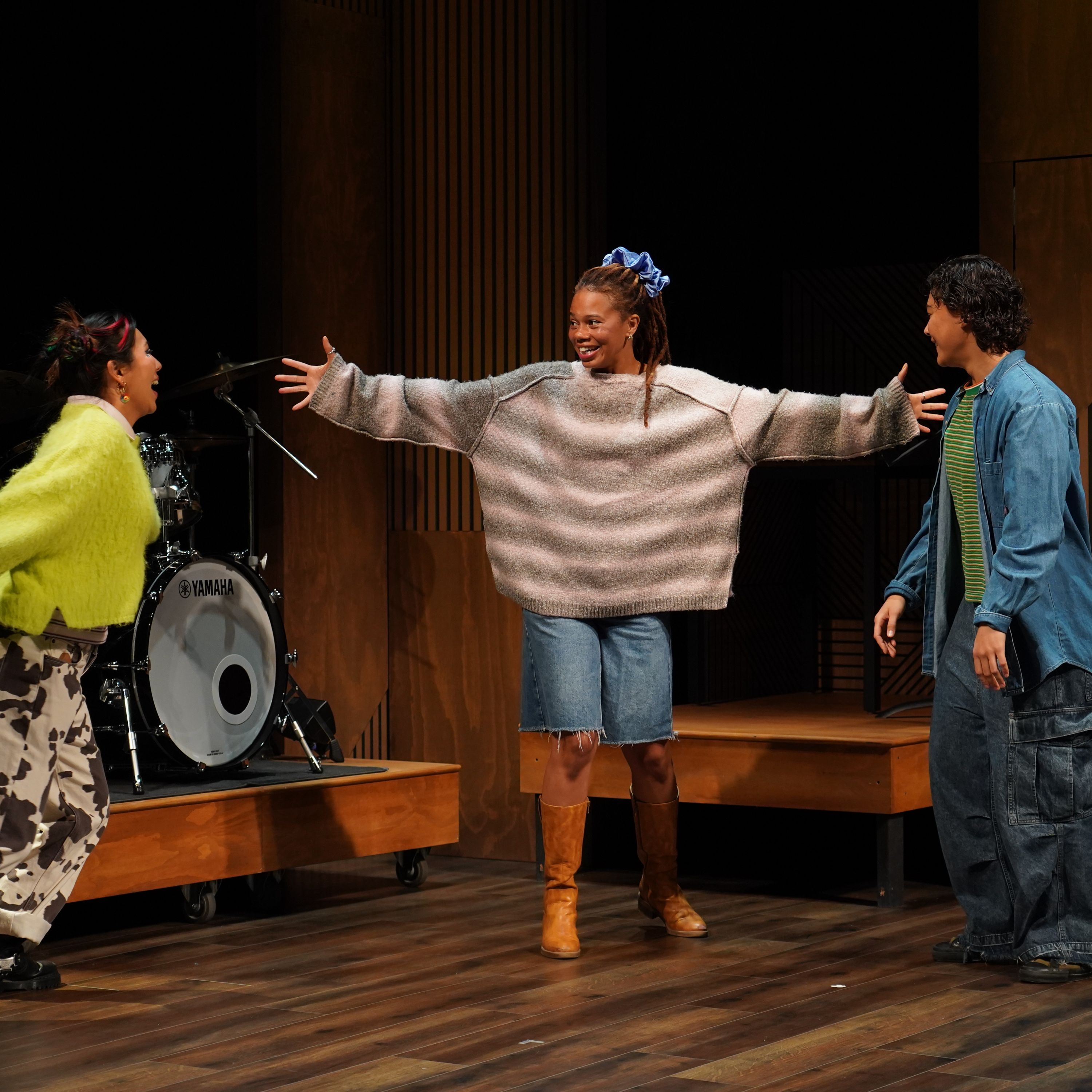
Loading summary
Transcript106 lines
- [00:00]
Hilary Fisher
All of it is supported by Progressive Insurance. Do you ever think about switching insurance
- [00:05]
Issa Davis
companies to see if you could save some cash? Progressive makes it easy to see if
- [00:09]
Hilary Fisher
you could save when you bundle your
- [00:11]
Issa Davis
home and auto policies.
- [00:12]
Hilary Fisher
Try it@progressive.com Progressive Casualty Insurance Company and affiliates. Potential savings will vary.
- [00:18]
Issa Davis
Not available in all states.
- [00:28]
Alison Stewart
This IS ALL OF it. I'm Alison Stewart live from the WNYC studios in soho. Thank you for sharing part of your day with us. I'm really grateful that you're here on today's show. We'll hear live music today from saxophonist David Sanchez. His new album is called Tembo. We'll kick off the all of It Summer Reading Challenge. Producer Jordan Loft joins me to talk about the details. But this hour we devote to plays about women. In about 30 minutes, we'll talk with the actors Fia Saban, Lydia Wilson and Yaron Ha. She'll join us to talk about their roles in the Maids. But let's get this started with Girls Chance Music. In a play at the Vineyard Theater, we meet four teenagers who are enrolled in a prestigious summer music program. These girls may have difficulties in the outside world, but in the music room, they share, they bond, sometimes they fight. And yes, they play music. Sometimes improvise, sometimes ethereal, always emotional. Plus, they are teenagers with all the angst and joy that comes with a period in one's life when you have a chance to figure out who you're going to be. And it's that chance part that can be a little sticky. The play is called Girls Chance Music. It is playing at the thinner Theater through June 21st. Joining me now is its playwright and composer, Issa Davis. It is always nice to see you.
- [01:50]
Issa Davis
It's so great to see you.
- [01:51]
Alison Stewart
And two of the actors, Hilary Fisher and Naomi Lata. Thank you. Naomi Lata, thank you so much for joining us. Of course.
- [01:57]
Naomi Lata
Thank you for having us.
- [01:58]
Alison Stewart
So, Issa, this is set in the Bay Area, a music program. How much of this is based on your experience?
- [02:05]
Issa Davis
It's not autobiographical. It's not even autofiction. It's purely invented, but filled with the inspiration that I had as a kid growing up in the Bay Area and going to a music program that was all genders. You know, I made this one a Girls plus program, but it's just filled with all of the love of all of the different kinds of music that I got to study. It's the place that really created this formative experience for me, taught me a relationship to music that I feel is really sacred and just gave me A real reverence for all of the ways that you can create music.
- [02:48]
Alison Stewart
Hilary, you went to Fiorello LaGuardia High School of Music and Art.
- [02:51]
Naomi Lata
I did.
- [02:53]
Alison Stewart
What did you get from that experience that you could channel into your character in girls chants music?
- [03:00]
Hilary Fisher
You know, it's funny, I had some friends come to the show from LaGuardia, and I was really hoping that the play would affect them in the way that it's affected me. And, you know, we're all artists and we study different things, but some people are just leaning a little bit more into their art, and some people aren't. And I'm just. I. Well, first of all, I get to sing classical music in the play, and I would not have been able to do that if it wasn't for LaGuardia trained in classical voice. I couldn't decide whether to do drama or vocal, but I was like, I know I'll get into the vocal department, so I chose that one. So that's been really interesting. And also, all of the relationships, I mean, we were a very social group, and also it was related to music. So a lot of times people would be popular just because of their art, or people would be popular because they were cool in school. And I just feel like when I read this play, I was like, this is my experience in so many ways.
- [03:52]
Alison Stewart
So, Naomi, did you have any kind of experience with this kind of program?
- [03:57]
Issa Davis
No, no.
- [03:58]
Naomi Lata
I was in a number of music programs through a regular high school. I was in the band. I did choir a little bit later in high school. But, no, I never had that, like, concentrated musical experience. I kind of found that more of in. More like the outlet arena outside of school and then. So it is kind of nice, though, to relive those years as if I did go knowing, you know, having everything I have now, it's. It's like I'm doing it now. This is my. This is my music program.
- [04:38]
Alison Stewart
Naomi, how would you describe your character? Margot.
- [04:40]
Naomi Lata
Oh, my gosh. I feel like she's someone who has learned to use her words in spite of herself. Kind of like she was raised to censor herself and her emotions that she feels too deeply in quotes, which is. You know, that's not true. No one feels too deeply about anything. But I think she's someone that's very wounded and realized through experience that, I don't have to talk. I'll just play. And that, you know, that's the outlet thing that I. That's what I connected to when I read the script for the first time. And, yeah, and it took someone who really saw through all of those layers to rip it open in Hillary's character.
- [05:30]
Alison Stewart
Hillary, can you describe Facts for me?
- [05:33]
Hilary Fisher
Ooh, okay. I think a line that really helps me describe facts is I want to do well, and I feel like facts is very determined. She's very affected by the people around her and the relationships, and she's very focused, and she has a lot that she's figuring out. I feel like Fax really just wants to get it right.
- [05:51]
Alison Stewart
Issa, can you describe the other two characters who are in the play?
- [05:54]
Issa Davis
Yeah. So there's a character named Ryle who's played by Yena Sung. And Ryle is a pianist who is a little bit tired of just doing the classical repertoire and wants to really expand into doing more improvisational, you know, more avant garde jazz. And then Gianna DiGregorio Rivera, we call her Gia. They play the character of Clementine, who in some ways is, you know, sort of beyond all of the sturm and jong of the rest of the students at the school that we see depicted. And it's just there to practice music because that's her day, you know, and she just kind of gives us a sense of what is outside of all of the drama that's happening between that triangle of three.
- [06:46]
Alison Stewart
I have to ask you, how did you come up with these names? Clementine, Facts, Margot and Ryle?
- [06:52]
Issa Davis
You know, I mean, what a question. Because it's sort of just like, you know, why do you even write what you do? I feel like there's just a real level of channeling, and I can't quite describe it. It's a mixture of things that you could easily find in an empirical way if you looked around at my life, you know, oh, she observed that from this relationship or from this dynamic. But I really feel that my work as a playwright and as a composer and just in general is just listening. It's just deep listening and trying to get it down. Whether it's waking up with a piece of music that I just try to get into my voice memos right away, or really feeling that there are maybe even sort of ancestral or teachers that I can't necessarily say that's exactly what this is, but I really just try to write it all down. As my mentor, Adrienne Kennedy says, that's the most important thing. Try to get it down, like all the things that you're hearing.
- [08:06]
Alison Stewart
We are discussing the play Girls Chance Music Playing at the Vineyard Theater near Union Square. It's a story of a summer spent with four girls and a gifted music program. Our guests today are playwright Issa Davis and actors Hilary Fisher and Naomi Lata. It is running through June 21st. Naomi, Margo, and Fax. They are very different, but they do bond for a time in the play. Won't give anything away. What do you see as the source of their bond?
- [08:33]
Naomi Lata
I think the source of their bond is this sort of. They, I try not to do without spoiling anything. I think they both inherently crave freedom, and they're just kind of shackled by different things. And even though they're too young to really put labels on that, yet they just see it. You know, it's that human nature thing, that animalistic thing when you can just see someone who, you know, sees you and that scares you. But what happens when you lean into that? And I feel like the drama of leaning into it instead of backing away is what makes good storytelling. Issa wrote that all down.
- [09:19]
Hilary Fisher
Hilary.
- [09:19]
Alison Stewart
We get glimpses into what's going on in the characters lives outside of the music room. When you think about it, what detail is important for you as an actor to understand your character a little bit, a little bit of what's going on in her life outside of the music room?
- [09:35]
Hilary Fisher
I think a lot of it is in the way that my character connects with the other characters in the play. I feel like I learn a lot about the backstory based on how they show up. And it's really fun for me to read a play, especially this play, because I feel like the characters are a bit archetypal. So I feel like when I'm reading something, I'm like, oh, my gosh, I know who this girl is. I feel like that really helped. And then I feel like the details kind of just add a little bit of shading into it. And it was really fun coming up with and adding to the things that I've already read. So, okay. You know, I have this relationship with my brothers, or this is what my family life is like. And I feel like based on how facts reacts to everyone else in the play, I can kind of fill that in and add my own backstory as well.
- [10:21]
Issa Davis
There's. Can I just add something about when you said freedom, Naomi, I was thinking this morning about how there's just this tension between discipline and freedom. And that is the tension. And how is it that we're gonna make music? Are we gonna have this real rigor? Are we gonna have this total risk taking? And I was thinking about how Esther Perel, the psychologist, and talking about what makes healthy eroticism, and it's a mixture of having that safety and having that danger. And that is the kind of dynamic that happens between these two characters.
- [10:55]
Naomi Lata
Totally. Totally. They have really different margins of error that they allow themselves. But I feel like they both still have. They both have both. They're just different ranges of it.
- [11:07]
Alison Stewart
Now, someone who's seen the logo for the program will realize that it should be Girls, Girls, Chance. Chants. Music. Music is what it should. Title should be. Could you explain this to people?
- [11:20]
Issa Davis
Well, yeah, and you get it because you're a music head and you play piano. So, yeah, so there are repeat signs in the title, which means that inside of the repeat signs, you have to say the word twice. And I was just telling them that we kind of broke the algorithm with ads because the algorithm had no idea what to do with those symbols. So we just think about the play as having all of these different points of interface. If you're a music head, you know that those repeat signs. And you would say, girls, Girls, Chance. Chance, Music. Music. But if you're just reading it and you're not part of that discipline, then you would just say, girls, Chance, music. And both of those are fine. But I think it also goes to, like, the title goes to the importance of chance itself, of experimentation. You know, the audience creates a melody when they come into the theater that we then use on stage to improvise with. And that's also a huge influence of the play is the pianist Craig Taborn, who just recently won a MacArthur, really talks about improvisation as spontaneous composition. And I think that that's something that's, you know, really crucial for these characters to talk about and learn as young students.
- [12:44]
Alison Stewart
We're talking about the play Girls Chance Music or Girls, Girls Chance, Chance Music playing at the Vineyard Theater. We'll have more after a quick break. This is all of It. You're listening to all of it on wnyc. I'm Alison Stewart. We're discussing the play Girls Chance Music playing at the Vineyard Theatre near Union Square. It's the story of a summer spent with four girls in a gifted music program. Our guests today are playwright Issa Davis and actors Hilary Fisher and Naomi Lata. It's running through June 21st. We got a text that said, I saw the show on Saturday. Really the best play I've seen in years.
- [13:25]
Hilary Fisher
Oh, my God.
- [13:27]
Naomi Lata
Wow.
- [13:28]
Alison Stewart
That's an exciting text.
- [13:29]
Naomi Lata
Yes, it is.
- [13:30]
Alison Stewart
So let's get to the play a little bit about the subject of it. First of all, you play drums. Naomi, in the play. Did you play drums before you joined this play.
- [13:42]
Naomi Lata
No.
- [13:43]
Hilary Fisher
Yes.
- [13:44]
Naomi Lata
Mic drop. Yeah. So, I mean.
- [13:48]
Issa Davis
Well, you do now.
- [13:49]
Naomi Lata
I do now. I definitely. Margot plays, and when I. Margo, I play. But, I mean, it's. I always. I'll take any excuse to give Issa compliments and the whole team that's, like, behind this play because, yeah, basically, I auditioned for Facts. At first, I bombed my audition. I just thought I would, like, surprise them and play a bunch of instruments that I hadn't touched in, like, in too long. And I told them that before starting. I was like, I didn't do. I don't know what I'm doing. And then I started, and I just thought I'd wiped the whole. You know, I just thought I'd laugh about this someday, which I guess we are. But then they reached back out and they had me read for what ended up being Margot, and they offered to have me learn the drums for the workshop that we had in November 2025. And then the rest was her story.
- [14:46]
Alison Stewart
So what's Margo's preferred method for playing drums?
- [14:51]
Naomi Lata
Preferred method, Interesting. I think her preferred method, it depends on what her love language would be, which I guess I leave that ambiguous because it changes definitely with who she's talking to and what mood she's in. I would just. Anything she'll find any medium to play on. It's just whatever she wants to communicate and how she can without using. Without using words.
- [15:23]
Hilary Fisher
Yeah.
- [15:24]
Alison Stewart
Facts is a classically trained singer when it comes to performing. What is the best day for her and what would be the worst day for her?
- [15:31]
Hilary Fisher
Ooh, I think the best day is when she's feeling creative and free, which, you know, hasn't happened very often, especially as the play starts. And so I feel like it's really a mind thing for Facts as opposed to how it all comes out.
- [15:49]
Alison Stewart
And for Ryle. I'm gonna ask you to stand in for Ryle. Issa, she stirs things up a bit. How does she stir things up?
- [15:56]
Issa Davis
Well, their real desire is for belonging, and they don't feel that they have a place in this dyad between Margo and Fax. And so they're trying to angle themselves in there. And the way that they do that is through learning about music, trying to impress them with their knowledge of music and just with their dogged persistence, you know, and then, you know, I think it's not too much of a giveaway to say that, you know, their character grows up to become a film composer. So, yeah, there's. I mean, that's the thing. When I'm Sitting here with these incredible performers and, you know, the two that aren't in this room, Pam McKinnon, the director, and I. Pam also is the person who commissioned this play and made it happen. You know, we just were like, how can we find people who can both. Well, actually, three part can be teenagers, can be great actors, and can be incredible musicians. And it's really wild that we were actually able to find people who could do that and also be great people, you know, so there's a real joy and probably why your friend sent that text. And just being able to see that much talent just explode on stage.
- [17:24]
Alison Stewart
Oh, that was my friend. That was a listener.
- [17:25]
Issa Davis
That was a listener.
- [17:26]
Alison Stewart
That's a listener who's listening to us right now.
- [17:28]
Issa Davis
Oh, my goodness. Okay.
- [17:30]
Alison Stewart
Even better. What did Pam McKinnon tell you or direct you that you are able to use every night? Hillary?
- [17:40]
Hilary Fisher
Oh, man, there's so many things. I think Pam is such a trusting director, and I think that's a big gift. When I'm working something out, there's a. There's a moment of silence when I bring up an issue, and it's really powerful before she says something incredibly profound. And there will be little snippets of phrases that I use every day from notes with Pam. And as opposed to just telling me what to do in that moment, it's just a phrase that I can just tell she pulled out of. Out of nowhere. I'm, like, going through my Rolodex in my head. But I, I. She has a gift of making. Putting. Giving us a phrase that is a summary of something that we're going through.
- [18:20]
Issa Davis
Wait, what about the lava?
- [18:21]
Naomi Lata
Oh, my God.
- [18:22]
Issa Davis
Remember? That was. That was a huge insight for me.
- [18:25]
Hilary Fisher
Yeah. Yeah. It was sad. Well, I feel like that also relates to the armor. The fact that the language is. Is our armor, and we're feeling everything like lava right underneath. I think about that every day. Yeah.
- [18:38]
Alison Stewart
What is something that Pam taught you, Naomi, or told you about your character that you're able to use every night?
- [18:44]
Naomi Lata
Hilary actually stole my answer. But I was going to say her biggest piece of advice for our first SF run or a San Francisco run, was that the writing is the armor. The language are the walls. They build up. So you, as the actor, don't need to do any of that. Let the language speak for itself, which leaves us very. I mean, for lack of a better word, naked. And I think that alone, it's what Hillary said of. There's. It's a summary of so many things that she can just Encompass in that of find a way to be comfortable being uncomfortable. And that's where. That's where the tension comes. You don't have to find the tension out of nowhere. It just. It will happen. And just trust that it's gonna happen and be okay with teetering on that. With the fire under you. Yeah, yeah.
- [19:45]
Alison Stewart
Issa, this originally was produced on the West Coast.
- [19:48]
Issa Davis
Yeah.
- [19:49]
Alison Stewart
How much has the play changed over time?
- [19:51]
Issa Davis
Ooh, such a great question. Like I said, Pam commissioned it back in 2018, when she first was stepping into the artistic directorship at ACT in San Francisco. And then this is the things she's doing as she's outgoing there. But it started with just write a play about the bay. And I thought about this school, and then we had, I think, something like six processes with different actors, you know, over those eight years, off and on. And so much has changed. Even between us doing it in March and April in San Francisco to here, you know, I was able to just watch the actors and listen to them and sort of see, well, what is the play needing from them? What is the play itself trying to say? And so we did a lot of restructuring. I added scenes. I combined some scenes. And the music, though, I think pretty much stayed the same. Right. And that's also, again, I think it just. It's all about, like, big ups to Pam for having that sense of trust and just saying, you know, what you're doing and keep listening to the play, and the play will tell you what needs to happen. And we have these incredible partners at the vineyard, you know, who also are co commissioners of this play. And, you know, one of the reasons why it's there. Sarah Stern is artistic director, but Daryl Roth and Paula Vogel, the playwright, you know, I don't think I would have a career as a playwright if she hadn't plucked up my play, Bull Rusher, and gave it, you know, its Pulitzer finalist status. And that is the reason why I even had a commission at the vineyard to begin with.
- [21:40]
Alison Stewart
So, yeah, I want you to explain something to me, because I came in just before the curtain went up. The songs that the girls sing that the piano, the pianist plays, that's created by the audience.
- [21:55]
Hilary Fisher
Right.
- [21:56]
Alison Stewart
Explain that to people.
- [21:57]
Issa Davis
Yeah, yeah. So there's something called a tone row. 12 tones on a piano. And what the audience does is they come up to a board in the lobby and then they choose. Each person chooses a different Note on those 12 keys. And then Cello, our stage manager, takes the board.
- [22:19]
Alison Stewart
That's what I saw this person just, like, taking the sport Out. I was like, where's he going with that?
- [22:23]
Issa Davis
Yeah, yeah, yeah, yeah. So cello takes it down, they put it on the piano, and then the actors use that melody that the audience has created and sing it, play with it throughout the show. So that's an element of chance, a kind of chance music that is incorporated, and it's different every night.
- [22:41]
Alison Stewart
Have you ever gotten anything that's kind of tough to sing?
- [22:44]
Hilary Fisher
Yes.
- [22:44]
Issa Davis
Yes.
- [22:44]
Hilary Fisher
But it's so fun because when I mess it up, I'm using that in the scene, and when I get it right, I'm using it in the scene. So it's really fun.
- [22:53]
Alison Stewart
Yeah. Can I ask you a couple questions that aren't about this play?
- [22:56]
Hilary Fisher
Yes. All right.
- [22:58]
Alison Stewart
Naomi, last night, were you at Filipinos on Broadway?
- [23:01]
Naomi Lata
Yeah.
- [23:02]
Alison Stewart
You performed in that last night, right?
- [23:03]
Naomi Lata
I did.
- [23:04]
Alison Stewart
All right, so tell us how that went, and how did it go?
- [23:07]
Naomi Lata
Oh, thanks for. Wow. Thank you for asking.
- [23:09]
Hilary Fisher
It went well.
- [23:11]
Naomi Lata
Well, I just think it's such. You know, I feel like we're all craving Community right now. And, I mean, it's such a privilege to have had that and have this show that really empowers queer women of color. And then on my day off, I get to go hang out with people that could. Could be my family.
- [23:34]
Alison Stewart
Yeah.
- [23:35]
Naomi Lata
You know, I haven't been to the Philippines in, like, 10 years, and so to kind of have that and sing all the songs. We all know karaoke. There's just so many things that kind of bring my heart rate back down, you know, in our very troubling times. But, yeah, it was fun. It was just fun.
- [24:00]
Alison Stewart
Hillary, you played Ariel. Yes, I did.
- [24:02]
Hilary Fisher
Yeah.
- [24:03]
Alison Stewart
What other Disney character would you like to play?
- [24:05]
Hilary Fisher
Oh, my gosh. What? Ariel was like, the one. I'm telling you. I mean, I've played a lot of princesses, and I love playing a princess. I would play Tiana. I think she's so fierce. Wow. Yeah, I think that'd be my choice.
- [24:23]
Alison Stewart
And, Issa, it was just announced that warriors is going to Broadway.
- [24:28]
Issa Davis
That's, like, a leak, but that's like, a rumor.
- [24:33]
Alison Stewart
Is it a true. Is it true? Ish.
- [24:35]
Issa Davis
I mean, truthiness. It's like, you know, when I know, you'll know kind of thing. You know, it's sort of like we're just in that process of finalizing everything. Cause we're going into workshop this summer. That's what we're doing. And we're just trying to figure out what the calendar will be. Precisely. But again, that was the first time I got to hang with you. Was to come in here and talk with Lynn. And of course, we're very excited for that. And I'm excited we're doing an event at Girls Chance Music tonight with Maestra, that organization for women and non binary folks in music. And, you know, it's just really crucial to me and I feel like this play really says it, that women have visibility as music makers and that that's what we should be doing is just really being able to see that, you know, we can make music just as well as, you know, the masculine principle.
- [25:42]
Alison Stewart
That was a good pivot. We'll say let's the rumor has some wind in our it's back.
- [25:46]
Issa Davis
Put it that way. Yes.
- [25:47]
Alison Stewart
We're discussing the play Girls Chance Music playing at the Vineyard Theater near Union Square. My guests have been Issa Davis, actors Hilary Fisher and Naomi Lata. Thank you for joining us.
- [25:57]
Issa Davis
Thank you, Alison. Come see the show. Having the right people in your corner for life's biggest milestones makes all the difference. Like a friend who's there. When you're house hunting or checking out a new ride, State Farm is there too, helping you choose the coverage you need. With a State Farm agent, you know someone is there to help you along the way. And with so many coverage options, it's nice knowing you have help choosing a plan that fits your needs so you can continue celebrating all of life's milestones. Head to statefarm.com to get a quote. Like a good neighbor, State Farm is there.
- [26:32]
Naomi Lata
All new drinks are now at McDonald's with refreshers like the Strawberry Watermelon Refresher and the Mango Pineapple Refresher with popping Boba. To crafted sodas like the Sprite Berry Blast with berry flavors and cold foam. Who knew ice cold drinks could be so fire? Try them all now at McDonald's. Refreshers contain caffeine.
- [26:57]
Alison Stewart
Copyright 2026, the Coca Cola Company Sprite is a registered trademark of the Coca Cola Company.