← All Of It with Alison Stewart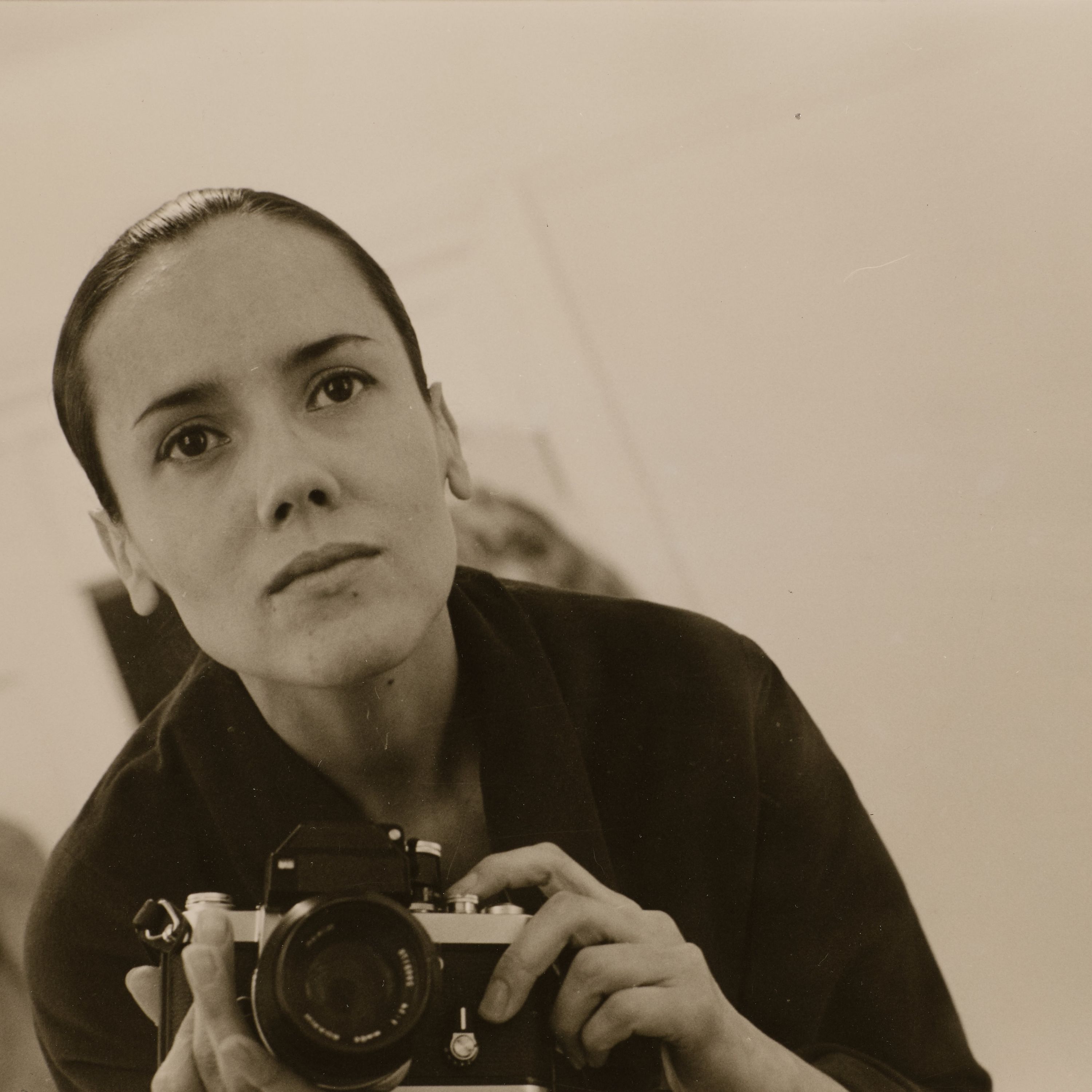
All Of It with Alison Stewart
El Museo del Barrio Spotlights Influential Nuyorica Photographer of the '70s
00:13:45
Loading summary
Transcript42 lines
- [00:09]
A
This is all of it on wnyc. I'm Alison Stewart. Sophie Rivera was a Puerto Rican photographer who started taking pictures in 1970s New York. She was known especially for her Latino portrait series, where she would ask people in her neighborhood, often of Puerto Rican descent, if she could take their picture. Rivera died in 2021 at the age of 82. And now El Museo de Barrio has organized the first ever retrospective of Rivera's work, encompassing decades of her experimentation with the camera. The exhibit is called Sophie Rivera Double Exposures. The show is a New York Times critic pick, writing how great that El Museo now has brought her fully into the light. It's on view through Aug. 2. A sample of some of her work is on our Instagram now ofnyc, so you can look at Pict while we talk about it. With me now is Susanna Temkin, El Museo de Barrio's interim chief curator. Welcome back to the station.
- [01:05]
B
Thank you. So glad to be here and excited to talk about all things Sofie Rivera.
- [01:09]
A
When did you first learn about Sofie?
- [01:11]
B
Well, she's a name that in the Latin American art world, in the Latinx art world, a name you always hear but very rarely get to see images of. So when I joined El Museo eight years ago, I was so excited to see that we had an image in our collection. So that began my first engagement with her practice. And the work we have is a quite surprising work. And so it led me down a lot of rabbit holes and starting to learn about her practice.
- [01:38]
A
It was interesting in that New York Times critics pick. They called the show Long Overdue Retrospective. Why do you think it took so long?
- [01:48]
B
Well, I mean, Sophie in her later years was ill, so I think that played a part of it. But I also think, unfortunately, as we're all recognizing women artists, especially women artists of color, often don't get their recognition until in their life. So sadly, that's the case with Sophie Rivera. But, you know, one thing I wanted to do with both the exhibition and the accompanying monograph is to try and bring in her voice. So what's really incredible about her estate is that even though she's not with us, she left behind a lot of writing. So I hope that the audiences can come and not only hear from us at the museum, but to actually have that contact with her.
- [02:26]
A
What did you get from reading her writing?
- [02:29]
B
You know, many people talk about how she was very private person, she kept to herself, very dedicated to her work, always going to the darkroom, reading her text, I think opened up so much more about her practice where we Were really learning not only about the subject matter, like the Latino portraits, but how she was very much engaging with photographic history, photographic techniques, really thinking about psychology, identity formation. So I think it's really cracked up a lot about her practice that we didn't know before.
- [03:01]
A
How did she get into photography?
- [03:03]
B
She started studying at the New School a little bit later in her life. She actually was a ballerina earlier in her years, which is very interesting. You don't really see that, I don't think, in her images. And she studied. Yeah. At the New School with Lisette Model, a really important Viennese emigre and figure here in the New York art world. And she started off doing a lot of photojournalism, which I think is a really interesting entry point, because in the show we see. See a lot of images of protests, also feminist protests, protests surrounding daycare funding. So a lot of things that I think are very pertinent to us today. I mean, not only in New York, but globally.
- [03:43]
A
It's sort of interesting because Model also taught Diane Arbus. Yes, yes, yes. Yeah. What impact do you think she had on Rivera's work, Modell?
- [03:52]
B
Well, I think Model and Arbus, who actually Sophie Rivera credits as also another influence. I think they both had an impact on how she approached her subjects. And also, you know, the people in the street. Modelle we know, especially for her work in the Lower east side, taking images of everyday New Yorkers. And I'll say that New York and New Yorkers were very much, you know, the constant muse of Rivera.
- [04:19]
A
And she was born in New York.
- [04:20]
B
Yeah, she was born in New York very much. I call her like an uptown girl. She lived on Morningside Heights, right off the 100, 125th street subway station, which you'll see the subway was very much an influence for her, an inspiration for her throughout her life. And, I mean, the proximity outside of her window, like, you couldn't. She took images from inside her apartment of the subway. That's how close. Yeah.
- [04:44]
A
What interested her about the subway?
- [04:46]
B
You know, I use the expression. I think it was a vehicle for experimentation for her. I think its proximity was very interesting to her. And she used it both as a place where she encountered everyday subjects like commuters. There's a beautiful image of a mother with a young girl riding the train. Also, you know, those unexpected encounters we have on the subway as New Yorkers. You never know who you're going to run into. But then I think she also enjoyed the subway, the challenge of photographing on the subway and its movement and again, looking out the window and seeing how the platforms would change in the snow, there's a whole series of really beautiful images that they're almost abstracted.
- [05:29]
A
We're discussing an exhibit at El Museo de Barrio about photographer Sofi Rivera. It's called Sophie Double Exposures, on view now through August 2nd. My guest is Susanna Temkin, El Museo's interim chief curator. So she's known for these Latino portraits. Right. Why are these the most well known photos of her work?
- [05:50]
B
Well, I mean, they circulated and they also were in what I think became her most iconic presentation during her lifetime. So she originally made these photographs in the late. But then in the late 1980s, she was invited by Public Art Fund and FOCO to do an installation inside the subway itself. So she made these really monumental images that she installed in the subway passageway at the Bronx Yankee Stadium subway station. And she really talks about how important that was, because for her then the everyday people going about their daily lives would be confronted with these beautiful images of people who looked like themselves and who Rivera photographed in this almost reverential, spiritual, like, exalted way. They almost have these halos that shine behind their heads.
- [06:43]
A
Now, that was her work in the dark room.
- [06:45]
B
That was her work in the dark room.
- [06:46]
A
Explain to people how she dodged and shadowed and all that kind of stuff.
- [06:49]
B
Yes. Yeah. So, I mean, this work has always been talked about in terms of the subject matter, but in this show, we really want to talk about her savvy as a physician, her know how in the darkroom. So to make the Latino portraits and to create this kind of shine that I was talking about, she used a technique of dodging and burning over and under, exposing certain areas so that these images, the backgrounds are extremely dark. They almost have like a chiaroscuro, like, art historical effect. And then the sitters, they are so beautiful. Their skin shines. They have this flashbulb that's going off behind their heads, and they look so, so gorgeous. And they're just everyday people in their everyday outfits, and somehow they turn into almost like these saintly figures. It's really incredible.
- [07:40]
A
The story was that she would walk up to people and ask if they were Puerto Rican, and if so, she would take their pictures right there on the street. It turns out it wasn't quite that. Will you tell us what the true story is?
- [07:51]
B
Yes, well, you know, I will acknowledge. So Sophie Rivera was the one who stated that. Anecdote to other curators who have worked with her in the past. But again, in having the opportunity to work with her estate, she left behind all of these notes that she had made for different presentations, different exhibitions that she was part of. And we learned that she was actually meeting people on the street and inviting them into a restaurant. So I think that's still. It's a similar ambit, but it's this twist. I still love that the restaurant, you know, is a site of community gathering. And we also know this from the contact sheets, which we all have access to now for the first time, and some of which are in the exhibition and some of which are published in the book.
- [08:38]
A
A lot of the work is done in the 1970s, and that was a gritty time in New York City. Where do we see that in her work?
- [08:46]
B
Yeah, well, like I said, she is an absolute New Yorker. We see it on the subway in all of the graffiti, which she loved, graffiti art. She talked about graffiti writers almost like prophets for the future. But she also took these quite beautiful images of, like, the stains and the grime of the city. So she has one image that she calls Sidewalk Demon, a rare image that she titled herself, and it's like this puddle on the sidewalk. And now as I'm walking around New York, every time I see, like, something a little goopy, I always think of Sophie. She would have loved it.
- [09:19]
A
We're talking about an exhibit at El Museo de Barrio about photographer Sophie Rivera. It's called Sophie Double Exposures. It's on view through August 2nd. My guest is Susanna Temken, El Museo's interim chief curator. If you'd like to see some of the images that we're talking about, you can check out our Instagram llofitwnyc. Rivera was involved in an organization called Enfoco, which is made up of Puerto Rican photographers. What was the mission behind El Foco?
- [09:47]
B
Yeah, the mission behind Enfoco, which was created very close in time to El Museo del Barrio itself. It was made to really be a place where photographers of Puerto Rican descent and later photographers of color could really come together and take images of the. So instead of people coming in to look at a location like El Barrio, it would be made by artists themselves. And Sophie got involved with them in the 1980s. She was one of the few women in that circle, which I think may also have played to why we haven't heard from her or about her. Long overdue. I think she was really, in some ways, fighting the patriarchy as this lonely female figure among that group.
- [10:33]
A
And we get to see self portraits as we see on the COVID of the book. Yes, it's really Amazing. What do you think she was trying to do with these self portraits? They're really kind of beautiful.
- [10:45]
B
Yes. I mean, Sophie was an incredible Persona, and she. Everyone always says she was always with her sunglasses, with her pipe, I think, also shielding perhaps some of the gaze that people were casting on her. And that series is from works where she was dealing with her cataract. So when you come to the show, I invite you, really look closely in her eyes, and you'll see this massive cataract. And she writes about confronting what does it mean to be an artist and a photographer in particular, where your vision is sort of threatened.
- [11:21]
A
Oh, my gosh.
- [11:22]
B
And in that series, too, I argue that she has this kind of odd, foreshortened perspective. Like, imagine when you put a hand in front of your eye, it changes how you see. And she plays with that to a certain extent in that series.
- [11:35]
A
As we said, she passed away in 2021. Where does her archive live?
- [11:40]
B
So her archive, it's all within her family's estate. Excitingly, her work is now being collected by other major museums. We're also so pleased that she's been a part of our collection at El Museo for decades. In fact, this is a bit of a homecoming for her. We had shown her work a lot in the 80s. She was working at El Museo doing other exhibitions of photographers. So, yes, this is, I think, an overdue evaluation of someone who has always been present. You know, she was very much on the art scene.
- [12:15]
A
What do you think Sophie Rivera understood about New York?
- [12:20]
B
Oh, that's a great question. I mean, I think that she understood that the people of New York were its core, were its spirit. I think she really enjoyed meeting her subjects. And it's something that I think is really interesting as you look at the gaze that she's engaged in in these portraits. You know, I think that she was charismatic. There was something about her that I think let people open themselves up to her and that were what made these images so absolutely beautiful and captivating.
- [12:52]
A
If someone goes and sees the show, where's a place that you'd like them to spend an extra few minutes in front of?
- [12:58]
B
Okay, well, I think the series that's called the Tutu series are really beautiful, really fun images of children in New York City playgrounds. They're double exposures. So she's making two images within a single frame and doing that. It's a very hard technique to do. Well, she does it beautifully, and it really invites close looking. You know, is this one child, two children together on the swings, on the playground sets, so I think those are really worth some extra attention.
- [13:32]
A
The name of the exhibit is Sophie Rivera Double Exposures on view through August 2nd at El Museo de Barrio. My guest has been Susanna Temkin. Thank you for coming to the studio.
- [13:43]
B
Thank you so much. It's always fun.
- [13:46]
C
WNYC Studios is supported by AT&T Summer. It's when we share more time, more memories and more photos and at, at and t. The iPhone 17 Pro is your summer essential. Its center stage front camera auto adjusts the frame to fit everyone into group selfies. Right now at, at and t, you can get iPhone 17 Pro for $0 with eligible iPhone. Trade in any condition required. Trade in of iPhone 15 or higher excluding iPhone 16e and 17e required eligible plan terms and restrictions apply. Subject to change. Visit att.comiphone or visit an ATT store for details.
- [14:24]
D
You won the bid. You're on the job now. You just need the materials. Get supplies that work as hard as you do from the Home Dep Depot. Maximize your savings with pricing benefits for pros. Get savings on the products you purchase the most and earn perks at checkout. Sign up today to save time and money. The Home Depot Pro it's about time.