← All Of It with Alison Stewart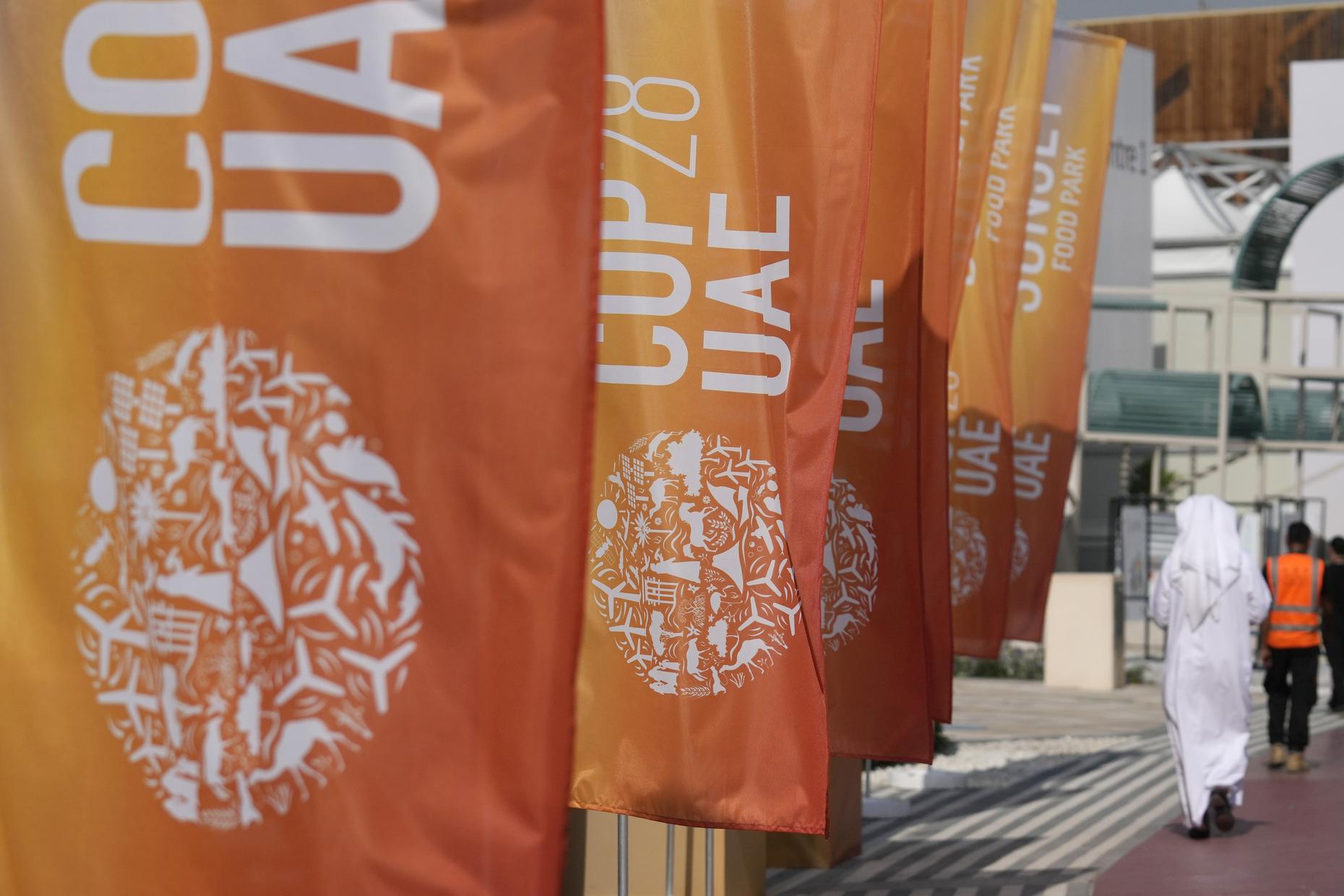
All Of It with Alison Stewart
Environmental Justice In NYC As COP28 Begins
00:30:45
Eddie Bautista, executive director of the NYC Environmental Justice Alliance, joins us to talk about some of the local impacts of climate change.
Loading summary
Transcript51 lines
- [00:02]
Bic Soleil Advertiser
Surprise. Beach day. No excuses. I'm in. Gimme five. With Bix Soleil Glide Razor, you'll have hydrated, smooth skin that's ready to go on the fly. No shave cream needed. You can prep, shave, and hydrate all in one step thanks to moisture bars that hydrate your skin during and after shaving. 5 flexible blades hug your skin for a close shave. Glide into smooth. It's your time to shine with bixsolil. Buy now at Amazon and Walmart. Ready? Your skin looks amazing. So smooth and beach ready.
- [00:29]
Eddie Bautista
Let's go.
- [00:32]
Alison Stewart
So I was just parking my car and then I saw you.
- [00:35]
Eddie Bautista
The Gecko.
- [00:36]
Alison Stewart
Huge fan.
- [00:37]
Eddie Bautista
I'm always honored to meet fans out in the wild.
- [00:39]
Alison Stewart
The honor is mine. I just love being able to file a claim in under two minutes with the Geico app. Well, the Geico app is top notch. I know you get asked this all the time, but could you sign it?
- [00:49]
Eddie Bautista
Sign what?
- [00:50]
Alison Stewart
The app. Yeah, sure. Oh, that means so much. Oh, it rubbed off the screen when I touched it. Could you sign it again? Anything to help, I suppose. You're the best.
- [00:59]
Eddie Bautista
Get more than just savings. Get more with Geico. I'm gonna put you on, nephew.
- [01:03]
Callers
All right, unc.
- [01:04]
Alison Stewart
Welcome to McDonald's. Can I take your order, miss?
- [01:06]
Eddie Bautista
I've been hitting up McDonald's for years. Now it's back. We need snack wraps. What's a snack wrap? It's the return of something great. Snack wrap is back. Listener supported WNYC Studios.
- [01:33]
Alison Stewart
This is all of it. I'm Alison Stewart, live from the WNYC studios in soho. Thank you for spending part of your day with us. I'm really grateful you're here. It is the 1st of December, which means it is World AIDS Day. And this year's theme is World AIDS Day 35. Remember and commit. If you were looking for a place to reflect, there were folks gathering at the New York City AIDS memorial at 7th Avenue and 11th Street, Greenwich Avenue area, right across from the former St. Vincent's Hospital, which was the epicenter of the epidemic here in New York City. I saw a lot of folks there this morning. It is the 1st of December, which also means it is moving day. There are a lot of moving trucks out there today, sometimes double park. So drive carefully, everyone. Pack your patience and easy on the horns. We know moving is stressful for everybody. On today's show, I'll speak with the directors of the new documentary Bad Press, which covers the battle over an independent press within the. Within the Muskogee Tribal Nation. And we'll talk about dating after 50 with author Francine Russo in conjunction with our first ever all of it watch party for a reality show. Yes, we're going to discuss the cultural phenomenon the Golden Bachelor. And yes, that explosive finale with super fan comedian Jordan Carlos. That is our plan. So let's get this started with a look at what the most critical environmental issues in our area are. The 2023 United Nations Climate Summit, otherwise known as COP28, kicked off yesterday in Dubai where leaders from around the world gathered to discuss how to address the environmental threats to our planet. And while climate change is a global problem that requires international cooperation, it's also very much a local problem. Think about our flooded subways like during that intense storm like the one back in late September which shut down the city. That was the same month we saw the hottest temperature for the year, 2023 in New York City when it hit 93 degrees on September 7th. That's where organizations like the New York City Environmental justice alliance come in. Led by my next guest, executive director Eddie Bautista, the NYCEJA has helped to organize campaigns addressing flood resiliency, waste, disposable renewable energy, and a whole lot more. So in the midst of these major global climate talks, we wanted to invite someone on to break things down locally. Eddie Bautista, welcome to all of it.
- [04:07]
Eddie Bautista
Good afternoon, Allison. Thanks for having me.
- [04:09]
Alison Stewart
Listeners. What are the most pressing climate related issues in your life? What would you make, what would make your neighborhood more environmentally just? Or if you're involved in any of the initiatives we're about to discuss with Eddie, feel free to join the conversation. Our Phone lines are open 2124-3396-9221-2433 wnyc. You can call in and join us on the air or you can text to us if that's more convenient. Our social media is available to you as well. At Olivet wnyc, we are talking about local environmental issues to kick off this hour. So as I mentioned, Eddie, Cop 28, it's all about the global focus. We are going to be locally focused. Your organization is locally focused. But I do want to ask, just sort of as an umbrella question, what do you think is the overlap between giant global issues and the things we focus on on the local level? When you, when it comes to mind, where's the intersection?
- [05:04]
Eddie Bautista
Thanks, Allison. I think from, from our perspective, context matters, right? So our coalition, New York City Environmental justice alliance, or nija, is a coalition of community based organizations from the city's most environmentally overburdened communities, which means we're a black and brown coalition, right. We, we're in the five boroughs. And one of the things you know from that pers when you look at climate change and climate impacts, we've long known that even though climate change will impact everyone, its impacts will not be evenly felt. And that in particular, when we extrapolate that context internationally, the way, say black and brown communities within the United States and in New York City tend to have the greatest environmental disparities. Similarly, on the global stage, we find that what's called the Global south, which are essentially entire continents, right? South America, Africa, Asia. When we talk about the Global south, we're talking about again, the sectors of the globe that have contributed the least to climate change but are disproportionately vulnerable to its impacts. For example, one of the things that's been a long standing deep concern of ours when it comes to the comp meetings is the ongoing failure of the Global north, the wealthiest countries in the world, to honor the commitments that they've said themselves and the world knows is needed, which is the kind of subsidies and support for the Global south to help them enact a just transition so that we're not worsening and already increasing hazardous moment for our planet. So yeah, so whether it's international or whether it's here in New York City, you know, we have to continue to center the communities of color and low income communities that are most disproportionately burdened because that's where the, the bulk of the deaths and the vulnerabilities lie right now.
- [07:15]
Alison Stewart
Sometimes these problems can feel so big, too big even maybe too far gone. And that big change needs to come from governments or major corporations to make any kind of difference. I want you to give a pep talk. I want to give your, you to give your, your speech, your pitch. Who thinks that I can't do anything, I'm really, I'm ineffective in this level. This is too big.
- [07:38]
Eddie Bautista
Yeah, no, I can't tell you how much I can relate to and our staff and our members. I think two things are important, right. I think there has, there is an emphasis that often publicly at least, tends to put climate action in individuals, makes it more of an individual responsibility or environmental issues. And obviously there are all kinds of things we can be doing as individuals to reduce our carbon footprint, to not contribute to the ongoing, not just environmental, but climate crises that both locally and internationally we're facing. But let's be honest, the real impacts, the real pivot when it comes to climate action and to really get serious about the climate change moment, not that's in the far distant future that we're currently living through. It's clear that it is the fossil fuel corporations, it's the big polluters. It is a global responsibility that local governments and national and state governments all have to play a part in holding polluters responsible and working to enact what we've been calling for years, a just transition. I think everybody now recognizes that the transition from an extreme attractive, polluting energy sector to a clean, renewable future is inevitable. What's not inevitable is justice. And what's not inevitable is ensuring that again, the least that the most vulnerable are given the tools and support and resources they need in many cases for solutions that we have developed on the ground ourselves in order to reduce the global impact. So in terms of what individuals can do, yeah, you, you know, absolutely, like, you know, use LED lighting, increase your recycling, increase your composting. But as great, you know, as great a contribution as those are, even more importantly, contact your council person, your assembly person, your state senator, your congressperson, and trust me, there are a range of things that elected officials at all level of levels of government need to be pursuing so that we can reduce the impacts that we now are living through. So yeah, individual action is fine, but what we really need is collective sectoral commitments to make sure that these transitions are happening justly.
- [10:10]
Alison Stewart
We are talking about local environmental issues. My guest is Eddie Bautista. He is the executive director of New York City Environmental Justice Alliance. Listeners, we're asking you what are the most pressing climate related issues in your life? What would make your neighborhood more environmentally just? Or if you're involved in any initiative that you want to shout out or discuss with Eddie or the with the rest of us, please call in our numbers. 2124-339692-21243. You can also text to us at that number. We got a text and we'll go to some calls. The text says, I would love to see a ban on all disposable plastics, including all packaging that would do a great deal for climate change and also just cleanliness in our streets. Let's talk to Sharon calling in from Queens. Hi Sharon, thank you for calling in.
- [10:56]
Callers
Hi. We have a problem in southeast Queens with tractor trailers parked on residential streets and in turn they block the vision of people at intersections and also they help people dump. So we not only have them parking on regular streets, they just park and then next thing you know, maybe six hours later, they're gone. And there's a whole lot of Garbage daily. And unfortunately, I've talked to my sanitation department about it and they're doing the best they can. Right. But it is ridiculous that they are allowed to park in the dark on a residential street with no flashes, no anything. And this has been a big problem. And I've talked to councilmen, I've talked to borough president. It seems like the police want to give them a pass because they're doing. But you know, they're doing crime.
- [12:00]
Alison Stewart
Sharon, I'm going to ask you to hold on for a second while I get. Bring Eddie into this conversation. Eddie, I saw you nodding about tractor trailers and particularly idling is another issue with tractor trailers, correct?
- [12:10]
Eddie Bautista
Yeah, absolutely. And in particular in southeast Queens, you know, there are multiple layers to this problem, right? So it's, you know, the trouble with tractor trailer trucks is that they all burn diesel and diesel emissions clearly, you know, exacerbate asthma and other public health. Upper respiratory cond. When you add on top of that the fact that they shouldn't be idling. When you add on top of that that certain neighborhoods are, you know, have been zoned and planned in such a way where they encourage these kinds of clustered activities, you end up having communities like southeast Queens, which is, you know, again, a community of color and a community that in fact is not, you're not even a traditional low income community. Clearly there are pockets of low income folks in southeast Queens, but it's also one of the largest communities of middle black homeowners in the country. And the fact that, you know, even, in fact, that's one of the things that we, we've told people over the years when it comes to this notion of environmental racism or environmental justice, we tell people, yeah, you know, low income communities, which include, you know, low income and certain working class white communities, can also be victims of environmental injustice. But that, in fact, there have been studies that show that even middle class African American communities oftentimes have greater environmental disparities and even lower income communities. So the, the idea that there are certain communities that have a disproportionate impact is in fact one of the reasons we founded our alliance in 1991. We were founded basically with two missions in mind. One is, can we identify what are the systems that are leading to these disparities and can we figure out how to dismantle these systems that lead to African American and Latino and Asian communities bearing a disproportionate brunt of these impacts? And so, for example, like the campaign that we've been fighting for the longest, our Inception has been the issue of waste transfer stations. And waste transfer stations are clustered in three communities. The largest cluster is in North Brooklyn, second largest in the South Bronx, third largest, southeast Queens. So when Sharon talks about garbage specifically, it's not just diesel trucks, it's specifically tractor trailer trucks that are driving waste in and out of waste transfer stations that are located in southeast Queens. Which is why we've been fighting for years for waste equity law that we got passed a few years ago. I can talk little bit more about that. But one of the, one of, I think the learning lessons that we've grown to painfully understand is that it's one thing to get a law passed. And mind you, one thing means years of campaigning and advocacy. It's another thing to make sure that the law gets implemented properly. And that is the fight that we've been having for the last couple of years. Even when we pass visionary policies like waste equity, like the commercial waste zones, its impacts are only as effective as the implementation by the city. And we are as frustrated as Sharon and other folks at how the city's not implementing these laws effectively or expeditiously.
- [15:20]
Alison Stewart
Let's talk to Reed calling in from Staten Island. Hi, Reed, thank you for calling all of it.
- [15:25]
Callers
Hi, Allison. Great to be back on again. This is my second or third week. I'm really upset about the elimination of the community composting program. And a lot of my friends. I'm in a graduate program in sustainability. We've been talking about this a lot. 8.3 million pounds of garbage already are diverted per year through this program. And Eric Adams is talking about eliminating it right when after the city council has now pushed successfully to make composting a like city directive. And this is, this program is all voluntary and people do this.
- [16:05]
Like.
- [16:07]
Voluntarily and divert millions of pounds of garbage a year. And this is all going to be slated for removal for the budgets. And this is now like all this soil that we're not going to get out for NYC parks and street trees and community gardens. So I'm just, I'm really upset about this program and I think that this should be the last thing that we're cutting in budget.
- [16:28]
Alison Stewart
Reid, thank you so much, Eddie. I wanted to get you to weigh in on composting and the idea that it's supposed to be universal in theory this year. I know someone on our team lives in an area where it's supposed to happen. Hadn't happened.
- [16:43]
Eddie Bautista
Yeah, no reads right. And in fact, it's the same vein as the previous callers of Sharon's issue, which again, solid waste, bad policy. How do we continue what is an unsustainable waste management system? How do we continue to drive reforms to reduce those impacts? Right. And just to give you an example, it's not just like, you know, you know, I don't want to be seen as being, you know, uniquely unfair to the Adams administration. This is a fight again, for 30 years, we've had with just about every mayor. And you know, we, for example, two, three years ago, two years ago, during the Blasio administration, there was another budget cut of composting that we had to fight with the council and finally get it restored. But yeah, if on up, up until and when we have citywide composting in place, and, and so long as we have. They have to have these budget dance fights every year between a mayor and a council, it's. It's not. We're not going to get to the. The scale of compost diversion that we. We know we need. Like, about a third of the waste that New Yorkers generate is, is. Is, you know, is. Is food waste. Right. And it's waste that could be compostable that could be, you know, could have not just an impact in terms of reducing the amount of waste that we manage in the city of New York and to reduce the amount of waste again in those three communities of color I was mentioning that handle like 75% of the city's waste. Let me just take a step back to kind of, kind of give people a sense of scale. We generate somewhere in the order of like 24,000 of 24,000 tons per day of waste. About half of that is residential waste, and the other half is commercial waste. And one of the things that we got passed in 2018 was something called the commercial waste zones law. And the intent of that law was to insert real regulatory, for the first time in the commercial waste system, a mandate that the commercial waste haulers actually have to increase recycling, increase waste export that uses environmentally sound ways of exporting as opposed to these diesel trucks that Sharon was talking about earlier. And again, composting could be a big part of it because restaurant, like, where do you. Where is the majority of the food waste coming from? Right. So, yeah, it is. Reid is correct. The composting we are going to. We and along with our allies will be fighting like mad to make sure that not only do we have these cuts restored in the future, but that we fully expand the program, which. Which we desperately need.
- [19:27]
Alison Stewart
We're talking about local environmental issues with Eddie Bautista, executive director of New York City Environmental Justice Alliance. We're also having this conversation with you. We've got a few calls lined up. Someone wants to talk a little bit about what's going on in the suburbs as well. We'll get into flood resiliency and maybe talk about the budget a little bit more. This is all of it. This is all of it on wnyc. I'm Alison Stewart. The United Nations Climate Summit, otherwise known as COP28, kicked off in Dubai yesterday. Of course, our world leaders discussing climate change. We're discussing it on a local level with you listeners as well as with Eddie Bautista. He is the executive director of New York City Environmental Justice Alliance. Before we go to more calls, I did want to ask you about what you were watching most closely in the new budget proposals because the Adams administration, there were budget cuts announced that affected libraries, the nypd, the Education Department, the composting programs and so much more. What were you watching most closely, Eddie?
- [20:33]
Eddie Bautista
You know, I mean, we, you know, because we're, we're a citywide coalition that are rooted in New York City neighborhoods. You know, unfortunately, we don't have the luxury to just look at any one piece of the budget. So all of it's concerning to us. But in the context of environment, let's just, let's, let's look, let's hone in specifically on flooding, for example. So, you know, we just had record rainfalls. You the broadcast talking about it, Allison. In September we saw the most rainfall that we've ever seen in New York City history. And again we saw an administration that for the second time this summer had a significant historic climate change event, yet they failed to notify New Yorkers with any sort of timeliness. That said, we understand in the administration, to their credit, has talked about the need to dig in in terms of their flood proof planning. Right. But the problem is, is that there, there have been a number of studies and reports that put out flood mitigation recommendations that were just not pursued by this administration. Right. You know, when they, when the city council had a hearing in October about, you know, the, the, the hurricane Ophelia and its impacts in New York, they talked about, about the flood net program and they talked about the flood sensors that, that they're going to deploy as part of the mitigation. Well, the problem was at that hearing they had just begun the flood net program and the flood sensors. The flood center deployment again is just begun and there's, it's all ahead of us. Right. This is what they testified to in October this month they cut it. So, you know, it's, and that's part of the problem is that, you know, we, we have a mayoral administration that, that emphasizes public safety but somehow struggles to see public safety beyond street crime. Like, you know, what's more public safety than making sure that on a, for example, the beginning of the summer on a day where we had the worst air quality in the world, there was no, not, there was no heads up from this mayor. And again, with the flooding, we knew that it was coming and, but they could, there should have been at least one notice from the mayor the night before because nobody's going to listen to, listen to or pay attention to their app, you know, or they're not gonna listen to some random commissioner. They will listen if the mayor gets on the, on the news the night before and says, look, this is coming. So, yeah. So whether it's everything from as simple as just making an announcement to the, the, the, the, the yawning gap between the rhetoric of climate protection versus how you actually pay and operationalize it, that's a big growing gap in this administration and should be caused for concern for all New Yorkers.
- [23:25]
Alison Stewart
Let's hear what people's minds Kathy has been holding. She's calling in from Nyack, New York. Kathy, thank you for holding. You're on the air now.
- [23:33]
Callers
Thank you. Yes, I'm in Rockland county, suburban area of New York City. The biggest contributor to greenhouse gas emissions is transportation in this area and in probably many, many suburban areas. But all the emphasis, this here is giving the subsidies and the tax breaks to the wealthy people to buy their electric cars so there'll be more cars on the road. So that's another huge issue. They may be selling their gas guzzling cars to the poorer people who, you know, and getting them off public transit. And the public transit up here is horrendous. We've really lost an opportunity here by giving all these subsidies for tax breaks.
- [24:30]
Alison Stewart
You'd rather, Kathy, it sounds like you'd rather see it go towards public transportation. That's where you would like to see money go.
- [24:36]
Callers
Absolutely. And they are the environmental heroes that have been taking public transit. And we could be at least putting more money into, to getting electric buses, which we don't, and improving the system.
- [24:53]
Alison Stewart
Kathy, thank you so much for calling in. Let's talk to Tess calling in from Manhattan. Hi, Tess, you're on the air.
- [25:00]
Callers
Hi. Thank you for taking my call. Yeah, I'm calling about something that I've sort of taken the initiative myself in collecting, like all the soft plastic and that we all acquire so much of just when you, you know, trips to the grocery store or shipping packages or whatever. And it's. I ended up finding out because I was like, you see it all the time in recycling bins, and it doesn't belong in there. In residential recycling bins, it clearly states it's supposed to be hard plastic. And people. But they want to do something about it, but they don't know that there actually was a law passed. I believe it's in all of New York State that large stores, a certain number of employees or whatever it is, are supposed to take back this soft plastic. And they're supposed to have, you know, in an obvious place, bins where you can deposit, you know, you can collect it in a bag and then bring it and drop it off. And it's rare that they may have those bins available. I often feel like I'm just giving it to them for them to just put it in the garbage after I took the time to collect it. I don't think that this program is at all publicized. People don't even know that they can do this. Most of this soft plastic kind of trash just ends up, you know, blowing around on the street or just mostly in garbage cans and landfills. And just the fact that all this plastic is being created like virgin plastic in the first place, I think if people were more aware and the onus were on, you know, the onus is on the consumer. But if we people are aware of this, that they have to deal with this, I think there'd be more pressure on manufacturers to use less of it.
- [26:27]
Alison Stewart
Tess, I'm going to dive in because our phone lines are pretty full. I really appreciate what you're doing and the point you're making. Let's talk to Lee calling in from Queens. Lee has a question that Eddie, you might be able to answer. Hi, Lee, you're on the air.
- [26:38]
Callers
Thanks so much, Alison, and thanks, Eddie, for taking the call. Wanted to get a sense from you whether or not you thought that there's going to be any chance of the Ravenswood facility will come offline, given there's been a lot of talk about offshore wind, there being difficulties with financing and things being no longer fiscally viable. Will we ever see Ravenswood come offline and replaced by something that's a little bit more environmentally friendly, like offshore wind or solar.
- [27:08]
Eddie Bautista
That's a great question. Can I jump in?
- [27:10]
Alison Stewart
Yeah, absolutely. Go for it, Eddie.
- [27:11]
Eddie Bautista
And just. Thanks for the question, Lee. And just for folks who may not be aware Ravenswood is the largest power plant in New York City, maybe the largest in the state. Now they think of it. For those of you who may, you still may not know what I'm talking about. Anybody drives on the fdr, when you look across and you see, see those enormous smokestacks and queens that are red and white striped, that is the Ravenswood Power plant. Not only is it the largest power plant in New York City, it's also immediately adjacent to Queensbridge Houses, which is the largest public housing project in the United States. It's the home of NAS and nas. If you're hearing this, we want you to come and join the campaign. We've been working for the last couple of years on something called Renewable Ravens we which the new owners of Ravenswood have been to their credit working with environmental groups and labor groups to do exactly that, to transition the Ravenswood facility from a fossil fuel burning entity to one that is, that's running on renewable. I'm sorry, not a facility that relies on clean renewable energy like offshore wind and the like. We have, there is a bill called the Just Energy Transition act or Jetta that we have been supporting along with our colleagues in New York Renews and it is a mandate for the state if the bill passes, that would mandate that a study be done looking at all the power plants that could potentially retire as a result of another law that we got passed in 2019 called the Climate Leadership and Community Protection Act. Again, for folks who don't know, it's the New York State climate law. It's the most ambitious climate law among the 50 states and served as an inspiration to the Biden administration for their climate policies. We saw when we passed that that there will be opportunities. Part of that law calls for by 2040, all of our energy generating systems in New York State needs to be emissions free. And so we believe that that mandate coupled with with this Jeddah bill which would mandate that a study looking at how to retire those power plants that rely on fossil fuel by 2040, as well as a procurement where the state of New York would actually have to pay, help pay for the deployment of those new clean renewable energy systems. We believe that that is the path to get the Ravenswood facility fully transitioned mentioned. So for folks who want to know more about that, just contact info@nyc-eja.org and we will plug you into the renewable Ravenswood fight. It's a good one.
- [29:56]
Alison Stewart
Before I let you go, I feel like I need to ask one question at least about heat. Anybody's here this summer knows that heat has a major impact on quality of life and also on safety and health. What is a heat issue that you're focused on? Where do you want to see change?
- [30:10]
Eddie Bautista
Extreme heat is the most deadly of all the climate change impacts. If you add up all the deaths that happen as a result of storm surges and flooding and wildfires and the rest, people, more people die of extreme heat. 300, over 370 New Yorkers in this city die every heat from exposure to extreme heat. You know, a lot of those sometimes are elderly folks and folks who have, have health conditions, but the extreme heat would be the trigger that actually contributes to their death. Right. So not only are we losing 370 New Yorkers every year right now to extreme heat, but by the 2050s, the panel on Climate change predicts that the number of 90 degree days in New York City is expected to double or triple and the number of heat waves are expected to triple or quadruple. We are in for a really dangerous period of time in the coming decades. And, you know, the 2000 and 50s may sound like a long way off. It really isn't. So there is a range of extreme heat legislative and policy recommendations that we've been pursuing to reduce and again, the disparities for black and brown New Yorkers are even higher when it comes to extreme heat and all the climate change impacts. So, yeah, extreme heat is real. It's, it's, it's, it's something that both the city and the state need to do a lot more. For example, one of the things we just got passed a couple of months ago with our partners in Forest for All was a, was a. The city council mandate that they plan for including 30% tree canopy coverage throughout the city, which would work wonders in reducing again, the heat impacts. That, and there's a ton of other things like that, but I'll stop there because I know we're running out of time, but thank you, Alison.
- [32:01]
Alison Stewart
Eddie Batista is executive director of New York City Environmental Justice Alliance. Thank you so much for fielding listeners calls and sharing the work you do.
- [32:09]
Eddie Bautista
My pleasure. Thank you, Allison.
- [32:13]
Bic Soleil Advertiser
Surprise Beach Day. No excuses. I'm in. Give me five. With Bic Soleil Glide Razor. You'll have hydrated, smooth skin that's ready to go on the fly. No shave cream needed. You can prep, shave and hydrate all in one step thanks to moisture bars that hydrate your skin during and after shaving. 5 flexible blades hug your skin for a close shave. Glide into smooth. It's your time to shine with Bixsol a buy now at Amazon and Walmart. Ready? Your skin looks amazing. So smooth and beach ready?
- [32:40]
Eddie Bautista
Let's go. I'm gonna put you on, nephew.
- [32:43]
Callers
All right, unc.
- [32:44]
Alison Stewart
Welcome to McDonald's. Can I take your order, miss?
- [32:46]
Eddie Bautista
I've been hitting up McDonald's for years. Now it's back. We need snack wraps. What's a snack wrap? It's the return of something great. Snack wrap is back.