Loading summary
Transcript33 lines
- [00:09]
A
This is all of it on wnyc. I'm Alison Stewart. This hour, we've been discussing things to do on Staten island this summer. And now at the Staten Island Museum, you can learn more about the island's past. On view, there is an exhibit called Staten Island Making History. It's Inspired by the 250th anniversary of the United States. The show displays more than 100 objects from the museum's collection and makes a connection that Staten Highland history reflects both the history of this country and New York City. With me now is Riley Etogenoso, Staten Island's museum director of curatorial affairs and programs. Hi, Riley.
- [00:45]
B
Hi. Nice to be here.
- [00:46]
A
And Debbie Ann Page, a public historian and genealogist who advised on the exhibit's curation. Thank you for joining us.
- [00:54]
C
Thank you.
- [00:55]
A
Before we go deeper into specifics, Riley, how do you see the connection between Staten island history and. And American history?
- [01:02]
C
Oh, golly.
- [01:03]
B
I. Let me count the ways. So I think Staten island, we often look at it as a microcosm. I think it has to do with the tension and the harmony of dichotomies. You know, Staten island is a place where both things can be true at once. You know, we are. This feels like the smallest town in the biggest city. We feel like connected and isolated at the same time. We have these beautiful, beautiful green spaces and contaminated earth. And, you know, sometimes Staten island votes the way that a lot of the nation votes as well. And, I mean, we have. We have urban, suburban, and even some remote locations on Staten island, too. So, like, I think that there's a lot of ways that people can relate to Staten island and people can relate Staten island to the rest of the country.
- [01:50]
A
Debian, when you think about Staten island, what's unique about its history?
- [01:55]
C
Staten island has this. So if we think about New York history and we think that as we look at the beginnings of Staten Island, African Americans have been here from the beginning, and not many people know that. And so as we build out New York City, Staten island is central to the. To the conversation as opposed to being peripheral.
- [02:23]
A
Yeah, Debbie, and you did Pub. You're a public historian and a genealogist who study the history of Staten Island's black population. Why was it important to you how black Staten island was represented in this exhibit?
- [02:37]
C
I'll tell you. When I grew up, I grew up in Staten Island. I got to Staten island when I was five, and I'm in my 60s. And so, you know, I didn't. I didn't know about the black past of Staten Island. And I think there are so many people who have a misunderstanding of who we are. And I think that having black people be a part of this makes the argument that we are a much richer and more diverse borough than many people think we are.
- [03:10]
A
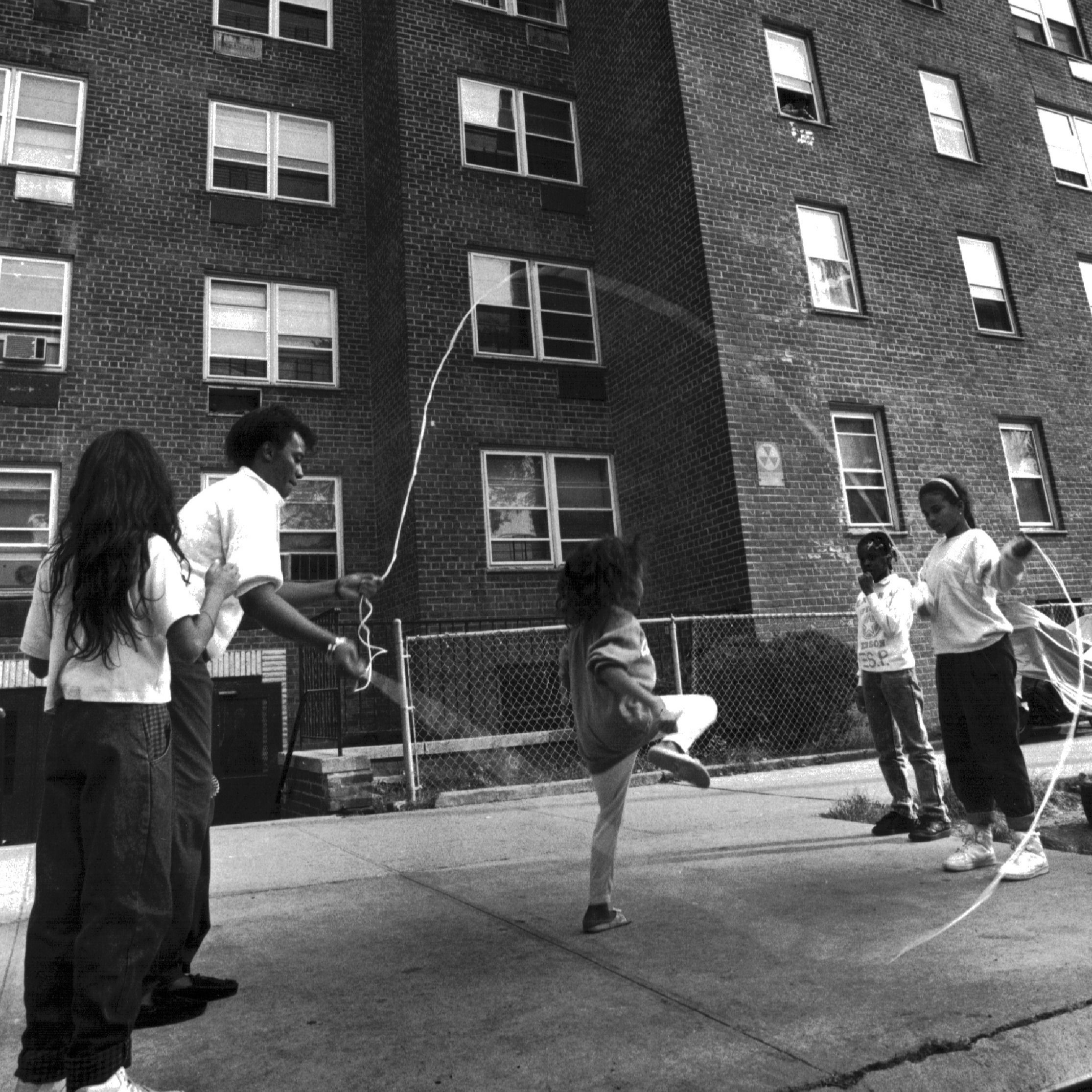
The exhibit especially looks at the history of the Park Hill neighborhood. Riley, what are some key objects or
- [03:17]
D
historical moments from this neighborhood that you include in the show?
- [03:20]
B
I mean, I'm definitely going to point that over back to Debbie, because this is Debbie's baby. But some of the things that we have. For instance, we have a cassette tape from Wu Tang. You know, we couldn't talk about Park Hill. We could not talk about Staten island or history without talking about Wu Tang. So that's definitely a key piece in this section, as well as an oral history from Marjorie Garvin, who's known as the mayor of Park Hill, and some very personal artifacts from Debbie.
- [03:52]
D
Debbie, why is Park Hill historically significant to Staten Island?
- [03:57]
C
So Staten Island, Park Hill becomes the story of post war housing, urban development, urban renewal. So all of those things that we think about how we look at communities contemporarily partial fit central to that. And so for me, having grown up in Staten island, the first thing that I saw were the buildings of Park Hill. And so while Wu Tang is central to the story and it is a thing for many of us who come before Wu Tang, it represents something else. And this is our way of telling the bigger, broader story of who and what Park Hill is.
- [04:43]
D
A new exhibit at the Staten island museum commemorates America's 250th birthday by looking at the role Staten island played in American history. It's called Staten Island Making History. My guests are Riley Edegernoso, director of curatorial affairs and programs, and Debbie Ann Page, a public historian and genealogist who advised on the exhibit. During the revolution Revolutionary War, the British first landed on Staten island before the Battle of Brooklyn. Riley, how else did Staten island play a role in that conflict since we've been talking about the 250th?
- [05:14]
B
Oh, absolutely. Well, I mean, Staten island became. Became where the British first came and, you know, came and got off their boat and were sort of uncontested and were on Staten island for. Until independence was won in 1783. But in 1776, you know, it was the first attempt at diplomacy happened here on Staten island at the conference house with Adams, Franklin and Rutledge, meeting with Admiral Howe and coming to terms. And so it was that happened here on Staten island. And it was also the journey of Starting off as a loyalist and making that switch, you know, during the occupation because of all the anxieties and the poor treatment. So that's definitely part of that.
- [06:06]
D
DebianNE. In the 19th century, a free black community called Sandy Ground formed on the south shore. It's where many oystermen lived. We had a text here said, please ask them to discuss Sandy Ground. How did Staten island become such a thriving area for black oystermen?
- [06:25]
C
So Staten island is, at one point was considered almost the capital of oystering. The Downings from lower Manhattan would come. There's stories of when they would come to Staten island to purchase the oysters here. So anyone who was in the oystering business would know of Staten island. And these oystermen from Maryland and Virginia and those who were here on Staten island understood its importance and were able to form their own community to. For self support and just to be in a place where they weren't dependent on anyone else, that they were dependent on themselves.
- [07:10]
D
Before colonists settled on the island, there was an indigenous population. Riley, what objects from this area era are on view in your exhibit, Staten island making History?
- [07:22]
B
Well, we couldn't talk about Staten island history without talking about Lenapehoking, which Staten island is a part of. That's the ancestral homelands of the Lenape people. So we have a Clovis Point on display in the exhibit to start out the exhibit. And also we have additional Lenape exhibits throughout the museum. So the exhibit works in conjunction with various galleries also throughout the museum.
- [07:49]
D
Debbie Ann, will you tell me about the Cherry Lane Cemetery?
- [07:53]
C
Yes. The Cherry Lane cemetery was formed in 1850 as a part of the AME Zion Church. We had six of them here on Staten island during the 19th century. And at one point, probably around the 1890s, the church fell in disarray, fell apart and closed, but the cemetery remained. The last burial that we know of happened in 1905. And then some developers came in in the 1950s and said that there was no cemetery there. There had never been a burial ground there. But we have the documents of more than 70 people who were buried there. There's probably more that we haven't uncovered yet. And so as a part of that, were telling this story beginning October 1st at the Empire outlet called Black Cherry Lane presence to tell the story of these individuals who were buried in the cemetery that has been paved over and is now a strip mall.
- [09:01]
D
I got a text, Riley, and maybe you know the answer to this. It says, who or what is Staten?
- [09:10]
B
Well, the origins of the name Staten island is actually Dutch So it was Staten island, and that is how we get the name.
- [09:22]
A
I do want to mention Fresh Kills Landfill. At once the largest landfill in the world, it's slowly being transformed into a park. Riley, what does the history of the landfill and its future representation to Staten Islanders?
- [09:36]
B
Oh, my gosh. A very interesting question because for someone who grew up in Staten island, like myself, I'm a third generation Staten Islander, there was so much stigma around the dump. You know, I remember learning in elementary school that it was the largest in the world. You know, it opened in 1948, and by 1955, it was the largest in the world. And it stayed that way until 2001. And there's this visceral memory that, that we all have too. And so it is it to me, it almost seems like everything growing up on Staten island, but now there's, you know, to talk about the. The ebbs and flows of. Of. Of history and how the Staten island continues to change. You know, this new park will be three times the size of Central park, and the only time that I've ever actually been able to step on that land is through the new park and through Fresh Kills Park Alliance. So it will soon be the largest landfill to park project in the world. And so, like, it will be a different claim to fame, if you will. But there are, you know, there are. There are people that are coming to Staten island right now that have no idea that that exists too. You know, there's this. What's that large hill? You know, and it's like, what's that large hill? You know?
- [10:59]
C
Yeah.
- [11:00]
A
The name of the exhibit is Staten island making. My guests have been Riley Edeanoso and Debbie Ann Page. Thank you so much for your time today.
- [11:11]
C
Thank you.
- [11:12]
B
Thank you so much.
- [11:13]
C
Alone.