Loading summary
Transcript99 lines
- [00:00]
Memorial Sloan Kettering Cancer Center Announcer
All of it is supported by Memorial Sloan Kettering Cancer Center. In a small groundbreaking clinical trial, 100% of participants with a specific type of rectal cancer saw their tumors disappear using immunotherapy alone. Researchers at MSK are now studying this approach in cancers of the stomach, liver and more. And a majority of tumors are disappearing. For MSK Giving Day, all gifts will be tripled. Learn more@msk.org all of it.
- [00:36]
Alison Stewart
This is All OF It. I'm Alison Stewart live from the WNYC studios in soho. Thank you for sharing part of your day with us. I'm really grateful that you're here on today's show. Maggie o', Farrell, the author of Hamnet and the Marriage Portrait, is here to talk about her new novel, Land. The Guggenheim has a new exhibit out about pop art. It's on view now. Its curator will join us to discuss. Plus, we'll revisit our convers about the Metropolitan's exhibit about Renaissance artist Raphael, which closes this weekend. That's the plan. So let's get this started with some Earth, Wind and fire.
- [01:30]
Earth, Wind and Fire Song Vocalist
Walk around, walk way around say little people try to push down what you need is a helping hand all the strength at your command how's the faith? How's the faith with you? Talk about pull your kidnapped Tell yourself the truth Spread your love for Friday for what you say you'll away.
- [02:33]
Documentary Narrator/Interviewer
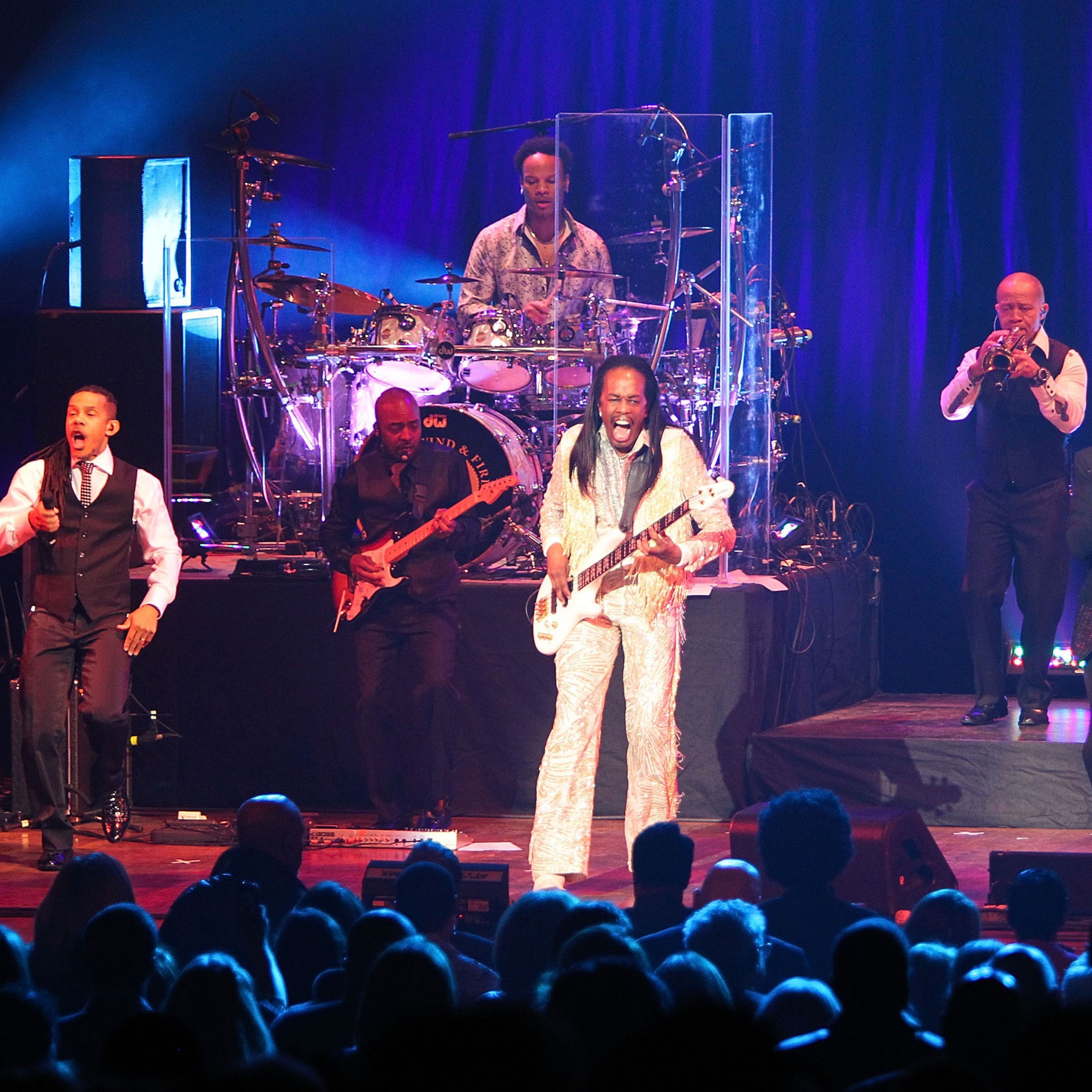
That was mighty, mighty. From Earth, Wind and Fire's 1974 album Open Our Eyes, A new documentary will open your eyes to the story behind one of the funkiest and spiritual bands to ever take the stage. Even their name, Earth, Wind and Fire, evokes the natural essence of the group. The doc is called Earth, Wind and Fire. To be celestial versus the weight of the World. The film explores the life of the band's founder, Morris White, from his lonely childhood in Memphis to his deep interest in metaphysics. And a look at the creative process behind some of the band's most iconic, iconic recordings like let's Groove,
- [03:27]
Earth, Wind and Fire Song Vocalist
Light up the Feels. It's all right, all right.
- [03:30]
Documentary Narrator/Interviewer
But there's a darker part to the EWF story involving money and ego. Earth, Wind and Fire to be celestial versus the weight of the World is out now. Joining me now in studio is its director, Questlove. Questlove, welcome back.
- [03:43]
Questlove
Thank you for having me. And I'm trying not to geek out right now. I'm just saying that, you know, 19 year old me is really impressed right now that I'm having this conversation.
- [03:53]
Memorial Sloan Kettering Cancer Center Announcer
Aw, thank you.
- [03:53]
Documentary Narrator/Interviewer
Speaking of manifestation, thank you so Much I appreciate that. When was the first time you saw Earth, Wind and Fire live?
- [04:02]
Questlove
Okay, here's the thing. Concert experiences in the 70s and the 80s, it was almost like even if you didn't go and someone came home and described, people would come home and describe, note for note, what would happen. So even though the first time I watched them physically, like live was like 81, I will say that hearing my cousin Diane absolutely transformed. Like, that's the thing. They would do these concerts and people would come home changed. And this is when I believe that my cousin Diane became sort of like my archetype. Like a very artsy, focused. Like she wasn't the same. And the way she described the first five minutes of their show, like, to this day, anything I do the first 10 minutes or the first five minutes, like, I have to have that effect that cousin Diane had on me describing seeing Earth, Wind and fire alive in 76. So I almost feel like I went to that show. But, yeah, like, I will say that. 80, 81.
- [05:13]
Alison Stewart
I remember my sister's 10 years older than I am. So as a little kid, I remember her and her friends dancing and experiencing Earth, Wind and Fire. And I'm like, what is that?
- [05:23]
Questlove
Yeah, I mean, they are okay. So I've been. This is sort of the running joke as I try to describe the marvel of Earth, Wind and Fire, which is. I describe them as the band that successfully tricked you into eating your veggies. You know, And I don't think it's a mistake that my first film was about joy and especially in the story of black people, because often when we think of the 60s, we only think of the turmoil and the civil unrest. So Summer Soul was about joy. And then when I did the Sly Stone doc, like, they were really the Sly and the Family. Stone was the blueprint of really just a new era. And it's also, you know, the film's about self sabotage. So around 72, when Sly kind of sort of drops the baton, two figures will pick up that baton and share it. And that'll be Stevie Wonder. And Earth, Wind and Fire. And Earth, Wind and Fire. Just really amazingly. Even as you played that clip, I realized how they did it because there's so many things in that. That one minute clip you played of Mighty Mighty. Maurice White sort of adapts the voice of what would typically be like a 1972 black teenager with that drow. You know, he's from Chicago. But also, Philip Bailey is reminding you of the great gospel singers, you know, that sort of thing. But what they're singing. Also the fact that they're singing in unison and not harmony makes it not intimidating. So you can sing along too. And what they're singing makes you want to sing along. And if you sing those words, then you're singing affirmations. And the laws of metaphysics is whatever you say happens, you know, so it's, it's multi layered. But I mean really, they're just one of the first bands that successfully marketed Joy.
- [07:28]
Documentary Narrator/Interviewer
Yeah, I was going to ask you. What do people overlook when they look at Earth, Wind and Fire? Because it's great to dance to. It's got good rhythms. But what else did they offer people?
- [07:38]
Questlove
Okay, so the one thing that I unpacked, like if left up to me, all my films would be like director's cut level five hours plus. So, you know, the version that we received is maybe like our fourth or fifth draft. But back when I was really just praying that God could be two hours and a half, I just wanted to dissect their lyrics people truly don't understand. Like a great example is the song Reasons There's a moment when Philip Bailey's like, how could people think that this was a love song? They famously got offered a nice seven figure check to come play Reasons at a wedding because Earth, Wind and Fire, so ethereal and beautiful sounding, whatever.
- [08:25]
Hershey's Commercial Narrator
And.
- [08:25]
Questlove
And Philip had to be honest, like I can't in good conscience accept this because this is songs about an affair, you know, and you know, like no one. So I mean, the thing is, is that they. I will say that at least 80% of their songs really deals with the idea of learning to shine your light and all things that most of us will say, like woo, woo, like granola, hippie things and things. I used to laugh at myself and scoff at other people, but they make it sound so fun that you feel left out if you don't partake in it. So they trick you into positivity and that's important.
- [09:12]
Alison Stewart
It was important for black people, especially in the 70s.
- [09:16]
Questlove
Well, yeah, like, like the whole thing is like past 1968, once our civil rights leaders were assassinated and COINTELPRO and sort of infiltrating the FBI and all those things, or FBI infiltrating the Black Panthers. There was a sort of the white elf in the room was the question mark of what happens to us now. And a few things will develop. And the thing is is that because it's entertainment, people might not put serious weight behind it because it's not so overtly political. But I view I Mean, the result of it, of course, is like a show like Soul Train demonstrating black joy, like dancing, even today, like joyful celebrations now seen as an act of protest, you know, for you to make a daily decision to wake up with intentions of bringing good to the world, especially where we are right now, is a joyful act of defiance. And Earth, Wind and Fire basically plant the seeds with that, with their music.
- [10:31]
Alison Stewart
We're talking about a new documentary, Earth, Wind and Fire to be celestial versus
- [10:35]
Documentary Narrator/Interviewer
the weight of the.
- [10:37]
Questlove
That's the way versus that's the way to the world. I love puns. I'm a pun guy.
- [10:41]
Alison Stewart
Questlove is my guest, of course. He directed the film Maurice White. Yeah, he had sort of. He grew up in Memphis, had a sort of a sad background initially.
- [10:52]
Questlove
Yes.
- [10:52]
Alison Stewart
His mom left, went to Chicago. How did he get involved with music?
- [10:58]
Questlove
So, you know, the one thing I've. I desperately wanted to unpack, that's hard to do, is he had his metaphysical calling at the age of seven, which is really unheard of. There's a story of him being in a cotton field and him looking at the sun. And the thing is, is that, you know, you brought up something about his. His childhood. Like we say, it's so casual now. Like, he was raised without his mother. His mother and him grew up dirt poor in Memphis. And she said, the only way that I could make a better life for both of us is if I leave Memphis and go elsewhere to build a better life for you. And so she took a risk and gave him to the next door neighbor and said, I'll come back when everything's right. And of course, well, you know, by the time he was 18, she came back, said, hey, I have a family now. Let's go to Chicago. But here's the thing, like a lot of the artists that we invest in, the one thing I discovered that I didn't know, Quincy Jones is one, Prince is one. Ray Charles, Tina Turner, George Clinton, James Brown, Billie Holiday, Anita Baker, Aretha Franklin, Smokey Robinson. I made a list of over 83 A list celebrities that we worship, and they're a common denominator is either that their mothers died early or their mothers abandoned them or their mothers really didn't protect them.
- [12:32]
Documentary Viewer/Commentator
Oh, that's interesting.
- [12:33]
Questlove
From the hell of the world. And I believe that there's. When it's the one thing when your dad's not there, but when your mom. And what registers to them is that, oh, I'm so unlovable that even my mother didn't want me right and so what I wanted to know was, like, how does this person who feels this way, like most people would go the opposite way and lash out at the world. And, you know, we often live through a time now where people want you to feel the pain that they feel inside. So even as to the detriment of your life, all I have to do is visit a mall or a school or whatever and express that rage. And I believe for the most part, when people talk about soul music, soul music is so beautifully cathartic that, like, when I hear a figure like James Brown screaming the way he does, that's him. That's the release valve that could be someone's life. Like for everyone doing that, expressing it the other way that I described earlier, that's what happens when you don't have that release. And so him coming to this place. There's also a story of him. I believe he ran into John Coltrane once he moved to Chicago, and Coltrane shared a book with him. Because John Coltrane's such a. This figure of genius that most jazz musicians wanted to follow. And that changed Maurice White's life. But pretty much, you know, him finding or finding metaphysics in such a painful way to me was a miracle. However, not really wanting to. Me not wanting to sort of spoon feed it to you. I also believe that for a lot of us, those who are sort of social avoidant, you live with partners now that you don't want to express something to or how you feel inside. And you hold it in and hold it in. You have co workers that you're angry at, or a sister or brother. And oftentimes when we hold and hoard dark emotions that winds up affecting our bodies. And so even his. That sort of leads to him getting the part Parkinson's, because again, he was the most physically healthiest person on earth.
- [15:20]
Documentary Viewer/Commentator
Oh, it was incredible during the documentary. It's interesting because I can't remember who says it in the documentary, but it says that he says music is Maurice's safe space and his son. Yeah. And you're describing his mother, mothers in general being a safe space for people. And he found music being a safe space.
- [15:38]
Questlove
That's. I believe that's the story with Prince. I got to know Prince as a person and was, you know, I considered myself to be a music guy. I mean, I. I have 200,000 records. Like, I think I have a reputation for loving music, but I didn't realize that literally Prince's whole social aesthetic is. Comes with the. The shield or the weapon of music. You know, grabbing even. I have jam sessions of Prince playing with non musicians. There's a. There's a tape I have of one of his protege groups, Vanity 6, who aren't necessarily known for their singing. And he's committing to, like, it's almost an hour and five minutes to just one four bar jam. He's having the time of his life playing with these not even mediocre musicians. Like, he's trying to teach them how to play a song and he's putting his heart into it. And, you know, I asked the band and that stuff, like, was that normal? He's like, that's literally how he communicates with you. Like, if he's angry at me, he puts a cassette in my hand and says, this is how I feel. So, yeah, like, music winds up being more than just a hobby for some people.
- [16:56]
Documentary Viewer/Commentator
This is an interesting text that we got. As a white guy in the 1970s,
- [17:01]
Documentary Narrator/Interviewer
I was the weird one listening to,
- [17:02]
Documentary Viewer/Commentator
quote, unquote, black music when most of my white friends were listening to white prog rock. But Earth, Wind and Fire were one of the rare bands that defied race or boundaries. All my white friends were also listening to them because they exuded pure love, joy, and musical genius. We couldn't help but dance and celebrate.
- [17:20]
Questlove
They were also. They did something genius as well, which is if you look at their lyrics like, they were way early on the pronoun game, and that was by design. The furthest that they would go is you only talking to you. Not I love you, girl, but I love you. And so their music, I mean, they purposely didn't want to negate one side for the other by making something specific. So that's a part of their universal appeal. Who are they talking to? They're talking to you.
- [17:57]
Alison Stewart
Yeah, we're talking about the new documentary available to stream on hbo. Max. Earth, Wind and Fire to be Celestial versus that's the Weight of the World. My guest is Questlove. We'll have more after a quick break. You're listening to all of it on wnyc. I'm Alison Stewart. A new documentary from Questlove explores the musical origins and lasting cultural impact of Earth, Earth, Wind and Fire. Earth, Wind and Fire, to be Celestial versus that's the Weight of the World is now streaming on hbo. Max. How'd they get their name?
- [18:39]
Questlove
Okay, so Maurice was big on astrology, and I believe that he was born December 21, I believe. Don't get me wrong, I know he's born in December. So Earth was in his chart. Air was in his chart. And fire was in his chart. And he changed air to wind. And it had a better name to it, and it was better than their original name, which was the Salty Peppers.
- [19:11]
Alison Stewart
That is the best piece of information you'll get all day. Let's listen to a little bit from the documentary Earth, Wind and Fire. This is Maurice White.
- [19:19]
Maurice White (clip)
I think Earth, Wind and Fire came out of a knee, a dual need, a need for myself as an individual
- [19:26]
to
- [19:28]
realize my total potential in a sense of speaking. And also from another sense. It came from a part of me wanting to render itself to humanity.
- [19:42]
Alison Stewart
It's interesting because he moved to California,
- [19:45]
Questlove
of all the places.
- [19:46]
Alison Stewart
All right, so what was his life like in California?
- [19:51]
Questlove
He moved out to. Really to California, to. There was a. There was a movement that happened in the very early 70s, really following the lead of Motown because of the riots of Detroit, 1968. A lot of the. Our geniuses from the Midwest figure that, okay, it's a more beautiful, safer environment out there for us. Like, some started down south, some started the Midwest. And, you know, New York is still seen as a cold place, not, you know, a crowded place. So following the lead of Motown, following the lead of Don Cornelius and Soul Train, even Stax Records, like, relocated, like pretty much most of professional black entertainment America had this migration to California, and Maurice White was a part of that.
- [20:52]
Documentary Narrator/Interviewer
It was interesting.
- [20:53]
Alison Stewart
There's just one story about the band playing in.
- [20:57]
Documentary Narrator/Interviewer
I think it's in Philadelphia.
- [20:59]
Alison Stewart
And they were not ready for them.
- [21:01]
Questlove
Yeah, right. That's my home. You know, I. That's right. I as a person. There's been a few. Next playoff game. I was actually proud that one of New York's boos was almost. I would rate it a four, but no town knows how to boo better. Like, we are famous for booing Santa Claus. We booed a player that was about to retire. That was dear to. We booed Beyonce once at halftime because she wore the wrong jersey.
- [21:30]
Documentary Viewer/Commentator
Wrong.
- [21:31]
Questlove
We are known for booing. And so pretty much one of the things that made Earth, Wind and Fire different was just the way they looked.
- [21:40]
Earth, Wind and Fire Song Vocalist
Yeah.
- [21:41]
Questlove
You know, the things that we take for granted now that we think of when we think of Earth, Wind and Fire. The Afrocentric clothes, the kind of Afrofuturism, space talk, the. Even the stuff of. That's woo woo again, like just what you think of Afrocentric lifestyle. They had to usher that in. And, you know, when you don't understand something, you.
- [22:10]
Maurice White (clip)
The.
- [22:11]
Questlove
The best thing you do is relentlessly tease. I mean, there's worse things that people have done with people they don't understand. And so what happens is they arrive at the Uptown theater, which is part of the chitlin circuit, just like the Apollo Theater. And one of the rules back then is if I'm paying money for some entertainment, you better be awesome. And if I sense anything that's amateur night about you, I'm booing you. And again, that's one of the polite things I could do. I could throw things at you. And sort of sensing that they were going to get basically blasted, Mari says, okay, this is what we're going to do. We're going to walk on stage, we're going to sit in the lotus position, and we're just going to close our eyes and meditate for like eight minutes straight. And they did it. And of course the crowd is going crazy. But then after about six minutes, the crowd started getting scared. Cause they're like, wait, we're not scaring them at all. Like, you know, it's fun to watch people walk off stage and cry and all these things. And they sat there stone faced and then they got up and started playing. And the audience respected them for that. And so, yeah, that's my town, Philadelphia.
- [23:31]
Documentary Narrator/Interviewer
It's really interesting when you listen in the documentary to how they developed songs. Let's play a clip. This is bassist Verdine White and audio engineer George Massenberg talking about the song Shining Star and how it came together. This is from the documentary Earth, Wind and Fire.
- [23:48]
Questlove
From my recollection, Shining Star started out as a jam.
- [23:51]
Bassist Verdine White (clip)
Actually,
- [23:58]
Questlove
There was Al McKay playing that raise nine chord. We just kind of took it from there, you know, and things start to grow. Additional keyboard lines, synthesizers, the horns, organs, bongos.
- [24:22]
Maurice White (clip)
There were a lot of good ideas. It was dense and all over the place. So I started cleaning out, cutting instruments out to keep only the essentials. And my thought was, let's get these vocals bright and clean, Simple, elegant ideas clearly presented.
- [24:53]
Alison Stewart
What impressed you most about that description as a musician?
- [24:57]
Questlove
Okay, so one of the things that I think makes me different than other filmmakers is because I also speak the language. Because I too am a musician. And you know, if I'm going to present why this band's important, I also better display why they're important. So here's the deal. Let's take a band, let's take a small scale band, like let's take Nirvana, three members, and they pretty much sound like an army or act. Better yet, let's take the White Stripes, a duo that sounds like, you know, play Seven Nation army at Any stadium, it's only two people playing, but yet it has the power to just absolutely energize an entire stadium. Here's the deal. Earth, Wind and Fire is nine people. Most bands aren't nine members strong. At the most, maybe four, maybe five. So the more people. If you're going north of five people, you have to check your ego at the door and do very little. And that's the thing. Earthwood and Fire has this power to make you think that it's just this powerful wave of musicianship coming at you. But each person contributes something just very minuscule and small. So, you know, to show you the skeleton of a song, the greatest producers will let people sort of express and get their creativity out. And then as a producer, you sort of bring it backwards and only keep the essentials of what's needed. And, you know, I've been in situations where a person will come up to me like, well, where's my baseline at? Like I said, look, I cut it in half. We only needed this much. So you also have to be in the mind state to check your ego at the door and serve the song, not serve your ego. And so this. That's the story of how what was once a cluttered, packed song gets just boiled down to the bare essentials. And it's what we now know today as Shining Star.
- [27:06]
Documentary Narrator/Interviewer
It's interesting because the film does go into Maurice's whites. I don't know if ego is the right word, but that he was Earth, Wind and Fire and he thought that he should receive more money on the publishing and that he kind of made the rules about it. I mean, there's the yin and the yang involved here, which didn't go over well with some of the members.
- [27:28]
Questlove
Well, you know, here's the thing. Everyone has to evolve and change, and this is why it's important to live in the present. Now, of course, when Maury starts the group, he's in his 30s, and these are kids, they're teenagers. So he's like a big brother mentor to them. You know, I would say after five or six years that anybody that you partnership would want to feel some sort of agency or acknowledgement of their contributions. And, you know, Maurice's thing was sort of. I mean, not like. I won't ever say that was like, oh, you're lucky enough to be here, and those things. But I will say that the difference between. And there's a part of the movie in which they discuss, you know, the finances going awry and all those things. The difference between Earth Wind and Fire and say our era of watching, like, post thriller, Michael Jackson is post thriller. Michael Jackson will easily get Pepsi Cola to pay millions and millions for whatever he wants. So it's Pepsi that is funding all those explosions and tricks and the band members and the costumes and everything. But before the Jacksons, like, you had to pay for everything, you know, and same for Parliament Funkadelic, like for George Clinton to bring that spaceship down. Like Neil Bogart of Casablanca Records had to pay for that. So, yeah, they were just unfortunately way too early to the table. They found a sponsor. Sponsorship, you know. But back then in the 70s was about like, no sellout, like, no corporation is going to get in our thing, you know. But had he just waited five years, it could have been different. But, yeah, so as a result of him prioritizing the brand Earth, Wind and Fire and paying for everything, they were kind of just living off of the bare essentials.
- [29:30]
Alison Stewart
Yeah.
- [29:31]
Maurice White (clip)
Yeah.
- [29:32]
Questlove
Oh, my goodness.
- [29:33]
Alison Stewart
My phone rang. That's embarrassing.
- [29:34]
Questlove
That's Marty's White right there.
- [29:37]
Alison Stewart
My guest is Questlove. We're discussing his documentary Earth, Wind and Fire. It's now streaming on hbo. Max, oh, I have so many questions I want to ask you.
- [29:50]
Questlove
I promise not to be long winded.
- [29:51]
Documentary Narrator/Interviewer
No, that's okay.
- [29:52]
Alison Stewart
We're going to run out of time. But I want to make sure I ask these questions. In the 80s, yes, they seem to have made want to go after getting on the charts.
- [30:04]
Documentary Narrator/Interviewer
They weren't themselves.
- [30:05]
Alison Stewart
They weren't themselves.
- [30:06]
Questlove
They weren't. So what happens is, you know, they ruled the 70s, you know, with an iron fist, magical iron fist. And all their disciples, Prince, Michael Jackson, the Pointer Sisters, Kool Na Gang, like all those that weren't anywhere near what Earth, Wind and Fire was in the 70s, learned from Earth, Wind and Fire. And then when they wound up, the student wound up being the leaders. So suddenly, you know, Prince and the Jacksons and, you know, Pointer Sisters had hits in the 80s and Earth, wind and Fire could not get arrested. And as a result, they imploded, you know, and it's. They're basically Moses. They literally wrote the blueprint for what we followed in the 80s, 90s and whatnot. But, you know, the thing is, is that their kind of celebratory moment happens for them in the mid-90s where people like hip hop. Yeah, hip hop brought Earth, Wind and Fire back to life. And so suddenly they were. They were cool again.
- [31:08]
Documentary Narrator/Interviewer
And then again, I want to mention that the Obamas are in your film.
- [31:12]
Alison Stewart
They sort of bookend it, man.
- [31:14]
Documentary Narrator/Interviewer
Yeah, it's pretty great.
- [31:15]
Questlove
Can I tell you something?
- [31:16]
Documentary Narrator/Interviewer
Sure.
- [31:16]
Questlove
They did that interview the day after the election results.
- [31:22]
Documentary Narrator/Interviewer
They did.
- [31:23]
Questlove
When I tell you the darkness that we felt, like, I thought they were going to cancel any moment. Like, they're not going to do this. And they came in. So, like, that's not an act. Like, that whole Harry Met Sally energy. And you rarely see them together. And half the time they just happen to be talking. Like, I didn't even say, like, okay, we're rolling now. Like, him dancing in the chair. And then, like, talking about reasons to each other. Like, we just had the cameras on, but that's just them talking about Earth, Wind and Fire and. Okay, you ready? You ready to start now? And I'm like, just continue. What were you saying?
- [32:01]
Documentary Viewer/Commentator
Oh, I might have to look at the documentary again.
- [32:03]
Questlove
Very natural.
- [32:04]
Documentary Narrator/Interviewer
I'm sure there's another level to what they talked about, because they talked about Black Joy. They talked about being the best person you can be.
- [32:11]
Questlove
Yes.
- [32:12]
Documentary Narrator/Interviewer
In tough circumstances.
- [32:14]
Questlove
It was so exemplary for me. Like, it helped me, you know, because the whole time I'm sitting there, like, how are you guys not wanting to slit your wrist right now? Like, we're going through round two of our ex. And literally, that was inspirational to me. Like, oh, even in the darkest of times, like, I still have to exude that light, you know, and never dim it. And it comes through so well in that show or in that show in my movie.
- [32:42]
Earth, Wind and Fire Song Vocalist
Yeah.
- [32:43]
Documentary Narrator/Interviewer
It's kind of amazing that they had Earth, Wind, and Fire at one of their inaugural balls.
- [32:47]
Questlove
Yes. That's why they were there, because Earth, Wind and Fire was their first act of the new era of the White House by having them as the band for their inauguration.
- [32:58]
Alison Stewart
You should watch Earth, Wind and Fire to be Celestial Verses. That's the weight of the world. It's streaming now on hbo. Max, thank you for joining us. Questlops.
- [33:07]
Questlove
Thank you for having me again. I appreciate it.
- [33:09]
Hershey's Commercial Narrator
One crunchy bite of a Hershey's Cookies and Cream bar, and I'm taken right back to college. Move in. Day, I was a little overwhelmed by the newness of it all. Boxes were everywhere. I needed a break from unpacking. But just as I was able to take a breath and open my Hershey's Cookies and Cream bar, my new roommate Rachel walked in. I offered her a piece, but she said no. Then after a beat, she said, actually,
- [33:29]
Questlove
those are my favorite ones.
- [33:31]
Hershey's Commercial Narrator
We left. The ice was broken, and we've been friends ever since.
- [33:36]
Memorial Sloan Kettering Cancer Center Announcer
Hershey's. It's your happy place.
- [33:39]
Bassist Verdine White (clip)
The 2026 FIFA World cup meal at McDonald's is underway with one of nine legendary cups in the lineup. Christian Pulisic, David Beckham, Lamine Yamal, Ronald Dinho, Thierry Henry, Son Heung Min, Alphonso Davies, Santi Jimenez and between the posts, it's grimace. Get one of nine collectors with a FIFA World cup meal at participating McDonald's for a limited time while supplies last. All rights reserved. 2026 McDonald's at FIFA World Cup 2026.