Loading summary
Transcript75 lines
- [00:09]
A
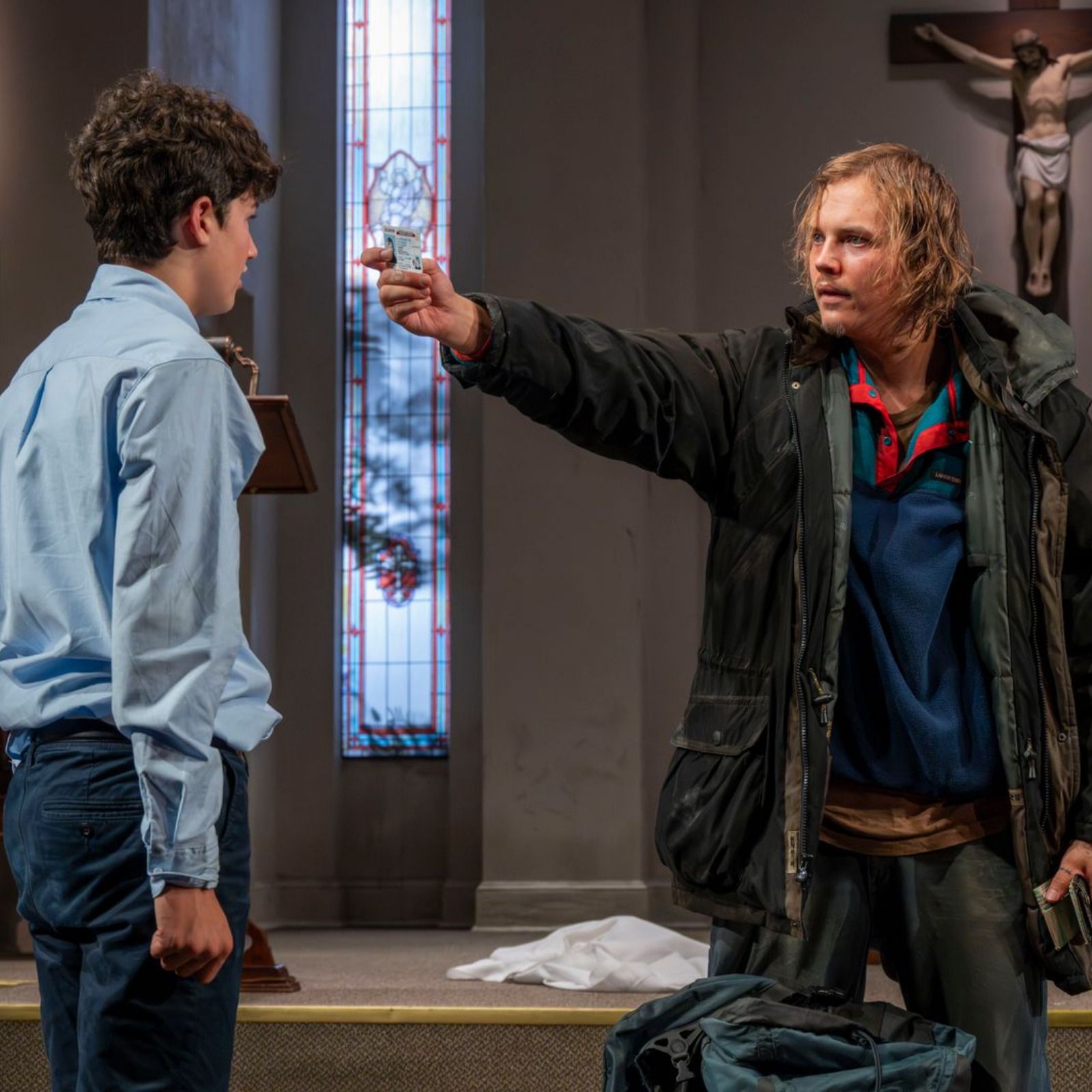
This is all of it on wnyc. I'm Alison Stewart. In the new Off Broadway production called the Saviors, two altar boys navigate the changing tides of their faith and friendship when a mysterious man takes shelter in their church. 8th grader Michael is an enthusiastic, upbeat boy. He is really into Jesus Christ. His best friend Paul is struggling to decide if he believes in God at all. When a man named Julian attempts to take shelter at the church, the teenagers try to manage this unexpected intrusion. Instead, they find themselves confronted with shifting belief systems that threatens to tear their friendship apart. The Saviors is playwright Bubba Wyler's second off what Broadway production? The last time he was here was, well, I'll Let yout Go. Hi, Bubba.
- [00:54]
B
Hi. Thanks for having me.
- [00:55]
A
Also joining us is Stanley Simons. He plays Julian, a homeless man looking for help. It's nice to meet you, Stanley.
- [01:00]
C
Very nice to meet you. Thank you for having me.
- [01:02]
A
The Saviors is running now at the Linda Gross Theater in Chelsea. And due to popular demand, the production has been extended until August 15th. That's great.
- [01:10]
B
Yes. We're so excited. And you're hearing it first here.
- [01:13]
A
That's awesome. Bubba, when did you begin writing this play?
- [01:17]
B
It's been a long journey with this play. I wrote the first draft of this play when I was 19 years old. I was a student at NYU, and they sent me over to London for a playwriting program. And I had this amazing professor named Roy Kendall who sort of walked me through writing this play, and I sat down to write, and this is what came out. And I put it away for a long time and picked it back up and realized there was maybe something there. So I've heavily revised it. But, yeah, it's been sort of like, you know, over 10 years in the making.
- [01:49]
A
Stanley, people might recognize you from film, from Iron Claw, but this is your professional stage debut. It says it right here in the Playbill. Why did you want to tackle stage?
- [01:59]
C
You know, that's a good question. I actually saw Ethan Coen's play at the Atlantic last year. Yeah, exactly. A friend was in it, and Dylan Glula shout out her great actress. And it made me really excited about. I mean, I always did school plays as a kid, but never, never, never did anything professionally after that. And I think that sparked, you know, and I. And then I asked my agent, hey, about. About like a month ago or a couple months ago now, I. I asked my agent, like, I'd like to do theater. And she's like, you know, the money's not that great. I said, no, you know, I'd love to. I'd love to be a part of something. And then this came through and it was at the Atlantic, I was like, oh, you know, it has to be.
- [02:46]
A
Meant to be.
- [02:47]
C
Yeah, Meant to be, yeah.
- [02:48]
A
It's interesting because this is sort of a traditional structure of a play as opposed to, well, I'll let you go, which is a little more experimental. How do, when you're writing a play, whether to go the traditional route, which is fine, or to go the experimental route?
- [03:02]
B
Yeah, it's something Jack and I, the director of Jack's Area and I have been talking about a lot because, you know, sort of in well, I'll Let yout Go, we were after this sort of like emotional truth and there's sort of this sort of strange theatrical container. When we were after sort of like a metaphor for grief. And for this one, it really is. It's realism, you know, and sort of the guiding light for that has been this is a play about young people. And we were certain that we wanted actual young teenagers to play this. We have a 13 and 14 year old boy starring in this play and it really is theirs. And so after that you're like, well, if they're real, then I guess everything else is real. And so, yeah, we were interested in what it felt like to be really, really rigorous about the realism and make everything feel as true as possible.
- [03:53]
A
Stanley, you sort of stalk into the play, down the aisle, sort of in darkness. What did you and director Jack Sario talk about? The way the audience is going to meet Julian?
- [04:07]
C
Yeah, I mean, we didn't necessarily talk about like the introduction to the audience, but it was more in terms of my introduction to those two characters. Two characters, two little boys. And I wanted to, you know, I wanted to scare them a little bit and be a sort of, I don't know, kind of an abruption to their normal habitual lives, I guess. And I think that came across a
- [04:40]
A
little bit, you know, how is he written to come in to the scene, Bubba?
- [04:45]
B
It says that he. I think it's that like he. Julian enters, he's weathered and exhausted. He has cheap tattoos on his hands and arms. And he walks the long center aisle of the church in silence. And there's like a very long amount of time before anybody speaks because the boys just have no idea what to do with this presence and are sort of like confronted by the thing that you are often confronted with in Christianity, which is like, here is somebody in need and you have this sort of like theoretical idea of what you're supposed to do. But then when it's actually in front of you, I don't know that everybody makes the choice that they say they would make.
- [05:27]
A
The Christian choice.
- [05:28]
B
Exactly.
- [05:29]
A
Right.
- [05:29]
B
Exactly.
- [05:29]
A
Yeah. Stanley, the first thing your character does is pray. First of all, what are you thinking about when you're praying? And what do you think that tells us about him?
- [05:41]
C
What do I think about when I'm on stage, personally? I mean, I'm like, now I have to cry in front of all these people, so I have to think about sad things. No, Yeah. I don't know. I think that it informs the character. I think it's. You know, he's a lost, wayward young man. And I think. I think when I came to this, I was really interested in the loneliness of just being by yourself and what that does to a person. And I think that. Yeah, I think a lot of young men face that in their lives. And it's interesting. It's interesting how that specific thing shapes a person, how it can, you know, really deteriorate your mental state, you know, just being alone. And I think. Yeah, when we first see him and he's praying, I think he's trying to not be alone.
- [06:34]
A
It's so interesting. When you came in, I expect you to be much, much bigger because the character just seems so big in the play. I don't know if it's meant to be that way or. What do you think, Bubba?
- [06:46]
B
He's certainly meant to be a big presence. You know, he sort of. I think if this character doesn't show up, the boys sort of go on the path that they would have otherwise gone on, and they don't have the conversations that they're. They're sort of able to have, and their world doesn't sort of explode in the way that it does.
- [07:05]
A
You know what else I realized? They're boys. They're little. They're younger men, and you're a grown person. And sort of. That's interesting. The scale is different.
- [07:13]
B
Definitely.
- [07:14]
A
You know.
- [07:14]
B
Definitely.
- [07:15]
C
Yeah, it was. It was interesting working on, like, the voice. I think it's still changing. We're still in previews technically, right? Yeah. But, yeah, the first night, I think I came in and I was really gruff and just a lower tone, and I was like, this is working. You know, this is. This is. I wanted to be a difference between the little boys compared to me. And then. And then everyone was like, we can't hear you. Like, you gotta speak. So that changed. But, yeah, no, yeah, I wanted to also, you know, he's seeking help. So I think. Yeah, I think. Yeah.
- [07:45]
A
My guests are playwright Bubba Wyler and actor Stanley Simons, here to discuss the new Off Broadway play the Saviors, which follows the friendship of two altar boys whose belief systems are confronted after a man seeks shelter in their sanctuary. It's now playing at the Linda gross the until August 15. The play is set in a church, and the theater is in a church.
- [08:06]
B
Isn't that incredible?
- [08:08]
A
How has that added to the play? How has it changed the play?
- [08:11]
B
I mean, I'm just. I'm very moved a by the sort of gorgeous production that the Atlantic has given this play. They are such a good home creatively, but also it just happens to be the perfect place for this play because you walk in through church doors and there are church windows in the space and there's this steepled roof, and so it's really perfect, you know. And the set, designed by David Zinn, is so close to what the church that I grew up in looks like that it's very sort of trippy, actually, for me to watch it each night. It can be hard. And, you know, the Atlantic, the building that the Atlantic in, is still owned by the church next door. And so. And that church does not have air conditioning, so they have actually been doing their services on our set. So it is kind of actively a church at the moment.
- [09:01]
A
Oh, that's amazing. Stanley, your character, Julian, what does the church represent to Julian?
- [09:08]
C
Well, that's a big question. It's a good question, I think. You know, I think as someone who's probably, you know, raised in the church his whole life, I think it probably has a sense of structure to him, but it's also a lot of, I'd say, like, forced, institutional, just memories of doing things that he was not. He didn't necessarily have any choice in. And I think. I think that's interesting. I think when we find him, he has, you know, he has some sort of choice, but I think he's coming to look for that. That structure again and that kind of, yeah, I guess that home that a church can really represent.
- [10:06]
A
What does the church represent for Paul and Michael? Bubba?
- [10:11]
B
You know, I think one of the things I'm sort of working out in this play, sort of for myself and for these characters, is that you're given the church as a young person, sort of as a way for adults to sort of be like, well, you know, the world is hard, life is hard, and here is something for you to hold onto, and then you reach a certain point and you maybe you realize that, like, this thing that I was. That I was holding on so strongly to actually doesn't have space for who I am. And you have to sort of choose between sort of, like, your identity and your belief system. And that can be really, really difficult when you are so ingrained in the belief system. And so that's what's at odds for these. For these two boys.
- [11:04]
A
We're not going to give away any spoilers because that's important, but many of the internal conflicts aren't really explored till later on. You sort of build to them, and you build to them. I'm curious, as a playwright, how did you work out, pacing out the information for the audience?
- [11:20]
B
Yeah, it's the thing I think about sort of obsessively when I write a play. And it's something that happens, actually, mostly in rewrites and because you have to sort of, like, lay out all of the material before you can start cutting away and moving stuff around. And a lot of information in this play actually moved in location, like, even during previews. So audiences have seen slightly different versions of this play where the. Where the information was doled out at different times and in different ways and to different degrees. You know, it's always a balancing act as to how much you say about something, how much you let an audience infer. So that's a huge part of my process and something I'm thinking about constantly.
- [12:05]
A
There's a conversation between Julian and Paul where they talked about God. In what ways does Julian sympathize or see himself in this younger person? Paul?
- [12:21]
C
Yeah, I think. I think it's a really interesting scene that Bubba has written, and it was cool doing it with Julius, who plays Paul and kind of being a Big Brother character, but also at the same time, you know, needing. Needing him as much as he needs, you know, and it's.
- [12:44]
B
Yeah, I think.
- [12:45]
C
I think it's really interesting, their conversation, because we've talked about it a lot. But, like, he's. He's searching. The younger, you know, Paul character is searching for something outside of this, you know, this town, this. This church, this anything. And my character is kind of, like, wanting to come back and. And having. Yeah, like, having kind of this, like, weird conversation, which is kind of at odds, but also they're empathizing with each other heavily. And. And, yeah, it was. It was really. It's. It's. I don't want to give away much, but. But it's. It's a really. It's a really beautiful scene and also kind of interesting that this character can reach out and be almost more mature than my character in terms of knowing himself and also wanting to learn from a person who he doesn't really know that well.
- [13:47]
A
Bubba, in a previous interview, you described that while navigating your own faith, you tried to hold the beauty and the pain of it at the same time. How does that show up in the Saviors?
- [13:59]
B
I mean, part of what I'm after in the Saviors is, you know, I don't want it to feel like a condemnation of faith or of my upbringing. I actually think I had a very sort of beautiful upbringing with people that were really well intentioned and didn't know that the sort of. What they thought was sort of care and protection might have been painful for me in some ways. And so the Saviors, I think is really, is about that. It's about people who mean really well and who really are trying to love each other. And it's about how we sort of try to save each other both with and away from God.
- [14:48]
A
Stanley, it was directed by Josh Serio.
- [14:51]
B
Jack Serio.
- [14:52]
A
I'm sorry, Jack. Thank you. Jack Serio. Stanley, what is something he told you that stays with you every night?
- [15:01]
C
Oh, that's a really good question. You know, okay, maybe, maybe not every night, but he does give this note whenever, you know, whenever I can't find something or something just feels off or I'm just not doing a good job. He'll very nicely say it's just a little general. And like that. That's just a little general. That bit is just a little bit general. And it helps, it helps so much, you know, in this, in this strange way where I'm like, okay, he's right. There's something. But he doesn't, he's not, he's not mean or no.
- [15:33]
D
At all.
- [15:33]
C
He's just, he's just saying that that bit's just a little bit general and we can, we can, you know, do. And, and that sticks with me now in, in other things when I'm doing auditions and stuff like that's a little bit general.
- [15:44]
A
Such a good direction.
- [15:46]
B
It is. He's a great director.
- [15:47]
A
Yeah, it's interesting. You do a bit of the show kind of in the dark.
- [15:52]
C
Mm, yeah, that's a lot of the show.
- [15:55]
A
Yeah, tell me about that. A little bit like acting in the dark.
- [15:58]
C
Yeah, it's interesting. I mean, in terms of like lighting. I mean, I've never been, you know, part of a stage production like this, of this magnitude before, so it is interesting, like figuring out like the Lighting of, you know, this. This production. And then. Yeah, like, it's a lot of working on diction because people can't see you. And I think a lot of listening is, like, looking at people's faces. So it's working on, like, kind of. Yeah, like, how to show. Let the audience know what I'm saying, you know? But it's. It's also. I think it's part of, you know, it's like he's spending a lot of this time in a. In a church that is not running. It's, like, at night. So I don't know. I kind of think it adds to the moodiness of the. Of the play and the character itself. It's. It's fun. It's actually fun kind of, you know, I can. I don't know. My facial movements aren't perceived in the same way that I usually, you know, I'm doing things, you know.
- [16:55]
A
What do you think about acting in the darkness?
- [16:59]
B
I. I'm really excited about it. I just feel like it makes an audience really lean in and listen. And it also puts a little bit of anxiety into the room because there is also a young boy in this scene who looks so small and scared and in this huge church in the dark. And also it's about that realism that we're after, which is that this scene takes place in the middle of the night in a church in which a character's not supposed to be in, so he can't turn the lights on, otherwise he'd get caught. And. And so our lighting designer, Stacy, who's absolutely incredible, Stacy derozier. She was really, after making it feel real, what would the room actually look like? And it's a balance, of course, of what would the room look like and what do we need to see the scene? But we've lit it with candles, and I think it's quite beautiful.
- [17:52]
C
Yeah, a red exit sign.
- [17:53]
B
And a red exit sign.
- [17:54]
A
Yeah, this gives it a little bit away. But near the end of the show, Paul recites the Lord's Prayer over and over again. Why do you feel like that was a good place to end the story?
- [18:07]
B
Because I wanted to recognize that people go to God for good reasons, too, and that it is a comfort to so many of us. And the sort of traditions and the things that we go back to are important, and they're real and they can be a solve.
- [18:30]
A
The name of the play is the Saviors. It's playing now at the Linda Gross Theater until August 15th. My guests have been playwright Bubba Wyler and actor Stanley Simons, thank you for coming in.
- [18:39]
B
Thank you, Alice. Such a big fan. Thank you.
- [18:42]
D
Since my mom was diagnosed with advanced endometrial cancer, it's been hard for her. There's so much she needs to understand. What are her treatment options? How can she talk about them with her care team? Learning about an available treatment option@advancedindometrialcancer.com can help her feel ready to have an informed conversation with her doctor.
- [19:03]
C
The doctor will see you now.
- [19:05]
D
That's us, Mom. You too can visit advancedendometrialcancer.com and learn more about a treatment option.
- [19:12]
A
Lemonade Sings a Pet Insurance Customer Review
- [19:15]
C
My new puppy swallowed a bone. Still a good boy though. And boy, was I glad that I had Lemonade. I was payback quickly and efficiently.
- [19:32]
A
Everyone was so nice.
- [19:36]
C
Insurance
- [19:39]
A
and get a quote at lemonade. Com Peter.