Loading summary
Transcript82 lines
- [00:00]
A
All of it is supported by Memorial Sloan Kettering Cancer Center. In a small groundbreaking clinical trial, 100% of participants with a specific type of rectal cancer saw their tumors disappear using immunotherapy alone. Researchers at MSK are now studying this approach in cancers of the stomach, liver and more. And a majority of tumors are disappearing. For MSK Giving Day, all gifts will be tripled. Learn more@msk.org all of it.
- [00:36]
B
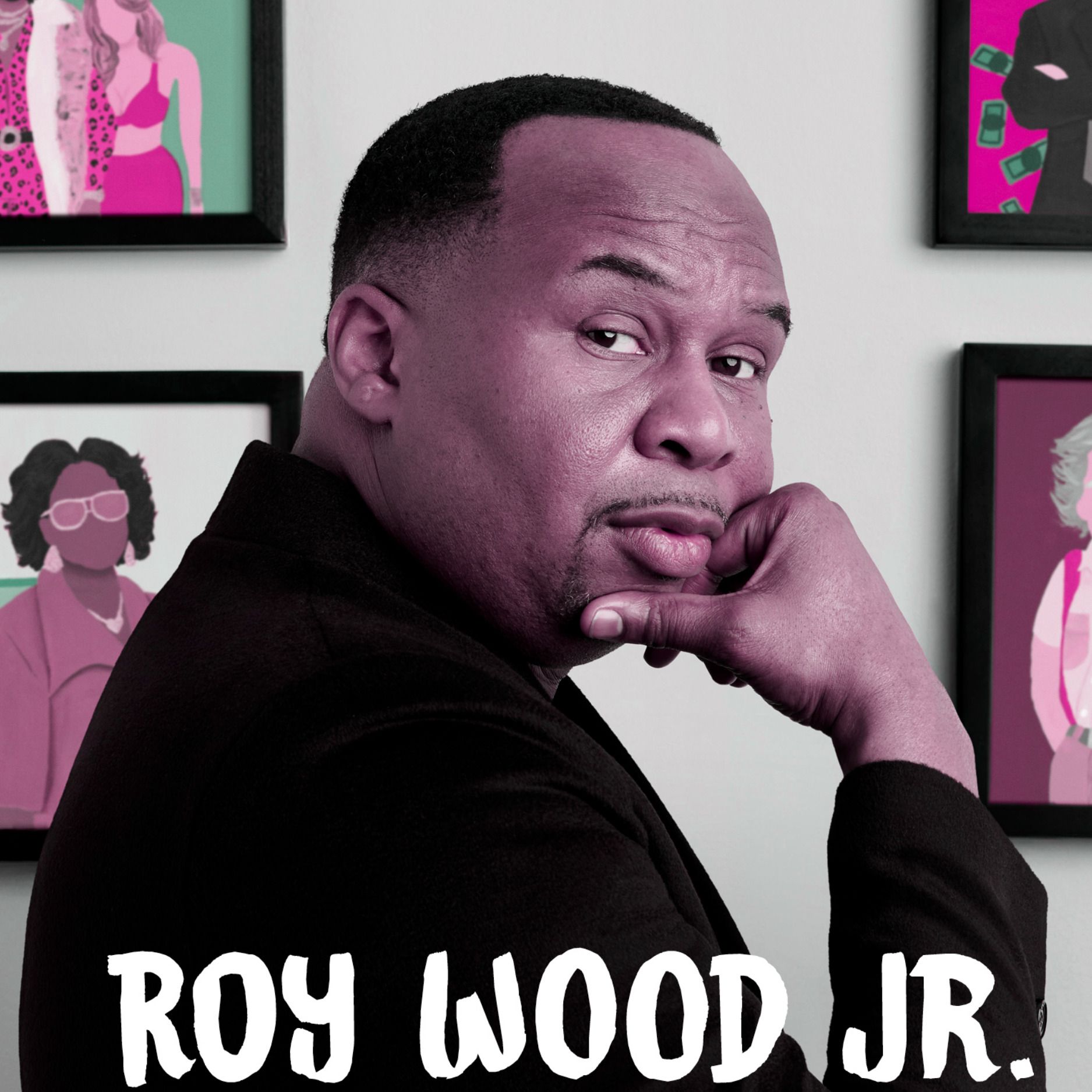
This is ALL OF it. I'm Alison Stewart live from the WNYC studios in soho. Thank you for spending part of your day with us. I'm really grateful that you're here. On today's show, we'll learn about a new exhibit devoted to tarot cards from the curators at the Morgan Library. We'll talk about the legacy and the impact of Alicia Keys album Songs in A Minor and and will mark the 100th anniversary of the birth of poet Allen Ginsberg. That's the plan. So let's get this started with a little fatherly advice. Comedian Roy Wood Jr. Has spent much of his career finding humor in the complexities of modern life and politics. He recently wrote an autobiographical book titled the man of Many Life Lessons Disguised as a Memoir. In it, Wood shapes reflects on the people who have helped him shape his life. His mother, his father, the fellow latchkey kids he grew up with and the lessons they taught him, intentionally or not among them never, ever returned to the scene of a crime after getting the clever idea to set a pile of pine needles on fire before sending them down a creek. That's good advice to give kids on this last public school day of the year. Although I should note this book is PG 13. It's for parents and caregivers who just need a little guidance. A man of many fathers is out now. And by the way, Roy Woods Jr. S show have I Got News for your has been renewed for a fifth season on cnn. Congratulations, by the way.
- [02:09]
C
See you in September on that one. But good to see you again, old friend.
- [02:13]
B
It is good to see you as well.
- [02:14]
C
I'm doing good today. I'm out here trying to find me an orange and blue trash can. Still here in New York City.
- [02:21]
B
I hear they're giving away five.
- [02:23]
D
Five?
- [02:24]
C
How many in the tri state metro?
- [02:28]
B
More than five.
- [02:28]
C
You'd be better off stealing a green can and getting some orange and blue. I'm sorry, I'm giving ideas I shouldn't.
- [02:33]
B
Don't be doing that.
- [02:35]
C
No. But good to see you. Good to see you.
- [02:37]
B
You know what is interesting? You're the second memoirist I've interviewed this week who has put letters in the book. Ooh, right. Your book bookends with letters to your son and then to various people who impacted you. What do you think letters allow a writer to do?
- [02:55]
C
Not have to worry about story structure and prose and whatever. Like when it's understood as a letter. It's the difference between a text and an email. An email is supposed to have form and shape and paragraphs and a conclusion and greetings and yours sincerely. Whereas a text can just be one long run on sentence. And I think a letter is just a stream of consciousness, whereas an actual book is laying out thoughts. There is a story structure and there's a reason, you know, you're going, you know, into those particular places.
- [03:32]
B
So it begins with a letter, a text to your son, who's 10 now. What did you want to tell him? That he'll read now or and he'll read 10 years from now?
- [03:43]
C
The simplest thing is, hey, man, this is why I am the way I am. So if you're ever figuring out why you are the way you are, then at least you know why I am. And maybe that'll inform you a little bit more about who you are. And then the book is, here's how I became the way I am in terms of just morality and choices and how I view people and my approach to the world. And if that helps you inform yourself, cool. If it doesn't, cool. I wrote the book originally. The original impetus for the book was my son is born, and then I'm going, ah, that means I'm going to die. Like, that's the first conscious thought is, ah, damn it. Thought I had more time. Okay, bro, here's everything you need to know. Oh, wait, you're an infant. All right, I'll write it down for you. And as I start writing these things, I start discovering how much of myself is not because of my dad. It's because of men that were in my life after he passed. My pops died when I was 16. Then five years later, I go on finding your roots, and I find out so much new information about my pops.
- [05:00]
B
Was that nervous thing nervous for you?
- [05:02]
C
Yeah. You know what they, man, it's wild to find out something like earth shattering about your family, but even wilder to find out with like six 4K cameras in front of you and Dr. Gates staring you in the eyes with that smirk of just, yes, I've just destroyed your entire psyche. Had to like that. But they do so much deep research on that show that I Left with the gift of understanding. My dad lost his dad when he was 4. There was no other head of household in his life after that. It instantly changed me into the spirit of forgiveness about my dad. Because, you know, good father, bad husband is probably. That's the quick for the sake of radio time. That's the summation of my relationship with him. So when I look at what I want to become and I look at who he was, it's like, oh, you weren't completely. You had no teachers. So, all right, yeah, you probably fumbled a little bit in the husband department and slacked a little bit in the dad department. I get it. I can't be mad at you and try to raise my son. I have to choose. And so when I left that PBS studio, that was like, the first, like, real weight lifted off of my shoulders. And so that was when I knew for sure what the book was, and I knew what I wanted it to be, and I started writing.
- [06:28]
B
It's interesting you learned that your dad didn't have anyone to model after.
- [06:33]
C
Yeah.
- [06:33]
B
When he grew up.
- [06:34]
C
Yeah.
- [06:34]
B
And he kind of was doing the best he could do, really.
- [06:36]
C
I guess. Yeah. You know, and granted, there's. There's always. Just for perspective, you know, I'm my mother's only child. I am the 9th of 11 children by my dad. So you're never going to get a full version of him. The other thing that was wild was as I started sitting down to write the book, I had to do something I didn't want to do, and I had to go back and start the talking to some of my half siblings.
- [07:04]
B
Oh, that's interesting.
- [07:05]
C
And asking them, you know, who was he around you? And then you start realizing that all of us got a different version of the same person, some for the better. I got a lot of siblings that are way worse than me, way worse than me. And then I got some where, you know, he was picking him up from football practice and going proofreading homework. My daddy could name one of my teachers. If you put a gun to. Ain't never seen a parent teacher conference.
- [07:36]
B
That's interesting, those two.
- [07:37]
C
So. But you can't be mad about that. You just have to go, all right, what is the good in him that is also in me? So I can pass that on to my son so that he could be better than both of us.
- [07:48]
B
It's interesting because my sister and I are 10 years apart, and there's nothing between us. And we had two different sets of parents because they were very different periods in their life.
- [07:56]
C
Yes.
- [07:57]
B
You know, they were sort of young and excited, exciting parents when she grew up. But by the time I came around, my dad was more successful, but he had to be way more.
- [08:05]
C
Yes.
- [08:06]
B
You know, and it was a different relationship that we had.
- [08:08]
C
Yeah. You get the disciplinarian who comes in off the road, and he's just checking homework and structure and why isn't your hair brushed? And I think that the gift of this book for me was really sitting and taking stock of my morality. And then in real time, realizing how much of who I am wasn't always because of my dad. Like, those examples of honor, I didn't get from him. I got that from this comedian that I opened for. And then I didn't get that from him. I got that from a street hustler who was selling drugs in front of my motel. And I didn't get, like, these. Like. I didn't get that from him. I got that from the co worker when I was in high school who slapped me in the middle of his shift. Like, these values. There's a lot of stuff, yeah, I did get from my dad. But I think if we all look around at the people that were in our lives, you know, throughout our life, you realize that you probably got a lot of lessons from them as well. And so that's what I just, you know, kind of started putting together for my son. And then it just turned into a book. This original thing was just supposed to be a Word document just.
- [09:19]
B
Just for you.
- [09:20]
C
For him, I was just gonna type out Amen. Here's 100 pages of gibberish about me. Put it on an SD card, throw it in a safe deposit box, and just pray that when I die that SD cards are still a thing.
- [09:36]
B
One guy in Nebraska who can take it off.
- [09:38]
C
Could you imagine right now if, like, right now, somebody showed up to me? Yes. Your father, Roy. He left you this floppy disk from 1981, when you were born. He opened an Apple Iie computer and. And not the little hard shell plastic. The big boys the size of a CD case. Proper plastic floppy disk. Yeah. I wouldn't know how to find a way.
- [10:03]
B
We'd find a way. My guest is comedian Roy Wood, Jr. He's here with me to talk about his memoir, the man of Many Fathers. Although the first chapter is about your mom.
- [10:14]
C
Yeah. I can't get into my dad. If the book is a summation of my morality, I can't omit my mother.
- [10:22]
B
You're tight with your mom. Your mom is a serious person.
- [10:25]
C
Yeah, We're Basically brother and sister. It's weird. You want to talk about relationships evolving and changing over the years? Yeah. You know, my mother, you know, because my parents didn't reconcile until I was in the fourth grade, so it was just me and her. My pops came to visit once a month or whatever. We lived in Memphis and my dad was already in Birmingham. And so, you know, my pops would make the drive up to Birmingham, make the drive up to Memphis from Birmingham, and I would spend summers in Birmingham with him. And, you know, during that time, you know, for a lot of the way, I was a latchkey kid, and that pretty much was the entirety of my life. But, you know, my mom just. There's a work ethic and there's just something you learn through observation with her. And, you know, my mom, you know, she was one of the first nine students to integrate Delta State University. And, you know, she. She comes from a family of sharecroppers in rural Mississippi, in the Delta, Clarksdale. So, you know, to say, my mom doesn't know about racism and fighting against it, so she always saw education as the ticket out. So that's what she pursued because she knew education would be the ticket to better employment, to more money and capitalism. And I can help the boy. And, you know, and so when I look back at her life, I realize all of that was in sacrifice for me. You know, she wasn't always around, but that's cause she was working. But then that left me to my own devices and my own creativity. And yes, sometimes we might start a fire in an apartment complex, but we were young, but no one died. There was no property damage. It was a brush fire. Let's add that context, please. But no, my mom and a lot of the center for what I believe in, who I am. Yeah, it absolutely starts with her. That's. My life started with her, you know, in a lot of weird ways. My father, he was only present for a decade. I'm 47 years old. That's. And if this were a television sitcom, he would be a recurring character. He wouldn't even be a regular cast member. So if my life were episodic, he would be a character that dropped in. My mom is a mainstay.
- [12:58]
B
It was interesting, though. There's a scene where your mom gets a baseball bat.
- [13:03]
C
Yeah, she had to.
- [13:05]
B
She takes it to the car.
- [13:07]
C
Yeah. One of my dad's women came to the house, and you ain't supposed to come to the house. And it's not like my parents had some sort of open marriage or some sort of weird agreement. It was just there was a degree of disrespect that was happening in a constant between the two of them. But in the midst of that, my mother saw fit to work, and I'm going to educate myself and get the hell out of this situation. So she had a North Star. He died before she got to the finish line. So. But yeah, I think that, you know, these instances where, you know, my mom is this astute, college educated woman and, you know, master's degree and law degrees and just a wonderful college professor, and then the moment disrespect follows her, she snaps, she flips. And that taught me about accepting disrespect and how to move in the face of blatant disrespect. And I'll say this much, it never happened again. You take a baseball bat to somebody's
- [14:08]
B
car and that takes care of that.
- [14:11]
C
Yeah, yeah. I mean, but to be fair, in defense of that other woman, this was the 90s. You couldn't just text your man if he was a side chick. And your man didn't call. You just had to go to his
- [14:22]
B
house, showed up at his house, and what happens, happens.
- [14:27]
C
There was no email. I think America online came, like, two years later.
- [14:31]
B
We're talking to Roy Wood Jr. His book is called the man of Many Fathers. It's about the lessons he learned from people all across his life. You're from the south originally.
- [14:42]
C
Yeah.
- [14:43]
B
Which city did you prefer? Did you prefer Memphis? Did you prefer Birmingham? Where did you like Birmingham?
- [14:48]
C
Birmingham is home. Yeah, Birmingham is home. Literally, on my social media profiles, it has bury me in Alabama. You know, I spent so much time all over the south, though, you know, I. Goodness gracious. We grew up in Memphis. We moved to Birmingham when I was in the fourth grade. I spent every summer in Clarksville, Mississippi, with my grandmother. The rest of the time I spent in Birmingham. And then I went to college in Tallahassee at Florida A and M. Came back out of college, did 10 years of morning radio in Birmingham after that, then left there and did two years of radio in Atlanta. So, yeah, I know the South. I know the south now.
- [15:40]
B
But you live in New York area.
- [15:41]
C
Yeah.
- [15:43]
B
How did those experiences in this shot in the south shape your sense of humor? Shape or morality even?
- [15:50]
C
I think that the one thing the south does as a black person, it changes how you view racism in other regions. I try not to live my life through the lens of is this discrimination happening to me right now in real time, But I've been around blatant Racism. And then you see the subtle stuff that is more discrimination in a weird way. Discrimin, like discrimination feels like corporate racism, like a, it's proper structured racism. Whereas regular race, we're going a different direction. Yeah, regular racism is. I'm walking up to the door and then you lock the door and say we're closed. Like that's, that's not discriminated, that's just racist. You know, they're, they're one in the same. But you get what I'm saying. I think that the interesting thing though about growing up in the south is that you meet a lot of interesting people who you're forced into interacting with. You know, I went to school literally on every side of town in Birmingham over the course of my matriculation, even the white side of town. And then I became a waiter. I worked, you know, when I wasn't doing standup, I was waiting tables. And then when you do stand up, you're working every hellhole, hole in the wall. Tupelo, Mississippi, Clarksville, Tennessee, Ozark, Alabama, like you're working strange. But that part of Georgia, south of Atlanta, where you can't name a city other than Macon, all of that performed in that entire region. So you meet a lot of people who politically you would not agree with. But on a one to one human level you connect. And so it's given me the advantage of like all of the worst things that you can say about the South. I see redemptive things in all of those people. And I'm not gonna say that that gives me hope that they'll change. Cause there's still group think and they're still, I'll have a drink with you, but I'll never vote for a policy with you. But there's something that has helped to humanize bigotry that you know, when you're in the south, it's different. So then when you get out of the south and you. I moved to LA and I moved to New York and people are just distant and weird when they don't rock with you. So I can see that a little bit more. And to me that feels, I don't want to say more sinister, but it's just not familiar to me. It's not familiar. You know, at least if you like, if you turn on, you want to see America, watch college football and just watch all these strangers who I guarantee you would not be at the same protest, but they're at the same football game having a drink. And so, you know, the south makes me hopeful for what America could become. But I feel like in New York and places like this in la, there's a lot of people lying who deep down, feel something, you know, completely different.
- [19:03]
B
We're talking to Roy Wood Jr. About his book the man of Many Fathers. We'll have more after a quick break. This is all of It. You're listening to all of It. I'm Alison Stewart. My guest is Roy Wood Jr. He's here to talk about his book, the man of Many Fathers. In the book, we get a sense that from a young age that you had a really strong work ethic, that you got jobs raking people's lawns or cleaning parking lots in exchange for chicken nuggets or gas station candy. Who taught you the value of a dollar?
- [19:43]
C
My dad.
- [19:44]
B
Your dad?
- [19:46]
C
My dad for sure. But it was kind of in a backwards, weird way, you know, My mom didn't have money. Every dollar she had was tied up in the thing like my mom. I had one of those mamas where you ask them for money and then they. They take that breath. Mama, $10, we going on the field trip. Ask your dad. Cause she already knew he was gonna tell her no. But if I asked, he won't give me 10, he'll give me five. Like my dad would do math. Oh, my God. I was like. I remember we went on a field trip and I just wanted money for McDonald's because the bus was going to stop at McDonald's. Yep, I just want McDonald's. Can I have $10 for McDonald's? And my dad does the math on, you don't need $10 at McDonald's, all you need is $5. And. And he's doing the math. He's doing state tax. My father was a stickler for a dollar, so he knew, tax the dollar rate, the Nikkei index, whatever, and he would give me like $6. And it ended up being just enough. You could get a hamburger, not a cheeseburger. You can't afford a cheeseburger, but you can get a hamburger. You can get an apple pie or you can get water, but you can't get both. Like, it was things like that. So I started seeing money as independence. So when I started, you know, raking leaves around town, that was to get Nintendo tapes. I just wanted to buy a Nintendo tape. And my birthday's in December, so I never got gifts until December. So December was my flux of shoes, clothing, toys, right? You get the double up two weeks later with Christmas, and then it's dead for 11 months. So in that 11 month stretch, it's
- [21:28]
B
rough when you're a kid, too, right?
- [21:30]
C
I want candy. I want to do other things. So I started having to work. And then that became a byproduct of my parents and some of the arguments they would have. And sometimes, you know, because, you know, my dad, he's traveling and he's this great civil rights journalist. But there would be days where sometimes. All right, well, I'm not going to pay a bill because I'm mad at your mom. Well, now the lights are off, bro. And that's kind of the pain to study with the lights off. So here's what I'm going to do. I'm going to go up the street, and I'm going to go to this chicken restaurant, and I'm going to convince that guy to let me sweep that parking lot. And then I'm going to take the money from that and then eventually save all of it so that the next time you say that there's that. You're not gonna pay the light bill. I can go give my mom $100. And so that's so interesting. That became this need to lean on myself and rely on myself was this idea of not wanting to be a burden on my mom because I didn't want to see her take that breath. So I started working hard around the neighborhood. And at this point, I knew everybody in the neighborhood because they had a basketball goal. I used to hoop at the park. I knew everybody. I went to summer school my ninth grade year for algebra, and I realized there were no snacks in the school. So I went to the gas station next to the school, and I told the guy, just give me $10 worth of candy, write it off as shoplifting, and I'll sweep this parking lot every day. And every day, that's what he did. And I took $10 of candy. And you could sell that usually for 150% profit. So. And keep in mind, there was no overhead for me. So it's $20 in my pocket. That's $100 a week times six weeks. So that's a good run. When you're 14 years old, that's a lot of money. That's a good. That's bitcoin. So that never left. So when I got to college, all I knew was working. When I became a road comedian, I would, in those days, comedy clubs, your runs would be six days in the same city. So I would work temp service. I would get up in the morning and do day labor until 5pm go back to the hotel, change, go do the show get up the next day.
- [23:41]
B
When did that leave you? When did you decide, I'm successful enough that I don't need to hustle that hard?
- [23:47]
C
It hasn't left me, really, because what happens the higher you ascend, the more it gets into, well, what if I fall? There was a brief period during Daily show where you could have, on the right day, you could have caught me being like, all right, this is good. Because I know the Daily show is a job where, if you're doing this right, you don't ever have to leave if you don't want to. You can be here. Samantha bee worked here 13 years. She was amazing, and she was good. Jason Jones was here almost 10 years. Al Madrigal has been Klepper. And then media started changing. The Viacom merger happens pre Covid, and then the Paramount merger is getting ready to happen post Covid, and I'm like, oh, we gotta sell some scripts. We need to write a book. We need to do a show. We need. You know, and even in that time at Comedy Central, I was still, you know, churning out our specials. I did an hour special pretty much every two years for eight years. And to do that, you have to tour for 40 weeks to prepare the hour, to get ready to put it on tv. So, yeah, the. The. The hustle never stops. And in a lot of ways, you know, it is my greatest asset because I'm never not going to have four pots on the stove. You know, you leave Daily show on the paranoia of a merger, and then you go to cnn, where you're now under the paranoia of a merger.
- [25:28]
B
But the good thing about you is that you bet on yourself.
- [25:32]
C
Yeah, that's important. Okay, but. So then here, then that's. But that's also part of why I can just leave you lead a Daily Show. Well, I know there's something else. If I work hard, talent is almost second to work ethic. In a way. They're really neck and neck. If you're being. If I'm being honest, I would argue that work ethic is more important than talent. I agree. So, like, yeah, I know if I leave, I know there's nine other things that I can do, and boom, there's one that hit. Okay, cool. So I'll do that for a while, and then you start waiting to see. And, like, even now, the work ethic is what has always sustained my career. But I would say that the origins of it make it probably more of a trauma response than an ethos of who I am and, you know, whatever. Like, One thing I'm always trying to stress to my son is, hey, you can relax today. We don't have to work today. Like, I almost want him to see me just reading.
- [26:29]
B
That's very important.
- [26:30]
C
Or just playing a board game or Sudoku or, like, because my only memories of my mom are work, just work because she had to, or she's studying.
- [26:44]
B
Yeah, but it taught you your own work ethic, correct?
- [26:48]
C
It did. But you also have to respect the rest and the stillness. Stillness is an important part of work. So I'm trying, I'm trying that. It's hard. I'm trying. But, you know, but, you know, but I also have two films I'm writing. I'm executive. I just executive produced an animated short that got into Tribeca.
- [27:13]
B
Oh, nice.
- [27:13]
C
And we're headed to ESSENCE and then probably Martha's Vineyard Film Festival. And so these things are all expansive thoughts and ideas. I don't know what I want to do next. Like, I don't have a new standup special ready. That book is probably a one man show that could probably be done in 2027. But that's gonna require some writing and some work and stillness to let the things come to you. But, you know, in the meantime, you write sitcoms, you write movies. You know, CNN's a good gig, you know, but, you know, when I left Daily Show, I posted this clip from, from Doug Herzog, who was my former boss. Yeah. Used to run MTV and Viacom and all of that stuff. And he said that, you know, all these jobs are temporary. They're on lease. So, yeah.
- [28:06]
B
Roy Wood Jr. S new book is called the man of Many Fathers. When it becomes a one man show, you come on back.
- [28:12]
C
I will.
- [28:12]
B
Thank you.
- [28:13]
C
Thank you for having me.
- [28:14]
D
Ondeck is built to back small businesses like yours. Whether you're buying equipment, expanding your team, or bridging cash flow gaps on Deck's loans up to $400,000 help make it happen fast. Rated A by the Better Business Bureau and earning thousands of five star Trustpilot reviews, OnDeck delivers funding you can count on. Apply in minutes@ondeck.com depending on certain loan attributes, your business loan may be issued by Ondeck or Celtic Bank. Ondeck does not lend in North Dakota. All loans, an amount subject to lender approval.
- [28:43]
C
When I found out I was going to be a parent, I immediately felt a lot of anxiety and worry. So I went on to BetterHelp to try to look for a therapist to help me with that.
- [28:53]
B
My relationship with my family and with my boyfriend and with myself were suffering
- [28:57]
C
and I really needed help. I was ruminating a lot. Really getting those thoughts out to a therapist and getting feedback was just life changing. Discover what BetterHelp online therapy can do for you. Visit betterhelp.com today.