Loading summary
Transcript42 lines
- [00:00]
A
WNYC Studios is brought to you by Progressive Insurance. Here's a helpful fact you might not know yet. Drivers who switch and save with Progressive save over $900 on average. Pop over to progressive.com, answer some questions and you'll get a quick quote with discounts that are easy to come by. In fact, 99% of their auto customers earn at least one discount. Visit progressive.com and see if you can enjoy a little cash back. Progressive Casualty Insurance Company and affiliates national average 12 month savings of $946 by new customers surveyed who saved with Progress Aggressive between June 2024 and May 2025. Potential savings will vary. All of it is supported by Memorial Sloan Kettering Cancer Center. In a small, groundbreaking clinical trial, 100% of participants with a specific type of rectal cancer saw their tumors disappear using immunotherapy alone. Researchers at MSK are now studying this approach in cancers of the stomach, liver and more, and a majority of tumors are disappearing. For MSK Giving Day, all gifts will be tripled. Learn more@msk.org all of it.
- [01:13]
B
This is all of It.
- [01:14]
C
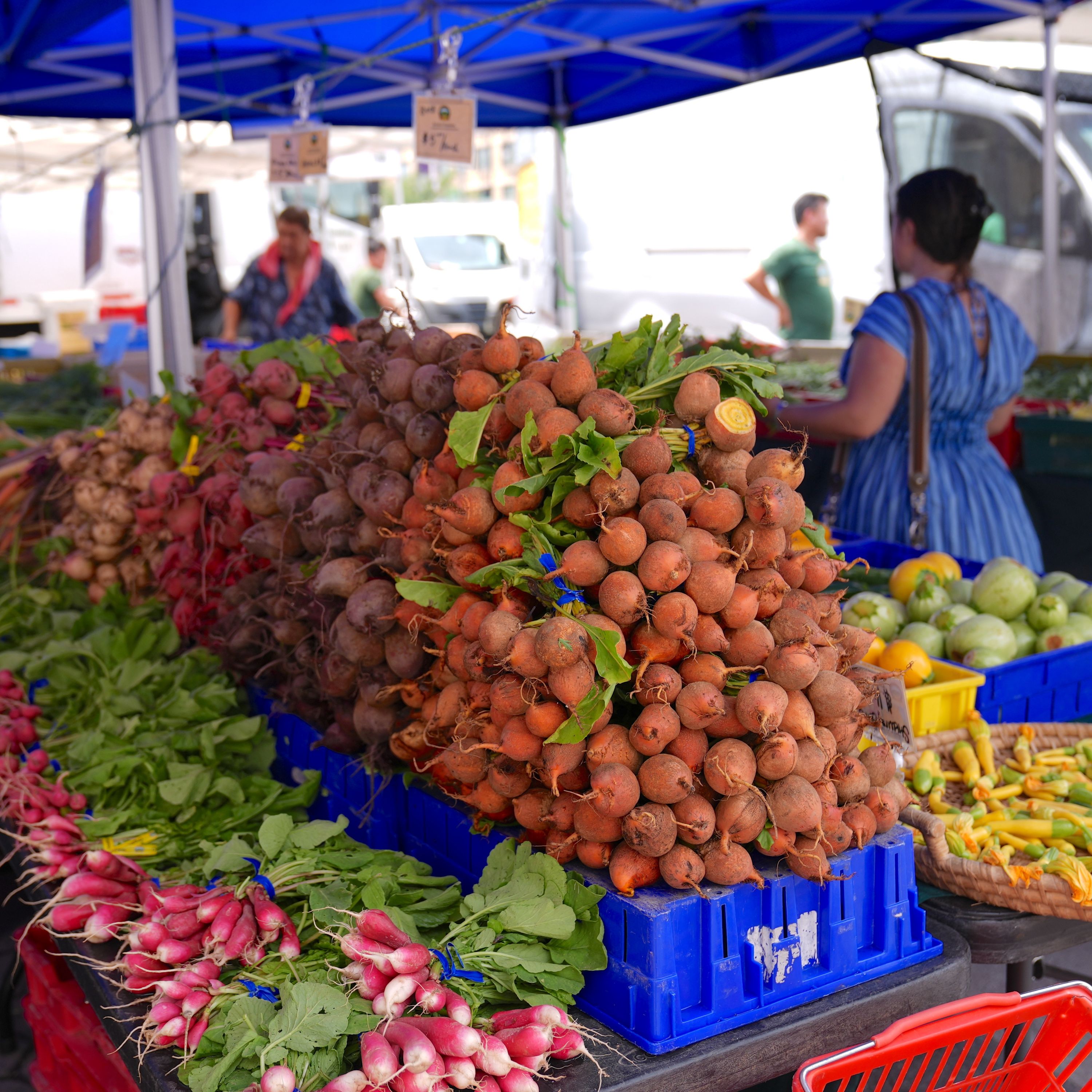
I'm Bridget Bergen, senior politics reporter in the WNYC newsroom, sitting in for Alison Stewart today. Thanks for spending part of your day with us. I'm excited to be here. I'm glad you are too. Coming up on today's show, we'll preview this weekend's New York City Poetry Festival. Author Jessica Knoll joins us to discuss her new novel, Helpless. And later in the show, we'll look back on two events that left a lasting mark on history and culture, the 1986 Challenger disaster and the 1996 blizzard on Mount Everest that inspired the book Into Thin Air. That's the plan. So let's get this started. New York City's Green Market program, which is run by GrowNYC, is celebrating its 50th birthday today. Exactly half a century ago, on July 16, 1976, the very first green market opened on the Upper east side and it was followed a month later by the now iconic Union Square Green Market. The markets seem like such an important part of the city's food landscape at this point, but when the idea of these European style open air markets first arose in the early 70s, it was a tough sell. New Yorkers were resistant, but the effort to bring fresh produce to the city and revitalize public spaces proved successful pretty quickly. At the very first market in 1976, every stand was swept clean in the span of a few hours. The markets have also come to function as pillars of community during the city's biggest crises of the last 50 years, they still stayed open the weeks after 9 11. They kept operating right after Superstorm Sandy. They created social distancing measures in order to stay open throughout the COVID 19 pandemic. Joining me now to talk about the program's history and mission is Amelia Tarpy, the program and publicity manager for GrowNYC's green markets. Amelia, thanks so much for joining me and happy birthday to the green markets.
- [03:23]
B
Thank you. I'm so excited to be here to celebrate with you all today.
- [03:27]
C
You know, I want to understand how these green markets got started. What was the initial vision and who were some of the main advocates.
- [03:35]
B
Yeah, so in the early 1970s in New York City and the region beyond, there were sort of two crises happening simultaneously. One being that farmland across the region was being lost to development pressure and the over industrialization of our food system. Small family farms were struggling to compete in these wholesale markets. As we began to ship food in from all over the world and many farms were going under and simultaneously in the city there was this lack of delicious produce and affordable fresh food. There was, you know, reports of people food coming in from all over the world that just did not have that like optimal flavor. And the two folks that really got the market started, Barry Ben Impe and Bob Lewis, they sort of saw these two crises and they wanted to do something about it. They were both city planners. Barry Ben Impe had grown up on a farm in Maryland and really saw firsthand the importance of shoppers being able to buy directly from farmers at his roadside farm stand. Bob Lewis had more recently moved to the city and the two of them worked together to bring these markets to life. There was quite a bit of red tape at first. The Barry really he was, had a lot of tenacity. He really had to convince the city that this is a good idea, get all the permits, get the funding to open. And then the other huge hurdle was actually the farmers themselves. Bob Lewis was incremental in convincing them to come to the city. They really, they had their reserves about coming to new to New York City. They were nervous that they. There was a line where they're nervous they were going to be like mugged by gangsters at the tunnel, you know, so.
- [05:35]
C
Well, I mean, it's interesting we talk about how that second market, the Union Square market, was in a neighborhood that at the time looked a lot different than it does now. It was, I think dodgy might be a word for it. You know, what role did Starting a market there play in revitalizing that neighborhood.
- [05:53]
B
It was majorly significant. New York or. Yeah. Union Square was essentially a parking lot at the time that the Green Market opened. And after the success that we saw at the 59th Street Green Market, you know, there was all this red tape. But then people from all over the city were calling Barry and Bob up, wanting them to open a market in their neighborhood. And the were so many plans in the city to try and revitalize Union Square. And so they called Barry up and asked if he'd be interested in opening a farmer's market there. So about a month after that first market opened, we opened in Union Square on a Saturday. And the rest is kind of history. I feel like having that regular weekly opportunity for people to come to Union Square in this, like, positive way really led to this, you know, cascading effect of changing the neighborhood. You know, businesses started to come back to the neighborhood. They started to pour back into the park to make it what it is today. You know, it's today, it's a gorgeous park. There's, you know, so many amazing nature and benches and seating. And we're there four days a week now. And, you know, restaurants started opening up in the area. So many chefs talked about how they specifically chose to open near the Green Market because they would have access to the market itself.
- [07:11]
C
Amelia, I'm finding every urge to start making puns about how it planted a seed and it started to grow.
- [07:18]
B
Trust, we love making those puns.
- [07:20]
C
Yeah. And I'm sure there's some listeners who, like me, as you were describing, some of those big market advocates, heard that name Ben Impe, and thought, wait, Ben Impe. There must be something in that family that is connected to. Has a green thumb of sorts. Because Adrian Ben Impe was of course, the parks Commissioner in Brooklyn Botanic Gardens and I think is the son of the founder of the Green Markets.
- [07:43]
B
Yep, he is.
- [07:44]
C
So talk to me about why are they called green markets as opposed to farmers markets, which is, I think, what we refer to them in many other places.
- [07:53]
B
Yeah, so that was a decision made early on by Barry and Bob. They really wanted a name that would distinguish the markets from. From other mark farmers markets. So one thing that's really special about the green market program is it is a producer only program. So we have around 45 green markets across the city, and everyone selling at those markets is the primary producer. So that means there are no middlemen. It's the farmers themselves. And we also have, you know, pretty, you know, the people that are selling there. The mission is to support regional agriculture. So we have farmers and then food businesses that are also dedicated to supporting regional agriculture, whether it be bakeries buying. You know, we require our Bakeries to buy 25% of their grain from local farms. We have people making jams, chutneys, preserves, pickles. Everything that they're preserving also needs to be sourced from within the region. So in order to really, you know, set us apart in that way, you know, there's farmers markets all around the country that there aren't necessarily those standards in place. So, you know, producer only. And then also we require our farmers to be coming from within our region. And we define that as a 200 mile radius around Poughkeepsie, New York. And so that way, you know, you're not going to see avocados at the green market or bananas they grow, you know, in other parts of the world. And we actually trademarked that name, Green Market to really define what it is and connect it back to our mission listeners.
- [09:30]
C
Do you have a favorite green market in the city that you want to shout out or a favorite, even farmer? How do they influence how you think about your produce or what you cook? We want to hear the role that green markets play in your community, in your life, especially this time of year when they are just completely bursting with fresh produce. Please call or text us at 212-433-9692. That's 212-433W. Again, you can call or text. We want to hear about your favorite green market. Maybe the best thing that you bought at the green market so far this summer. Emelia, you mentioned that the timing of the start of these green market green markets aligned with really what was the beginning of the farm to table movement. How did the markets influence the city's restaurant and food scene?
- [10:25]
B
Yeah, I feel like the restaurant scene in New York City and the green market scene really grew up together. The like I mentioned many chefs, as the markets were beginning to sort of spread throughout the city and as Union Square was growing into our flagship market, many chefs would either position their markets close or, sorry, position their restaurants close to the markets and, and, or ensure that they were going to the markets, you know, one to several times a week, they were developing relationships with the farmers themselves and really working closely with farmers to begin growing the crops that they wanted to use on their menus. I think, you know, it was just this moment where the things that are, that they're growing are just more flavorful, delicious than anything you can get anywhere else. And that in turn, you know, benefited the restaurants, allowed them to really develop their menus. There's a really great story. There's a handful of farmers that were really significant with this, one of whom being Rick Bishop, who has since retired from the green market program. But his farm was Mountain Sweet Berry, and he worked so closely with so many chefs over the years. There's a great story about how Daniel Boulade, you know, missed his fingerling potatoes from France and worked with Rick to develop a new seed stock and enrich his soil so that he could start, you know, growing these fingerling potatoes at that Daniel Boulad wanted to put on his menu. And then, you know, that kind of led to this fingerling potato craze that we have today. You know, I feel like so much again, back to, like, the seed was planted at the green market, and a lot of. A lot of the produce we have, the diversity of produce that we have is really thanks to these partnerships between chefs and restaurants. There's so many amazing stories of chefs, again, like, bringing seeds from their home countries or something they see, like, at a. On a menu over in San Francisco or wherever it may be, and asking the farmers to grow them and. And working closely to. To make sure they're on their menu. And then just the other piece of that, too, is, you know, the restaurants have continuously been a major source of, like, revenue and support for the farmers. And really, especially a market like Union Square, where that's sort of the central hub of all this restaurant activity. And the chefs guarantee that the farmers are going to be selling a certain amount every day and ensures that they're going to have the success in order to continue coming to the city and growing all the food they grow and making it available for everyone.
- [13:03]
C
We're talking now about how it's influenced restaurants, but it's also influenced home kitchens. Right. People are doing their grocery shopping at these farmers markets. How did the green markets play a role in. Role in kind of popularizing this new era of produce in our homes and perhaps new produce things that people are maybe didn't grow up with, but are learning to cook for the first time because they're discovering it at one of these green markets.
- [13:29]
B
Totally. I mean, I think that's the beauty of the green markets is you sort of have both things happening at the same time. You have all this new, exciting produce and things that, you know, I feel like shishito peppers, for example, is a great, you know, that's a great example of this. That was, you know, I Feel like most people had not heard of them. And then over the years, it's a household staple now, and every restaurant menu has it. But I think the farmers markets, the green markets, are a really big part of bringing those to people. But I, you know, both things play out at the markets. These sort of exciting new varieties of produce. And then also you have these really, you know. Oh, I'm blanking on the word, but these produce, that's like, part of people's childhood. Sentimental. I was just talking with my colleague, and she grew up eating her mom's summer squash casserole. And it's made with this very specific yellow squash that's popular in the South. And the farmers markets are one of the only places that she can find it. So I think, you know, because the green market program is so widespread spread and really speaks to so many people from all walks of life across New York City, that has really led to our success and, you know, influenced how. How New Yorkers are cooking. So, yeah, I think. I think, again, it's sort of both and all of it, if you will.
- [14:57]
C
Sure.
- [14:58]
B
And then, you know, I feel like we are always doing education at the markets. We're always doing cooking demos to show people what they can do with the. We're, you know, doing our recipe reels on Instagram and also working with people that are on the forefront of recipe development and making, you know, inspiring people to cook in their kitchens. I feel like, you know, we're kind of entering an era where people aren't cooking as much. And so we're really, you know, working to combat that and inspire people to get out to their markets. And I think, you know, the flavor sells. Sells the produce itself.
- [15:35]
C
Absolutely. Well, we have some great calls who are ready to tell us about their favorite market. Let's go to Winnie in Brooklyn. Winnie in Brooklyn. Hey, Winnie.
- [15:50]
D
Hi. Hi. Hello. I'm from the Hudson Valley and from Iowa, so two really big farm areas. And my family all grew up working for Miglarelli Farm stand in Red Hook, New York. And I just love seeing their stands here at. I just see them at Union Square. I usually go to the Fort Green Market, which I love, and I make lots of delicious recipes there, but they don't have a setup there. But I still see the Migliorelli crates there, which I love to see. So I just want to do a shout out to Fort Greene Farmers Market and shout out to Miglia Rally Farm stand.
- [16:25]
C
Winnie, thank you so much for that. Amelia, I see you nodding. Are you familiar with the farm in
- [16:29]
B
Particular, yes, we love Miglarelli Farm. That's so fun that your family used to work. They're a longtime green market farmer. You know, I think, you know, being around for 50 years, we still have farmers that were there on the first day that we opened and that have been here with the green market program for many decades. And Miglarelli Farm is definitely one that. That's been with the program, you know, since. Since the very early days of green market. And they sell at several. Several markets. And again, just an incredible farm, an incredible family. So it's so exciting to hear that you have that connection with them, Amelia.
- [17:07]
C
I mean, these markets have been so beneficial for some smaller local farmers, particularly ones who were struggling at the time that the green markets started. How did the markets change the independent agriculture scene in New York State?
- [17:23]
B
Yeah, I mean, there at the time when the green markets opened again, there were not many opportunities for farmers to sell direct to consumers In New York City, you know, in the early part of the 20th century, there were markets, but that all kind of changed sort of like, you know, into the mid 20th century and were basically extinct coming into the second half. And so really creating that opportunity where farmers could come sell direct to customers was incremental and making that change. That way, the money goes directly back into their pocket and they're able to charge a fair price for their product. You know, when you get into the question of this industrialization of our whole of our food system and wholesales, you know, a lot of times the farmers are not going to be making as much money on that product. So allowing that money to go directly back to them has been major. We've also, you know, done so much work to support farmers in our program, from marketing support to, you know, helping them apply to grants and that kind of thing. So we've, you know, done many things over the years to help help the farmers that are both in the program train new farmers to come, you know, the next generation of farmers.
- [18:44]
C
So on the flip side, you know, we've got farmers on the producing side, and of course, we have consumers. And a lot of listeners are texting with a version of this question, which is, how do you respond to the fact that only wealthier New Yorkers can afford green market prices, speaking to the fact that, you know, this fresh produce doesn't come cheap?
- [19:05]
B
Yeah, I mean, I really think that there is this sort of perception of the farmers markets being very expensive. And I do think that it's not a singular. There's no, like, you know, singular price when it comes to the farmers markets. We have so many different types of farms. And that's another thing that we're doing. When we are, you know, creating these markets, we have bigger farms that are able to grow at much larger scale and sell produce for much cheaper. And then there are more boutique farms that do have, you know, organic farms that do have have a higher price point. So I do think that, you know, across the board, there's a wide variation in the kinds of prices that you can find at the Green market. I truly believe that, you know, when you go, you can definitely anyone can find something that's within their budget. And I also think, like, the produce that you're getting at the markets, again, it was picked within 24 hours of coming to the market. It's going to last so much longer than anything you will find at the grocery store. And I think also, like, as we're seeing, you know, this is a, you know, I think as we've seen prices rise across the board, this, the farmers market products are, like, very on par with what you're going to find in grocery stores. You know, I feel like the price of eggs is a great example of that. Like, you go to a grocery store, I see the same price for eggs as I see at the markets. And those eggs, a lot of times they were, you know, laid over a month before getting to the grocery store. When you're. Yeah, go ahead.
- [20:39]
C
I want to sneak in a couple more callers to shout out some other farmers. Let's do really quick. Barbara in Williamsburg. You want to shout out a farm?
- [20:47]
D
Barbara yeah, McCarran Market, McCarran park, the Green Market there. I watched it grow from like five farmers. Now we have like 10 or 12. It's really great. I love it. And I love Ronnie Brook and I love Garden of Eve.
- [21:02]
C
BARBARA thank you.
- [21:03]
D
Those are my two things.
- [21:04]
C
Those are both. I know Ronnie Brooks. I know Ronnie Brook. I think a lot of us know Ronnie Brook. Mary in Staten island, want to hear your farmer's market or your Green market? Shout out
- [21:15]
D
Union Square. I go to the Union Square and I go to Migliori for my macum apple. They have it all year long. It's the best.
- [21:25]
C
Mary thank you so much for that call. I love when people have very specific types of produce that they love are delicious. You know, Amelia, we have to talk about something that I think a lot of people, when they think about produce right about now, are worrying a lot about, and that's the start, the sharp rise in cyclospori. I'm gonna get it right.
- [21:50]
B
Cyclospori, sporiasis, Cyclosporiasis.
- [21:54]
C
Thank you.
- [21:56]
B
It's a tongue twister for sure.
- [21:57]
C
I was practicing and I was practicing and then I just handed it right on over to you. So that's, of course, the foodborne illness that's been traced back to a parasite. Contaminated produce. What kind of precautions are green market shoppers, should they be taking to avoid encountering this?
- [22:16]
B
Yeah, I mean, we always say wash your produce. It's just like, as a standard, regardless of whether or not there is a foodborne illness going on or not. But, you know, I think we. Washing your produce, a lot of folks are also saying, you know, taking the. If you're eating lettuce or cabbage, just taking out some of those, taking off some of those outer leaves and eating what's on the inside. And if, if you are concerned, then definitely cooking your produce. Right now we're in peak berry season, making jams and all that great stuff.
- [22:48]
C
Those are some great tips. We really appreciate it. I have been speaking with program and publicity director Amelia tarpy about the 50th anniversary of New York City's Green Markets. Happy birthday. Green markets, they've got a birthday coming up on July 31st at Union Square starting at 4pm A little party. Amelia, thank you so much for joining me. Appreciate it so much.
- [23:10]
B
Thank you for having me. This has been so great. And thanks everyone for your amazing calls. Really love hearing about everyone's favorite markets.