Loading summary
Transcript46 lines
- [00:00]
A
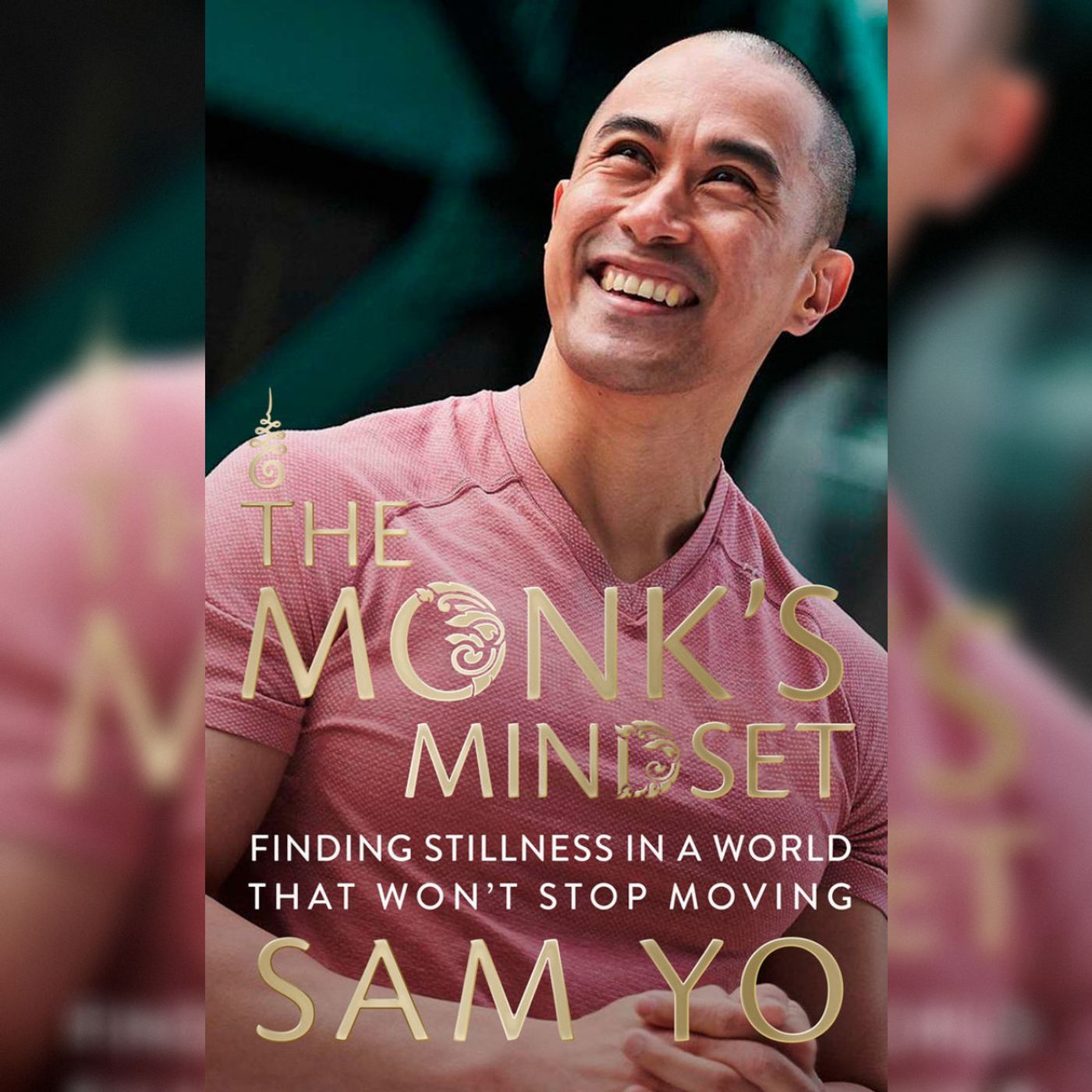
All of it is supported by Memorial Sloan Kettering Cancer Center. In a small, groundbreaking clinical trial, 100% of participants with a specific type of rectal cancer saw their tumors disappear using immunotherapy alone. Researchers at MSK are now studying this approach in cancers of the stomach, liver and more. And a majority of tumors are disappearing. For MSK giving day, all gifts will be tripled. Learn more@msk.org all of it. This is ALL of It on wnyc. I'm Alison Stewart. For the next hour, we're going to be talking about living well and eating well. Andre Fowles is the former culinary director of the Jamaican bar and restaurant Ms. Lily's in the East Village. We'll hear recipes from his cookbook My Jamaican Table, and talk about his other job at as Bruce Springsteen chef. Plus, Robin Arzon is the vice president of fitness for Peloton. She'll share recipes from her own cookbook of vegan meal ideas. It's called Eat to Hustle. Now let's get things started with another peloton instructor. Sam Yeoh has lived many, many lives. Before he became a fitness instructor, he was a successful musical theater actor, starring in the King and I on the West End. He worked on TV shows, including the famed British soap opera EastEnders. And perhaps most importantly, he trained as a Buddhist monk when he left the monastery in Thailand. The lessons he took from his time there have remained with him throughout his life. Now he wants to share those lessons with readers everywhere with his new book, the Monk's Mindset, Finding Stillness in a World that Won't Stop Moving. Part memoir, part mindfulness guide, the book takes you through Sam's time at the monastery and also provides guidance to help you find some serenity in a hectic world. Sam Yeoh joined me to discuss his memoir. Because this is an encore presentation, we won't be taking calls today. Here's my conversation with Sam Yeoh.
- [02:16]
B
Before you went to the monastery, you, you were in acting?
- [02:19]
C
Yes. Very different.
- [02:22]
B
Why did you decide? Well, first of all, why did you decide to go into acting?
- [02:25]
C
So I, I've always loved movies and, you know, film, but I also got into acting through dancing. So I used to dance. Basically. I trained as a ballet dancer as well. So I think you can add that to your list. I trained ballet and contemporary, and then I got into a musical and I was on stage and I was, you know, on the outside looking very successful externally and internally. I've always kind of felt disconnected from myself. You know, growing up first generation in London, you Know, I was never quite British enough in school and was never quite Thai enough. I went to Thailand because when I would speak Thai, I would speak with a distinct British accent. People heads will perk up. It's like, well, that doesn't sound right. So I kind of always felt like the other. So, you know, I found my belonging more in kind of trying to perform and trying to fit in every room. And, you know, once you do that and once you're on stage, you're performing internally and externally and, you know, I was on this wild roller coaster of, you know, entertainment industry for three years. And, you know, I was no to say, you know, I was on autopilot for those years. I was never in the moment enjoying the moment. I was always kind of waiting for next thing. And then there's one night where I almost. I did lose control of my car.
- [03:43]
D
Yeah.
- [03:44]
C
And you know, afterwards, you know, spoiler, I survived. I'm okay. But afterwards, I remember sitting there and feeling so uncomfortable. And it wasn't the fact that what could happen. It was the fact that for the first time in a long time, I was present with myself and felt very uncomfortable in my skin. And the question that was in my mind from that point on is, how much of my life have I not been present for? So I knew I had to change my environment somehow and. And then when I was offered a new contract, I knew I had to leave and do something, but I didn't know what it was and. Yeah, well, how did you decide studying
- [04:20]
B
to be a monk would be your choice?
- [04:23]
C
So I. I went to Sunday school in. In London. There's a beautiful temple in Wimbledon, if anyone's ever there, go to Wimbledon. There's a Thai temple. And I used to be taught tradition and language by monks. And I always had this thing about monks knowing everything. If I had had any questions or queries, I could just go to them and seek their knowledge. And it just happened that one day after I finished my job, I was at the temple, my mom, and just standing at this lake in the temple grounds where I fall into as a child when I was 10 years old. And I remember the sensation of feeling stuck as a child in the lake and still feeling stuck as an adult. And. But the feeling of the being in the grounds, on the monastery, the peace it gave me in that moment, and I thought, I need this peace. I need to. Need to find it somewhere. So on the drive back to my mum's house, I turned to my mum very like, you know, matter of fact, mum, I think I'll go to Thailand and become a monk.
- [05:23]
B
And mom said.
- [05:25]
C
Mom was like, I remember it. And she looked at me because my mom's, like, very serious and she doesn't joke and stuff. And so she's like, are you joking? I said, no, I think this is what I want to do. And the funny thing is, is that it was more believable for my Asian mother for me to dress up and play make believe on stage. That was more acceptable and, you know, within my. My space than me going to. Becoming a spiritual man, because I never thought that was something I wanted to do, but I just knew I needed to remove myself from the environment and find something that was a little more quieter so I can kind of hear myself.
- [06:05]
B
My guest is peloton instructor, former Buddhist monk Sam Yo. We're discussing his new book, the Monk's Mindset. Finding Stillness in a World that Won't Stop Moving. What was. What is the biggest misconception that people have about monks, about monks, about you and your time in the Buddhist in your. In the monastery.
- [06:24]
C
So when I first went into the monastery, you expect to find. I expected to find peace and stillness. But when you first sit still with yourself for the first time, all you hear is noise. And it's the noise that you've been avoiding. And there was a lot of noise. And, you know, and this had been building up for, you know, from when I was growing up, for when my. My parents divorce, you know, I detached myself emotionally not to kind of feel anything about that. So, you know, people expect to be peaceful. It's not. And. And you need to go through this barrier first of accepting yourself and who you are and where you are. But what I found in the monastery, once I got rid of all that was structure. And, you know, the monastery gave me structure. And a lot of us, you know, when we're kids, we have structure, structures given to us. And as adults, we do. We have physical structure, go to work, this and that, but we don't have emotional structure and mindful structure. How do we anchor ourselves within the day, within our physical structure? And what it is in my book is how we can do that with. I call them monk mindset moments. Just finding moments to get into yourself and to, you know, talk to yourself. How I'm feeling and having more intention when you move through the day, because a lot of the time we're just reacting to things.
- [07:45]
A
It's interesting. One thing I love about your book is there sort of guidelines at the end of chapters to help people along the way. And I just wanted to say that out loud. It's a really, it's a beautiful part of your book. What changed about the way you interacted with other people after your training?
- [08:02]
C
So when I was in the monastery, what I realized from the outside was that a lot of us are just waiting to speak and not actively listening. And what the monastery taught me was that we, there's an art to listening. Every morning we'd have breakfast together. My, my brother, my monk brothers and I, there'll be five of us and we'll sit in a circle and what we would do is that we'll pour tea so when someone was talking, everyone else would be quiet and they'll just pour tea for that person. And what it is, is a lot of time we fill our own cup with our own voice and we don't allow other people to fill it for us. So what we need to do, you know, it's very Bruce leaving is to empty a cup and allow that person to fill it in for us and really not just listen, but connect in the moment with that person to make them feel seen.
- [08:59]
A
One of the check ins you include in your book involves the four dimensions.
- [09:03]
C
Yes.
- [09:03]
A
What are they?
- [09:04]
C
So the four dimensions we live in so four mindful dimensions. It's the body, the heart, the mind and the spirit. So the body of course is, you know, our physical form, how we look after our body, you know, movement, nutrition. And then we, we have the mind which is our thoughts. And how do we navigate our thoughts? And I describe in the book as, you know, Every thought is a new library book that we place on our shelves. And sometimes those thoughts get outdated or sometimes we need to dust off those thoughts or get rid of those books. So it's managing your mental health. And then the, the heart is emotion, your emotion of how do you regulate yourself emotionally? Do you talk to people? Because a lot of time we hold that all in, don't we? We hold all in all our emotions. And then one day it just explodes and then we have spirit. So spirit is not religious. It's, it's purpose. It's, you know, something that service that's bigger than you. And what tends to happen is when one of these dimensions I describe in the book, like sitting one chair for four legs of a chair, say so say that the body is off, the chair becomes uncomfortable and you don't know why. So what we tend to do is get up and move to a new chair, don't we? We haven't fixed the chair, do we? I'm Gonna get another chair. So you walk to another chair and then you still have the same thing. You're kind of moving around that chair. And then eventually two legs start to rock and then three, we don't deal with it. And eventually that the chair is gonna get you crashing to the ground. So, you know, it's. We look after ourselves physically, mentally, emotionally, and have a sense of purpose. And, you know, this, this four dimensions, they're all aligned with each other.
- [10:40]
A
My guest is Sam Yeoh. We're discussing his new book, the Monk's Mindset. Finding Stillness in a World that Won't Stop Moving. Let's talk to Peg in Fairfield, Connecticut. Hi, Peg. Thank you so much for taking the time to call. All of it. You're on the air with Sam.
- [10:56]
D
Hi, Sam. Thank you so much for taking my call. Also, I just thought that Sam could speak about how breathing has really. Because Sam is a true blessing in my life. I've crossed the ocean 10 times last year to see him at the breathing and his voice. This book, by the way, is also going to be an audiobook. And I thought we could point that out. Maybe Sam could speak to how it was creating an audiobook.
- [11:27]
C
Oh, hi. Hi, Nanapeg. How are you?
- [11:31]
D
Oh, I'm thrilled to hear your voice, Sam.
- [11:32]
C
I'm thrilled to hear your voice. Nanape comes and visit me in London. She comes all the way to London to do classes with me in a London studio. And Nanapeg is known in our London studio for her amazing brownies. So just to point this out, Nana Peg, she always brings brownies and I share with all the staff at my work in PS&P as well. So with the audiobook, it was very strange for me reading the book because, you know, when you write it and you kind of leave these chapters of reading it, you know, I. I was kind of experiencing for the first time as well. And like, oh, my gosh, yes, this. And it allowed me to take myself back into that moment. So when I did read it, I hope there's the emotion of where I was those 25 years ago when these stories were in my journals to how I was reading it in the moment in time. And I hope that comes across and I really enjoyed it. It was a very new experience for me as well. And having my voice in my ears makes me very self conscious. You might get over time, Alex. Yeah, I'm used to that. Yeah. So before I came in, I was like, should I have a radio voice when I come home?
- [12:50]
B
It's radio Sam. Yeah, I have A text here that says, thank you, Sam, for hours of sweaty serenity on the bike in our basement gym. Can you say a bit about the place music occupies in your mind, body connection and your peloton classes? It's clearly more for you than just a cadence.
- [13:08]
C
Yes. So, you know, music is medicine, and that's something I believe. And the thing is, when I was in the monastery, I didn't have music. And that was the thing I, you know, apart from my family, I missed the most was music. You know, it wasn't like I could put on a Backstreet Boys record in the monastery. I don't think they would allow me to do that. I didn't try, but I mean, I didn't want to overstep the boundaries with my mentors. So, you know, when I, when I do these playlists, you know, I'm so blessed because we have an amazing music team at Peloton and they're able to get the rights to all this catalog. And I'm just a kid in the playgr. There's so much there. But when I, when I do my playlist, I, you know, part of me is like, okay, this, how is this going to sound? But I really want to think about, okay, how is this going to feel when you're on the bike, when you're breathing, how is this going to make you feel? You know, I, I'm going to push you to exhaustion by this track. So the next track there needs to be a bit light and shade, so I need to bring your feeling down somehow. It's great that you can have, you know, great high tempo music for every single track, but then you're gonna be uphill all the time. But it's. The thing with life is there's the ups and downs and we're going through this journey together. So when I choose a playlist, it's not just how it, how it, how it, how we listen to it, it's how we feel when we listen to it.
- [14:26]
B
I'm curious about your thoughts about mindfulness, because for some people it's become a little bit of a buzzword. For other people, it's very meaningful. What does it mean to you?
- [14:38]
C
So I know there's kind of this commercialization about mindfulness and wellness. And wellness, yeah. So. And sometimes when people hear the word mindfulness, they think of, oh, it's going to be spiritual. And I've got to, you know, sit on top of a mountain meditating with a waterfall and Kenny G in the background playing. It's not that you know, and if you do think that, then you just got to kind of shift your perspective on the world, on the word. So instead of thinking of it as mindfulness, mindfulness, think of it as awake fullness. How much are you awake in your day? Or how much are you just reacting in your day? So mindfulness is just that. It's just moving for your day with intention and not rushing through the moments that you should celebrate. Especially as adults as, well, we, you know, we. We don't celebrate ourselves enough. You know, we wait some big events, you know, oh, when I finish this project in three months, you know, I'll celebrate something. But, you know, you got to set those tiny little step, tiny little steps. As children, we celebrate everything. You know, our first steps, you know, the first time we, you know, we go to the toilet by ourselves, you know, we celebrate all these little things. And as adults, we need to do this just to remind ourselves to be present and. And to enjoy life instead of just moving through.
- [15:54]
B
Was funny because I took your class this morning.
- [15:55]
C
Oh, yeah.
- [15:56]
B
And it was interesting because you said, calm the mind. Like, don't worry about your body. Calm the mind. I found that very interesting. Why do you tell your people who are exercising their bodies to calm their mind?
- [16:09]
C
Because, you know, the mind is centered and the body can push harder. And, you know, there's a lot of amazing coaches, instructors. Then they, like, hype you, hype you up.
- [16:19]
D
Yeah.
- [16:19]
C
Yeah. Come on, let's go. Let's go, let's go, let's go. You can do this. You can do this. So other instructors hype you up. I ground you down, so I ground you down, you know, so the more grounding you have, the more you can push, the more leverage you have. Because I found, you know, growing up, as you know, I did a lot of athletics and through ballet and through personal training and through playing a lot of football that, you know, it's great that the coach is going to be at that level with you, but the thing is, as a coach, you. You don't want to be at the same level as the athlete that you're training. You want to be behind them, supporting them. And I. When I ground you down, a lot of people feel like, oh, I've just done a new person the best, but I'm not tired at all. That's because I spent the whole time testing you, but grounding you at the same time.
- [17:08]
A
Everybody right now, what is one thing they can do to either achieve mindfulness
- [17:13]
B
or to quiet the mind or something? They can do that will set them off before they read your book.
- [17:20]
C
One thing they can do.
- [17:21]
B
Yes, just one thing they can do. Very simply.
- [17:24]
C
Gratitude. I love this. So sometimes gratitude has the power to kind of break that autopilot in our head about negativity and, and just bring us into moat and joy, the things we have around us. So every morning when you're drinking your coffee, just hold the coffee cup and feel the warmth. And when you feel the warmth, that physical sensation associate with something you're grateful for in your day. Just one element of gratitude to start your day. And that's the first building block to stay intentional. It could be the cup, it could be your children. It could be the job that you love. It could be just the fact that you're showing up today, Anything. So start with gratitude, holding your coffee cup and that warmth.
- [18:07]
A
The name of the book is the Monk's Mindset. Finding Stillness in a World that Won't Stop Moving. It is by Sam Yeoh. Thank you for coming to the studio.
- [18:15]
B
We really appreciate it.
- [18:16]
C
Thank you so much. It's my first ever radio. I'm so excited.
- [18:19]
B
You did great.
- [18:20]
C
Thank you.
- [18:27]
B
Up next, Robin Arsan shares recipes from her cookbook, Eat to Hustle. This is all of it.
- [18:37]
E
When you own your own business, you need to keep things moving. Need to book a last minute flight? Earn a $300 travel credit to cover that. Need to take a meeting before takeoff? Do it from the comfort of the Chase Sapphire lounge by the club. Need to catch your breath before you board? Done. Chase Sapphire Reserve for Business. The business card that gives back all you put in. Visit Chase.com Reserve Business to learn more. Cards issued by JPMorgan Chase bank and a member FDIC subject to credit approval terms apply.