Loading summary
Transcript32 lines
- [00:00]
Progressive Insurance Announcer
WNYC Studios is brought to you by Progressive Insurance. Insurance isn't one size fits all. That's why drivers have enjoyed Progressive's Name your Price Tool for years. Now. With the Name youe Price Tool, you tell them what you want to pay and they'll show you options that fit your budget. So whether you're picking out your first policy or just looking for something that works better for you and your family, they make it easy to see your options. Visit progressive.com, find a rate that works for you with the Name youe Price Tool. Progressive Casualty Insurance Company and affiliates Price and Coverage Match limited by state law. All of it is supported by Memorial Sloan Kettering Cancer Center. In a small groundbreaking clinical trial, 100% of participants with a specific type of rectal cancer saw their tumors disappear using immunotherapy alone. Researchers at MSK are now studying this approach in cancers of the stomach, liver and more. And a majority of tumors are disappearing. For MSK Giving Day, all gifts will be tripled. Learn more@msk.org all of it.
- [01:08]
Alison Stewart
This is ALL OF it on wnyc. I'm Alison Stewart. Throughout the summer on ALL of It, we're doing a series called American History Fridays where we take a deep dive into a different piece of US History.
- [01:20]
Interviewer
Today.
- [01:20]
Alison Stewart
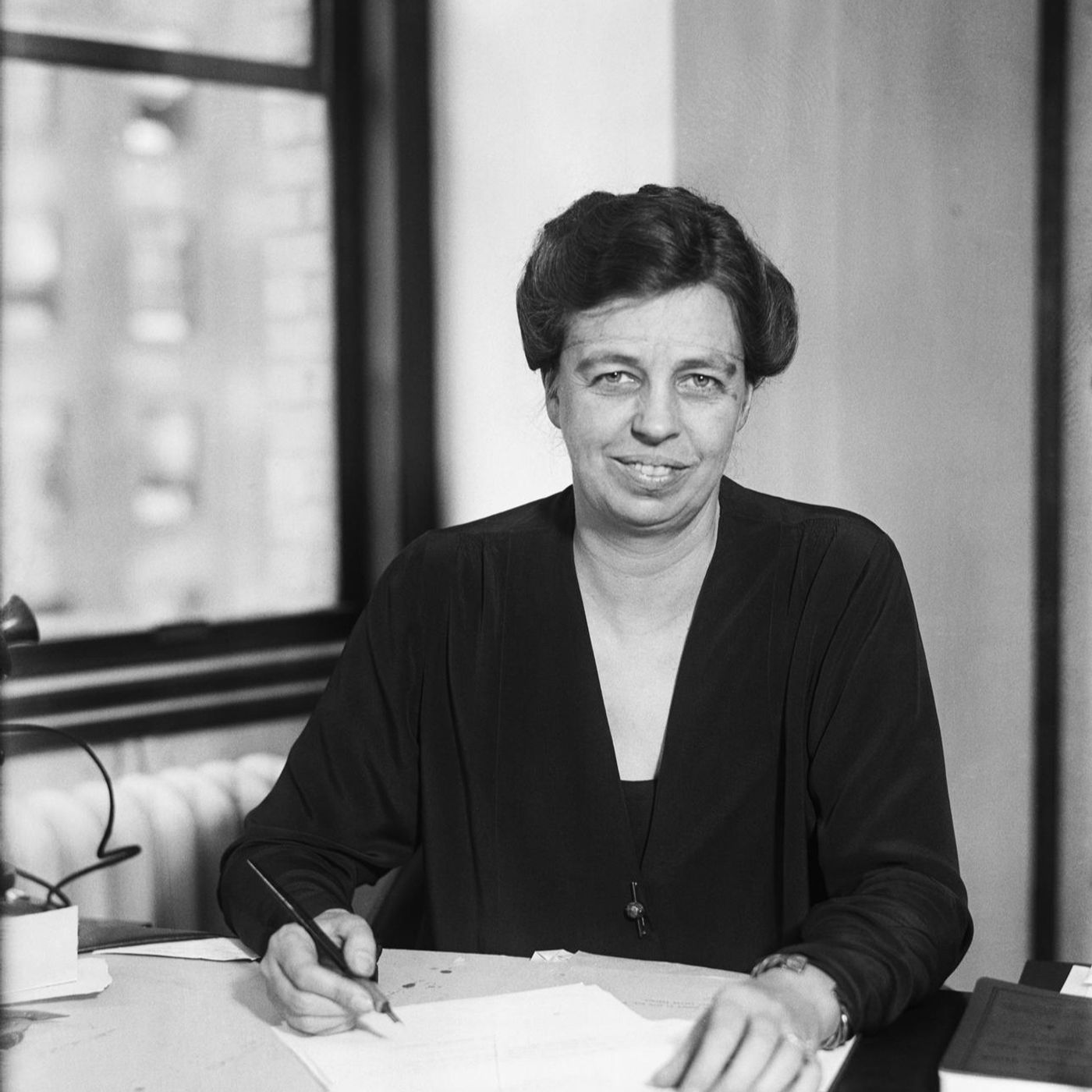
For the hour, we'll be learning about the life of the longest serving first lady of the United States, Eleanor Roosevelt. For our series Full Bio, I spoke to biographer David Michaelis, who spent 11 years working on a biography simply titled Eleanor. The book traces her life from a tumultuous childhood through the White House, her work with the then newly formed United nations, and into her final years. Here are highlights from that conversation.
- [01:59]
Interviewer
Eleanor left a huge paper trail, making her personal and professional papers available for study. So much of the FDR Library and museum in Hyde park, there are more than a million papers of hers and they rise over 889 cubic feet feet. Where did you even begin when you started to think, I have to tackle these papers?
- [02:19]
David Michaelis
I actually, I got lucky because some of the decisions were made for me because they were reorganizing the research room at the FDR library. And they told me, if you want to see the following collections, they're about to go into deep storage for five years. You better look now. And so that actually made the initial few months not as shocking. But the shock came when that reorganizational, reorganization finally took place. And there came a day where all the cartons, the million documents in cartons, the 836 cubic feet, were literally trucked out of the back room and began on trolleys to make their way to their storage facility before all the renovations were going. At that moment, I literally saw the scale of, you know, Everest. And so I paled. I mean, I literally went pale. And my friend there, the wonderful supervisory archivist Bob Clark, looked at me, saw what was happening, and said, oh, David, they're there. He said, that's why you're here. You are here to select. There's so much in those papers, there's so much in those million documents we don't need to hear, so we need this story. And this was what was missing. Oddly enough, out of all the books written about Eleanor Roosevelt at the time, there was not a single one volume, one book that told the whole story in one go. Sort of like doing the whole thing in charades. It was sort of on me now to grasp all of this and bring it into one volume. And that was actually terrifying. And even more than my face going pale, it drove me nuts for 10 years.
- [03:56]
Interviewer
Initially, as a young woman, she was not particularly confident. Her parents had a great deal to do with that, you write in your book. Her father embraced her as a miracle from heaven. Though. Elliot and Anna, her parents had been hoping for a male heir, a precious boy junior, to put an end to the Roosevelt clan's plague, as one biographer would term the family's recent sending of girls, the relationship she had with her parents was quite different. Her mother, who was thought to be one of the most beautiful women in New York City, was really rather cruel to her. Called her granny at a young age. How would you describe her mother's parenting style and its impact on young Eleanor?
- [04:43]
David Michaelis
Cold, I see. Also very needy in a narcissistic way. That Eleanor be a reflection of herself and, you know, barring that, at least a very fine reflection of the family in its, in its graces and elegances. Eleanor had a kind of. Had a sweet face as a child. She actually was, it was commented upon in newspapers and magazines at the time that she was a very adorable, attractive child. She's not some, you know, buck toothed figure out of an Edward Gorey cartoon standing in the corner. But that's how her mother cast her. You know, she would say that when her mother criticized her openly and called her granny in this very contemptuous, demeaning way that she wanted to sink into the floor for shame. And shame was really the ruling emotion. Humiliation was the ruling emotion that she felt from her mother. And one thing that should be said about her mother, not to excuse but to explain, which is that her mother wasn't just some, you know, society lady who, you know, was terribly determined to have Eleanor be something. What she was was herself afraid. And what she was afraid of was falling down in class, becoming marginalized, so that all the sort of badges of status that she needed to wear, she very much wanted Eleanor to wear, too. And she very much. It meant something to her that Eleanor would be a sort of youthful, blithe, carefree figure instead of what she saw her as, which was sort of downcast and stern and old and granny like. And she wanted nothing to do with oldness and sternness and someone sitting in the parlor with a long face.
- [06:26]
Interviewer
After spending so much time with her and with her words, do you know. Do you have any thoughts on why Eleanor Roosevelt left behind so much documentation rather than keeping keeping these things private?
- [06:43]
David Michaelis
It's a really good question. I haven't thought of it that way because it speaks to her wish to be useful, which is an overwhelming wish in her life. It does not speak to her wish for attention. She very clearly said to Lorena Hickok, her close confidant, toward the end of her life, she said, you know, I really just simply. I want the plainest coffin and just to be remembered by the people I loved and who loved me, but I don't want to be remembered. And so it wasn't. Eleanor did not have a wish to exist in history. In fact, she. She often would say, you know, if it weren't for my husband or for within a few years from now, I'll be forgotten. And she really believed that. So she wasn't writing for posterity. I think she was writing and leaving a record of things, because that was what a professional did. That is what a person of purpose and a person who had a connection to other people who depended on her. I think she felt strongly, for instance, in her column, that that was a daily connection to people and to anybody. It was the person over the fence. It was the person in the next seat in the train. It was the person that she hadn't yet met on the street, in the town she was going to visit. There was a way for her always to connect through words in the plainest of style and the plainest of language. She always said what she meant, and it was a way of connecting, was to be actually to mean what she said and to say what she meant. And I think that was another good reason to leave the words there. But I don't think she ever thought of herself as a personage in A large sense the way of course, FDR did and the way, you know, the men of that era, the Churchills, the Stalins, they all had, you know, the grandest of self image. She did not. And in a way that freed her to do the things she did. General Marshall, George Marshall once said, you can, you can accomplish anything in Washington D.C. as long as you don't need the credit for it. And she didn't need the credit.
- [08:55]
Interviewer
Before we dive into the book, I feel like we need to share with our audience that New York is all over this book. That you could take this book and make a walking tour of various Roosevelt homes and places that are important. What was New York to Eleanor Roosevelt?
- [09:18]
David Michaelis
She was a lifelong Gothamite. I mean, I think of the city that she was born into and bred from from as Gotham. It was the, you know, she was born and bred from generations of seaport Roosevelts who had hardware store down on Maiden Lane at the foot of Manhattan Island. They were, they had a sense of the city as an island. They imported glass from France and Belgium. Those shipments came in to the wharves. They owned the wharves. The Roosevelts, her direct line descendants. Franklin Roosevelt, we need to remember quickly here, her future husband was an upriver Roosevelt up the Hudson. Her family, her uncle Theodore Roosevelt, uncle Ted, the 26th president of the United States was also a born and bred New Yorker. And her father was a born and bred New Yorker. And her grandfather, the first Theodore Roosevelt Sr. Cared a great deal about the city and was one of the first, you know, great advocates for the poor, for the marginalized, for the, for the, for the mentally distressed and the mentally ill. And he was, you know, on the board of the, of the new Museum of Natural History. And they were absolutely part of the fabric of the city and the city. It's important to remember that she was born into and the city of her childhood is the city that is so. And such a complex and contrasting history as what it was just then becoming, which was the nation's and the world's capital of wealth and the nation's capital of immigration. Which gave Eleanor her very first the contrast between those things. You could walk a block in the city and go from direst poverty to fantastic wealth in the city of her childhood. And it gave her her first vision of the United States as a liberal pluralist democracy. All of the, her early experiences of the city, even including riding the fifth Avenue coach, which is a horse drawn vehicle as a child, seeing a man appear before her and put his hand out and ask desperately for anything that she could give. And it gave her her first look at and understanding of what was needed. It was a world also, by the way, that was not regulated. It was a world where disease was rampant. It was a world where all the things that became part of the Liberal and Democratic Party and of the New Deal even eventually were then being answered by the Democratic machine, by Tammany Hall. If you showed up in Manhattan as an immigrant, Tammany hall would come to you and start bringing you ice and asking you what you needed. The government wasn't there for you. The government was a corrupt institution. But New York and its constant composting and constant divisions between wealth and poverty really were her great laboratory.
- [12:18]
Alison Stewart
You're listening to my conversation with David Michelis about his biography on first lady Eleanor Roosevelt. We'll be right back. This is all of it on wnyc. I'm Alison Stewart. We continue today's American HISTORY Friday with my conversation with David Michaelis, author of the biography Eleanor. Here's more of our conversation.
- [12:47]
Interviewer
Eleanor meets her cousin Franklin Delano Roosevelt, I believe their fifth cousin. What initially attracted them to each other when they started to see each other as a couple?
- [13:03]
David Michaelis
Well, Franklin Roosevelt and his mother, who were the couple that's getting their next Franklin Roosevelt, an only child, and his mother a widow, recently widowed. And she, in fact, had gone when he was in college, which is when he met Eleanor. He was a sophomore, I believe, at Harvard College. His mother had already moved up to be with him. She moved from the Hudson Valley to Cambridge just to be close. So she and Franklin and his mother were a unit. And Eleanor, in seeing cousin Franklin on the train one summer afternoon and as they began to see each other more often at young people's parties, and as he would ask her what she was reading, as he appealed to her mind and to her intellect and connected with her on a extremely exciting level of the world opening up and books and ideas. And he was quite and he was dazzling. He was attracted. He was beautiful. He was a beautiful young man. He's like the sun. He just shone. He had light pouring out of him. He was an incredible young sun God. And he and his mother gave Eleanor something that at that very moment she did not have. What she had was uncles who were crashing into a house that she and her aunt was living in, the old hall house that was now completely down at the heels on East East 37th Street. Eleanor's life was surrounded by adults and family that were in chaos and the world of kind of absolute at that Point kind of dissipation. The uncles were really falling into. Into alcoholism at that point. They had once been tennis champions. They had once been fairly pulled together. Now. Now things were really bad that Eleanor looked upon cousin Franklin and whom she called Cousin Sally. Those two figures, cousin Franklin and cousin Sally, were her, in a way, her saviors, in a sense. They provided solid ground. There was going to be regularity, routine, safety, security in their world. And it attracted her. And what attracted him to Eleanor was that she was independent. She was on her own. She was a thinker. She was actually extremely appealing. She had beautiful mountains of blonde, sort of gold, highlighted brown, blonde hair. She had dazzling blue eyes. And when she smiled, it was radiance. It was complete sort of. You couldn't believe that this person who had looked so solemn a minute ago was suddenly beaming this look. And she was above all. I mean, above all that. And I really put it as above all because I think it was above all from Franklin Roosevelt. But this is my humble opinion. She was the niece of the President of the United States. Theodore Roosevelt was then the President of the United States. And not just the president, United States. He was something new in the world. He was something new in the. In the. On the globe. Theodore Roosevelt was a. An American who had brought together in a political coalition and in his own Persona, in the cult of his own personality, had brought together north and south and east and west and was looking outward from an America that was seeing itself as an empire and saw itself in launching fleets across the world to control and command. And he was it. I mean, he was the man of the world. And Franklin Roosevelt took him as his great hero, as did so many young men like Franklin Roosevelt. Young men were mesmerized by him. They wanted to be Theodore. And here was Theodore's niece. But Eleanor had a certain thing. She was sort of a double. She was already kind of a double Roosevelt. She was born a Roosevelt, and now here she was with Franklin. And so they were sort of doubling up and teaming up. And there was a kind of. I mean, even the Kennedy family later doesn't even contain this glamour. There was so much glamour at the time in the Roosevelt, the Theodore Roosevelt White House of youth, of passion, of patriotism, of being activated by energy itself, by strenuousness and by mission to become an American, to become this great new thing in the world. And it was full of optimism. And so she and Franklin teaming up were. I mean, they were the power couple of. You know, they were the power couple of all time.
- [17:38]
Interviewer
So they had sort of a traditional marriage in certain ways because they had a lot of children, five surviving children, one infant who died of a heart defect. They get married. I'm curious, you know, we were going to talk about it later. They each had both physical and emotional affairs during the course of their marriage.
- [17:58]
Progressive Insurance Announcer
Early on, were they in love with each other?
- [18:01]
David Michaelis
Really good question. I say yes. I think they absolutely adored each other. And you can see it actually in photographs. And yet there was all that stuff I was just talking about, all that Roosevelt Ness had its opposite side, its darker side, and, and it worked against them. I mean, their honeymoon was a sort of classical disaster honeymoon. He. He had hives five times during the course of the honeymoon. She couldn't quite find her sea legs. She did there, you know, she was terrified of the water and of long ocean voyages from episodes, real traumatic episodes of her childhood. But she did get over those. And he got over his hives and. And they both tried, and they both tried, and they both tried, but they found the truth on their honeymoon that would dog them for years, which was that they couldn't make each other deeply, intimately happy. And it's sexual, yes, but it's also that she couldn't quite be playful the way he wanted her to be playful. He would then start bullying her, he would then tease, he would pretend he wasn't bullying, but he was teasing. She. She didn't want to be. Their chemistry was exactly off. He was a sort of practice deceiver because that's how he got things done with his mother blocking the way. And she was. Eleanor was a seeker of truth, a teller of truth, a facer of truth. So there's a lot in their essential makeup that was contra, you know, intimacy and contra partnership. On the other hand, they had this sort of. When they were shoulder to shoulder, side by side, facing outward, not facing themselves or facing inward, they were already even on that same honeymoon, protecting each other. They both had made terrible gaffes socially and in public on their honeymoon. Once, you know, at one point, Franklin was asked to make a speech at a small and open a garden sort of festival in England. And he made a disastrous speech and Eleanor helped cover for him. And she was asked at one point in a sort of high powered drawing room to explain how American government worked. This was Denise of the President, United States. You'd think she'd be able to tell a little bit about how the states versus the federal government, how they interacted and worked. She couldn't say a word. She didn't know a thing. She couldn't have offered a single idea about a legislature or how the U.S. house of Representatives related to the U.S. senate. Franklin saved the day. They began instinctively covering and using each other's weaknesses to turn into strengths and strengths into weaknesses. This was their genius all along, was that they constantly flipped back and forth between strength and weakness, using it to their advantages and, and it went through their entire life. It became the basis of their real partnership and of ultimately one of the greatest relationships in power relationships, but real partnerships in American history.
- [21:15]
Interviewer
My guest is David Michaelis. The name of his book is Eleanor. It was interesting you mentioned that Eleanor Roosevelt didn't know much about government when she was a young woman. And the book gets into some of her points of view, which I think would surprise a lot of people because many people think about her as a feminist and an activist and a champion of civil rights. But when she was a young woman during the suffragette movement, Eleanor was against the woman's right to vote. She was openly anti Semitic, she was racist, she referred to black people as darkies. And writing things like with darkies one is always suspicious, suspicious even of a death in the family. This was all when she was a young woman. Why was it important to re examine her past belief system, especially in light of her activism that she's known for?
- [22:07]
David Michaelis
Well, the importance of it is that the spine running through the 20th century is the idea that the spine of, of both wars, both world wars and of the system of Jim Crow and of racism that we are just today beginning to finally, finally confront and that dominated a great deal of the politics of the Roosevelt era, all has to do in some part with the idea that some people are superior to others. And Eleanor's class, the class of her childhood, of her growing up, the class of that she, let's say, married into when she married the Delano family, when she married Franklin Delano Roosevelt, she got a mother in law whose family very paradoxically was delighted to have Booker T. Washington, the black educator, to tea and to their house. And to think of themselves as being progressive and thoughtful in ways about the new ways of looking at the world. But they were deeply convinced of their own superiority, so that they would say nasty things about Jews whom they considered their social inferiors. And they looked down upon and kept a servant, master, servant class relationship in these earlier parts of Eleanor's life that you're describing, that today would of course be considered racist. But at the time was part of a class system and a racial system. The different parts of that legacy filtered through Eleanor's story all through her life. And you see it all the way through the Roosevelt presidency, really up till the Second World War, which was when a lot of this changed. And it's kind of shocking to see how much of it didn't change until the Second World War and how much of it was just repeated over and over from 1905, when FDR and Eleanor married, right on through and especially through the First World War during race riots in Washington in 1919, with returning veterans being treated, black veterans being treated horribly, Franklin as the Undersecretary of the Navy, and Eleanor off on Campo Bello, neither particularly concerned with the actual events, more with the way things looked and with the Wilson administration not responding at Franklin being extremely free to be high handed and not particularly caring. And these are shocking, actually, to see at such a late date in their lives. They were by then in their 30s with families and children and careers, but their real careers, the ones we think of when we think of Franklin Ellan Roosevelt, didn't really begin until after polio in the 1920s. And so everything that comes before that is part of a different world and part of a different, really almost different people. And I think it's really important to understand that people obviously can evolve and we see it all the time if we look carefully enough. But the Roosevelt story is so filled with event and world history that it can kind of get lost. And so I was hoping in this particular telling of Eleanor's story that I could stay close, as close as possible to her reactions and to why she changed and why she began to see things differently. And that has a lot to do with adapting and growing up and becoming a responsible adult that she seemed to be at first, but actually took her a long time. And it was really only through the failures of their marriage and of the Lucy Mercer and polio episodes of their life that real change began to happen for them both personally.
- [26:00]
Interviewer
FDR contracted polio and Eleanor was determined that it would not be the end of him. Even though it might have seemed like his political career was over, yet she didn't want him to become president.
- [26:13]
David Michaelis
Why she wanted him to become. I think she came to the conclusion that she. The only way for their lives as individuals and their lives together and for the life of their family to go on would be for Franklin to become the great man he had always planned to be. That there was no other version of Franklin other than the great Franklin Roosevelt that he had intended and still intended. Polio is a virus, and as the initial storm, a kind of Tempest, a huge thunderstorm, lightning, and the biggest kind of summer storm you can imagine, literally kind of zapping a single human being on a. Lying on a slab alone, after all that has passed, the person, the survivor, is now left with the job of becoming a functioning human again. And in Franklin's case, this was meant being vertical, it meant being able to walk, it meant being able to shake hands and go about the business of politics, which was all about pressing the flesh and standing up. And you would never take an oath of office sitting down. At any rate, the point here being everything that Franklin determined, despite polio, Eleanor supported, because she knew very well that to be confined as an invalid, for her to be confined with Franklin as an invalid, for Franklin himself to be confined to invalid status, as his father had been in earlier years upriver at the old Roosevelt household, which is what his mother was proposing, that he began that he come home and write nice histories of John Paul Jones and his naval heroes and sit among his stamps and his books and be a nice gentleman farmer. Eleanor was, along with Louis Howe, very clear about how he had to. I mean, they made actually a very telling decision. And it's back to New York City, which is the foremost polio doctor. And the doctor indeed, who Franklin consulted with and became his doctor were doctors who were working out of Boston, they were working out of Harvard, they were the leading doctor. Lovett was. Robert was attached to a clinic in Boston. So why didn't Franklin Roosevelt leave Campo Bello and go to Boston? Simple. He went back to New York because New York was his political future. He went back to New York on a train that Louis Howe and Eleanor organized to make it look as if he was just coming home from a summer cold. And it wasn't a full scale deception of the press, but they certainly made it look as if he was going to be fully recovering. All in good time. And this was nothing permanent. And on we go. And he was by then a year away from having been a vice presidential candidate. So he was still very much the next expected Democratic presidential nominee. New York was his power base. And he came back to New York, he took leadership positions in local politics. And Louis Howe made it look as if all the letters were coming directly from a very active Franklin Roosevelt. He stayed on boards, he did this, he did that. All those things were all geared toward creating a version of Franklin Roosevelt that had nothing to do with invalidism and nothing to do with being pitied as a cripple, which was the word then used.
- [29:41]
Interviewer
How did Eleanor's husband's illness allow her to. To become a political force in her own right.
- [29:51]
David Michaelis
Well, two things that are really weird to think about and they are, they repeat. So I'm going to tell them both at the same time. The first one is in 1921 when they returned to New York and Franklin was beginning the process of the first physical therapy following the storm of polio, when his legs were in a position to suddenly jackknife and atrophy. And you couldn't, you had to be very careful not to have his body be deformed by the very illness itself now gripping his body. And so careful physical therapy, careful day to day, hour by hour, care and attention was needed. Now that's 1921. Flash forward to 1932 and Franklin Roosevelt has been elected President of the United States and he's going to the White House. But what's Eleanor going to do? Both times she offered everything. She offered, I'll do this, I'll do that, I'll do your mail. I will be there every minute with the bedpan. And she was turned down flat both times. That's what's sort of extraordinary. Franklin and she both realized that she was not going to be the person who saved Franklin Roosevelt and brought him back from polio. That job actually was filled by others. And then in 1932, she was not going to be taking care of his mail. Thank you very much. Missy Lehan was doing that other others in the White House were going to be doing. In other words, she was left to her own devices, both at these crucial turning points and both times made choices that turned herself into a practical politician in 1921, really importantly, she went right out into the field with Franklin's purpose and name and with the idea that she wasn't doing this for herself. And in fact, she was very shy at that point still and had not found her public voice. And that's when she began to learn it. She would sit, Louis Howe would sit in the back and listen to her give a speech in which she would let her voice go way too high and it had a sort of giggle glissando that would suddenly come into it nervous and anxious. And he taught her painstakingly and over and over again how to give a speech. And she learned that through a network of women she began to meet. Through these speeches, she learned about Democratic politics, about the Women's Trade Union League, about women's city politics, about politics of New York State. Through the Women's division, an entirely new world had opened up. Women with 100 years ago with the 19th amendment and women's suffrage and the biggest, newest population of women, of voters needed to be. Well, they needed. They needed to learn how to vote. They needed to learn how to get in the habit of voting. And Eleanor was one of the first ones who would show up in tiny little communities way out in New York state that had never seen anyone show up in any woman, show up in a car by herself or with a couple of other women in knickerbockers and men's clothes and ties and suddenly talking about voting and using your own thoughts and your own opinions and not relying on your husband and not relying on other factors. But she began to learn how to be an organizer. And all of that happened because she no longer was stuck with her own sense of duty and began to accept what became the lesson of her whole life from then on, which is how do you adapt and how do you learn your own limitations and accept them and while accepting those limitations, find your greater potential.
- [33:33]
Interviewer
My guest is David Michaelis. The name of the biography is Eleanor. It's part of our full bio series. One of the things I got from the book was the sense of loneliness that she. That carry through almost her whole life. And she would find one or two people that she would become immediately quite close to and. And it seemed to give her some sort of relief from her loneliness. And perhaps the most well known is journalist Lorena Hickok, known as Hick. She was coloring covering Eleanor for the Associated Press. They developed a relationship. You stress in the book that they were sexual intimates. Eleanor Roosevelt and Lorena Hickok is not a story of unfulfilled sexuality or of sexually unveiled or a cheated woman's revenge on her husband. That they truly had a connection. They were deeply connected. They were perhaps even soul mates, to use sort of a cheesy term. What do we know about how Eleanor felt about homosexuality and how she grappled with her own sexuality all her life?
- [34:35]
David Michaelis
She longed for a deep intimate connection. But somehow her behavior and her own fear and frustration put distance between herself and others. Lorena Hickok was the first person whom she didn't feel that she felt she was being loved for herself alone. She felt she was being seen, she felt she was being heard. She felt she could serve Lorena Hickok as she had learned in her own self, that she felt she would only be loved if she made herself useful. And that's what I mean by cert. If only she could serve her beloved, you know, or better still, heal them or Better still, you know, give them her constant help. It became extremely functional, this sort of wish of hers in her work. And by the time Lorena came along, she could actually do a great deal for and with Lorena Hickok, but was suddenly opened for the first time in her life. And I think it's partly because of the fact that she was literally entering the White House without anything to do except be what she didn't want to be, which was the traditional first lady. And that was something she had determined she would do by duty, but not certainly by passion or by what she wanted. But Rena Hickok professionalized her. Over time, Lorena Hickok made possible the professionalized first lady that Eleanor became. And it was only because of this intimate relationship that they were having. Literally, Eleanor, on entering the White House, was looking at a ring on her finger and thinking, oh, she does love me. And this was a ring that Lorena Hickok had given her and that she wore during the inaugural and that she wore during the inaugural parade and that she was looking at as she entered the White House and was beginning to try to find her legs and find herself there. And this was an anchoring, deeply anchoring relationship, because it was two ways. The idea of trying to parse out Eleanor's views on homosexuality is fairly simple in that there are records of people later who say that they hearing Eleanor talk about, oh, you know, various French novels, Gide's La Faut Monniere, in which she detested, apparently, the portrayal of homosexuality, or she felt very strongly against. It's pretty hard to figure out what we're really talking about, because when you get right into the intimate relationship she was having and later, and had continuously with Lorene Hickok from the time they met till the time they, oh, I want to say, broke up, but where their first sort of the. The real intimacy fell away after about five or six years, and they remained lifelong friends, and they actually remained very close to their lives. But that the real intensity of their romantic relationship only went on for about five to seven years. You can neither read the letters that they wrote to each other, which are far greater evidence, I believe, than any other evidence there is in the record of Eleanor Roosevelt and homosexuality or lesbianism. And there is a clear line through those letters and a clear line through Eleanor's actions toward Lorena Hickok of love, of eroticism, of every form of intimacy that you could imagine Eleanor Roosevelt embracing. Because this is what she wanted and is what she was getting and what she was giving and it's the reciprocity of it is what to me is so convincing about it. And it's so much more reciprocal and so much more in its best days, the language of equals. And in fact, it was the inequality that kind of threw them both off. Finally, it was that Eleanor had too much power and was doing too many things and had too many people who needed her time. And as she increased in her role, as she increased the role of first lady and became an ever more complex first lady, it became harder and harder for her to conduct the intimate relationship that Lorena Hickok very much wanted to continue having and that she might have wanted to, but realized she was moving away from because she just simply couldn't do it all. Eleanor had deep and intimate relationships with men and women. There is no question that the kind of intimacy and the kind of partnerships she sought were always of this one and only. She would always have one person with whom she could be as close as she could possibly be. It's always personal with her. She didn't become political in her thinking about her sexuality.
- [39:26]
Alison Stewart
It's American History Friday on all of it. You're listening to my conversation with David Michaelis about his biography on first lady Eleanor Roosevelt. We'll be right back. This is all of it on wnyc. I'm Alison Stewart. We continue today's American History Friday with the later years of Eleanor Roosevelt's life. Here's more of my conversation with David Michaelis. Author of the biography Eleanor.
- [40:04]
Interviewer
Eleanor Roosevelt is often credited with changing the role of the first Lady. She was different in many ways. She didn't always agree with her husband, especially when it came to conviction on issues of racial justice, his failure to act on anti lynching legislation. How was she able to separate herself from her husband's ideas and policies? And how did he react? How did FDR handle those instances when his wife publicly disagreed with him?
- [40:36]
David Michaelis
This is one of the places where you love fdr. At least I did when she was a columnist. She would sometimes say to him, you know, I'm going to write about lynching Bill tomorrow. Is that going to be a problem? And he would look up from his desk and say, oh, you know, you go ahead and say exactly what you want to say on that. And if I have any trouble with those Republicans or the Southern Democrats, actually in this case, if I have any problem with the Southern delegation, I'll just tell them, I can't handle you. He was extremely shrewd and extremely smart. I mean, this is the greatest politician of the 20th century in so many ways, building one of the greatest coalitions ever, and Eleanor helping build that coalition. He was very practical about her and knew exactly both how to use Eleanor to his effect, to his advantage, and also how to get the most from her energy in sort of almost like jujitsu, kind of, you know, throwing Eleanor's forward energy at things, sometimes made that, made those things work. The reason, in the broadest sense, that the Southerners and the Midwestern Republicans hated her so much was that she wasn't just words and kumbaya, she actually could make. She mobilized machine politics. She got people to the voting booths. She got whole pieces of the coalition that became the Roosevelt coalition into the voting booth and voting Democratic. She had that influence. And it is so much more vivid and so much more real when you look at it today, given the things we've just come through. But to really understand that Eleanor Roosevelt reshaped the office of the first lady, the job of first lady, by going out to the people. I mean, you know, people came to the President, but Mrs. Roosevelt came to you. And that's sort of the beginning of what Eleanor really did as First Lady. She, you know, her innovation was movement. She moved out of the White House. The velocity and speed with which she traveled, the fact that she was the first first lady to cross the continent, cross the country by air, you know, somebody standing, you know, in some small town in America, looking up one day in June of 1933, could suddenly think, wow, the President's wife is up there in that plane going to California. If that's possible. Anything's possible. We can get out of this depression. We can make things work again. There were so many things that she did like that that were about movement, about going to people, about becoming the intermediary between the government and the people, but between you and your government. That made her vital in people's imaginations as well as in their actual lives. But I think she was as much a figure for people of inspiration and excitement and imagination during this crushing depression, during the crushing years of American despondency and the loss of the dream and the loss of the idea that maybe that everything was. Was possible. She could kindle this in people, and she made people feel that it was going to be all right and things were going to work again. The classic, earliest thing that made her, I think, herself realize where she was going to fit in was very early on in the first. In the spring. FDR was inaugurated on March 4, right in the middle of 33, in the middle of the banking crisis. The first time you really see Eleanor emerge was actually in May and May and June of that year where a second bonus Army, US Veterans not being paid their bonuses. Veterans of the First World War, men who had sacrificed for their country, who were invalided, who were, who were wounded, who were coming to Washington to get their bonuses. They had been treated by the Hoover administration just before FDR had come in. They had been treated as criminals. Hoover had gotten General MacArthur, General Eisenhower to attack these veterans, these U.S. veterans on the Mall, in their camps in Anacostia, burned their camps down, routed them out of the city and shots fired, the whole works. Second Bonus army comes in June of 33. FDR is now President. And Louis Howe said to Eleanor, we're going out to the country camp and you're going to go talk to them. And she said, what? You know, what would I possibly have to say? How could I do that? And he said, look, we're going. And she. You're driving. And they drove across the Anacostia and they drove to the camp. And Louis Howe, he's kind of like one of these figures out of a Frank Capra movie. He turns to her and he says, I'm taking a nap in the backseat. You go, head into the camp. So he sends her in, and in she goes. And almost immediately, there's a line of men that on the. You know, there's a chow line, men waiting in line for food. And she goes up to the first one and asks his name and starts to talk. Within an hour, a group of US Veterans is surrounding her. They are singing songs of the First World War together that she remembers from the army canteen she worked in. She has hundreds of men in the palm of her hand. She is laughing, they are laughing. She's taking names. She's. She's right on everything that they need and want, and she's taking it back to the White House right now. And she leaves and she goes back. And the headlines in the Washington D.C. papers the next morning are a quote from one of the men. Hoover sent the army, Roosevelt sent his wife. And so she became this figure. And people saw themselves in her, and they saw their mother and they saw their wives and sisters, and she was a female figure, but she also was always in a man's world. So she carried something that no other woman of the time carried, which was a kind of passport of influence and power that just never had existed before.
- [46:43]
Interviewer
A woman in America with someone like Eleanor Roosevelt. There's a mythology around Eleanor Roosevelt. And then there's the reality, which we get a lot from the papers and some of her letters. What is something of the mythology you think is really not useful in thinking about Eleanor Roosevelt? And then what is something that is really right on that, that that really is accurate about her?
- [47:12]
David Michaelis
I think we think of her in mythology as a sort of do gooder, you know, sort of mushy do gooder who wants good things for people and kind of goes about her way in a smiling. She championed the idea that your government belongs to you and that it was designed to furnish you with life, liberty and the pursuit of happiness. Right. And that for your share in that power, you had to do something. And I think the part of her that wanted people to understand they had a duty and a citizenship we kind of for a while could look at and think of as being like, oh, that's sort of do gooding and that's sort of kumbaya. But I think the last four years has taught us that this is really important, this mandate you have as a citizen, this right you have to vote, this privilege you have to vote. And the idea of good government, which is completely foreign now, but it is what we're seeking. And we seek decency and we seek once again to see that we are a multi ethnic democracy and that we have a powerful set of institutions, but that it's not about the institutions or about how they act in balance, it's about how we treat each other. And all those things can sound kind of goopy and mushy when you think of, oh, you know, kind of a school teacher telling you to, you know, study up and eat your vegetables. And that's kind of how I remember thinking of Eleanor at one point in my young life. You know, it was sort of eat your vegetables and do your homework and do your duty. And I think that Eleanor that comes came clear to me was that she didn't just believe in community or in home, both of which she believed in strongly. She believed in individuals. And it's the one by one by oneness of her life that each person and you see it as she leads her life during any given day, and you see it as she leads her life over time. It's always. It does take a village, yes, but it takes an individual in a village. And I feel to the core of me that what has moved me most about the election we've just been through, and what we've all just been through is that this is one more time where one single person, an individual, changed history and changed the course of events. I'm thinking of Stacey Abrams. I'm thinking of individuals who shaped Kamala Harris. I'm thinking of people who individually shape the outcome we now have. But it's the idea that you can trust the individual and. And you can believe in individuals, in the people who believe in America and in democracy and make it real and act on it. We were teetering. I think democracy was teetering. And I think the Eleanor that I came to know in the years where I was suddenly thinking, oh, my gosh, are we really gonna be the same country? Is an Eleanor who believed in me and in individuals who can speak and say things and who are unafraid. And I think the lack of fear, that with which she finally was able to see herself as a person and which she saw other people, that sort of fearlessness. People talk about her courage. For me, it's fearlessness. She didn't fear things. She. She knew things were going to be all right in the end. And I think she did not even fear death at the end. In fact, I know she didn't. She. She definitely didn't fear death. She did feel that it was going to all work out, and I feel that that's the owner that I always could put my trust in and today feel about my country. Things are gonna come out. Things are gonna come right. Things will come out all right.
- [51:02]
Alison Stewart
That was my conversation with David Michaelis, author of the biography Eleanor, for our series American History Friday. And that is all of it for today. I appreciate you listening, and I appreciate you. I'll meet you back here.