Loading summary
Transcript36 lines
- [00:00]
Amanda Vail
All of it is supported by Progressive Insurance. Do you ever think about switching insurance companies to see if you could save some cash? Progressive makes it easy to see if you could save when you bundle your home and auto policies. Try it@progressive.com Progressive Casualty Insurance Company and affiliates. Potential savings will vary. Not available in all states.
- [00:28]
Alison Stewart
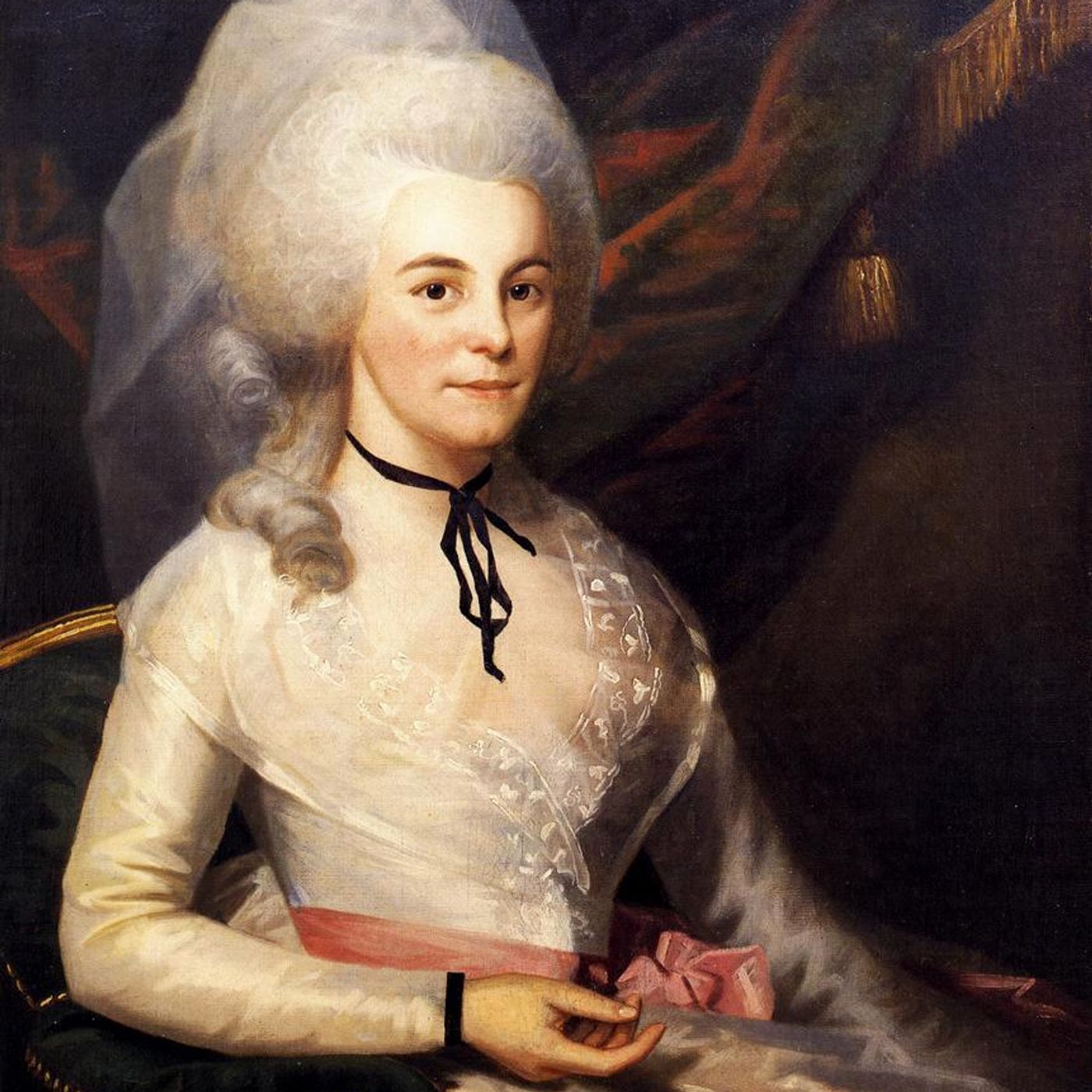
This is all of it on wnyc. I'm Alison Stewart. Last Day of January's Full Bio series we're kicking off 2026 with a book about America's 250th anniversary. We're discussing the book Pride and the Schuyler Sisters in an Age of Revolution by author Amanda Vale. The eldest Schuyler sisters, Angelica, Eliza and Peggy, were three of eight children who survived into adulthood. Their father was a war general and the first senator from New York. On day one of Full bio, we heard about Peggy, a traditionalist with a feisty spirit who helped save her baby sister during the war. Yesterday we learned about Angelica, the vivacious, smart woman who eloped with a man who was not honest about his reputation. And now we arrive at Elizabeth Schuyler. She lived to be 97 years old, dying in 1854. She spent almost her entire adulthood as the wife and widow of Alexander Hamilton. He described Eliza as the best of wives and the best of women, but that doesn't mean she lived to serve him. Vail found out she could be stubborn and get angry. She cared about manners and her family. Here's Amanda Vail, author of Pride and our choice for Full bio. Eliza Schuyler was originally called Betsy. Who knew that? You knew that. When did she start to be called Eliza?
- [02:04]
Amanda Vail
Well, Eliza is Betsy all through her childhood and indeed is still called Betsy by her family at the time that she meets Hamilton in 1780. And he calls her Betsy quite a lot at the beginning of their relationship. And it is at that time that she begins to sign herself and to essentially, it looks like be asked that she be called Eliza. When her daughter, her second daughter, was born in 1799, she's christened Eliza, not even Elizabeth, because I and I think what that tells you, among other things, is that Eliza did not like the name Betsy. And if Elizabeth Schuyler Jr. Had been called Elizabeth, she would have run the risk of being called Betsy, too. And Eliza didn't want to have that happen. So she didn't call her that. She called her Eliza. So I, I think it's one of those things that, you know, you do when you get to be a grownup, you decide you're you're gonna get rid of that childhood nickname that everybody uses for you, and you're gonna be something else. And that's what she does.
- [03:16]
Alison Stewart
She and her sister, they were raised in Albany at the family estate. They were brought to New York City for schooling. And as they grew into young women, they were sometimes called, quote, nymphs of the Northern Plains.
- [03:29]
Amanda Vail
Yes, I love that. Well, that's what their father's cousin, William Smith, called them that in a letter. And I just thought that was such. The nymphs of the Northern Plains. Such a great, great thing.
- [03:43]
Alison Stewart
So what does that mean, though, when you think about that?
- [03:45]
Amanda Vail
Well, they were nymphs, as in young, beautiful, lovely young women. And they were from the north, from Albany and Albany. And of course, William Smith is living in and writing in New York City, where he lives, where they had been going to school. And I think, you know, the two elder daughters were being groomed to be ornaments to society, the wives of important men, whatever.
- [04:20]
Alison Stewart
And.
- [04:24]
Amanda Vail
So they're down in New York. And William Smith, who is their father's kinsman and lawyer, sees them quite a lot. And he just. He gave them this nickname or this, you know, describes them in this way and sort of jocularly, I think, you know, he's just making them seem like something out of a poem.
- [04:45]
Alison Stewart
There's this great line you write about Betsy turning into Eliza. You write, she's now older than her mother was at her marriage. But even after spending nine months in Boston, where there were at least some eligible young men, she's still unspoken for. Gentlemen admire her. They speak of her good nature and her sparkling eyes, but they don't ask to marry her or she doesn't encourage them to. Did she want to get married? Was it on her mind? I.
- [05:18]
Amanda Vail
You know, that is because we don't have a diary from her and we don't have, you know, girly confessions that she's writing to her buddies. Because if she did write such a thing to any of her little friends, like Kitty Livingston or any of them, she. We don't have those papers. They just disappeared. So all we have is. Is the effects, you know, and you have to extrapolate from that. What we do know is that in 1775, Tang Tillman, who was one of Washington's aides, had come to Albany to help out and be present at a meeting of the colonists, the Continental army and the Adenosaunee nations, which the idea was they were trying to get the Adenosaunee Native American tribes to commit to staying neutral in the war. And this was effected. But the while Tench Tillman was in Albany doing this, he met both Schuyler scissors. He was at first really attracted to Angelica, who he thought was a very beautiful young woman. But then he met Betsy, Eliza, Ms. Schuyler or Ms. Betsey Schuyler. And he was very struck by her candor, her frankness, her charm. Not by. She seems to be the girl that you want to be friends with, but not the girl that you want to marry. He, at least he didn't think so. Now Tan Tillman thinks of himself as kind of a, you know, he's a kind of a frat boy. He, he, he just, he all. Oh yeah, you know, he's got conquests all over it. He's done this, he's. And that's the kind of guy he is. And Angelica is just the kind of girl that he would yearn for and absolutely never get anywhere with because he would never be cool enough for her, but he would think she was the greatest. Elizabeth is not quite his dish in part because she's too sharp for him. She sees absolutely what he's up to. At one point he's trying to flirt with her really young cousin who's one of the Van Rensselaers, and she sees exactly what's going on with it, starts laughing at him and you know, he's not gonna think that's very cool, but. So that's the kind of girl she is. She sees stuff. She's honest, she's got a sense of humor. She's very. She's also incredibly outdoorsy. She loves the out of doors. She manages to run up a hill, hillside when they're all on a picnic. He tends Tillman and a bunch of other people and everybody else, all the other ladies are going, oh, I can't possibly get up that hill without help. And Eliza just runs up at, you know, and laughs at all the rest of them.
- [08:28]
Alison Stewart
You write in the book that Eliza knows who Alexander Hamilton is. How did they actually meet?
- [08:36]
Amanda Vail
Well, they, Alexander Hamilton had been writing journalism for some of the papers that people that the scholars knew controlled. So his name was around. He, she'd seen his byline, if you want, in various newspapers. He'd written columns in support of the colonial positions and he was known to a lot of the men that were friends of her father. So she knew him by reputation. And she arrives in Morristown, New Jersey, where she's gone in the freezing cold winter of 1780 because in part there's absolutely no social life in Albany where she comes from and she wants to get away and her aunt, her brother, her father's sister is married to the physician to the army in Marstown. So she's going to go and stay with her aunt and uncle and she arrives and she goes to one of the assemblies that the officers have on a regular basis in this storeroom of the Inn on the Green in Morristown. And lo and behold, there is Alexander Hamilton. She meets him and nothing could have been further from what her parents would have thought of as an eligible guy. He's really poor, he comes from St. Croix. Actually he comes from Nevis, but he grown up in St. Croix, he's in the West Indies, he is illegitimate and he has absolutely no connections. And what he has is a giant brain, a huge amount of charm. Lots of people think he is headed places and she falls madly in love with him and he with her. Bang. They have this whirlwind courtship and after a month they are engaged and she gets her parents to agree. Her parents who were not going to have anything to do with John Carter, the mysterious John Carter who had a job at least, you know, and, and seem to be semi respectable. No, no, no. She gets them to absolutely unquestioningly support the idea of her marrying Alexander Hamilton. It's incredible.
- [11:11]
Alison Stewart
Yep. They got married December 14th, 1780 at the Pastures. It sounds like it was a real affair, but she was once described as a poor man's wife. How did that affect her?
- [11:25]
Amanda Vail
Well, she was, you know, this is a woman who, I think one of the things that her life tells you is that she takes whatever situation that life throws at her and she just deals with it. And in the case of Hamilton having no money, which he really didn't, I mean they were. He was in debt in fact when they were married and he was in debt when he died, alas. But she is able, she's thrifty and she knows how to cook and she can set up a household and run it on next to nothing and she apparently did that. One of the things that you see she. I have her one of her gross sweet lists from Philadelphia when she was married to what was then the treasury secretary. And you could see she's buying quite economically stewing meat, lots of vegetables, things that will pad out the stew that she's probably making. It's really fascinating. You can see that she's a very economical person. So she was a good wife for him.
- [12:48]
Alison Stewart
It's really telling how devoted to Hamilton she was. There's a point in your book where he has yellow Fever. And she wants to get into bed with him. And he says, no, no, no, you'll get it, too. And she does get it to. She was willing to put her life on the line to be with the man she loves. What does this say about her? What does this say about their relationship?
- [13:13]
Amanda Vail
Well, you know, the Haldens, despite whatever was going on between Hamilton and Angelica, the Hamiltons had what I guess you would call today a hot marriage. Right after they get married, Eliza writes to her sister Peggy, oh, you know, you should marry for love. You know, you really. You've got to marry a guy that you love. Because when I. I'm having a great time, she says, my dear Hamilton is fonder of me every day. And fonder does not mean he kind of likes me in the 18th century. It means he is besotted, he's crazy in. He is. He's a madman in love. And. And indeed, Hamilton himself writes as a postscript on that letter, because I am a fanatic in love. Your sister thinks I'm great. Well, you know, you can figure out what's going on if you want. Hamilton himself, in the letter to Eliza that he wrote her in their courtship, referred to how much he was looking forward to what he called the unrestrained intercourses of wedded love.
- [14:34]
Alison Stewart
Okay.
- [14:35]
Amanda Vail
And, you know, I think there was a fair amount of that in their marriage. He's always asking her later on in life, you know, if their children are weaned. Because it is important to me to rest in your bosom. He says, you know, there's. He writes letters to read, to sign this. My. My darling, my angel. He says to her, not like what most men of the time would say in their letters, which are, respectfully, your husband, John Jay. As you know, these are even affectionately your husband John Jay. He's really ardent, and I think you see that in that relationship, that this was a very powerful thing they had going on together. And when he died, unlike other women who, almost without exception widows, married again in Hamilton's lifetime, they did it whether they needed economic support or they needed moral support or they needed just to have a guy around or something. She couldn't bear the idea she would never have another man. And all she could think of was Hamilton. Her whole life.
- [15:55]
Alison Stewart
Life.
- [15:55]
Amanda Vail
She wore a little poem that he wrote to her in a bag and on a. Suspended on a cord around her neck. She, you know, kept a bust of him in the corner and looked at it all the. She just. When she was first widowed, she wrote her brother saying, I. If I didn't have children. I would want to be dead now so I could be reunited with my Hamilton. And, you know, this is an extraordinary bond that they had.
- [16:31]
Alison Stewart
The book is Pride and the Schuyler Sisters in An Age of Revolution. It's our choice for full bio. Our guest is Amanda Vale. You did note in the book that Eliza could have a temper. Oh, yeah. When did she let it go? Give us one instance.
- [16:50]
Amanda Vail
Well, did she let it One instance in which she let go her temper? And I find this so ironic, all things considered. Angelica's daughter Elizabeth ironic. Also, ironically, Angelica's daughter Elizabeth, her namesake, eloped with a young man called Rudolph Bunner, who was actually a law student of Alexander Hamilton's, had been his clerk. And Eliza was infuriated on Angelica's behalf because Angelica, having amnesia, I guess, about the fact that she herself had eloped with somebody, decided to be furious with Betsy, as she was called, and said she would never speak to her again. And Eliza went round and. And gave her a tongue lashing and, you know, such a tongue lashing that Rudolph Bunner held it against her until, I think, the day he died. He managed to try to undermine her and her efforts to get her husband's biography written because he was so mad at her for having just been so furious with him.
- [18:10]
Alison Stewart
That was Amanda Vale, the author of Pride and Pleasure, the Schuyler Sisters in an Age of Revolution. When we return, we'll learn what Elizabeth Schuyler Hamilton thought about her husband's extracurricular activities. That's after the break. This is all of it on wnyc. I'm Alison Stewart and you are listening to full bio. We're talking about the book Pride and Pleasure, the Schuyler Sisters in an Age of Revolution by author Amanda Vale. We continue with our discussion of Eliza Schuyler Hamilton. Eliza was deeply in love with her husband, Alexander Hamilton. They built a small house uptown in Manhattan and called it the Grange. You can still visit it. After Hamilton died of a duel with Aaron Burr, she was the keeper of his flame and his secret. So much so that Eliza burn Hamilton's letters to her when he died. Eliza spent the rest of her life attending to his legacy. She fought for his biography to be written. She fought for his papers to be put in the Library of Congress. But first she had to fight for money. He left her in debt. And with questions about his actions, here's Amanda Vail with the last edition of Full Bio. I'm curious, given her temper, what did Eliza think of his relationships? First with her sister Angelica potentially with John Lawrence and with Mariah Reynolds.
- [19:49]
Amanda Vail
Well, again, you know, with Eliza, one of the things that we're hampered by is that her own letters to Hamilton were. She is most probably most vulnerable and where we would see most of how they interacted. She destroyed those after his death. So we don't know what she said to him. We can only judge by her actions and by what other people say about her or by what she writes to other people. In the case of Hamilton's relationship with Angelica, all we know is that she begins to seem very uncomfortable around her sister and even around her husband. When Angelica returns to America in 1797, she and Hamilton are living two doors apart. I mean, the Hamiltons and the churches were two doors apart on Broadway. And Hamilton at that time is really dancing attendance on Angelica. He's showing up at all of her parties. Eliza doesn't go. She doesn't show up at them.
- [21:18]
Alison Stewart
Interesting.
- [21:19]
Amanda Vail
And you can see there seems to be this tension between her and Hamilton. He writes her letters saying, I hope you're in a better frame of mind now than you were when I left. So you, you can tell that, you know, this is when he's away on a business trip. And, you know, apparently they were having words there. There's some difficulty in the marriage and you're. You wonder where it comes from. But you see, you see it. You see her reacting to her sister's presence in her husband's life in a way that makes you think, oh, she's not comfortable with this. So, you know, but she adored her sister and, and she adored Hamilton. Yes, in theory. So, so, so here is this woman who has got a situation in front of her that is causing her possible anguish, and she can't look at it because it'll just make her have bad feelings about the two people in the world that she cares the most about. So, you know, you. That's all I can see there. The case of Hamilton and John Lawrence, she knew very little about this. If anything, all she knows is that Hamilton has a great friend who may or may not have been a closer friend than she knows. And then he dies. She never meets him. And so that's not. That's not an issue for her, really. Mariah Reynolds is a whole other thing. Hamilton's infidelity with Mariah Reynolds, which is also apart from whatever he had going on with Angelica. The only documented case of Hamilton's having a sexual relationship with someone other than his wife is his relationship with Mariah Reynolds, who lured him into this relationship. When Eliza was away for the summer in Albany with sick children. A sick child. And the relationship, was it carried on in secret? It was carried on in secret after Eliza returned to Philadelphia and her husband blackmails him. And in the payments that Hamilton is making are suspected of being evidence of graft, that he has got his hand on the government till in some way he confesses to the affair. He confesses to the blackmail payments in order to save his own political reputation, to say, I am not a thief, I'm not taking money from the government. And he ends up writing a pamphlet about this in which he confesses to all of this publicly. Eliza doesn't know anything about this until the pamphlet is published in 1797. And at that point, shortly after the birth of her child, William, she escapes from the family. She runs away, goes home to Albany to her parents. And I don't think she'd have done that if she didn't feel like this was a horrific betrayal of her, that she feels upset by what has happened. She feels upset that Hamilton thought to make this public. She's horrified by the whole thing. And it's at that point, actually, and this is sort of parenthetical, that Angelica, horrified that Eliza is behaving in this way, writes her a letter. And she says, you silly girl, don't you understand that anybody who is as famous and as important as Hamilton is going to attract scandal like this? And it's just really nothing. You shouldn't think anything of it. It's just the kind of thing that happens. It wouldn't have happened if you'd married into a family less near the sun. But then you would have missed the pride, the pleasure, the nameless satisfactions. It's not much comfort to Eliza, the.
- [26:14]
Alison Stewart
Last hundred pages of books, they really feature Eliza herself. It's after Hamilton is killed in a duel with Aaron Burr, she finds herself in great debt. She manages to get out of the debt and later in life she decides, I'm going to have Hamilton's papers published, especially all the help he gave George Washington. And she has a really, really hard time getting others to agree with her. Why was it so hard for her to have Hamilton remembered this way?
- [26:49]
Amanda Vail
After Hamilton's death, he succeeded by a Virginia dynasty. Jefferson, Madison, Monroe, all of whom were from the unopposing political party. They all opposed Hamilton, they opposed his policies and his vision. And he was. His name was mud, literally. So the simple act of trying to keep his memory alive was itself a rebellious act, the act of trying to reclaim his position as the author of Washington's Farewell Address was a completely different thing, because Washington, as the founding president of this country, was like God. And the Farewell Address, which he had asked Hamilton to write for him, the documentation of their conversations about this was all in Hamilton's papers. This was, however, considered heresy to say that Washington had not written the Farewell Address. The Farewell Address was like the Ten Commandments coming down to Moses on the mountain. You couldn't say that he'd didn't write them, but Hamilton had written them to Washington specifications. And Eliza knew because she was in the room when he was doing it. And Hamilton asked her help. The correspondence had been sequestered, taken away, given to a Federalist politician who kept all those papers in his safe and wouldn't give them back to Eliza when she demanded them. She had to go to court and sue him in order to get them. And not only did she have to sue him, she had to sue one of Hamilton's executors, who had refused to demand the papers from this politician. And so Elizabeth said, well, fine, you want to help me, I'll sue you too. And she did, and she got the papers. And the fact is that when she gave all those papers, when she sold them to the Library of Congress, all of those papers included the Farewell Address papers. And Washington's heirs were horrified that they would be available for anyone to read. And lots of people would know that maybe Washington hadn't written every single word of this Farewell Address, he just approved it and that Hamilton had written it. And Washington's heir caught up rough. He. He made a huge protest about it. And Eliza's son, John Hamilton, tried to smooth things over, and he tried to apologize for his mother's temerity in doing this and said, this is, you know, the way that women do things. And Eliza has always stood for honesty and clarity and candor. It was she who. Who asked Hamilton to take the last court case of his life, which was a case involving press freedom and the use of truth as a defense against libel. And although he lost this case, the principle of truth against libel was adopted in the New York Constitution the year after his death because the legislators had seen his trial testimony and his arguments. They had seen what he'd argued at Eliza's behest. She was. She was a woman who believed in the power of truth. And I think that's a very remarkable thing about her. We don't know very much about her political opinions, but we know that. And I think that's a really important thing about her. And I, you know, you can't in a case like this, it's easy to wish that you could show how the Schuyler sisters influence this or that piece of legislation, or help to enact this or that treaty or influence this man to do that. You can't do that much of that with, with this material, but what you can do is you can see the landscape that they saw of in the founding era from their point of view, and you can see what they were able to do with it.
- [31:54]
Alison Stewart
Is there anything I haven't asked you about the book that you think is very important for people to know?
- [32:02]
Amanda Vail
Well, I think when I started this book, in the prologue to this book, which starts with Hamilton's death and deathbed, Eliza and Angelica are really pushed to the side at that time. And that is really what has happened to them in history. Not just to them, but to women generally. From the history of the founding era, women had to spend time pushed out of the picture. And I wanted to restore them to the center of this story and not to ignore the history that we know, but I wanted that. I wanted to flip the telescope. I wanted to see the women and the women's story up close and I wanted the context that they were living in to be seen as something of a remove. I wanted.
- [33:05]
Alison Stewart
To make.
- [33:08]
Amanda Vail
This be the. The story of the way that women do things, but within the context of a real life, the revolutionary era. And it's one of the things that made the book as substantial as it is. There's a lot of history in this book and you needed to understand what it is that they were doing and to understand the people that they were interacting with. But at all times, I wanted to keep those women front and center, and I hope I did that.
- [33:45]
Alison Stewart
The name of the book is Pride and the Schuyler Sisters in the Age of Revolution. My guest has been Amanda Vale. Amanda, thank you so much for all of your time.
- [33:56]
Amanda Vail
Thank you. Thank you. Thank you.
- [34:00]
Alison Stewart
Thanks again to Amanda. The book is called Pride and the Schuyler Sisters in an Age of Revolution. It has so much information in it about the Revolutionary War and the Schuylers. It's a really great read. Post production for full bio was done by Jordan Loff. It's engineered by Jason Isaac and written by me. This is Ira Flato, host of Science Friday. For over 30 years, the science Friday team has been reporting high quality science and technology news, making science fun for curious people by covering everything from the outer reaches of space to the rapidly changing world of AI to the tiniest microbes in our bodies. Audiences trust our show because they know we're driven by a mission to inform and serve listeners first and foremost with important news they won't get anywhere else. And our sponsors benefit from that halo effect. For more information on becoming a sponsor, visit sponsorship.wnyc.org.