Loading summary
Transcript38 lines
- [00:08]
A
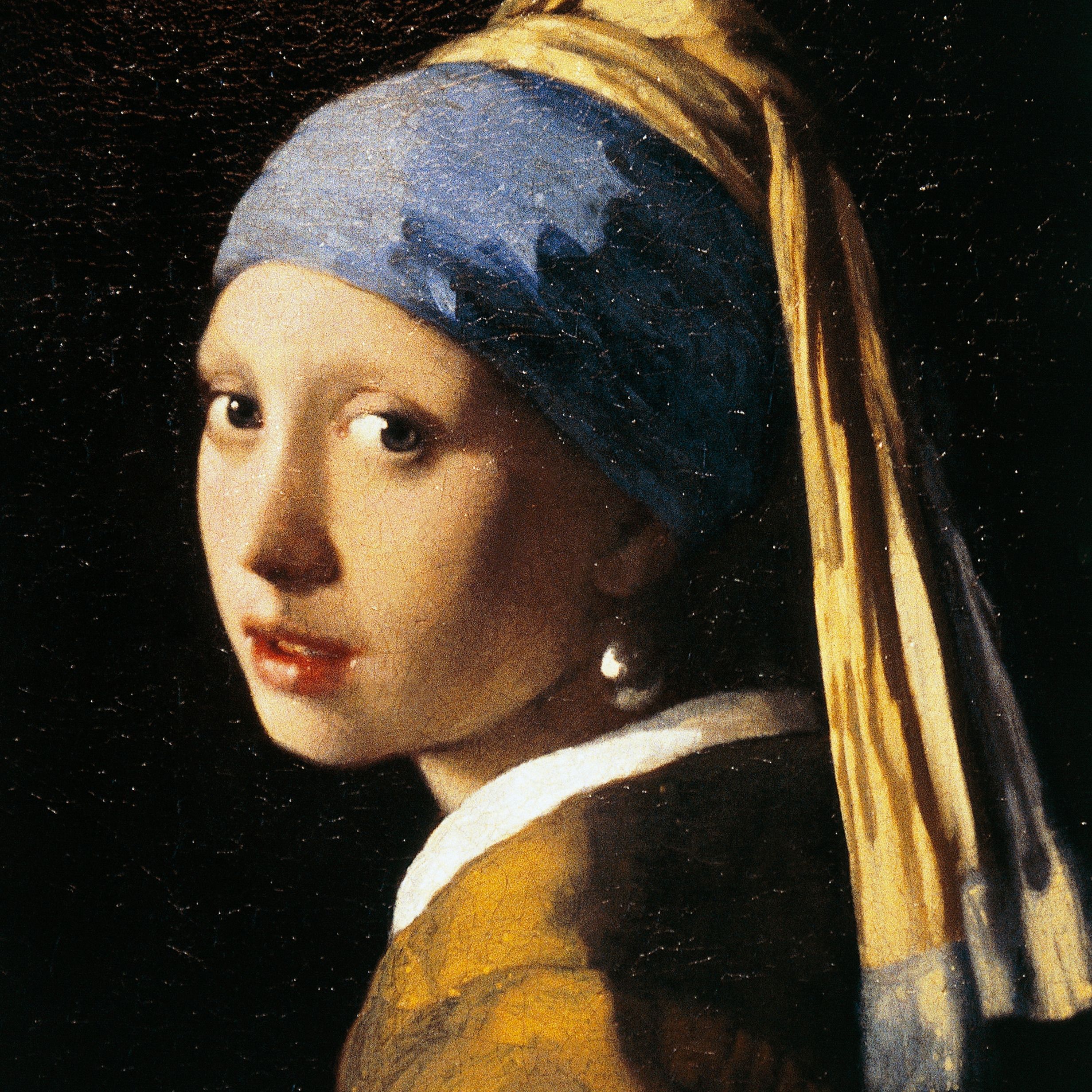
This is all of it on wnyc. I'm Alison Stewart. If you haven't heard, our May get lit with all of it book club selection is the novel Ghost Town by Tom Parotta. The story is set in 1970s suburban New Jersey. An 8th grader named Jimmy is grappling with a terrible loss. In the midst of his grief, he finds himself with two new friends, a a stoner named Eddie and an older teenager named Olivia, who also has experienced death in her family as well. Olivia has a Ouija board and wants Jimmy to use it. The novel also follows Jimmy as an adult now known as Jay Perry. He's a successful writer who has been invited back to his hometown by the mayor, a visit that brings up all kinds of memories. Thanks to our partners at the New York Public Library. Library card holders can check out an e copy of Ghost Town right now with no wait times. You can also grab tickets to our live event with Tom parotta in exactly three weeks on Wednesday, May 27th. Head to wnyc.org getlit for more information. That's wnyc.org getlit and listeners. Book lovers, get your tickets now because this month's musical guest is super popular and I can guarantee it will sell out fast. So we're giving readers a few days before our Music Friday. So act now. Go to wnyc.org getlit now. Let's get this hour started with Vermeer A Life Lost and Found. Today is our last installment of full bio. We have been discussing a 369 page biography of 17th century Dutch master Johannes Vermeer. We learned about his family, the war he lived through and his religious influences. Vermeer was not a well known painter in the 1650s. He grew to fame in the mid-19th century for a handful of works, 36 of them most painted for one patron. Today we'll go over those works with author of the book Vermeer A Life Lost and Found Andrew Graham Dixon. If you'd like to see a few of the pictures from the book, go to our instastories oflovenyc on Instagram. In his book, Graham Dixon lists where you can see a Vermeer and fortunately, if you're in the New York City area, you can visit Vermeers at the Metropolitan Museum of Art or go to the Fricklin Collection. Andrew Graham Dixon says don't be fooled by the modern titles. They are often misleading. The Girl with the Pearl Earring Pearl Pearl Earring is his most famous work. It is likely the daughter of his patron, and she's wearing a glass bauble rather than a pearl. Johannes vermeer, father of 15, lived to be only 43 years old. He died suddenly and in debt and from his will and the sale of his paintings by his patrons. That's why we have some documentation about him and his status when he died in 1675. Let's get into our final installment of Full Bio with Andrew Graham Dixon, the author of Vermeer A Life Lost and Found. So the first two paintings that were part of the Van ruven Estate, Lot 8 and Lot 11, they can both be seen in New York. For our listeners at the Frick Collection is Officer with a Laughing Girl. The other is A Maid Asleep that can be seen at the Met. Let's start with Officer with a Laughing Girl. What's special about this painting?
- [03:34]
B
Well, again, this is another great example of, or I think a very good example of, how if you look at these pictures with the traditional spectacles or colored glasses that you'd be given to wear by traditional Dutch painting, you might think that the Officer with the Laughing Girl, in which we see a young woman at the table of a tavern, perhaps a tavern, but at a table with a glass of wine in front of her and a soldier sitting opposite her, you might think, and people have said, that this is a rather seedy painting. It's a transaction. It's a brothel. He's about to pay her money. And in fact, I think there was a text to that effect on the wall of an exhibition that I saw a few years ago. And I also found a woman crying in front of that very picture who subsequently explained to me that she was crying because the caption on the wall said that the soldier was about to give the young woman money and that she was a prostitute. And she said to me, of course that's not true. She's one of the most beautiful young women I've ever seen. And she's clearly deeply in love with the soldier, and he's clearly deeply in love with her. How could they say such a terrible thing about such a beautiful painting? And of course, she was right. This is not, not, not, not a brothel painting. This is a painting about. See what the key to it is. It's got a map on the back wall, and the map on the back wall symbolizes. The lines on the map have been drawn. Peace has broken out. All of Vermeer's great paintings are done in this interregnum period between 1648, when the Dutch declare peace with Spain, when Peace breaks out across Europe. And 1672, when war returns, all of Vermeer's pictures are painted in this wonderful, glowing golden window of peace. And that's what this picture is about. What the picture is saying is, now that the lines on the map have been drawn, now that the map war is over, now that the sun, the light of God, is flooding through the room, illuminating the face of this beautiful woman, now that all of that has happened, soldiers don't need to fight anymore. Soldiers can become lovers. Soldiers can settle down. Their wandering is over. They will find a peaceful and loving way to live. And you can see the painting in another lens, if you like. And Vermeer clearly was very familiar with Italian art. You could see it as a mythology, a kind of modern Dutch mythology. Venus is conquering Mars. The young woman who stands for love is conquering war, making his heart melt. So it's a beautiful painting about what it is to fall in love and to fall in love forever.
- [06:25]
C
You write that Vermeer had a rare gift for painting light. Where do we see that?
- [06:31]
B
Well, on the wall. You see it on the wall. You see it everywhere. You see it in the view of Delft. It's the most beautiful light that I think exists in any painting. And the thing about Vermeer's light is that it comes from inside the painting. It comes from inside. It's not like the light that allows a photographic exposure to take place. It's not that kind of light. It's the light of the soul. It's the light of illumination. It's the light of love. It's the light of belief. That's why people have always been hypnotized by these pictures. And that's why people have always known, in my opinion, that something like what I'm saying was the truth about them. People have always known that this. This other, more secular way of looking at them as brothel pictures. Or, you know, like the maid asleep that you asked me about a minute ago, you know that picture which is in. In the Met. It's not a. It's not a drunken. You know that. That would be the. Yes, the. The kind of conventional. The way of sort of forcing the round peg of Vermeer into the square hole of conventional Dutch art. You'd say, well, the maid has been. She's put on her mistress's costume. She's dressed up in all her finery, and she's seen a man and she's got terribly drunk, and now she's asleep. And we're meant to mock this Woman. Nonsense. Nonsense. It's a picture of a woman. And this is what the Remonstrance did. She's dressed in red, very finely, very demurely. She's experiencing a vision, or she has just experienced a vision. She has been venerating Mary Magdalene. We know that Maria, the mother of the house, the woman of the house, the person who commissioned all these pictures from Vermeer, venerated Magdalena, Mary Magdalene, because she gave the name Magdalena to her own daughter. So here she is, she's venerating Mary Magdalene. She's been visited during the course of her meditation, her spiritual meditation, she's actually been visited by the spirit of Christ. And it's as if at this moment, this extraordinary picture of a kind of dream moment, you can almost sense the presence of Christ in the room beyond. And the cross, you know, the cross is made. The sign of the cross is made by the. The leg of the table in the background. The whole picture is charged with this mystical sense of transports, of being taken elsewhere. And one of the favorite quotes of the founder of the Remonstrant movement, Jacobus Arminius, this remarkable man who influenced them so much, one of his favorite quotes was just the words of Christ, you know, knock on the door and I shall enter, and I will come and eat with you. So if you're open to my presence, I will come and join you. And that's what's happened.
- [09:35]
C
It's interesting, though, Vermeer had an interest in science as well. Where can we see that in his painting?
- [09:44]
B
Well, this is a very. That's a very interesting question. I mean, Vermeer certainly had an interest in science, but that is not incompatible with having a profound belief in God.
- [10:04]
C
I agree.
- [10:06]
B
In this period, particularly in this period. So, for example, we know that Newton responsible for the theory of gravity. Newton was a profound believer in the imminent end of days. He believed that the return of the Messiah was round the corner, and even wrote a huge book trying to calculate when the date would fall. And I think Vermeer is rather similar. I mean, he's fascinated by light, and he probably investigated the properties of light by looking at the images formed in a camera obscura. Delft was a military town, and camera obscuras were originally developed there as military devices. And he knew lots of soldiers, his publishers. His father's pub was full of soldiers. So there's every reason to think that Vermeer had seen the images in a camera obscura. And yet when he paints. Yes. He conjures the subtlety of light but you always feel that it's God's light that's working behind all that. And one of my favorite pictures is a painting called the Lace Maker.
- [11:09]
A
It's the Louvre, right?
- [11:13]
B
It's in the Louvre. And it shows us this young woman who's making a piece of lace. And it's my belief that she's actually pregnant and that she's making a little piece of lace, which they used to do to announce whether your child had been born alive or not. It was black piece of lace if they were born dead. And I think it was a red piece of lace if they were born alive. And this would be stuck on the front door of the house so that people didn't disturb the family in the immediate days after the event. So that's what I think she's doing. And I advanced in my book this rather adventurous explanation that there's this sewing cushion which should really not be there in a lace making painting. There's this sewing cushion. And to me, it looks. It looks like it's. It looks just like a placenta. It looks like a placenta pulsing with veins of blood. It's covered in this extraordinary sort of spatter of red threads, this sewing cushion which Vermeer has actually thrown. Like Jackson Pollock, contrary to his legend, he's not always this totally, totally careful, meticulous painter. He's thrown these laces of red paint down there. And I remember when my book was nearly finished, my Dutch friend, who's a great historian of religion, who's very helpful to me in holding me in check when I made mistakes in my interpretation of archival detail, he said, andrew, I must say I'm. I'm not entirely sure about this interpretation. It seems very, very. Because of course, if this is true, Vermeer would have had to have been familiar with William Harvey's work on the circulation of the blood, which had only been published in Hamburg in 1627. And how do we know that Vermeer could have read Harvey on the blood? Because Harvey actually describes placental blood flow in great detail. And my answer to him was, well, I think Vermeer was friends with Spinoz, the Jewish philosopher, who was also a scientist and certainly interested in science, and that he maybe would have had it from him. And he said, well, okay, I'm not convinced, but, you know, if that's what you're going to say, that's what you're going to say. So that is what I said, and
- [13:29]
A
there's his interest in science.
- [13:31]
B
But you won't believe what I. You Won't believe what I just found out. I mean, it's truly incredible. I just got written a letter by a guy who's been doing research into his family, and he's found one of his ancient descendants was a man called Van Assendelf, who was Vermeer's remonstrant preacher.
- [13:49]
A
Wow.
- [13:49]
B
In Delft, in the church in 1662. And this guy, I said, that's amazing. And then he said back in the next email, he said, it's more amazing than that. I'll tell you what, he wasn't just a preacher, he was a surgeon. And you will be glad to know because of what you write about the lace maker. He was the first man to translate William Harvey on the circulation of the blood in Delft in 1662. So Vermeer definitely could have read that book.
- [14:16]
C
I'm talking to Andrew Graham Dixon. The name of his book is Vermeer A Life Lost and Found.
- [14:22]
A
It's our choice for full bio. You mentioned earlier an Italian influence in his art, but you write there's really no proof in the book that he went to Italy. Where do you think this Italian influence came from?
- [14:36]
B
Well, I mean, I don't know what proof amounts to. I mean, I think there's very strong indications that he went to Italy on the basis that two of his earliest pictures, Christ in the House of Martha and Mary and a picture called Saint Paxedis, are both clearly derived from pictures by his Italian contemporaries. I mean, not. Not famous old masters, people who were alive and working when Vermeer was alive. One of them was a painter called Felice Ficarelli, and the other one was a man called Vaccaro, one in Florence, one in Naples. And neither of them are very famous painters. And the picture, it's, you know, there's no doubt whatsoever that Vermeer has effectively copied the Ficarelli and effectively taken the figure of Christ from a Vaccaro picture of a different subject. It's in the Capodi Monte Museum in Naples. Now, my point is that these pictures were painted in 1646 or so. So the idea that. And we know that they never have left Italy. So the idea that such obscure pictures by people who really weren't very famous at that time, that they would have been transmitted some other way to Holland so that Vermeer could see them and copy them, I just find that deeply implausible. I find it much more likely. I think he was taught by Gerard Ter Borch, who was a painter who certainly went to Italy, whose father went to Italy. I know that Vermeer's father was friends with a whole group of Dutch artists who called themselves Birds of a Feather. And what they all had in common was that they had all studied in Rome. So there would be plenty of people saying to the young Vermeer, go on, why don't you go to Rome? And there's a complete gap in our archival knowledge of him that corresponds to a two year period between 1648 or 9 to 1651, where he's absolutely, totally absent from all archives. And that also coincides exactly with the time when his apprenticeship to Terbog would have finished. So, you know, why not have him go to Italy? I think he went to Italy during those two years. I mean, the fact that we don't have archival evidence saying that he went to Italy is no proof in his case that he didn't. And there's another picture called Diana and her Companions which is in the Maurits house. And people have always said with its color, which is very much actually the color of Florentine High Renaissance art, Andrea del Sarto colors these beautiful sort of rich reds and oranges. Not at all. Dutch people have often said it looks like an Italian picture in a room full of Dutch art. So, you know, I think he went to Italy for sure.
- [17:33]
C
Andrew, you end the book with the year of disaster when France, Germany and England, they also wanted a piece of the Netherlands. You write, the Dutch failed to grasp how offensive their existence was to Europe. What was the offense?
- [17:49]
B
Well, you have to remember that they were the only, with the exception of Venice, the only republic in a patchwork of states that were all monarchical and I would say, fairly tyrannical. And so someone like Louis, Louis xiv, you know, the whole idea, the very idea of a country where merchants were, you know, allowed to live more finely than aristocrats is just disgraceful. I mean, you know, what a horrible country. This can't be allowed. And he absolutely detested the Dutch with a vengeance. And all the more because they had the temerity to be by far the richest country at that time, the richest country probably in the history of Europe. And they'd come from nowhere to be that because all of these great merchants and entrepreneurs had been forced north by Spanish tyranny. They'd made their own republic and boy, had they, you know, made the most of what they had in terms of their knowledge. And also, you know, they're being paid back for their toleration. Because what I haven't said is that, you know, after the initial Outburst of intolerance towards Vermeer's remonstrant faith. In the end, the remonstrance and the collegiates become fully integrated into Dutch society, and Dutch society itself is persuaded of the virtue of their views and becomes an extremely tolerant place. And as I was about to say, they get paid back for it by, for example, they allow all the. All the Jews who've been expelled from Portugal and expelled from Spain this terrible anti. Semitism all over Europe. Well, in Holland, they find a home, these Jewish people, and guess what? They've got the best network of trading contacts with the Mediterranean. You know, figs, olive oil, all the money that they get from that. So, you know, the. The Dutch. The Dutch are deeply unpopular with the English, the French, the Spanish, the Munsterites, because. Who hate them because they're Protestant, and the Munsterites are rabid Catholics. So. Yeah, and they don't quite realize. They think they can sort of get out of it by arguing for free trade and toleration. They think, perhaps naively, that, well, we can all get along okay, can't we? We're making lots of money, but we're going to make you richer too. Look at all this stuff that we're bringing back from, you know, the other side of the world. Look at all our innovations and technology. Surely you just want to join us, not fight us. So they're slightly sleeping at the wheel when, you know, the terrible thing happens. France invades.
- [20:43]
C
Some say that Vermeer never fully recovered from the year of disaster. He died at 43. What do you think?
- [20:51]
B
Well, I mean, I've written about this wonderful, extraordinary group of people. I mean, these collegians and these remonstrants. Not only do they believe that peace is here to stay, they actually believe that universal peace is about to break out when the year of disaster comes, you know, and it comes just at the moment when they're hoping that the spirit of Christ will descend on earth. It's such a shock, it's such a blow. Adrian Parts, who's Vermeer's other great patron, who's the spiritual father of the. Of the collegiate movement, he has to rush off to Spain to try and broker an alliance with the old enemy against this new enemy, France. So he's out of the picture. Vermeer's patron, Peter Clauseon van Raven, he dies of unknown causes. They all die, and they're all in their 40s. And, you know, I can't say that, you know, early death was not as uncommon then, perhaps as it is, it is now. But for people like that. But he, you know, I don't know, it just seems to me that the spirit goes out of Vermeer after that happens. He paints very few pictures after 1672. All his great pictures are before. That's partly, of course, because Peter Klaus Van Ruiven is ill and they've moved house. The whole project of painting these great paintings for the house that is also a church, you know, that's. I think there's this just tremendous sense of disappointment.
- [22:42]
A
Andrew, what do you think makes Vermeer's art so special?
- [22:47]
B
I think what makes Vermeer's art so special is the fact that it is completely sincere. Completely sincere. He never painted a picture because he thought it was a good picture to paint or because he thought, oh, maybe they'll like this one, or, oh, if I paint like this, will I be famous? He painted because he wanted to express the deepest feelings that those people had. He painted with utter integrity, no even slight taint of anything else. And it's utterly unique that the name
- [23:30]
C
of the book is Vermeer A Life Lost and Found. It's by Andrew Graham Dixon. It was our choice for full bio. Thank you for all your time today.
- [23:39]
B
Oh, thank you. No, it's been a pleasure. Great questions. Kept me on my toes.
- [23:45]
C
Take care.
- [23:46]
A
Thanks again.
- [23:47]
B
Thank you.
- [23:48]
A
Thanks again to Andrew Graham Dixon. Full bio is produced by Jordan Loff, engineered by Jason Isaac, and written by me
- [23:57]
D
and Doug. There's nowhere I wouldn't go to help someone customize and save on car insurance with Liberty Mutual. Even if it means sitting front row at a comedy show.
- [24:06]
C
Hey, everyone. Check out this guy and his bird. What is this, your first date?
- [24:10]
D
Oh, no. We help people customize and save on car insurance with Liberty Mutual together. We're married. Me to a human, him to a bird.
- [24:17]
B
Yeah, the bird looks out of your league. Anyways.
- [24:19]
D
Get a quote@libertymutual.com or with your local agent.
- [24:22]
A
Liberty. Liberty.
- [24:23]
C
Liberty.
- [24:24]
A
Liberty.
- [24:25]
E
Hi, I'm Maggie Smith, poet and host of the Slowdown. Each weekday, I share a poem and a moment of reflection, helping you turn listening into a daily ritual. It's five minutes to slow down, pay attention, and begin the day with intention. Find it in your favorite podcast app and make the Slowdown your new daily poetry practice.