Loading summary
Transcript43 lines
- [00:00]
Progressive Insurance Announcer
All of it is supported by Progressive Insurance. Do you ever find yourself playing the budgeting game? Well, with the Name youe Price Tool from Progressive, you can find options that fit your budget and potentially lower your bills. Try it@progressive.com Progressive Casualty Insurance Company and affiliates Price and coverage match Limited by state law not available in all states.
- [00:29]
Alison Stewart
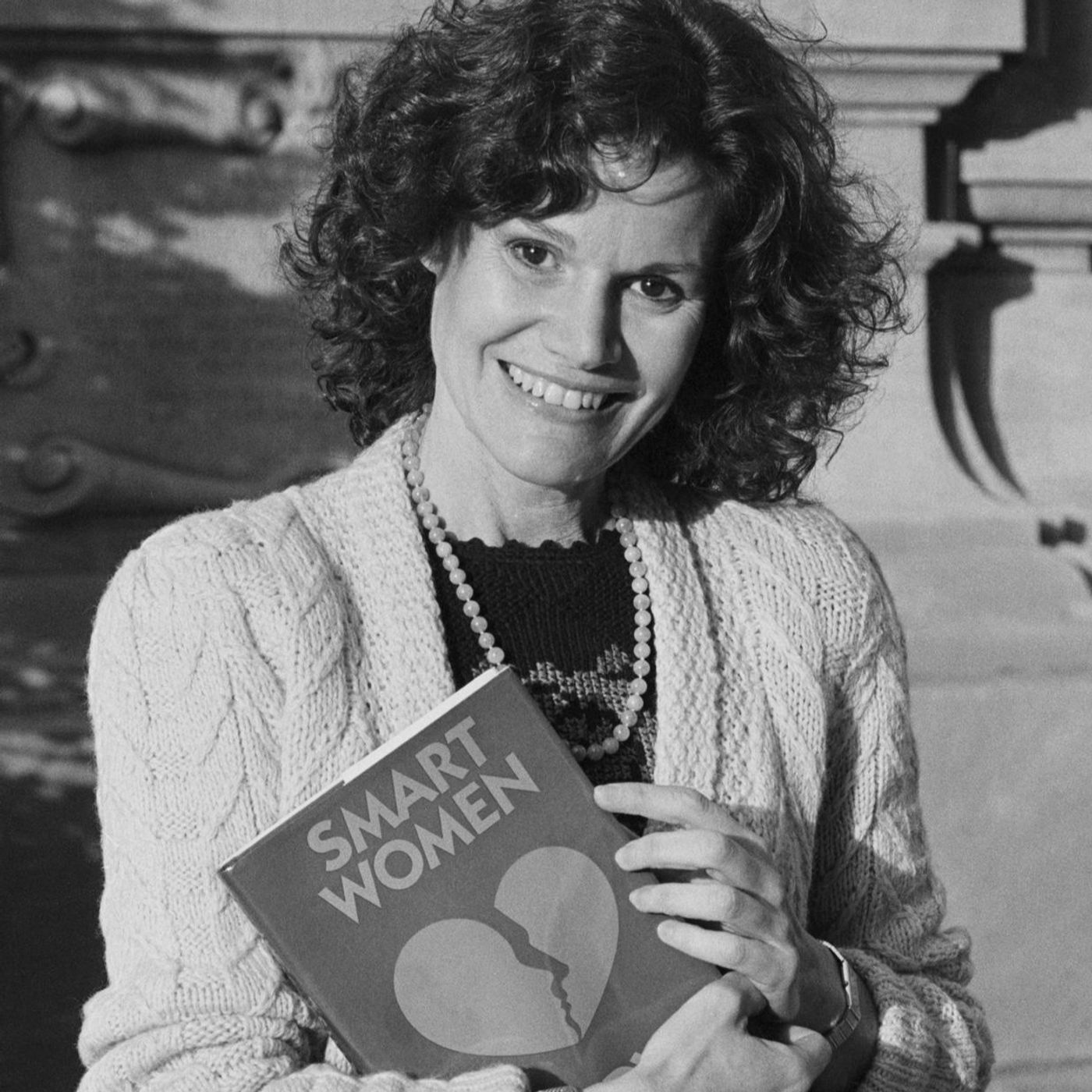
This is all of it on wnyc. I'm Alison Stewart. Coming up on the Tomorrow show, the city is the cultural capital of the world. So I'm excited the city's new commissioner of cultural affairs will be here in studio, Diavage joins us. Talk about her role, her background as an artist and a curator and how she wants to work with the mayor to make the city a place where artists can actually afford to live. That's in the future. Now let's get this hour started with this month's full full Bio conversation. Full Bio is our book series where we spend time with the author of a deeply researched biography to get a fuller understanding of the subject. JUDY Blum, A Life was written by author Mark Oppenheimer. Oppenheimer, who holds a PhD from Yale, has written five books and you may recognize him from his years as the columnist on religion for the New York Times. His subject, Judy Blume, wrote 29 books and has sold 90 million copies and counting. Her work includes classics like Are youe There, God? It's Me, Margaret Deanie Forever, as well as adult books, including Wifey, Her Children. And young adult books had a candor and honesty that earned her legions of fans. It also earned her critics that sought to have the books removed from classrooms and libraries for discussing things like menstruation and teenage sex. Here she is talking about it on wnyc.
- [01:58]
Progressive Insurance Announcer
When I look back, I feel so lucky to have written at a time when I didn't ever feel the censor on my shoulder. The advice I give to young writers now is you can't write with the censor on your shoulder. You have to kick that feeling away so that you can write from deep inside that you can write fearlessly. And while I was a fearful person, I was pretty fearless in my writing.
- [02:25]
Alison Stewart
Judy started as the dutiful daughter of a New Jersey dentist and his wife. She married three times, had two children and came to writing later. Mark Oppenheimer's job was to chronicle that life and what it meant, and he does so in the 469 page book. Now normally I would start full bio with Bloom's background and we'll get to that soon and a whole lot more. But I did want to find out why Bloom, who was interviewed for the book, seemed to step away from the project. The New York Times wrote a piece about it and about Oppenheimer called He wrote Judy Bloom's Life story.
- [02:57]
Interviewer/Host
She won't talk about it.
- [02:59]
Alison Stewart
Let's get into it with Mark Oppenheimer, author of Judy Blume A Life. Mark, how did you come to write Judy Blume's biography?
- [03:15]
Mark Oppenheimer
That's a good question. It started when I was 23 years old. I. Or 22? No, 23. I wrote a piece for the New York Times Book Review about Judy Blume. It was my first or second published piece. I was very young. I wrote it on spec. That is to say, I sent it in unsolicited. And the New York Times Book Review published it. And it was a big back page essay about what it had been like to be a boy who loved Judy Blume. And in fact, I read little else from the ages of 8 or 9 to 11. And so that essay ran and unsurprisingly, Judy saw it and she sent me a very nice note. I think it was in the mail, paper mail, snail mail. This was still the 90s. And she said that she liked it and she wanted to talk. I think we had a phone conversation. And then she invited me to visit her at her place on Martha's Vineyard the following summer. So a few months later, I went and visited her. We got to know each other a little bit. That was really great. And then we stayed in very loose touch over the years. I mean, we weren't close pen pals, but, you know, every few years or so, one of us would send the other an email. And at a certain point as I advanced in my career as a writer, it occurred to me that maybe I would do a book about Judy Blume. And so I floated the idea with her and she initially demurred. She swatted it away and said, you know, I am too young to have a biography written about me. I have a lot of living left to do. I'm not interested, so forth and so on. So eventually I backed down. And then in the summer of 2022, she reached out to me and said, you know, I. I've been thinking and it might be time to cooperate with a biographer. Do you want to talk? So that's how it got going.
- [04:52]
Alison Stewart
How many people did you interview for this biography?
- [04:56]
Mark Oppenheimer
I interviewed just over 100, I think 80 or 85 of them were willing to go on the record with their name. And some of them were anonymous, not that they said Anything that was so scandalous, they just preferred not to put their name to it. So there are about 80 or so quoted sources in the book, but it was just over 100 interviews.
- [05:13]
Alison Stewart
On March 8, 2026, the New York
- [05:16]
Interviewer/Host
Times published a piece about your writing of this biography and Judy Blume being involved with the project, sitting for interviews and making introductions. And you gave her a draft of the book for fact checking. And Judy Bloom replied with many changes. You made some corrections, but you didn't change a lot of the language.
- [05:33]
Alison Stewart
And then it was reported that you
- [05:35]
Interviewer/Host
and Judy Blume have not had any contact.
- [05:39]
Alison Stewart
Have you spoken to Judy Blume?
- [05:42]
Mark Oppenheimer
Well, just to be clear, she always had agreed to read a draft of the book that was very important to me and I think to her I would never want anybody to be blindsided by anything that I'd written. And for a long book, rather than my send her a thousand questions or a 500 page questionnaire about everything I said about her, it always made more sense for me to show her a draft with the understanding that ultimately it was my book and the final editorial judgment would have to be mine. And that was always understood on, on both ends from the beginning. So when I did that, she did respond with a very long, thoughtful, careful memo. She caught lots of errors that as I. As I knew she would, you know, there are things that I had said happened in 1972, and she said, you know, it was 1973. In some cases, she was correcting herself. She had said one thing to me in an interview, but then on further thought, she realized actually that guy's name wasn't Bob, it was Frank or something like that. Mostly very trivial stuff. But it's important to get all that right as far as one can. And then she did have some larger critiques. There were interpretations I made that she didn't like or disagreed with, and she pushed back. She attached a memo with lots and lots of notes. And then the really exciting thing that happened was that in some cases I had quoted a story and she said to me, you know, I told you that, but I only gave you part of the story. So to be more accurate, let me tell you what really happened. And she would expand on it. And she actually gave me more stuff on the record so that the book actually was able to take advantage of this note as if it were a further set of interviews. And then we were in Touch through 2025. She helped with one of the photo permissions for the book. You know, she was getting back to me. Her agent was Getting back to me now, it is true that I haven't heard from her since the final draft went to press and was published. We sent them a copy, of course, and I don't know what she thinks about it. That didn't really surprise me so much. You know, it was always going to be my book. In the end, it was never going to be her job to publicize my book. It has to be my product. I'm the one who has to stand behind it. And the other thing is that Even though she's 88 years old, she works at least half time. She's in the bookstore that she helps run in Key West, Florida, that she and her husband founded several days a week. So she has her own stuff to do. And the book is my stuff to do. And so I never expected that we would be out on book tour together.
- [08:06]
Interviewer/Host
My guest is Mark Oppenheimer.
- [08:08]
Alison Stewart
We're talking about his book Judy A our choice for full bio, let's go back to the beginning. Judy Blume was born Judith Marsha Sussman
- [08:17]
Interviewer/Host
on February 12, 1938, to parents Rudolph and Esther. We'll start with her mother. Esi's parents emigrated from Russia in 1897.
- [08:27]
Alison Stewart
Where did they arrive and what did they do?
- [08:32]
Mark Oppenheimer
Yeah, so Essie's parents and, and Rudy's parents, they, they all came over and ended up in or around Elizabeth, New Jersey, which is not so far from Newark. If you're standing on the Elizabeth docks, you actually can practically throw a baseball to Staten island, which was kind of shocking to me. I've, even though I was born in New York City and my wife grew up in New York City on the Lower east side and, and has, has been everywhere in the city. I've actually been to all the boroughs except Staten island, which is a, an unfortunately common story, I think. So this was the closest I ever got, was going to Elizabeth, New Jersey to, to, to do a tour and see where Judy grew up. So the family on both sides was in Elizabeth, New Jersey. The mom's side, the, the Rosenfelds, they were a little more prosperous, a little more middle class than the father's side. Judy's mother grew up with elocution lessons. I think there were dancing lessons. There may have been a piano in the house, and she was a little more middle class. Her hus husband was a little more lower class. Essie's parents, Judy's grandparents, spoke English better than her father's family did. They were more Yiddish speakers. So there was a kind of class distinction, even though they all Ended up in the same kind of middle class environs of Elizabeth, New Jersey.
- [09:49]
Interviewer/Host
Rudolph's family was from Lithuania. They came in 1898. His father was a house painter, but the children went further with their education. What was Rudy's life like before he was married?
- [10:02]
Mark Oppenheimer
Well, Rudy, yeah, he grew up poor. He met Essie, his future wife, both at high school. They attended Batten High School together where Judy would later go to high school. When Rudy and Essie met, it was a co ed school and it later switched to being an all girls school. A kind of unusual story. Usually it goes in the other direction a single sex school will go co ed. But Batten High had been co ed and Judy's parents met there as teenagers and then it became all girls later which, which was Judy's education. Rudy and Essie met in high school, but they really got to know each other better because Rudy worked in the little grocery that was owned by Essie's family. So he was over at his future father in law's place of business after school. And that's probably where he and Essie struck up their flirtation.
- [10:50]
Interviewer/Host
They were secretly married. There were several speculated reasons why. Was it ever clear why they were secretly married?
- [10:58]
Mark Oppenheimer
I don't think Judy knows. It's a very weird story that she wasn't told until her own wedding was approaching. And then at some point they were sitting around the table and the dad, Rudy said something, he let it slip out and, and said something to the effect of, oh, I think it's time that she know. And Essie didn't want her to know. And the one time that Judy asked what it was, her mother sort of broke down and didn't want to talk about it. There was not a pregnancy. Apparently there was no child born until many years later after they were more formally and openly married. So who knows if there had been a pregnancy scare and then a miscarriage. Who knows if they had wanted to have sex and felt that if they had a rabbi sanctify the marriage first it would be okay. Even though they didn't have their civil marriage. It may also have been just that they were in love and wanted to do this thing even before it was fitting to do so. Because Rudy was in dental school and was not able to support a family yet, wasn't able to get them a home. So there may have been everyone telling them to wait and they just felt like, you know, we're not, we're not ready to wait. We've been in love since we were teenagers. So it's one of those great family mysteries that is like the one that we probably all have somewhere in our family.
- [12:07]
Interviewer/Host
I would describe Essie as Essie as the more forceful of the two parents. Would you agree
- [12:14]
TaxAct Announcer
with?
- [12:15]
Mark Oppenheimer
Interesting. First of all, Rudy is a little bit frozen in time. He died shortly before Judy was married at the age of 21. He died very young. She knew he was gonna die young. She'd always feared it. His two brothers had died very young. Nobody in the family made it to 60. It was really shocking. So the memories of him are that he was warm and delightful and nurturing. And I'm sure that was all true. It's also true that when you die young, people might remember the best about you and kind of airbrush the rest out. And Essie lived another several decades and had a long, complicated adult relationship with her adult daughter, Judy. So, you know, it's. It's a little bit. Essie was never on the pedestal that Rudy has been on for a very long time. But, yes, Rudy was a lot of fun. He was cheerier. He was more upbeat. Essie was a little more anxious, a little more neurotic, a little more brittle. Although it's worth pointing out that Rudy did have a rageful side. And I do talk in the book about a memory of Judy's when she was very young, when her father got angry and started smashing kitchen furniture up. His nurse or dental hygienist at his office kept a group of plaster figurines around that Rudy could smash when he got really, really angry. Now, think about that. I mean, what kind of person is so prone to rages that his assistant or secretary keeps smashable things around for him to turn his rage onto? So I took that to be a very salient point in the book. I think it probably says something about Rudy. But when Judy talks about Rudy, she is very insistent that he was just delightful, just warm, charming, delightful and nurturing. And the mother was the tougher character.
- [13:56]
Alison Stewart
You also note that sex was not
- [13:58]
Interviewer/Host
a forbidden idea in this household and
- [14:01]
Alison Stewart
not forbidden idea to Judy as a kid. Sexuality, given the time, how unusual was this and how did it play out?
- [14:10]
Mark Oppenheimer
We tend to think of everything before the sexual revolution of the late 60s and 70s as this completely repressed, uptight era. And of course, we have the facts to know that's not true. My mother tells the story about how one time she was sitting around with some friends and they realized all of them had a sibling who was born a little bit prematurely after their parents were married. You know, they all had an older brother or sister who was born at seven months or eight months, which is to say that they weren't premature. They just. The parents got married, had shotgun weddings. There was always a lot going on. The question was really just how much society was willing to admit to itself. Judy came from a family that was pretty frank about the body. Her father's the one. Perhaps as a medical professional, as a dentist, perhaps it fell to him to talk to Judy about getting her period and what that meant. She certainly knew the facts of life from a very young age. And she was not raised with any shame about sexuality or the body. She was, however, raised with a sense of caution. The reason not to have premarital sex for her and many of her friends wasn't that they'd go to hell, which was not something that the Jewish community was pushing, the way that, for example, some Catholic schools were to be crude about it. The reason not to have premarital sex was that if you got pregnant, you could, quote, ruin your life. And so there was a pragmatic reason, a prudential reason that you were careful about what you did with boys. But it wasn't about shame or hellfire or, you know, being a fallen woman.
- [15:39]
Interviewer/Host
My guest is Mark Oppenheimer. His book is called Judy A Life. It's Our Choice for full bio. At one point, the Sussmans moved from New Jersey to Miami. How different a life was that for Judy? And do we see Miami in her books anywhere?
- [15:56]
Mark Oppenheimer
Yeah. Well, longtime readers of Judy will remember the book starring Sally J. Friedman as herself, which is Judy's most autobiographical book by far. It also happens to be my favorite of her books. I think if they make another movie out of any of Judy Bloom's books, it should be starring Sally J. Friedman as herself. And that book is pretty closely based on this experience Judy had. She had an older brother, David, four years her senior, who was diagnosed with nephritis or kidney infections. And the recommendation at the time was go to a warmer climate. You know, this is something we see in literature and old movies is that, you know, if you're ailing, if you, you know, have polio or have infections or heart troubles, move to a warmer climate. I don't know that doctors anymore think that, you know, going somewhere, someplace a little more temperate, is going to cure your ailments. But that was a thing back then, right? And so, on the doctor's advice, the mom, Essie and the grandmom and Judy and her brother all relocated to Miami beach for a couple of years soon after World War II ended and dad would come down about one weekend a month. He had to stay up in New Jersey because, you know, he had a. He had a dental practice. But there was this wonderful couple year period where even though Judy missed her father and was desperately worried that something was going to happen to him, she knew about the curse of the early deaths in the Sussman family, especially among the men. It was nevertheless this extraordinarily free and wonderful time. It was warm, it was beautiful, it was growing. It was a place that people were moving to from the big cities. She went into a new school, kind of reinvented herself as more of an extrovert, made friends. She was taking dance lessons, she was swimming in the ocean. And it was just a delightful time. The baseball teams were having spring training practice in the parks near her house. So it was just this extraordinary slice of, you know, late 40s Americana that she got to live and she poured that all into. Starring Sally J. Friedman as herself. It was also the time when, again, there's a dark side to this. Judy had not only these fears about her father, but. But it was also somewhat Holocaust haunted. The war had ended pretty recently. News was filtering back about what had happened to the Jews of Europe. Everybody had cousins, close cousins or distant cousins who had died. And Judy had these fears that. That Hitler was actually in Miami Beach. She puts this into the book, into starring Sala J. Friedman as herself. That in which there's a character she spots on park benches and is convinced is Hitler, who escaped the bunker and somehow moved to Miami beach. So that that fear of the war, of death, of destruction, got transmuted into the Persona of. Of a refugee, Adolf Hitler, in hiding in Miami Beach. But the book, as I hope you're gathering, is just delightful. It's also her most scenic book. You really can. Can smell the flowers and the trees and. And sort of see the. The color palette of Miami in this book. I just love it.
- [18:55]
Alison Stewart
As a young woman and a young girl, she sort of had a good
- [19:00]
Interviewer/Host
girl image, I would describe it as.
- [19:04]
Alison Stewart
Were there issues that perturbed a young Judy during her adolescence, or was it
- [19:08]
Interviewer/Host
a fairly smooth sailing?
- [19:12]
Mark Oppenheimer
She had a pretty idyllic adolescence. Her family life wasn't always smooth, but it was pretty relatively smooth. One of the issues was that her older brother David was tough. My take is that based on what I heard from her and from others and things she's written was that if he were a young boy today, he would probably be diagnosed as neurodiverse or somewhere on the autism spectrum. Maybe with other issues. He was socially awkward. He tended to stay in the basement. And tinker. He ended up in an Air force, I think, engineer and quite bright, quite brilliant, but difficult. And the parents worried about him a lot. And that really put the pressure on her to be the good girl, to perform, to be easygoing, to get good grades and to not cause problems, because the sense was that David did cause problems. But Judy was always popular. She had a great group of friends in elementary and middle school. When she got to Batten High School, she made a new group of friends who, some of whom she's still very close with. She loved this all girls high school where the girls ran the show. They were president of the Latin Club and the French Club and the future Aviators of America, and you name it. And there was also, you know, an expectation that the brighter girls from the class would go on to college, which she did. So in many ways she was really poised for success, even though in many ways it was also a conventional time. And the expectation, the overriding expectation was that she would find a husband and get married, which of course, she did.
- [20:45]
Interviewer/Host
You write that Judy only had one career woman in her family, but that she did go to college. Why did Judy decide to go to NYU and live in a dorm room that overlooked Washington Square Park?
- [20:59]
Mark Oppenheimer
Yeah, she had one career woman role model. That was her aunt, who. Whom she was close to and who would bring books over and. And they were close. Her mother, who did not have a college education, by the way, was so a great reader. It was a family of bright women. And. And it's not surprising that by the 1950s that the women in that generation would be going to college. But she ended up starting at Boston University and very quickly, within the first couple of weeks, came down with mononucleosis and had to come home. And that was a bit of a trial. Her, I think that her brother's wife. Her brother had been recently married and he had been redeployed in the army, but his wife, who was a Southern Baptist, who had done a sort of nominal conversion to Judaism but was culturally very alien from the family, had grown up in Texas, was living with the Sussmans. And so she had this new sister in law there who wasn't getting along with. With the mother in law, Judy's mom. And everyone's trying to nurse Judy back to health, and she really wants to get the heck out. She doesn't want to go back to BU that. She just decides that was a failed experiment. So when January comes around and the new semester comes around, she enrolls in NYU and moves into the dorms at New York University, which proves to be a really great fit living on Washington Square park in the kind of moment of there's folk singers out there. It's the beatnik moments. It's, it's just for, for, for a bookish, aspiring career woman to be going to NYU at that moment in time was really quite exciting.
- [22:29]
Alison Stewart
That was Mark Oppenheimer, author of Judy A Life. Tomorrow on Full Bio, we'll learn about Bloom's first marriage and the person who encouraged her to start writing TaxAct's filing
- [22:40]
TaxAct Announcer
software and live Tax experts can help small businesses easily knock out their taxes. Actually, our experts can help you find deductions and credits for any sized business. Itty bitty businesses, medium sized, really big mid sized small businesses, companies with zero employees. And mom and pop conglomerates. Yep, our tax experts can help all of them. Tax Act. Let's get them over with.
- [23:09]
LifeLock Announcer
It's tax season, and at LifeLock, we know you're tired of numbers, but here's a big one you need to hear. Billions. That's the amount of money in refunds the IRS has flagged for possible identity fraud. Now here's another big number. 100 million. That's how many data points LifeLock monitors every second. If your identity is stolen, we'll fix it. Guaranteed. One last big number. Save up to 40% your first year. Visit lifelock.com specialoffer for the threats you can't control. Terms apply.