Loading summary
Transcript41 lines
- [00:00]
WNYC Sponsor Announcer
WNYC Studios is supported by Odoo. When you buy business software from lots of vendors, the costs add up and it gets complicated and confusing. Odoo solves this. It's a single company that sells a suite of enterprise apps that handles everything from accounting to inventory to sales. Odoo is all connected on a single platform in a simple and affordable way. You can save money without missing out on the features you need. Check out Odoo at o d o o.com that's o d o o.com.
- [00:38]
Alison Stewart
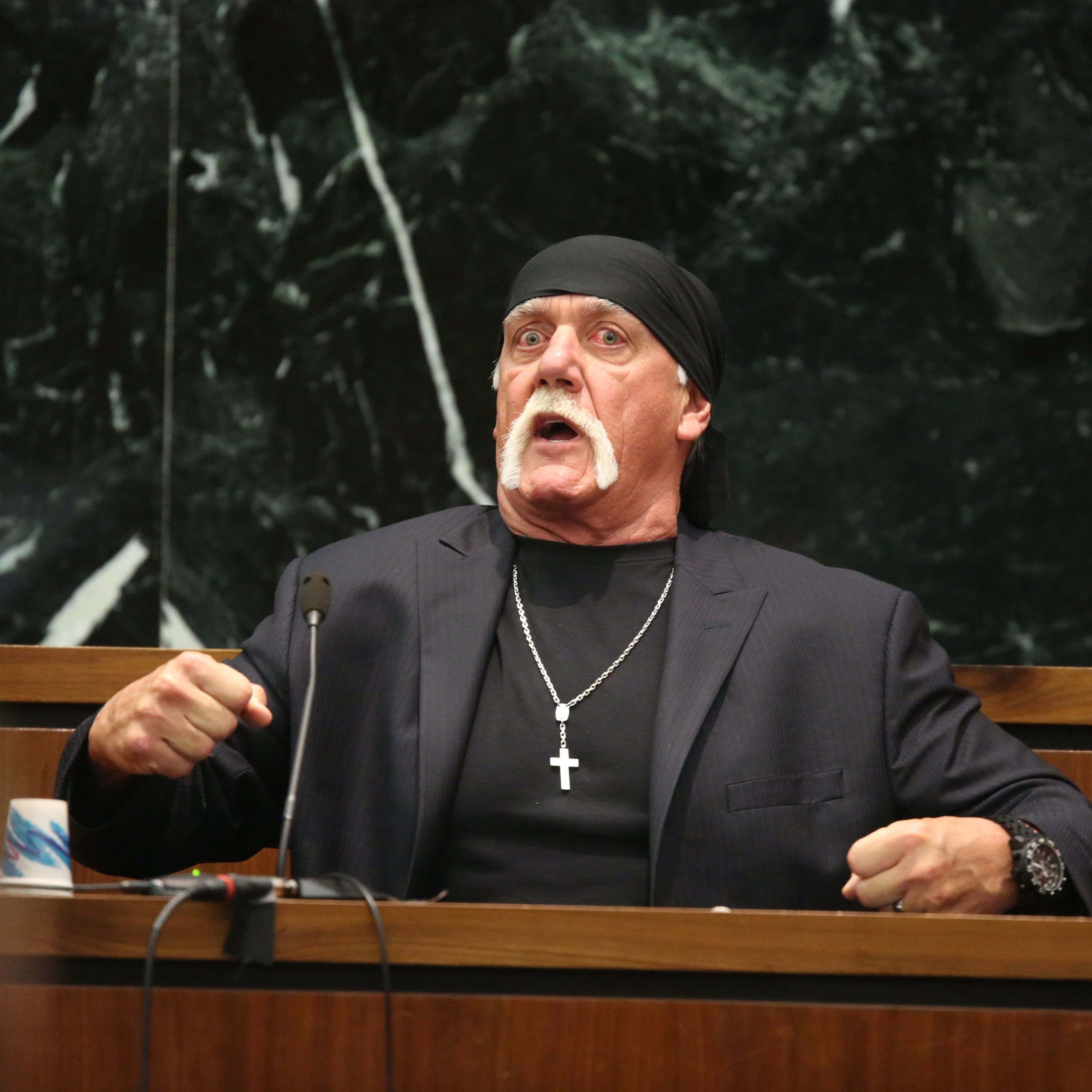
This is all of it. I'm Alison Stewart. The Tony Awards are this weekend and coming up on the show tomorrow, we'll hear from some of the nominees including the stars of the Rocky Horror show and Two Strangers Carry a Cake Across New York, as well as live performances from the team behind Cats, the the Jellicoe Ball, who recently joined us for our recent Broadway on the Radio event. Tickets are available for our next Broadway on the Radio series. We are welcoming the cast of the Outsiders. It's all happening next Thursday, June 11th at noon. The stars of the Tony winner for Best Musical will be right here in the WNYC green space performing live. This is a free event. Why is the free event? Well, it's a special edition of our series. It's co presented with the Mayor's Office of Media and Entertainment for New York Music Month as part of their Radio City lineup. So thanks to them. Please note it is a first come first serve. RSVP does not guarantee entry, so go to WNYC Events to register. That's happening in just a week. Now let's get this hour started with Gawker. Gawker was a blog turned media outlet that was founded in 2002 by Nick Denton and Elizabeth Spring Spears. It was known for pioneering a kind of sharp and snarky and sometimes even mean editorial tone that permeated early Internet culture. It was also known for its elastic journalistic standards. Gawker built its brand on publishing what others wouldn't. Ten years ago this summer, Gawker shuttered all operations, including its spin offs like Jezebel and Valleywag, and not because it wasn't getting enough traffic or because people were losing interest in the content. It went out of business. Business because the outlet was sued by Hulk Hogan for invasion of privacy and had to pay $31 million in damages. It was later revealed that the lawsuit was funded by the billionaire Peter Thiel. You know he co founded PayPal and it gets personal there too. The Thiel held a grudge against Gawker ever since one of its spinoff publications, Valleywag, outed him as gay in 2007. In many ways, Gawker's demise was a harbinger of how billionaires would learn to weapon the legal against media outlets whose coverage that they didn't like. Frank Diacomo is a media reporter who recently wrote a piece for the Hollywood Reporter called At Gawker, they battled a billionaire. Ten years later, the scars are still healing. He's also the co author of a book called Paper of Wreckage, which offers an oral history of the New York Post since 1976. Hey, Frank, thanks for joining us.
- [03:25]
Frank DiGiacomo
Thank you for having me. Allison, how are you?
- [03:26]
Alison Stewart
I'm doing well. Listeners, help us report this story. What do you remember about the website Gawker? What did you think of its tone? Did you like that it was candid and sometimes even a little bit mean? Or was it too much? Are there any memorable headlines or stories you want to shout out? Or maybe you're a journalist and the legal battle strikes you as relevant right now. What do you see as Gawker's legacy? We are taking your calls at 212-433-WNYC 212-433-9692. Tell me about the heyday of Gawker.
- [04:01]
Frank DiGiacomo
Well, Gawker started in late 2003 and as you said, shut down in 2016. A lot of the other sites were actually sold off to Univision and honestly, I'm not sure if they're still running. I doubt they are, but Gawker was shut down due to the lawsuit. Gawker was a bleeding edge in terms of the Internet blog world. It, it really kind of propagated. Well, I guess the thing I would first say is that really sort of monetized Internet, the Internet and scaled it. It and it introduced that kind of renegade journalism that and, and really propagated its language, which was sarcastic and skeptic. Skep skeptical or there was a very black queer slang aspect to it. Message for slang, you know, lots of exclamation points and LOLs. And it happened at a time when print journalism was really struggling to find its way onto the web to translate their voices to the web. And Gawker had a very unique voice, a voice that changed often with whoever was running it. But certainly the snarkiness and I would add great humor often was always a part of it.
- [05:31]
Interviewer/Host
What kinds of stories did Gawker cover that mainstream outlets would shy away from?
- [05:39]
Frank DiGiacomo
Well, they, well, one of the, you know, there was definitely legitimate News happening that they were uncovering. One thing they did was they were the first outlet, media outlet, to publish Jeffrey Epstein's little black book, as well as the flight logs of. Of passengers on his private plane. They did that in 2015. Something that the mainstream media wouldn't really touch but certainly knew about was it. Dawker published a video, a Tom of Tom Cruise sort of recruiting for Scientology, in which he declared that Scientologists are, quote, the authorities on the mind and, quote, we are the way to happiness, which I think was paraphrased now on the Mandalorian. You know, it is the way. This is the way the other stuff, it is done. I mean, some of the more questionable stuff was a video of a. Of a woman having sex in a bathroom stall in a. In an Indiana sports bar. The woman begged, begged to have the piece taken down. And at first, Gawker ignored those pleas, but eventually did take it down because as the editor who. Who took it down said that there was a possibility that it could have actually been a rape.
- [07:10]
Interviewer/Host
It's interesting. This is. This brings us into our next subject, why they were sued. One person on staff said that he would never have bet that a suit brought by Hulk Hogan over a sex tape would have brought Gawker down. Could you tell us a little bit about what the lawsuit was about and how they arrived at a decision around privacy?
- [07:35]
Frank DiGiacomo
Well, it's a very interesting case in that Hulk Hogan probably would not have won that lawsuit, certainly on defamation or libel claims. And the lawsuit was not based on that. The backstory is that Peter Thiel, who was at least explicitly stated that he. He hated Gawker because they had outed him. And what, if you look back at it, is a very positive. A very positive blog post about how. How hard it was to be gay in the VC culture in Silicon Valley and how he had succeeded despite that. Nick Denton actually thought that it had more to do with the fact that Valleywag and Gawker covered his missteps in business. In any case, this is a grudge he carried for a long time. And when he was visiting Oxford University in the uk, he. He met a law student there named Aaron d'. Souza. And d' Souza proposed that they use someone else who had been mistreated by Gawker, so to speak, as a proxy to get revenge. And so Hulk Hogan ended up being that proxy. And behind the scenes, Peter thiel spent approximately $10 million to fund his lawsuit, which was an invasion of privacy lawsuit, not a definition or libel lawsuit to win what ended up being, you were right. It was a $31 million settlement, but the initial damages were $130 million.
- [09:22]
Interviewer/Host
Wow.
- [09:23]
Frank DiGiacomo
Actually, I think 140 million. So that, that's sort of the tick tock of how that unfolded.
- [09:30]
Alison Stewart
I want to play a short clip of Peter Thiel talking about his involvement in this lawsuit. Here he is speaking at the National
- [09:36]
Peter Thiel (clip)
Press Club sort of around 20, 2011. One of my friends convinced me that if Gawker could get away with this sort of sociopathic repeat behavior over and over, it was this tragedy of the commons. Nobody would ever, they would continue to ruin lives one after another. And there were many people that did things to far worse than me. And so I was convinced that if I didn't do something, nobody would.
- [10:05]
Alison Stewart
Based on your reporting, what do you make of Thiel's argument?
- [10:10]
Frank DiGiacomo
Well, look, I think he, you know, he, it's a free country. He had a right to do what he did. I think that what he did unleash though, is the beginning of this chilling effect on media that showed anyone with a great deal of money and we, there are more and more of those people in the world now can affect, can essentially sort of hamper, at least, at the very least hamper in some cases prevent the truth from getting out. Now you may say, well, does outing something, you know, is, is that necessary? And I agree with that. Like, that's a, that's a judgment call as a taste call. But I think what we're seeing today is, you know, you've seen CBS Pay $36 million because. Pay $36 million to the Trump administration and his foundation because of the editing and editing decision made for a 60 Minutes interview with Kamala Harris. We've seen ABC pay 15 million to settle the defamation lawsuit lodged by Trump after George Stephano Stephanopoulos incorrectly said in an interview that Trump had been found liable for rape when in fact he was liable for sexual abuse. Now, defamation of libel cases, you have to prove intent. I'm not a judge, but I would say that that was a mistake, certainly not made with intent. And then, you know, we've also got now the FCC ordering early renewal applications for Disney's eight broadcast stations because Jimmy Kimball has angered, angered the Trump administration for a joke he made about Melania.
- [12:04]
Alison Stewart
Yeah, a lot of people said the decision, the Hulk Hogan decision, it foreshadowed a political shift. How can we understand how that suit as part of a backdrop to Trump's rise?
- [12:20]
Frank DiGiacomo
Well, Trump's, Trump's mentor was Roy Cohn. And Roy Cohn's philosophy was attack, attack, attack. And Roy Cohn was a man of many lawsuits. He filed a lot of lawsuits, a lot of them that held no water. We're seeing that with the Trump administration. And I think there's this. What's happened is, you know, a billionaire won this lawsuit, which is sort of sets a precedent for other companies with money to burn to be able to say, all right, well, we may not win this case, but we're going to, a, we're going to instill doubt by suing them, and, and B, we're just going to rack up as as many expenses as possible, legal expenses for the, for the defendant.
- [13:16]
Interviewer/Host
How will this affect smaller media outlets?
- [13:20]
Alison Stewart
I mean, if it's expecting networks the way it is.
- [13:24]
Frank DiGiacomo
Yeah, I think that you're not seeing, you're not seeing, you know, I don't think a Gawker could exist today for the reason, same reason that it got shut down in 2016. There is. Unless you have, unless you're, say, the New York Times or the Wall Street Journal, unless you have a lot of firepower and cash for capital to fight a lawsuit like this, you're not going to go out there and sort of poke the bear too much. The other thing I will say, just based on my personal journalism experience, increasingly the general counsels who handle the libel, who handle sort of of First Amendment stuff for publications and media outlets, are sort of preaching more and more conservative ways to report. And that, that is, that is chilling.
- [14:27]
Alison Stewart
The website Gawker shuttered its operations 10
- [14:30]
Interviewer/Host
years ago this summer. We're talking about it with Frank DiGiacomo,
- [14:34]
Alison Stewart
a freelance reporter who wrote a piece
- [14:35]
Interviewer/Host
for the Hollywood Reporter about the website's complicated legacy after its downfall. Let's talk to Benjamin is calling in. Hey, Benjamin, thank you for taking the time to call, all of it.
- [14:48]
Benjamin (Caller from Fordham Law School)
My pleasure. I was just. I teach at Fordham Law School and I teach about defamation and privacy. And I just wanted to insert, you know, that I think there's another way to look at this case, which has its own ironies, and that is there's a huge amount of degradation of women and destruction of women's privacy online. And it's a big problem that needs to be dealt with. It is ironic that it was a very wealthy man, Hulk Hogan, who won this case with a very conservative backer. But it's not clear that it's such a bad thing. It really shows how much power lies behind First Amendment protection in the United States that it took that to get someone to win a verdict like this took that amount of money, that amount of celebrity. But there really are two sides to this.
- [15:52]
Interviewer/Host
Thank you for that statement. Yeah. This leads me to my next question. You know, I want to read a quote that stood out to me from a former Gawker editor for your piece in the Hollywood Reporter. Frank. He said Gawker eventually became like Lenny from Of Mice and Men where it didn't understand its own power. It started out as this little blog published out of Nick Denton's living room. Everything he was doing was punching up because nobody had ever heard of it or him. By the time I got there, it was a powerful entity that could rattle and affect lives. But people continued to write as if they were still in a living room when they should have started thinking, this story's true, but is it a story that we should be sharing? When you were talking to the people who worked at Gawker, did you sense any regret about their editorial judgment?
- [16:42]
Frank DiGiacomo
Yeah, I mean, as, as Cord who. Cord Jefferson, who. That's his quote. As he also said, you know, it became an increasingly morally queasy place to work with very high highs and low lows. You know, on the, on the minor end, he, you know, they had a, they had a big board which posted traffic, the traffic of various stories and the, and people who had the most traffic would get bonuses on a monthly basis. And Cord talked about, you know, how he might work on a piece for a week or more. There was a thought piece and with a lot of research, and he put it up and it would get trounced by a cat video. So you've got that. But also, you know, increasingly, you know, the. I think a prime example is that of this is when Gawker essentially reported that an executive at Conde Nast who was married to a woman had hired a male porn star for an escort as an escort during a business trip. And, you know, the question there is, is this person public enough to have to have done that about him? And they did end up taking that down. The GoK reiterator that put it up and a number of the other staffers who were. Well, another person who was involved in that quit in protest because they said it was the first time that Gawkers marketing and sales department had been involved in making such a decision. So as you know, I would say that you do, as your power grows, you do have to sort of make those calls, like those judgment calls. And Gawker didn't do that. I think Nick Denton wanted to do it more, but he kept a mostly hands off approach to his staff. I mean he, he even wrote that once he, he's friendship with Brian Williams, the NBC former NBC anchor, ended because he forwarded a private email to the editors and they published it. So you, you, you know, you do, you do get that. You do need to, to instill that judgment and especially when and, and I, I can speak, you know, from personal experience having worked at Page Six in the, in the pre digital eras era, you know, you, you, you come into a place like Gawker Young. You, you're, you have no filter, you're very idealistic. You. And, and so you're kind of, you know, like a baby rattlesnake. You're just injecting all the venom at once. And, and you learn as you, as you, as you gain some life experience that that is not always a good thing.
- [19:54]
Interviewer/Host
How did, how do the folks that you talked to, how did they feel about their time at Gawker?
- [19:59]
Frank DiGiacomo
Well, it's interesting because they, they, it was a real sort of us versus them type of community and a lot of them have remained friends and continue to get together or do wordle. As one, as one editor said, I think, you know, it was really kind of an intense experience there. You know, someone said it was a very, it was a cocaine atmosphere. And again, having worked at the New York Post that you, you, you do get that sort of bunker mentality. And that doesn't always work to, for the, for the best or for the good. For the good.
- [20:49]
Alison Stewart
I'm curious, was anything surprising to you in reporting the story?
- [20:55]
Frank DiGiacomo
I have to say I, you know, I was one of those print people who didn't think Gawker would, you know, that it was going to fizzle immediately and sort of learning of its history and some of the news that it did break, it made me appreciate it more. And also just talking to a lot of the editorial reporters there who have gone on to bigger and better things, I think that there were a lot of really smart, talented writers there, writers with voices. Gawker gave let you have your own voice. It didn't attempt to homogenize you into a sort of institutional voice. And you have some really interesting voices out there that are still out there. Like Katie Weaver. She wrote a classic Gawker story about going to spending 14 hours at TGIF testing its endless appetizers promotion. She, she, she did a TikTok of like eating seven plates of mozzarella sticks. And now she's done something very similar at the Atlantic about finding the best free restaurant bread in America.
- [22:12]
Alison Stewart
And she's been on our air talking about that, actually, and somebody just texted in. I still think about the article they did where they ate every endless appetizers for as long as possible. One of the best reads of my life.
- [22:24]
Frank DiGiacomo
Right. And, and Emma Carmichael, she's writing an OR history of the wnba, but she, she and, and Cord Jefferson and Max Reed and Leia Beckman. I reported this in the story. They, they had actually sold a piece to sorry, a series to Apple TV that was going to be a sort of dramedy based on Gawker called Scraper. And Tim Cook personally killed it because he, he had also been outed by Gawker. Cord, though, has gone on to he's won an Emmy for Watchmen for his writing on Watchmen and he won an Oscar for his screenplay for American Fiction. So you've got a lot of very smart and witty writers and editors out there. John Cook, who was one of the journalists who, one of the journalists who who revealed the Jeffrey Epstein black book, he's the deputy editor of an investigative team at the Wall Street Journal.
- [23:35]
Alison Stewart
The name of the piece is At Gawker, they battled a billionaire. Ten year later, ten years later, the scars are still healing. It is. By Frank dijiacomoitz and the Hollywood Reporter thank you so much for sharing your reporting with us.
- [23:47]
Frank DiGiacomo
You're very welcome.
- [23:49]
WNYC Sponsor Announcer
Having the right people in your corner for life's biggest milestones makes all the difference. Like a friend who's there when you're house hunting or checking out a new ride, State Farm is there too, helping you choose the coverage you need. With a State Farm agent, you know someone is there to help you along the way. And with so many coverage options, it's nice knowing you have help choosing a plan that fits your needs so you can continue celebrating all of life's milestones. Head to statefarm.com to get a quote. Like a good neighbor, State Farm is there.
- [24:20]
Interviewer/Host
Hi, I'm Maggie Smith, poet and host of the Slowdown. Each weekday I share a poem and
- [24:27]
WNYC Sponsor Announcer
a moment of reflection, helping you turn listening into a daily ritual.
- [24:32]
Interviewer/Host
It's five minutes to slow down, pay
- [24:35]
WNYC Sponsor Announcer
attention, and begin the day with intention. Find it in your favorite podcast app
- [24:42]
Interviewer/Host
and make the Slowdown your new daily poetry practice.