Loading summary
Transcript68 lines
- [00:00]
Progressive Insurance Announcer
All of it is supported by Progressive Insurance. You chose to hit play on this podcast today. Smart Choice. Make another smart choice with Auto Quote Explorer to compare rates for multiple car insurance companies all at once. Try it@progressive.com Progressive Casualty Insurance Company and affiliates not available in all states or situations. Prices vary based on how you buy.
- [00:29]
Alison Stewart
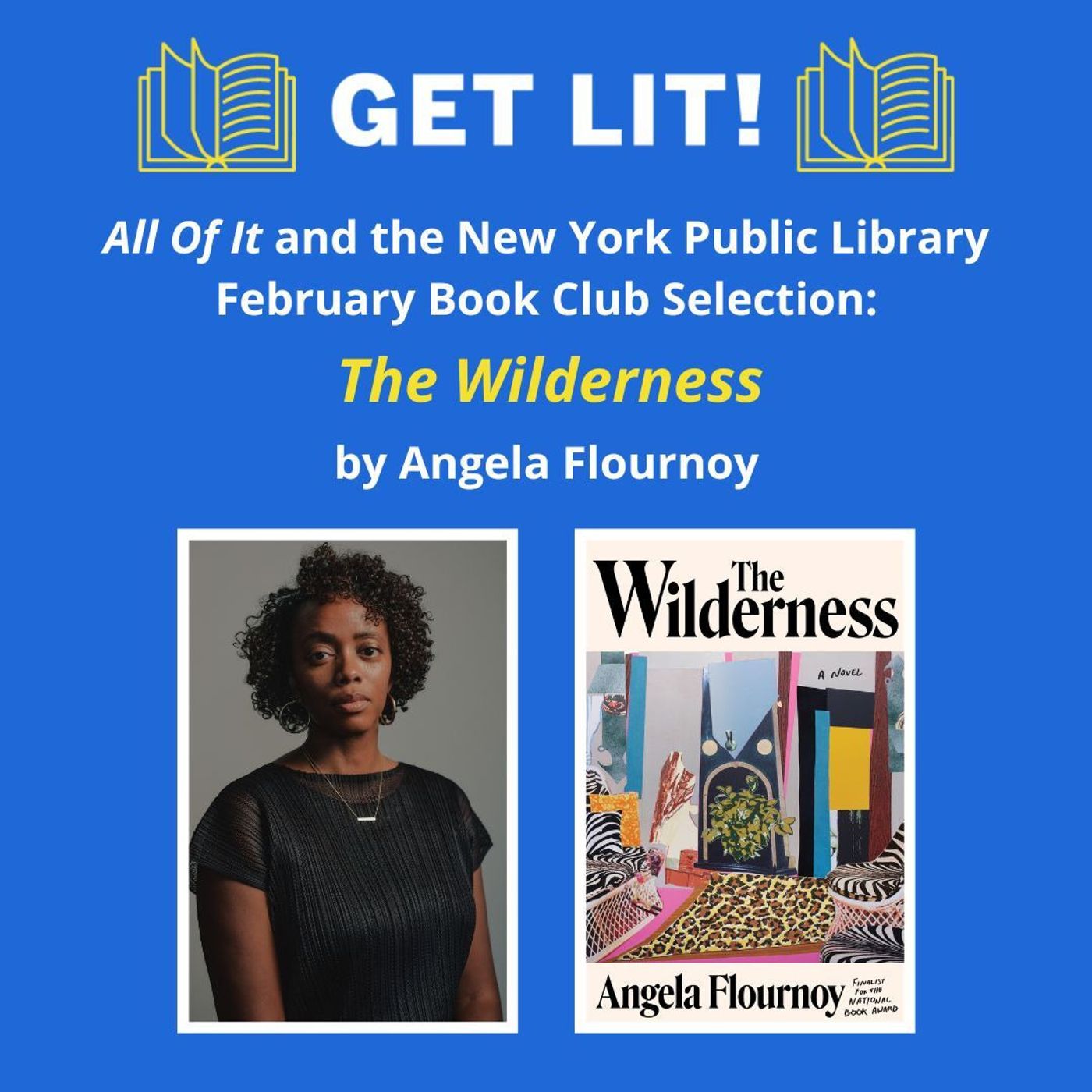
This is all of it on wnyc. I'm Alan Alison Stewart Coming up later in the show, we celebrate St. Patrick's Day with some music from Dark Streets. They are a Pogues tribute band and as you can imagine they are very busy this time of year. So we are very glad that they are here to perform live in WNYC Studio 5. But first, let's get into the wilderness. The new novel the Wilderness by Angela Flournoy explores a group of friends. Friends who lean on each other to help navigate the wilderness of young adulthood. There's Desiree, a woman who is grieving the loss of parental figures in life, including her estranged older sister Danielle. There's Nakia, coming into her own as a queer woman, also carving a path in the culinary world. World. January's in the midst of big life changes. She's broken up with her boyfriend of many years only to learn she's pregnant with his child. And finally there's Monique, a college librarian who finds herself in the midst of of Internet virality after she decides to speak up about racism she's witnessed at her job. The story spans from the aughts to 2027, from New York to LA, and these four friends try their best to figure out where they should be headed and how to get there. The Wilderness was our February get lit with all of it book club selection. Our original event at the Stavros Niarchos was canceled due to a snowstorm, but we were thrilled to be able to reschedule and host our event in the Green space in early March. I began the conversation with Angela Flournoy by asking her if this novel was always the book she set out to write.
- [02:07]
Angela Flournoy
Yes, I started thinking about this book in 2016, like in the summer of 2016. So about a year after my first novel, the Turner House came out. And I wanted to write about what it felt like to have like a friend group and what it might look like to sort of age into middle age with those people. And I always wanted to project a little bit in the future because I wanted the characters to be around my age and I was not yet middle aged when I was thinking about this book back then. But then there were some things that happened in the fall of 2016, that made me be like, well, I really don't know what the future is going to look like because things are happening that I did not necessarily predict. So it just took a little longer. But the central concept was the same.
- [02:59]
Alison Stewart
Why did you want to write about friendship?
- [03:02]
Angela Flournoy
Because I feel like many of the women I know, especially the black women that were like my aunts and my mother and stuff, the central love stories of their lives were actually their friends. Those were the relationships that helped me become the person I am, because those are the people who helped to raise me. And really, you know, before people were saying things like co parent. They were really like my mother's co parents. And I had not really read anything about that.
- [03:34]
Alison Stewart
Were they your aunties? How many of you all are aunties out there? Yeah, okay.
- [03:39]
Angela Flournoy
Yes, my aunties. And so I felt like I was interested in what. Why these relationships were so important. It wasn't that I had never read anything about friendship, but I always. There was always a way that the stories that were ostensibly about women friends mostly ended up being about the men in their lives. And I really wanted that to not be the case in this story. I wanted it to be about, like, of course people get married, they have kids, whatever. But it is about what keeps pulling these people back to each other.
- [04:12]
Alison Stewart
Sort of your own Bechdel test for your.
- [04:16]
Angela Flournoy
Yes. Some people might think that, like, oh, well, the men, you know, they don't matter. It's just. That's not the story that this story is.
- [04:24]
Alison Stewart
In the novel the Wilderness, you write from so many different perspectives. What do you like about writing from so many perspectives?
- [04:32]
Angela Flournoy
You know, I have tried to not do it. I did. My first novel was about a family with 13 adult siblings. And. And not all of them got their own pov, but a lot of them did. And it felt like it was a lot of work. And I figured out how to do it. And then I was like, okay, I don't need to do that again. But I think it has something to do. The reason why I was drawn to it again is something I'm very interested in. Like networks. When I think about characters, I immediately think about who else is in their life. I could never write a character sketch that was just about an individual. It immediately becomes about the people that they are near and, like, how people think about them. And if I'm thinking about any experience, I'm always turning it around from how other people also experienced it.
- [05:25]
Alison Stewart
There are four women in the book. I'm going to give you A quick one line about each, and then we'll go into each of them. Nakia, an upcoming chef. Monique, who is an influencer slash librarian. January, a designer who's sort of in a stagnant romance and is pregnant. And Desiree, who doesn't quite know what to do with her life now that her granddad is gone. Which one of these women was the easiest for you to write and which one was the hardest?
- [05:52]
Angela Flournoy
I think the character Nakia was the easiest to write. So Nakia is one of the things that I think makes particularly friendships in your, like, 30s, when people are really trying to figure out, like, okay, how am I going to actually make the life that I think that I want? One of the ways that attention can, like a kind of tension can find its way into relationships is the people who seem to know exactly what they want versus the rest of us who are like, you know, this job seems fine. You know, kind of just figuring it out. And Nakia is a person who I felt like it was useful to have a character who, from a very young age, knew what she wanted, because those people, they can be really inspiring to their friends. They also can just be really confounding and frustrating to like, to have to live alongside, even if you love them. It's not even necessarily jealousy. It's just, how do you know? How are you so sure? And so for. I knew I wanted a character like that. I think I have perhaps been that person in some people's lives because I have always wanted to do this thing. And it's because also that person, even if they're not making money or whatever, they seem fine in some ways because it's like, I still am just doing this thing. And so writing that character was like. It was clear to me that part of her just like her personality, the fact that she just wants to be in restaurants, that's what she wants to do.
- [07:21]
Alison Stewart
We learn a lot about these friends and what they think of each other. It's not always kind. What new things do we learn about characters when we see them through the eyes of their friends instead of from their own point of view?
- [07:38]
Angela Flournoy
Oh, you learn so much. I think that one of the things I'm teaching right now, a graduate fiction workshop, I teach, kind of like an itinerant academic sometimes teach. And often in a workshop, people will be like, well, the problem is you can't see around this character. Like, this character is presenting themselves some way. But we need an opportunity to see around them, to get to some kind of truth. And I'm Always like, well, what is the truth is there? I've always been suspicious of this idea of there being like a single truth about a person. And I think that is why I'm interested in having other people's view of what, like how a person is or how they behaved in a situation so that a reader can get a sense of them just more in like three dimensions. It feels really important. And sometimes I've had some readers say, do these people even like each other? And yes, but more importantly, they love each other. And that means sometimes they really see some things about each other that of course, the character in, like the main character in question would not like. The things that they see. Sometimes it's out of deep concern that they notice those things about their friends.
- [08:57]
Alison Stewart
What aspect of being in your twenties did you wanted to make. You wanted to make sure we're in this novel?
- [09:04]
Angela Flournoy
Oh, just mess. You know, I feel like in my 20s I was blessed to be in New York City for a lot of it. Just. And this was before everybody was like videotaping everything. You know, you could really be in the club. Like, you could go with your hair straight and then end up with your hair in a completely different hairstyle. Cause you sweat it out, right? But now I feel like people would be too self conscious, right, about that. And that is. I felt like I really needed to capture that. That feeling of trying things out, like trying people out. And also the ways that you can perhaps act before you really consider, like, why am I doing a thing? The ways that you're still like a mystery to yourself when it takes a little bit more work to delude yourself in some ways when you're older, because, you know, you know, but you can, you know, earnestly not know or just really not think it through. I think when you were younger.
- [10:16]
Alison Stewart
The book jumps back and forth through time from the early 2010s to 2024, even to 2027. Why did you want to structure the book that way?
- [10:26]
Angela Flournoy
This is, I think it's really exciting to me to. This is the thing that a lot of readers don't like about this novel. But it's also really exciting to me to hear readers talk about their experiences with the structure of the book. Because the structure of the book is it began out of a desire to feel like I was in the room with four women and I was asking them the story of their friendship. If I asked you and three of your good friends the story of your friendship, it might begin chronological, but it would soon not be chronological anymore. People would Be like, well, wait a minute. It's important that you know that when you were doing this, I was doing this. I was trying to break up with him. And then this was happening. And then a different kind of, like, shape emerges. And it absolutely has to be, like, prismatic. It has to be a thing you can kind of pick up and turn around. Because I wanted it to be about what it feels like for all of them to experience this friend group. And that means sometimes people, like, it's not till later. It's like, you didn't know I had this personal crisis happening around this time, but I did. And so that means also every moment of the novel cannot focus on just their friendship, but it intersects like it informs why they're still in each other's lives.
- [11:51]
Alison Stewart
You decided to go to 2027?
- [11:53]
Angela Flournoy
Yes.
- [11:54]
Alison Stewart
That's an interesting choice of a year.
- [11:55]
Progressive Insurance Announcer
It's not so far into the future. I mean, it's next year.
- [11:59]
Alison Stewart
Why did you pick 2027?
- [12:02]
Angela Flournoy
Well, you know, I was slow writing this, so when I, in 2016, 27, felt very ambitious. But then when I finished. I finished writing this book in 2023, and I had a feeling that the way I think it was really post pandemic, I got a feeling, I think we all did, that time was operating differently. It just feels like time has always felt elastic, but it feels like time is both accelerated and not really moving at all. So it felt like if I just projected a little bit into the future, there were things that in 2016, when I first started writing, this would seem very implausible. But given the way that time works now and the way that the world and politics, et cetera, works now, you can tell me a lot of things are going to happen next year, and I would believe you. And I think a lot more people would today than they would have 10 years ago.
- [13:12]
Alison Stewart
What did you want to explore about class in this book?
- [13:16]
Angela Flournoy
Oh, I wanted to think about the ways that class, when you have a group of friends like this, how class can be one of the many kinds of friction, and also the way that as you get older, it suddenly, if it hasn't already, starts to emerge,
- [13:44]
Alison Stewart
you
- [13:44]
Angela Flournoy
get older, and suddenly you get an inheritance. Like you have someone in your life who could leave you an inheritance, or, you know, you get older and your expectations for what it looks like to have made it start to diverge from your friends. I have a friend, the novelist Jade Chang, who talks about how in her 30s is when she realized not all of her friends just wanted to have fun and make art. Right. Some of them wanted to own a home. Some of them wanted to make a baby. And they started moving towards those things sometimes very quickly. And it felt like one of those things that also, for a person like Nakia, class is part of what leads her on her path. There are characters who do not think, and I'm not saying that it's a luxury to be thinking about, like, what is your bigger purpose in life? But there are characters who are really just concerned about making money, right? Like, they don't feel like they have. They can look up enough from just, I need to establish myself to think about, well, why am I doing these things? Am I good? But that is one of the things, not just particularly because of her class, but the legacy of her family where she feels like, well, I need to be. If I'm in a kitchen, I can't just be in a kitchen, because were out of kitchens, you know, a long time ago,
- [15:12]
Alison Stewart
Desiree goes with her grandpa to end his own life in Europe. They go through Paris, and these areas are really important to him
- [15:26]
historically.
- [15:27]
Were these important to black people, the areas of Paris that he went to?
- [15:33]
Angela Flournoy
Yes and no. They were not necessary. They were important to black artists, for sure.
- [15:38]
Alison Stewart
Black artists.
- [15:38]
Angela Flournoy
Okay. So maybe there's a little bit of myself popping out in some of Nolan's particular, like, addresses of interest, because I've always been interested in just that period of black expat life in Paris and why they were drawn to that city. People from, obviously, like, Josephine Baker, but also James Baldwin and Richard Wright and Buford Delaney and really, like, two generations of black artists and why it had to do with a kind of freedom. And for Nolan, end of life. He is interested in retracing his steps in this period of time where. In this place where, for a period of time, he felt like there was a different kind of freedom, like there was an option for something else, even though he didn't, you know, try to stay and, like, make a go of it. It is something that, like, still lives in his memory as, like, a very special period of time.
- [16:42]
Alison Stewart
Let's talk about January. She's at this big life crossroads. She's just broken up with her boyfriend of many years, moved to her own place. Then she found out she was pregnant. What scares her the most about her pregnancy?
- [16:55]
Angela Flournoy
There's a lot of things, but I think January is interested in, like, she wants a bigger life than getting pregnant in her. You know, I'm an elder millennial, and we seem to. A lot of us had children late. It seems like, the young people are having children earlier again, but so in your early 30s is early for her. And also, she feels like she has spent so much of her life before that kind of playing in the background to her husband, to her partner, to Morris. And so it feels like, well, now the door is closed on doing something different because I am pregnant.
- [17:40]
Alison Stewart
You wrote a really dramatic scene about prolapse after birth. And I don't think I've ever seen that in a book before. I don't remember.
- [17:52]
Angela Flournoy
Yeah, you got all excited. Yes.
- [17:58]
Alison Stewart
That was incredible.
- [18:00]
Angela Flournoy
Thank you. One of the things about, I think in one way, there's this world on the Internet where it feels like we know everything more than we have known before. But when it comes to women's health, there are just so many things that people still do not talk about. And I really wanted to think about what that, like, feels like in the body for a character to have a character who feels like, okay, I did not actually, in the beginning know if I wanted to have this baby. But now, like, I had one and now I have another one, and I feel like I know everything that's possible. And I actually, I just didn't even know about this thing, which is obviously, like, a failure of, like, our just, like, public health education, but also something that it seems like in 2020, when I think it's supposed to be like 2022, at that point should not be possible, but it's still possible where people don't. In fact, a friend, like, sent me a video of a woman discovering kind of making a joke out of it. But last week, a woman discovering she had a prolapse because she was, like, weightlifting and then had, like, complications. And people in the comments were like, I didn't know this was possible. And it's like, oh, yeah, people still don't really know so many things about women's health.
- [19:15]
Alison Stewart
You'll hear more of my conversation with author Angela Flournoy after a quick break. This is all of It. You're listening to all of it on wnyc. I'm Alison Stewart. We continue my conversation with author Angela Flournoy about her novel the Wilderness. It was our Get Lit Book club selection. Thanks to our partners at the NYPL 2,602 New Yorkers were able to check out a copy of the novel and read along with us. And as always, our audience had some great questions from our author. You'll hear some of those in a moment. But first, more of my conversation with Angela Flournoy. Live in the green space.
- [20:08]
When we get Monique's point of view. It's not through her perspective, but through this viral blog that she has written. Why did you want us to meet her that way?
- [20:20]
Angela Flournoy
So one of the projects of this book is to think about how the experience of coming of age right now or over the last two decades and coming into middle age, which to me is the real coming of age, because I feel like it is. It's harder than just leaving your parents house. You know, going from being an adolescent to a young adult. There are fewer sort of like guideposts to figure out how you're supposed to do this thing. And I was just interested in what. It's really important to me that characters actually listen to music, actually read things. I just don't feel like it makes sense. It does not make your work timeless to have people who don't consume culture. It just makes to me it feels like it's flat. It doesn't feel like a real lived in world. I think about Anna Karenina. There is so much culture in there. They're always referring to operas and things that they're reading. And yes, I have to go to the footnotes to understand it all, but that's what makes it feel lived in is. And so to me, one of the big things that I think is a hallmark of the last 20 years is that a lot of people, what they are reading is just things on their phone, right? They're reading like the majority of words that a lot of people are reading a day are other people's captions, right, for their posts or they're reading people's substacks or people's blogs. And I felt like that has especially the more casual like the blogging and the captions and things like that, it has created its own kinds of idioms. They change so quickly. In six months time, people just speak differently and it spills into our real life. So it felt important to have a character really reflect some of that language. It was really hard. I will say the character that was hardest to write was Monique. Because I was committed to, to until sort of the third part of the book where things change. We only really experience her through her own writing. But because she is so aware of an audience and she is trying to cultivate an audience, that means that seeing around her, right, it's a challenge because she is always trying to position herself in like a way that she thinks will be useful to her.
- [22:51]
Alison Stewart
Let's go to the audience for some questions. She's got mics
- [22:59]
back there. Okay.
- [23:00]
Angela Flournoy
On the other side of the column from you. There was a hand here. Hello. Hi.
- [23:05]
Audience Member 1
Is it on?
- [23:06]
Audience Member 2
Hi.
- [23:07]
Audience Member 1
Big fan. Speaking of Monique, early in the book, she has, like, a bad time at a university when she's working on a kind of like, archival project because she realizes that people want to remember things differently than maybe they should be. But how. How would you say that you treated like, memory and perception as like a kind of like, running thread through these. These women's relationships over time?
- [23:39]
Angela Flournoy
That is a very good question.
- [23:41]
Audience Member 3
I.
- [23:46]
Angela Flournoy
I think about when people. When people tell me that my characters feel so real, if there's any reason why they do, I think it has to do with their memories. And when you say perception, the way that I think about it as a writer, I think about it is like their way. Like, each character has their own way of seeing. So even if it is just describing them walking from here to Spring street to get on the train, like, those four people are going to see things completely different because everything is filtered through the way that their perspective, how they like the way that they notice the world. So I think a lot about it. I think a lot about when I think about memory. That is probably the most exciting part for me of writing is thinking about how what is happening is related to their experiences. Another thing that happens a lot when I teach is that, you know, a lot of times people complain about, like, there's too much backstory. Like, the backstory pulled me out, but I, you know, I am a lover of Saint Toni Morrison. And, like, the backstory is a story, Right? Like, memory, like, is like, we are repositories of our memories. It doesn't mean that we have to, like, you know, not be able to have them in the right, like, position so that we can move forward in our lives. But we are like, they are a part of us. And so to me, when I think about building those for characters, I think that that is probably like, the most important part more than, like, where they're going is how it is informed by where they've been before. Yeah.
- [25:33]
Audience Member 3
So one of my favorite descriptions you have of Monique is that she's a character who's too smart to want what she wants. And I remember that stuck with me because I definitely have thought that about someone in my life, but realized that the weird privilege is that they love me, so they're bringing me along the decision making process. I'm really curious if there's a core desire that you had in your early, like, your either adolescent years, your young adult years, and how you either had let go of it entirely, or it's morphed into something that was a little more sustainable, that can be something in your life or just also in your work.
- [26:13]
Angela Flournoy
You know, I am really boring. I really only wanted to do this.
- [26:21]
Alison Stewart
Really.
- [26:21]
Angela Flournoy
Yes. Well, that's it. So I wanted to write books. So there wasn't. And yeah, I feel very fortunate. I feel like if there are people in my life, all of my friends who work, like in the entertainment industry, they're smarter than that industry. They are brilliant at their craft. But the industry is dumb. Right. It's just unfair to them because it's like they are brilliant actors and they have to be around dumb people. Like, the people who make the decisions are just always thinking about trends and the bottom line. But it's like, I just feel like for them. But it's not the same as Monique, because Monique is making a choice that is about crafting a self that is not. That is what she thinks is like, would be popular. Right. So that is a thing that, for instance, Nakia is so anxious about is why would you be interested in having to make a life being someone you're not or someone who's just like a part of you? And I have not fortunately had to do that. And I don't really know a lot of people who are doing exactly that either. Fortunately.
- [27:42]
Alison Stewart
Hello.
- [27:44]
Audience Member 2
So most of the characters are. We see them in New York or Southern California. And I know that you grew up in Southern California, but have lived a lot of your adult life in New York. And I wonder how you thought about the tension between. You know, you hear a lot about New York versus la. I wonder how you thought about the tension between those two places or the comparisons between those two places as like, a lifestyle and a culture. As you were writing this book, as someone who's lived in both places,
- [28:14]
Angela Flournoy
you know, I think that they're really, like, mismatched to be compared. Because LA is, I think part of the reason why people compare them, though, is because of the ways that, you know, New York being sort of like the home of publishing, there gets to be a lot in like our cultural imagination because of literature and obviously because of Hollywood, LA gets to be a lot in our culture imagination. But as far as, like, cities that one lives in, they are so different. Like, it should be like you're comparing, like, LA and Houston or something. You shouldn't be comparing LA and New York. They feel completely different and they operate very differently. It maybe makes more sense to compare like, New York to Chicago or something. But I having, you know, I love la, but I prefer to live in New York. I'll just say that I tried it, you know, I tried it. I went back, I had a child there, I did the whole thing. But I feel that there are a lot of things that I really like that I admire about Olay especially. I really admire any sort of artist who is not working in Hollywood, because nobody in LA cares about you. Like, they just do not care about you. But because of that, there's like a real. Like a way that you can get sort of plugged into the creative community really quickly. And people are just making stuff like they don't know how they're gonna make money, but because of that they are just taking chances and being really creative and. And it used to be a cheaper place to live, but it is no longer the case. And that really does, I think, tip the scales. Because it's like, if you're going to pay New York rent, you should be in New York, in my opinion.
- [30:05]
Alison Stewart
You've been on tour with this book.
- [30:08]
Progressive Insurance Announcer
Is there anything that you haven't been
- [30:10]
Angela Flournoy
asked that you want to be asked so that you may answer it, or
- [30:16]
Alison Stewart
something that hasn't been touched on that you've always wanted to talk about?
- [30:22]
Angela Flournoy
I really love Smokey Robinson. I don't think he gets enough credit. You know, I don't think he gets enough credit, but he gets a lot of credit, though. But no, I think that probably the thing that I would love to talk to, talk about the most, I think. Well, I know that a book that has an ending like this, that there's something that is like, really kind of unsettling for readers, but I really hope people can just think about Bigger Than, like the sort of shock of it. It's a meditation. The entire book, Bigger than Just Friendship, is about community. And it is about the way that the book ends. It begins thinking about friendship in the ways that we mostly think about it. And it ends thinking about, well, who are you willing to have be a part of your community and what are you willing to sacrifice to protect those people in your community? You should not have to sacrifice those things. But what does it mean to think broader about who is worthy to put your arms around? I've been thinking about that a lot, of course, since seeing all of the brave people in Minneapolis and the ways that they have shown that community can be more expansive than people who look like you or who worship like you or who live next door to you, necessarily. They might live on the other side of town. And I just think that it's something that, especially in this country, people are going to have to figure out a way to have a more expansive view of that.
- [32:01]
Progressive Insurance Announcer
Angela, thank you so much for being with us.
- [32:03]
Alison Stewart
Angela McWarnoy. That was my conversation with author Angela Flournoy. Her novel the Wilderness was our February get lit with all of it book club selection. Our March get lit event is coming up. We're reading A Guardian and a Thief by Megha Moojumdar. To find out how to borrow your copy and how to grab your tickets to our March 24th event, head to wnyc.org getlit whether it's news from around
- [32:32]
Progressive Insurance Announcer
the world or the latest from your neighborhood, New Yorkers, engage with WNYC studios for the information and connection they can only get from our programming. Be a part of that conversation through your business support. Learn more@sporship.wnyc.org.