← All Of It with Alison Stewart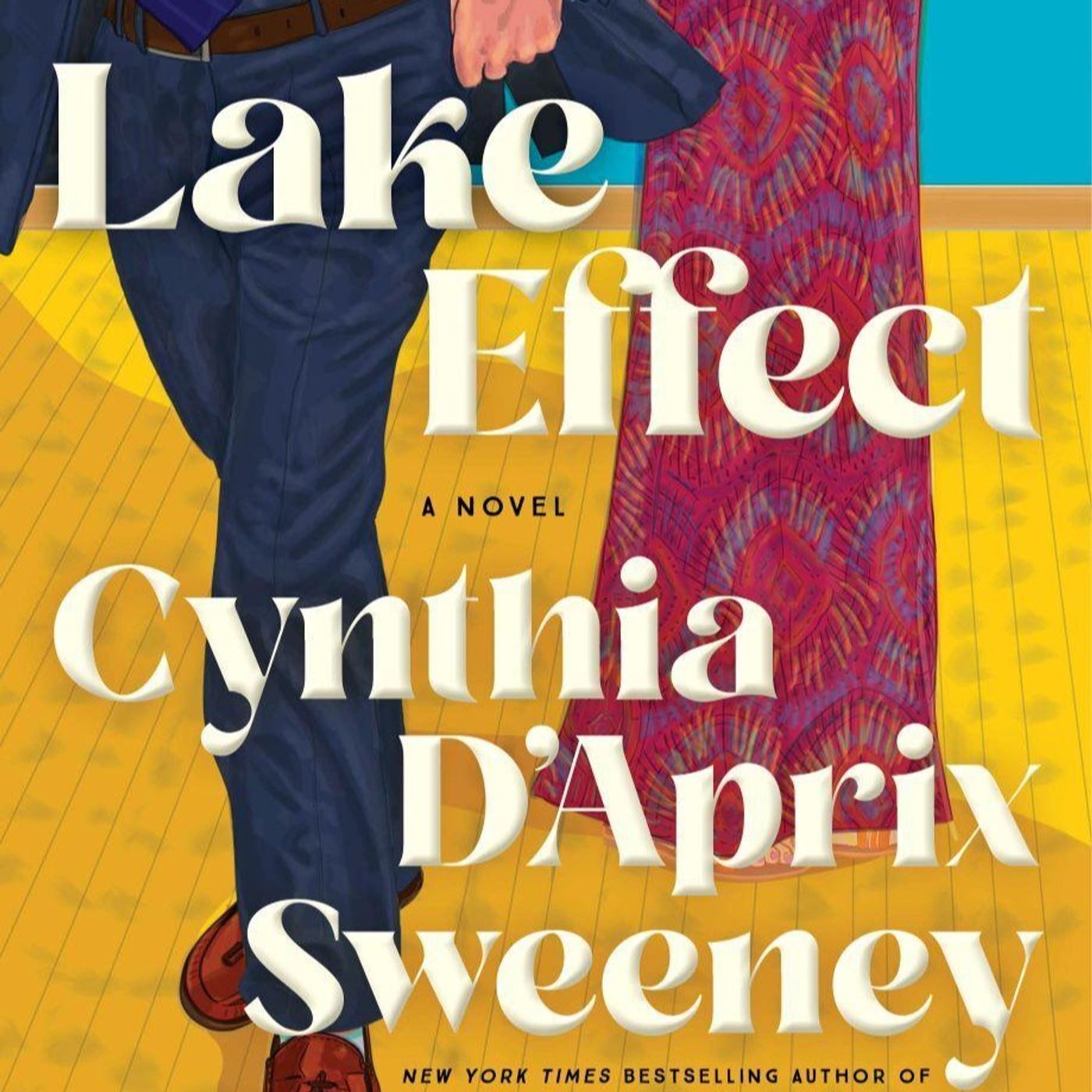
All Of It with Alison Stewart
Get Lit: Cynthia D'Aprix Sweeney's 'Lake Effect,' with Music from Brooklyn-Based 'Ida'
00:48:09
Loading summary
Transcript155 lines
- [00:00]
Progressive Insurance Announcer
WNYC Studios is brought to you by Progressive Insurance. Here's a helpful fact you might not know yet. Drivers who switch and save with Progressive save over $900 on average. Pop over to progressive.com, answer some questions and you'll get a quick quote with discounts that are easy to come by. In fact, 99% of their auto customers earn at least one discount. Visit progressive.com and see if you can enjoy a little cash back. Progressive Casualty Insurance Company and affiliates National national average 12 month savings of $946 by new customers surveyed who saved with Progressive between June 2024 and May 2025. Potential savings will vary. All of it is supported by Memorial Sloan Kettering Cancer Center. In a small, groundbreaking clinical trial, 100% of participants with a specific type of rectal cancer saw their tumors disappear using immunotherapy alone. Researchers at MSK are now studying this approach in cancers of the stomach, link liver and more, and a majority of tumors are disappearing. For MSK Giving day, all gifts will be tripled. Learn more@msk.org all of it.
- [01:13]
Host Alison Stewart
You're listening to all of it on wnyc.
- [01:16]
Interviewer Alison Stewart
I'm Alison Stewart.
- [01:17]
Host Alison Stewart
In the latest novel from best selling author Cynthia Dupree Sweeney, one woman's affair has long lasting consequences for the rest of her family. The book is titled Leg Effect. Nina Larkin is living in Rochester in 1977 when a friend hands her a copy of a spicy book, the Joy of Sex. Suddenly, Nina begins to question her marriage to Sam, which has been lacking in passion for many years. So she starts an affair with a handsome neighbor, Finn. He owns the big grocery store chain in town and is in an unhappy marriage with a woman named Honey. One day Finn and Nina elope, heading to the Dominican Republic for a quickie divorce and remarriage. Their kids are left behind to deal with the fallout and the gossip. Nina has two teenage daughters, Clara and Bridie. Finn has a son named Dune and a daughter named Fern. What Nina and Finn don't know is that their kids have been falling in love. Dune and Claire have been secretly dating. In the wake of this affair, Dune breaks up with Clara, leaving her heartbroken. Years later, now living in New York City, Clara still can't manage to forgive her mother for the affair, even though everyone else seems to have moved on. And when Clara receives a shocking invitation, she might have to finally confront the past she's been clinging on to for so long. Lake Effect was our April get lit with all of it book Club selection. I Began my conversation with Cynthia Dupree Sweeney by asking her what the inspiration was for for this novel.
- [02:49]
Author Cynthia Dupree Sweeney
The original seed of the idea was, came from me going home one weekend to visit my parents in Rochester, New York. And my mom telling me about a friend of hers who I knew who was helping his 80 something mother with estate planning. And she was doing this because her husband had recently died. Her husband was her second husband, someone she had had an affair with and left her friend first family for. And so she wasn't just doing estate planning for her children, she was doing it for his children. And it was absolutely chaotic. There was so much anger, arguments, resentment. There was like significant resources in the family and there was a real battle that was not about the money at all. It was about everyone just being stupid. So angry at what had happened to them when they were younger. And I just thought to myself, my God, being a parent, it never ends like, it never stops. You're in your 80s and you're trying to like plan for your kids futures when you're gone and they're still so mad at you, at something you did 30 years ago, let's say a big thing you did, but still I just thought, I don't know, when do you ever, in your children's eyes, get to be a full human? And that was the kernel of the idea.
- [04:24]
Interviewer Alison Stewart
It's a Catholic enclave that you set the story in. Why did you want to set it in a Catholic enclave? And what did you want to examine about Catholicism?
- [04:35]
Author Cynthia Dupree Sweeney
I mean, I think the easiest answer is that I grew up in a very Catholic community. I went to Catholic school my entire life. And so I know that world and I know that world in Rochester, and I know that world particularly in Rochester in the 70s very well. I am the exact age as Clara in the book. So in 1977, I was a senior in high school. And I was, you know, it was an interesting time to be in a Catholic community because the church was changing a lot. My parents were very progressive, very liberal, very activist kind of Catholics. And I liked that part of the church, but I also really disliked so much of it. And I think that as a teenager I was trying to understand what parts of Catholicism and organized religion in general made sense to me and which didn't. And I also was very interested in how people's belief systems, how that governed their reaction to things they weren't expecting to happen either in their lives or in the lives of their friends.
- [05:50]
Interviewer Alison Stewart
I would have to imagine in the 70s, I was 10, it was a big deal.
- [05:54]
Author Cynthia Dupree Sweeney
If you got divorced, it was a big deal. And I remember vividly when my friend's parents started getting divorced. And I remember when my parents friends started getting divorced. And it felt very threatening to me and very destabilizing. And it was just. There was so much drama and so much judgment. And I couldn't help but notice and really take in that no matter the circumstances of the breakup, the women were judged much more harshly in every scenario.
- [06:27]
Interviewer Alison Stewart
What did you want to capture about Rochester in the 70s?
- [06:33]
Author Cynthia Dupree Sweeney
I think that Rochester is so interesting to me because when I moved to New York City, which I did the second I could, like 12 minutes after graduating from college, I learned that Rochester isn't really upstate New York. People would ask me where I was from, and I'd say upstate and Rochester. And they'd be like, it's not upstate. In downstate New York, upstate ends at Albany and then to the left. There's just nothing. It's just snow until you get to Niagara Falls. And it took moving to New York for me to understand how Midwestern that Rochester is. Like, how it's really, really. I also. When I moved here, people kept asking me if I was from Chicago, because the accent starts around Syracuse and really picks up in Rochester and then makes its way to Chicago. And so it's of New York State, but it's very different from a lot of New York State. And it is. It's a sophisticated community with a great history of, you know, really interesting Frederick Douglass, Susan B. Anthony, George Eastman, people who change the world in really significant ways. And it has a very. It maybe takes itself a little too seriously. And it's very smug. It's a very smug kind of town. And I wanted to write a little bit about that.
- [08:03]
Interviewer Alison Stewart
The 60s and 70s were cultural turning points for characters in your book. And now they've arrived in the 70s. Sam, who goes to San Francisco, he's closeted, and he tries to fit in with younger people. That seems harder than being gay to him. What did you want to examine about the cultural shifts that happened during this time?
- [08:23]
Author Cynthia Dupree Sweeney
I think just how destabilizing it was to everyone, how it really threatened your sense of security and safety. And I thought about that a lot when I was writing about Nina, which was that. And I just think that I saw this happening with my mom and her friends where you thought that you'd set up your life according to the way you were supposed to. And then the world changed around you, and all of a sudden there opportunities and options that previously were not on the Table. But you are in this box. So how do you get some of those things without blowing everything up? And I think that's also true for Sam. When he has the opportunity to live as a gay man. He just. I mean, he can't. He doesn't have the skills. And I have one friend in particular who's father was closeted his entire life. And she said to him, at some point he kind of got caught. And she said, well, dad, do you just want it? Like, do you just want to get a divorce? Do you just want to be gay? And he was like, no, I want my. I want my wife, I want my house, I want my kids. Like, it wasn't even. I don't even think he would have had a clue how to do that, you know.
- [09:48]
Interviewer Alison Stewart
So for people who have read the book or who haven't read the book, I should say is Finn and Nina are neighbors. They have an affair, they run off to get a divorce in the Dominican Republic. But then they come back and they have a very typical marriage with ups and downs. Why did you want their marriage to be typical?
- [10:07]
Author Cynthia Dupree Sweeney
Because I think that's what would happen. I think that. Well, I think. I think in some ways I just wanted to show that they were just choosing to have a fulfilling, happy life and not so much rejecting the social mores or anything, but just actually choosing happiness. Like, I can't stay in this marriage anymore. I am desperately unhappy and I see a chance to be happy and I have to take it. And so I just wanted them to be happy, but not unreasonably happy. Like being married is sometimes happy and sometimes hard. And so yeah, I just kind of wanted them to be normal.
- [11:01]
Host Alison Stewart
The book switches perspectives.
- [11:03]
Interviewer Alison Stewart
Who is difficult to write?
- [11:05]
Author Cynthia Dupree Sweeney
Oh, Sam was difficult for me to write because he's such a self contained person. And I think he was the hardest Finn a little bit because he's just like a big character, you know, a big presence. But I'm not sure how much is going on inside for Finn.
- [11:31]
Interviewer Alison Stewart
You do have some funny names in the book, Honey.
- [11:33]
Host Alison Stewart
Dune.
- [11:34]
Interviewer Alison Stewart
Bridie. What's your process for naming your characters?
- [11:39]
Author Cynthia Dupree Sweeney
It's very tortured, I will say. I've been trying to get the name Bridie, which is short for Bridget, into a book forever. I grew up, let me tell you a spell check.
- [11:48]
Interviewer Alison Stewart
Changes it to Birdie every time.
- [11:50]
Author Cynthia Dupree Sweeney
Yeah, I have to change it back every time. I have a friend who also grew up in an equally as Catholic, you know, Irish, Italian kind of community that I did and she said that one of her friends had read it and had never heard the name Bridie. And she said, imagine that degree of non Irishness. So I love the name Bridie Honey. Just kind of came to me. I just thought it would be funny to name this sort of brittle woman honey. And then Dune. I knew that he was going to be named after Finn and I was trying to think of something creative form of Junior and I went into a Reddit thread and someone said we call our son Dune instead of Junior. I was like, all right, I'll take that one. I have a terrible time naming characters, so it's maybe my least favorite thing to do.
- [12:52]
Interviewer Alison Stewart
When was the first time you saw the Joy of Sex?
- [12:55]
Author Cynthia Dupree Sweeney
Oh well, I was probably 11 or 12 and I found it in my parents bedroom on their bookshelf and of course was horrified. But then I also thought maybe they left this here for me, like as an instruction booklet. And then I thought, okay, well that's good. It's here. I don't need it now, but I'll probably need it eventually. And that's like. It's good that I have it. But it was. I mean that book is bonkers. So it's. I think it scarred a lot of people. I've been out on the road talking about this book long enough to. Everyone has a story about finding that book and. Yeah. And their feelings about it.
- [13:49]
Interviewer Alison Stewart
So how does Nina feel about the book?
- [13:53]
Author Cynthia Dupree Sweeney
I think Nina. I think the book scares Nina, but
- [14:01]
Progressive Insurance Announcer
also
- [14:03]
Author Cynthia Dupree Sweeney
shows her that something that she already knows about herself is true and makes it impossible for her to stop knowing that about herself.
- [14:13]
Interviewer Alison Stewart
Explain a little bit more.
- [14:14]
Author Cynthia Dupree Sweeney
I think that Nina knows that she's. That her unhappiness is because there is something that she doesn't know about her marriage and something she doesn't understand. Some wall she can't get past and that she's sort of given up and become complacent as a mother and someone in the community. And then for whatever reason, I mean, I imagine it's the timing of when she gets that book, when she's. Her children are getting ready to leave the house and she's looking down the road and seeing her and Sam in this house alone. And I think she just. Something cracks in her and she can't ignore that eventuality, which is going to be tough.
- [15:07]
Interviewer Alison Stewart
Finn has a near death experience. He has this massive heart attack. How do you think that brush with death changed him?
- [15:17]
Author Cynthia Dupree Sweeney
I think that anyone who has to confront their mortality in an unexpected time and in an unexpected way, I think that changes You. I think it obviously depends on who you are in terms of how that will change you. But I have certainly had enough friends who have had to face their mortality in unexpected and sudden and scary ways. And it really changes what you think is valuable in life and how you want to spend your time and where you want to put your focus. And I think it brings into focus what makes you happy.
- [15:57]
Interviewer Alison Stewart
Why can't Clara forgive her mom? Why can't she forgive Nina for trying to have a life of her own?
- [16:04]
Author Cynthia Dupree Sweeney
I just think Clara, well, Clara is definitely like many 17 year old narcissist and sees the world through the lens of how does this affect me? But I think she just was so deeply hurt and, and so angry and so. I mean, she is stubborn and she was unwilling to try and see her mother as having the scope of humanity, of being flawed, of having desires, all of that. And I think, I think it's. I think it's hard. I think that's a hard transition from being a child to being an adult who can look at your parents now that you have, when you have a little knowledge of being an adult and say, oh my gosh, they went through all this stuff that's so hard for me. They had to go through that too. I remember understanding at some point, because my mom had me very young, that when she was my age she had four kids and I maybe had one kid who I was struggling with and just seeing her like it was just something went into focus in my brain, like seeing her so differently as this very, very young mother with all of these children and just having compassion for her that I had never had, certainly as a teenager.
- [17:37]
Interviewer Alison Stewart
At one point, Nina says something to Clara that she can't let go of. She says, I truly hope that this is the last time you hurt yourself by exaggerating the importance of your presence. I know, right? What's truthful about that statement?
- [17:53]
Author Cynthia Dupree Sweeney
It's true. I mean, but this is teenagers, right? So. And sometimes this is your children. Their lives are very big until
- [18:09]
Elizabeth Mitchell
they
- [18:10]
Author Cynthia Dupree Sweeney
have to integrate into the world as all of us do as adults. And you realize that your life isn't the big thing. The world is the big thing and you're trying to find your place in it. And it's such a harsh thing for Nina to say and for Clara to hear. And I can't imagine saying it. I can certainly imagine thinking it and I guess I can imagine being so frustrated and so hurt that I would blurt it out, which I think is what happens. But yeah, there's A long tale of repercussions for that.
- [18:52]
Interviewer Alison Stewart
All I have under Dune is what's Dune's deal?
- [18:57]
Author Cynthia Dupree Sweeney
I don't know. He's just a guy. He's like a guy.
- [19:01]
Daniel Littleton
He.
- [19:02]
Author Cynthia Dupree Sweeney
He's a guy who's gonna work in the family store and find a wife and have some kids and go to the club like his father. He's just one of those people who's never gonna leave town.
- [19:19]
Interviewer Alison Stewart
Yeah. Honey is kind of a tough character to like.
- [19:22]
Author Cynthia Dupree Sweeney
Yes.
- [19:23]
Interviewer Alison Stewart
But you reveal more about her past later on in the book.
- [19:28]
Host Alison Stewart
Why did you want to include this
- [19:29]
Interviewer Alison Stewart
as part of her background? Why did you want us to know what had happened to her?
- [19:33]
Author Cynthia Dupree Sweeney
Because I didn't think. I don't think that. I didn't want Honey just to be a stereotype. And I think that people are the way they are for reasons, and that doesn't excuse their behavior. But sometimes it gives you. If you can open up your heart a little bit to understanding what's happened to someone, maybe you can at least have some perspective on their behavior. I just thought it was fun. I thought it was important to offer the reader a little something more of Honey other than her incredibly frustrating behavior in the sort of present of the book. And also to give her a moment when we move into the future to have this nice thing happen to her and to see her soften a teeny little bit.
- [20:31]
Host Alison Stewart
You're listening to my conversation with author Cynthia Dupree Sweeney. Her new novel, Lake Effect, was our April get lit with all of it book club selection. We'll have more with Cynthia, plus audience questions after a quick break. This is all of It. You're listening to all of it on wnyc. I'm Alison Stewart. Let's continue my conversation with author Cynthia Dupri Sweeney. Her new novel Lake Effect was our April get lit with all of it book club selection.
- [21:13]
Interviewer Alison Stewart
There's so much about food in this novel. Yeah, you have cooking, you have food styling. We have dieting, we have Weight Watchers, we have food poisoning. When did you know food was going to play a key role in this book?
- [21:27]
Author Cynthia Dupree Sweeney
Pretty early on. I knew that Nina, much like my mother and like many, many women in the 70s, was going to turn on the TV and see Julia Child and all of a sudden become a gourmet cook like my mom. You know, when we were younger, it was. It was either Italian. It was either Italian food or it was like American food. And then all of a sudden we were having, like, beef Borino and Coco Van and. And, you know, everyone was Coming to parties with elaborate puff pastry things. And I liked that for her. And then I liked food being a battleground for her and Clara. And also when I finished my previous book, my friend, the writer Ruman Alam, said to me, I think you have more to say about family and food. And so he just planted that little idea in my head. And I thought, yeah, I think this book is gonna have some things to say about family and food. And so it does.
- [22:34]
Interviewer Alison Stewart
Let's go to the audience for questions.
- [22:38]
Audience Member
I think that Fearne is kind of the steady, almost unspoken, beating heart of the story, especially toward the back half and the very end. So I was just wondering if you could talk a little bit about what inspired her, particularly her role as a caregiver.
- [22:55]
Author Cynthia Dupree Sweeney
I think when I started writing Fern, I just immediately understood that she was a caregiver, that she was a caretaker, that she was somebody who had been put in the role of taking care of people against her will, but then took it on willingly. And I really felt like she was going to be critical to. She has two. She has a few very, very important moments in the book. And I just thought she was so strong and had such a sense of herself that she could carry those moments and she could carry these broken people kind of to the end of their story where they needed to be. And I think some of the strongest people I know are caregivers. And I'm just thinking about this as I'm talking about it, but perhaps that this was a novel that was started during COVID and having that experience of seeing how the caregivers in our lives are so important. I have a few nurses in my family, and I also sort of wanted to honor them by making Fern just like a real badass.
- [24:16]
Progressive Insurance Announcer
Can you talk a little bit about your decision for them to go to the Dominican Republic and have the quickie divorce and do it under cover of night?
- [24:25]
Author Cynthia Dupree Sweeney
Well, it was really driven by the fact that this is pre, no fault divorce. So if you wanted a divorce and your spouse wouldn't grant you one, that was. That could have gone on for years. And so for Nina, this was this scene. I think she felt like this was just going to rip the band aid off and do it. She could have moved out of the house, but she didn't have any money. And that just would have become legally a very complicated thing. The reason that this divorce tourism existed first in Mexico and then in the Dominican Republic was because people didn't want to go live in Las Vegas for six weeks. So, you know, they. They sat that up the minute no Fault Divorce kicked in, all these places just had to sort of shut down shop. But it's. It's such a fascinating thing. And I first. When I first came across it in my research, I couldn't actually believe it existed.
- [25:29]
Story Littleton
And.
- [25:29]
Author Cynthia Dupree Sweeney
And it does. And that's what people did. And so it was really a function of the legalities of the time.
- [25:39]
Interviewer Alison Stewart
You came on our show earlier this month and I asked you for an Easter egg or something about the book that was very specific that you wanted readers to pay attention to. And you said that you were really proud of the last 75 pages of the book and that you had to dig deeper in yourself than you had in your previous novels to write that ending. Where did you have to go to do that?
- [26:05]
Author Cynthia Dupree Sweeney
I had to go to losing my mother and in a very. Under very different circumstances. But, you know, I had to go to the death of a parent and to everything that that brings up and everything it allows, everything it opens up within a family when something like that happens. And I had. And I really wanted to. I knew probably halfway through the book that what I wanted to do was narrow and narrow and narrow the aperture until those last pages were Clara and her daughters and Fearne, and that it was going to be these women in
- [26:54]
Story Littleton
a room,
- [26:57]
Author Cynthia Dupree Sweeney
hopefully giving someone forgiveness and a beautiful death and at the same time allowing themselves to break open in some way that would carry them forward.
- [27:12]
Interviewer Alison Stewart
And my final question is, what do you like about writing families?
- [27:16]
Author Cynthia Dupree Sweeney
I mean, what's more interesting? I like. I listened to your interview with Angela Flournoy, and I love the way she put it. You asked her about writing a multiple point of view, and she said, I like networks. And I like networks, too. I like groups of friends. I like families. People who are. But families, man, families. You are connected to them, not by choice. So you're born into this story that is someone else's story. You are given other characters to live out this story with, and you have no control over that. And you have to somehow figure out what part of it, what part of that family narrative that you're born into and somehow sometimes assigned. You're the smart one, the athletic one. You're the troublemaker. How much of that is true and how much of it is not and how much you're going to accept and how much of it you're going to rewrite and what that rewriting is going to do to the organism. So it's just endlessly fascinating to me.
- [28:24]
Host Alison Stewart
That was my conversation with Cynthia Dupree Sweeney, the April, author for our Get Lit with all of it book club. Her novel is titled Leg Effect. Up next, family band Ida performs at our get lit event. Stay with us. You're listening to all of it on wnyc.
- [29:03]
Interviewer Alison Stewart
I'm Alison Stewart.
- [29:04]
Host Alison Stewart
Our April Get Lit with all of it book club selection, Lake Effect by Cynthia Dupree Sweeney was all about families, something our get lit musical guests know a lot about. Elizabeth Mitchell and Daniel Littleton founded the band Ida in Brooklyn in the early 1990s. They've released a number of albums with the band, including a series of children's
- [29:23]
Interviewer Alison Stewart
albums that have been nominated for two Grammys.
- [29:26]
Host Alison Stewart
Along the way, they had a family and the talent was passed on. Their daughter, Story Littleton just released her debut solo album at a Diner. Later, you'll hear Story performed from that debut album. But first, here are Elizabeth Mitchell and Daniel Littleton and Story Littleton performing the Ida song Downtown.
- [29:54]
Elizabeth Mitchell
Get it in tune.
- [30:28]
Story Littleton
Summer snout in half and half flipping coffee creamer do it 20 times and that's a good sign just like a four leaf clover
- [31:03]
Elizabeth Mitchell
all right, y' all.
- [31:10]
Story Littleton
Do.
- [31:35]
Downtown was filled with the sounds of the F and the part time losers winners when we stepped up to the
- [31:55]
bar
- [31:58]
you asked for a cigarette
- [32:02]
Author Cynthia Dupree Sweeney
the
- [32:03]
Story Littleton
years just melted away. And I saw all the ways that
- [32:17]
we've changed and the decision
- [32:26]
that we
- [32:28]
Daniel Littleton
made
- [32:32]
Interviewer Alison Stewart
and I.
- [32:37]
Story Littleton
Wow.
- [32:40]
Wasn't hur
- [32:45]
or afraid. Skin holds nightingale Some gifts go unrequited. A dream that I was holding my breath I go down again till I'm breathing in water and breaking like the.
- [34:45]
Elizabeth Mitchell
Thank you very much.
- [34:52]
Story Littleton
This next song that we're going to play is the title track off of my album, which is my first one, and it just came out a couple months ago. It's called At a Diner. Thank you.
- [35:13]
Pulling up at night to your house was something I knew I would do for the longest time park the car and leave Leave the rest all up
- [35:40]
to you Every night I choked on
- [35:45]
what to do say you'll meet me
- [35:50]
at a diner on the moon. And I think it gets tears.
- [36:06]
Like it gets to me.
- [36:13]
Take me down again.
- [36:20]
To the Salton sea.
- [36:27]
My desert was water oh, nothing could make me live.
- [36:42]
I remember us in a city that
- [36:50]
was far enough away from home It'll
- [36:58]
wait for us Every sidewalk that was made for us will stay below Palms
- [37:13]
were never meant to grow up here but somehow they keep coming every year. And I think it gets to you
- [37:36]
like it gets to me.
- [37:44]
Take me down again.
- [37:50]
To the Salton sea.
- [37:58]
My desert water oh, nothing could make Me leave. My desert water
- [38:16]
there's something to still believe Liz.
- [38:36]
Interviewer Alison Stewart
So, Liz, I've known you forever, more than 30 years. What's the role of music in your family?
- [38:46]
Daniel Littleton
The center. Yeah, I mean, it's really. Wouldn't you say? I would say that, yeah. The center. I mean, it's what we all. Where we all, I think, feel most alive is when we're making music or listening to music or talking about music. And so it's a really beautiful thread. And look, we were like, we were ready for her to be a soccer player or, you know, anything you. We try. I presented many other outcomes, but she.
- [39:17]
Elizabeth Mitchell
I thought of. I thought of other things, like football star. But no, just because she's the smart one.
- [39:23]
Daniel Littleton
I mean, I would have gone to sports games. I would have. You know, I would have done that. But she just wanted to play music.
- [39:29]
Elizabeth Mitchell
We didn't question her intelligence until she started, like, being like, no, I'm gonna write songs. Like, that's when we were like, oh, man. Because. Yeah, I mean, we always have said it, that it's like our household was so over determined in this direction that it almost would be crazy if she didn't have music in her life in some way. Or maybe her punk rock would have been like, screw music and y'. All. But instead it's like, you know, it's a beautiful thing we get to do together.
- [40:00]
Host Alison Stewart
Story.
- [40:00]
Interviewer Alison Stewart
Do you remember. Do you remember when you realized not everybody's parents get on stage and go on radio shows and played on the radio? When they realized, my gosh, my parents are professional musicians?
- [40:10]
Author Cynthia Dupree Sweeney
Yeah.
- [40:12]
Interviewer Alison Stewart
When did that happen?
- [40:14]
Story Littleton
When I started school, probably. It was confusing. I was on tour most of my childhood, so it was, like, weird to have to make friends with other children other than, like, you know, I was used to hanging out with their musician friends, and those were my. That's who I felt comfortable with.
- [40:36]
Interviewer Alison Stewart
So. You just released your first solo album. Congratulations. It's called At a Diner. When did you start writing it?
- [40:43]
Story Littleton
I started. I guess I wrote the first song for that when I was 18. Yeah.
- [40:51]
Interviewer Alison Stewart
Liz, did you feel an urge to get in there and help her as a musician or.
- [40:56]
Daniel Littleton
Every day. It's the only thing I know how to do, and I have to just stop myself, but mostly.
- [41:06]
Story Littleton
What do you.
- [41:07]
What do you mean?
- [41:08]
Daniel Littleton
I try to stop myself.
- [41:09]
Story Littleton
Yeah, sometimes. You do.
- [41:11]
Daniel Littleton
Yeah.
- [41:12]
Author Cynthia Dupree Sweeney
It's okay, whatever it is.
- [41:14]
Elizabeth Mitchell
But I'm so glad that you're here, Alison. It's not just me because. Yes. I mean, yeah, the. The, like, the parents have to, like, refrain just because we just want to get out of the way also. Your so cool. So we just want to like, we want to learn.
- [41:38]
Interviewer Alison Stewart
You perform with a band called Monogamy?
- [41:41]
Author Cynthia Dupree Sweeney
Oh, yeah.
- [41:41]
Story Littleton
Yeah.
- [41:42]
Interviewer Alison Stewart
How has your experience recording a solo album been different than when you were with a band?
- [41:45]
Story Littleton
Oh, well, I actually made the solo album before I made that. Just the order that they came out was flipped. It was a lot easier to make something with a band. It was only four songs, but it was. Yeah. A lot less pressure.
- [41:59]
Interviewer Alison Stewart
Daniel, you guys made kids music before you had Story, right?
- [42:03]
Elizabeth Mitchell
Yes, it's true.
- [42:05]
Interviewer Alison Stewart
How did making kids music prepare you for being a parent?
- [42:10]
Elizabeth Mitchell
I don't think anything does, but. I don't. You know, Liz was a teacher at the time that we first started doing it, and she was teaching Roosevelt on Roosevelt island. And a lot of the kids were un kids. So, like, there was like so many languages spoken in that classroom and the kind of unifying thread. Liz was determined for it not to be Disney. So she was like singing Elizabeth Cotton songs and Lead Belly songs and Woody Guthrie songs and all this stuff with the kids. But everybody was so inspired and lit up and I got to go and record them. So we made a tape for the kids and their families because they all adored Liz and they were. Some of the boys were really, like, concerned about my presence. What did they want? No, it was really good. One was like, if you come to my country and marry me, Liz, I'll never. You'll never have to do these things. I'm like, oh, okay. So wait, in these days, you know, you can't even make anarchists like this. Okay. But just flaming out. So I recorded this tape. We gave it to everybody and including our goddaughter, who was in the classroom and getting to spend time with Jojo, our goddaughter. That probably helped prepare us and our nieces and nephews.
- [43:59]
Daniel Littleton
I was going to say Bing. We were. You know, we had some nieces and nephews before Story came along. And we were like the amazing aunt and uncle.
- [44:07]
Elizabeth Mitchell
Right?
- [44:08]
Daniel Littleton
Like, we were really. We still love to be Auntie Liz and Uncle Dan. And that was how children's music sort of evolved even from that as much as the teaching and that I think that does help get you ready for being a parent.
- [44:24]
Interviewer Alison Stewart
On your Instagram page, Daniel is. It says, In January of 1996, these kids drove across the Williamsburg Bridge, you guys, during a blizzard, and made an album called I Know about yout. Thirty years later, we are still here and grateful to celebrate this anniversary with you. You've been in the music business for a while. What's changed? What stayed the same?
- [44:46]
Daniel Littleton
I mean, everything. I haven't put out a new kids album since 2018, and I feel like, well, yes, there's a new one coming, but I feel like the terrain has even completely changed since then. Like, it's changing so fast all the time and now I don't even know how to do it. So if anyone has any tips, meet me outside afterwards. I don't know. I mean, luckily I work with a label called Smithsonian Folkways and they. They save me. But. But yeah, it's. It changes so fast. I. I mean, it's. All the cliches are true about missing the one on one and the real time connections, but. Yeah, but the music is the same.
- [45:33]
Elizabeth Mitchell
So really there's always great music to be found. It's just. It is like difficult time for all artists, all musicians who are not in the 1% of like, the, like, household name and most famous people in the universe. Because, like, the streaming platforms really, you know, they give everybody a lot of access. But the trade off is that artists, like, can only make money playing live. And it's complicated. It's just. It's hard.
- [46:09]
Interviewer Alison Stewart
You guys are gonna play live? You're gonna go on tour?
- [46:11]
Daniel Littleton
We are, yeah, we are.
- [46:14]
Author Cynthia Dupree Sweeney
Tell us a little bit about that.
- [46:15]
Daniel Littleton
Oh, well, we're doing a couple of things. So we're doing an experiment. We're doing our first Living Room show tour in June. We're working with this amazing company called Undertow and they book house show tours. And we've always wanted to do that. I want to call it the One Guitar Tour. So we're going to put one guitar in the car. He doesn't know this yet, but that's the plan. And, and like, no mics, no anything. Just play in the living room to some people. And we're going to do that this summer and then take the full band out too. And then we're going to start doing kids shows as well. Maybe even at the library, which would be so cool.
- [46:54]
Interviewer Alison Stewart
What's the last thing we're going to hear from you guys?
- [46:56]
Daniel Littleton
We're going to do a Leonard Cohen cover that we like to sing sometimes.
- [47:03]
Elizabeth Mitchell
This is what our family would sing together, you know, when we were sitting around. We are very, very communicative with each other. But like, we first realized that story would like, like to sing three part harmony when we were singing some Appalachian death ballad in the car. And she did like the third part perfectly. And she was little and we were like, okay, she's got the damage. It's here. But then we started learning even more uplifting songs, like this one. This is one by the great Leonard Cohen. And it's called the Nightingale.
- [47:48]
Story Littleton
I built my house beside the wood so I could hear you singing and it was sweet and it was good and love was all beginning Fitted well, my nightingale Twas long ago I found you now O your song of beauty fail the forest closes round you the sun goes down behind a veil Tis now that you would call me so Rest in peace, my nightingale Beneath your
- [48:53]
branch of holly Filthy well, my nightingale
- [49:02]
Twas long ago I found you now that was Ida.
- [49:10]
Host Alison Stewart
Featuring Story Littleton from our April get lit with all of it book club event.
- [49:15]
Kit Kat Jingle Singer
1, 2. 1, 2, 3, 4. Gimme a break, give me a break Break me off a piece of that Kit Kat Give me a break, give me a break Break me off a piece of that Kit Kat bar the chocolate crispy taste gonna make your day and wherever you go you hear the people say Give me a break, give me a break Break me off a piece of that Kit Kat bar have a break, have a Kit Kat Having
- [49:44]
State Farm Announcer
the right people in your corner for life's biggest milestones makes all the difference. Like a friend who's there when you're house hunting or checking out a new ride, State Farm is there too, helping you choose the coverage you need. With a State Farm agent, you know someone is there to help you along the way. And with so many coverage options, it's nice knowing you have help choosing a plan that fits your needs so you can continue celebrating all of life's milestones. Head to statefarm.com to get a quote. Like a good neighbor, State Farm is there.