← All Of It with Alison Stewart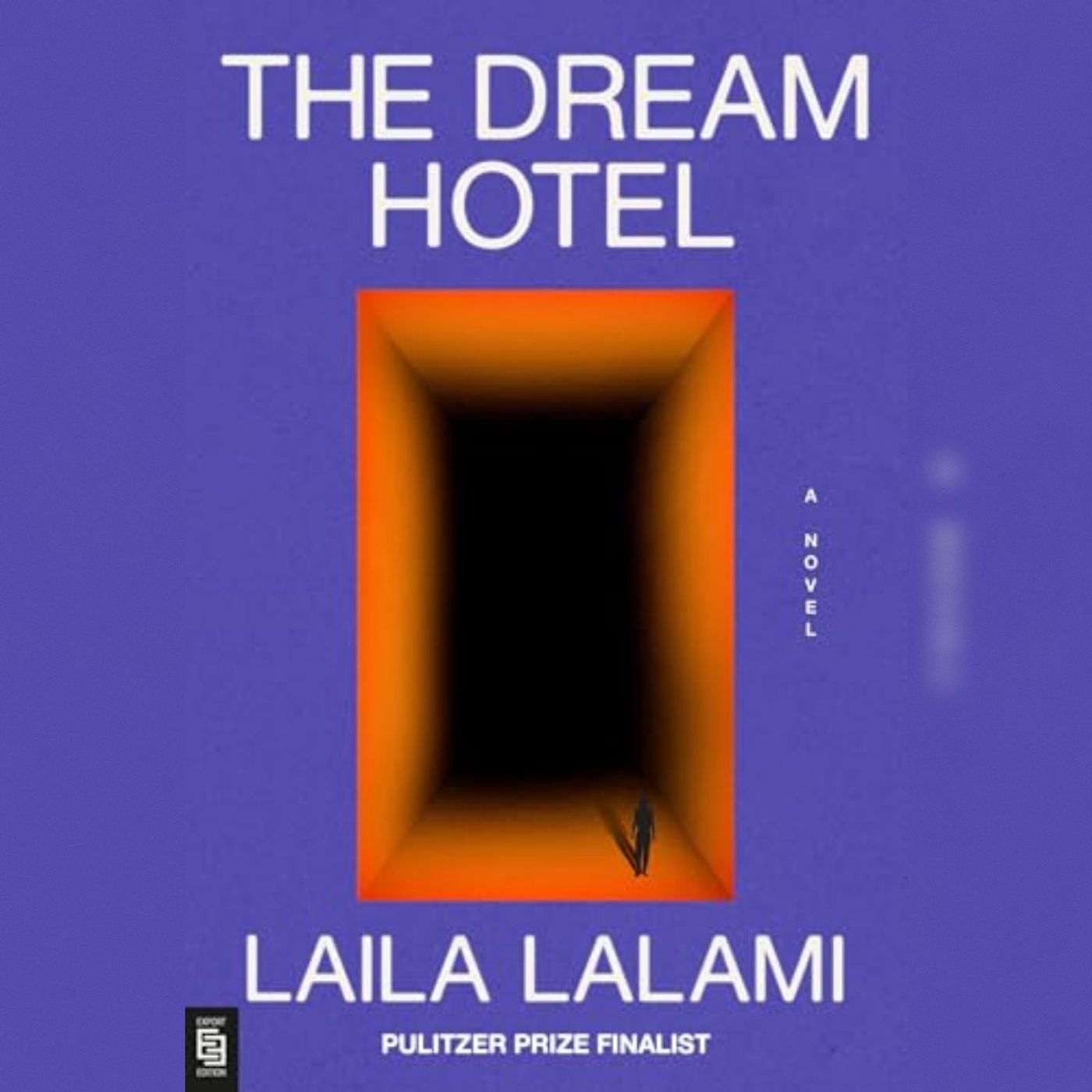
All Of It with Alison Stewart
Get Lit: Laila Lalami's 'The Dream Hotel,' and Imal Gnawa Performs
00:46:47
Loading summary
Transcript88 lines
- [00:00]
Progressive Insurance Announcer
WNYC Studios is brought to you by Progressive Insurance. Here's a helpful fact you might not know yet. Drivers who switch and save with Progressive save over $900 on average. Pop over to progressive.com, answer some questions and you'll get a quick quote with discounts that are easy to come by. In fact, 99% of their auto customers earn at least one discount. Visit progressive.com and see if you can enjoy a little cash back. Progressive Casualty Insurance Company and affiliates national average 12 month savings of $946 by new customers surveyed who saved with Progress Aggressive between June 2024 and May 2025. Potential savings will vary.
- [00:44]
Alison Stewart
This is all of it on wnyc. I'm Alison Stewart. Happy Friday on Fridays this summer we're learning more about American history in commemoration of the 250th birthday of the United States. Later, hear my full bio conversation about the abolitionist Senator Charles Sumner with biographer Zakir Tammies. His book is called Charles Conscience of a Nation. It's out now in paperback. But first we're going to get started with a former get lit with all of it book club selection. The Dream Hotel by Leila Lalamy. In the latest novel from author Leila Lalamy, a woman is held in a retention center all because of her dreams. Sarah is a new mom to twins. She's exhausted, so she signs up for a device that helps her feel more rested on a few hours of sleep. But she didn't read the fine print. Now an AI algorithm has analyzed her dreams and determined she's at risk of harming her husband. She stopped at an airport and sent to a retention center called Madison.
- [01:58]
Narrator/Host
The women in Madison are held there to prove that they won't commit crimes in the future. But as weeks stretch into months, Sarah and her fellow retainees begin to wonder if there's any way to show that they are innocent of crimes that haven't even happened yet. The novel is called the Dream Hotel. The book is now out in paperback. It was also a get lit with all of it Book club selection Author Leila Lalamy joined us in front of a sold out crowd at the Stavros Niarchos Foundation Library last year. Here's part of that conversation.
- [02:37]
Interviewer
I read that originally the protagonist was a man. Is that true? Yes. When did it change to a woman?
- [02:46]
Leila Lalamy
It changed after the first draft. What happened was I had written about this. I had created this world. I had sent this character into this kind of in between space that functions like a prison but is not really a Prison, because you haven't committed any crime. You're not actually being held. You're just being kept under observation for a period that seems to get extended with every minor infraction. And after I finished that initial draft, I sat back and I looked and I thought, okay, well this is interesting because obviously I'm taking the world of technological surveillance to its absurd limit. Like, what if it could penetrate the subconscious? But I'm not looking at surveillance with a broad enough lens. If I were to look at it with the, you know, like, what is the role that it plays in various systems of control, not just technological control, but other systems. And I thought, well, what am I thinking? One of the most basic forms of control that we have in our society is sort of like this gender based form of control, AKA the patriarchy. And that really kind of makes women feel constantly under surveillance. We're constantly like self disciplining things like our looks and our weights and our behaviors in society and how loud our voices are or how quiet or how we behave. Like we, we're constantly policing ourselves. And that's because we've internalized a lot of these behaviors that are expected of us. And so I thought, well, obviously I have to go back to square one and rewrite the whole thing as, you know, with a woman character. And so that's how it started.
- [04:36]
Interviewer
The book is set in the near future. And I made a joke because you refer to the aging playwright Lynn Nottage for the same age,
- [04:46]
Leila Lalamy
it's in the future, we're all aging. It's a lot of fun. Everyone's doing it. And she's going to continue producing plays in this future. I'm a big fan, that's why.
- [04:58]
Interviewer
About what year did you consider it to be?
- [05:01]
Leila Lalamy
Probably about 20 years into the future.
- [05:03]
Interviewer
Why did you pick 20 years? What was it about that period of time?
- [05:06]
Leila Lalamy
Yeah, that's a really great question. When I was thinking about writing this idea of like dream surveillance, I wasn't imagining that it would be in a future of flying cars or like inter galactic travel or something like that. I wanted it to be to read like horror, to read as it's like something that could actually happen to us. Twenty years into the future is just about far enough that none of us know what kind of technology will exist. The entire world that we now live in, all the phones that we have in our pockets, we've learned to live with them over the last 20 years. So it felt to me that, you know, picking a time that is about 20 years in the future would Give me the ability to create a world that felt extremely real and plausible and frightening and that it would actually be enough room to explore this world of surveillance to its limit.
- [06:02]
Interviewer
That's what was so scary about it. You know, I was thinking as I was walking over here, if someone had said to me 10 years ago, I'm going to slack you about a zoom. I've been. What are you talking about? Right. But how, how prevalent it is in our lives now.
- [06:15]
Leila Lalamy
Yeah. And I mean, I think if you even told somebody 20 years ago that we're going to live in a world where, you know, a bunch of corporations and potentially the government could have access to your location, to every single text that you write, to every picture that you take, to every email that you write, you'd be like, what is this sort of totalitarian system that you're talking about? But because it happened incrementally and because the information is kind of in different hands, in different companies hands, like we are not seeing the sort of broader danger there that it could very easily be integrated and fall into less than democratic hands.
- [06:57]
Interviewer
In the book, we're told that some of the technologies to prevent crime and you point to fatal shooting at a Super bowl. And it reminded me a little bit of the patriot act after 9, 11. What did you want to examine in the book about our concerns about crime?
- [07:17]
Leila Lalamy
I mean, I think part of the reason that I chose to do it this way is that I feel that one of the biggest indicators of what will happen in the future is what has happened in the past. The past is really only a collection of futures that did happen. And, and you know, human beings don't change. Right. We have the same instincts, the same emotions, generation after generation. So it seemed plausible to me that if we had, you know, like an event of the kind that I describe in the book, that we would go into this world of pre crime. And I'm already going off on a tangent and I forgot what your question was.
- [07:55]
Interviewer
You were answering it.
- [07:56]
Leila Lalamy
You were. Okay, okay, good. Okay, yeah. So, so that's, that's, that's kind of one of the ideas behind it is that it wouldn't take much for a government to then put forward a piece of legislation that would take us into pre crime territory. Everything is kind of already set for it. And in fact, pre crime is not something that happens in the future. It's something that is existing already. So policies like stop and frisk could very easily be considered. So policies of pre crime and we tolerate them. So why would we not tolerate something that would take us even further and deprive more people of their privacy for the sake of safety. That just seemed very plausible to me.
- [08:41]
Interviewer
What did Sara think about the Risk Assessment Administration? Before she's retained, what did she think about it?
- [08:49]
Leila Lalamy
Well, she thought, here's the thing. It's very hard to notice the electricity when it's on. When everything's working in your home, think, oh, how wonderful that I have electricity in my home. Right? But if one day you go without it, then you notice, you know, you can't, you know, use the. Run the laundry, and you can't. You know, everything is breaking. You can. Your food is rotting. And when you have failures of government, you see them only when they're, you know, when things stop working, that's when you notice it. So with the Risk Assessment Administration, I would say this isn't an agency that my character has given much thought to. It is an agency that is sort of just part of the world that she lives in, just as Homeland Security is part of the world that we live in. And it wasn't there 25 years ago. So it's just an agency that exists and is basically looking to prevent as much crime as possible and to keep people feeling safe in their homes. So she doesn't think about it. But then when she gets pulled aside and gets through this whole experience, then she realizes, wait a minute, you know, I'm innocent. You know, what is going on here? And it's really this sort of journey of exploration with the consequences of that administration.
- [10:08]
Interviewer
It's interesting, as I was typing up questions, every time I put in retention center, it changed it to detention center, and I had to go back and change it. I was like, oh, it's coming for me. The spell check is coming for me. Why did you choose to call them retention centers? And how often do people make that mistake and say to you, oh, your detention centers in your books?
- [10:30]
Leila Lalamy
Yeah, Well, I feel like, you know, as a writer, I feel like language is, like, one of the primary sites of our arguments about politics and our arguments about what is right and what is wrong. And one of the ways in which we are made to accept things that are unacceptable is by corrupting language. So, for example, to go back, since we just brought up the Patriot Act, I might as well go travel back to the early 2000s, when we had detainees in Guantanamo Bay and we were told that they were undergoing enhanced interrogation. And that just became the phrase that was used in the news media rather than using the accurate descriptor of torture. And there's this constant fight. You see it continually in the news. Like for example, when I was growing up, you heard constantly the occupied Palestinian territories was the phrase that the United nations used and that was used in news media. And then it became the west bank and Gaza, or now it's become the dispute disputed territories. So little, bit by bit we see that language gets changed and it changes our perception. And so it seemed to me in this future, if I was going to make this world of pre crime feel inevitable, it seemed to me that language had to be a part of it. And to get people to accept that people are being detained for no crime, that people are being detained because they might commit crimes, then even the language around it had to change. And instead of detention, it had to be something else. And I thought, okay, well retention is close enough and something that I could play with. And so that's what I said.
- [12:14]
Interviewer
So Sarah is retained at the airport. She stopped by these officers. It looks like she's going to get off. But she suggests to them that they have racially profiled her through her last name, Hussein. How does her Arab Americanness, American identity factor into this interaction at the airport?
- [12:37]
Leila Lalamy
Well, it's one of the inciting reasons for her to be pulled into retention. One of the things about technological surveillance that I think is really unique is that it is universal, almost or near universal. In order to function in our society today, you pretty much need to have a device of some kind, right? Like to ride the subway or everything to communicate with others. You need these devices. There is a sense in which technological surveillance is universal, but universal does not mean neutral. We, all of us, can be subject to technological surveillance. But the sort of discipline that comes from that surveillance and the control that follows from that discipline is something that is not applied equally to everybody. And some people, by virtue of their appearance, with the sort of signs that their bodies emit, are going to be more noticeable to law enforcement. If you're in an airport and your last name is Hussein, you are getting looked at a little bit more carefully. And I can attest to you that that happens to me on almost every trip. They look at you a little bit more carefully. And so it felt that, I think my character felt because she's in an airport, that that was something that played a role in her being asked all of these questions. And it was her refusal and her pointing out that sort of lack of neutrality that brought all this trouble upon her. It's because she dared to name that thing. She dared to say, you're pulling me aside you're putting me through this because of that and because she said that then sort of shifts the atmosphere and everything starts to go wrong.
- [14:31]
Interviewer
Dream saver. It sounds like an amazing thing. If you're the mother of twins, you sign up for it, it can help you get extra sleep. Sarah doesn't quite fully look at the terms and conditions of the. Of signing up for it. It seems like an okay deal. How did you decide dreams, like the unconscious mind, would be sort of the final frontier of privacy?
- [14:56]
Leila Lalamy
Well, it was because of personal experience. I was, you know, I'm an insomniac and, you know, I oftentimes don't fall asleep until the early hours of the morning. And one day about 10 years ago, I had overslept and I reached for my phone and I saw a notification that said if you. Because it reached for my phone to look at the time, and I saw a Google notification that said, if you leave right now, you will make it to the name of my Yoga Studio at 7:28. And of course, I had never told Google what day of the week or what time of day or even that I went to yoga. But of course, the company was following my movement and had learned that every Tuesday and every Thursday at the same time, I went to that location that it's mapping software, I said, was a yoga studio. And I was understandably disturbed, disturbed by this. And I turned to my husband and I said, you know, pretty soon the only privacy we're going to have is going to be in our dreams. It was kind of like as a joke. And then I thought, but wait a minute, you know, what if someday we continue developing technologies that collect. Because we already have technologies that are collecting data about our movements. Even the sort of your gait and how long each step is. We have, as I mentioned, text and emails and pictures, medical data, periods. You know, all of this data is being collected by these apps, you know, so why not imagine that that data collection might penetrate the world of the subconscious? I can tell you that scientists are already imagining, you know, you know, ways to study the subconscious. And. And they are seeing data from that. And, And I think that's, you know, there's nothing wrong with that. Human curiosity is a good thing, and scientific innovation is a wonderful thing. Even technological innovation is a wonderful thing. The question is, it's really a question about rights. Do you own your body and do you own the rights to all of the data that it emits? To my mind, the question is a very simple. It's a very simple. Yes, like this is my body and the data that it emits is, is mine. But the devices that we use. What's really happened is that these tech companies have laid claim to that data because of the fact that they're giving us that convenience and that connection. They have laid claim to that data and claim it as their own. And so that, that really is the question for me. It's not really about whether technology is good or bad that we have technology.
- [17:36]
Interviewer
It was interesting because Sarah becomes obsessed with this woman who's gone off the grid.
- [17:40]
Audience Member 1
Yes.
- [17:41]
Leila Lalamy
It is a fantasy that I have too. That's.
- [17:44]
Interviewer
Well, I was gonna ask you, how long did it take you to figure
- [17:47]
Alison Stewart
out how to get her off the grid?
- [17:49]
Interviewer
How many things did she have to give up?
- [17:51]
Leila Lalamy
I know so often I'm doom scrolling, you know, and during the writing of this book, I would be doom scrolling and I would be thinking, you know, how wonderful would it be to just be in a cabin, you know, and no technology and I can finally be free. And then of course, you know, I, you know, I know who the Unabomber is, and I know how well that turned out. So I, you know, I just have no illusions about that. But also, I think that, you know, survival is not something that can happen to an individual by themselves. Like, we are social species, right? We are meant to survive by helping one another and working in community. You know, no single person has all of the, the skills and the tools and the creativity and everything that is necessary to survive on their own. Even if they did, they're going to want companionship, right? So. So it's just, it's kind of, you know, but the fantasy remains, right? I still have that fantasy at the back of my mind because I get so tired of the technology. I get so, you know, frightened about where it might be going. That, that is a fantasy that I still like to entertain from time to time.
- [19:04]
Interviewer
I hope you write a book about that woman.
- [19:06]
Leila Lalamy
I hope that's the next one.
- [19:07]
Interviewer
Maybe over time you start to wonder, is Sara a reliable narrator? Is she in your book?
- [19:15]
Leila Lalamy
Yeah. No, I think that's a really, it's really perceptive, you know, perceptive observation. I think what happens when you are continually observed and you feel like you have like, no sort of room for freedom or to maintain any kind of privacy? You start to sort of like doubt yourself, like, did this really happen or did I imagine it? That is the effect of continual surveillance on people. And I think she starts to think like, did I actually do this or is this, is this happening? And so There is a certain kind of destabilizing effect on the narrative and you start to wonder, well, maybe she's not really telling me everything because according to the archival records in the book, there's other things about her that she's not revealing, like who do I trust? Do I trust this sort of subjective narrative that I've been given about her or do I trust this sort of objective data that has been collected about her that is presented in the form of these documents in the, the book? So it's really kind of challenging you to think about the nature of the self and how we form it and which one you should trust, whether it's the archive or the sort of subjective narrative of the person.
- [20:35]
Narrator/Host
You're listening to my conversation with author Leila Lalamy from our get lit with all of it book club event. We read her novel the Dream Hotel last year. We'll have more with Layla and hear some questions from our sold out crowd. And after a quick break, this is all of It.
- [21:03]
Alison Stewart
You're listening to all of it on wnyc. I'm Alison Stewart. Let's continue my conversation with author Leila Lalamy. Her novel the Dream Hotel was a Get lit with all of it book club selection. The book is now out in paperback. It's about a woman who's held in a retention center after an AI algorithm analyzes her dreams and determines she might be at risk of committing a crime. We had a sold out crowd at the Stavros Niarchos Foundation Library and as usual, our audience had some great questions for our author. You'll hear some of those in a minute. But first, here's more of my conversation with author Leila Lalamy,
- [21:46]
Interviewer
Who wants to work at Madison.
- [21:49]
Leila Lalamy
Well, people who need jobs. And it turns out, yeah, it's, it's quite a number of people, it turns out, right. So people do need jobs and they tell themselves that this is a, you know, and don't forget that this is set in a small town. Again, this is a place where, you know, the local school, you know, could be hiring teachers, could be educating students, could be hiring, you know, lunch matrons and all kinds of things. And instead, you know, it is this, this retention center and the jobs are, you know, attendants and nurse and, you know, all these other different jobs. So it's, it's really about this continual and just ever shift, ever increasing investment in punishment that we engage in as a country rather than in nurturing people and educating and taking care of them.
- [22:39]
Interviewer
Let's go to the audience for questions Hi.
- [22:44]
Leila Lalamy
This might be wishful thinking because I enjoyed the book so much, but I felt a little bit that the ending might be setting us up for a sequel. Do you have any plans on writing a sequel? You know, people have been asking me this a lot, and normally if the outcome of the presidential election had been a little bit different, I might have been tempted to write a SQL immediately. But now that we have a Department of Government Efficiency, where the person who's running it is quite busy trying to figure out a way to integrate various government databases into one, which, in the book, if you've read the book, there is an Omni cloud. So it's like this big database that has all this information and it just feels a little. Feels a little close. And so I. I don't know is the answer. I would really have to think, because if I were to write a sequel, it would really be concerned about what happens outside of this retention center. What happens to people who've chosen to opt out the 23rders and kind of like, what's happening in that world. But it's just a level of like, I don't know that I'm comfortable enough right now to venture there.
- [23:58]
Audience Member 2
Hello.
- [24:00]
Leila Lalamy
So how has the writing of this book affected your personal relationship with technology? And have you chosen to opt out of any services? It's a great question. It comes up all the time, like, tell us, what are you doing? Yeah, I mean, I still have an iPhone, is the short. The short version of the answer. But I do. I am kind of cutting as much as many of my connections as I can to unnecessary technology. I take the trouble. I know it's really annoying, but every time it gives me the, you know, the terms and conditions where, you know, just click agree. I always go through the several windows it takes to decline everything. I do this systematically. I use VPN when I can. I try not to use things that I don't like. If. If you need an app for something and there is another way to do the thing, I will go do the other way. But if. But if there is an app and there is no other way, then I delete it immediately after I've used it. So I try to do things like that. But going forward, one of my dreams, once I'm done with promoting this book, is to kind of quit social media altogether. So start there. Because I just think that the information environment has gotten really. Not just toxic, but dangerous. So that's one of the places where I think I could easily. I could easily cut. And also because I read the actual news. I actually subscribe to newspapers and read the actual news, so I don't need some rando telling me me what they're thinking about it.
- [25:29]
Audience Member 1
Thank you so much. I really enjoy the narrative tension in the book. You know, it kind of kept me in the edge of the seat. So I was wondering, like, if you knew how it was going to end and. Or if it kind of came to you because it kept me guessing, you know, and in the feeling of punishment.
- [25:51]
Leila Lalamy
Yeah, yeah, yeah. I mean, when I started and I realized that my character was stuck there, I was writing and I kept thinking, I've put myself in a corner and I have to figure out a way out of it. Right. I knew that it had to end one of two ways. Either she is. You know, I'm afraid to say something without spoiling the book, but for those who may not have read it, but basically, I knew that she had to find a way out or else she was going to actually have to commit the thing that they said she was committing. So it was one of those two things.
- [26:31]
Audience Member 2
Thank you. I was just talking the other day with a friend of mine just about how back in the day we had rotary phones, and when people walked around with the big old box, those were actually cell phones or they were more in the car. But I'm just wondering, just. I haven't read your book, but I was just wondering about the part of, like, what if dreams become taken over because the reality of it is artificial intelligence is here. Right. Or it's been here and it's been marketed. And, you know, as much as you would think it, that quitting social media might be the best thing for people, but as an author, how do you get your book out there if you quit social media overall?
- [27:12]
Leila Lalamy
Yeah. No.
- [27:12]
Audience Member 2
So I'm just wondering if maybe, like, what. What would that world look like? Right. Because movies depict that sometimes when dreams are taken over as well, and then we just become part of the matrix, which we're in right now.
- [27:28]
Leila Lalamy
No, I think that's. That's true. And. And thank you for pointing that out. Like, I have the luxury of saying I can quit social media for now. I mean, you know, probably will have to be suckered back in for the next book. But I think that this really just highlights how the book is really about systems of surveillance. It's not just about one person going through this journey. Yes. The novel focuses on the one character because you're the reader and you're attaching yourself to this character whose journey you are following across 350 pages. But it really is looking at this system of surveillance in toto, and the response cannot, you know, be purely individual. There is some amount of individual power which you're free to each exercise in the best way that you can. Like you can choose to. That to. To delete certain apps from your film. Like, if you don't need it, why use it? You know, if you don't need social media, why not? Why use it? And then there is collective power, right? Like there's, there's, you know, things that we can come together and do together as a group. And, you know, obviously it's. I mean, it seems to me that what we really need is a digital bill of rights that makes it, you know, very clear that the data that our bodies emit belong to us. And so this is, this is the future. We're going to have to fight for this in the same way that we had to fight to have control over our reproductive systems. And I know that we're still fighting that fight, and it's not over. And things sometimes can seem, you know, one step forward and two steps back, but this is going to continue to happen. And this is going to be one of those things that we have to fight for is our sort of, you know, digital freedom.
- [29:11]
Interviewer
People in Sarah's life keep telling her, keep your head down, you'll get out of there, be agreeable, just do what they say. And she doesn't seem able to do it. Why not?
- [29:22]
Leila Lalamy
Because she comes from a long line of difficult women. I think you see from the moment that you meet this character and she's having that device checked, just that little instinct of not bending her head and not wanting to make it easier on the guy to check the device. That is what attracts me to her as a character. It's that refusal. It's that desire to say no, even if it's a small thing. That refusal to cede what little amount of pain power she has. That's what ties me to her as a character. And that's what makes me excited about reading about her and writing her and following her.
- [30:05]
Alison Stewart
That was my conversation with author Leila Lalamy from our April get lit with all of it book club event. Up next, a special live performance from the local band Imal Ganawa, which blends traditional and modern Moroccan music. You are listening to all of it on wnyc. I'm Alison Stewart. Imal Ganawa is a local band that blends traditional Moroccan Ganawa music with modern technology and futurist ideas. They released their debut ep Last year called Twilight Prophecy, the band joined us for our get lit with all of it book club event with author Leila Lalamy, who requested a contemporary Moroccan artist for the evening. You'll hear some of my conversation with the band's frontman, Atlas Phoenix in a minute. But first, here's a live performance from Imal Ganawa.
- [31:03]
Atlas Phoenix
Thank you guys. We're going to share with you some Gnawa vibes. So Gnawa is basically like ancient psychiatry. Before the modern psychiatry. People would gather up and they play these trance rhythms. But the way we do it is we're adding sci fi elements, including synthesizers. And that's going to be led by Andrew, Andrew Fox. Please give it up to Andrew. And a drum machine. That's Elon Elkaim and we're doing the traditional part. Mustafa on carcaba and vocals. And me un Gimbri. So Gimbari is this great grandmother of bass. And I'll let you guys listen to it. And we're going to perform Mimouna. We're going to perform two songs. So the first one is Mimouna. So in Morocco, this tradition is shared by many communities, including Jewish community. So Mimouna is a Jewish female Moroccan, Jewish female saint and. And also a holiday Jewish Holy.
- [37:05]
State Farm Announcer
Beautiful,
- [37:09]
Leila Lalamy
beautiful, beautiful, beautiful.
- [37:37]
Atlas Phoenix
That's.
- [38:27]
Interviewer
Atlas. Can I ask you a couple of questions before we hear your next song?
- [38:31]
Atlas Phoenix
Sure, yeah.
- [38:32]
Interviewer
First of all, what is the name? You said it's the grandfather of the bass. What is that called again?
- [38:37]
Atlas Phoenix
Or maybe grandmother, Grandmother, grandparents.
- [38:41]
Interviewer
What's it called again?
- [38:42]
Atlas Phoenix
Gimbri. Yeah, but you can also call it Haj Sentir. It's where bass, bass guitar evolved from. Yeah, it's migrated from sub Saharan Africa to Morocco and it evolved in Morocco.
- [39:01]
Interviewer
Before you send over some of the music you were going to play for us tonight, you described it as having colors. Some of one piece was blue, another was black, another was green. First of all, what did we just hear?
- [39:13]
Atlas Phoenix
Blue.
- [39:13]
Interviewer
Black. Green.
- [39:14]
Atlas Phoenix
This is blue.
- [39:14]
Interviewer
This is blue. What does blue mean?
- [39:16]
Atlas Phoenix
Actually, this is black.
- [39:17]
Leila Lalamy
This is black.
- [39:18]
Interviewer
Okay, what does black mean?
- [39:20]
Atlas Phoenix
So Genoa music goes by spirits and colors. Like, goes by colors. And each color has a collection, is a collection of songs. And those songs, they represent ancient spirits. Like, you know, maybe they were gods and goddesses back in the day. Because this is one 1000 year tradition. It was passed down orally. So but they evolved, you know, like Mimouna, for example, like, is an evolution itself of this spirit, you know, so like these spirits, like each color represents a bunch of spirits. And what is it's like a courtyard. You know, people, they think they're possessed. That's how they interpreted their illnesses. And Gnawa is there to basically like, like a judge, like basically like mediating between the. The. Through trends, of course between the, the dancer and. And, and, and, and. And spirits basically.
- [40:23]
Interviewer
So you have this beautiful traditional music and then the guys back there on the electronics. How do you think about balancing the tradition and the technology? Because that's what a lot of what the book was about.
- [40:36]
Atlas Phoenix
I think everything is connected and it's just about like what fits. So we studied it and we met and then we made this and we produced the first album and we have, we have two more but different, different experiences because the first one was just like solo with synthesizers, but the second one was with a group of vocalists. And the third one, we did it with a visitor, Malem, he was visiting and we made that album. We're gonna release it soon, hopefully.
- [41:11]
Interviewer
So what are your plans for the future of the band?
- [41:14]
Atlas Phoenix
You know, we, you know, just to play music and enjoy music. You know, enjoy music and experiment with it and you know, we heal ourselves first and then anybody that vibrates with the, with the, with this vibe like can also get the benefit.
- [41:32]
Interviewer
What's the next song we're going to hear?
- [41:34]
Atlas Phoenix
This one is we're gonna switch back to Muslim marabouts and we're gonna, we're gonna. We have a song called. So Giles or Giuliani is known in Arabic literature as Giuliani. He's like not Al Halaj but is similar to Halaj is this bohemian spiritual marabout migrated from modern day Iraq, Baghdad to North Africa and established like a Sufi, a Muslim Sufi sect if you want. And that's it. And Moroccans, they sing songs about him including Genoa. So that's what we're going to hear right now.
- [42:21]
Interviewer
Here's Imal Genoa.
- [42:22]
Atlas Phoenix
Thank you, Sam.
- [43:05]
Audience Member 1
Sa.
- [44:04]
Interviewer
La.
- [44:36]
Atlas Phoenix
Sa.
- [46:08]
Audience Member 2
Allah.
- [46:58]
Atlas Phoenix
Thank you guys. Thank you.
- [47:05]
Alison Stewart
That was a live performance from the band Imaginawa from our get lit with all of it book club event with author Leila Lalamy.
- [47:16]
Narrator/Host
Because it's Friday, here's another installment of our poetry series with Nick Offerman. A wonder is what it is.
- [47:25]
State Farm Announcer
Having the right people in your corner for life's biggest milestones makes all the difference. Like a friend who's there when you're house hunting or checking on a new ride, State Farm is there to two helping you choose the coverage you need with a State Farm agent. You know someone is there to help you along the way and with so many coverage options, it's nice knowing you have help choosing a plan that fits your needs so you can continue celebrating all of life's milestones. Head to statefarm.com to get a quote like a good neighbor. State Farm is there.