Loading summary
Transcript39 lines
- [00:00]
Sponsor/Announcer
WNYC Studios is supported by Wise Wise. The smart way to manage the currencies you need around the world. With a Wise account, you can send, spend and receive in up to 40 currencies with only a few simple taps. Be smart, Get Wise. Download the Wise app today. Terms and conditions apply. WNYC Studios is supported by Odoo. When you buy business software from lots of vendors, the costs add up and it gets complicated and confusing. Odoo solves this. It's a single company that sells a suite of enterprise apps that handles everything from accounting to inventory to sales. Odoo is all connected on a single platform in a simple and affordable way. You can save money without missing out on the features you need. Check out Odoo at o d o o.com that's o d o o dot com.
- [00:55]
Alison Stewart
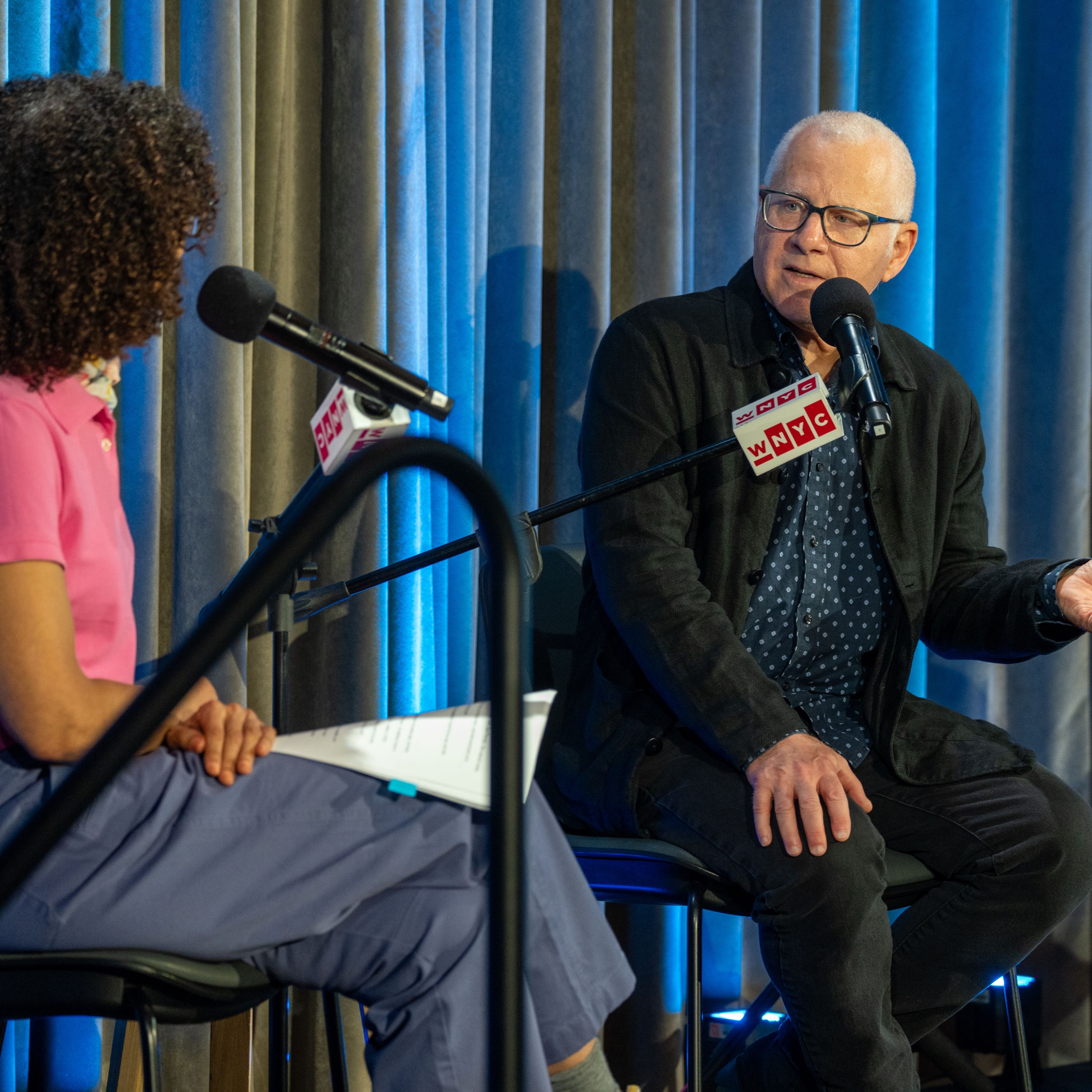
You are listening to all of it on wnyc. I'm Al Steward. Author Tom Parada has written about mysterious raptures in the Leftovers, a hard fought battle for class president in election, and about a single mom's sexual awakening in Mrs. Fletcher. Now in his latest novel, he has written about grief and ghosts. The novel is titled Ghost Town. The story follows Jimmy Perini, an eighth grader growing up in Creamwood, New Jersey in the 1970s. When Jimmy's mom dies suddenly at the start of a summer, he feels lost in his grief and left adrift. His dad is working extra shifts, his sister is gone most nights with friends. Left on his own during the summer, Jimmy makes two new older friends. There's Eddie, a lonely stoner who drives Jimmy around in his car while they smoke weed. And then there's Olivia, the high school valedictorian. She suffered a loss of her own and has used a Ouija board to contact her loved one. Now she wants Jimmy to do the same. As Jimmy has exposed these new experiences, he's also noticing change in all white Creamwood, N.J. change that white residents might not be too happy about. Ghost Town was our May get lit with all that book club selection. Tom Parotta joined us for a sold out event in the Stavros Niarchos Foundation Library. I began my conversation by asking Tom what was the first seed of the idea that became this novel.
- [02:21]
Tom Perrotta
You know, I was during the pandemic. My mom, who was in her late 80s, was starting to have some health problems and I started to go back quite a bit. I live in Boston, so I would drive home to New Jersey and go and spend a week with her every month. And I was sleeping in my childhood Bedroom in the house that I lived in since I was, you know, eight or nine years old. And, you know, the presence of the past was just swarming around me. And it was both the memories in that house and the sense of the presence of the town overlaid on its past. You know, just all those ghosts that were, you know, lurking in the. In the shadows if I walked around at night. So I. It made me start to think about a ghost story. And then somewhere along the way, somebody mentioned, you know, using Ouija boards as a teenager in the 70s. And I remember I did it once, and. And it really spooked me, and I. Somehow or other, this idea of a. A ghost story that was about the whole variety, the whole plethora of all the ghosts that are around, which are good memories, bad memories, people you missed, people you wish you could have missed.
- [03:53]
Alison Stewart
You dedicate your book to your mom, Sue Parotta. Could you tell me a good Sue Parada story? One that would help us understand her a little better?
- [04:03]
Tom Perrotta
Well, you know, what I mean, can tell you about my mom is that she really wanted to be a teacher. And she grew up in an immigrant family in Jersey City. And she's very happily told us all her life. She had perfect attendance in school, never missed a day, and she was a really great student. But she took the secretarial track and, you know, ended up going to work right after high school. And I think just that was the great regret of her life. And. And so when she did have kids, you know, she was adamant, like, my kids are going to college, and my kids are, you know, gonna be readers. And. And, you know, I could see it again when my own kids were born. And my mother, you know, just. Just. She just loved talking to them. She loved telling them things about the world. She loved, you know, giving them space to kind of show her what they could do. And that made me think, oh, that was. That must have been my. My childhood.
- [05:15]
Alison Stewart
Jimmy is 13 years old in this book. Why did you make him 13?
- [05:20]
Tom Perrotta
Well, I. To me, that is the age where we start to become ourselves. You know, like a Freudian might say. Okay, in the first three years of life, things happen to you, and you are formed. It's almost like you don't really get to choose who you are. It's kind of a depressing idea in that sense. You're really trapped by what your parents do or don't do to you. But that wasn't how I experienced growing up. I remember feeling somehow like. Especially I remember the night before I started High school, you know, just, you know, sweating in my bed, just thinking, like, can I? Can I do it? Am I going to survive high school? Like, it seemed like, you know, an open question, but I, you know, and I was sort of strategizing like, how am I going to make people like me? And, you know, and at that point I was really defined myself as an athlete. And then, you know, I didn't grow. But I also started, you know, listening to rock and roll in a serious way. And, you know, just, you know, I remember feeling like that I was this person in progress and I had choices to make and I remember making them, you know. And to me, adolescence is at least, you know, a time where there's an illusion of agency and choosing. And it's one of those, you know, we make ourselves. And, you know, fiction loves a character who's in process, who's becoming something. I think, you know, Jimmy becomes. Jimmy's a victim of circumstance rather than choosing, though, I think to some degree. But there's some element of. Well, I guess I'll leave that to readers.
- [07:15]
Alison Stewart
We meet Jimmy as an adult. He's now Jay Perry, a successful writer. What do you see as the differences between Jimmy and Jay?
- [07:27]
Tom Perrotta
I think that Jay can't really understand how Jimmy turned into him. And part of the book is to explain how that happened. Part of it is he belongs to an entirely different social class. Right. He grew up in a very working class world and things happened that led him to leap into a different class, which normally we would consider like, oh, that's the American dream. But I think because of the circumstances that he describes in the book, it's something he's ambivalent about. It's also something that is bewildering to him. And I think part of the project of Ghost Town is him convincing himself that he's had one life, that Jimmy is Jay and Jay is Jimmy. But weirdly, to do that, he has to kind of see Jimmy from the outside. And I think the book kind of works on this interplay between Jay speaking in first person and telling a third person story about this boy who is him, but who he's seeing from the outside and I think coming to have a real sense of compassion for.
- [09:06]
Alison Stewart
The book also takes place mostly during the course of one summer. Why did you want to set the book in summertime? What is sort of transformational about summertime?
- [09:17]
Tom Perrotta
Well, you know, part of it is summer itself, but part of it is the 1970s summer. Because I think Jimmy is sort of school ends, his father and his Sister go to work, and he's just home. He's just cut loose, in a sense, and he's just drifting through this familiar world that he feels alienated from because he's grieving for his mom and he's just lost, really. And I think there is just something about that sense of being adrift and being unsupervised and being vulnerable that leaves him so open to a variety of experiences that are dangerous, that are exciting, that are deeply confusing. But nobody's looking out for him. And I think during the school year, obviously there's a structure and there are adults around, but in the summer, in those days, I think he's on his own.
- [10:30]
Alison Stewart
There is a moment in the book where a priest takes him to the beach for a good day. And when you're reading along, you're like,
- [10:38]
Tom Perrotta
oh, no, it's a priest. Take him to the beach.
- [10:41]
Alison Stewart
But it turns out fine.
- [10:43]
Tom Perrotta
Yeah, it's my version of a horror jump scare.
- [10:48]
Alison Stewart
Really? Why did you put it in for that reason?
- [10:50]
Tom Perrotta
Well, I did. I did. I wanted there to be a kind of. You know, there's a lot of foreboding in the narrative, you know, that bad things happen to Jimmy. And you're watching, you know, a summer where it's not really bad things that are happening, weird things are happening. And I think you're maybe starting to feel a sense of dread, of, like, well, I've been told that something bad is coming. And then this priest shows up and says, you know, I'll take Jimmy to the beach. And I think, you know, again, in the 70s, if that happened, I think Jimmy might say, well, that's weird. I don't really want to go to the beach with a priest. But I don't think he'd think what we think now. And so, yes, I think it was. And that relates to what I was saying before about the past looking different depending upon where you stand in the present and what you know. So an event like that, which might have seemed odd or charming or. It is a good day, but as we read it, we keep thinking, oh, when is this day gonna go wrong? And it almost does, it seems, but it doesn't.
- [12:06]
Alison Stewart
How did you know you were gonna tackle race in this book?
- [12:12]
Tom Perrotta
Well, that was kind of at the heart of the story because, you know, I grew up in a town that was all white and, you know, very close to New York, and there were a bunch of towns like that in that part of New Jersey. Yeah, I'm sure you are. And, you know, for so many years, it was just kind of a fact. But it changed in the late 80s, early 90s, and especially say, during the Clinton and Obama administrations. I'd look back and say, well, this is the world I grew up in. And we fixed that. There was just this sense of. That was a definite marker of positive social change. But then right around the time that I was going back to my mom's, during the pandemic, of course, this was the Trump administration and there were Trump signs and there was just, to me, this sense of, oh, God, there are people who are nostalgic for what I considered, you know, the bad past, the toxic past. And, you know, that was just another ghost. Another, like something that you thought was gone was starting to come back. And it's really important, you know, because when I say I'm writing a ghost ghost story and it's about a variety of ghosts, that's one of them.
- [13:47]
Alison Stewart
Jimmy doesn't fully realize that his mom is dying. He's kind of been shielded from the worst of it. And he doesn't get a chance to say goodbye. He's at his little league game. How does shock factor into how Jimmy's grieving?
- [14:02]
Tom Perrotta
Yes, I think that's really at the heart of Jimmy's dilemma, which is that he didn't. I mean, I don't know how a 13 year old prepares themselves in any way, but I think Jimmy's mother said to him, I'm not going anywhere. And I think, you know, I think she must have believed it and wanted to believe it. It's easy to understand how that would happen. But when she does die, he says it was my sister remembers it as a long, drawn out process and that when she finally left, it was a blessing because she was in so much pain. But to Jimmy, it came like a sucker punch from the blue sky, you know, because he, he was in denial, perhaps, or was protected to the point where he really didn't know. But what happens is that something is severed, right? This connection between him and his mother is severed. And he spends the whole book trying to reconstruct that connection. And the Ouija board is part of that. And his mother appears to him a couple times in the book or he thinks he hears her, which I think is, you know, that makes a lot of sense. Just you don't have to believe that she's there to believe that, you know, people appear to us as living memories. And, you know, I think the whole book is just wanting to see her again and wanting to hear her again. And, you know, that's the. That's his quest.
- [15:46]
Alison Stewart
Yeah. So he makes friends with Olivia, and Olivia has a Ouija board. Who out here has a. Had a Ouija board? When you were a kid, Right. Were you scared of it? Yes. Why are Ouija boards scary, Tom?
- [16:00]
Tom Perrotta
Because something happens when you touch them. Right? I mean. I mean, that thing moves. And spirits speak to us.
- [16:12]
Alison Stewart
Are you a person who believes in spirits?
- [16:16]
Tom Perrotta
Well, I believe that we don't want to be separated from people we love. And so we. You know, I think there's a great urge to believe in spirits, and I have that urge. I also know that when I played with the Ouija board, I walked home in a state of pure terror because I had this sense that these consciousnesses were floating around behind every tree, and not all of them meant well.
- [17:00]
Alison Stewart
We meet Eddie, his friend. He seems like a classic stoner. We used to have the stoner pad in our high school, the stoner patio. What does he see in Eddie that he relates to?
- [17:13]
Tom Perrotta
Well, that is a good question, because other kids think Eddie is a creep. Eddie is that older teenager who has a car but doesn't have friends his own age and likes to pick up younger kids and kind of show off and get them high. And he's often just trying to pick up every girl he sees. I think what Jimmy sees in him is. Well, let me just put it this way. Jimmy can't connect with his normal friends, the friends his own age who are out having fun, because he's in a dark place and he doesn't think what they're doing is funny. The girl that he likes has left him for a guy who Jimmy had thought of as his best friend. He just. He's really cut off from the social world that he considers like his normal life. And there's some darkness with Eddie that I think he connects to, but there's also something mystical about it because he walks out of a funeral home. His mother. He thinks his mother tells him, you don't have to be here. Go out and get some fresh air. And he's out there, and he doesn't know what to do. And Eddie shows up and says, get in the car. And he seems to him, in this kind of irrational, magical thinking that you have at a time like that, that his mother sent him, that Eddie becomes a kind of emissary. And he does feel better in that car. He says later, looking back, I was mostly high in that car, and that helped. But I think there's just a sense that Eddie accepts his darkness and kind of shares it, even though he doesn't really know much about Eddie. There's a sense that they're, you know, vibrating on the same dark wavelength.
- [19:19]
Alison Stewart
You're listening to my conversation with author Tom Parada. His novel Ghost Town was our May Get Lit with all of it book club selection. We'll have more with Tom Parada after a quick break. This is all of It. You're listening to all of it on wnyc. I'm Alison Stewart. Let's continue my conversation with author Tom Parotta from our May Get Lit with all of it book club event. We spent the month reading his novel Ghost Town. The event was sold out, and as usual, our audience had some great questions for our authority. But first, here's more of my conversation with Tom Parada. I'll just ask it plain out. Do you think Eddie and Leonard had some were responsible for the tragedy at the end of the book?
- [20:18]
Tom Perrotta
I think that Jay thinks so. I think so. I think that that part of this book is about somebody finally telling his story right, because, well, I don't want to spoil anything, but I do think there was a kind of traumatic amnesia around it. And there's been now Jay has, in a sustained way told the story that, that he's been avoiding for, for his whole life. And I think one of the conclusions is that he actually, the story, the official story, is wrong and that he knows the real story.
- [21:09]
Alison Stewart
Let's go to the audience for some questions.
- [21:12]
Tom Perrotta
Hello. I'm a fellow. I went to Syracuse, so I'm kind of interested in the legacy of the writing program there. And I know you studied under Tobias Wolf. I wonder if you could talk a little bit about the influence that he had on you. Yeah. So there's a lot of Syracuse people here tonight, by the way. So when I was in college, I read Raymond Carver for the first time. And it was a real shock to my system. You know, I had been, I was at Yale and I was reading a lot of, you know, reading Joyce or, you know, whatever and, you know, loving it. But then it was like here was this working class American voice, and it was, you know, in some ways, like Stephen King, this language that felt like it was just emerging from the American consciousness and almost not literary, but on some other hand, like very sophisticated. And I just, it became, he became my favorite writer. And I found out that he was teaching at Syracuse, and I said, well, I want to go study with that guy. And what happened was the year I got in, Carver had a fellowship and he took the year off. And then while he took the year off he did become ill with the cancer that killed him. So he came back and I saw him a few times, but I never took a class with him. And the other teacher was. Well, there are two other teachers. Doug Unger, who's a wonderful writer, but also Tobias Wolf, who I had not heard of, but who became like a real touchstone for me. There's something about his voice which is both very funny and very serious at the same time. That, that just struck me as a, you know, a model, basically. I mean, you know, I. And that. That's a wonderful thing to have a teacher who you feel like is actually opening up some space for you. So, yeah, I had a. I had a. A really mind expanding time at Syracuse. Hi. In response to one of Alison's questions, you said, I think that Jay thinks. And it was just interesting to me as the author, if you had, I don't know, an uncertain sense of your character's thoughts or if you felt you had. Didn't have full control or agency over his thinking. Well, actually, I think it's more. I don't like the idea that I get to dictate as me separate from the narrator of the story. What I think it's that intentional fallacy that they talk about in college where it doesn't matter what the writer thinks the book says, it matters what the reader thinks the book says. And so I would prefer not to pronounce a verdict on the work because I feel like it might shut off some people's experiences or make them doubt their own. Their own interpretations. And I. So that was just me being. Not wanting to be the arbiter.
- [25:04]
Sponsor/Announcer
Hi, thank you for doing this. Can you talk a little bit about the female characters in the book, specifically Olivia and Denise, the sister.
- [25:14]
Tom Perrotta
Yeah, so Denise and Olivia. Denise is Jimmy's sister and she and Olivia are in the same class, but Olivia is actually two years younger. She skipped a couple grades, as people did sometimes back then, and she's like a 16 year old valedictorian. And I think she, like Eddie, is somebody who is acquainted with a certain kind of darkness and feels a little bit alienated from, you know, the quote, unquote, normal kids. And I think, you know, one of the things that one of the motifs in the book is that, you know, wounded people kind of recognize each other, that there's a kind of a, you know, little society of people who have had experiences that kind of keep them a little bit cut off from. From the mainstream. Olivia. And you know, Jimmy's dad is having some issues with alcohol. Olivia's mom is an alcoholic. Olivia lost her father and brother in a car accident. And she introduces Jimmy to the Ouija board because she is trying to contact her father. And so Jimmy thinks, oh, we're doing this to contact my mother. But I think Olivia just needed a partner in her quest to reconnect with her dad. And, you know, Olivia becomes. I've used this phrase before, for lack of a better word, a kind of sexual mentor to Jimmy. And I think, in a way, like with the priest, I think we look back from the standpoint of today with a more judgmental view than maybe people would have in the mid-70s to. I mean, she's two years older than him, and she's kind of introducing him to some sexual experiences that he may or may not be ready for. And, you know, that is. That's up to. You know, I think up to the reader to try and make sense of what Olivia's up to and whether she's manipulative or helpful or some mixture of both. Denise, Jimmy's sister, kept living the life that Jimmy was meant to lead. She stayed in the hometown and married her high school boyfriend. And her politics are very different from Jay Perry's. Jay's a, you know, a wealthy, successful writer who's, you know, created a TV show in Hollywood. And Denise is back home in the Creamwood area, you know, working as an administrator in a dentist's office. She is. She and her husband went MAGA right from the start. And, you know, Jay and Denise are trying as best they can to figure out how they can be connected across this political divide that does, you know, separate people from their own families. But I think, you know, there is. Denise didn't go to college. Denise stayed home. Those are two things, I think, that are correlated with, you know, MAGA supporters.
- [29:01]
Alison Stewart
This book spoke to me so strongly growing up in New Jersey in the 70s around Jimmy and Olivia's age. I know the same happened for you. What elements of your own childhood in Jersey did you want to make sure were included in this book?
- [29:21]
Tom Perrotta
Well, you know, this idea that, you know, just driving around, I mean, this is funny, right? It connects to, like, even American Graffiti. It connects to the 50s. It was this. I think it's just a part of our weird culture that just kind of went away. Like, I don't think my kids ever just left the house and wandered around hoping that somebody would pull up and say, get in the car. It's true, right? Idea of a really good night when somebody pulled up and said, get in the car and, and like sitting in a car and, and listening to music. Like, those were some of the most, you know, profound experiences. I mean, I also, you know, sadly, I mean, I had friends who would drive around with a case of beer. You know, I mean, there were a lot of stupid things that, that, that we did, but I mean, that was one of them. You know, this idea of, you know, where I talked about the summer with nothing to do. Right. Again, my kids were raised, you know, they all. We always knew what camp they were going to be in and what sports they were playing. But for the most part, you know, we were, you know, go out and play. And the place to go and play was this, you know, town recreation program where they had some, you know, old battered knock hockey and a ping pong table with a wilted net. And, you know, it'd be home before
- [30:55]
Alison Stewart
the lights went on. Right before the street lights went on. Music's mentioned in your novel, Jethro Tull, Van Morrison. We're about to get to the musical portion of our evening. What does music mean to you? Is it involved in your writing at all?
- [31:12]
Tom Perrotta
Well, it's not involved. In fact, I can't write if music is playing. But I write a lot about music and, you know, I think it's something that I think we don't give a lot of credit to, which is just, you know, we live immersed in music in a way that I don't think humans have in the past. I mean, I think music used to be a special thing that would happen at certain times. Right. But with me, like, if I'm, if I can be listening to music, I'll be listening to music. Writing is separate. That's a quiet thing. But if I'm in the car, I'm listening to music. If I'm cooking dinner, I'm listening to music. And I think it does color our experiences in ways that maybe we're not always aware of. And I'm just sometimes amazed and embarrassed by how many songs are in my head. Like, I know the lyrics to a lot of songs. I'm sure there are people here who know the lyrics to more songs than me, but not too many.
- [32:24]
Alison Stewart
That was my conversation with author Tom Parada. His new novel Ghost Town was our May get lit with all of it book club selection. Up next, a special live performance from our May get lit musical guests. They might be giants. Stay with us.
- [32:54]
Tom Perrotta
Are you looking for the best deal on a new home? Discover the Dr. Horton home of the week. With new construction homes now selling in ellensburg from the mid-3002. Dr. Horton has the right home at the best value for you, offering one and two story homes near Central Washington University. Your new home is within reach. So what are you waiting for? Learn more about the Dr. Horton Home of the Week, visit drhorton.com and schedule a tour today. Dr. Horton, America's builder and equal Housing Opportunity Builder. All new drinks are now at McDonald's, like the strawberry Watermelon Refresher and the Sprite Berry Blast topped with cold foam. Who knew ice cold drinks could be so fire? Try them all now at McDonald's. Refreshers contain caffeine.