Loading summary
Transcript90 lines
- [00:00]
A
WNYC Studios is brought to you by Progressive Insurance. Insurance isn't One size fits all. That's why drivers have enjoyed Progressive's Name your Price Tool for years now. With the Name youe Price Tool, you tell them what you want to pay and they'll show you options that fit your budget. So whether you're picking out your first policy or just looking for something that works better for you and your family, they make it easy to see your options. Visit progressive.com, find a rate that works for you with the Name youe Price Tool, Progressive Casualty Insurance Company and affiliates Price and Coverage Match limited by state law. All of it is supported by Memorial Sloan Kettering Cancer Center. In a small, groundbreaking clinical trial, 100% of participants with a specific type of rectal cancer saw their tumors disappear using immunotherapy alone. Researchers at MSK are now studying this approach in cancers of the stomach, liver and more, and a majority of tumors are disappearing. For MSK Giving Day, all gifts will be tripled. Learn more@msk.org all of it.
- [01:08]
B
This is all of It. I'm Alison Stewart live from the WNYC studios in soho. Thank you for spending part of your day with the Day with me. We're really grateful that you're here and happy Bastille Day. On today's show, we're talking about documentaries
- [01:21]
C
you can stream at home.
- [01:22]
B
One follows a woman who has been
- [01:24]
C
hired to help in An Affair and An Affair.
- [01:26]
B
Another profile is the career of Pulitzer
- [01:28]
C
Prize winning investigative journalist seymour Hersh. And one follows the life of scholar and activist W.E.B. du Bois. Plus, Jane Wickline and Leva Pierce join
- [01:37]
B
us in studio to talk about their
- [01:39]
C
new Off Broadway show, Dukes. And maybe they will play and sing
- [01:43]
B
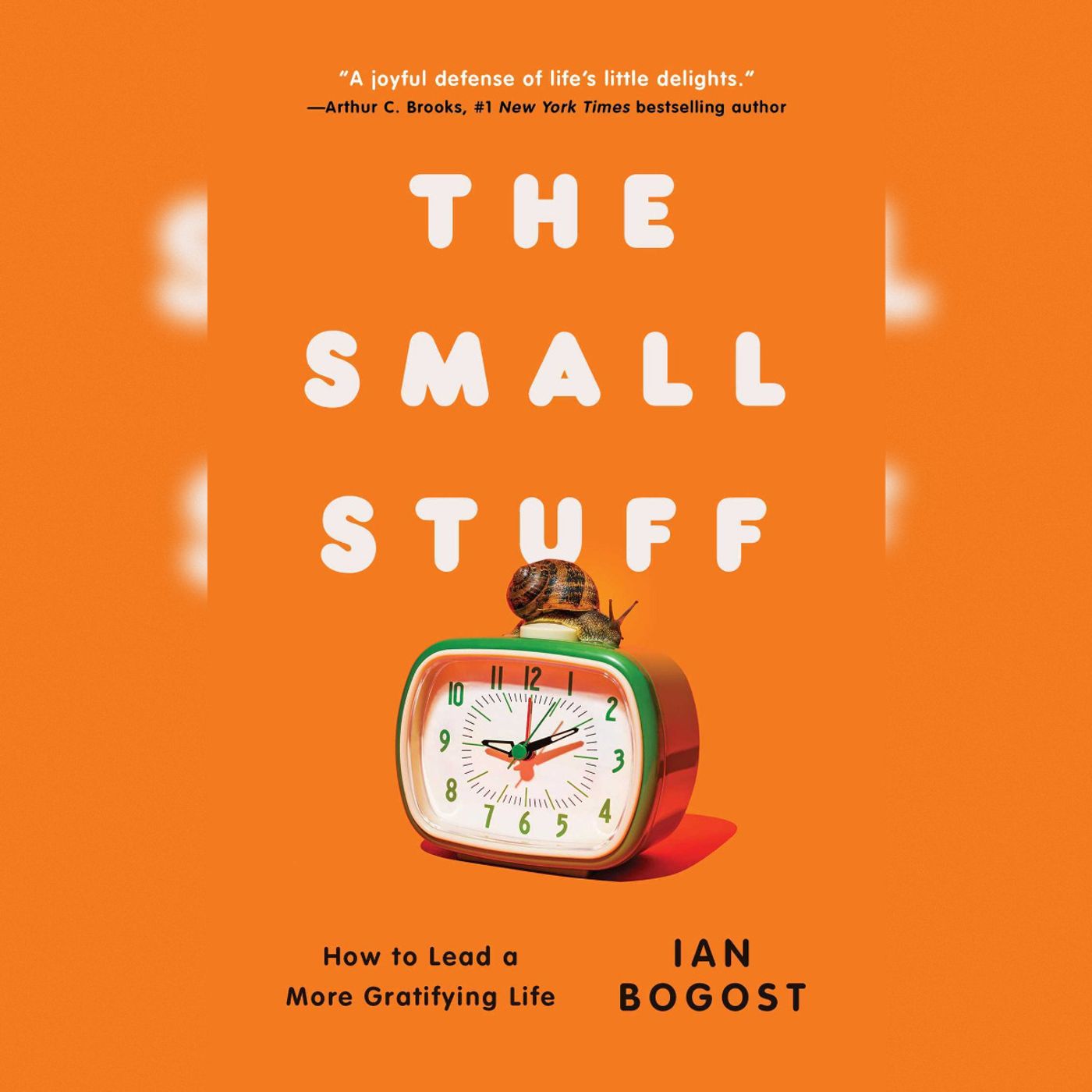
a couple of songs. That's the plan. So let's get this started with the Small Stuff. Painting a wall. The sound of ice clinking in your glass. Removing a protective film from a knife block. These are just some of the small pleasures of daily living that author and Atlantic contributing writer Ian Bogos describes in his new book. It's titled the Small how to Lead a More Gratifying Life. In the book, Ian argues that life becoming more frictionless has actually threatened some of the tiny things that make it great. What do we lose when life becomes less tactile and more and more virtual? Ian's book also has some tips for how to start embracing the small pleasures of life. From the sound of a doorbell to the ridges in a takeout coffee cup. The Small Stuff how to Lead a More gratifying Life is out now and I'm joined by author Ian Bogost. Nice to meet you.
- [02:44]
D
Great to be here, listeners.
- [02:46]
B
We'd like to hear from you. What's a way you appreciate the smaller things in life? It could be a daily ritual or a routine or just a small way you've tried to increase gratification in your life while what's a small thing that brings you happiness? Give us a call at 2124-3396-9221-2433 wnyc. You can call now and join us on air or you can text to us at that number as well. What counts as small stuff?
- [03:15]
D
Things that aren't big, which is a good way to get us started, right? If you think about the stuff that might make you happy, that's a good example of what I mean by big stuff. So like your marriage, your career, your home life, making your house the way you want it, your children, the future of the nation or your city, those are big stuff kind of happiness driven things. They're all about the future. They're hard to accomplish. And small stuff and the stuff associated with gratification, it's really that sort of moment to moment experience of the delight of living in our bodies, in everyday life. So even like right now as I'm talking to you, I can feel the, the smoothness of the table and the coolness of my cup and I can see the embroidered lemons on your blouse. And those things are entering my senses and if I accept them and allow them to give my life a little bit more meaning, then that's a different kind of contentment than we get from that happiness pursuit sort of thing.
- [04:11]
C
There's this great chat, this great point you make in your book and I wanted to ask about it. I'm going to read a little bit. This is from page 14. It says for millennia happiness has been defined as a blend of two things. The pursuit of pleasure or the avoidance of pain and the over feeling of a life well lived. In the 4th century BC, the Greek philosopher Aristotle named these two things hedonia, for which we get hedonism and eudaimonia, which literally means good spirit but is usually translated as the good life.
- [04:42]
B
What has changed since then?
- [04:44]
D
Well, one thing that's changed is that all we've done is pursued big stuff, purpose driven outcomes. We're like really, really goal oriented today and we've declined to engage in experience even as we think that we've turned experiences into these indulgences that we can sort of avoid or that we ought to avoid. So we essentially turned our everyday moment to moment lives into sin. Right. Or indulgence, pleasures of the flesh that you're supposed to avoid in order that you can accomplish all those big things. So it's almost like we turned up the heat on that life. Well lived stuff so much that now we're only living in the future all the time. We've forgotten how to live in the present, how to feel inside of our bodies.
- [05:27]
B
How do you feel about self care? Because a lot of people talk about self care. Some people think it's frivolous, some people think it's necessary.
- [05:34]
D
Yeah, I talk about it a bit in the book and it's great. So long as self care doesn't mean I need to take a break from all of those big stuff pursuits in order that I can get back to them as soon as possible. And if you're doing like mindfulness exercises or meditation or you're going to the spa, you're getting your nails done or whatever it is, only in order to give yourself a break from all of the overwork at your job or at home, then you're not living in the moment in the way that I'm suggesting. However, if you think of every moment as being a potential self care kind of moment because your senses are always available to you and you're always living in your body, then that gives you a chance to just eke out a little bit of that pleasure. And as much as you want, anytime.
- [06:19]
B
This text says, I love the cobalt blue mug I use for my morning coffee.
- [06:23]
D
Perfect.
- [06:24]
B
Let's talk to Leslie, who's calling in from Maplewood, New Jersey. Hi, Leslie, thank you for making the time to call all of it. You're on the air.
- [06:32]
E
Hi. Thanks so much for having me. I love listening to you, Alison. I walk for exercise and I definitely notice the trees and the flowers, but I also look for hearts in nature. So a heart leaf or maybe a drop of water that has turned into heart. I'm always sort of on the lookout for them and then it makes me smile.
- [06:54]
B
I love that. Thank you for calling in. Let's talk to Lori from Seacliffe, New York. Hi, Lori, thank you for calling all of it. You're on the air.
- [07:02]
F
Hi.
- [07:03]
E
Hi, Allison. Thank you. It's so great to be on. I'm just calling because I wanted to say that, you know when you're driving in the car and suddenly you hit a beautiful stretch that has been completely repaved and it's kind of got that feeling and it's smooth. And, you know, maybe you're on a wind and the trees kind of canopy over you and there's like a shade, and maybe your. Your sunroof is open and you catch the breeze, and it's this moment of disappearing into this beautiful, windy, smooth, delicious feeling of, like, I love driving. I feel so lucky to be in this moment.
- [07:38]
B
Thank you so much for calling, Laurie. Do you have any.
- [07:40]
D
I love Laurie's example. And, you know, I talk about automobiles and machines in the book a bit. You know, the feeling of shifting a car or steering it, that's gratifying. But that I'd not thought of that example, feeling the machine move over a newly paved surface and the tone of the car changes. What I love about that example is, as I heard it, I was like, oh, yes, that is the stuff. That's gratification. And I found that when you fall upon an example like that, that's really gratifying. It's almost like, strange. It's weird. And then someone gives it voice, and you're right there with them. We are experiencing these things all the time, but sometimes we're embarrassed to admit it or we don't recognize them. And so just giving it voice, talking about it like Laurie just did and like we're doing that can help us feel it together.
- [08:28]
B
What's the difference between gratification and satisfaction?
- [08:32]
D
So, in my mind, satisfaction is like pride in accomplishment. So you finish something, I finished a book, and I'm proud of it, and that's satisfying. Or you finish eating a big meal and you say, I'm satisfied because it's all done and you feel good about it, or you feel good about the company you kept. So it's still bigger. It's not quite as big as your life in the happiness sense of it. It's also retrospective, and you have to do. Satisfaction requires work. Now, some people use that word satisfied or satisfying to describe what I can name gratification. Oh, such a satisfying sound. And that's fine. But one thing I wanted to do was to give that experience of sensory enchantment its own space and its own terms. So that's the difference to me between satisfaction and gratification.
- [09:16]
B
We're discussing a new book, the Small how to Lead a More Gratifying Life. My guest is its author and Atlantic
- [09:23]
C
contributing writer Ian Bogost.
- [09:24]
B
Listeners, we want to hear from you. How do you appreciate the smaller things in life? What is a small thing that brings you joy? Give us a call at 2124-3396-9221-2433 wnyc. Ian, what does the research tell us
- [09:40]
C
about the main sources of happiness and
- [09:44]
B
how does that, how does that account for the small pleasures in our life?
- [09:48]
D
One of the big things we know about happiness is first that we don't know a lot of about it. It's kind of murky and there's a little bit of like a circular argument at work in some of the happiness science. So surveys are often conducted in which people are asked if they're overall happy with their lives, but what is it to be happy? They're meant to fill in that blank and often they'll go straight to this sort of feeling of wait, am I happy? I don't think I am. Or if I am, what would make me happier? And it's acquiring more. And it's always something that sort of put off for the future. Now one of the things that we do know that happiness researchers and sort of the pop psychologists who help translate that into practice, they recommend is infusing your life with purpose and it should be meaningful and worthwhile at the end and by connecting with your community and other people and kind of advancing the sensory pleasures that I really want to pay attention to, always putting those in service of some sort of bigger, higher end that that's one way to achieve purpose and thereby happiness. I think all that's great and I'm not telling anyone not to be happy or not to pursue important goals, but along the way you're still living in every moment of your life. And so I see gratification as a different kind of contentment. We can have them both and we've denied ourselves gratification while we've been pursuing happiness. So one of the interventions, I guess, that I hope to make with this book is to reintroduce people to sensory pleasure without taking away the ability to build a purposeful life.
- [11:21]
C
Let's go to some more texts. This is said how I embrace the small stuff is matching my sleep wake pattern with nature. I turn it in at dusk after a walk watching the sunset and wake at dawn to the chirping birds. It's glorious. This says, I love observing my four legged dog nephew, my four legged dog sniff out new scents when we walk in the woods.
- [11:45]
D
Right.
- [11:46]
C
Let's talk to Amy from Brooklyn. Hey Amy, thanks for calling, all of it.
- [11:50]
E
Hi, thank you so much for taking my call. Love your show and especially the segment. Something that's been inspiring me lately is phenology, the study of change in nature. And I've gotten To record things in my nature journal. Such as just like when I hear the wind blow through the leaves in the tree for the first time in the spring. And just awakening my senses taps me into the more than human world. It makes me feel more alive in the process.
- [12:21]
B
Thank you for sharing that. We appreciate it. Let's talk to Richard on the Upper west side. Hi, Richard. Thank you so much for taking the time to call.
- [12:29]
E
All of it.
- [12:30]
F
You're welcome. Nice to be here. So I'm calling because a year ago I ordered a big old royal typewriter. It weighs like 30 pounds. It's on my window sill. And I write occasionally. And what I notice is I'm using it to write instead of my laptop or my iPad. And there's something about just the sensation of pressing the keys hard enough to imprint into the paper the sound the keys make when they land on the page. And a side benefit. I spend an hour or two a day now writing without looking at any kind of screen.
- [13:07]
B
Thank you so much for calling in. That brings up the issue of frictionless. How being having non friction in our lives. It may bring efficiency, but we lose something.
- [13:18]
D
Yeah. Our lives have become a lot easier and broadly speaking, they've become a lot better. Our laptops and our smartphones and all the automation systems that we surround ourselves with, many of them, they've improved our lives, but also they've removed our ability to feel connected, to be connected to them. I love Richard's example because it's all about like drawing our attention back to the experience of tapping on keys. Although when you think about it, your laptop also has that too. It's just that sometimes we need a break from it, a reminder that that experience of hearing and touching the keys, that that sounds a certain way and feels a certain way. Or we need to be reintroduced to a different version of it. But a lot of the automation in our lives, we didn't really choose.
- [14:01]
F
Exactly.
- [14:02]
D
My favorite example of this is how you go to like a public restroom, try to wash your hands, and you can't turn the knobs anymore. There's like a sensor and you're supposed to wave your hands like a fool until it turns on. And it doesn't really help anyone. It's not necessarily environmentally better and it's taken away that contact and connection with the world. It's removed for you an opportunity to touch.
- [14:25]
C
How important is the actual content?
- [14:27]
B
Because I contact. Because there are all these videos online.
- [14:31]
D
Yeah.
- [14:31]
B
Oddly satisfying videos where you can watch cement being poured and how beautiful it is. Or ASMR videos. Is the contact important or can I watch these things online?
- [14:45]
D
I called it, like, vicarious gratification. It's like we're sort of being reintroduced to the opportunities for gratification. I think it plays a role. But you don't want to just live in your senses through watching someone else perform their sensory activity. You want to have, like, a diversity of sensory experiences. But some of them are vis and some of them are auditory. You mentioned the ASMR videos, which is like when people are touching the windscreen of their microphone and whispering.
- [15:10]
F
Yeah.
- [15:11]
D
And one of the things about that is that you're sensing that very particular recorded sound that you can't access any other way. And so that's delightfully gratifying. And someone else is doing it and you're sort of encountering it in that manner. So what I really want is, like, a diverse diet of sensory encounters, not just ones that you're watching, but also, you know, we heard. We heard Amy talking about nature and looking at it and watching it and sort of collecting those ideas through her eyes and her ears. And you're not necessarily touching those experiences in nature. You're simply allowing them to enter your sensory life.
- [15:46]
B
We're talking about the new book, the Small how to Lead to a More Gratifying Life. We'll have more after a quick break. This is all of it. You're listening to all of it on wnyc. I'm Alison Stewart. My guest in studio is author and Atlantic contributing writer Ian Bogost. His new book is called the Small how to Lead a More Gratifying Life. Listeners, we'd like to hear from you. How do you appreciate the smaller things in life? What's a small thing that gives you gratification? Give us a call at 2124-3396-9221-2433. WNYC. Ian. This text says, I have so loved watching my children catch lightning bugs this summer. Those moments make me catch glimpses of my own childhood when the air takes on the same temperature as your body and you can settle into the evening peacefully after a long day in the sun.
- [16:48]
D
I love it.
- [16:49]
B
Another one says, nothing beats seeing a bumblebee taking a nap on a flower I grew. What's similar about those two?
- [16:57]
D
Well, you might think that what's similar about them is that they're natural experiences, and that's one thing, but also the idea that these things are happening all the time and that some people think it's about noticing them or like getting your mind into the right place where you can see them, but that's maybe not the right way to think about it. It's rather giving yourself space to kind of linger in what you're already doing, such that those things can happen to you and you can kind of receive them. I think of them as gifts, and they're not just gifts of the natural world. They're also gifts that the built environment delivers. When I came to the building, I felt my footfalls against the hard floor of the structure that tink on the corrugated metal steps as you go into the subway. Those are also gratifying. So I love that those are natural examples. But I also just want to point out that we don't need to wait to be in the natural world in order to experience gratification. It's more about letting it happen and being open to receiving it.
- [17:56]
B
This brings us to the doorbell. Yeah, the story of the doorbell. Would you share this with us?
- [18:02]
C
It's in your book.
- [18:02]
D
Yeah, it's in the book. So I have this 1909 historic house in St. Louis where I live. And the doorbell line, the electric line got cut at some point in the 120 years that the houses existed. And I knew that I wanted a doorbell, but I didn't want to have one of those newfangled electronic ones. It just didn't feel right. It didn't suit the house. It didn't fit into the sensual experience of approaching it and seeing the brick. And so yeah, I built like a whole computer system that connects a traditional brass doorbell that you can feel press to like a manner sounding bong bong kind of sound that resonates when it gets depressed. And I was thinking about not just like being alerted to the fact that the door has rung, but you go up to a house and you want to feel the doorbell press and know that it pressed and you want the house respond and say, I'm here, I hear you, I see you, someone is coming. And for that experience to be like sensorily connected to the architecture of the home and the street and the block, all those things were important to me. And they may seem totally unimportant and irrelevant. It's definitely like a kind of dadding out example. But it's also an example of how high tech solutions can come in the service of low tech sensory experiences. I'm not saying we should reject computers or technology at all, which is sometimes some of the conversation we have about this topic. I need to put my smartphone away so I can see the bumblebees on the Flowers. But that's not really the world we live in, nor should we live in a world like that, because those things are useful.
- [19:41]
C
If you weren't able to jerry rig your doorbell this way and you had had just like a very electronic sound go off every time somebody rang it, what would that have done to you?
- [19:53]
D
Well, in part, it would have disconnected me from my sense of. My sense of my home and being in it. And then there's the idea that it's got a recording, you know, that's always looking at people and capturing their image and maybe sending it up to the cloud. That wasn't necessarily a position I wanted to take about my house. I think it's also, you know, you said, like, what would you. If you hadn't been able to. I am fortunate to own a home that I can customize, and that's one of the ways that we've been disconnected from the world. Dematerialized is the word that I use for this. If you can't afford or you don't have access to not just a home, but anything that you own that you can make yours, that you can customize or repair or make direct contact with or have incentive to make direct contact with because, like, your super isn't going to yell at you or your security deposit isn't going to go away. And that's another mode of disconnection. So another thing I was doing was just being a steward of this property of, like, allowing it to speak to me about what it wanted, if that makes sense, and then to respond to the structure as well as my own needs or the needs of my guests.
- [20:55]
B
Let's talk to Santos. Hi, Santos. Thank you for taking the time to call. All of it. You are on the air.
- [21:01]
F
Oh, for sure. Well, I'm a senior cyclist. I was competitive as a young man, but there are times when I ride now where everything is going right. My body is in tune with my bike. My bike is in tune with the ground, and I'm moving along, and it almost seems effortless. And it's like the wind is going through your hair, and it's like riding on a Frisbee. It's just totally in tune.
- [21:22]
B
Sounds like he was in the flow.
- [21:23]
D
I love that idea. Yeah. The sense of control that we have in our bodies when we connect with machinery or with anything that we kind of feel competence around, that can also be really gratifying. And it doesn't have to be like a bicycle, and you don't have to be an expert. The reason it feels good to Hold a mug of warm coffee or this cup of water is because you know that your hand is holding it successfully, and you can feel the warmth, and you were alive on earth.
- [21:49]
F
Yes.
- [21:49]
B
It's interesting because you said the holding your cup we had on a man who used to be a monk. And I said, what's one thing people can do to celebrate mindfulness is what he was talking about. And he said, just feel your cup in the morning. And I've been doing it ever since, and it really has changed my day.
- [22:07]
D
Yeah, there's this idea we have that we have to somehow get through that stuff as quickly as possible, that it's not important. Like, I'm just gonna down my coffee so I can get the caffeine into me, so I can go to work, so I can be productive, so I can make another dollar. So the next thing will become available to us. But if you allow those moments to just extend, like, a little longer than they would otherwise, you don't have to enter into some meditative state. You just need to occupy them, and then those. Those secrets kind of release.
- [22:36]
B
Let's talk to Elena, who's calling in from Los Angeles. Hey, Elena, thank you so much for calling all of it.
- [22:42]
E
Hi, Allison. My thing is a little more than noticing it doing something, but in the morning when I wake up and I feel frazzled and uncentered and kind of out of sorts, I have bought a ball of soft yarn, and I just
- [22:56]
F
cut a little piece like maybe two
- [22:58]
E
feet long, and I braid it, and then I use those little pieces of yarn for tying up things. You know, there's always a use for it. But the hand over hand, left to right, and the soft hand, soft yarn,
- [23:11]
F
you know, fingers vibrate.
- [23:14]
E
It takes 10 minutes, and then I'm centered.
- [23:17]
B
Thank you so much for sharing that. We also have VHS tapes and other
- [23:21]
C
analog media are definitely inconvenient, but it forces you to slow down and maybe actually enjoy not interrupting the experience every few seconds. That's interesting because analog has definitely become the word of the summer.
- [23:35]
D
There's a lot of this, and I understand and appreciate the sort of drive to this kind of return to analog. You can't really live your whole life that way, though, anymore, which is one of the problems. It's one of the ways that we've lost gratification. Physical media, VHS cassettes, the feeling of a telephone handset, all that stuff, it's not exactly gone, but it's much harder to access. So I encourage people to think of that drive to kind of like analog Culture solutions as more of a sign of what they want. And it's great, incorporate that into your sensory mix. But if you're resting your whole experience of gratification on VHS tapes, you're gonna have a problem because you're not gonna be able to access that all the time. One of Elena's examples is instructive, I think. Cause it's all about experience over outcome. The little bits of yarn, they're not really for anything, even if she's using them for some end. It's just the sense of the yarn has a texture and you can cut it and it has a give and you can braid it and it's responsive that way. So you don't need a VHS tape to have that kind of experience. And we wouldn't call yarn analog culture. Right. It's just a physical good that we can encounter with our senses. So I definitely think the analog culture thing is onto something, but it's not the solution. It's more of like a symptom or a sign of the problem.
- [24:54]
C
As long as we're talking about practical places, what about the workplace?
- [24:57]
D
Yeah.
- [24:59]
C
Should that be someplace you look for better?
- [25:02]
D
You're there all day. And so if you can't be gratified at work, then that's a real loss. I think that one of the reasons, if you feel like my job, something wrong with my job, and you're immediately going, I need to get a different job, I need to be in a different career. This isn't right for me. That's like happiness stuff. That might be the case, but often it's just that you feel disconnected in your work. Right. Like maybe the break room doesn't have the right ice, or the carpeting is worn, or you don't have an opportunity to get up, or you're in a row of cubicles and everyone is in their headphones all the time, and you don't feel like you can engage with them. And, you know, standing up and moving around and looking out the window is what you need. Certainly especially in like office type jobs. In knowledge work jobs, we have less contact with the world than we once did. And professionals of all kinds were in the world more. And for the book, I talked to some trade workers who, and you know, their whole, like you're laying tile or you're, you know, you're fixing plumbing. Your whole day is about direct contact and direct connection with sensory activity. And it's not so much that all of us should go be plumbers, but rather that that matters, that experience of the Moment to moment work. Life matters just as much and maybe over time more than what you're doing and why you're doing it and where it's sending you.
- [26:22]
B
Let's talk to Sally. Hi, Sally, thank you so much for calling all of it.
- [26:27]
E
Well, I get a lot of satisfaction of seeing the moon and the sky in Manhattan. And it's amazing the number of evenings when it's been a perfect day and a lovely dusk and then we'll have all over clouds and there's no sign of the moon. So whenever I see whether it's a crescent or partway or full, I just am very, very happy. And whenever I go travel anywhere, I always check to see where am I going to be when the moon is full, particularly if I'm outside of Manhattan, because then you really get a spectacular, spectacular sight. I've sometimes taken the Staten island ferry at the right time to be able to watch the moon come up, especially in the fall and early winter.
- [27:19]
B
Thank you so much for calling in. This is. I love the sound of a screen door opening and closing.
- [27:25]
D
So good.
- [27:25]
B
All right, let's. You've been listening to this conversation. You're thinking, like, what? What should I. What should I concentrate on? Where can someone start? Two or three things that you can start to notice.
- [27:37]
D
It's not even about noticing. Allow those moments of sensory life that are always happening to you to just extend a little longer. The moment you feel a little strange or embarrassed where you're like, what am I doing? Listen to that and allow that to be the invitation in. Talk to people about it like we're doing now. Normalize it by sharing it with others and then build this kind of idea of like a diverse diet. Whatever your sensory life is at work or at home, look for different things in other environments. If you spend all your time on the computer and maybe picking up that ball of yarn and knitting with it, it doesn't matter what it's for. It doesn't have to be for anything. Put your fingers in the dirt. Do something different sensorily than you might do every day.
- [28:18]
C
The name of the book is the Small how to Lead to a More Gratifying Life. Its author has been my guest, Ian Bobos. Thank you for being with us.
- [28:26]
D
Oh, thanks so much.