Loading summary
Transcript62 lines
- [00:00]
Progressive Insurance/UPS Store Announcer
WNYC Studios is supported by Progressive Insurance. Did you ever think about switching insurance companies to see if you could save some cash? Progressive makes it easy to see if you could save when you bundle your home and auto policies. Try it@progressive.com Progressive Casualty Insurance Company and affiliates. Potential savings will vary. Not available in all states this Father's Day when you ship UPS Air at the UPS Store, your items arrive on time with your money back guaranteed at no extra cost. It's like the father of all shipping services. It shows up to the airport way too early. Just the plates save. It's overprotective about all the things that truly matter. And it's always prom, especially to be with family. Make it your first choice to celebrate your dad. Ship UPS Air with our money back guarantee exclusively at the UPS Store US retail locations. Visit the upsstore.com airshipping for full details. Terms and conditions apply.
- [00:57]
Alison Stewart
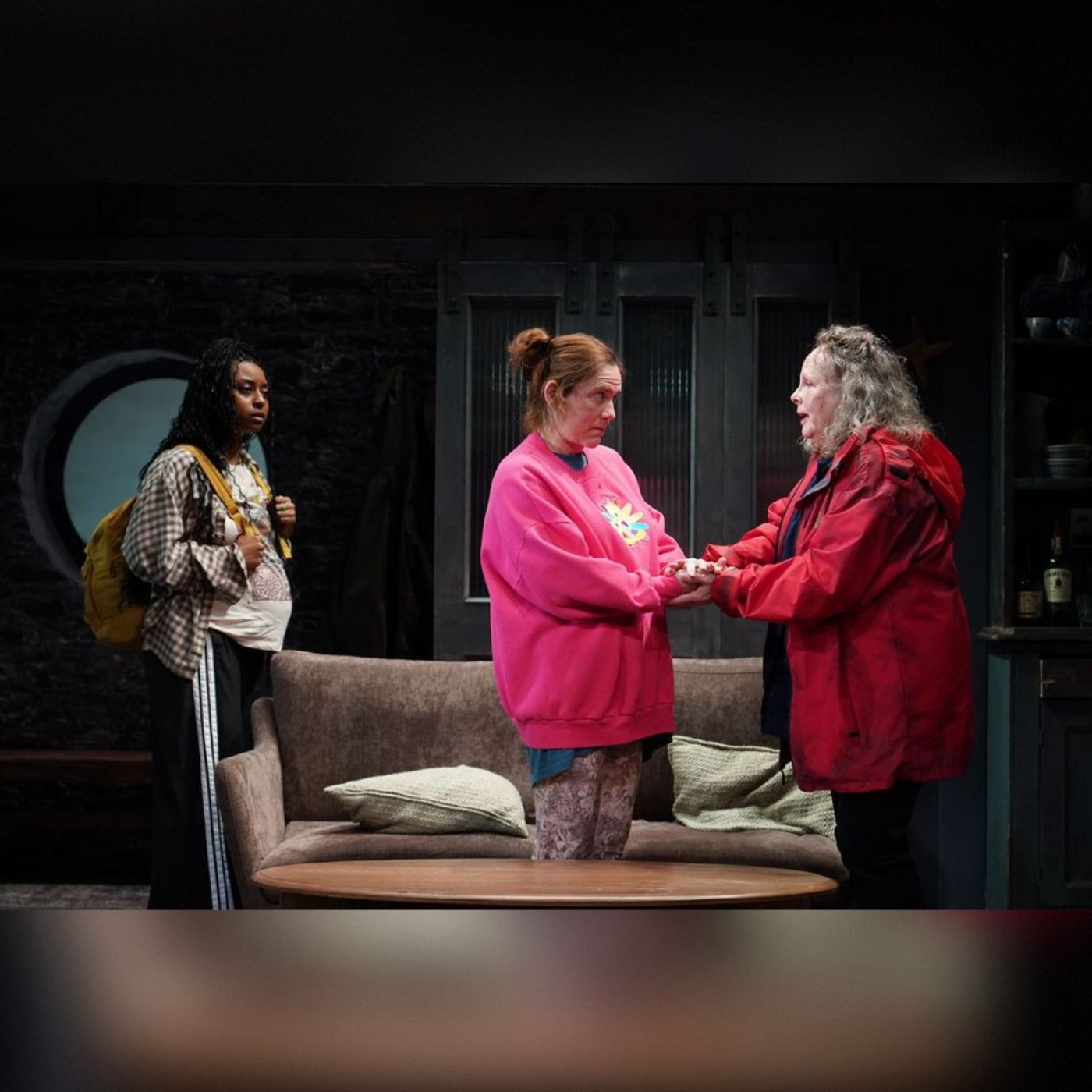
This is all of it. I'm Alison Stewart, live from the WNYC studios in soho. Thank you for sharing part of your day with us. I'm grateful that you're here. On today's show, the band Cure for Paranoia. They won this year's NPR Tiny Desk Concert competition and they will perform live in studio. And the Emmy nominations are out. We'll speak with three actors who star in the nominated series the Pit no Wiley, Kathryn Lanassa and Luke Tenney. That's the plan. So let's get this started with a new play, the Loved Ones. The scene is a farmhouse in West Clare on the coast of Ireland. It is owned by a quiet woman named Nell. Nell isn't alone exactly, she runs an Airbnb. But she is lonely because Nell is grieving the death of her adult son Robin, who was a professor at a city university. The weekend has come when Nell's daughter in law, Orla, is about to arrive at Nell's house to spread Robin's ashes. The problem is Nell forgets that she has an Airbnb, an American birder who just and then an unexpected guest shows up, a 20 something pregnant student named Gabby who had an affair with Nell's son months before he died. That sets up the story called the Loved Ones. The play is a take on the two hander, only it's a four hander, each character handling bereavement in their own way, all while keeping secrets. One reviewer wrote. The Irish rep strikes gold with the insightful and incisive the Loved Ones. Erica Murray's beautifully written new play is as spiritually generous as it is smart and entertain. The Loved Ones is playing at the Irish Repertory theater on West 22nd in Chelsea until August 2nd. I'm joined by its cast members, Marianne Plunkett, Alana, Raquel Bowers and Claire o'. Malley. Thank you so much for coming to the studio on a show day for you. I really appreciate it.
- [02:54]
Alana Raquel Bowers
Thanks for having us.
- [02:56]
Alison Stewart
Marianne how would you describe Nell?
- [03:00]
Marianne Plunkett
I think Nell is of the elements. She's of the earth and the sea. She has lived a contained life, as we discover in the play. Shame figures into it highly and I think she is elemental. That's fierce and elemental.
- [03:28]
Alison Stewart
Alanna When Gabby decide she's going to show up pregnant on Nell's doorstep, what is on her mind? What is she thinking?
- [03:37]
Alana Raquel Bowers
I feel like what brings her to Ireland is what ends up connecting Gabby and Nell. At the end of the play, there is a deep amount of shame that Gabby feels that she cannot share with her loved ones. And so she comes to Ireland assuming that she has the answers to this, what she considers to be a blip, a blip in her, in her dream, in her schedule, in her life. And she learns that this is just the beginning of understanding what it means to face yourself and face your problems and be an adult. I think she is at the brink of adulthood and this is one of those, one of those difficult issues that we come across, whether or not it be obviously like a pregnancy or something, something that involves needing to reflect and look at yourself and be honest about who you are and what you need to do. So I think she is confident at the beginning of this play that she will get her way and by the end she realizes that it's not that simple.
- [05:14]
Alison Stewart
Claire we hear a lot about Orla, mostly from her mother in law, Nell. We expect her to be really high strung, but when we meet her, we see a different story side of her. What is her relationship to her mother in law, Nell?
- [05:29]
Claire O'Malley
Well, how long have you got? I love the fact that you hear a lot about Orla before you meet her and then when you meet her, you, you get to make your own judgment of her. I believe right before this, Robin, my husband, has passed six months ago and there was a issue at the funeral that has really caused a large rift between the two of us. So when we first meet in this play, we have not seen each other since the death of Robin, which is huge. And then as the play develops, obviously we learn more about what Orla has been through and what she's currently facing. And it's really fun to play with the audience and play with the initial expectation of who you think someone is and then learning more and deeper about someone and kind of changing your opinion. And I love what Erica, the playwright, has done with all those characters and how she does that.
- [06:34]
Alison Stewart
Yeah. Because it's interesting in the play, when Orla meets Gabi, she's really kind towards Gabi, of course. Why does she show kindness towards Gabby? She doesn't know anything about Gabby's. What she's done or has done or has relationship with her ex husband.
- [06:47]
Claire O'Malley
But Orla is a kind person. This is what, like, she's a good person and you see that in her actions. I mean, even when Orla finds out that Gabby has. Oh, should I give spoilers? Maybe not.
- [07:03]
Alison Stewart
Maybe maybe not.
- [07:04]
Claire O'Malley
When Orla finds out something large, she still takes care of Gabby.
- [07:08]
Alison Stewart
Yeah.
- [07:09]
Claire O'Malley
No matter, you know, so you see, you really see who she is by her actions and she's a kind person. Yes. She's been through a lot and she may be a bit prickly because of that, but she's well within her right to be feeling all of the things, you know.
- [07:24]
Alison Stewart
Nell has made some very hard choices in her life. What do you think has affected her the most?
- [07:35]
Interviewer/Host
Wow.
- [07:39]
Marianne Plunkett
Some of the choices she made were not really choices. You know, Gabby asks her at one time, was it, you know, magic growing up here with all this space around? And I think so we didn't really have any other option. So she ended up living on the farm of her family. I picture that she ran the farm with her parents until they died. She then moved back into the main house and raised Robin from whatever stage that was. I think her choices have been in thinking of choices that she stays to herself. I think she reads a lot. I think she's so proud of saying, I was studying up in Galway at the time when she got pregnant that one night, you know, and she's a smart woman, so she has not gone out into the world. She has her friend Stevie, however, you know, who runs the guest house in the village. But they're not bosom buddies, they're just there. She will see her occasionally. I think she lives a very solitary life and the Airbnb it provides, so the house is not completely empty. But you don't have to really become friends with people. You make sure the bedroom is clean, you make sure there's tea or coffee. You make sure there are snacks. You make sure, oh, we're here. Go to this place, go to that place. So there's not silence. But I think her choice, as it might be, has been to just. She contains Herself, she's proud of her son teaching in London. And just to speak of Orla, Nell loves Orla. You know, within a family, there may be people that they're different from each other. You go, this is. Orla is. She's pursuing something different. She dresses elegantly. She is elegant. Nell never reached that point. Nell is mucking, you know, the sheep stuff and fixing fences, and it's a different person, but she loves her profoundly.
- [10:01]
Alison Stewart
Alana, did you have a backstory for Gabby when you arrived at this character?
- [10:07]
Alana Raquel Bowers
Well, I think we. Nicola, the director, had us do this exercise where the sort of, like, pebbles in the Stream exercise where you start where you're, like when your character was born, and that's the beginning of the stream. And the end of the stream is where we find the character in the play. At the beginning of the play, or. Yeah, beginning of the play. And so the pebbles in the stream are major events that help to shape the journey that this person, this character goes on for them to reach the end of this dream. And so I think it was crucial for me to lean into that exercise because what makes a girl from Lewisham travel to Ireland to her dead teacher's mother's house and drop this information and really believe, like, authentically believe that this plan is going to work? I needed that to make sense. So it was necessary for me to do a lot of backstory and what I've come to in my own research and with the help of that exercise and of all of us just trying to. Trying to make sense of how our characters have arrived at where we find them in the beginning. Gabby is so smart. She is the oldest of four children. We learn in the play that she has three younger brothers. We also learn that her mother had her when she was very young as well, which is one of the reasons why she is petrified, why telling her mother is not an option. It's not even that she's afraid it's not an option at the beginning of the play. And that creates a lot of pressure. Gabby is under a lot of stress and pressure, which leads to. And no spoilers, but which leads to what ends up happening to her, because she has been holding not only the information, but the idea of being pregnant. So she hasn't really been looking after herself. She hasn't been taking this seriously. She's in school. She wants to finish her exams before she does anything else. She's determined. She is a. I have this. This fun thing that I do with myself where I create. I do the. The big three Zodiac signs for all my characters. And so ever since, I guess I did a show back at the signature in, like, 2023, and it was hard for me to get into that character. So I started doing it then, and I've done it for every single character. And it's so helpful because it takes. I know my characteristics of who I am and why I am the way that I am, particularly through my zodiac signs. And so when I can take that off and put something else on, it really helps me get into the world of this person who is either could be very similar to me or very different, but I can enter into their brains and their isms and their idiosyncrasies through knowing what their sun, moon, and rising signs are. And so doing that with Gabby, with these exercises in the room and also understanding the stakes for her, is how I was able to create a backstory that hopefully helps to justify her actions.
- [14:07]
Interviewer/Host
Is she a Taurus, a Leo?
- [14:09]
Alana Raquel Bowers
Oh, Gabby is a Libra sun. She is a Capricorn moon and a Taurus rising, if you understand that.
- [14:19]
Interviewer/Host
Great show.
- [14:20]
Alison Stewart
We're talking about the play the Loved Ones.
- [14:22]
Interviewer/Host
At the Irish Rep, four women find themselves grieving together and facing a new reality. My guests are three of the show's actors, Marianne Plunkett, Alana Raquel Bowers, and Claire o'. Malley. Claire, I'm gonna ask you about the fourth character in Cheryl Ann, played by Donalyn Champlin, who couldn't be here today. She's the only American in the play. She's a guest at Nell's Airbnb. She loves birds. How would you describe her in a few words?
- [14:49]
Donalyn Champlin
Oh,
- [14:52]
Claire O'Malley
bright, optimistic, soulful, insightful, intelligent. Emotionally intelligent.
- [15:07]
Interviewer/Host
Doesn't read a room, right?
- [15:08]
Claire O'Malley
No, she does not know how to read a room. I'm sorry. You know. You know, it's funny, when you. When you first said the fourth character in the play, I actually thought my husband, Robin, and I was like, oh, I can't wait to. Yeah, I was like, I can't wait to talk about my husband. But okay, so Sherilyn is, I believe, the heart of the show. She truly. I mean, she just. She really doesn't know how to read a room. And it's interesting. I didn't see the production when it was in Ireland, but I do find it is fascinating to witness it here because she is the. She really is the only lens of. She's the only American in the play, and we're doing the play in America, and it's the way in for people, and she's Full of optimism. But she really does, like, put her foot in it often. And so that's really interesting to feel. The audiences kind of get to know her and live with her for a little bit. And then by Act 2, she. She has you. I mean, just like every single other woman in this play, she has lived and she has accumulated all of the life things that make a life hard. And. And you get to see that and it's revealed and I think it's just beautiful. Yeah, beautiful.
- [16:26]
Interviewer/Host
We'll hear more about the Loved Ones after a quick break.
- [16:29]
Claire O'Malley
This is all of It.
- [16:40]
Alison Stewart
You're listening to all of it on wnyc. I'm Alison Stewart. We're talking about the play the Loved Ones at the Irish Rep. It's about four women find themselves grieving together and facing a new reality. My guests are three of the show's actors. Actors Marianne Plunkett, Alana Raquel Bowers and Claire o'. Malley. Marianne. The play takes place sort of in one location, Nell's living room, but other actions take place in other parts in. At the Airbnb in town. And we, the audience, don't necessarily see that it comes into play later. But what do you like about the action taking place in one room?
- [17:17]
Marianne Plunkett
I think there's no escape, in a way, and it's a compact space. There's not a lot of room for running around or I'm going to be over here. We're confined. And throughout much of the play, it's raining, and at times it's sheets of rain just coming out. And you can see on the windows. So that makes it even more confined that whatever happens in here has to be resolved within here. There is a barn that we refer to, but that does not seem like the greatest place to be. And this is. And it's a lovely space, but there's not a lot of room for four very distinct individuals, four women who are so different from each other, these characters. And not a lot of elbow stretching room within there, or even mind stretching. Sometimes there are collisions.
- [18:28]
Alison Stewart
You know, as I was watching the play, I thought at the end, no one is a villain in this play. Right. But not telling the truth or not reacting to what the truth is about, your situation is kind of the villain for each character. Claire, what is your character not dealing with in this particular play?
- [18:47]
Claire O'Malley
Oh, again, how much time have you got? Well, she. Okay, so since Robin has passed, and that's not a spoiler. So since my husband has passed, my goal when I come into this, when I am here to see Nell is the first one is to scatter his ashes and for us to have the kind of unification after the terrible funeral. But the other one is to get her blessing on going into ivf. They are. They no longer have any embryos left, but Orla is hopeful that she can still continue on the plan which was to have his baby. And Orla is dealing with multiple pregnancy losses, three miscarriages, and one emergency C section at 24 weeks. And it's. It's deeply, deeply sad. And she is just bulldozing her way into trying to hope. So even though she's lived these really, truly difficult times, she's trying so hard to find a glimmer of hope. And this IVF plan, I believe, is her last tiny ember of hope, that something good can come from every bit of tragedy that she has experienced. I mean, she really is. I find her profoundly strong when I think about her, like, what she has lived through and how she's still able to find that hope.
- [20:23]
Interviewer/Host
Alana, you talked a little bit about Gabby not really dealing with being pregnant. Is there a moment in the play when you think the light turns on for her?
- [20:34]
Alana Raquel Bowers
Absolutely.
- [20:35]
Claire O'Malley
Yeah.
- [20:35]
Alana Raquel Bowers
Absolutely, yes. I think. I think all of these women are deeply brave. I think the secrets that they hold are not selfish, but selfless. I think they understand that there are, as most women do, that the world has to continue, and I have to continue in this world as well. So how do I continue to live despite this problem? I still have to show up, whether it be for my son or my job or my. Or schooling or, you know, Cheryl Ann also has a terrible grief story that we learn about as well. And how do you continue showing up in the world despite. Despite not being able to fully grapple with what is happening within yourself? And so I think what this play does is at a point, it's sort of everybody comes to their breaking point, and we get to see how that manifests within each woman. And so Gabby absolutely has a breaking point. We don't necessarily get to know the result, but we do see her grow up a little bit and understand that there is. There is strength in asking for help.
- [22:21]
Interviewer/Host
Marianne, you've been in so many plays, people would recognize you right away. And you're married to an actor as well. What was unique to you about the Loved Ones? It was written by Erika Murray. When you read it, and you thought, there's something unique here.
- [22:37]
Marianne Plunkett
Well, first of all, it's about women. You know, a play about women and the. And four ages of women, you know, starting young through My age and dealing with the women as we are, you're the issues within a woman's life, which might be years we call women's issues or whatever this is. It's life and death issues, as I say in this contained house. It's about life, it's about death, it's about betrayal, it's about disappointment. And just as the lives of anybody would be. And I really loved being part of what you call four people, quadruple of all ages. And everyone is valid. Every age has something to say and something to offer. And the problems may be different or it may be familiar. Now looking at Gabby, but now looking at Orla and then eventually now looking at Cheryl ann in Act 2 of it's the Same. Someone had said something about someone who had seen the show that they were loving it about the women. And they said, if this had been a play about four men, there would probably be dead bodies on the stage. And they said, and yet these four women, it's not like, oh, we're best friends and we're going to live in this house together. There's no resolution. I love that. Also about the play, there's no resolution. We don't even know if Gabby tells her mother. You know, we. We don't know what happens. We don't know the throwing of the ashes. If Orla is there. There's no resolution. And I love that.
- [24:28]
Interviewer/Host
Claire, what is something that director Nicola Murphy Dubit told you that you use every night?
- [24:33]
Alana Raquel Bowers
Oh, that's a good question.
- [24:37]
Claire O'Malley
Wow. I love working with Nicola. So there's so many, like, nuggets of wisdom that she's given me. I would say, like, one thing overall is that I guess I know we. I'm digressing a little bit, but I know we're saying it's all about grief and it's really sad and heavy, but it's also very funny. It's very funny. And that's very Irish. And Nicola always kind of. She reminds me, because we're from a very similar place at home in Dublin, to find the lightness and the humor and the heart in the grief as well. And she always says, don't worry about what other. What other people are feeling. Don't worry about what they're both. They're feeling, what they're thinking. You do. You.
- [25:22]
Interviewer/Host
You have an accent. Marianne and Alana, you do not.
- [25:25]
Alana Raquel Bowers
Yeah, correct.
- [25:27]
Interviewer/Host
Well, you have an accent. An American accent. Alana, how did you go about nailing your accent?
- [25:32]
Alana Raquel Bowers
Well, I had a. I had multiple ways in our dialect coach, Barbara Rubin shout out to her. Incredible, Incredible to work with. Incredible to. She was really able to, like, meet me where I was and work from there and was just such a wonderful guide for me. I do have two. Well, I have a community in. In England. I've worked there before. And I have two really, really incredible friends who I have sent many a voice note to. To be like, say this sentence please. Say this phrase please. What vowel placement is this in your world? And so. But that, you know, they've been very good friends of mine for years, and so they're. I think that the. I've been getting really incredible feedback from folks, but something that was told to me yesterday was that it wasn't even the accent, but it's the kind of rhythm that exists in that part of England. And I truly dedicate that to my two very good friends because the rhythm of how they speak lives inside of me because I hear them and when they're telling me a story and when it's emphatic and strong, there's a way that they talk. And then when it's like a little bit more mellow and chill, there's another way that they talk. Also. Must, must thank my second vocal coach, Mikaela Cole. I rewatched Chewing Gum because she is from that part of London.
- [27:20]
Alison Stewart
Oh, right, yes.
- [27:21]
Alana Raquel Bowers
And so her cadence and how she speaks and even the gesturing and the facial gesturing. Like, I did as much research as I can because I am type A about that when I listen to things. And so I really wanted to give it justice and give that character again to make her as authentic as possible. And it started with how she spoke and how she. And how she treats language.
- [27:52]
Alison Stewart
How did you do it? How did you do it, Marianne?
- [27:54]
Marianne Plunkett
Well, again, another shout out to Barbara Rubin. She made it fun coming up with different words that I might say. They go, well, that's the same sound, you know, or something. And getting the music of it. I think of what language is when I did with Claire, the O' Casey cycle in 2019, and this was Dublin from 20. I mean, from 1917 to 1923, actually a different sound than, say, even modern Dublin dialect. And so. But I'm thinking, oh, yeah, I have that down. It's like, well, but this is like 2026 or whatever. And it's counting Clare and amazed that certain sounds that I felt very comfortable with. It's sort of, oh, it's different now. It's. It's just, you know, as dialects are. And Barbara made it fun. And I also had it playing in My ears constantly different people from that county. People either giving tours from the county, from there, and listening. And you know what the chief thing for me in terms of release is? Because when you're learning a dialect, I think maybe type a type, I have to get it right. And then you realize there's no right, because I'll listen to 10 different people on my little recording from the same area. And you go, well, they don't always say that sound that way. They don't. They drop this or they sound this. And you go, as long as you get the music. And you just go, stop worrying about perfection. You're a human being, and depending on your emotion, depending on the quickness, depending on how you're feeling. I love music, and I love the music of language. I'm from New England, and when I go home, I've had to sort of change how I. I grew up saying mother, father, you know, Paki Khan, Harvard, yeah, type of thing. And it's just. You go. But not everybody in my family, they speak differently. Even though they all live up there, there's different. And that's the biggest thing, I think, for anyone learning a dialect is if you do it, perfection. You don't sound like a real person.
- [30:12]
Claire O'Malley
Right.
- [30:14]
Alison Stewart
The play is called the Loved Ones. It's at the Irish Rep. I've been talking to Marianne Plunkett, Alanna Raquel Bowers, and Claire o'. Malley. Thank you for coming to the studio.
- [30:23]
Marianne Plunkett
Thank you.
- [30:23]
Alana Raquel Bowers
Thank you for having us.
- [30:26]
Donalyn Champlin
One crunchy bite of a Hershey's cookies and cream bar, and I'm taken right back to college. Move in. Day I was a little overwhelmed by the newness of it all.
- [30:33]
Alana Raquel Bowers
Boxes were everywhere.
- [30:34]
Donalyn Champlin
I needed a break from unpacking. But just as I was able to take a breath and open my Hershey's cookies and cream bar, my new roommate Rachel walked in. I offered her a piece, but she said no. Then after a beat, she said, actually,
- [30:47]
Claire O'Malley
those are my favorite ones.
- [30:49]
Donalyn Champlin
We laughed, the ice was broken, and we've been friends ever since.
- [30:53]
Marianne Plunkett
Hershey's, it's your happy place.