← All Of It with Alison Stewart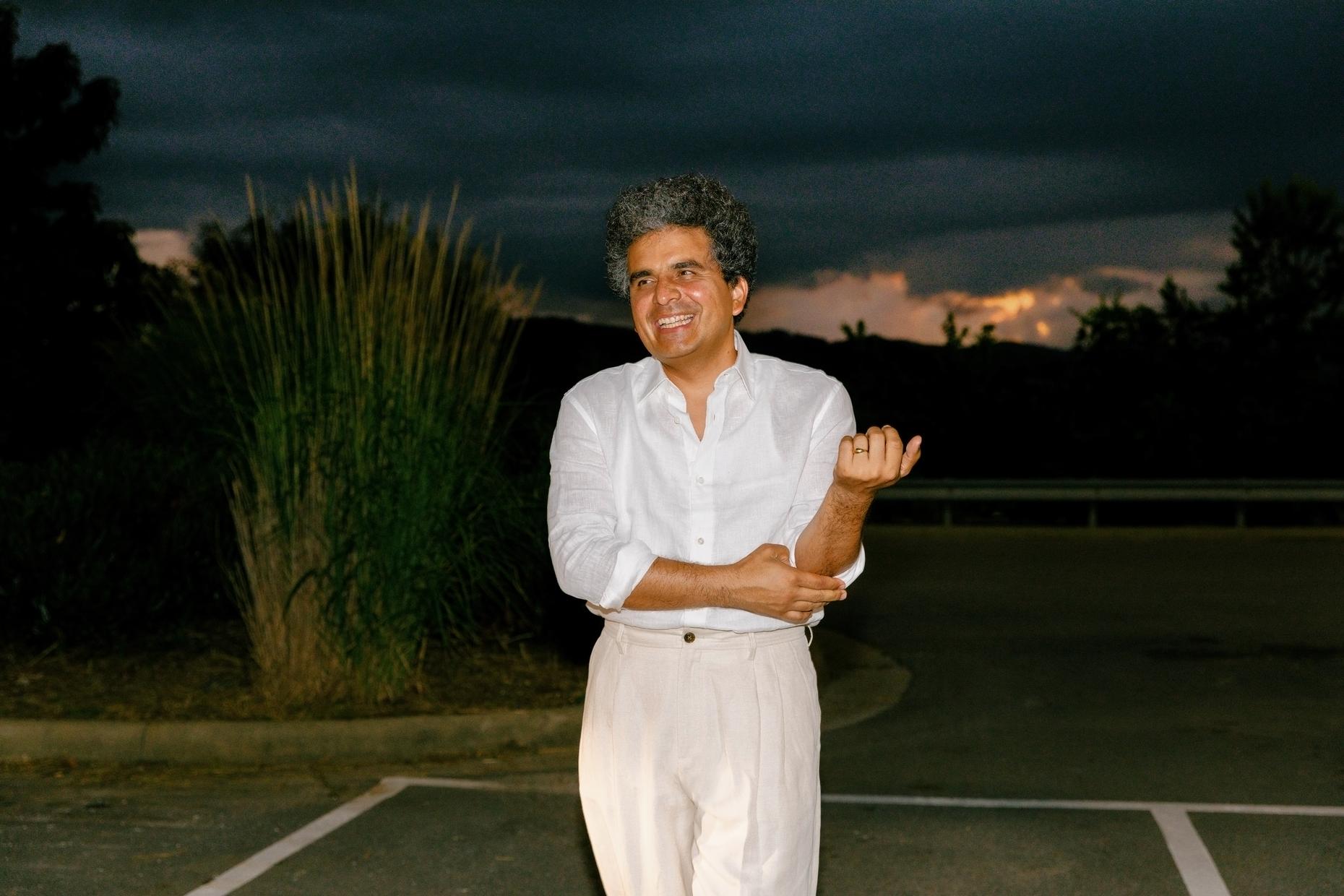
All Of It with Alison Stewart
Helado Negro: 'Phasor' (Live from Five)
00:22:31
Helado Negro performs live!
Loading summary
Transcript47 lines
- [00:04]
Roberto Carlos Lange (Gelato Negro)
Listener support WNYC Studios.
- [00:18]
Host (possibly a WNYC presenter, name not specified)
This is all of it from wnyc. I'm Alison Stewart. The one time Brooklynite, now Asheville, North Carolina based musician Gelato Negro is known for his deeply considered and atmospheric music. He'll be back in New York City soon though at Webster hall on April 24 in support of his new album Phaser. It features tracks both in Spanish and English, telling stories of real people as well as meditations on nature and memory. Phaser will be out this Friday, but we're going to get a little bit of a preview. Gelato Negro joins me live from Studio 5. Welcome back to all of it.
- [00:52]
Roberto Carlos Lange (Gelato Negro)
Thanks for having me.
- [00:53]
Host (possibly a WNYC presenter, name not specified)
We're going to hear a performance first. What are we going to hear?
- [00:55]
Roberto Carlos Lange (Gelato Negro)
We're going to hear a song called Colores del Mar, which means colors of the sea.
- [00:59]
Host (possibly a WNYC presenter, name not specified)
This is Gelato Negro. SA.
- [03:35]
Opal Hoy
I.
- [04:27]
Host (possibly a WNYC presenter, name not specified)
That was Gelato Negro with Colores del Mar. Before we go any further, will you introduce our audience, our radio audience to everybody in the room?
- [04:34]
Roberto Carlos Lange (Gelato Negro)
Yeah, for sure. On drums is Jason Nasri. On bass and guitar and multi instrumentalist extraordinaire and the Andrew Stack. And on piano, today's and voice is Opal Hoy. And I'm me, Roberto Carlos Lanhi.
- [04:52]
Host (possibly a WNYC presenter, name not specified)
Roberto, if you go on the Loto Negro social media, you are always sharing your influences. You're very open about your inspirations. Why do you want to share that with folks?
- [05:06]
Roberto Carlos Lange (Gelato Negro)
It's fun. It's like the thing I really enjoy doing. I think one of the like, I think that comes from like a place of, of I, I'm curious and I find when I find things that I love, it's like, why not want other people to love it? I mean, not forcefully, but you're just like so excited about things. I think I get excited about especially music, you know, I like, I think the thing I like doing the most is sharing music with friends. And it's like I find those friends that we do that a lot and so we're just like going back and forth. It's like this exhausting session of just like, we're just like, oh my God. But check this out, check this out. So I think that's like, it's invigorating.
- [05:41]
Host (possibly a WNYC presenter, name not specified)
So many fans of yours who are New Yorkers and listen to wnyc know you used to be based in Brooklyn, now in Asheville. Why the move? As all New Yorkers want to know, why'd you go?
- [05:53]
Roberto Carlos Lange (Gelato Negro)
Yeah, why not? It was good timing for, for me and my partner. It was a perfect time for us to go and see what's new and possible. I think the thing that always happens is you get comfortable, and it's harder to move as you get older. And you're just like, why would I move? And we realized that the day we put our stuff in this new place, we're like, what did we just do? And that's really hard. But it's also exciting, the challenge of knowing that you can do this. And I think it's reassuring to know that you can. It's change in the sense that you're, like, embracing something that you. You weren't sure you could do.
- [06:31]
Host (possibly a WNYC presenter, name not specified)
Yeah. Would. Didn't. Did the move change your songwriting process at all?
- [06:39]
Roberto Carlos Lange (Gelato Negro)
I think I've been writing the same song forever, but I think what it did was give me the ability to have this. I think I've always had a lot of focus on creating and finishing songs, but I think the focus was kind of put under a different lens in terms of, like, it wasn't this. This ambient stress behind me. I think in New York, I had a lot of these very intense feelings when I'm trying to make something or be productive, per se. But while I was focusing on this record, I was able to use that process and realign it with now this other kind of feeling of expansiveness and also having space, literal space, and some brain space and body space.
- [07:18]
Host (possibly a WNYC presenter, name not specified)
A lot of Negroes new album is called Phaser. It will be out this Friday. A reminder, they're playing Webster hall on April 24. So in the press notes for the album, you said that the bedrock for this album came in 2019, when you interacted with this machine, the Salmar construction machine, thought to be, like, the first composing machine ever. First of all, how was that explanation? Not great. I could use you a little bit better. Could you please explain to folks what it is and how you interacted with it?
- [07:46]
Roberto Carlos Lange (Gelato Negro)
Yeah, I know it's hard because it's kind of like one of these, like, really technical things, but it's also. I think that was. The whole idea was, like, something super technical behind the hood, conceptually. But then the application was, like, really fun. And it was invented by this guy, Salvatore Martorano. It's living in the d' Souza archives in Champaign, Illinois. And the archivist, Scott Schwartz, who had been in contact with since 2015, I finally got a chance to visit it in 2019, and I got to record it. And it's like this generative synthesizer at the time. It's easy to find something like that now. That's, like. That happens. You can buy a machine now and it does these things. But then it was kind of just brilliant and fun and interesting to see a composer, an educator, be able to like apply his idea. And someone's like, we have the supercomputer. He's like, I want to make this machine that makes weird sounds. And they're like, sure. And it seems very not common then to have those resources. And so it made wild sounds. And I was able to use it in my recordings, kind of revisit those recordings and use them as like textures and loops and use them as fodder, but also influence, but then part of the arrangements of the music as well.
- [08:56]
Host (possibly a WNYC presenter, name not specified)
Go Google it. It's really cool to look at. By the way. I'd love to hear another performance I have in my list here. I Just Want To Wake up with youh is the title self explanatory?
- [09:08]
Roberto Carlos Lange (Gelato Negro)
Yeah, I mean, I think it is. I think, you know, it can be as literal as you want, but it's also like. Can also be like you want to wake up with yourself. You're like, I feel good about myself. I wake up and I'm like, I just want to wake up with that. That feeling that I woke up the other day. Like I just. I want that day again, you know? And I think that's like, kind of like looking forward to that more than anything.
- [09:29]
Host (possibly a WNYC presenter, name not specified)
Here's Hilado Negro.
- [09:50]
Opal Hoy
You take me all around Uptown walk slow dance fast, let's turn around. Cause all I want to do is sing your song again and again Ain't all I want to do is see you sing my name again I just want to go with you I just want to go with you Just wanna wake up with you I just wanna wake up with you I just wanna wake up with you I just wanna wake up with you I just wanna wake up with you I just wan. Could we make this a new place to stay now? Island seem lonely now Float miles to see your face string hearts to heart sing now my voice changes so you know I'm just a boy, I'm just a girl I'm just a man I'm just a woman I just wanna regard with I just wanna go, just wanna go I just wanna go with you I just wanna go with you I just wanna forgot with you I just wanna go with you I just wa.
- [12:44]
Roberto Carlos Lange (Gelato Negro)
Me.
- [13:26]
Host (possibly a WNYC presenter, name not specified)
That was Gelato Negro performing live from Studio 5 here at WNYC. We got an unsolicited text that says great music. I hear echoes of the Brazilian Tropicalissimo movement.
- [13:39]
Roberto Carlos Lange (Gelato Negro)
Cool, cool.
- [13:40]
Host (possibly a WNYC presenter, name not specified)
Just let Them share that. There's a. I sound like I was googling through the entire listening to the album, and I kind of was because I loved reading about Lupe Lopez. Yeah, there's a song called lfo, which stands for Lupe Finds Oliveiros. And so Paulina Oliveros was a composer.
- [14:00]
Roberto Carlos Lange (Gelato Negro)
Correct. And Lupe an educator, philosopher, etc.
- [14:04]
Host (possibly a WNYC presenter, name not specified)
And Lupe Lopez was someone who helped make sender guitars.
- [14:08]
Roberto Carlos Lange (Gelato Negro)
Yeah. Apparently I don't know anything about her. So, you know, I just found this photograph online while I was, like, googling, looking for an amp that I used to use. And I was like, do I want to buy a new one? Do I want to buy an old one? I wasn't sure. And then this photo was just so striking to me. It was this black and white photo, and in the caption it says, lupe Lopez building Fender champ amps at the Fender, you know, shop in 1950. And I was like, cool, weird, awesome, you know, and then in the forum, it was. There was like a lot of collectors and people who were like, fans and how they knew these amps. So essentially, there's a market for her amps, but then there's collectors because there's a distinct tone that she created through these amps. This design that already existed. A bunch of people already made these amps, I'm sure, as well, that worked with her, but. But I just found it so interesting that they. They loved it. And how they knew that she made the amp was that she wrote her name Lupe on the inside. I think it was like a quality control thing. So I'm sure there's other amps out there with other people's names on there, but it was just like so distinct. And her sound was so. I guess the sound that she was able to do that with her care and touch and talent, she was able to make something different out of this design that was already created.
- [15:20]
Host (possibly a WNYC presenter, name not specified)
And people are really obsessed with it. Having one.
- [15:22]
Roberto Carlos Lange (Gelato Negro)
Yeah, I think there's like a niche, you know, I don't think it's like, worldwide, but I think there's like a niche. You know, it's cool to see when people are into something and just be excited about it. And it makes me very excited to see that some. Someone can be so appreciative of someone's work, you know, just like just doing something that they were doing out of necessity. Like, I'm sure it was her job, but she cared about it. It was cool. She came in, she did it, and she wasn't trying to, like, she wasn't like, I'm gonna make the best amp in the world. She was like, I'm just gonna do the best job I can today.
- [15:49]
Host (possibly a WNYC presenter, name not specified)
What was interesting about having Lupe meet.
- [15:52]
Roberto Carlos Lange (Gelato Negro)
Pauline, I think what I was trying to do was, like, there was this connection. What I was saying before about, like, focusing on these things that you can do, not trying to do everything, but just one thing you can do. And I think that was the thing that Pauline was talking about with deep listening, this, like, philosophy that she developed about not just listening to, like, music or. But, like, deeper listening to the world around you and yourself and having this connection that can kind of center you, that makes you feel connected. And I think I was connecting this, like, this deep attention that seems like Lupe was doing. And it. By putting this deep attention and creating this, she was able to harness the sound, this specific sound that people appreciated over time from, like, the 1950s till now. And I. And I feel like that's, like, a great example of this. This idea of, like, deep listening. Everybody was, like, appreciating the work. The simple, you know, task of doing this one thing as. As well as you can do it and knowing that it was good. It was gratifying for you. And you never know the impact that'll have over time with more people.
- [16:52]
Host (possibly a WNYC presenter, name not specified)
It's interesting. I'm nodding because you're talking about deep listening. And for folks who don't know, you were a Foley artist.
- [16:57]
Roberto Carlos Lange (Gelato Negro)
Yeah.
- [16:57]
Host (possibly a WNYC presenter, name not specified)
So you're very aware of sound and how people listen and what things sound like, what from your work as a Foley artist has helped your work as a musician.
- [17:06]
Roberto Carlos Lange (Gelato Negro)
So many things. I used to work with my friend Jay, and we used to, like, trade off. He would do the Foley, and there's just so many things, like when the thing you're looking at, when you're looking at the screen, you're, like, paying attention to all the textures of the fabric that people are wearing, the shoes. So sometimes you're thinking about, like, well, if there's a scene with somebody wearing heels, and you got to put heels on, and then you would get some short shorts on, and you would go inside the Foley room, and you would have to, like, whoever's walking with some heels. That was a thing. And it was really funny because we would be, you know, either of us would be staring at somebody, you know, doing that, like, in heels, you know? So I think that it was funny in the sense that it's just, like, something we're not, like, doing or used to. So. But in the sense it was like, the artistry of it was like, learning how to distribute weight and, like, understanding what that means from, like, walking on pavement to cement to rugs to carpet. And that is, like, deconstructing life in itself. When you're watching humans, like, go about what they're doing, it's like thinking about everything that you're doing. Even breathing is just like. So when you're listening to people breathe in a room, it's like. It's so freaky, you know?
- [18:13]
Host (possibly a WNYC presenter, name not specified)
I know. Well, I hear it. I hear a lot. I hear people breathing in my ear, my headphones a lot. And that applies to your music how?
- [18:24]
Roberto Carlos Lange (Gelato Negro)
I don't know.
- [18:27]
Host (possibly a WNYC presenter, name not specified)
That's a perfectly fine answer.
- [18:28]
Roberto Carlos Lange (Gelato Negro)
No, I think it's good. It's one of those things where it's fun. Like, this whole, like, idea of deep listening, you know, it's like, I love textures, and I love. I think when people ask me how I make music, I don't really make music in this, like, traditional compositional sense where I'm, like, working from left to right. In a linear sense, I'm working vertically. So when I'm creating the music, I'm over time. I'm peeling back the layers or adding layers vertically. Not necessarily. Like, this is the chorus. This is the verse. You know, it's like sometimes I'm like. I don't even know what this is. And even when we're rehearsing, sometimes, like. Like Andy or Jason, we're trying to figure out what the timing is, and I'm like, in my mind, while we're, like, trying to, like, figure out something really simple, I'm like, why did I make this weird? It could have just been normal. So there's. That's that part.
- [19:16]
Host (possibly a WNYC presenter, name not specified)
It doesn't have to be normal. It's okay to be weird. The last song you're gonna play for us, what is it?
- [19:22]
Roberto Carlos Lange (Gelato Negro)
It's called Best for your and Me. And Opal's gonna join us on piano and sing with us.
- [19:27]
Host (possibly a WNYC presenter, name not specified)
This is a lot of Negro. The new album is called Ph There.
- [19:58]
Opal Hoy
Mom's asleep that's not home it's what's wrong and I go outside looking at the moon went too long and I go outside looking like the moon went too long what's best for you and me what's best for you and me it's all wrong what's best for you and me? What's best for you and me? It's all wrong I go outside looking at the moon way too long.
- [21:38]
Roberto Carlos Lange (Gelato Negro)
And.
- [21:38]
Opal Hoy
I go outside looking at the moon went too long what's best for you and me what's best for you and me it's all what's best for you and me what's best for you and me it's all wrong what's best for you and me what's best for you and me it's so wrong what's best for you and me what's best for you and me it's all.
- [22:40]
Host (possibly a WNYC presenter, name not specified)
For 140 years, MultiCare has been in Washington prioritizing long term solutions, partnering with local communities and expanding access to care. Together, we're building a healthier future. Learn more at multicare.org@rxbar they believe in simple nutrition without the BS. That's why they said no to artificial ingredients and yes to deliver intentional, transparent nutrition. Try their original 12 gram protein bar, the Nut Butter and Oat bar, or Minis RXBar, the proud sponsor of no BS. Use code RXBar on RXBar.com for 25% off, subject to full terms and conditions and to change. Valid until September 30, 2025, and may not be combined with other offers. See rxbar.com for full details and limitations.