Loading summary
Transcript44 lines
- [00:00]
A
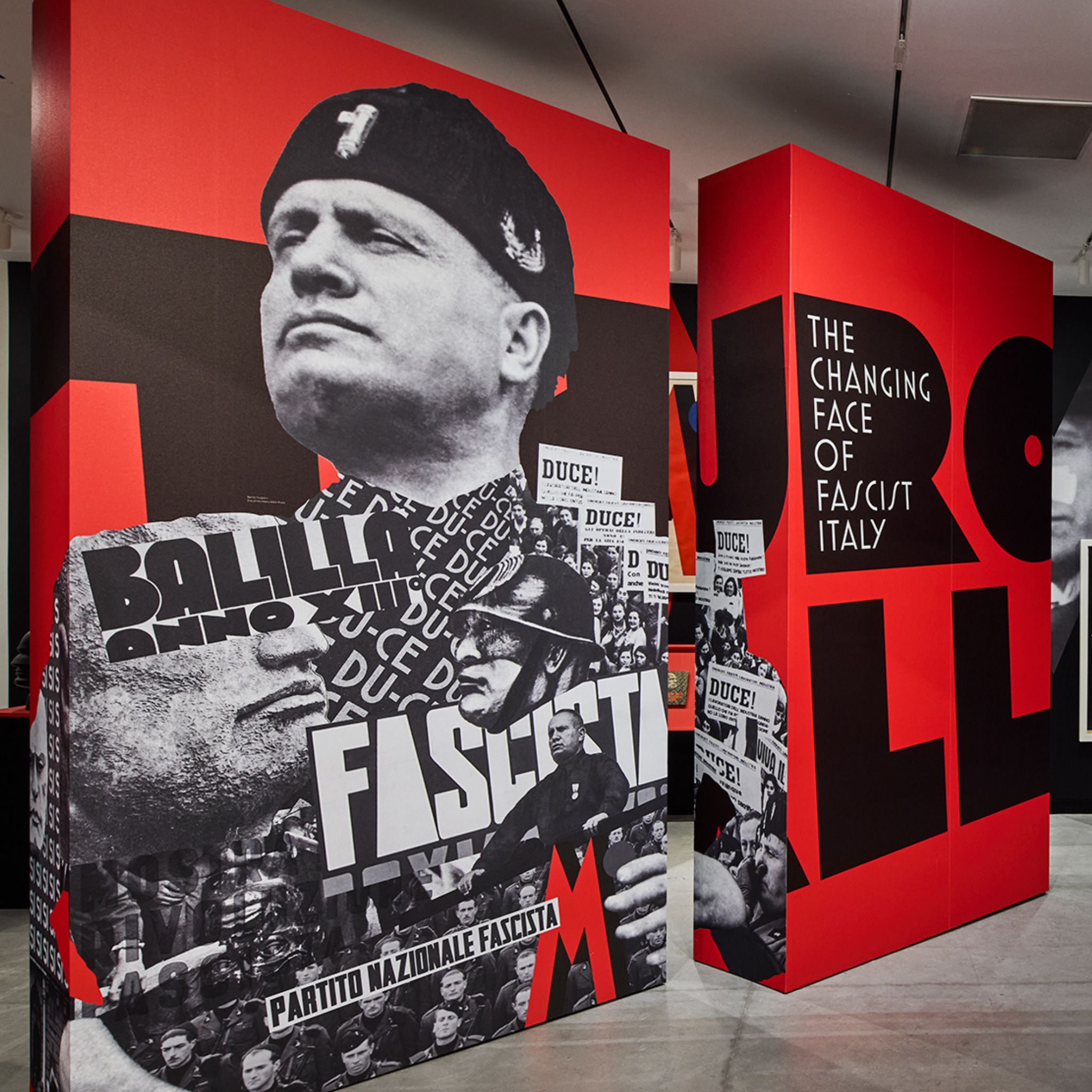
All of it is supported by Progressive Insurance. You chose to hit play on this podcast today. Smart Choice. Make another smart choice with Auto Quote Explorer to compare rates for multiple car insurance companies all at once. Try it@progressive.com Progressive Casualty Insurance Company and affiliates not available in all states or situations. Prices vary based on how you buy. This is all of it on wnyc. Hi, I'm Alison Stewart. We have been reading this month's get lit with all of it book club pick and now it is time to discuss. Tonight I will be in conversation with Ocean Huang, the author of the Emperor of Gladness. The event sold out almost immediately after we announced it earlier this month, but our partners at the New York Public Library have just released a few more seats now. Tickets are free, but grab them now if you want to be with us in person. It all starts tonight at 6pm Door doors open at 5:30. Get there early to make sure you get a good seat. It's first come first serve. And when we reach capacity, that's it. Now, in addition to Ocean, we'll be joined by musical guest picked by Ocean himself, Quinn Christopherson. You might remember him from his Tiny Desk performance. It is happening tonight. Head to wnyc.org getlit to grab those last few tickets. It's also where you can get information about how to watch the live stream of Tonight's event. That's wnyc.org getlit and we'll see you tonight. Now let's get this hour started with a new exhibit that looks at how Benito Mussolini used art to sell the idea of fascist Italy. The Italian Fascist Party was headed by Benito Mussolini, a movement where images were plentiful and propaganda was everywhere. An exhibit running now at Poster House titled the Future Was the Changing Face of Fascist Italy looks at the entanglement of Futurist art movement, the Futurist art movement and Italy's fascist political regime. It explores how the Italian dictator and how fascism used art as a movement. The Future was then the Changing Face of Fascist Italy runs now at the Poster House through February 22nd. I'm joined now by curator Ba Van Cise. It is nice to meet you.
- [02:28]
B
It is nice to meet you as well. Thanks for having me today on this cold, cold day of light news and light fair. Between this and Bernie Goetz, it should be a nice chill day.
- [02:36]
A
So before Mussolini and the Fascist state, what were the origins of futurism as an art movement? Before they even got intertwined.
- [02:45]
B
So they're not always mingled. So fundamentally what you're seeing in Italy is the same that's happening everywhere in Europe, everywhere in the world, all the time. New art movements come and go. Futurism starts quite a bit before Mussolini is even a glint in the eye of the Italian nation. In 1909, a guy named Marinetti comes up with a futurist manifesto, kind of sets this movement going. It's a radical departure from what you're seeing Italy before that, which is what we call style liberty. It is art nouveau in Italy. What you expect from art nouveau anywhere in the world. It's every line stretched long enough can become a curve. It's very floral. There's lots of people who've forgotten to put their clothes on, that sort of thing. What you see with Marinetti is a really rapid departure from it. What you see is this implementation of technology, of speed, of the idea of fast, futuristic movement. It's a little kooky to the modern sensibility. It's Ginsburg before Howell. It has that kind of feeling to it. There's a lot of early adopters who are sort of on the fringe of Italian society. You see Marinetti, you see Bocconi, who becomes very important to this, even though he does not live long enough to see the rise of fascism as well. But the art movement itself precedes what happens in fascism by quite a measure. There's a reason why it becomes intertwined with fascism, but they do begin separately.
- [04:06]
A
Why did they become intertwined?
- [04:07]
B
That's a great question. I couldn't imagine you would have asked it. So they become intertwined fundamentally because Mussolini is perhaps the rare man who is both a fighter and a lover. He has many loves in his life. The most important to the topic at hand being a woman named Magda Sarfati, who is a incredible, incredible woman. She is a peerless art critic, art promoter. She is a Venetian Jew. She is an extremely cool person. You can sort of imagine Gertrude Stein with better couture. She also happens to be Mussolini's longtime lover, probably the closest thing he has to love of his life. Now, when you talk about him, you talk about fascism, there's a lot of complicated opinions about it. There's someone right now who is driving around New York City or America who is pounding on their steering wheel saying, no, ba, that's not right. Or it's more nuanced than that. But it's a pretty top level way of thinking about it. The importance of Margaret Serfati is that she's surrounded by artists. Her arguably closest friend is Umberto Bocconi, who is a painter and sculptor. He is a futurist. When Mussolini comes to power, what ends up happening as we see time and time again in that country, in this country and many other countries, is that you see art movements follow the politics of the time. Advertising fall apocs at the time when you have the boss's girlfriend having a particular taste, all of a sudden you see in the aftermath of the First World War, the entirety of the Italian art scene snap into futurism. Sarfatti brings it to Mussolini, who is not a particularly keen art I himself, but understands the value of keeping everyone happy and keeping this movement going from that point on. They're not the same, but they're intertwined forever. As long as he's alive, they're tied to each other.
- [05:51]
A
Yeah. You said every single thing in this show exists because of her?
- [05:55]
B
100%, yes.
- [05:56]
A
Is that because she's his lover or is it because she has an eye for it? Why her?
- [06:02]
B
She's both. So fundamentally, if you are talking about. If she had never been his lover, you'd still be talking about her in the context of Italian art in the 20th century. But she is also his lover. They're together for. Don't quote me on this angry person steering wheel. Like they're together for like 18 years, some of that. And because they're together, he is introduced to all of these artists who are really, really close to her. Many of the people who are the founders of the feasts of the symbolism of fascism are connected to her. You're talking about. And now this person with the angry steering wheel is an Italian person. You're talking about Gabriel d', Annunzio, who is a. A really interesting Italian poet, writer, one armed fighter pilot, lover of everything. He's in her circle. He's the person who comes up with a lot of the early symbolism of fascism. He's responsible for the idea of black shirts, of the famous Roman salute, which we can't do in polite company, et cetera, et cetera. So because all of these people know Mussolini through her, they all influence the political movement. There's no way around it. A lot of what we think of as the traditional visuals of fascism come to him because he knows these creative people who are thinking about the future, who are thinking about aviation, who are thinking about cars, who are thinking about neoclassicism in an unusual way. They come to him through her. So she has this sort of double edged effect on Italian society.
- [07:41]
A
And for people who are listening and want to check out our Instagram one, I'm sorry about My picture taking. But I did take pictures of the show and it's on our instastories at all of it, wnyc, so you can understand what we're talking about. I'm speaking to Ba Van Zeiss about the future was then the changing face of Fascist Italy. It's now on view at Poster House. I did want to ask one more question about Margherita Saffriti. I hope I said that right. She said she was Jewish.
- [08:08]
B
She sure is, yeah.
- [08:09]
A
So what happened to her? Given that Mussolini's government. Government publish the manifesto of race.
- [08:16]
B
So there's. The relationship between the Italian government and the racial laws is very complicated. There are tremendous. I don't say tremendous. There's quite a number of Italian Jews who are involved in the raising of the Fascist government. Sefati among them, but there's quite a few others. Mussolini himself, at least at the beginning, does not really hold the same racial beliefs that his later allies will. He does want something that is very important to him. The entirety of the Fascist government is founded on the idea of. How to phrase this for Radio Italy was once great. Rome was once great. They would like Italy to be Rome again. And so they become fairly obsessed with the idea that there was a time when the known world to them was ruled by Rome and they'd like to have an empire again. He makes a dirty deal with the Germans to be able to do that, take the eastern horn of Africa. In doing so, the racial laws, which he does not necessarily originally buy into, but later does sort of evolve into, are imposed upon him. This is disastrous for Italian Jewry. Margaret Serfati goes to England, does the same thing in England, by the way, that she's been doing in Italy. She still becomes a patron of the art. She becomes the center of a lot of art and critical circles. She writes a memoir about her time with Mussolini, his rise to power, the influence of futurism that came through her. She titles it, curiously, My Fault, talking about him. But fundamentally, the racial laws that are imposed because of the alliance of Germany lead to her leaving the end of relationship with him, the departure of quite a lot of Italian Jewry, and in the end also his own downfall. The implementation of Nazi policies and of course the Nazi alliance leads to Italy being dragged into the war that Mussolini perhaps did not want us to be in. That's complicated as well. And in the end, Mussolini ends up, you know, hanging upside down and quite dead at the time because of it, which perhaps would not have happened if he hadn't decided to desperately need to have Ethiopia.
- [10:27]
A
There's some amazing text in this exhibit. And one thing that really struck me was this line. It says, the face of Italian Fascism was created by creatives. It was maintained not just by marching, but by museums. When do we see this start?
- [10:45]
B
So you see it start fundamentally with the growth of Italian infrastructure under Mussolini. Mussolini's father had been an avowed socialist. He gets really into social programs. He would not have called himself a socialist, but he certainly is interested in that. There's the famous line about Mussolini making the trains run in time. He didn't. He didn't.
- [11:06]
A
Right.
- [11:06]
B
He didn't at all. But what he does do is he makes a lot of train stations. What he does do is make a lot of buildings. And there's nowhere in Italy where you can throw a shovel into the ground and not find something ancient. They start building museums. They get obsessed with the idea of the old Caesars. He starts calling himself an emperor. There's lots of Roman numerals everywhere, et cetera, et cetera. You start seeing really truly the explosion of museums as we know it today in Italy. And there's no shortage due to this period, due to the fact that there's just so much of it. There's this embrace of this classical culture, sort of in contrast with the futurists and what's going on there. You see them sponsoring art exhibitions both in Italy and outside. We've got posters for exhibitions all throughout Italy as well as in France. They really want to show to the rest of the world that Italy is becoming a new and different nation while still steeping its old values. But fundamentally, they're selling a lot of these ideas through both the support of contemporary artists as well as the remembrance of those who came in centuries before. They do want to create this artistic legacy of. My goodness, aren't we the Italians, just the very best. And let us show you so many examples from Caesar until now.
- [12:21]
A
That's interesting because now I'm thinking about the third three sculptures which are right in the center. Could you explain those to us? The helmets?
- [12:30]
B
Yeah. So what everyone wants to talk about in the exhibition, I think, and we have a wonderful exhibition designer named Ola Baldock who came in and created this sort of intimidating might be the right word for it, but intimidating design for the exhibition that dumps you into these three sculptures at the center of it.
- [12:46]
A
Incredible.
- [12:47]
B
One is a fairly well known sculpture of Mussolini which is based on ancient depictions of the God Janus. Janus sees forward and backward. He can see the future and the past. Mussolini expands this as a 360 degree view. His head almost appears as if it is in a whirl in the sculpture, because Mussolini super passes over even Janus and can see in all directions at once, in all times at once. He is that godlike. You see a lot of that. You see a lot of art in praise of emperor, just as it was in antiquity. It is again in this, this, this idealized second Roman Empire that Mussolini creates, where you see Watson, of artists making these fawning depictions of him. You see it in our posters, you see it in our sculptures. You see if you're talking about Dante's sculpture of the. We have sort of, how to describe it for radio. A semi liquid soldier in helmet who even he, while not Mussolini, boy, does he, howdy, does he ever look like Mussolini. So there's this idea that Mussolini is not just a person, but he is the state. That the individual Italian is also Mussolini. We have a wonderful poster where Mussolini himself is composed of thousands and thousands of Italians. It becomes a sort of cult of personality, as fascist governments often do.
- [14:15]
A
And it's also interesting that you mentioned speed earlier, because there's a lot of planes, there's a lot of trains, and there's a lot of posters for Fiat.
- [14:23]
B
Yes.
- [14:24]
A
How does Fiat fit into this?
- [14:27]
B
So fundamentally there's an emphasis on Italian products. The word. I know how to say it in China, I don't know how to say it in English, but I'm gonna guess it's autarky, or autarky in English. But the idea that Italian things consumed by Italians should be from Italy. So you see in the idea of a totalitarian state, a word that he coined. You see this idea that the government should have a total control of corporatism, of governance, of everything. And so you see the constant pushing of Italian products, kind of regardless of their quality. I apologize if the Fiat folks are listening. Fiat's not making great cars at this time. But you're going to see lots and lots of posters for them, which essentially all hinge on the idea of you should buy Fiat because it's Italian. So are we. So is Mussolini. Hooray, right? So you should. That's why you should do it. Same thing with the aviation. I had this horrible harebrained scheme when we were putting an exhibition together. I desperately wanted to get a period Italian military airplane into the gallery. Now it would not fit in that gallery. You've seen that space. It would never fit.
- [15:33]
A
It wouldn't.
- [15:34]
B
It would not fit in a million years. I Did not tell the museum director this. I figured I would just try and get forgiveness afterwards rather than permission before. But the Italians, because of futurism, are investing a tremendous amount of their emotional and actual capital into building up aviation in that country. They're having lots and lots of air shows, which is sort of the fulfillment of the bread and circus aspect of the old Roman philosophy. They're having lots and lots of air shows. They're building up their air force. They're even sending these large air flotillas to the Americas to try and convince the Italian American diaspora population in the United States, in Argentina, in Brazil, that, hey, maybe it's time for you to come back. Maybe you're tired of Canarsi. Maybe you don't want to be a plumber anymore. Maybe you would love to come back to Sicily, to Rome, to wherever. Look, we've got airplanes now. Things are better. The reality is, a little bit of it is putting style before substance. They're so eager to build up these assets. They have beautiful planes that crash a lot. They've got a really, really good looking air force that is inconsequential in the war, but it is futurist. They zoom, they are fast, they look great, sound great. Air shows are great. The audiences who come to these air shows really feel positive about the regime that is ruling over them. So it does work.
- [16:58]
A
How do the artists feel?
- [17:02]
B
So most of the artists who are in this show, it's perhaps the most interesting aspect of it to me. Most of the artists who are in the show are older folks who've been doing other things for most of their lives. They have been doing art nouveau before this. Some of them are old enough. They've been doing sort of the town equivalent of belle epoch before that. And so what you see is a lot of these artists who have styles they prefer, who have work that appeals to them more, who turn on a dime when it becomes advantageous to do so, because you can exchange money for goods and services, you can feed your family with that, as opposed to just hopes and dreams and art. So you see a lot of these folks who change completely. There's an old precedent for that. We've seen this a number of times in the last 10 years in the United States, where you've seen big changes in what advertising looks like based on big political changes. Without diving too deep into that. But if you went back 2,000 years, you would see criers in the Forum in Rome talking about how Brutus is an honorable man between trying to sell you bread and fish. And whatever else. Right. So fundamentally, it's not a new principle, it's just how it applies here. Suddenly there's a new style. Suddenly we have to change. Oh, my goodness, I'm 55 years old. I guess I'm going to be making lots and lots of posters for fiat.
- [18:18]
A
Now, were there any kind of anti fascist contingents within the artist community?
- [18:25]
B
Oh, boy. All right, so we don't quite have enough time for that, but all right. So yes, there are. The thing to understand about it is that Mussolini has a kind of tough rise to power when he first starts. And there's a lot of politics that are involved with that. By the time we get to the cusp of the war, he's quite popular. He is. He enjoys a popularity that a lot of leaders today would absolutely die for. But there are always artists who are in opposition to this. A lot of them go into exile. Some of them operate within the parameters of the regime. There are arguments to be made that artists sometimes fared a little better in opposition than others did. And Mussolini's regime, there's a huge asterisk on that. But there is some truth to it that is partially due to the influence of Srafati and the fact that he's surrounded by artists. It's not universally true, but there is some minor criticism allowed amongst the artist class. But what you really see is in 43, the Americans land in Sicily, the Italian government almost immediately falls. You see the rise of the partisans which fundamentally come out of the far left and the Communist Party amongst them, there's a tremendous artist cadre who keep rolling, keep running after the war, who become the sort of folks who are making films and doing interesting things afterwards. So they exist. I wouldn't necessarily say they're vocal until it's advantageous to be so, but there's certainly folks who are doing that. We tell a few stories about getting too far into the weeds in the show about one fellow who went into exile in Africa and creating things. We talk about folks who went to America for the same. But fundamentally, once it becomes a little safer, you start seeing a lot of voices saying, well, you know, we were always against this. It's not always true, but it is well found.
- [20:31]
A
Do you see parallels to Mussolini's use of propaganda today?
- [20:37]
B
Do I see parallels to it? So you're going to see parallels of Mussolini's use of propaganda to any political movement at any time. You are going to see all countries use propaganda? All countries, propaganda, yes.
- [20:54]
A
It's not United States, everybody.
- [20:56]
B
It's not it's not novel to Italy, but what you. What you will see, you know, there are a lot of growing fascist movements in the world today. And what I would argue is that a lot of them, both subconsciously and consciously, are looking at what these movements, their ancestors in the 30s, were doing. And they're certainly taking visual cues. They're especially taking cues from the idea of the rosier past we all like to remember. Right. And Kurt Vonnegut has this wonderful bit about the idea of what home felt like to him. And it's an imaginary thing when he was a kid and there were no problems and he had a mother, father, sister, brother, dog. We can always feel good about that because we tend to remember those little. Those little instances of it. You do see amongst a lot of the neo fascist movements that are around the world today, that idea of an appeal to a nostalgia for a time that if it ever existed at all, and it probably didn't, has long since passed us. That is something that certainly you'll see from Mussolini until now. You'll also see unquestionably a blurry line between where governments end and the corporations trying to walk a very, very narrow tightrope will begin. And so that certainly happens because nobody knows how to navigate it. That is a certain parallel, you'll see with Mussolini was perhaps a little bit more overt.
- [22:42]
A
What would you like people to spend just a few minutes in front of in this exhibit?
- [22:47]
B
The very last thing, which actually wasn't even my idea, I was. I was sort of pushed into. The museum director is named Angelina Lippert. And when we were getting the show started, it came up in one of the meetings. It is a coincidence to the show or why I curated or anything else, but my. My grandfather was in the mob that hanged Mussolini. And the show ends with the snapshot that he took of Mussolini and company hanging from the girders of a gas station in Milan. And should it be in the show? I'm not sure, but it is there. And we end the show on a bit of a reminder that these things can be scary and their influences can be scary, and they also end. And when they do end, often, more often than not, things snap a different direction. In 1945, Mussolini is hanged. He has no successor. In 45, Hitler dies as well. They die. There's no successors. The very next year, De Sica starts making his neorealist films in the streets of Naples and Rome. The very five years later, Sophia Loren turns up. Fellini turns up. It turns just as fast back in the other direction. These things always have a successor and it often surprises you. So that's where we end the show. And that's what I kind of like folks to think about. Not the course of it, but what follows next.
- [24:17]
A
You're an art guy.
- [24:19]
B
I hope so.
- [24:20]
A
You're a photographer. People know this about you. How did you get so involved with this history?
- [24:27]
B
So I actually. Thanks for spilling the beans on that. Yeah. So I'm an artist and author in my other life and a curator for Poster House and my attempt to be a serious person. And you know, for me, I came into it actually because of that, that history just mentioned. I am very, very interested and always have been. I always love. I've always loved cinema. I've always loved the way storytelling can be made long form in that way. And I've always loved what comes after. I've always loved those neorealist films. I've always loved what Fellini's doing, et cetera. These are folks who live through these horrors and then go say, I want to go make something beautiful. And I've always loved that. The person who sees the ashes and says, I want to make something beautiful, that's always appealed to me. But to learn about that person, you have to learn about all the folks who made them.
- [25:13]
A
The name of the show is the Future Was then the changing face of Fascist Italy. It's on view now at the Poster House. I have been speaking. The curator, BA Venzais. Thank you for coming in.
- [25:24]
B
Thank you for having me. This is Ira Flato, host of Science Friday. For over 30 years, the science Friday team has been reporting high quality science and technology news, making science fun for curious people by covering everything from the outer reaches of space to the rapidly changing world of AI to the tiniest microbes in our bodies. Audiences trust our show because they know we're driven by a mission to inform and serve listeners first and and foremost with important news they won't get anywhere else. And our sponsors benefit from that halo effect. For more information on becoming a sponsor, visit sponsorship.wnyc.org.