Loading summary
Transcript55 lines
- [00:09]
A
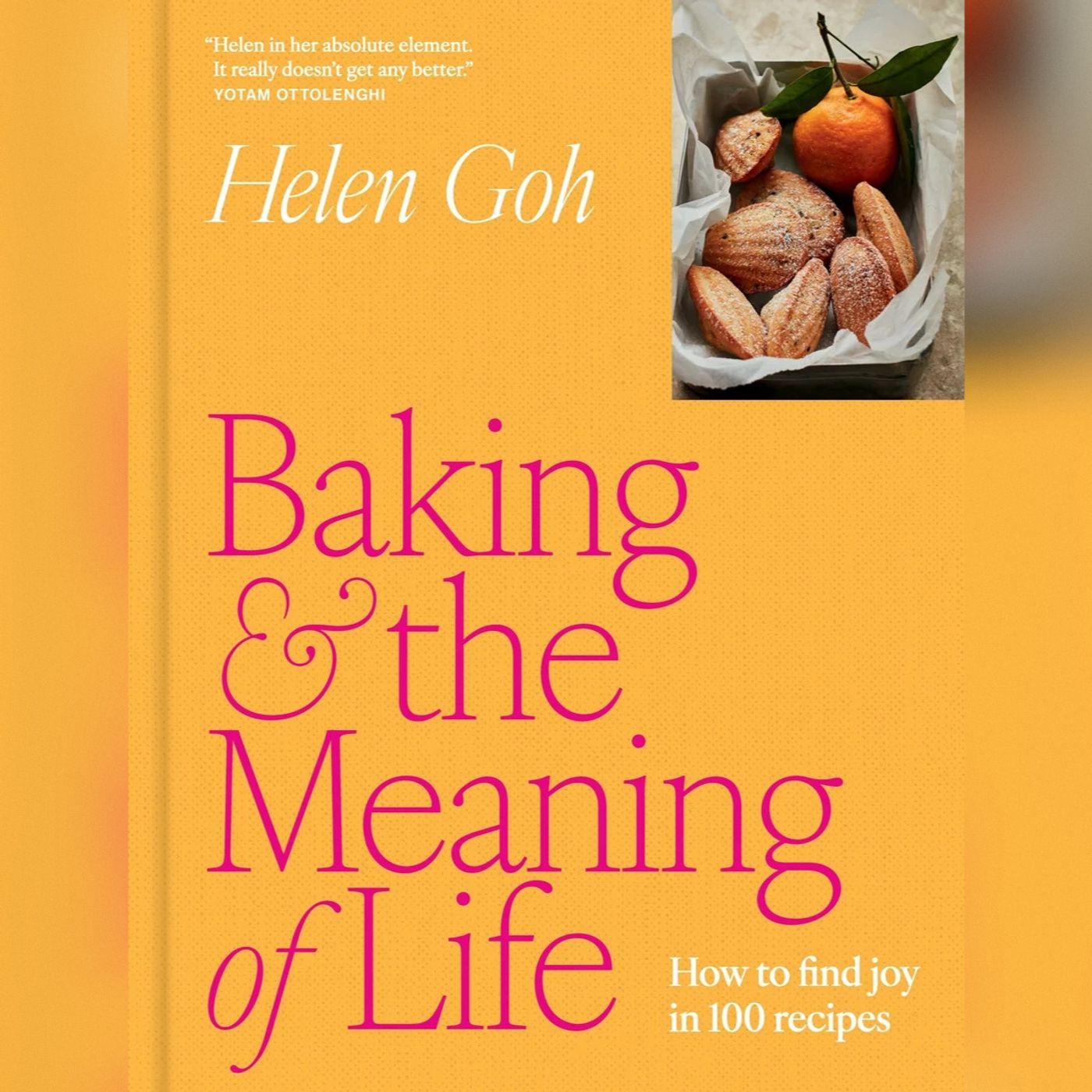
This is all of it on wnyc. I'm Alison Stewart. I want to give a give you a taste of what's coming up next week here on the show. You know, the storytelling nonprofit the Moth now they've published a new book called My Life in Stories. It will help you identify important details and milestones in your life and and shape them into stories. They'll join us on Tuesday to about it. On Wednesday, we'll celebrate Lunar New Year with a conversation about dumplings. New York Times cooking columnist Eric Kim and food writer Hetty Lou McKinnon will be here to share their favorites. And on Friday, the cast of the Putnam Counting Spelly Bee will perform live in WNYC Studio 5. That's in the future. Now let's get this hour started with some yummy eats. Helen Goh has made a successful career out of her love of baking. After a stint as a head pastry chef in Australia, she joined the award winning chef and restaurateur Yadam Ottolenge in London. There, she helped develop recipes for his restaurants and together they wrote two cookbooks, one called Sweet, the other called Comfort. But Helen's other deep interest is in psychology, which she studied in college. Somehow, while working in the hospitality industry, she found time to finish her studies and open a private therapy practice in London. For her first solo cookbook, she combines both loves baking and psychology, providing recipes that are made to connect, to nurture and to create a community. She argues that baking is a true expression of love. And since it's almost Valentine's Day, we invited her to join us here to discuss her cookbook, Baking and the Meaning of Life. How to find joy in 100 recipes is Helen Goh. Hi, Helen.
- [02:01]
B
Hi, Alison. Thanks so much for having me on.
- [02:04]
A
We are so happy to have you. Listeners, what do you bake for special occasions as gifts or what do you make for others to share? What do you bake that brings you joy? Do you have something that's coming up that you want to bake something for? Give us a call and tell us about it. Our number is 212-433-WNYC 212-433-9692. Why was this the right time to write a book that combined your your interest in psychology and your love?
- [02:34]
B
You know, I didn't plan it like that after, you know, collaborating on several books with Yota Motolenghi. And that was a very fertile and creative time and I absolutely loved it. You know, Ottolenghi is so much about bold flavors and looking externally and excitement And I suddenly felt this pull to look more inward and more internally for comfort and small, you know, everyday joys. And it occurred to me that through throughout my whole life and career, I've always baked, you know, small things in small gestures. Of course, at Ottolenghi, we have to sort of impress because it's a restaurant and it's a cafe. We need to get people in. But, you know, I was suddenly more tuned into the more domestic kind of cooking, the everyday cooking. And I realized that underpinning that domestic cook kind of baking is emotion. There's always someone around. There's always a relationship around, you know, something that you're baking, you know, for someone or with somebody. So that got me to thinking, I guess also my training in psychology helped me to turn or gain some insights into the reasons why we do that, why it's so important that we bake.
- [03:49]
C
Your focus is on existential psychology.
- [03:51]
A
Could you explain that for us a little bit?
- [03:54]
B
Yes. Existentialism looks at, well, if I was to summarize it in one word, is how to lead a good life. You have this one short life. What do you do to make it the best life? And it's about taking responsibility and agency. I trained, first of all in psychoanalytic psychotherapy, which I loved. And so when I did my doctorate, the college that I did that with was helmed by an existential psychologist. And I found that quite depressing, this idea that you just sort of have one life and you've got to make the best of it. But by the end of my thesis, I really came to see that, that that is the truth. You know, it is how to. How to lead a good life. And I guess I'm talking about baking as something that we don't need to eat. You know, none of us needs to eat cake, but why do we do it? And it speaks to the idea that there must be another reason. It's like art, you know, nobody needs it to survive, and yet it imbues our life with something inexpressibly beautiful and wonderful.
- [05:00]
C
Yeah, you mentioned, you know, baking is. Is not essential. It's not something that you have to do.
- [05:05]
A
So why is it important or is.
- [05:07]
C
It special to bake for someone?
- [05:10]
B
I think it's also symbolic. The very fact that it's not essential means, you know, why. And I think from a very early age, you know, we. We. We've known that being given a. A birthday cake, you're being celebrated. This. It's a connection with reward. It's a connection with a special time. We mark special moments whether it's a wedding or Hanukkah or Christmas or Eid or Chinese New Year. You were talking before, you know, we there, there are symbolic bakes. It helps us to kind of capture the rituals and traditions that underpin our lives because, well, you know, it is symbolic. You know, we know that Easter is coming. I'm at the moment testing hot cross buns for my column in at the Sydney Morning Herald. And so, you know, we're tuning towards those particular times that help us to locate ourselves in time and also in community because I'm testing it now. But in a couple of weeks there'll be many people, you know, baking hot cross buns. So it connects you to the wider world and public as well.
- [06:16]
C
We're speaking about a new book, Baking and the Meaning of Life, which contains recipes that encourage community and connection. I'm speaking with Helen Goh, award winning recipe developer, chef and therapist listeners. What do you bake for? Special occasions as gifts when you want to get together and share. Do you have something coming up that you want to bake for? Give us a call. 2124-339692-22433. WNYC. We've gotten a couple of texts here. Praline pecan chocolate bars on a shortbread crust. That sounds delicious.
- [06:50]
B
That does sound delicious. Delicious. That sounds very textural.
- [06:54]
C
The next one says boiled cookies. They're super easy, rich and filling. Been making them since I was a teenager. It's interesting when you, when you divided up your book, you reflect on how baking gives meaning to one's life. There are different categories like nurturing and sharing and ritual and tradition. How did you decide which recipes would go in which section?
- [07:16]
B
Oh, that's a very good question because actually one recipe could ostensibly go in a number of different sections. And what I try, it's a very personal book in the sense that when I think about that particular recipe, who inspired it, what was the context, what was the occasion? And so I hone in on that and usually there is my answer, you know, whether I did it because somebody was ill and I wanted to make a cake or an apple pie to take over when my friend was recovering or whether it's something I like to cook with my son and watch him, you know, not just grow and master something, but just that sense of nurturing that I have, that we're doing something together. So when I looked at, you know, the reality of, of how that recipe existed or exists in my life, that usually gave me the answer for example, there's a chapter called Remembering and Continuity. And that makes me think of my father and certain things that he likes. And, you know, certain times that we used to go out to a particular Chinese restauran and we would order these Shanghai pancakes. And so now I'm making these Shanghai pancakes. And there's something that it speaks to about remembering and the continuity, that this was something I used to do with my father, and now I make it for my family and my children. You know, that sense of remembering and also a continuation of something that I used to do with my father.
- [08:43]
A
Let's talk to Deborah from Westchester. Hi, Deborah. Thanks for making the time to call in.
- [08:49]
D
Thank you so much for taking my call. I really appreciate it. Great segment. I can't say enough about the act of baking challah. Challah baking. It happens to be Friday, so it's happening in my house right now.
- [09:02]
B
Yes. We're not going to religious people.
- [09:05]
D
Thank you. Thank you. Thank you. But the cultural connection that my children have felt ever since they were little, like really little, like two, they could help participate in the process, as well as my grandmother, who's in her 80s, who still loves to come and bake. The way the house smells, the idea that you have to walk away and you have this connective time together because then you have to come back and finish the process. That's also really special and lends itself to just a wonderful experience together. So it's more than just the actual food in the end. And so that. That's my two cents. Challah baking. Everyone should do it, Jewish or not.
- [09:49]
A
That was very.
- [09:50]
B
I think that's just wonderful. And actually, I really relate to that. In fact, I have a recipe for challah in the book, and it's slightly different because one of the things. So we sell. We. We, you know, do a Shabbat every Friday. My husband is Jewish, and my children, I noticed, used to love the challah so much that they would eat it all and then they wouldn't want their dinner. So in the book, I've done one that's less rich. It's more bready. So the challah that we used to buy is sort of a little bit. It's. It's very eggy and it's very buttery. Oh, not, you know, it's rich, and they really love it. And in the book, I've created one that doesn't have any eggs. For me, it's still plush. It's still beautiful. I still have that ritual and tradition of braiding it with them. And watching it prove and, you know, watching it come out of the oven, but it doesn't quite spoil the appetite.
- [10:43]
A
Let's talk to Sean, who's calling from New York City. Hey, Sean, thank you so much for calling all of it. You're on the air.
- [10:50]
E
Yeah, I wanted to talk about black cake. I'm from Jamaica and making black cake. It's a cake that literally takes an entire year to make because we soak the fruits and then they only make it for two occasions. They make it for Christmas, or if you're getting married, it's your wedding cake. You have it up the day of your wedding, but then you save the piece of the cake for about a year until, you know, God willing, guess you have a baby. But the black cake tradition for me is just the most amazing tradition because when my aunts and my grandmother and everyone would come together to make it, it's a whole day event. And they never make just one cake. They make like 10 or 12, 20 cakes. And my grandmother would ship off these cakes to all throughout the world, wherever my family was. So from Jamaica, it would end up in Brooklyn, Fort Lauderdale, Toronto, England. So for me, the black cake is. I mean, just thinking about it makes me feel. I don't know how to put it. It makes me feel very rich and just happy. It gives me so much joy. So that's my, my contribution.
- [11:48]
A
Thank you.
- [11:49]
B
Sean, can you tell us a bit what's inside it?
- [11:52]
F
I.
- [11:53]
E
You know what? I think the black cake is a spin off of the English fruitcake. No pudding. I forgot the name of the type of plum pudding. I think it's a spin off of the blood of the plum pudding, but it's just something to really enjoy. And they usually make little cakes for the children. You only get a small piece because it's very rich. They soak it, the fruits in wine and rum all year long. So by the time the cake is made, it's pretty powerful to say the least.
- [12:27]
A
Thank you. Sean, I wanted to ask you about a chocolate cake. In your book, it was called, and.
- [12:33]
C
People normally know it as the Guinness.
- [12:34]
A
Cake, which means you use. Use beer, but your version is chocolate ginger beer cake.
- [12:40]
C
Use ginger beer because there were little.
- [12:42]
A
Kids involved, I believe. What's the story behind it?
- [12:45]
B
But I also thought, I mean, I love that cake because it's one very, very easy. It's made in one saucepan with one whisk, so that's a real bonus. But it also has this really beautiful crumb that's really easy to eat and Then it's sort of topped off with this cream cheese icing. And sometimes I don't have Guinness in the house. And one day, I mean I was thinking, actually my children love anything ginger, gingerbread they adore, you know, and I thought, well, what about using ginger beer? It has the same sort of fizz as, as a beer. And when I try, and I love the affinity with ginger and chocolate together, for me that's a great combination. And when I tried it, I was just absolutely delighted that it worked just perfectly. And I think I ra prefer that.
- [13:34]
A
Now to the Guinness something for our gluten free friends. You have vanilla and nutmeg caramel. It looks like it's, it looks a little bit like flan. What's the secret?
- [13:43]
B
Yes, it is a bit like flan. And what's unusual is that it has proportionately much more milk than cream. And for me that was, that gives it a lightness. It's, it's, it's impossibly light because you often think of creme caramels or creme brulees as being quite heavy and rich and there's something actually quite refreshing and it's because it's predominantly milk and I flavored it with vanilla and nutmeg and I used to loathe nutmeg until I, you know, sort of infused the creme caramel with this and now I absolutely love it.
- [14:18]
A
Yeah, it's interesting because cinnamon is usually with vanilla. What's special about the nutmeg and vanilla or what do you need to know about nutmeg?
- [14:25]
B
I should say then what. I think the thing with nutmeg is fresh, you know, makes such a big difference and grating it freshly and just infusing it into, into. Usually it's a dair for me. It cuts the richness of dairy. It gives it a very, it kind of, it's an unmistakable kind of aroma that you can't quite place. It's something quite mysterious about nutmeg for me. And what I've done here is that I've got a whole nutmeg in it, which is usually a lot. I mean, you know, in savory baking you might use just sort of a scrape of nutmeg, what we call a suspicion of nutmeg that you can sort of barely detect it. And this one, I've grated a whole nutmeg and infused the milk and cream and then I strain it. So you've got that kind of memory of the nutmeg without it being too, too much. It just offsets the tendency for dairy to be a bit cloying. And for me, it just with. Together with the vanilla, just that synergy I find just really lovely. And it's unusually refreshing for an eggy, creamy pudding.
- [15:30]
A
Let's take a few more calls. Hannah is calling from Highland Park. Hannah, thanks for taking the time to call, all of it.
- [15:38]
D
Thank you for taking my call.
- [15:40]
F
I was calling in to talk about my family's shortbread recipe. My family is Scottish and I moved here as a child and was taught how to bake shortbread. There's a little bit of discrepancy about where the recipe comes from, whether it's a old home EC recipe or if it's a family recipe. In any case, it's one that I've long since memorized, can make in my sleep. It's only four ingredients. And I actually trained as a musician. I'm a cellist. And for every single recital when I was in grade school and then through my undergraduate, graduate and graduate studies, whenever I had a recital and had a reception, I always had to make shortbread. So making shortbreads the morning before performance has become quite a ritual for me. And it's really nice for me to be doing something with different. With my hands that are about to go and perform. And it really connects me to my aunts and relatives that have since passed, that were great bakers and taught me how to bake. And ever since I've graduated and any gathering I have, whether it's a birthday and particularly at Christmas and the holidays, it's the invite is always, yes, there's going to be a shortbread.
- [16:41]
B
Thank you so much. I love that story. I think listening to that, I'm trying to think of which chapter it would belong in in my book because at first I hear there was a ritual that, that was involved, you know, in, in having the shortbread when with your performances. And then I heard the idea of continuity, something that you'd learned from your. Your family, and I just love that.
- [17:02]
C
Let's talk to river, who's calling from Brooklyn.
- [17:04]
B
Hi, river, you're on the air.
- [17:07]
F
Hi. Thank you for taking my call. I wanted to talk about how my friend and I, we create what we call lore pies. So we create pies and then while they're baking in the oven, we tell each other, like, the histories of our lives and like our quote unquote, lore. And a lot of the times the pies end up burning because we get.
- [17:27]
D
So into each other's histories and it's allowed us to get really close.
- [17:31]
F
And the thing is, like, now it's like, I'll ask her, like a question about her life and she'll be like, no, save it for a lora pie.
- [17:39]
B
Oh, that's wonderful. I just love that, the connectivity of cake. You know, very rarely do we make a cake for ourselves. There's usually a relationship around it and a story.
- [17:51]
C
I want to ask about something that you make for your husband. It's pudanesca galette with lemon ricotta. Tell me more about this. I need to know more about this recipe.
- [18:04]
B
Well, there are 17 recipes that are savory in the book. And it came about because one of my friends, she'd moved into a new house and usually I would bake a cake. I would visit and bake a cake, but she'd recently quit sugar, so I had to think of a savory bake and I made her a broccoli pie. And then it was so successful that I thought, oh, gosh, what else else can I, you know, make that savory? My husband, who also doesn't. Well, actually he does love cake, but he's very health conscious and, and very disciplined and, and only allows himself, you know, certain, certain times and, and, and certain cakes. And he loves a puttanesca pasta. So I thought, now how can I incorporate those flavors that he loves, which are olives and capers and anchovies and tomatoes and garlic. How could I import, you know, use that to make a savory offering, something that looked celebratory and resplendent. And I made it into a galette, which is kind of open face pie. And I really love making galettes because, you know, part of their charm is their rusticity. And so there's sort of some parmesan in there. And I think it also looks really beautiful. So I've managed to capture all the flavors that he loves and into this sort of round galette that, that could be a cake when I place it on the table and we slice it into wedges just like a cake and it's delicious with a salad.
- [19:26]
C
What is the easiest recipe in your book?
- [19:29]
B
Oh, gosh. The easiest recipe would have to be these crackers that are made with store bought pitta. And I split them so they're sort of two very thin pieces and I grate cheese on them. That's just baked in the oven for seven minutes. That's something I have in the house all the time because when the children were little, instead of them having, you know, potato crisps, I would make this and now it's just sort of something that we always have in the house. But there, there are, there's also a Yorkshire pudding kind of, it's a, like a giant popover that's called a Dutch baby. And my children love to have that. It's just so easy to make. It takes five minutes and then the oven does all the work and it, it puffs up into this glorious, like a giant popover. And I fill it with strawberries and yogurt cream. So they love that as well. That's easy.
- [20:22]
A
Yes. The name of the book is Baking and the Meaning of Life. It's by Helen Goh. Thank you so much for joining us, Helen.
- [20:28]
B
Thank you so much, Alison. I loved hearing all these stories from the callers, too.
- [20:33]
G
It's tax season, and at LifeLock, we know you're tired of numbers, but here's a big one you need to hear. Billions. That's the amount of money in refunds the IRS has flagged to for possible identity fraud. Now here's another big number. 100 million. That's how many data points LifeLock monitors every second. If your identity is stolen, we'll fix it, guaranteed. One last big number. Save up to 40% your first year. Visit lifelock.comspecialoffer for the threats you can't control. Terms apply.
- [21:03]
H
I'm Ira Flato, host of Science Friday. For over 30 years, our team has been reporting high quality news about science, technology and medicine. News you won't get anywhere else. And now that political news is 24 7, our audience is turning to us to know about the really important stuff in their lives. Cancer, climate change, genetic engineering, childhood diseases. Our sponsors know the value of science and health news. For more sponsorship information, visit sponsorship.wnyc.org.