← All Of It with Alison Stewart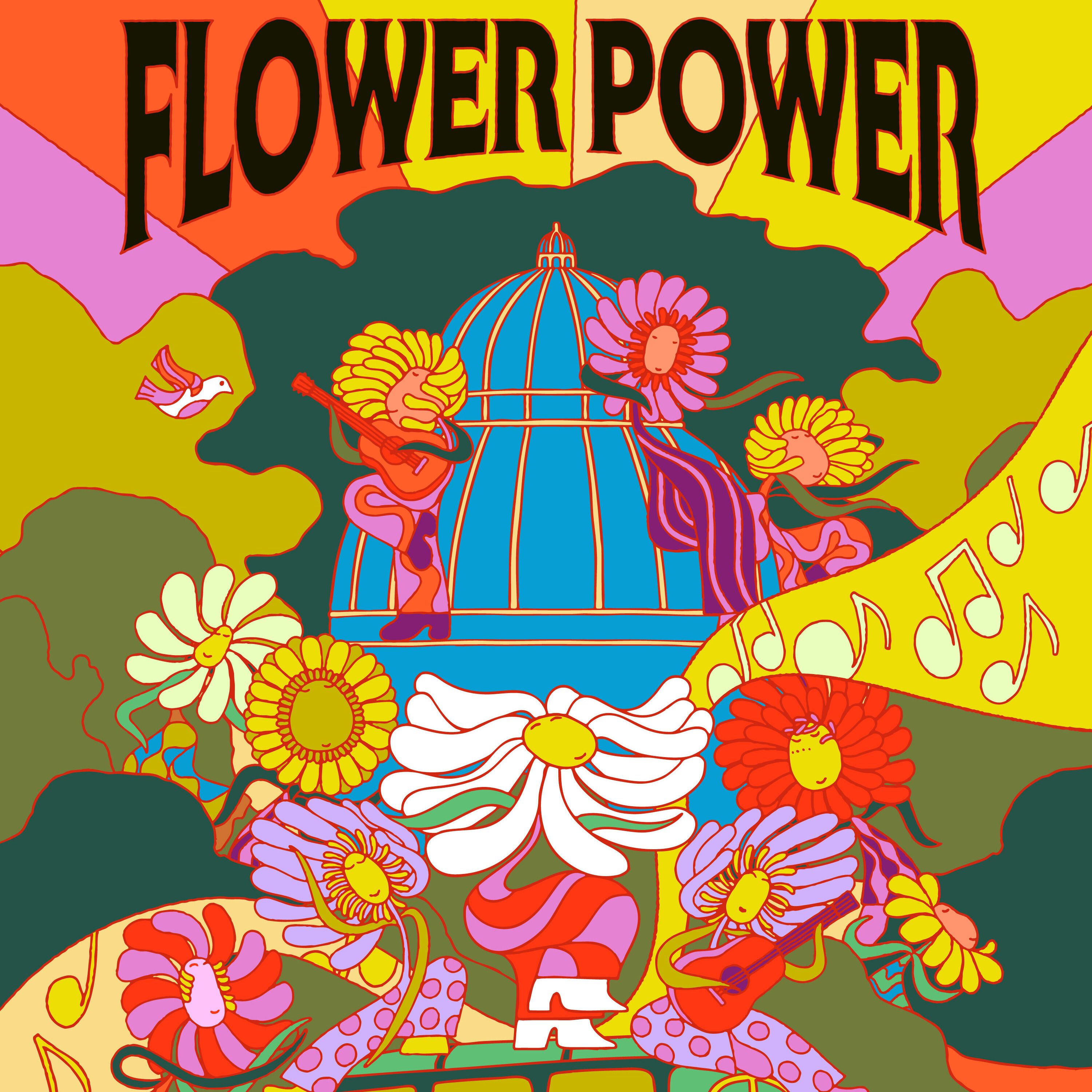
Loading summary
Transcript26 lines
- [00:08]
A
You are listening to all of it. I'm Alison Stewart. I'm really glad that you're here. On tomorrow's show, the cast and creative team from Cats, the Jellicle Ball will be right here in the WNYC Green space as part of our Broadway on the Radio event series. Tickets to the in person event are sold out, but you can still watch the performances on our live stream. For more information, go to wnyc.org cats that's wnyc.org cats come one, come all. The cats will be taking over the Green space at noon tomorrow. Now let's get this hour started with two things you can do this holiday weekend. Flower Power was a countercultural slogan in the 60s and 70s meant to promote non violence and love and anti Vietnam War sentiment. A new exhibition at the the New York Botanical Garden in the Bronx celebrates that feeling for 2026. Flower power is a multidisciplinary exhibition opening this weekend featuring sculptures, paintings and posters from the 60s and the 70s alongside the garden's floral arrangements. Patrick Noick, gnome manager of operations for the New York Botanical Jordan, joins me now to preview the show. Hey, Patrick.
- [01:25]
B
Hello. How's it going? Thank you for having me.
- [01:27]
A
Thank you for joining us. What specific kind of flowers come to mind when you think of flower power?
- [01:34]
B
Oh, great question. And it's one I've been thinking about for the last about two years or so. I think the first thing that comes to mind most certainly is the daisy. When you think about like hippies with flowers in their hair, flower crowns, I think it's always the daisy that comes to mind. But right now in this like late spring getting slowly into summer or days like today where it feels like we're getting quickly into summer, I'm thinking about a little more about the spectacular things that are starting to bloom at the garden. Peonies, foxgloves, all those like early summer annual and perennial blooms that we've got on show at the garden.
- [02:16]
C
Yeah.
- [02:17]
A
When you sat down to think about what the vibe of the exhibition would be when it came to flowers, how do you cultivate a garden to make it more psychedelic?
- [02:29]
B
That's a great question. I think that what we learned is the focus is a lot less about the individual flower and more about taking a step back to see what kind of shapes and textures we were able to create that blended in the real flowers with the sculptures and installations that we were building just for this show. So we looked a lot at different kinds of flowers that could fill like homogenous looking color swaths and shapes that were kind of. That we've created something that you can walk through that feels like it's changing every step as you go. But it's less about getting in close and looking at every individual flower, and more about zooming out and seeing what kind of shapes and experiences your eyes can give you.
- [03:21]
A
Yeah. We should talk about how this exhibition includes works by Andy Warhol, Milton Glazier, Corinna Kent, and others. How do you think about the curation of artists and artwork with the gardens?
- [03:34]
B
Absolutely. Yeah. We are so lucky to have so many fabulous artists represented with their work in our indoor galleries, in addition to the installations that we have outside paired with the flowers and in the gallery when we set out to curate a show. You know, flower power and flowers in general represent so many things to so many different people and different cultures. And it changes over time, but also a lot of it is very consistent, and it comes up over and over again. So what we have certainly tried to do is tell the story of the flower as an image, as an icon in itself, specifically in the late 60s in the US and how it changed. So we attempted to find and succeeded. We were looking for artists who could represent different stages of how the flower was being perceived in the public and the cultural eye and all those different perspectives and points of view when you're standing in a gallery and you can see them side by side. What our team, I think, has done a really beautiful job of doing is tracing that timeline and then being able to look at it physically in front of you with the works that represent that timeline and see how all those different viewpoints all came from the same natural horticultural body, which is really the inspiration for the show.
- [05:06]
A
I'm speaking to Patrick Nowak. Did I pronounce your last name right?
- [05:10]
B
Yeah. You're good? Absolutely.
- [05:11]
A
Okay. I'm speaking to Patrick Nowak, manager of exhibition operations for the New York Botanical Garden, about their new exhibition, Flower Power, opening this weekend. Literature is also featured. First editions of Betty Friedan's the Feminine Mystique and Rachel Carson's Silent Spring are part of the show. How does literature fit in to this exhibition?
- [05:33]
B
Great question. Yeah. We always are looking for ways to incorporate more kinds of texts and objects rather than just more traditional gallery artworks into our shows, especially because we collaborate so closely with the Lewestor T. Mertz Library here at the New York Botanical Garden. And pulling from our collections of both objects and literature. And the hippie and the flower power movement was deeply connected to and inspired by these texts. And in a world. And in a subculture that was trying to disconnect from technology, they were, in a lot of cases, still focusing and zeroing back in on the written word and how they could use that to communicate ideas, both new ideas and older, traditional ideas. And so it was certainly important that we included some of those texts in the show.
- [06:35]
A
Now, not all of the featured artwork is from the past. How did you work in Contemporary artists into this exhibition? Flower Power?
- [06:43]
B
Yeah, it's always exciting and fun for us to work with new folks to develop art and works that is unique to our installations. Here at nybg, we have such beautiful but also very specific exhibition spaces. And what we really wanted to do was foster and create a sense of a community gathering space in the gardens that gave our visitors an opportunity to experience for themselves the kind of camaraderie and community and connection to nature that they're reading about and examining in the art gallery inside. So it was a lot of conversations with these artists who built new things for us and designed new things for us about how they were inspired by flowers and by the natural world. Just the way in the same way that Andy Warhol and Corita Kent were inspired by flowers and what that looked like for a new set of contemporary artistic eyes and how we could bring that to the visitor.
- [07:53]
A
We're talking about the New York Botanical Gardens new exhibit, Flower Power, opening this weekend. My guest is Patrick Nowak, manager of exhibition operations for the new nybg. The Flower Power movement is tied to music culture. How will music be represented?
- [08:13]
B
From the beginning, it was, of course, so important that we could incorporate music from the time period into the show. And we found a really. A few really fun ways to do that. There are installations across the ground that have speakers built into them that are running playlists with music selected by the artists who designed those installations. And that is all music that was recorded and released in the late 60s and a little bit in the early 70s. So to kind of give that sort of constant undertone of music throughout the garden as you move from space to space. And then on the weekends and on select nights, our programming team here at NYBG have done a really awesome job of curating a roster of live musicians who will be at the garden to activate on some of our more high traffic and busier weekends. And then with our Liquid Light Labs, which are. Or, excuse me, Liquid Light shows, which are being produced in collaboration with Liquid Light lab. Lot of Ls there. Excuse me. On those nights, we'll be projecting a live Liquid Light show. Onto our library building that is being supported by a live band. And there are a few different live bands. Each one has its own individual night. And so it's been really fun to look at and explore how we can use the music that was recorded during the time that lots of folks associate very specifically with it. And then also contemporary artists, meaning artists who are of course performing now who are inspired by those musicians in the same way that we are showing contemporary art installations from artists who are inspired by people in the gallery who are making art at that time.
- [10:08]
A
We got a great text here that says haven't been to botanical garden since 1989, but as a product of the 60s and the 70s in NYC, I'm totally intrigued. And I'll wear flowers in my hair when I go.
- [10:21]
B
That's perfect. That's exactly the sentiments, the sentiments we're hoping to stir up. That's perfect.
- [10:27]
A
And I have to ask you this question before we wrap. How are the peonies doing, by the way?
- [10:32]
B
Oh my gosh, the peonies are spectacular. They're truly peak right now. I would say about six 60 to 70% are in bloom right now. I think this weekend is certainly going to be the best one. The Pina collection is certainly one of my favorites and it is right along a huge section of the garden where a lot of the flower power elements are. So it's a really special space right now.
- [10:56]
A
And finally, will I see a peace sign anywhere on the gardens? In the gardens?
- [11:02]
B
Great question. You most certainly will see a few peace signs. And most notably right when you walk in, there's one that's probably going to be the biggest peace sign you've ever seen, filled with real life plants and flowers that is sure to catch your eye.
- [11:21]
A
Flower Power is opening this weekend at the New York Botanical Garden. Patrick, thanks for joining us.
- [11:28]
B
Absolutely. Thank you for having me.
- [11:30]
C
Do you wish you could relive the most meaningful moments in your life? Like that legendary birthday celebration, your first wedding anniversary, or the day you got your diploma? You can't turn back time, but you can revisit those memories with a Hallmark card. When you give a Hallmark card, you give a reminder of the relationships, emotions and moments that make up their big meaningful, magical life. So make the moment last. Make it a Hallmark card shop@hallmark.com or wherever Hallmark cards are sold. If you walk into a room and can't remember why, it could be nothing or something more. If you confuse a familiar recipe, it could be a slip up or it could be associated with amyloid plaque. Buildup in the brain. Amyloid is a protein that your body produces naturally, but a buildup in the brain could lead to memory and thinking issues. To see what may be behind your memory and thinking issues, talk to your doctor about getting a full assessment. It's never too early to start the conversation. Visit amyloid.com to learn more.