← All Of It with Alison Stewart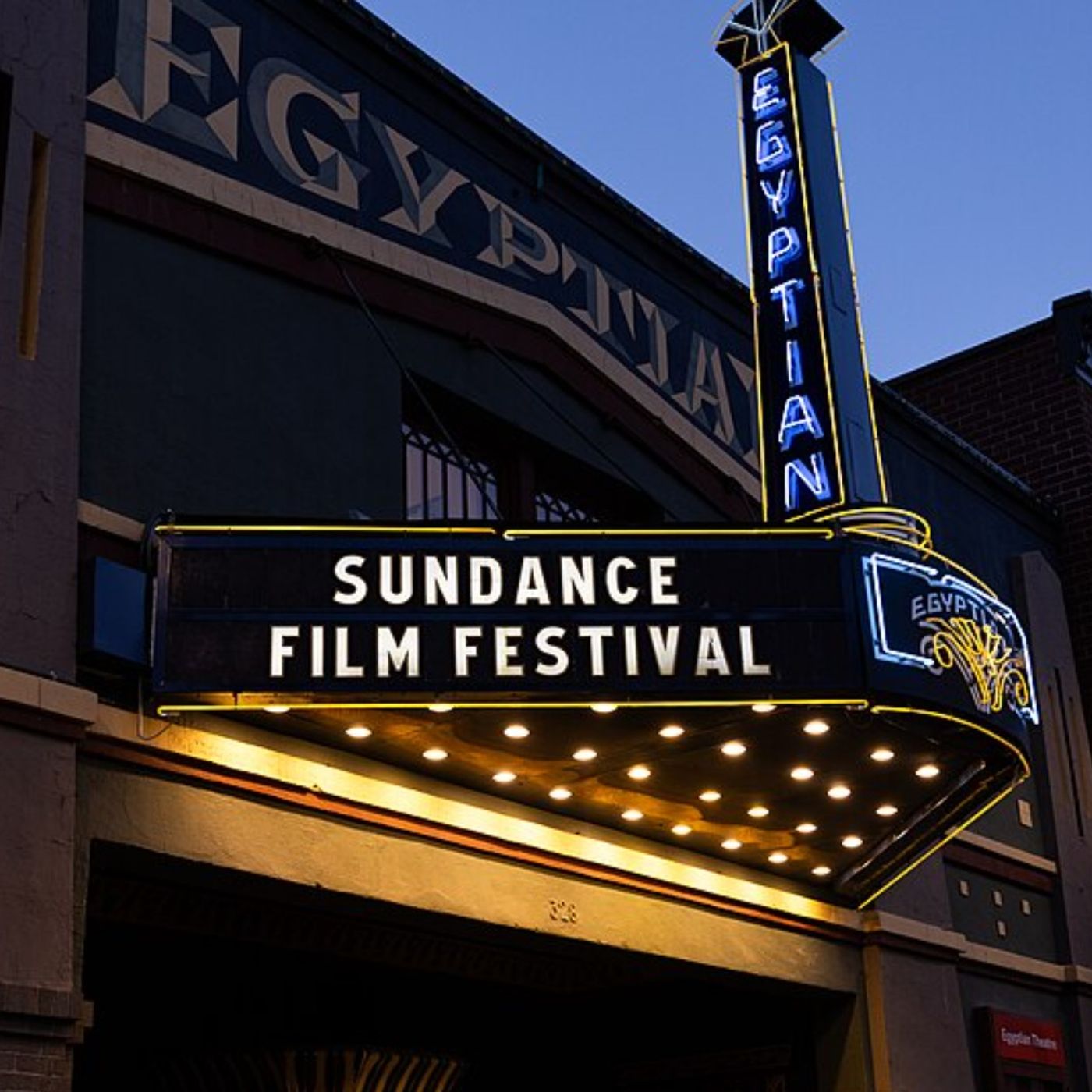
All Of It with Alison Stewart
How Sundance Changed Hollywood, and What the Future of the Festival Holds
00:28:49
Loading summary
Transcript43 lines
- [00:00]
McDonald's Advertiser
They put hot honey sauce on the snack wrap. McDonald's outdid themselves again. The classic snack wrap we all know and love paired with the sweet heat of hot honey sauce. Just what we needed to make it even more perfect. You know the drill, so go to McDonald's and try it today.
- [00:27]
Alison Stewart
This is all of it on wnyc. I'm Alison Stewart. It's the start of a new month, which means it's time to start reading our February Get Lit with all of It Book Club Pick. It is the novel the Wilderness by Angela Flournoy. It was named one of the 10 best books of the year by the Washington Post and was a finalist for the Kirkus Prize. It explores a group of friends who lean on each other to help navigate the wilderness of young adulthood. Angela Flournoy will be our guest for our get lit event on Monday, February 23rd at the Stavros Niarchos Foundation Library. And thanks to our lovely partners at the New York Public Library, New Yorkers can borrow unlimited E copies of the novel to read along with us. To grab tickets and to borrow your copy, head to wnyc.org getlit Tickets are free and they tend to go quickly, so reserve yours now@wnyc.org getlit that's wnyc.org getlit and we will have a musical guest to announce very short shortly. That's in the future. Now let's get this hour started with Sundance. This year marks a big turning point for the Sundance Film Festival, which just wrapped this weekend in Park City, Utah. It is the first festival without the founder Robert Redford, who died last year at the age of 89. Redford founded the Sundance Institute in 1980 with the goal of developing and encouraging new voices in American cinema. It was the last year of Sundance in Utah. In 2027, the festival will head to Boulder, Colorado. Sundance has changed the landscape of American filmmaking, helping launching the careers of visionary directors like Richard Linklater, Chloe Zhao, Quentin Tarantino, Ava DuVernay, Ryan Coogler, Wes Anderson, and so many more. Director Todd Field told the New Hollywood Reporter, I wouldn't be the filmmaker I am today without Sundance, and there are many people who would say the same. But what will the future of the fest hold at this pivotal turning point? The Hollywood Reporter decided to compile an oral history of the Sundance Film Festival. The piece is titled the Ultimate Sundance Oral History Screaming, Crying and Almost Throwing Up. Joining me now to discuss the piece and the history of the festival are David Canfield and Mia Galupo, senior entertainment Reporters at the Hollywood Reporter. It's nice to meet both of you.
- [02:59]
Mia Galupo
Thank you so much for having us.
- [03:00]
David Canfield
Happy to be here.
- [03:02]
Alison Stewart
Listeners, we want to hear from you. Have you ever been to the Sundance Film Festival, either as part of. Part of the industry or a film lover? What memories do you have attending? What hopes do you have for the move as to Boulder next year? Give us a call with your Sundance memories. Our number is 2124-3396-9221-2433 W, NYC. Okay, Mia, I'm gonna ask you to do a little bit of history. What was the original intention of Sundance when it started? When Rob. What Robert Redford dreamt of? Yeah.
- [03:34]
Mia Galupo
So even before Robert Redford came in on everything in Utah, the Sundance Film festival was the U.S. film Festival. This was a film festival in Utah that was meant to screen and program independent films, which at the time in the 70s were not a big deal in America. You know, independent filmmaking was definitely more of a European endeavor. The studio system was the only way to really, really make films and get them seen in America. And the smaller regional film festival started and then got the attention of Robert Redford, who was really passionate about filmmaking and having filmmakers be able to tell their own stories, the types of filmmakers who had been ignored by the traditional studio system. So he partnered up with the US Film Festival, which then eventually became the Sundance Film Festival, and moved to Park City, Utah. But the Sundance Institute was established not as a film festival, but as a laboratory. It was a place where chosen filmmakers would go to Sundance Utah with Redford during the summer. It was 10 projects that were chosen initially out of 100 scripts that were sent, and these projects would then get workshopped and with the hope of them eventually becoming feature films, and eventually a pipeline was created where those films would then screen at the newly named Sundance Film Festival. So it's hard to overstate how important Robert Redford was to independent American filmmaking.
- [05:16]
Alison Stewart
David? Yeah. Listen to this clip I want to play for you. It's from Sterling Harjo. I interviewed him on the show, and he spoke about what Robert Redford and the Sundance Institute meant to him and to other indigenous filmmakers. Let's listen to.
- [05:31]
McDonald's Advertiser
You know, I mean, I wouldn't be sitting here without Robert Redford and his vision. And literally, he, you know, not just independent film, but he fought for indigenous voices in cinema to tell their stories. And he. And he, you know, he knew Chief Dan George, and he was basically like, I think that native people should be able to tell their own stories and be empowered to do so. And he didn't just say that he played the long game with the institute of trying to support indigenous voices. And he did. And, you know, one of the people that worked for the Sundance Institute was Bird Runningwater, who came and spoke at the University of Oklahoma and found me and brought me into the fold. And then I became part of this sort of Sundance family. And, you know, I'm a direct result of Redford's vision.
- [06:24]
Alison Stewart
David, what did the directors you spoke with, the people you spoke with for this oral history, tell you about Robert Redford's role?
- [06:33]
David Canfield
Oh, my goodness. I mean, for these filmmakers, regardless of, you know, the level of personal interaction that they had with Robert Redford, in some cases it was extensive. It's been over decades. In some cases it was a few meetings to what Mia was saying. His entire purpose for developing this festival, for raising all kinds of voices, for establishing a kind of home ground for American independent film was transformational, foundational. It helped establish what the American independent cinema scene could look like. So to them, he was not only a guiding light, but somebody who was incredibly generous with his time, who understood what. Who understood the difficulty of getting films made and the difficulty, particularly for certain maybe underrepresented groups, of getting their movies made. I think Sterlin speaks really beautifully to that, and that was a priority for him. Regardless of the filmmakers we spoke to, whether it was somebody like Ryan Coogler, Chloe Zhao, Quentin Tarantino, you know, people from all different kinds of backgrounds, he was the figure, right. And he was somebody to whom they could all look in different ways.
- [07:44]
Alison Stewart
Miyu, you touched on this in your first answer, but I wanna tease it out a little bit. What did the independent film landscape look like prior to Sundance?
- [07:53]
Mia Galupo
Yeah, it was relatively non existent. This is the thing is the Hollywood unions didn't have contracts that included independent film at the time. So a lot of union people couldn't work on independent productions. That ecosystem just did not exist in America. It was the studio system or bust at that point. And so if you weren't a filmmaker that the studios saw as someone that they wanted to work with, you know, was. Could be lucrative, then you were largely ignored at that point. Even up into the. Until the 90s, the Independent American film system was really held together by duct tape and a prayer for the large part. And once the 90s came, that kind of came the initial heyday for independent filmmaking. And Sundance was the place to go in order to show your independent film. You know, talking to, in this oral history, Kevin Smith talked about getting into Sundance, you know, at 23 years old with Clerks, and, you know, he'd tell people, oh, I'm going to the Sundance Film Festival. And they would go, what's that?
- [09:10]
Alison Stewart
Wow. David. Filmmaker Justin Lin said Sundance presented like a meritocracy. It was hope and opportunity. Was that something you heard from other filmmakers as well?
- [09:22]
David Canfield
Absolutely. The entire notion of getting into Sundance, you know, we have Clint Bentley, the director of Train Dream, Say, getting a rejection for a short was considered a stepping stone. Like, there became a point where every single point toward getting into Sundance, getting into the competition, whether with a short or ultimately a feature, was a sign of progress. And because of the, especially at that time, very refined, rigorous methods for selection, for judging, it became a real bar for every filmmaker to clear. And you had these systems with the artistic labs, which we can certainly talk a little bit more about, and this sort of feedback loop of the way that sentence started, training filmmakers who then were accepted into the festival with films that they developed there. All of that sort of fed into this feeling that if you were a new filmmaker, a new American filmmaker, and you wanted to come out, you know, guns blazing, with a big opening, Sundance was the place to do it.
- [10:22]
Alison Stewart
Yeah. Tell me a little bit more about the labs. You mentioned it.
- [10:25]
Mia Galupo
Yeah.
- [10:25]
David Canfield
So I think that this year's Oscar lineup for Best Director is actually a great sort of example of what this. What these labs can produce. So Redford and the co founder, Michelle Satter, who remains with the organization, spearheaded these small collectives where they would select young filmmakers out of schools, developing scripts to essentially work together and come out of these labs with something ready to get made. That would not guarantee admission into the festival, but it would certainly set them on the path to creating something that was not only artistically viable, but commercially viable. And so this year's directing lineup features Ryan Coogler and Chloe Zhao. A little over a decade ago, both of them were in the lab together with their films that they were developing. Songs My Brother Taught Me in Chloe Zhao's case, and Ryan Coogler's Fruitvale Station, both films of which went on to get accepted by Sundance. Incredible critical success. They are now both, of course, Oscar nominees. And a third person in that directing category, Joachim Trier, who directed the film Sentimental Value, was actually an advisor to them way back then, and he was considered an early mentor, especially to Ryan Coogler. He worked on Fruitville Station. He viewed Cuts. So flash forward, 10 plus years later, I spotted Ryan Coogler in Telluride attending the world premiere of Hamnet, Another Filmmaker in their group was David Lowery, filmmaker who helped Chloe Zhao on her upcoming Buffy the Vampire Slayer pilot. So these kinds of relationships fostered this incredible sense of community, which is something that all the filmmakers we talked to spoke of feeling on the ground at Sundance every single year.
- [12:11]
Alison Stewart
My guests are Mia Gallupo and David Canfield, senior entertainment writers for the Hollywood Reporter. We're discussing their piece the Ultimate Sundance Oral History in honor of its last year of the Sundance Film Festival in Park City, Utah, and the first festival without founder Robert Redford. Next year, the festival heads to Boulder, Colorado. Listeners, we'd like to hear from you. Have you ever attended the Sundance Film Festival? What are your memories of attending the festival? What do you hope for the Future of it? 212-433-969-2212, wnyc mia in recent years, the festival has been a good place for female filmmakers. Ava DuVernay, Gina Prince Spyewood, Sean Hader, who won Best Picture for Coda. What did female filmmakers tell you about the festival? Was it a welcoming place for their work? Did they. Was it still Hollywood as usual? What do you think?
- [13:03]
Mia Galupo
No, it definitely was a welcoming place for their work. It was a place where they were able to screen their movies when the studio system was really seemed intent on keeping them out. Time and again, you know, Sundance has overindexed on female filmmakers, usually in the US Dramatic competition lineup. Half of those films are being directed by female filmmakers that then go on to have successful careers directing studio films, you know, directing tv. It was a proving ground. It's a place where they are able to say, you know, we are able to do this. Give us an opportunity. And they were actually able to get that opportunity from Sundance in a way that traditional Hollywood wasn't able to advocate for them. It also was a place that was incredibly welcoming for female filmmakers in terms of being working mothers. You know, in our oral history, Shawn Heder and Marielle Heller both talked about, you know, having young babies at their respective festivals and, you know, nursing them, you know, ahead of their premieres and being supported in terms of being working filmmakers and also working mothers at the festival in a way that they hadn't experienced, you know, at any other point in their career in Hollywood.
- [14:29]
Alison Stewart
We are talking about the Sundance Film Festival. After the break, we'll talk about getting distribution, the social aspects of the film festival and what it's like. It's what it's going to be like when it goes to Boulder, Colorado. Stay with us. You're listening to all of it on wnyc. I'm Alison Stewart. My guests are Mia Gallupo and David Canfield, senior entertainment writers for the Hollywood Reporter. We're discussing their piece the Ultimate Sundance Oral History. In honor of the last year of the Sundance Film Festival in Park City, Utah, and the first festival without its founder, Robert Redford. Next year, the festival heads to Boulder, Colorado. Let's talk about distribution. David, how has the festival navigated the balance between the artistic aspects of the festival and the commercial? People go there to get distribution for their films.
- [15:27]
David Canfield
Indeed they do. And this is a dynamic that's evolved a great deal since those early days that Mia was talking about. There became a point at Sundance where it became really the hottest market in American film in many ways, especially American independent film. You would premiere a movie there if it was a success. You would have overnight bidding wars, right? You would have these huge deals coming away. Movies like Little Miss Sunshine, of course, that went on to extraordinary success that were matched up with big studios. People like Harvey Weinstein, candidly, were also very instrumental in sort of taking this festival and sort of realizing its commercial potential. And in some of the filmmakers we spoke with, a tension kind of emerged between the original spirit of this festival and what ultimately became a place for studios to attend, scout their films, come away with a slate, and then have that mapped out for the rest of the year. It's changed a lot. And I think as independent film has evolved, as it's faced new struggles, especially since COVID that has receded to a degree. But at its height, Sundance did become a more commercial kind of venue for these films, and it did become a place where if you didn't get that level of response from studios and you had a certain amount of expectation, a certain amount of financing, it would be considered a disappointment, actually.
- [16:57]
Alison Stewart
Richard Linklater said to you, I always thought that a fun joint project we should all do together is a documentary called Sick at Sundance. By the time you get off the plane, you or someone in your party gets the winter flu. So is that true, Mia?
- [17:14]
Mia Galupo
Yeah, I'm in the middle of it right now. No, it's so true. The thing about Sundance, and it's kind of incredible, and a lot of our filmmakers talk to us about this is when you are at the festival, you really gain this superhuman ability to not sleep and to not eat and to survive for days at a time functioning that way. You are at altitude. You are never hydrated. You are going to a lot of events, so you're drinking a lot of alcohol and it's very, very difficult to actually find a meal in Park City because it is. All of the restaurants are so packed because of Sundance. What that usually means is you neglect your body for, for about a week, and then the comedown from that experience usually leads to some sort of illness. Everyone from the filmmakers to the executives to the agents that go have their methods that they swear by in terms of how not to get sick. Of course, you know, at the, at the 20 Film Festival, a lot of people came down with flu like symptoms that were difficult to be diagnosed. Janicza Bravo actually told us about taking her film star Riley Keough to the emergency room at the 2020 film festival. And the doctors were unable to diagnose the illness that she had. And they ultimately realized it was likely Covid. Just based on context. Yeah, that was a big for illness coming out of that festival.
- [18:52]
Alison Stewart
Well, speaking of COVID how did Covid change the film festival, David?
- [18:58]
David Canfield
Well, initially, the festival had to shift to a virtual format because of ongoing variants. The next festival, after the Pandemic officially broke out in the late winter, early spring of 2020, was the 2021 festival. And this was moved online. And so this was viewed in two ways. On the one hand, it greatly expanded the accessibility of these movies. People who had never attended a film festival certainly never attended Sundance. Park City can be quite expensive and inaccessible. Were able to participate. We're able to see these films. Were able to weigh in on the conversation. Anyone who goes to Sundance knows that one of the most exciting parts is being able to come out of the Eccles Theater and hear the debate around how people thought about the night's big premiere. And suddenly this was happening online. Then as the pandemic receded somewhat, they were in a bit of a conundrum. And you had the situation where the opportunity for accessibility was not one that the festival wanted to fully take away. But studios, producers, filmmakers also saw the value in having their films premiere only in person, in theaters, especially as, you know, concurrently streaming. And the very existential threats to the theatrical experience started becoming a larger and larger problem. So you have these things dovetailing at the same time. And where we are now is Sundance is a hybrid festival. Some of the films premiere. The films premiere in the theaters. Some of them are then put on an online platform, others are not. It's usually up to the studio's discretion, especially in the premiere section, whether or not they want their films to online. Typically they do not. But even just at last year's festival, a film called Twinless Starring Dylan o', Brien, that was very well reviewed, was pirated. The leaks went online and actually had to be removed from the platform. That was one of the more critically acclaimed films in the competition that year. And it was considered, you know, part of the reason why it did take as long for that movie to sell as it did.
- [21:04]
Alison Stewart
It's interesting. So I went to the film festival 20 years ago, right. You know, it's like one street. You walk up and down it. You go see a movie and a school somewhere. I like. I thought. I think it was the only person who saw welcome to Collinwood with Sam Rockwell. And I thought, you know, if I. If social media had been there, someone else might have seen the film. How has social media changed Sundance? What do you think? David or Mia?
- [21:33]
David Canfield
Yeah, I'll go. I'll take it first. I think that, for starters, it does create a more immediate kind of conversation. The old days of Sundance would be you'd have dailies, you know, daily trades going around the festival. Reviews would not be as immediate. The reaction in the room would be more important, especially to buyers. Now, between posts on X, formerly Twitter, and letterboxd reviews, you have instantly thousands of reactions, often going online and kind of instantly determining a film's value to a potential buyer. So that in and of itself just dramatically changes the equation. It kind of, I think, again, dovetails with general shifts in film culture and sort of immediacy with which people react and therefore react to the reactions. But also on a more fundamental level, I think it's allowed for more public engagement with the festival. And I think this is something they're really going to try to harness in this next chapter. And really just taking the enthusiasm you see online, you see for these films that oftentimes do not generate that level of enthusiasm once they made a general commercial release. Try to find a way to bridge those two things, channel that excitement for the next phase of the festival.
- [22:51]
Alison Stewart
Let's talk to Rocco from Bed Stuy. Hey, Rocco, thanks for calling, all of it.
- [22:56]
Listener Caller
Thanks for having me. Yeah, I'm calling. For the past couple years, I've hosted friends in my apartment at Christmas. Covid. Sometimes it's done this online component, and it's not all the films, so we miss out on a little bit of the selection. But there's plenty enough that we fill an entire weekend and try to cram friends into our living room and sort of make a little mini festival out here. But I'm from Colorado, so I'm looking forward to it moving to Boulder, but I'm A little reticent about the whole move because for me, I've been to Sundance before and it's a winter festival and I really like the snow and I know the Front Range of Colorado doesn't always have snow like Park City might. So I think it'll be a new vibe. But it'll be nice to go home and maybe pop into Boulder and watch the next one.
- [23:59]
Alison Stewart
Thanks for calling. Hey, Mia. Why was the decision made to move the festival from Park City, Utah to Boulder, Colorado?
- [24:05]
Mia Galupo
Yeah, the short answer is that Sundance outgrew Park City. You know, when Sundance first started, they were programming at the Egyptian Theater on Main street, which is a smaller venue. They were programming, you know, in, in the library theater, which is called the library theater because it is just the upper room of the library that they put a screen in. You know, you were, you were putting screens up in conference rooms and in school classrooms. And eventually as hobbies and also as brands and other marketing ventures moved into Park City, it just outgrew the festival. They had to bring in more and more infrastructure to the point where it was just bursting at the seams. And the local population became more and more disenchanted with the, you know, Hollywood parachuting in for, for two weeks every year into the festival, which is in the middle of ski season. You know, this is a festival in January. You know, they usually aren't want for tourism in city during, during that time. So the choice was, was made to look at other locations to see what this next chapter of Sundance would look like. And they ultimately decided on Boulder because there was definitely financial and tax incentives there. But it also was hoping to retain that sort of mountain town environment, that small town feel. The, the big difference between Park City and, and Boulder is actually the university that is in the state university that's in Boulder. And a lot of people who I talked to this year on the ground at Park City, that's the reason that they are most excited for the move. You know, people are very much so wary of a move to Boulder. But the highlight that keeps consistently getting brought up to me is a younger audience that's coming in and younger, you know, Hollywood, an independent film, need to attract younger audiences in order to survive. And what better way to do that than, you know, with 20 something college students, you know, get them in young.
- [26:17]
Alison Stewart
All right, David, real quick about this year's festival. What are two films we should be looking at?
- [26:23]
David Canfield
I'll name one that has sold and one that hasn't. The one that has sold is called the Invite. And it is Olivia Wilde's direct directorial effort at the festival. She actually was in multiple films there. Another one called I Want yout Sex, directed by Greg Araki. Me actually wrote a wonderful feature about this film. It's a real comeback movie for her. The film Don't Worry Darling, her last movie generated mixed reviews, became a bit of tabloid fodder, which we don't need to get into here. But this is a movie with Seth Rogen, Edward Norton, Penelope Cruz and Olivia Wilde starring as well. It's kind of compared to a who's Afraid of Virginia Woolf esque sex comedy relationship. Comedy generated great reviews and generated an old fashioned bidding war, the kind we haven't seen in this post Covid era of Sundance very often at all. A24 came away with the rights. Many top studios were in the mix for it. So that's one to look for. The other is a film called Josephine. It won Sundance's Grand Jury Prize, also the Audience Award, therefore sweeping the American dramatic competition. It starts Channing Tatum and Gemma Chan. It is a movie told through a child's eyes, unlike like any I've seen. It's quite heartbreaking. The filmmaking is really innovative. I know a lot of people caught up to it and were really impressed with it on the platform. And I suspect it could be an award season player if it gets the right distributor.
- [27:49]
Alison Stewart
And we'll take one last call. Suzanne is calling from Manhattan with a good story. Hey, Suzanne, tell us your story.
- [27:56]
Listener Caller
Hey, I'll be quick.
- [27:57]
Listener Caller Suzanne
Thank you. So my husband and I were in Sundance January 25, 2010. So this is a long time ago. My husband was working with Bob Bedford and we ended up spending the entire weekend with he and Billy, which was amazing. The premiere was Women Without Men. It's a critically acclaimed Persian language film directed by Sharon nasdaq. Amazing film. And at the premiere and at the dinner, this journalist misunderstood who I was. And I was standing with Robert Redford and my husband with Billy. And so they did all these photographs of me with Bob Redford and he laughed. They thought I was Billy. They thought I was his wife. And so we just laughed. He never even corrected the journalist. We all just laughed about it. And God knows where those pictures are, but it was a remarkable weekend and a memory we will never forget. Certainly not me.
- [28:49]
Alison Stewart
So you have photos that list you as Mrs. Redford. Is that the case?
- [28:53]
Listener Caller Suzanne
That is right. Girl.
- [28:59]
Mia Galupo
Love that call. Thanks, Suzanne.
- [29:00]
Alison Stewart
My guests have been from the Hollywood Reporter, Mia Galupo and David Canfield. Thank you so much for joining us.
- [29:07]
David Canfield
Thanks for having us. What a treat.
- [29:09]
McDonald's Advertiser
They put hot honey sauce on the snack wrap. McDonald's outdid themselves again. The classic snack wrap we all know and love paired with the sweet heat of hot honey sauce. Just what we needed to make it even more perfect. You know the drill, so go to McDonald's and try it today.
- [29:29]
Alison Stewart
Since WNYC's first broadcast in 1924, we've been dedicated to creating the kind of content we know the world needs. In addition to this award winning reporting, your sponsorship also supports inspiring storytelling and extraordinary music that is free and accessible to all. To get in touch and find out more, visit sponsorship.wnyc.org.