Loading summary
Transcript89 lines
- [00:00]
Progressive Insurance Announcer
All of it is supported by Progressive Insurance. Do you ever think about switching insurance companies to see if you could save some cash? Progressive makes it easy to see if you could save when you bundle your home and auto policies. Try it@progressive.com Progressive Casualty Insurance Company and affiliates. Potential savings will vary. Not available in all states.
- [00:29]
Alison Stewart
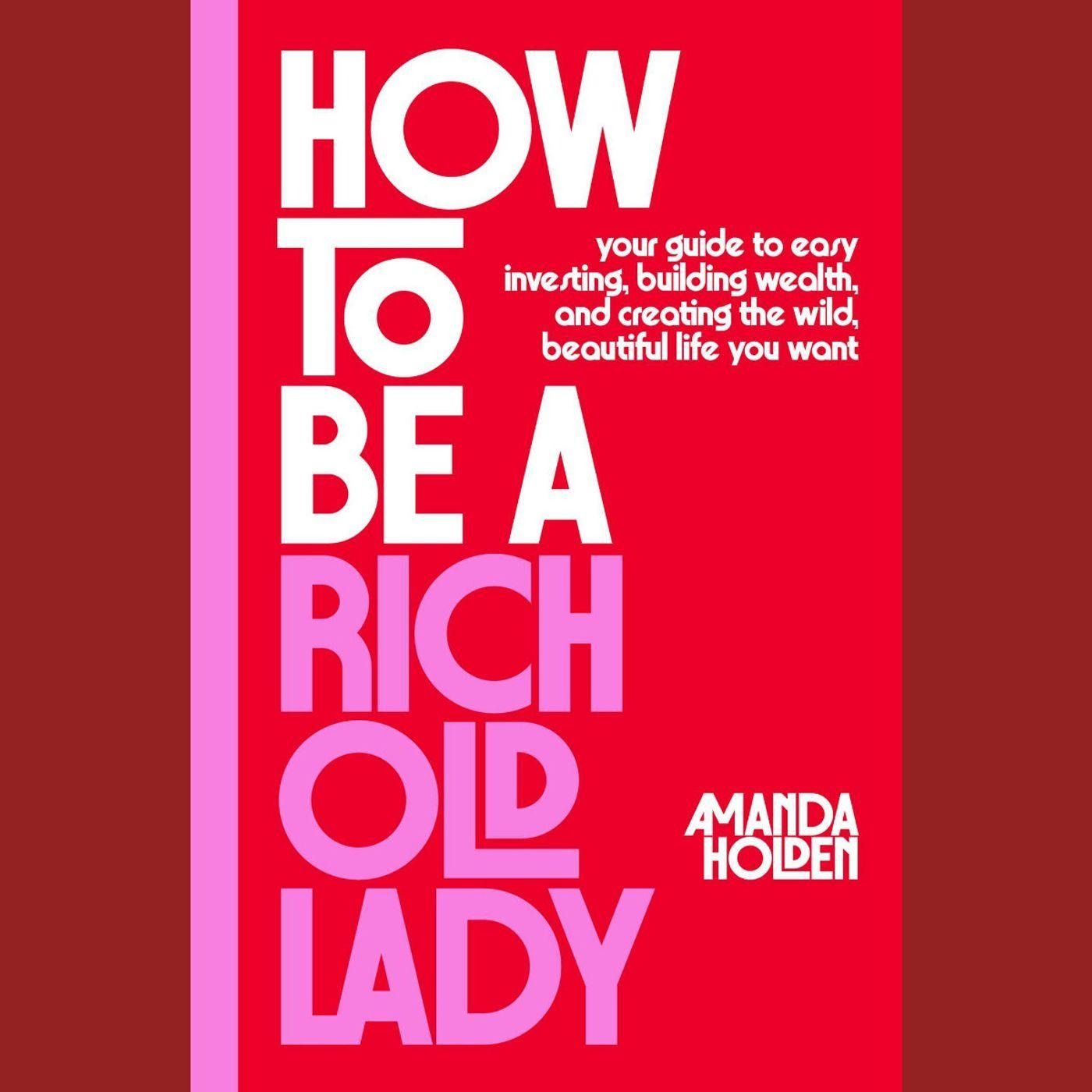
Remember Monday we had financial expert Amanda Holden in to talk about her new book called how to Be a Rich Old Lady. Your guide to easy investing, building wealth and creating the wild, beautiful life you want. Amanda is a former Wall street banker who is one of the only few women in her workplace. She realized that her job was to make a select group of rich people even richer. So she decided to start a business focusing on helping people, women especially, learn how to invest and to be financially independent. Amanda was great our callers and we had so many that we couldn't take them all. Plus we couldn't really get into her book as much as we'd like. So Amanda, being the men she is, has agreed to come back. Hi Amanda.
- [01:15]
Amanda Holden
Hi Allison. It's so great to be back with a fellow future Rich old lady listeners.
- [01:22]
Alison Stewart
Are you trying to save for retirement or do you have questions about the best way to do it? Do you need an explainer about your 401k if you have one, a Roth IRA? Do you want to figure out the best way to pay down debt? Or maybe you have some dream in and you need to know how to pay for it? Give us a call. 2124-3396-9221-2433 wnyc. Remember, Amanda here is only to offer her take and what might not work for others might not work for you, but she can sort of think about what she has to say. So Amanda, in your book you joke about possible other titles for the book, but you settled on how to Be.
- [02:00]
WNYC Host/Interviewer
A Rich Old Lady.
- [02:02]
Alison Stewart
What were you channeling when you decided on that title?
- [02:06]
Amanda Holden
Sure. So it's so hard to title a book because you want to, you want it to tell the whole story. But basically what I decided the most important thing was giving people a reason to hope and save for the future. And so I landed on the Rich Old lady as as really an avatar for financial independence. And I know mine is going to be like when I like to think about my future ritual lady, she's going to maybe be doing work that is meaningful to her because she can take on lower paid gigs. She will have purple hair. That is a promise. And she will occasionally jet off to Italy with her significantly younger lover. But the idea here is understanding our overly complicated financial system so that we can do our best to use money as a tool to, to build a life of options.
- [03:02]
Alison Stewart
Yeah, you just put in Paris for Rome for me. And that's okay.
- [03:06]
Amanda Holden
Perfect.
- [03:07]
Alison Stewart
How does your book specifically deal with.
- [03:10]
WNYC Host/Interviewer
The way women and the way that women's evolution of finances has occurred?
- [03:17]
Amanda Holden
Sure. So what I want to make really, really clear to women that are reading the book is that you are not bad at money. That is a feeling that was likely grafted onto you. And it is actually really quite diabolical that women think that they're bad at money when really women having less money is the outcome of centuries of economic design. Right. Some of our grandmothers couldn't even have a bank account. You couldn't, you were not guaranteed to get a loan or a credit card, you know, within many of our lifetimes. And so we're still playing catch up very much. Not to mention that there are still absolutely systemic factors that lead to pay gaps, which of course then transmute into wealth gaps.
- [04:10]
Alison Stewart
You talk about the beauty industrial complex in your book. This is an interesting idea. How does the notion of having to maintain beauty siphon money away from women that it doesn't for men? I think Naomi Wolf, back in the day, when she made sense, she talked about this a little bit.
- [04:29]
Amanda Holden
Yeah. Well, it's not uncommon for women to spend thousands and thousands of dollars per year on beauty. And often it is spending that doesn't always feel optional. It feels like it is a requirement. And it's, it's, it's, it's really a difficult topic because oftentimes we feel like we have to uphold some sort of beauty standard to be respected in the workplace, to be seriously, to be not seen as sloppy or tired or whatever it may be. And so I certainly don't fault anybody for spending money on beauty. But what I aim to do is also point to the industry and the CEOs and the many, many rich suited white guys that are making gobs of money on our insecurity and just, you know, trying to shine a light on that.
- [05:23]
Alison Stewart
Yeah, you must have seen that in Wall Street. You had to have your nails done, you had to have your hair blown out, you had to have a certain kind of suit to go to work and be taken seriously.
- [05:33]
Amanda Holden
Absolutely, always. And it's just so much more expensive for women. That is very much a part of the pink tax of, of being alive in this world. And a lot of the insecurities that we have are absolutely manufactured by these corporations. That then sell us the solution. Right? Can you imagine how many industries would collapse if women were no longer insecure about way that they looked? It's pretty wild to think about when.
- [06:03]
Alison Stewart
People found out you were a banker. What were some of the common questions that women had?
- [06:09]
WNYC Host/Interviewer
Sure.
- [06:09]
Amanda Holden
So I worked specifically in investment management and so my job was to be on the phones with high net worth clients answering questions about the markets. And so it was a pretty easy transition. When my friends would hear about this work that, that I did, they would say, okay, well what do you, what am I supposed to invest in? How do I get rich? Do I do it? And so it was, it was a pretty easy next step for me to take to then switch over to teaching, teaching personal finance and teaching investing to my friends and now just women more generally and even, even bigger than that. Anybody who's ever felt left out of the conversation about how to learn money.
- [06:53]
WNYC Host/Interviewer
I'm seeing with author and financial expert Amanda Holden about her debut book how to be a Rich Old Lady. It came out this week. It provides step by step advice on how to invest towards retirement and financial independence. We are also taking your calls. Are you trying to save for retirement or have questions about the best way to do so? 2124-3396-9221-2433. WNYC. No judgment here. If you have a question about your 401k, we want to hear it. If you want to know how to pay down debt, there is no judgment here. Give us a call. 2124-3396-9212-4433 wnyc or maybe you have a dream and you're trying to figure out how to get there. Amanda might have some advice. Our number is 212-433-9692. Okay, so the last time we spoke five days ago, you recommended starting out your saving process first before anything by tracking your spending. What are some good ways to do that? Are there apps that are helpful? Are there guides that are helpful?
- [07:58]
Alison Stewart
Sure.
- [07:58]
Amanda Holden
So you can always put an app like a Monarch or Copilot on your phone. RIP Mint. I know a lot of folks used to use Mint and that's no longer around. And that's going to be a type of like banking interface that allows you to see into your spending. And so that's a strategy that's going to work for some people. But my recommendation for most folks, especially if you've got any New York New Year's resolution goals, is to actually spend a little bit of time not just looking at today or you're spending this week. But actually go back, print out your last three months of statements and start to investigate, like, look at those statements. Start to group them in the, in the ways that make sense to you. And also seek out some of those rascally purchases that you might not remember making. Right. If you don't even remember going to that coffee shop and having that coffee, maybe that's a place to begin. If our ultimate goal is to cut out some of that rascally spending.
- [08:59]
Alison Stewart
Let's talk to Alice on the Upper west side. Hi, Alice, thanks for taking the time to call, all of it.
- [09:06]
Caller
Oh, and thank you for taking my call. My question is the following. My husband and I are both in our late 70s, and truthfully, we're, we're middle class and we've saved very, very well in terms of, we've saved within our means. We don't have, you know, we didn't win the lottery, but we've been very diligent. So my question is the following. So we're in our late 70s. We don't know if we're going to live 10 years or 30 years. I'm planning on 30. And his parents died in their mid-90s. So we're not dying in the next three years. We need money for a while. But the question is, the question is, do I spend my money down or save a lot of money in case I have to go into the hospital or hospice or end of life care? And I'll need, you know, instead of my usual amount, I'll need 200,000 a year for five years. I don't know what to do.
- [10:22]
Alison Stewart
Alice, it's a really good question. Do you have any thoughts for Alice? Amanda?
- [10:27]
Amanda Holden
Sure. And I hate to throw a type of question like this to a financial planner that can get to know your total financial situation personally, but it is what you are asking for is a personal recommendation about your very unique situation. And so I don't want to, I don't want to say too much because I just, I can't know. I can't see into the total picture. But you're thinking about it exactly correctly in that it's hard to make a plan about how to save or spend or invest when you don't know the timeline for this money. Because generally speaking, what you want to do is make sure that you have cash that is available to you to spend in the next several years. That's money that you will not necessarily want to invest. But beyond that, we want to consider potentially investing our some our money in some way so that we get a little bit of growth beyond inflation. And so that might mean investing in some bonds or it might even mean doing a little bit in the stock market, if that is something that you're comfortable with. But that's for goals that are like 10 years and, and longer out. And so that way then what you have is you've got these different pots of money that you can pull on depending whatever is going on in the world around us. If this feels kind of advanced, that's because it is, it does. It does require some understanding of our investment markets, which is something that we can do through education and understanding. What are the tools that I even have to work with? Or if that feels just like totally out of reach, understandable. But it might be time to seek out a certified financial professional, a CFP that can give you more specific recommendations.
- [12:23]
WNYC Host/Interviewer
Let's talk to Frida in Islip. Hi, Freda, thanks for calling all of it.
- [12:28]
Caller
Hi, good afternoon. I had a question about bringing your partner on board. My husband has been taking care of finances for the last 18 years. I'm finally finding my voice and have an opinion. How do I get him on board with just sitting down at the table and figuring out a plan that's beneficial to us both?
- [12:54]
Amanda Holden
Such a great question. And I'm a big advocate of doing a money date and maybe doing it just to begin just once or twice or setting 30 minutes once a month. And gosh, how do you, how do you get somebody interested in doing something like this? I think it's a good idea to agree that it will be short, that everybody will be like, will truly approach the conversation with kindness, remembering that money can be really sticky and really painful. And so how can we approach this conversation from a place of mutual respect and love? And then maybe you get to have a little treat after, after you do it, you go out to eat, go get a burrito, do something fun.
- [13:39]
WNYC Host/Interviewer
Well, it's interesting in your book, I think it's like chapter 28, you write about upkeep. Like you've gone through all of this savings and investment, but you do have to have a certain kind of upkeep of, of your portfolio. What should people do? It sounds like that might be a good thing for this caller.
- [13:58]
Amanda Holden
Absolutely. And so from an investing standpoint, specifically, it just means peering into your accounts and making sure that your strategy reflects what you want it to. And by that, I mean, you know, one of the biggest decisions we're going to make is it's so jargony but it's called your asset allocation. And so how are we allocating our money to the big different investment or asset types? So how much money do we, we think needs to be kept in cash? How much should we allocate to stocks, to bonds and so on? And then also how are we actually getting exposure to those different markets? Most of us are going to use really simple, broad index funds or something like that to be invested, but just peering into our accounts at least once a year to make sure that things are where we want them to be. Now, beyond that, we can also take a look at our savings accounts, take a look at our, like we said earlier, our spending, but also our income. Just to make sure, at the very least, we're identifying one, maybe two, no more places that we can work on in the months ahead.
- [15:05]
Alison Stewart
In the book, you talk about having the gap. Not like the clothing gap, but the gap. It's a magical place, you call it. Can you define what the gap is and why it's so important? Sure.
- [15:18]
Amanda Holden
So when we are building a financial foundation, there's really a few components. One is saving up for emergencies. Another is paying off credit card debt. But of course, it is very hard to do these things if you do not have an income that exceeds your expenses. And so when your income exceeds your expenses, that surplus is what I call the gap. You can imagine that surplus. That gap is where the magic happens, because that's the money that you can apply to your dreams and your financial goals.
- [15:52]
Alison Stewart
Let's take a call from Charlotte in Grahamsville, New York. Hi, Charlotte. Thanks for calling all of it.
- [15:59]
Caller
Hi.
- [16:01]
You guys have been mentioning Roth iras a lot. And I have to say that I almost accidentally was visiting with my parents, one of their rich friends, and I saw in her kitchen, going to the bathroom, all laid out her financials. Okay. I took a little peek at them, and it was, can I name the financial organization? It was T. I'm going to T. Rowe Price. And I kind of looked at it and then kept that in mind, opened an IRA. I was in my early 20s and I have to say, whatever, 35 years later, maybe not that much. It almost paid entirely for my second daughter's education. It was amazing. And I didn't, I don't, I don't think I ever put more than maybe 1000 or 2000 in every year. It was probably more like 500. Many years I didn't. But New America Growth Fund, I think one of them was called, and it just made money. And now it's, of course Very high because of economic things that I don't really agree with. But. But, you know, it's. It's money in the bank and kind of the best accidental financial decision I ever made. And I highly recommend it.
- [17:13]
Alison Stewart
Thanks for calling in. It's never too early to start. Really, Amanda, it's so good.
- [17:19]
Amanda Holden
And also, isn't it fun to snoop through people's money? I love this story. Hey, we take our inspiration wherever we can get it. Thank you for sharing your success story. The best reminder is that you don't have to max out your Roth ira. You don't have to put thousands and thousands in each year to get started. Even if you get started with $10 a month, it's so great to get in the practice of saving and investing in a Roth ira.
- [17:48]
WNYC Host/Interviewer
All right, question from the back of the room.
- [17:49]
Alison Stewart
What's the difference between a 401k, a.
- [17:51]
WNYC Host/Interviewer
Roth IRA and an IRA like SIP?
- [17:55]
Amanda Holden
Okay, so if you are ever looking at the landscape of retirement accounts, it's like 401k, SEP IRA. WT. What is going on? How could a loving God cause such agony? It's. It's because of taxes. Each one of these retirement accounts, all retirement accounts exist because they are giving you a tax benefit when you invest for your own retirement. And I would be even a little bit more specific than that when you invest for the long term. And the reason I use that specific terminology when you invest for the long term is because the benefit that you are getting is it is a tax shelter for investment growth, which means the more that the money grows over time, you don't have to pay this additional tax on investment gains. We call them capital gains and dividends and interest. You don't have to pay this tax when you're doing the investing inside of a retirement account. And I know it's, it's. It's a little bit confusing because we're just taught to believe that a 401k is a retirement plan. Like somebody's got a plan for us. But really all it is is a bank account that gets special tax treatment when we invest for the long term. And so that's all retirement accounts. Now, a 401k is different from a Roth IRA? Well, there's a few differences, but the primary one is when you pay your income taxes. We were just talking about taxes on dividends and capital gains, but we also have to consider our income taxes. Hang with me. I know that this is. This is pretty crusty stuff. With our income taxes. We are generally funding our retirement accounts. With money we make through work. And so we have a choice to pay those income taxes now or later. When we withdraw the money from these accounts. A 401k is what we would call a traditional retirement account. Traditional accounts are tax deferred. We defer our income taxes until later, which means we don't pay them this year, which means we lower our bill in this year. But we kick the, the, the income tax can down the road and we pay them later. Roth is reverse. With a Roth account we pay those taxes up front but we do not pay taxes later. I wouldn't get too hung up. They're all good because they all share the same primary benefit which is tax free growth over time. It also has a lot to do with what you have access to. And so if you've got a retirement account through work, great start there. If you don't have a retirement account, a Roth IRA is a great starting place. See if you qualify. If you are a self employed person, a Roth, a Roth IRA could be a great choice. You could also look to add something like a SEP IRA or a Solo 401K. In conclusion, they're all great.
- [20:55]
WNYC Host/Interviewer
We're talking to Amanda Holden, the author of how to Be a Rich Old Lady. We'll get to more of your calls after the break.
- [21:13]
Alison Stewart
You're listening to all of it on wnyc. I'm Alison Stewart. My guest is Amanda Holden. She's the author of how to be a Rich Old lady. Your guide to easy investing, building wealth and crediting the wild beautiful life you want. Let's take some calls. Spenta is calling in from Tappan. Hey Spenta, thanks for calling.
- [21:35]
Caller
Hi, how are you doing?
- [21:37]
Alison Stewart
Well, what's your question?
- [21:39]
Caller
So my question relates to long term care benefits and how that fits into long term financial goals and plans. What's, you know, is it advisable to get that if you otherwise have some assets or like what how that fits into the long term financial goal and picture future, you know, if you want to be independent.
- [22:00]
Alison Stewart
Oh Amanda, you're on, you're on mute. And 1, 2, 3. And she's going to get rid of the little microphone in the corner that's not there.
- [22:10]
Amanda Holden
Sorry, calling in from home. And there was the loudest siren. Thank you, thank you so much for the call. In terms of preparing for our future lives and our future selves, you can absolutely consider getting some sort of like long term care insurance. Although do read the reviews, the reviews on these policies are not always great. And so go in eyes wide open, understanding that they may not always take care of what you think that they're going to take care of. And so just be really judicious whenever you're shopping for any type of insurance. In terms of insurance, I think it's a great idea to have term life insurance. That's the insurance that will cover your dependents and provide an income if you are to able, ever become disabled or unable to work. So that's especially important if you've got dependents. Some private disability insurance might be a good idea to look into and then of course, health insurance. But beyond that, really focusing on saving, investing and building your own wealth is probably the most popular way to make sure that you are set into the future. The idea with investing, especially when you're doing it on your own and in an educated way, right, like really understanding what it is that we're getting into, is that you probably will do better than if you were to ever, for example, buy something like a whole life or universal life insurance policy. And so really just focusing on building up your financial fortress would be my recommendation.
- [23:50]
WNYC Host/Interviewer
This is to our next question texted in. My wife and I are in our 50s and have never really saved for retirement and are just starting now. Obviously not a great situation, but what should we do? What should we do first?
- [24:02]
Alison Stewart
Thanks.
- [24:02]
Amanda Holden
Sure. So the most important thing that we do is just not miss any more time. And so I'm so glad that you're getting started now. You're going to be so happy you started now and not 10 years from now, but because we don't have as much time to make mistakes, you know, not, not as much time for the goofy stuff. What we're going to really want to focus on is educating on our, ourselves on what the options are, not just in terms of retirement accounts. So what exactly is a retirement account and which one is the best? Me. But moving swiftly to the next and most important decision, which is how are we going to invest the money inside of those accounts and really gaining some familiarity with those investing options. So you can choose what is best for you so we can get you to where you want to go. But great job getting started.
- [24:52]
WNYC Host/Interviewer
Now what would you suggest? An index fund? Somebody who just really wants to dive in?
- [24:58]
Amanda Holden
Yeah, absolutely. So as a reminder, really, the two, the two main investment types that we're talking about, especially when we're talking, talking about investing for retirement, are stocks and bonds. So first understanding what is a stock, what is a bond? And we can get into those definitions if we want, but for the sake of time, understanding that, okay, Then what we have to do is make a decision about how do I invest in the stock market, how do I invest in the bond markets? The easiest and really one of the most successful ways to do that is by buying a little bit of everything, which is something that you can do with a low cost broad market index fund. And so the three core pieces of almost all investment strategies are bonds, US Stocks and international stocks. And so you would buy, for example, something like one fund to represent each of those categories. Another really easy option is to look for something that is called a target date index fund. That is a fundamental of those funds. It's like buying the combo meal. So instead of buying the fries, the Coke and the burger separately, you buy them all together in a combo meal. Do look for the index version.
- [26:11]
WNYC Host/Interviewer
Let's talk to Judy on the Upper west side. Hi Judy, thanks for calling all of it. What's your question for Amanda?
- [26:17]
Caller
Thanks for taking my call. I'm retired and have have been always very, very frugal and unfortunately or fortunately have never worked with anybody to figure out what to do next. And I don't know how to find a certified financial planner. I mean, do I just ask friends and also at this point, also an elder law lawyer. So how does one go about doing that so that I do things correctly for the rest of my life? I don't have any immediate dependence. I never had children, but I do have, you know, relatives I would like to help when I'm gone.
- [27:01]
Alison Stewart
Yeah.
- [27:01]
Caller
So how does one go about figuring out.
- [27:03]
WNYC Host/Interviewer
Yeah, how do you find a certified financial planner? Sure.
- [27:07]
Amanda Holden
So great question. And also good job saving up and being in such a good position to even be asking this question. It's a wonderful place to be. You nailed it. Asking around locally to see if anybody has somebody to recommend is a great idea. Also, I love the resource. Hello, Nectarine. Hello. Nectarine offers CFPs where you can hire somebody for just one hour. And that's kind of nice if what you're trying to do is feel somebody out and see if they can help you and, and answer your questions in that hour. And if what you want is to then hire them to create a bigger financial plan, you can do so. This is a newer offering in the industry and it's just a, a nice way to dip your toe in the water so you're not having to spend the multiple thousands of dollars right out of the gate without having, without having tested somebody out first.
- [28:04]
WNYC Host/Interviewer
This text says how much should I really share for emergency savings? I have a cushion, but it's hard to know what to have in mind and also just let the fund sit there when I could be investing it in other ways.
- [28:18]
Amanda Holden
Absolutely. This is such a big question. How much money do we keep in cash and where do we draw that line between money that needs to be kept in cash and the money that should be earmarked for the long term? It's a pretty personal exercise. General personal financial planning tells us do six months of like really stripped down expenses. Like imagine you were laid off from your job and it took you six months to get rehired. What would you need to be able to keep food on the table and keep the lights on? And that's a pretty big number for a lot of people. The cost of living is just so expensive. And so feel free to adjust that in any way that makes sense for you. Let me give you just two examples. Maybe you are somebody that has the type of work where it's not really going to be the case that you're going to not, not be able to find work for six months if you're laid off. Like maybe you're like a, a travel nurse and there's always need for you, you might need less in your emergency fund if you know that there's always just a chance that income can be coming in. Maybe you are somebody that you're in a highly paid C suite position and it's very hard to find another job. If you are laid off, then maybe you need more. Maybe you need more if you have family responsibility. And so just take a look at what you would need in the worst case scenario, which for a lot of folks is getting laid off from work, and determine how much money you think you would need to get through that rough period.
- [29:49]
Alison Stewart
I think worst case scenario is the way to go these days, to be honest.
- [29:52]
Amanda Holden
Totally.
- [29:54]
Alison Stewart
Let's talk to Patricia from South Orange. Hi Patricia, thanks for calling, all of it.
- [29:59]
Caller
Hello. How are you doing?
- [30:01]
Alison Stewart
Well.
- [30:03]
Caller
So I have a question. I'm planning to relocate to another country with my husband and daughter next month. And I wanted to give some guidance. We are planning to use our savings when we get there, you know, to survive until we open up. We plan to open a business and we are planning to use our, one of our pensions options to make that happen. Do you think that's a good idea?
- [30:32]
Alison Stewart
She wants to move to another country. She is going to move to another country and she's curious whether they should use her pension. One of their pensions.
- [30:39]
Amanda Holden
Hey, I am like so supportive of first of all getting out of here and, and Doing something new and trying something different. And, and I really, I believe in you and I believe in people and how resilient and brilliant they can be. There is a cautious side of me that just wants to, you know, just wants you to be able to also have your pension to fall back on in the event that it doesn't work out. Because there is also just this stark reality that most small businesses, quote, unquote, fail, right? Most small businesses don't last longer than five years. And so in five years it is, you know, it is the higher not knowing you, it is the higher likelihood case that you are without a business and without a pension five years from now. And so just, you know, just really be, be, you know, go after your dreams. But like, also like think of your future self too.
- [31:37]
WNYC Host/Interviewer
One last question for you. We have to be quick.
- [31:39]
Alison Stewart
You have this great line about cryptocurrency.
- [31:42]
WNYC Host/Interviewer
You say it's like a sparkly purse you take out on a Friday night, but you have to be okay with accidentally leaving it in a taxi.
- [31:49]
Amanda Holden
That's right.
- [31:51]
Alison Stewart
What's the pro, was a pro of cryptocurrency. What's a conversation on.
- [31:55]
Amanda Holden
Sure. So cryptocurrency is, I would say, in my opinion, not everybody agrees with this. There's not a total industry consensus here. But to me it is highly speculative still, which means that it is closer to gambling than it is to investing. And that's what I mean when I say that, like you have to be okay with losing any money that you put into cryptocurrency. And so that is not from an investing standpoint to say that it's good or bad. I certainly have my opinions about cryptocurrency and you can read them in my book. But from a purely investing standpoint, it's just a matter of, hey, do you want to take on that risk? And going into taking that risk with eyes wide open.
- [32:37]
WNYC Host/Interviewer
The book is, may I say, excellent. It's called how to be a Rich Old Lady. Your guide to easy investing, building wealth and creating the wild, beautiful life that you want. Amanda, thanks again for joining us. We really appreciate it.
- [32:52]
Caller
It.
- [32:52]
Amanda Holden
I love being here. Thank you. This season everyone deserves a little more. And Mazda delivers with the extended driving range of the CX50 Hybrid so you.
- [33:00]
WNYC Host/Interviewer
Can spend more time together.
- [33:02]
Progressive Insurance Announcer
Standard all wheel drive in every Mazda.
- [33:04]
WNYC Host/Interviewer
CUV including the CX5 and room to.
- [33:07]
Progressive Insurance Announcer
Bring everyone with three row seating in the CX90.
- [33:10]
Amanda Holden
Find more reasons to celebrate the season.
- [33:12]
WNYC Host/Interviewer
At the Mazda Mortemovie sales event.
- [33:14]
Alison Stewart
Every Mazda CUV offers you an elevated.
- [33:17]
Amanda Holden
Driving experience and refined performance.
- [33:20]
Alison Stewart
Discover it at your local Mazda dealer.
- [33:23]
Progressive Insurance Announcer
Today NYC now delivers the most up to date local news from WNYC and Gothamist every morning, midday and evening with three updates a day. Listeners get breaking news, top headlines and in depth coverage from across New York City. By sponsoring programming like NYC now, you'll reach our community of dedicated listeners with premium messaging and an uncluttered audio experience. Visit sponsorship.wnyc.org to get in touch and find out more.