← All Of It with Alison Stewart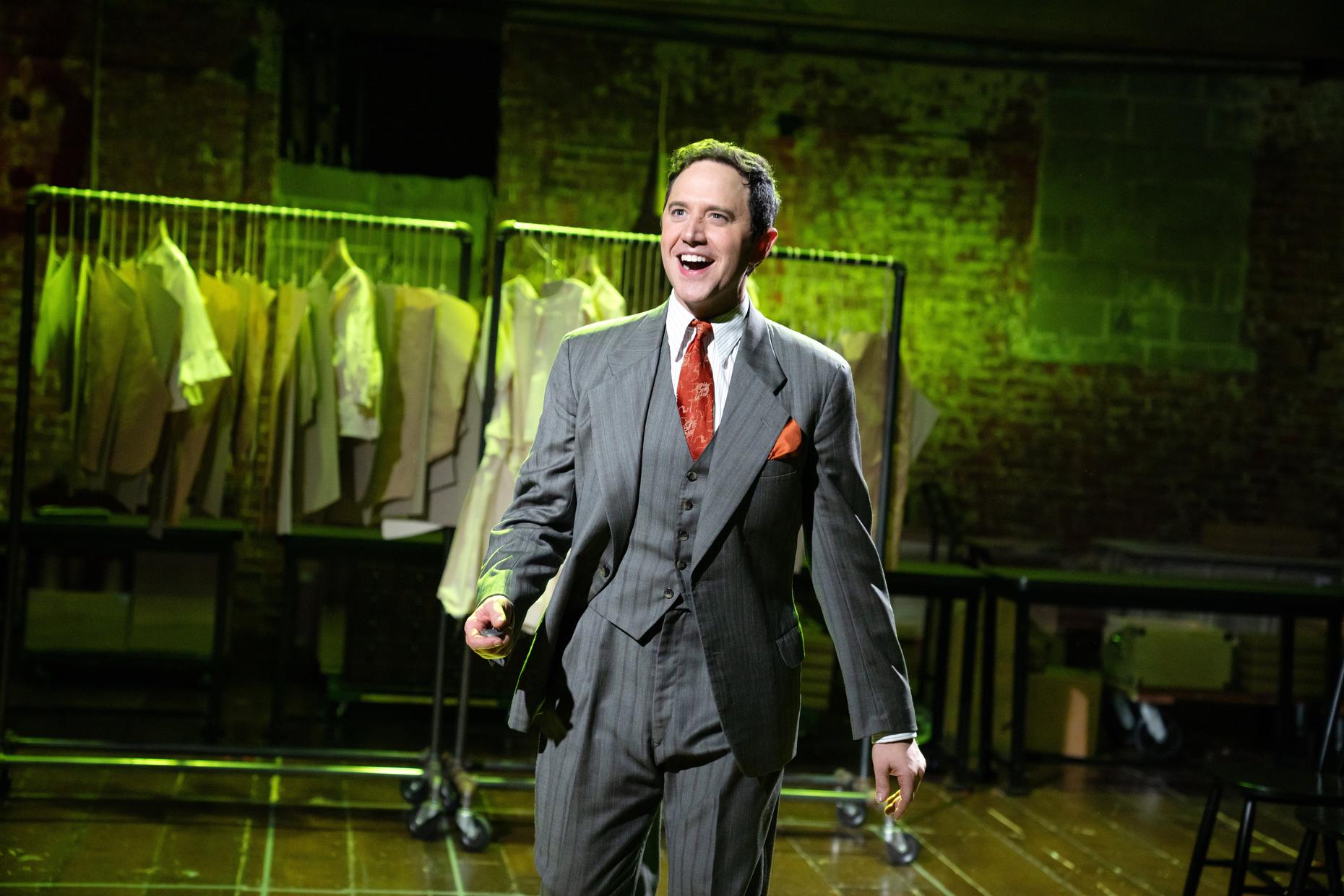
All Of It with Alison Stewart
'I Can Get It For You Wholesale' Finds New Life at Classic Stage Company
00:28:29
Last seen on Broadway in 1962, "I Can Get It For You Wholesale" tells the story of a young man trying to make it in NYC's Garment District. We discuss the musical's revival.
Loading summary
Transcript68 lines
- [00:02]
Bic Soleil Glide Razor Advertiser
Surprise beach day. No excuses. I'm in. Gimme five. With Bix Soleil Glide Razor, you'll have hydrated, smooth skin that's ready to go on the fly. No shave cream needed. You can prep, shave and hydrate all in one step thanks to moisture bars that hydrate your skin during and after shaving. 5 flexible blades hug your skin for a close shave. Glide into smooth. It's your time to shine with bixsolil. Buy now at Amazon and Walmart. Ready? Your skin looks amazing. So smooth and beach ready.
- [00:29]
Judy Kuhn
Let's go.
- [00:31]
McDonald's Customer
I' ma put you on, nephew.
- [00:33]
Santino Fontana
All right, unk.
- [00:34]
Alison Stewart
Welcome to McDonald's. Can I take your order, miss?
- [00:36]
McDonald's Customer
I've been hitting up McDonald's for years. Now it's back. We need snack wraps. What's a snack wrap? It's the return of something great. Snack wrap is back.
- [00:47]
Marshalls Advertiser
Oh, my gosh. Have you been to Marshall's lately? They have all the brand name and designer pieces you love, but without the jaw dropping price tags. Alright, so here's the truth. You should never have to compromise between quality and price. And at Marshall's, you. You don't have to. Marshalls believes everyone deserves access to the good stuff. And that's why their buyers hustle around the clock. To make it happen for you, visit a Marshalls store near you or shop online@marshalls.com.
- [01:19]
McDonald's Customer
Listener support WNYC Studios.
- [01:33]
Alison Stewart
This is all of It on WNYC. I'm Alison Stewart. Before Fiddler on the Roof became a sensation, before Barbra Streisand was a household name, and hot off the heels of how to Succeed in Business without really trying, the 1962 musical I Can get it for you Wholesale melded the magic of those three shows. Combining klezmer music and show tunes. Harnessing the power of a big voice in a small part and featuring a ruthless businessman at its leading as its leading man, the show has been reinvigorated with a new production at Classic Stage Company. The story follows a Jewish man named Harry Bogan, who at first is just trying to help keep his family with a roof over their heads and food in their bellies by wheeling and dealing in the garment district in 1930s New York. But it becomes clear that Harry wants more and more and more and will lie and scheme and cheat to do it all while smiling and charming everyone around him, including the audience to a point. With Tony winner Santino Fontana speaking directly to the audiences explaining why Harry does what he does. And he almost has you ready to invest in his next business venture, the only Ones who seems to see through him a bit is his mother, played by Tony winner Judy Coon. She tells his girlfriend he just should be a little bit careful about Harry. The revival features an updated book from John Weidman, who you might know as the man behind the book for shows like Assassins and Pacific Overtures. His father, Jerome Weidman, wrote the original novel on which the story is based, as well as the book from the original production. I can get it for you. Wholesale is running at the Classic Stage Company through December 17th, and I am joined now by John Weidman, as well as stars Fontana and Judy Kuhn. John and Judy are with us in studio. Nice to see you.
- [03:16]
Judy Kuhn
It's good to see you.
- [03:17]
John Weidman
Pleasure to be here.
- [03:18]
Alison Stewart
And Santino, are you there?
- [03:20]
Santino Fontana
Hello? Hey. Hello.
- [03:22]
Alison Stewart
I just decided to call you by your last name. Hey, Fontana. Santino, welcome. John, why did this seem like a good time to revisit the work?
- [03:32]
John Weidman
Well, the project started about seven years ago, way pre pandemic. It was not my idea. I got a phone call from a producer named Jeffrey Richards, who's been kind of a godfather to this project from the beginning. And Jeffrey was interested in the musical and in the possibility of reviving it. Wholesale was one of those shows that got done. It was a modest success, but it was put on a shelf and it sat there. And the show really rarely has been done, rarely, if ever, since then. So I was delighted to discover that he was interested in the show, but what he was really interested in when he pressed beyond that initial idea, wasn't seeing if there wasn't a way to reach back into my dad's novel and to pull some of the tone and style of that novel into the musical. The novel was published, as you said, in 1937, and it is a very rough, raw, unfiltered portrait of a bad guy behaving badly and, frankly, getting away with it. The musical, when it was produced in 1962, was presented in a musical theater environment in which that kind of dark, difficult material was not as welcome as it has become now. You know, it would be two years before Fiddler was produced, five years before Cabaret was produced. So they sanded the edges off what the novel, the novel's Portrait of Harry, I think, in order to accommodate a 1962 musical theater audience. And the idea of approaching the project with. As a way of restarting the process of adapting my dad's novel was really intriguing to me. And I went back, I read the novel, and I thought, yeah, you could do this, and it would be like restarting the process of the. Of adapting the novel into a musical. And so we went forward from there.
- [05:18]
Alison Stewart
Santino playing Harry, you have to understand his motivations. What is Harry. Why is Harry doing what Harry's doing?
- [05:29]
Santino Fontana
Well, I think it's really clear what, especially at the beginning, the way that John has addressed adapting the novel as well as relooking at his father's book of the musical. There's a strike. He can't make money. If he can't make money, he can't provide for his mother. And he is the one working. And his father's passed away. He's the only breadwinner in the family. He's responsible. And they're gonna get kicked out because they can't pay the rent, because they can't work. I mean, this year and alone, how many strikes have we seen in so many different industries across the country? I think it's so prescient that we're telling a story about people trying to survive in a system that really isn't looking out for them, and he has to find a way, and so that's why he does what he does. I think as he goes along, you know, someone who's struggling for so long, you get a taste of success, you want a meal of it. And I think that's what we're watching. You're watching somebody who has to kind of play by his own rules in order to get ahead, and he gets lured in by that, you know, and it goes from there, which is also something we see in the news so many. You know, Sam Bankman freed. We have a certain politician who's trying to stay out of jail. You know, it's so zeitgeisty to me. Yeah.
- [06:59]
Alison Stewart
Do you like Harry Santino?
- [07:03]
Santino Fontana
Yeah, of course I do. A boy who's lost his father when he was a child, was beat up on the street and called racial epithets, stolen from having to go home and take care of his mother. If you don't like that person, there's something wrong with you, because that person needs us, the community needs us. Now, he makes decisions that I do not like, that I would not make. But, you know, that's. That's the fun of being in the theater, you know? Do you like Madea? Do you like. You know, I don't. And yet I want to see her. You know what I mean?
- [07:40]
Alison Stewart
Not the sentence I expected when I woke up this morning. Do you like Madea?
- [07:43]
Santino Fontana
Good morning. Well, you know what I mean. When people are pushed to a certain degree from a system that is Unfair, they react. And that's kind of what's fun about going to the theater to watch it.
- [07:58]
Alison Stewart
Judy, how would you describe the relationship between Harry and his mother, especially when we first meet them?
- [08:04]
Judy Kuhn
Well, it's very complicated. You know, I think like what Santino just said, there's a certain amount of desperation. I mean, what you see in the prologue that John so brilliantly added, when you see Mrs. Bogan with her young Harry and you know, you see that there is a desperation there that she is she's forced to send her 11 year old son out on the streets to work in the garment district to make money and you know, he gets beat up, but she has to send him back out. And I think that's difficult and complicated and you know, I think we have different expectations of parenting these days than we did in that would have been, you know, 1917. So yeah, I think that's sort of where it starts and of course goes on from there with her particular ambitions for him, but also her concerns about what he might be capable of.
- [09:18]
Alison Stewart
John, let's talk about that opening that Santino and Judy have referred to. The story begins when Harry's experiencing this violence act of anti Semitism and he's a little boy and it's done through dance. He's just trying to make some money. 1 why did you want to include it and in writing this book, how did you think, how does this violence affect the way Harry behaves later on?
- [09:42]
John Weidman
Well, I should say first of all that all the work that was done on the show, once the work was started again, really was a collaboration between me and Trip Coleman, who directed this, but who was involved from the beginning in all the conversations about the changes we would make and the stuff we would hang onto and the ways in which we would massage certain parts of the show. And one of the earliest conversations was about contextualizing Harry's story by creating a prologue that would not excuse his behavior, but would begin to explain it, that to see him as a child sent out into the streets, I mean, it's Dickensian when this kid is racing around New York trying to earn enough money to keep his family together when he's, I don't know, 11 years old, to show that to the audience and to shine the harshest and most shocking possible light on it by having him actually attacked by a grown man and by having the worst possible word could be thrown at him, thrown at him, which is meant to shock the audience, but it was the intention, as I said, was to start the story in a Place that would allow people to lean towards Harry as opposed to leaning away from him. Because there's a lot in the story that ultimately causes people to lean back from Harry. But the longer they can lean towards him, the better. And that's what really drove the initial decision.
- [11:02]
Alison Stewart
What were some other parts of the show that you knew you needed to edit, you needed to massage, you needed to take in or take out or put something else in?
- [11:12]
John Weidman
The biggest changes, I guess, were driven by the fact that the novel is written in the first person. Harry's telling us his own story, which was not true, obviously, the novel or the musical in 1962. So it seemed to me a trip that if we put Harry on stage and let him talk to the audience, he could charm them, he could explain himself, and he could manipulate the audience in the way in which he's manipulating people in the story. And that would make for a much fuller experience over the course of the evening. The other main change, other than a change here, a change there, reimagining certain characters so that they would work better in a 2023 context, was to pull the events from the novel that ended the novel into the musical in 1962. The musical ended with something which I think reflects the fact that they were struggling to accommodate that audience, which is something that sort of mimicked a happy ending without really being persuasive in any way. In 62, the show ended without music. There was a long book scene in which Harry basically changes his mind, finds the money to keep his partner out of jail, and goes downstairs, meets Ruthie, his the good woman that he was involved with, and they go back to the Bronx to have blintzes with Judy. So.
- [12:37]
Alison Stewart
Oh, that's a nice bow.
- [12:38]
Judy Kuhn
Yeah. It doesn't exactly work that way in our production.
- [12:42]
John Weidman
No, I mean. And it is not. That's not where the story was going even in 1962. So the events that are now on stage at Classic Stage were pulled from the novel. Reshape the scenes, and it takes the story where we think it. I think where my father felt it needed to go.
- [13:00]
Alison Stewart
Santino, you address the audience. Harry addresses the audience, trying to explain to us what's going on. This is why I'm doing what I'm doing. Can you see the audience change? Can you see it, as John put it, lean in and lean out. What is that like for you?
- [13:16]
Santino Fontana
Yes, yes, immediately. I mean, that's one of the. It's a blessing and a curse and, you know, Classic stage on East 13th Street, 13th and 3rd. One of the great things about that space is it's a thrust. So the audience is surrounding you on three sides, and that makes for a very intimate evening of theater. John was there the night that, you know, Oliver Platt and Nathan Lane were there in Sitting back to Back, so. And I saw them instantly. So you see everything in terms of the content of the story as well as my relationship with the audience. Yeah, you do. I watch them gasp when my character is punched in the face. I watch them lean in and laugh at Harry being able to make light of certain situations as well as acknowledge what he's doing. And then I feel. I mean, you know, he makes bad decisions along the road, and you forgive him because you know where he came from. Or I can see the audience forgive him, and then I can see some people that don't. And then as the show goes on, it becomes very clear in the same way that I think people who make bad decisions feel like the people around them betray them because they're judging them, and then they strike out against them. I feel that, and it's fascinating. There was yesterday we did a student matinee, and I do something terrible. My character does something terrible, and one of a kid in the audience wrote or said, that's cold. And my next. You know, I have a lyric right after that, life's a cold cash situation. And I just pointed at him, and he kind of recoiled. And I was like, yeah. I mean, there's. I love that it's kind of scary, but it's also great. And, yeah, I do feel. And yet I also know that that's how I know I did my job and I did. You know, I want to do John's story justice and Trip's direction and the cast, the audience needs to. I need them to turn on me eventually or it won't work. Yeah.
- [15:31]
Alison Stewart
The name of the musical is I can get it for you wholesale. It's running at the Classic stage company through December 17th. We'll have more with part of the cast and the creative team after a quick break. This is all of it. This is all of it on wnyc. I'm Alison Stewart. My guest this hour are John Weidman. He updated the book for I can get it for your wholesale running at the Classic stage company through December 17th. Also joining us are the stars of the show, Santino Fontana. Santino Fontana. I will get that. And Judy Coon. Judy and Santino. I'm a big fan, though. I mean, like, oh, Crazy Ex Girlfriend. One of my favorite shows. Judy, as a musical Theater vet. What's unique about singing music that mixes klezmer elements and traditional musical theater song structure?
- [16:27]
Judy Kuhn
Wow, that's such an interesting question. You know, to me, it's. I don't really think about that so much as whether the music fits the moment, you know, And I feel like for Mrs. Bogan, it really does in this show, because actually, my. I would say three or four musical moments. The style of the music is very different. You know, in one, it's this very klezmery song where we're dancing the hora. And one is a beautiful, very sort of traditional music theater ballad. And then there's this song, eat a Little Something, which I sing at the beginning and the end, which is really a monologue almost. And they each sort of fit the moment so well. And allow me to tell the story that I think needs to be told at those moments.
- [17:30]
Alison Stewart
Santino, how about for you, that mix of the klezmer music and traditional musical theater structure?
- [17:36]
Santino Fontana
Well, I think what Harold Rohm did very smartly was, although the family music, the stuff involving stuff at the home, those klezmer moments are really there. But as soon as you leave, it's gone. Gemini in Capricorn is a song I sing with the girl that Harry should be with. And that is a charm song in every way, played by Rebecca Naomi Jones beautifully. And then I have a great song with Joy woods called the Sound of Money. Martha Mills, who was kind of the woman he shouldn't be with. And that sounds like a club song. That sounds like Bobby Darin could have covered that song. So Harold Rome, in a lot of ways ahead of his time, was really writing so specifically for each situation. So a nightclub song sounds like you're in a nightclub. I mean, granted. Yeah. And the. I think it's. I think it's interesting and fun. And a lot of these songs are so, like, complex in the best way. David Chase did an amazing job adapting the score and creating new material that we get to breathe life into every night. One of the things I do want to say, too, what you talked about earlier, by the way, I'm also a fan from your MTV days, but the. When I was a child, the thing that John did that he's not going to say because he's too modest. The women in this show, I cannot tell. I can't find another musical with this many strong, very specific, empowered women with so much agency, Whether that's Judy or playing my mother or Sarah Steele playing Blanche, or Joy woods playing Martha Mills or Julia Lester playing Ms. Marmoustein or Rebecca Naomi Jones playing Ruthie, as well as even Hayley Petchune playing a lawyer. I just can't think of another musical where there are this many empowered, strong women who are having none of it. They are. You know what I mean? That is. Would not have been written in 1937, would not have been written in 1962, and it is written today in 2023. Also, a lot of big testament of that is to Trip Kallman and John's work in developing the material.
- [20:02]
Alison Stewart
Well, that was my question on page seven, so we will move on.
- [20:07]
Judy Kuhn
I second what Santino just said. It's really true, Judy.
- [20:13]
Alison Stewart
Ida loves her son, but she also sees him. I was gonna say sees through him, but she sees him.
- [20:19]
Judy Kuhn
Yes.
- [20:20]
Alison Stewart
What does she see in her son that maybe others don't quite see?
- [20:29]
Judy Kuhn
I think she sees something that she recognizes in herself, which is a certain kind of drive and ambition and a desire to succeed and be seen in the. You know. And I think she sees the dangers in going too far with that. And so I think while she pushes him forward, she's also trying to rein him in and, you know, unsuccessfully, in the end. And I think. I think the painful thing for me about her story is that at the end, she recognizes her own compulsion, complicity. And I think there's a lot of grief in that, and I think there's a lot of rage at him. And I think there's. It's very complicated, and it's really interesting to explore every night, because it feels a little different every night. But I find her really fascinating and familiar in a certain kind of way.
- [21:31]
Alison Stewart
Someone texted us unsolicited, I can get it for you wholesale. Rather than telling you how much I loved it, I'll quote who approached me as I was leaving the theater and said, I just enjoyed watching you enjoy it so much. So New York, right?
- [21:47]
Judy Kuhn
Yeah. Well, that's the other interesting thing about that space. You know, Santino said, yes, we can see everyone in the audience, but the audience can see each other, and they can watch each other watch the show. And that's really an interesting thing to be a part of, having been in the audience in that theater many times.
- [22:09]
Alison Stewart
John, what conversations did you have with Trip Coleman about that space? Because it's a small space.
- [22:14]
John Weidman
Yeah. Well, this is the third show I've done there. Pacific Overtures was. John Doyle did Pacific Overtures there. And also, Judy was in Assassins just a few years ago. I mean, you know, that piece of it, this sort of staging piece of it. How's it going to work in this space was really left in Tripp's lap. He and I were in conversation about. About text and content, but I. The kind of theater where I am most comfortable being in the audience is a theater like that. I mean, you know, after working in a theater like that, after seeing stuff in a theater like that, sitting in a house with a proscenium where you're separated from the work that's being performed on stage, begins to feel like there's something you're missing. And so I just love being downtown in that space.
- [23:01]
Alison Stewart
What's something that you observed or discovered about the show being in that small space? Once you watched it, once it was locked and you watched it, you're like, oh, I never necessarily noticed that.
- [23:13]
John Weidman
I think one of the things that, you know, it's a cliche to say, you know, the last collaborator is always the audience. You finally, you get an audience, and you're gonna learn things about the show that you thought you knew or maybe you did. You wish you weren't finding out once the audience comes in. But it. You know, Santino's relationship to the audience is sort of the last piece that could not really be explained until there was an audience to listen to him. And I think, you know, I was actually reassured. I mean, Santino does what he does brilliantly. I think Harry needs to be charming in order to connect to the audience, and that's something that Santino brings on stage with him. But watching the way the audience either went with him or resisted him, and when that began to happen was part of the process. That's part of what previews are for.
- [24:00]
Alison Stewart
Yes. Santino, what did you adapt or change about your performance once that last element came in the audience?
- [24:07]
Santino Fontana
Well, yeah, I will say. I mean, it's still happening. I'm still. I mean. And this is the great thing about theater is, you know, every. Every day, you have another chance at it, Right? And there's so much to be. And I bug John about this sometimes in texts. All the times where I'm like, I have an idea, or I think this. I wish we could have another month of previews or go out of town or do, like. Because there is so much to played with, which is what's so fun is being able to figure out. And it's different every night. And I'm very aware of everything going on in that audience, partially because they're almost always lit as well as I can hear everything. So the other day I asked. There's a question. I asked the audience and a girl answered, and I got to respond directly to her with John's next line. And then there was a. Like a kind of a gasp. And how thrilling is that? You know, you get to see something that only that audience got to see. It is still the same story we're telling every night, but it really is different depending on the group of people that are in that house. And I think that's something over time. I mean, I'm still playing with it. I'm still figuring that out in a great. In a fun way. And, you know, I want to, like, go back and, like, oh, I want to try this this way, and I want to try it that way. And anyway, it's. It's fascinating and kind of endlessly surprising, which is also a testament to it being a complex, you know, detailed, dense work that has a lot going on in it.
- [25:51]
Alison Stewart
Yeah. Throughout the whole thing, I'm like, he's gonna do that. Oh, my God, he's gonna do that.
- [25:54]
Judy Kuhn
I think that's one of the things that I hear from friends who have come to see the show, is that it constantly surprises them, which is why I don't like to talk about this story too much, because you don't want to give too much away. People, really, they are surprised. They think, oh, it's going there. Oh, no, it's going there. And the other comment I've had a lot is that people say they wake up thinking about it the next day because they're still trying to understand everything that's happened and why it happened and how it happened, which is great. And it's very much of the moment and how we're thinking about capitalism very much. Without question, very much.
- [26:32]
Alison Stewart
Another thing that's great about it is that almost every character has their moment in this. Why is that important to the telling of this story, John, that almost every character has a moment?
- [26:46]
John Weidman
Well, I guess I would say that, you know, the opposite idea to what Harry comes to represent, certainly by the time we land at the end of the show, is the idea of community and of people supporting each other as opposed to turning on each other. And when, like Judy, I don't want to give away too much, but they're the affirmation of the relationship among all those characters in the piece. To have real power requires that we have an investment in each of them, that they're not just ensemble members. And so this is, you know, my dad. This is me trying to take that idea, which my dad created, and massage it and make it work with even more Power. But I think it does work in the piece. And it must be said that. I mean, this cast of actors is extraordinary. I mean, one of the reasons why everybody lands the way they do is because, yes, I think the parts are right, but also the people playing those parts are something else.
- [27:50]
Alison Stewart
What was it like working on your dad's work?
- [27:52]
John Weidman
You know, this is insert here. Standard joke about my therapist being my unacknowledged collaborator. But in fact, the jokes. Well, yeah, but in fact, it was a pleasure and in the end, enormously satisfying. Because I think all of us who worked on the show really felt that we sort of brought it in for landing in exactly the right way. And, you know, this was not me deciding my dad's work needed to be fixed. It was me deciding that because of when the musical was written, there was a way to make the musical more like what he would have wanted it to be if it had been written at a different time. The source material was all him. It didn't come from anybody else. It didn't come from me. It was like pulling more of him on stage. And I enjoyed doing that.
- [28:39]
Alison Stewart
Judy, we have a little bit of time left. You said people are talking about it and thinking about the next day. What is something you'd like people to talk about over coffee or a drink after they see the show?
- [28:49]
Judy Kuhn
Oh, wow. So many things about the willingness we sometimes have. I think it's good to look at ourselves and ask ourselves how willing we are to compromise our values in order to get something we want. And I think it's very easy to look at Harry Bogan and say, oh, he's terrible. I would never do that. But. But is that true, really? Yeah. Because as you said, Sam Bankman fried all these people. We've watched them go down that road. And I think that's a big question that this show asks.
- [29:31]
Alison Stewart
The name of the show is I can get it for your wholesale running at the Classic Stage Company. My guests have been John Weidman, Judy Kuhn and Santino Fontana. I did it. Thanks to all of you for being with us.
- [29:46]
John Weidman
Thank you.
- [29:47]
Judy Kuhn
Thank you.
- [29:48]
Alison Stewart
And that's all of it for today. I'm Alison Stewart. I appreciate you listening and I appreciate you. I will meet you back here next time.
- [29:55]
Bic Soleil Glide Razor Advertiser
Surprise Beach Day. No excuses. I'm in. Gimme five with Bic Soleil Glide Razor. You'll have hydrated, smooth skin that's ready to go on the fly. No shave cream needed. You can prep, shave and hydrate all in one step thanks to Moisture Bars that hydrate your skin during and after shaving. 5 flexible blades hug your skin for a close shave. Glide into smooth. It's your time to shine with bixsolil. Buy now at Amazon and Walmart. Ready? Your skin looks amazing. So smooth and beach ready?
- [30:23]
Judy Kuhn
Let's go.
- [30:24]
McDonald's Customer
I' ma put you on, nephew.
- [30:26]
Santino Fontana
All right, unc.
- [30:27]
Alison Stewart
Welcome to McDonald's. Can I take your order, miss?
- [30:29]
McDonald's Customer
I've been hitting up McDonald's for years. Now it's back. We need snack wraps. What's a snack wrap? It's the return of something great. Snack wrap is back.