← All Of It with Alison Stewart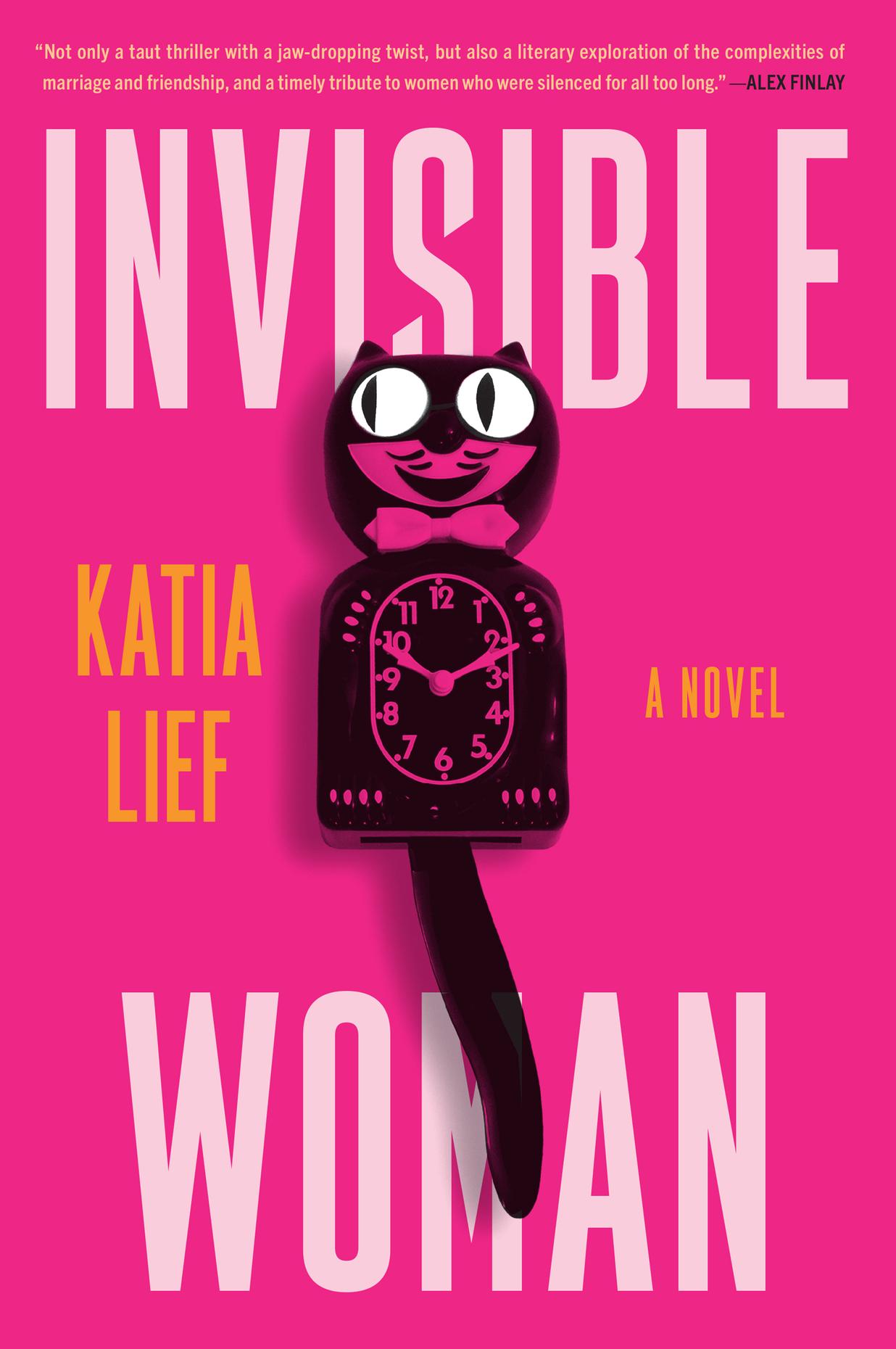
All Of It with Alison Stewart
Invisible Woman' is a #MeToo Thriller
00:19:23
In the new novel, Invisible Woman, a former Hollywood filmmaker named Joni tries to convince her friend Val to share the story of the sexual abuse she faced years ago.
Loading summary
Transcript81 lines
- [00:02]
Bix Soleil Advertiser
Surprise beach day. No excuses.
- [00:05]
Katya Leif
I'm in.
- [00:06]
Bix Soleil Advertiser
Gimme five. With Bix Soleil Glide Razor, you'll have hydrated, smooth skin that's ready to go on the fly. No shave cream needed. You can prep, shave and hydrate all in one step thanks to moisture bars that hydrate your skin during and after shaving. 5 flexible blades hug your skin for a close shave. Glide into smooth. It's your time to shine with bixsolil. Buy now at Amazon and Walmart. Ready? Your skin looks amazing. So smooth and beach ready.
- [00:29]
Katya Leif
Let's go.
- [00:32]
NetCredit Advertiser
Netcredit is here to say yes to a personal loan or line of credit. When other lenders say no. Apply in minutes and get a decision as soon as the same day. Loans offered by NetCredit or lending partner banks and serviced by NetCredit. Application subject to review and approval. Learn more@netcredit.com partner NetCredit credit to the people.
- [00:47]
McDonald's Advertiser
I' ma put you on, nephew.
- [00:49]
Katya Leif
All right, unk.
- [00:50]
Alison Stewart
Welcome to McDonald's.
- [00:51]
Katya Leif
Can I take your order, miss?
- [00:52]
McDonald's Advertiser
I've been hitting up McDonald's for years. Now it's back. We need snack wraps. What's a snack wrap? It's the return of something great. So snack rap is back. Listener supported WNYC Studios.
- [01:21]
Alison Stewart
This is all of it on wnyc. I'm Alison Stewart and listeners, this segment will discuss sexual assault. If this is triggering for you, or if at any time you need support, please call the National Sexual Assault Hotline, 1-800-656-4673. In the new novel Invisible Woman, a MeToo moment hits close to home for a talented and troubled woman named Joanie. She was a rising star director in the 1990s, and her best friend Val was starring in her films. They got separated at an industry party where a producer raped Val. Val didn't report the assault, swore Joni to secrecy about her assailant, and left the movie business. And Val and Joni haven't been in touch for years. Years later, Joni's own career has stalled. She hasn't directed in years. Meanwhile, her TV producer husband, Paul Starr, has risen, and he loves the attention and the massive mansion in Brooklyn he made them move into so he could establish a TV empire on the East Coast. She's tasked with throwing parties and raising the kids.
- [02:21]
Interviewer/Producer
When news of Val's attacker comes to light, Joanie decides to reach out to her friend Val and and encourage her to tell her story. But Val seems reluctant to come forward and is not happy by Joni's repeated attempts to contact her. Joanie does relent.
- [02:39]
Alison Stewart
Joni doesn't relent. So Val agrees to meet for a drink in Dumbo, but never makes it because Val is viciously attacked and left in a coma. When Joanie becomes the number one suspect in her friend's assault, she must figure out what really happened that night and what happened to Val decades ago. Katja Leif is a professor of writing at the New School, and she joins me now to discuss her book, Invisible Woman. Welcome to the studio.
- [03:01]
Katya Leif
Hi, Alison. Thanks for having me.
- [03:02]
Alison Stewart
Was this the original story you set out to write when you first sat down to write this novel?
- [03:08]
Katya Leif
I wrote so many drafts of it, I think I have to say no. Except at its heart, yes. I wanted to look at the emotions that were gonna kind of volcano up when all of these kind of scabs of time were ripped. The story, the women. And so it was really the gist that I was after. And I worked really hard over many revisions to make sure that I was expressing that. But in terms of the story itself, that's always an evolution, draft to draft to draft. I do a lot of revising.
- [03:47]
Interviewer/Producer
Writing is rewriting, as they say.
- [03:49]
Reader/Voice Actor
Oh, it really is.
- [03:50]
Alison Stewart
Would you read the prologue of Invisible Woman for us?
- [03:53]
Reader/Voice Actor
I would be happy to.
- [03:57]
Katya Leif
The first time the thought came to her with clarity instead of anger. It was a warm evening in June, not long before the party that was supposed to launch a new phase of her husband's brilliant career.
- [04:09]
Reader/Voice Actor
She was standing at the kitchen sink.
- [04:11]
Katya Leif
Sponging tomato sauce off a white plate. She rinsed it and set it dripping in the dish drainer, then picked up a wine glass and scrubbed at a haze of lip gloss biting the rim. She put the glass down but left the water running, as if the sound could blot out her thoughts, as if.
- [04:28]
Reader/Voice Actor
He could hear them through the linkage of empty rooms. What if I killed him?
- [04:34]
Katya Leif
The thought arrived whole, like a package.
- [04:37]
Reader/Voice Actor
Delivered to her door.
- [04:38]
Katya Leif
It shocked her and she slammed the door, but eventually she cracked it open to take another look. Despite all their challenges, she had only recently started to fully imagine life without him. The thought had occurred to her, of course, but had never seized her like this. What really fascinated her wasn't the idea of his absence, but that it might.
- [04:59]
Reader/Voice Actor
Be caused somehow, by her.
- [05:02]
Katya Leif
She was starting to crave a chance to exert force in his life the way he'd exerted force in hers more and more. It was as if the defenses of.
- [05:12]
Reader/Voice Actor
The mutually agreeable life they'd built together had been stripped away. And when they looked at each other now, they no longer liked what they saw. Well, she didn't know what he felt about her at that point. What she knew, what she was starting to know, was that he was not the man she thought she'd married. She turned the water off and closed her eyes and went into revision mode. She was a writer, a director, a creator of worlds, and no idea ever survived without a vigorous remolding and nullified the violence of his imagined absence. She loved her husband. She did. Their commitment was based on not just love, but friendship with roots that went deep and got tangled where no one could see. She'd get over it. She'd adjust. Other people killed their husbands, not her.
- [06:02]
Interviewer/Producer
That's the prologue from Invisible Woman by Katya Leaf. So just from that we get the sense that these are two flawed humans, the two of them. What flaws did you want Paul to have? What flaws did you want Joni to have?
- [06:16]
Katya Leif
Joni? I wanted to have the flaw of sort of a little self delusion and magical thinking to carry her forward through her life because it was hard to look at certain things too closely. And for Paul, actually, through the drafts, I had to try and make him less likable. I don't think he was ever likable.
- [06:42]
Alison Stewart
This is all of it on wnyc. My guest is Katya Lee for talking about the book Invisible Woman. So you're talking about Paul, the husband in this case, and it's his likability.
- [06:55]
Katya Leif
Okay. So I tried to show his self centeredness, his narcissism, even his lack of concern for his wife, for Joni, in moments where he wouldn't listen to her, literally would just tune out. And there's a scene where he drops a plate, he clears his. They're having kind of a tense argument at the table and he doesn't like how it's going.
- [07:30]
Reader/Voice Actor
And he picks up his plate or.
- [07:32]
Katya Leif
Bowl, I don't remember, and walks to the sink and drops it in. And it sounds like it breaks and that that jars her. And that's a moment where there's a shift for her. She says, did you do that on purpose? No, I didn't, but obviously he did. So the reader knows that because it's clear and she's starting to see that. She's starting to allow herself to see these. It's kind of the death by a thousand cuts approach where she just overlooked a lot of it. And she starts in this story, she starts to see it.
- [08:12]
Alison Stewart
In the novel. We get the sense that we're not quite sure Joni is an entirely reliable narrator. Because Joni's got a bit of a drinking problem, as you said. She's got some magical thinking. How did you play with that as a writer?
- [08:27]
Interviewer/Producer
And in telling this story, Joni's sort of. I'm reading him like, is Joni right? Or it's Paul Wright.
- [08:34]
Katya Leif
Aha, good. That's what I wanted you to think. Perfect. The drinking is, you know, it's an obvious way that people mask pain. And so that was one of her bad habits. And she, you know, she was an alcoholic without thinking about it, without it. And through the course of the story, when there's a very, very bad night, she realizes she has to get a handle on that because she can't remember.
- [09:06]
Interviewer/Producer
Important things at an important time.
- [09:08]
Katya Leif
She's blacked out something extremely important. And she wonders if she's culpable for something, for what happened to Val. She doesn't know. And that really shocks her. And that's the awakening moment for her. And that's when she starts to really pull back. She tries to stop drinking and she gradually does. She does get a handle on that. And her thinking starts to clarify. And that's really the window opening, kind of a dirty window that opens up onto the scene of what's going on around her now. So that was a significant hurdle for her. Yeah.
- [09:48]
Interviewer/Producer
In your characters of Joanie and Val, why is Joni so hell bent on getting Val to talk about her rape? And why is Valley. We won't give anything away, but why is Val so nervous about it?
- [10:00]
Katya Leif
Joni has felt. Joni is at this. Okay, so when the book opens, Joni receives an email from bam, the Brooklyn Academy of Music, inviting her to a Q and A about her own films in a series they're calling Lost and Forgotten Women filmmakers of the 80s and 90s. And she's so, you know, it's meant to be an honor, but she's really stung by it. Women filmmakers lost and forgotten.
- [10:31]
Alison Stewart
She's a has been.
- [10:32]
Katya Leif
Yeah, she's a has been. And it hurts. She had, you know, an award winning film when she started and she feels kind of, it opens up this well of pain, of confusion, of regret and wondering for her what happened. And. And at the same moment, really, there's this breaking news of a mogul who has been serially raping women in Hollywood.
- [11:02]
Reader/Voice Actor
And this is the man who raped Val.
- [11:04]
Katya Leif
And Joni and me too, is happening. And Joni thinks, this is it. We can't just sit here anymore. The passivity is smothering us. It's killing us. We have to talk, but it's. It's not. We. It's Val. It's Val's experience. So she feels that it's time, and she hopes Val feels the same way. Val doesn't feel the same way at first, because she's left the world of.
- [11:32]
Alison Stewart
She's moved on.
- [11:33]
Katya Leif
She moved on and she built a whole new life and a very, you know, a very kind of solid, happy, contented life, a good life. And she doesn't. She. You know, she's buried it very deeply. She's never spoken to her husband about it. She. She just doesn't want to at first. She's not read. She's also the one that would have to come out publicly. She doesn't know if she wants to.
- [11:54]
Alison Stewart
Yeah, they're both.
- [11:55]
Interviewer/Producer
And the title refers to both of them being invisible.
- [11:58]
Reader/Voice Actor
Right.
- [11:59]
Interviewer/Producer
Val is invisible victim. And Joni's invisible in her marriage in many ways and visible from the work that she used to do. We just got a text that's interesting. It says, I studied writing with Katya Leef in 2001. She's an amazing teacher. I don't know.
- [12:15]
Alison Stewart
But we also.
- [12:16]
Interviewer/Producer
One of our producers took your creative writing class. Zach did. At the New School, and they said that the focus was on suspense, and that's really important in this novel as well. What are some strategies for deploying suspense in a novel?
- [12:29]
Katya Leif
Okay, so, Zach, you took my suspense writing course. I haven't taught that one for a while. But suspense, you know, I believe suspense belongs in any. Every novel, no matter how you categorize it, because suspense is the desire in a reader to keep reading, and you need that in any kind of novel or movie or play or anything at all. And so in writing suspense, it's a matter of, I think, opening, asking a question that you don't answer till much later in the story. And don't beat that question to death. Just put it out there. And very gradually, as you build character and you build story and you move it forward, occasionally touch on it again. And the idea is to try to have it so closely fused with character, the importance to a character who you as a reader could relate to, so that it resonates emotionally. I mean, listen, it's not like a formula. Here's the recipe for it. But it is a technique, I guess. I tried to teach it. And, yeah, a little bit less is more. Put it out there, but don't harp on it too much.
- [13:50]
Alison Stewart
My guest is Katya Leaf. She's author and creative writing professor at the New School. The name of her new novel is Invisible Woman. So this is largely about the entertainment business, but it's set in Brooklyn. Why did you set it in Brooklyn?
- [14:04]
Katya Leif
So I said it in Brooklyn for two reasons. One, I live there. I know it so well, and I love writing about it. And one day, really. Okay, more than two reasons. One day, my husband and I were riding our bikes around through Dumbo, and then we went down into Vinegar Hill, which is right off of Dumbo, and we just out of nowhere came upon this huge white mansion sitting behind a gate and a huge, big lawn on a cul de sac. And we were blown away. So as we kind of immediately took out our phones and sort of. It was called the Commandant's House. And I was just mesmerized by it. And I kept going back to it, and I decided at some point I was gonna write about that. It was amazing. Meanwhile, it's pretty close to the Brooklyn Navy Yard with the Steiner Studios. And so when I decided to write about these people who worked in film, just Joni in film, her husband in television, how could I write about them in a setting that I knew intimately? I could bring them to Brooklyn, and so I did. He opens a kind of a major television studio at Steiner, and he kind of wrangles it so they can have the Commandant's House, which is like, almost, I think, no other house or building in New York City. It's a big white mansion on a huge lawn behind a gate. It's crazy. So that's how it happened. It was just, you know, kind of fascination on fascination, and I just got pulled to it.
- [15:51]
Interviewer/Producer
Since we're talking about Hollywood and your mind, do you have. Not that they would play them, but do you have actors in mind as you were reading it? Because at first I was like, Paul. Oh, Jon Hamm is Paul. Like, I just went right there.
- [16:02]
Katya Leif
He'd be great. I really have a hard time thinking of actors, you know, for it.
- [16:06]
Interviewer/Producer
Oh, I got a ton of ideas.
- [16:07]
Katya Leif
Oh, throw them out. Throw them out.
- [16:09]
Interviewer/Producer
I thought the Val. Well, if I were casting this, the Val and Joni part should be two of the three actresses from Friends. She needed to be Lisa Kudrow and Jennifer Aniston or Jennifer Aniston and Courteney Cox. Like, so there's some sort of long term.
- [16:21]
Reader/Voice Actor
Oh, my God.
- [16:22]
Katya Leif
You know what's so funny? We've been binging on Friends at Home. The ultimate comfort show. I love that idea. Yeah, that's great. Oh, thank you. We'll just put it out into the world.
- [16:32]
Interviewer/Producer
We're talking about Invisible Woman, the name of the novel from Katia Leaf. When you think about creative writing, we have some people who listen, who are writers. How does one start. How does one start to write a novel? What should they do tomorrow?
- [16:51]
Katya Leif
I always tell my students, well, no, I'm not going to talk about my students, because they always have deadlines. What I would say to someone else who doesn't have a deadline is, first, really let the idea kind of grow in your mind. Don't feel pressure. And when the idea feels like it's starting to gain some traction and it's starting to gain many, many elements and facets, and you almost can't not write it down, Just sit down and just start writing with no agenda and no pressure to. I'm now writing the perfect first page to a novel that I'm gonna finish in X amount of time. So take the pressure off and just allow yourself to begin with an understanding that you're probably gonna throw this page away and find the characters and find the voice. And when you find them, you'll know it, and you'll know when you've hit upon the right beginning.
- [17:55]
Alison Stewart
In this book, Val and Joni are women who've had their careers derailed by men in Hollywood. Val because of the sexual assault. Joanie because of her more powerful husband, who may or may not have been causing her problems, and her trying to advance her career. What did you want these two women's.
- [18:14]
Interviewer/Producer
Stories to illustrate about what it takes to make it as a woman in media and in Hollywood?
- [18:19]
Katya Leif
Okay, so it was because they're in their 50s. Their time when they were young women starting out was more in maybe the 90s. And I can't really speak to right now, but I'd love to hear what I really wanted to illustrate, especially with Joanie. With Val, it was clearly, you know, an assault that you're not safe with your colleagues, that she wasn't safe, that that could happen on the most brutal, brute level. With Joni, it was a little more subtle, and it involved her colluding with the process that brought her down. Her is that she made an independent film. Her voice, her idea. She got it done. She made it. People loved it. It won awards, and it got her a big studio film. So her second film had money and prestige, and she became subject to pressures of executives who wanted it different. And of course, they were men. And she was pressured to change the ending so it wouldn't be a kind of feminist ending. And she gave in to that pressure because she was afraid if she didn't. She would not get a third film. So it was collusion. And in this story, she begins to recognize that. So it's not that she made the movie and it just did it her way and it didn't do well. It's not that she had kids and that was that. It wasn't that. It was that she begins to recognize the ways in which she buckled to it. And so it's the collusion, the self collusion, which is a kind of very disturbing thing, I think, for women, especially older women, to recognize.
- [20:13]
Alison Stewart
The name of the novel is Invisible Woman. It is out now. My guest has been author and creative writing professor at the New School, Katja Leaf. Katja, thank you so much for coming to the studio.
- [20:24]
Katya Leif
Thank you for having me, Alison.
- [20:25]
Alison Stewart
There's more, all of it on the way. We'll talk about a new mystery murder series on Showtime called called the Woman in the Wall.
- [20:34]
Interviewer/Producer
That's next.
- [20:35]
McDonald's Advertiser
I'mma put you on, nephew.
- [20:37]
Katya Leif
All right, unc.
- [20:37]
Alison Stewart
Welcome to McDonald's.
- [20:38]
Katya Leif
Can I take your order, miss?
- [20:40]
McDonald's Advertiser
I've been hitting up McDonald's for years. Now it's back. We need snack wraps. What's a snack wrap? It's the return of something great. Snack wrap is back.
- [20:50]
Katya Leif
At Capella University, we believe accessible education can make a difference. That's why we offer scholarship opportunities to all eligible students. Unfuturo differente. Estama serca de loques. Concapella University.
- [21:03]
Reader/Voice Actor
Learn more at Capella. Eduardo.