Loading summary
Transcript59 lines
- [00:00]
A
WNYC Studios is supported by Odoo. When you buy business software from lots of vendors, the costs add up and it gets complicated and confusing. Odoo solves this. It's a single company that sells a suite of enterprise apps that handles everything from accounting to inventory to sales. Odoo is all connected on a single platform in a simple and affordable way. You can save money without missing out on the features you need. Check out Odoo at o d o o.com that's o d o o.com.
- [00:38]
B
This is all of it on wnyc.
- [00:41]
C
I'm Alison Stewart.
- [00:42]
B
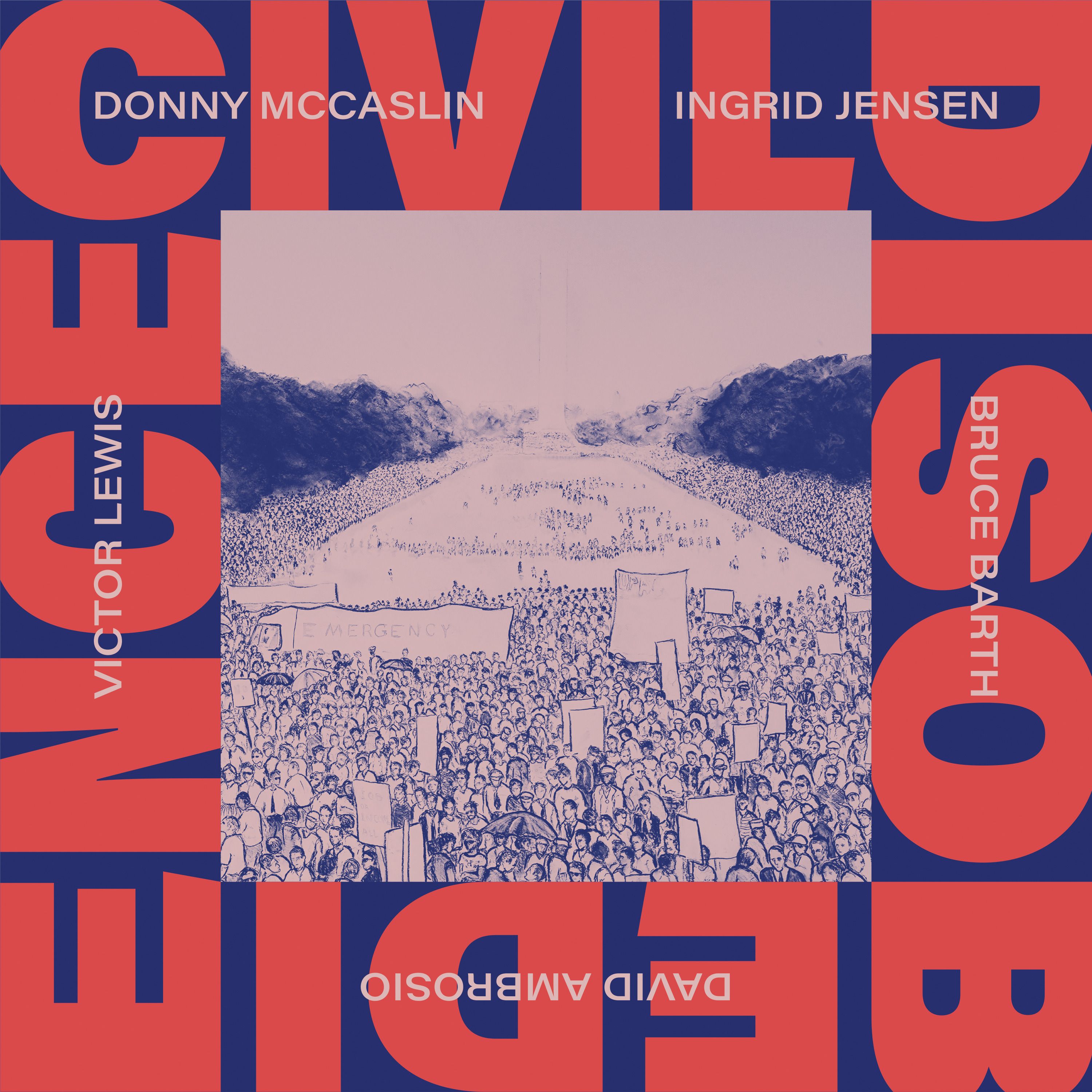
You know the Broadway season is drawing to a close and tomorrow we'll close out our season of Broadway on the radio. If you haven't been to one of these events, you are in for a treat. The cast and creative team behind some of the biggest musicals on Broadway come to the WNYC Green space where they perform live and they talk about their work. And tomorrow at noon we have a great one for you. The cast of the Outsiders will be here. They recently switched casts. The tickets for this event are free, thanks to the Mayor's Office of Media and Entertainment and New York Music Month. You can RSVP by going to wnyc.org events but please note the event is first come first, first serve. RSVP does not guarantee entry everybody and if you can't make it in person, you can watch performances on our livestream as always. Or you can just hear it on the radio. It all starts tomorrow at noon. Go to wnyc.org events again that's wnyc.org events now let's get this hour started with Civil Disobedience. My next guest, Dave Ambrosio spent a long time time not wanting to record his latest album. It's an album that features compositions by important figures of the 1960s jazz scene. Bobby Hutcherson, Jack McLean, Jackie McLean, Joe Chambers, Duke Pearson. These songs were recorded for the Blue note label in 1960s and inspired by the civil rights civil rights movement and anti war ideals of the era. But in many cases they went under the radar because the label delayed their releases. So Ambrosio knew he wanted to get more people familiar with this music. But it took him a while to get comfortable with the idea of re recording them with his own band. To do it he put together a group called Civil Disobedience and now they have a self titled album out. They'll also be playing Joe's pub this Thursday, June 11th. Dave Ambrosio and Civil Disobedience joined me and WNYC's Performance Studio. Here's our conversation. So, Dave, you're going to play two songs for us. The first is for Duke P, written by the great Bobby Hutcherson. Duke Pearson was a jazz pianist. How did this song come together?
- [03:04]
D
Well, I think that it was a tribute to him and the work that he did at Blue Note records in the 60s. He was a really important figure there, not only as a musician, innovative player and composer and band leader, but also he was kind of a liaison between the musicians and the management of Blue Note at that time. And they actually, at one point one of the two people who were running the label decided to retire and they asked him to step up and be like an A and R person. And, and he was really influential in making a lot of these records that we're playing these songs from a part of the repertoire and recording them and making them happen. So you know, he was quite revered by the. His fellow musicians. So they wrote a piece for him
- [03:47]
B
and then after that you're going to play A Time to Go. The piece is generally considered a tribute to mlk.
- [03:54]
D
Yes, it is.
- [03:55]
B
How is it a tribute to him?
- [03:57]
D
Well, you know, it's actually kind of interesting because the liner notes say that it was written for his passing, you know, after his assassination. But this song was recorded before that time, so it might be slightly unclear. But James Spalding does say. I've been actually trying to get in touch with him. So if anyone wants to tell me how to get in touch with James Spalding, please do.
- [04:17]
B
Oh, it'll happen on this show.
- [04:19]
D
I'm telling you, please, because I would love to ask him and I've been having a hard time, but. Yeah, but, but he makes it clear that it's a tribute to him. It's just in terms of when it was written and whatnot. So it was just about his, you know, the amazing figure that he was. And you can really hear it in the piece. The, you know, just the spirit of it is. And, and the tone of it really sets the tone for. For something very spiritual and beautiful.
- [04:45]
B
So let's hear some music from Civil Disobedience.
- [04:54]
D
1, 2, 1, 2, 1, 2.
- [06:07]
E
It. It's. It's sam. It's.
- [11:14]
D
It.
- [12:31]
E
It. Sa.
- [15:15]
C
That was Civil Disobedience, a band led by bassist Dave Ambrosio. They have a self titled debut album out now and they'll be at Joe's Pub on June 11th. Do me a favor, would you please introduce the group to the audience?
- [15:29]
D
My pleasure. So on Saxophones, we have Donnie McCaslin. And it's so strange not to hear applause after. I know they're applauding out there, though. Can we hear the track? Okay, so Donnie McCasmon on the saxophones. Awesome. Thank you. See, that feels right. Joining us for the first time ever. But I was waiting for this moment and so glad that he's here with us right now. Mike Rodriguez on trumpet, Bruce Barth on piano, and E.J. strickland on the drums.
- [16:04]
B
All right.
- [16:06]
C
And of course, on bass, that would
- [16:08]
D
be me, Dave Ambrosio.
- [16:10]
B
Yes.
- [16:12]
C
So the. The tracks on this album are based on songs that Blue Note label recorded in 1960s, right?
- [16:18]
D
Correct.
- [16:19]
C
First of all, how did that concept come together for the album?
- [16:23]
D
Well, so the concept just really, for me, just developed organically, you know, because I just, you know, as a musician, as I think all musicians do, we're just attracted to the things we're attracted to. And a friend kind of showed me some of these recordings and said, have you ever heard of these tunes before? And I was like, no. And I was so into them and thought they were such. Such great music. And I'd wondered why I'd never heard, you know, 60s Blue Note come on, like. And so, you know, I started transcribing them just because I wanted to learn them. And I started playing them with people. And then I started to notice that many others include, you know, not just myself, didn't, you know, like, they didn't know this music. So I thought, what's up with that? And then I investigated a little more and realized that it was. All these records were released later and of course they related to what was going on politically in terms of civil rights and anti war movements and whatnot at that time, economic movements. And I thought, wow, this is really important music that never got heard and it spoke to so much of what we're experiencing now. So that's when I decided to form a project around it. But at first I just loved the music and wanted to learn it and play it with people, you know, that was really what it was about for me.
- [17:36]
B
What did you learn about the music, all of these songs? What do they have in common?
- [17:43]
D
Well, in terms of the music itself, I think they were pretty modern for that time, but in different ways than we were thinking about modern music of that time in terms of, like, kind of the music becoming more free. Certainly there was lots of people who were experimenting with music and being a lot freer than this. This music still stays within, like, kind of traditional structures and forms and whatnot. But it's certainly, like. Finds new territory with them and uses things like mixed meters and kind of odd phrasings and forms and whatnot to form these. These compositions, which. There wasn't a lot of that happening at that time. And I thought, wow, it's very interesting because I felt like it. To me, it was. Had the same feeling as some modern music today that, like, my peers were writing, except that much of it was really still rooted deeply in swing and that feeling and that sound at that time. So it was this interesting, like, mix of, like, the old and new to me, you know, that I had never heard before. And I thought, wow, so cool.
- [18:53]
B
What was something that you wanted to
- [18:54]
C
bring to these songs?
- [18:56]
B
And then what was something you said?
- [18:57]
C
It's not broke, not gonna fix it.
- [18:59]
D
To be honest, I didn't want to record this music for the longest time.
- [19:02]
B
Oh, really?
- [19:03]
D
Well, I just, you know, first of all, you know, how could we do it better than the way they did it? Which is. I guess that's not the point, to do it better. But, I mean, you know, I just felt like it's sacred music in a way. And I just, you know, always thought I would just be recording my own music because that's what jazz musicians do. We're just always looking forward and putting our voice. And so, you know, to kind of speak for, you know, to create a voice for these compositions and these musicians felt like. I don't know if that was something I wanted to get into, but it just felt. Felt important to me to do. And so. But I wanted to honor it in a way that kept true to it, but still put my own voice into it. And really, I think of it as our voice, the band. You know, it's really about what the band does. And so one. My first approach was really just to rearrange it, because a lot of these recordings had vibraphone, because a lot of them were Bobby Hutchinson recordings. And Even the Jackie McLean records Bobby was on. So. And sometimes piano, and then, like, you know, various saxophones and drums and bass. And so I thought, well, you know, I always wanted to have, like, a kind of classic jazz quintet, 60s jazz quintet, you know, tenor trumpet, front line. So I rearranged them for that. And that's really all the changing that I did, other than the approach of the band. You know, I just. As a musician, that's the way I am. I like open approaches to things, and I just. I try not to tell people too much about what to play or how to approach the Music, and especially it's not mine. So I want to hear their voices in it. And so, you know, those are the only differences really is that rearranging the music and letting it be, letting it go where it needs to go. But otherwise, you know, all the charts that I have, I just transcribe directly what they played.
- [20:47]
C
We're talking about Civil Disobedience, a band led by bassist Dave Ambrosio. They have a new self titled album out and they'll be at Joe's Pub on June 11. Can we hear another song?
- [20:59]
D
Sure.
- [21:00]
C
What are we going to hear?
- [21:00]
D
We're going to play a Joe Chambers piece. Joe wrote so much music in this era and for these records, especially these Bobby Hudson records. And so we're going to play one of his pieces. It's called arena and it means peace. 1, 2, 1, 2, 1 2.
- [27:42]
C
You're listening to Dave Ambrosio and his band Civil Disobedience.
- [27:45]
B
We'll be right back.
- [27:56]
C
You're listening to all of it on wnyc. I'm Alison Stewart. I'm in studio with Civil Disobedience, a band led by bassist Dave Ambrosio. They have new self titled album out and they'll be at Joe's Pub on June 11th. So the album and the name of your band is Civil Disobedience. Why did that seem like the right name?
- [28:17]
D
Because I, I think, you know, when I thought about what these composers were doing when they were writing this music, and especially, you know, the music that really had very direct themes to what was happening at that time, like the next piece we're going to play and even the tribute to mlk, I just think it was their form of civil disobedience. And I think that, you know, the main idea behind Civil Disobedience is that it's protest that's peaceful and is coming from a place of love, but is also very powerful and rooted in justice. And so I think jazz music and what we all do as jazz musicians and certainly what they were doing at that time, how they were dealing with their, you know, conditions that they were dealing with. I think that that was their form of civil disobedience. So it just seemed like the appropriate title for what we're doing.
- [29:09]
C
Do you remember when you first realized that jazz could be used for political and social power?
- [29:18]
D
Well, just all like a lot of classic recordings and whatnot. The. That I heard the Charlie Hayden Liberation Orchestra and all the stuff that Max Roach did. Yeah, actually Mike Rodriguez played in that band. He's raising his hand There, and I remember hearing him play with that group and, yeah, so many others. I mean, I just think music in general speaks to that, you know, freedom, liberation.
- [29:45]
C
Jazz was such a huge part of the protest movement of the 60s. What makes jazz a good medium for it in 2026?
- [29:55]
D
You know, I just think we have enough words at this point, and I think that we need to speak to emotions more than discussions. I mean, you know, conversation is an important part of it, but I feel like there's an emotional component and connection that's missing from a lot of conversation right now. And I just think that, you know, you know, vocal music is great, too. I don't mean to say that can't be just as powerful, if not more in many ways, because people seem to feel that more. But I just think that we feel the emotion in music without having to be kind of. We can all find what we want in it. That feels good to us and that brings us together, I think. And so, you know, I think, like, this music really has a certain expression to it that we all feel and makes a us feel good and makes us feel like we can. We have hope and, you know, we can kind of triumph over all the adversity that we're dealing with.
- [30:50]
B
If someone's listening to this and thinking, yeah, I'm gonna go see them at Joe's Pub, what recordings would you like them to go back to listen to?
- [30:57]
C
The originals. Is there one or two seconds? One or two songs?
- [31:01]
B
You think that they should definitely hear
- [31:03]
C
the original as well?
- [31:05]
D
Sure, why not? I mean. I mean, they should definitely listen. I mean, that's the reason why we're doing this, is to give light to this music. So, you know, there's a few Bobby Hudson records like Spiral and Medina, and what is that the kicker, which not to be confused with the Joe Henderson recording, this Bobby Hudson recording. And I know I'm missing. Oh, Patterns. That's another one. Those four are where most of this material is drawn from. There's also a Jackie MacLaine record called Consequence, which we took a few tunes from. So I think those are all great records, but, man, really, anything in that era is just unbelievable. Of course, you know, June.
- [31:44]
B
June 11th, you're playing Joe's Pub. What's the plan for the show?
- [31:50]
D
Just what we're doing right now, get off on stage and give all we have and try to, you know, do justice to this music and connect with as many people through it, you know, connect as many people as we can through it. And. And, you know, I just hope we have a great audience and people are ready to hear us and what we have to say musically and otherwise.
- [32:13]
C
We're going to hear one last song from you. What are we going to hear?
- [32:16]
D
We're going to play a Harold Lan composition, and this is called Poor People's March. It was written for the Poor people's campaign of 1968, and the record wasn't released until almost 1980, so it never got heard. I don't think anyone had played played it up until then or even now until us. So it never got heard at that time. So I think it's a really important piece to just remind us of an important time in history, an important movement in history. But the beauty of it, which I didn't know until just recently, was that when we premiered this music in 2018, there was a modern day Poor People's campaign that was being developed, which is still running strong and growing and building now, now. So, you know, it's kind of nice that we can play for something of the past, but also something in the present, too.
- [33:02]
B
This is civil disobedience.
- [33:06]
D
1, 2, 1, 2, 3.
- [36:23]
E
It's sam.