← All Of It with Alison Stewart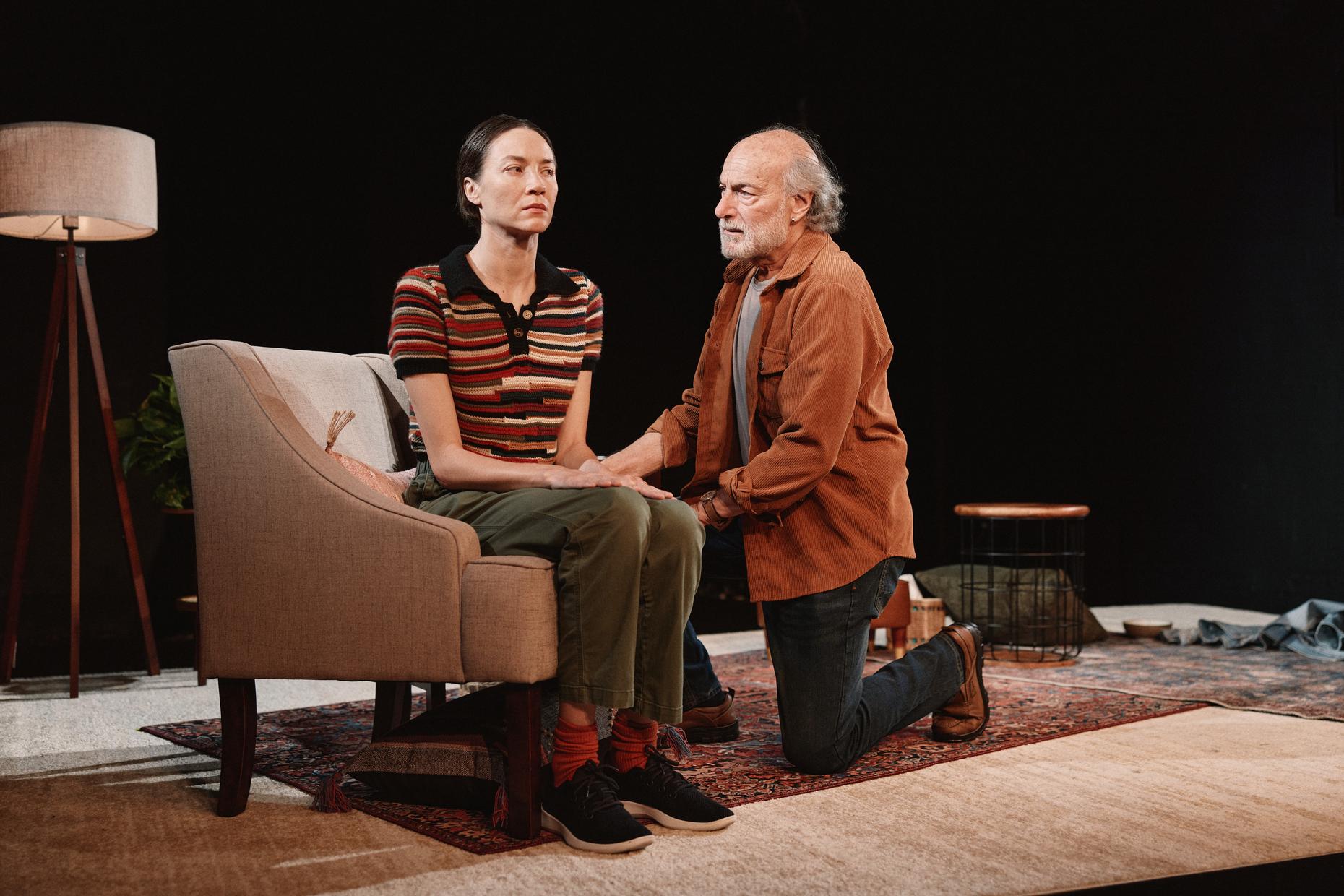
All Of It with Alison Stewart
'Job' Continues its Run
00:21:52
The play 'Job' has a new limited engagement at Connelly Theater.
Loading summary
Transcript107 lines
- [00:00]
Max Friedlich
Hey, Fidelity. How can I remember to invest every month?
- [00:05]
Sidney Lemon
With the Fidelity app, you can choose a schedule and set up recurring investments in stocks and ETFs.
- [00:12]
Max Friedlich
Huh. That sounds easier than I thought.
- [00:14]
Sidney Lemon
You got this?
- [00:15]
Max Friedlich
Yeah, I do. Now, where did I put my keys?
- [00:19]
Sidney Lemon
You will find them where you left them.
- [00:23]
Max Friedlich
Investing involves risk, including risk of loss. Fidelity Brokerage Services, llc. Member nyse, sipc.
- [00:31]
McDonald's Advertiser
I' ma put you on, nephew.
- [00:32]
Max Friedlich
All right, unc.
- [00:33]
Interviewer
Welcome to McDonald's. Can I take your order, miss?
- [00:35]
McDonald's Advertiser
I've been hitting up McDonald's for years. Now it's back. We need snack wraps. What's a snack wrap? It's the return of something great. Snack wrap is back. Let's say your small business has a problem. Like maybe one of your doggie daycare customers had an accident. You might say something like, doggone it.
- [00:59]
Max Friedlich
Hey, Chihuahua. Holy schnauzers.
- [01:02]
McDonald's Advertiser
But if you need someone who can actually help, just say, like a good.
- [01:06]
Peter Friedman
Neighbor, State Farm is there.
- [01:07]
McDonald's Advertiser
And get help filing a claim from your local State Farm agent for your small business insurance needs. Like a good neighbor, State Farm is there. Suffering from dry, tired, irritated eyes. Don't let dry eyes win. Use Sustain Pro. It hydrates, restores and protects dry eyes for up to 12 hours. Sustain Pro Triple action Dry eye relief Listener supported WNYC Studios.
- [01:48]
Alison Stewart
This is all of it on wnyc. I'm Alison Stewart. Today, the acclaimed Play Job opens for the second time in New York, giving us all another chance to see this heart pounding two hander. Here's the premise. Imagine losing it at work and having that meltdown recorded and it goes viral. That happens to Jane in the Play Job. Jane is on leave from a social media behemoth where she had a shrieking freakout. In order to be reinstated, she needs a recommendation from a crisis therapist. And that might have easily been attained had Jane not brought a gun to their first session. She's smart, articulate, and has strong feelings about the work she does. But that work may have broken her. She sifts through all the images and footage that are deemed too disturbing to be on the platform. The therapist, Lloyd, is not a Luddite, but definitely has questions about how the Internet has changed us all. He is calm and kind, but in addition to the obvious, that gun that goes in and out of her bag. Something about Jane makes him confused and maybe even on edge. Is Jane sane and Lloyd out of touch? Or is Lloyd a calming presence that Jane should avail herself of if she can? And what about that gun? After a very successful run at Soho Playhouse, Last year. Job is back for a limited engagement at the Connolly Theater through March 3. The two stars of the original run, Sidney Lemon and Peter Friedman, have reprised their roles. So we thought it was a good time to revisit our conversation with both of them, plus playwright Max Friedlich. I began the conversation by asking Max when he first started work on the play and what changed about it since he first started writing it.
- [03:27]
Max Friedlich
I started writing the play in 2019. The basic plot, I would say, has always been there. As you mentioned in your wonderful summary, Jane works as a content moderator and I met someone who had that job socially, just at a parties super casually and was sort of writing notes on my phone, which I try to avoid doing. But I just found it fascinating and it opened up this, this whole world of morals and ethics in tech that I've found super fascinating.
- [04:02]
Interviewer
Sydney, the day before Jane has her breakdown. What was her day like?
- [04:08]
Sidney Lemon
The day before Jane's breakdown, she went to work, which she loves to do, and sat at her desktop and worked for probably eight hours straight and then had an unexpected meeting with somebody from her past. Without saying too much else. That was what her day was like.
- [04:29]
Interviewer
What adjectives would you use to describe her the day she shows up at the therapist's office.
- [04:37]
Sidney Lemon
Hopeful to lost and well, overwhelmed.
- [04:51]
Interviewer
Does she know she's lost?
- [04:53]
Sidney Lemon
Yeah, she knows, she knows. Yeah.
- [04:55]
Interviewer
And sort of the being articulate and super hyper verbal is coping or covering.
- [05:01]
Sidney Lemon
I think that's just who she is as a person. I think she had a strong liberal arts education and I think that she's an over educated soul who knows what she believes, but maybe has too many ideas in her head.
- [05:18]
Interviewer
Peter, same question for you about Lloyd. How do you imagine his day before he shows up to work that day.
- [05:26]
Peter Friedman
Before he shows up? We assume it's around 11:30am so that would be four sessions. Four sessions. A typical, you know, 50, 50 minute sessions. He's waiting for the next one. He knows it'll be a challenge, but that's what he likes.
- [05:48]
Interviewer
What is his demeanor when the gun. I'm not giving too much away. This has been a lot of the reviews when the gun is not in sight. At some point the gun disappears and I guess the audience, we sort of forget. But here he can't possibly forget.
- [06:01]
Peter Friedman
I don't think anybody really forgets.
- [06:03]
Interviewer
Yeah.
- [06:04]
Peter Friedman
And I think that was the hard part for me during rehearsal. I forgot because we hadn't put it all together yet. But its presence is always there and it's always felt and that's what Keeps that tension that I was wondering about early on in rehearsal, in the middle of the play.
- [06:26]
Max Friedlich
It's. It's probably. It can be problematic and challenging or. Historically, I think we figured it out to sort of keep that tension and fear alive. But I think it can also be like a cheat code because I think there were times where we're like, oh, like maybe there isn't as much happening. And our director, Michael Hurwitz, would be like, well, can we remind the audience and the characters that there is a gun in the room? So it's like it was always something that we could sort of defer to as well as be like, okay, how do we keep this alive? So it was sort of a double edged sword from my perspective.
- [06:58]
Interviewer
How about for you, Sydney?
- [07:00]
Sidney Lemon
Hmm. Well, Jane carries the. We talked about this a lot in rehearsal. Jane carries the gun in a way as a security blanket or as a teddy bear to feel protected in the world. It was not her intention to pull it out or to use it. That was the last thing she was imagining would happen on this day. So I think that there's a lot of trying to work backwards from starting off a very important session with a gut reaction that you wish you could take back and then trying to prove your sanity when you've done something that makes you look a bit like you've gone off the rails.
- [07:41]
Interviewer
The play takes place January 2020, the time.
- [07:44]
Max Friedlich
Correct.
- [07:44]
Interviewer
Why January 2020?
- [07:46]
Max Friedlich
I wanted to write. There's. I think there are elements of the play that sort of hopefully feel like a parable or that like they're talking about something beyond what is happening between the two characters. That's. That's the hope that feels very high minded to say. As the writer, I hope that people take really intellectually interesting things away from it. But I wanted to write about this moment of sort of the. The end of the known world. Obviously we all came out the other side, but so much of the play is concerned with a generational divide and sort of two perspectives sort of smashing together. And also there's this question of will they get out of the room? Will they sort of connect? And I liked the sort of dramatic irony of these two people having no idea what's coming. That sort of. Even if they leave, even if they survive, there is this sort of huge thing looming. And it just felt. January 2020, when I think about that phrase every time I hear it, it just felt like a time of such innocence and fear and just no idea of like what was possible in the modern world. So it was Just a. I'm fascinated by, like, mini period pieces in that way. So, yeah, January 2020. I just wanted to write about that month.
- [09:12]
Interviewer
My guests are playwright Max Friedlich, as well as actors Peter Fridman and Sidney Lemon. We are talking about job. Sidney, why does Jane want this job back so badly? It's a tough job. She's gotta look at horrific images. And I guess she considers herself a little bit of a hero. Lowercase H, hero. But why does she want her job back so badly?
- [09:32]
Sidney Lemon
Well, I think she found meaning all through life. I feel like Jane is a little bit of a lost soul or wanderer. She's had the privilege to find herself ushered into certain groups or classes. But with this job, she found that she had some sort of niche talent for doing something that other people just couldn't do, and that she was actually making a difference in the world palpably by removing these sort of horrible videos from the Internet. And that she could handle it. She could handle the work, and not a lot of other people could. And so, you know, Jane says in the play that, like, this has given her life some meaning that she didn't have before. So there's a strong connection to the work.
- [10:21]
Interviewer
Peter, when you're thinking about this character of Lloyd, what was something that you saw in Lloyd that you really hadn't seen or gotten to play in your career? You've had a long, strong career.
- [10:35]
Peter Friedman
It's not that you play it, but I like the fact that Max deals with the ambiguity of who this guy is. Whether I play it or not, it's there. You know, I certainly have chosen one direction as opposed to both directions that it could be. And it's fine. It doesn't matter. It plays as well no matter what you choose. I suppose so. I guess I wanted to hit on his apparent goodness that. That we see in the play in. To hit up against what. What Jane brings to the play.
- [11:10]
Interviewer
Did you do any research into crisis therapists? Aside from. That's a knowing laugh.
- [11:16]
Max Friedlich
The laugh of someone who did extensive research?
- [11:18]
Peter Friedman
No, I didn't. I didn't do anything into crisis therapy, and I probably should have. No, I just drew on my lifetime of going to therapists, you know, and.
- [11:29]
Interviewer
What is something that we see on stage from that experience, if you feel comfortable sharing?
- [11:34]
Peter Friedman
Not. Hopefully not. Not judgmental in anything, anywhere I go. Until a certain point where he gets a little bit fed up.
- [11:43]
Interviewer
It does, right? Yeah, yeah, he gets fed up. Well, there's a gun in the room, as we say, as we know. Sydney, for you Same question. What is something in Jane you saw that you hadn't had the opportunity to play or you hadn't seen in a character that intrigued you?
- [11:56]
Sidney Lemon
Well, Max wrote a really incredible role, somebody who is dealing with so much, and it felt. It feels almost like Jane is the personification of anything that could happen in our modern world, that it's, like, happening to one person. It's almost like she's more than just one person. She really feels like the sum of the Internet and the world and modern life. And it just felt like such a feast and such a challenge that I was just really grateful to Max for having written it.
- [12:33]
Interviewer
Is Lloyd spelled with one L?
- [12:35]
Max Friedlich
It is.
- [12:36]
Interviewer
Why is Lloyd spelled with one L? Lloyd, the therapist.
- [12:39]
Peter Friedman
Thank you for asking. Thank you.
- [12:41]
Max Friedlich
I'm so glad to go on the record with this. This is the big question of the play that we've been getting. I didn't really want either of them to have names. Just stylistically, I was like, I don't really care about this. We ended up kind of insert. You never hear his name in the play. We ended up inserting Jane's name at the end. But I just wanted there to be character names and to make it clear to an actor or director that it's not like it doesn't take place in, like, heaven or, you know, that it's not, like, otherworldly that, like, there are two people named Jane and Lloyd. And for a while, I think we were playing with. There's obviously sort of a pun in the name that sometimes comes up of, like, Job and Job. And I was like, oh, it's sort of like Job and, like, the Lord.
- [13:29]
Peter Friedman
Oh, thanks.
- [13:32]
Max Friedlich
But, like, that doesn't. But I've never brought that up to you guys because it doesn't equate to anything. And there's no connective tissue there.
- [13:39]
Peter Friedman
Watch what happens tonight.
- [13:40]
Max Friedlich
I was just messing around.
- [13:41]
Sidney Lemon
I think you just unlocked all the answers for me.
- [13:44]
Interviewer
Thank you.
- [13:45]
Max Friedlich
Cool. Glad.
- [13:46]
Interviewer
What is something that Peter brought to you, to Lloyd, with one L that you didn't anticipate?
- [13:53]
Peter Friedman
The other L?
- [13:54]
Max Friedlich
The other L. That's such an interesting question. I mean, I think for both. Both Peter and Sidney, in the best possible way. When I heard them read for the first time, I was like, this is nothing like what I pictured these characters like in a way that was so exciting and electric and made me just want to give the parts to them in a literal and figurative sense of just like. You guys understand this more than I do, in a way. I think Peter, in particular, his charisma on stage and his, his, his likability. There is sort of an ultimate question of sort of the who is might be good and who might be bad. And I think you watch Peter and you can't help but love him on stage. And I think that that is of incredibly special quality in an actor and just makes the play all the more electric because people really root for him.
- [14:57]
Interviewer
Sidney, you have to handle a gun. Have you ever done that before? What's that like for you?
- [15:02]
Sidney Lemon
Well, not in my personal life, no. But I've worked on particular shows or films where I have before.
- [15:13]
Interviewer
So.
- [15:13]
Sidney Lemon
Yeah, two TV shows in particular that I've had to handle.
- [15:19]
Interviewer
What's it like for you?
- [15:20]
Sidney Lemon
Yeah, it's, it's, it's the, the. If the story requires that, then it's a challenge that you rise to the occasion of. And it's never something that you take one takes lightly. It's. Yeah.
- [15:37]
Interviewer
So this is a two hander. The two of you on stage for an hour and a half. Peter, what is something that's a great thing about that? And then what is really challenging about that?
- [15:52]
Peter Friedman
You know what you've come to do and you're going to be doing it. There's no break to interrupt you, so you can go do it. And what was the other part?
- [16:01]
Interviewer
The challenging part? That's the challenge. The answer's the one.
- [16:05]
Max Friedlich
Yeah, they might be one and the same.
- [16:07]
Peter Friedman
I was thinking it's probably the same thing. Yeah, you got, it's. You have. I come early and I take the local downtown from uptown to sort of get into the bath slowly. I do sit outside and have a coffee beforehand to, you know, make sure I'm prepared. And then I walk up the steps and. And there are a lot of steps backstory and sink into it what we have to do.
- [16:35]
Interviewer
There's a lot of ambiguity in the play. We've been talking around it because we don't want to give too much away. When you are writing a play that has ambiguity, what is something you have to keep in mind as you're weaving it through the story?
- [16:50]
Max Friedlich
I think my background in theater is in LARPing, like live action role playing. That's like how I got into theater through a summer camp called the Wayfinder Experience. And so I find myself sort of like embodying the characters when I'm thinking. And I think you achieve, hopefully, which we have, you achieve that ambiguity by really believing everyone. And I think that if you can put forth two really strong opposing viewpoints that are actually like really set in their ways and pretty concrete. You will create that gray area, hopefully. So that's how I sort of think about it. I don't think I ever. I think it's a through line through what I want to do creatively. But I never really set out to be like, it's murky. Just like if you can really get behind everyone and be like, I know where he's coming from. I know where she's coming from. I think hopefully we achieve that gray area.
- [17:45]
Peter Friedman
That was a good answer.
- [17:46]
Sidney Lemon
That was a good answer.
- [17:48]
Interviewer
Very interesting.
- [17:49]
Max Friedlich
Thanks, guys.
- [17:50]
Interviewer
What did you want to explore about tech and the Internet and what it's doing to us?
- [17:56]
Max Friedlich
I'm fascinated by tech's insistence that it is doing good always. I think that that is something that I can appreciate in a weird, circuitous way about finance or banking. I don't think those people sit around being like, we're changing the world for the better. I worked for a very strange tech company that built digital influencers. So, like fictional people on Instagram, the famous, most famous of which was called Lil Mikayla, and we were building fake celebrities and we talked all the time about how we were changing the world and how we were doing so much for society. And the insistence that your work be benevolent, I think is something that is, I always hesitate to say, unique to our generation because I wasn't around in the past, but feels very millennial and very, maybe Gen Z as well, of like, the thing that I do every day has to impact the world. And I am my job, and my job is me. And it's not about a 9 to 5 thing. Like, this is how I exist in the world. So I'm fascinated with how tech makes us locate ourselves in. In a broader picture. While also Jane works for this behemoth. She doesn't touch her. She has no control over her company, and yet she feels like the company really represents her and she represents the company and it sort of is foundational to her identity.
- [19:22]
Interviewer
And that's part of the. Another source of tension between these two people. There's a big generational rift. Sydney, what is Jane have a blind spot of brown boomers?
- [19:33]
Max Friedlich
Mm.
- [19:35]
Sidney Lemon
Well, Jane probably thinks that she knows a little bit too much of everything and she could maybe use to have a dose more humility. But I think that she's very swept up in this idea that she is important and doing good. Right. Like Max just talked about. And I think that there's a vitriol that she sort of harbors about this idea of boomers being like, why can't they just be happy with having all of the power and the money? Why do they have to. Have to. Yeah, it's just like, why do they have to judge us for wanting to be on the phone when they're making all the money from it? So maybe that would be the blind spot.
- [20:20]
Interviewer
What's Lloyd's blind spot? What does he not understand about a young millennial Gen Z type person sitting across from him?
- [20:28]
Peter Friedman
What Peter doesn't understand, you know, all of it.
- [20:32]
Interviewer
So this is something you share with your character?
- [20:35]
Peter Friedman
Sure, yeah. I don't get it. My ignorance is real up there.
- [20:43]
Interviewer
Have you thought about it? Has it changed the way you thought about tech? When you get to hear Jane's argument for why tech is good and why.
- [20:51]
Peter Friedman
We need tech, she makes a lot of great sense. Love it. But I don't need it at this point in my life.
- [21:00]
Max Friedlich
Fair.
- [21:01]
Interviewer
Why does it matter to these two characters that they need, need to be right about their two sides? Because they dig in.
- [21:08]
Max Friedlich
It's a great question. I think that gets at sort of what it means to be right in general, which I think is to. It affirms your position in the world. And I think for Jane, she's justifying a lot of suffering and a lot of trauma and convinced herself that she needs to continue in this job. And if she's wrong, it's sort of all falls off a cliff in general. And I think that similar. Again, want to avoid spoilers, but Lloyd's character has a, A personal tragedy in his life. And if his worldview and his world mission is not right or is not good, who is he? And he doesn't sort of. It's not hyperbolic to say, like, doesn't really have a reason to live. So it's sort of. There are real life, life and death stakes in the play. There's a gun on stage, as has been mentioned. But also for both of them, them being right or them being wrong, I think is a matter of life or death internally for both characters.
- [22:11]
Interviewer
Max, I feel like you might have a good answer to the question. Have you had a day where you just, you could have had a breakdown that could go viral?
- [22:16]
Peter Friedman
Yeah.
- [22:18]
Max Friedlich
It feels very vulnerable to say this on wnyc, but I mean, I, I, I, I. A lot of the.
- [22:25]
Peter Friedman
Core of the.
- [22:26]
Max Friedlich
Play comes from experiencing panic attacks and having. When we were doing, we sort of came into. It's a long story. We came into this production via a competition at Soho Playhouse. And in the course of doing that excerpt, I just had like a day where I became like catatonic with just overwhelm and panic. And not literally what Sidney's character is doing of sort of internalizing the Internet, but just all this stuff in life. So a lot of. A lot of the panic stuff, I think because I'm male and the character is female, sometimes they're like, oh, like, you didn't really. There's a lot more autobiographical stuff around mental health, I think, in the play than people realize. So I've definitely had. I don't know if I've had a day quite that bad, but I've definitely, I felt those feelings, and I hope that there's a catharsis to anyone who has had those feelings in seeing them traumatized so well by Sydney.
- [23:23]
Alison Stewart
That was my conversation with the team behind the hit play Job. Job is now running at the Connolly Theater in the East Village through March 3.
- [23:32]
McDonald's Advertiser
Building a portfolio with Fidelity Basket Portfolios is kind of like making a sandwich. It's as simple as picking your stocks and ETFs, sort of like your meats and other topics, and managing it as one big, juicy investment.
- [23:47]
Peter Friedman
Mmm.
- [23:48]
McDonald's Advertiser
Now that's pretty good. Learn more@fidelity.com baskets Investing involves risks, including risk of loss. Fidelity Brokerage Services, llc Member nyse, sipc I'mma put you on, nephew.
- [24:03]
Max Friedlich
All right, unc.
- [24:04]
Interviewer
Welcome to McDonald's. Can I take your order, miss?
- [24:06]
McDonald's Advertiser
I've been hitting up McDonald's for years. Now it's back. We need snack wraps. What's a snack wrap? It's the return of something great. Snack wrap is back.