Loading summary
Transcript80 lines
- [00:00]
Memorial Sloan Kettering Cancer Center Announcer
All of it is supported by Memorial Sloan Kettering Cancer Center. In a small groundbreaking clinical trial, 100% of participants with a specific type of rectal cancer saw their tumors disappear using immunotherapy alone. Researchers at MSK are now studying this approach in cancers of the stomach, liver and more. And a majority of tumors are disappearing. For MSK Giving day, all gifts will be tripled. Learn more@msk.org all of it foreign.
- [00:38]
Alison Stewart
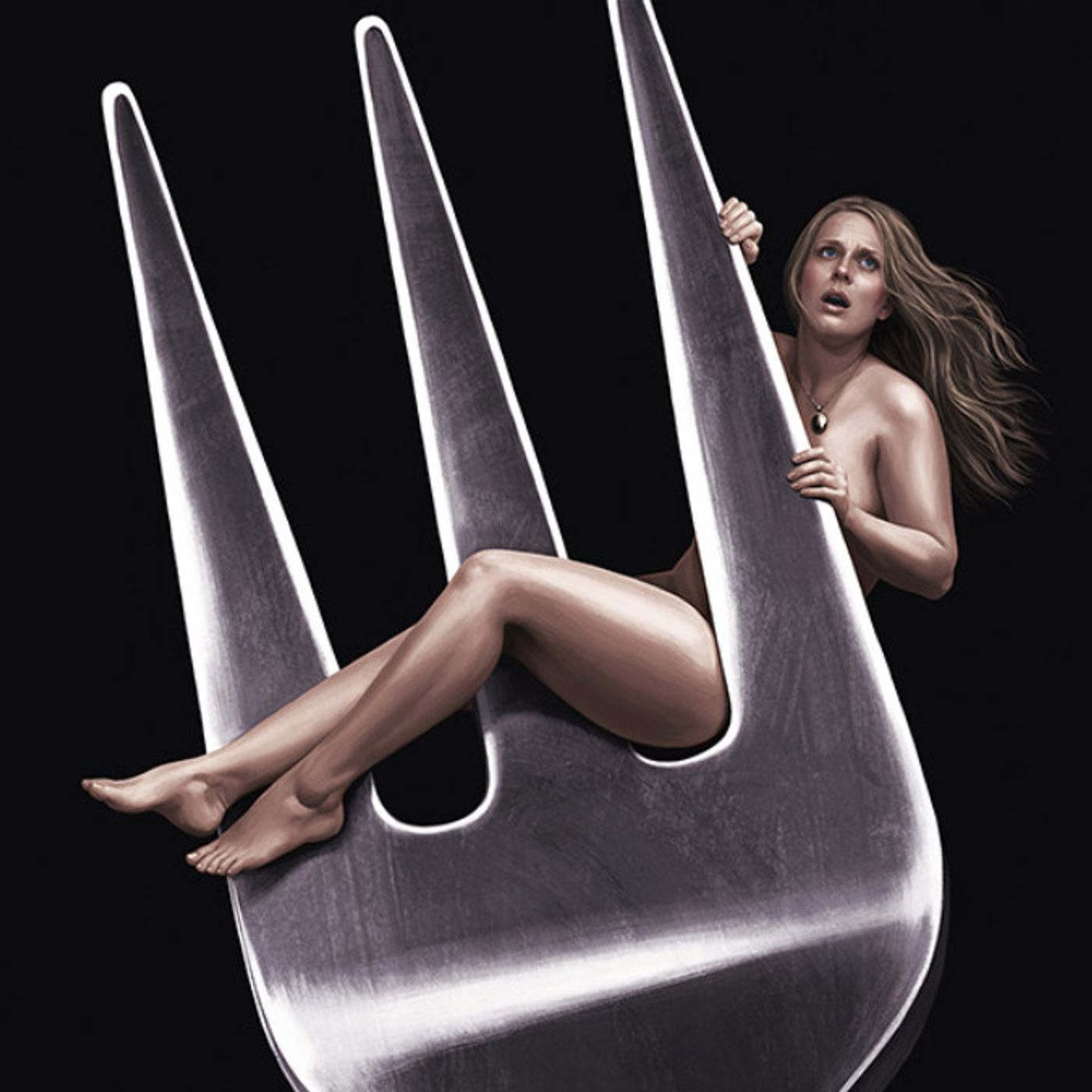
This is all of it on wnyc. I'm Alison Stewart. In the new film Maddie's Secret, comedian John early plays the title character, a burgeoning food influencer and a pathological people pleaser. As Maddie rises to Internet fame, she spirals back into disordered eating that she thought she had under control. Now the film is kind of campy. Maddie is bursting with optimism and also a little naivete. But it's not just satire. The undertones are very sincere and the subject matter is intense. It's about a woman plagued by her desire to be perfect, generous, beloved and most importantly, thin. The film had its New York premiere last night and it's already been getting rave reviews. The Hollywood Reporter called it a triumphant tonal balancing act. The New Republic said it's a brilliant melodrama of social media. And a writer for Indiewire said it' one of the boldest American movies they've seen in years. My guest today is John early, who wrote, directed and starred in Maddie's Secret, which is playing now at ifc. Welcome back to the show, Alison.
- [01:42]
John Early
It's so nice to be back.
- [01:44]
Alison Stewart
It is nice to see you in this role as a director. When you sat down and thought, I'm going to be a director and I want to be a director on a set, what did you think a director should be? What should a director do?
- [01:58]
John Early
Well, you know, who knows? I mean, I guess, you know, I'm similar to Maddie, I guess, in that I am a pathological people pleaser. And I've worked with a lot of directors who are total tyrants. So like, so, you know, I think it was part of what kind of finally pushed me into doing this was wanting to see if you could have a set where it was fun. And, and, you know, also I had just come off of working for the past two years with Andre Gregory in the Wallacean play that we on this very show. And so I really was kind of taking inspiration from him. He's such a kind, patient director. So I was trying to be like that. And then I was doing all of this, by the way, in a Wig with double f. Breasts. To be very clear, yes.
- [02:49]
Alison Stewart
You play Maddie?
- [02:50]
John Early
Yes, I play Maddie.
- [02:52]
Alison Stewart
Was that always the case that you were going to play Maddie?
- [02:54]
John Early
Absolutely. There was never. I didn't write this script and then suddenly go, wait, it's me. It's always been me as the role. It was always buil. Everything I make always comes from some sort of performance instinct. And I build the project around that. And in this case, I just. I've always had this kind of ingenue character in my back pocket. She's just always like a chirpy, sweet little ingenue voice that I do, kind of to make myself laugh, kind of to make fun of myself. And, you know, I guess she's kind of this vehicle for my sincerity, you know, And I wanted to see what would happen if I stretched it out from, you know, just a little joke I do to make myself chuckle to like an hour and a half. I thought something maybe a little mysterious and magical could happen if I did that.
- [03:48]
Alison Stewart
What did you notice about the physicality of being a woman? Well, how did you have to change, besides the wig and the giant.
- [03:56]
John Early
Yes, yes, thank you. I. You know, I noticed I had to kind of cut a lot of angles if I. If I kind of stood, you know, firmly in the ground, like, kind of head on. It didn't really help the illusion. I had to kind of always kind of like lean on a hip or something. But the thing. The thing that kind of shocked me is I thought I would have to undergo some sort of, you know, training program or I'd have to really rehearse it. But it was really mysterious. Like, the second I put the wig on, she just was there. Like, she was just right there. It was really cool.
- [04:37]
Alison Stewart
When did you realize. Because it's a funny movie, but it's also a little bit dark, too. When did you realize the movie was going to be a little bit heavy?
- [04:47]
John Early
Well, you know, I think I set out to make something very satirical. I thought I was gonna make this really kind of fast, cheap movie with my friends, kind of in the spirit of those early John Waters movies. A really kind of handmade sleepover style movie. I imagine something with a little. With like, kind of sharper teeth, a little bratty and ratty. And then, you know, I don't know. I guess I've gotten older. I don't know. The second I started writing it, I just felt very protective of Maddie. I felt very maternal towards her, and it was a very bizarre experience. I just was, like, immediately weeping. Like, I thought I was kind of above the genre that I was, like, tapping into. I thought I was maybe, you know, cooler, smarter than the. Than this kind of TV movie genre I was kind of having fun playing with. And before I knew it, the genre was totally working on me and playing me like a fiddle. I mean, I was. I was totally swept up into it. And so it was. It made it scarier to take it seriously and to let the movie be as emotional as it clearly wanted to be. But I also had a feeling that, that. That I should trust that and keep going with it.
- [06:08]
Alison Stewart
It's sort of interesting you said the word bratty, and that is such a word for your 20s. Like, yeah, make fun of this. Yeah, I'm cooler than this. And then as you get older, you start to realize some. Realize some of those things that people feel they matter to them.
- [06:22]
John Early
Yes, absolutely.
- [06:24]
Alison Stewart
I'm speaking with John early about his directorial film debut Maddie's Secret. He also wrote and starred in the film, which follows a burgeoning food influencer and a pathological people pleaser who struggles with an eating disorder. What's going on with Maddie? When we first meet her in the
- [06:40]
John Early
film, you know, I like to think that there. We did a lot of wind in the beginning of the movie. You know, we had a lot of. This is a very, very low budget movie.
- [06:50]
Alison Stewart
Well, were you gonna say a leaf blower? Oh, yeah.
- [06:52]
John Early
Oh, yeah. No, we had multiple leaf blowers on set. And there's a lot of unmotivated breeze that I'm very proud of. Like indoors. Like, there's. There's shots where Maddie's hair is blowing and there's not a single window open in the room.
- [07:04]
Alison Stewart
And I was like, where's that coming?
- [07:05]
John Early
I just was like, wind. Let's. Let's find a way to admin. But. But, you know, in. In addition to that, just looking beautiful and kind of enchanted on screen, I. I think she is being pulled by some sort of mysterious force at the beginning of the movie. I think she unconsciously is ready to kind of destroy this, as you say, pathological people pleaser thing in her. She. But she doesn't know she's doing that. So she's kind of. She's kind of, at least on a conscious level, I think at the beginning, she's full of hope and optimism, and she has dreams of going from being a humble dishwasher at this content farm to being a, you know, to being more of a respected known chef, maybe.
- [07:49]
Alison Stewart
And in the film, she's. She's a dishwasher.
- [07:52]
John Early
Yeah.
- [07:53]
Alison Stewart
And she sort of stumbles into her fame at home. We'll talk about her husband in a second. But you have to sort of go with the, the, the genre of movies at the right way to put it.
- [08:02]
John Early
Yeah.
- [08:02]
Alison Stewart
Because sort of like it's like After School Special on ABC or like Channel 7 movie of the Week and there's like a little ode to fame in there and the dance classes. It's sort of. It's a certain kind of the way it looks.
- [08:17]
John Early
Yeah.
- [08:18]
Alison Stewart
Tell me a little bit about how you got to the way it looks. Because it's very clear when you first watch, you're like, oh, wait a minute, my nostalgia is coming back now.
- [08:27]
John Early
Yeah. Well, I wanted to make something that was very expressive, very visually expressive and bright and kind of dreamlike, like a fairy tale. And that's the whole kind of both the joke of the movie and what's dead serious about the movie, which is like, it's dealing with all these kind of grim, kind of phone based things about contemporary life. These like influencing and content and food media, these things and you know, and viral fame. You know, these are all very flat things that kind of fill me with dread in real life. And I wanted to inject that with a kind of old school cinematic expressiveness and colorfulness. So that was kind of the mission statement behind it. But you know, we were looking at lots of like, you know, Brian De Palma and Douglas Sirk and lots of other pretentious things.
- [09:24]
Alison Stewart
And I went down a Douglas Sirk rabbit hole earlier tonight. Yeah, it's kind of interesting.
- [09:30]
John Early
Yeah. Well, you know, and also Adrian Line, who did Flash Dance and Unfaithful and Fatal Attraction. Like I. What I loved about Adrian Line, he was a huge visual influence for this is he. I didn't mean to use the past tense. He is very much alive. Sorry, the D just kind of slid out there. But there's so much haze in his movies.
- [09:53]
Alison Stewart
Oh my gosh.
- [09:53]
John Early
There's so. There's just these giant shafts of golden sunlight and haze passing through that. And sometimes you're like, what time of day is it supposed to be? Like, you know, it just. It has a very kind of urban fairy tale kind of quality. And I wanted to make something even before I had a narrative. I just knew, like, I want to make contemporary life feel like a fairy tale. I want to pull people through like a kind of sweet little storybook kind of dream, you know.
- [10:24]
Alison Stewart
And it's sort of interesting because the close ups last just a second too long. They're just a second too Long.
- [10:30]
John Early
Well, I would say that happened because I was directing. So it's like, I would be acting, and then I'd be like, wait, who's gonna call? Cut. And then I'd. So I'd hold it for a long time and realize that it was me. I'm the director. And so it would be like, cut. Anyway.
- [10:46]
Alison Stewart
Anyway, it's pretty funny. All right. So when we meet Maddie, she's a dishwasher, and her best friend is a dishwasher. Will you explain who her best friend is?
- [10:54]
John Early
Well, Dina is played by my best friend, Kate Berlant, my comedy partner. And, yeah, Dina is kind of a devoted. I would say scarily devoted best friend. You know, Kate and I love to do the kind of fatal attraction, single white female kind of psychosexual, obsessive friendship thing in a lot of our work. And I'm. Whenever I'm writing for a Kate, I'm always like, well, is there something. Can we. Can we turn it. Can we turn up the dial a little bit and make it kind of terrifying? That's, like, our specialty. I think. So. That's. I don't want to give anything away, but that's where that was born out of.
- [11:41]
Alison Stewart
It's a bit. It's an important part of the movie.
- [11:43]
John Early
Yes.
- [11:44]
Alison Stewart
Let's listen to it a little bit earlier in the movie. This is Dina, played by Kate Berlant, driving Maddie home and asking her if she likes being a good girl. This is from Maddie's Secret.
- [11:56]
John Early
Thanks for the ride, Dina. Oh, do you know the door stuck?
- [12:02]
Alison Stewart
Oh, sorry.
- [12:05]
John Early
Let it go. Thanks.
- [12:08]
Alison Stewart
Oh, sorry.
- [12:09]
John Early
Sorry.
- [12:10]
Alison Stewart
There it is. It's a little finicky.
- [12:13]
John Early
Good night.
- [12:13]
Alison Stewart
Good night. Hey, Maddie, don't you ever get tired of being such a good girl?
- [12:27]
Memorial Sloan Kettering Cancer Center Announcer
No.
- [12:28]
John Early
And that. And there was a leaf blower off. I had to. I had to overdub that line. That. No, because if you listen to the raw footage, there's such a loud leaf blower putting wind in my hair.
- [12:39]
Alison Stewart
Oh, what. What other kind of corners did you cut on the film using the leaf blower? An example of like, hey, kids, we can do this.
- [12:48]
John Early
Yeah. I mean, it did have a very Judy and Mickey, let's put on a show kind of quality. I mean. Well, I mean, I also. It was very important to me to work at a budget level where I could hire my friends. So, like, every. You know, once you. Once you make something too expensive, they. They start suddenly needing, like, you know, Jacob Elordi to be in it in order to get financed. Like, so it was. It was Very. You know, all due respect, I love him, but I really wanted this to feel more intimate than that. And so I got to hire a bunch of people, including myself, like amateurs. Like, this was like basically all of our first features. And, and I got to populate the movie with friends. Even the background actors are my friends. So it was kind of an all hands on deck affair. And I think it gives the movie more of a handmade quality.
- [13:40]
Alison Stewart
I'm speaking with John early about his directorial film debut, Maddie's Secret. You hear in her voice, she's kind of, kind of an affected voice a little bit. What was your calculus behind that? Intentional. It's not corniness. Well, it's a little bit of corny, but it's like just like, gosh, gee willikers.
- [14:03]
John Early
Yeah, I mean, she's. That's exactly right. I mean, she is, she is that kind of archetype. She's Pollyanna, she's Sandra Dee, you know, I think. But I think if you look at it more deeply, psychologically, I think it's just a life of never wanting to like, harm anyone or she doesn't want to seem threatening to anyone. So she's always kind of, you know, modulating her voice. So it's always like perfectly gentle and easy to. It lands on the ear very easily.
- [14:39]
Alison Stewart
You know, it's very interesting. Now we're going to get into a little bit deeper into the, into the script a little bit. And the more serious part is she's got disordered eating.
- [14:49]
John Early
Yes.
- [14:49]
Alison Stewart
Yes. Right. Women are more than twice as likely as men to suffer from disordered eating. Did you know that was what was going to happen to her in this film? You knew that she had to have something to overcome. Was it always going to be that?
- [15:03]
John Early
Well, you know, it was kind of a. It was kind of a byproduct of the genre I was living in. I knew I wanted to do this kind of lurid kind of TV movie melodrama, kind of sensationalistic tone, like, you know, like a third, fourth, fifth rate Tennessee Williams play or something. And, and, and so if I chose this profession for her as like a kind of an aspiring chef, food influencer. And so it needed a kind of shadow side. And so quite quickly I was like, well, this makes sense. She needed her dark secret. And it made a lot of sense, the context of her profession. And, and, you know, yeah, I grew up. This may come as a shock to you, Alison, but I'm gay and I grew up really. And this is kind of still true, like only friends with women, with girls. And, you know, when we were. When I was a kid and one and a girl in our group would get an eating disorder, it was totally devastating. And it was. And we were very, very young and kind of didn't know how to deal with it and didn't have the kind of vocabulary to deal with it, and it was. It really rocked us. And I don't know, it's like I stumbled into it again because of, like, kind of the demands of the genre. And then before I knew it, I was like, oh, this is actually quite personal. This feels. This feels kind of almost like a love letter to my girlfriends from that age, you know, and we would watch these movies. We would watch eating disorder TV movies, like sleepovers, and we would scream, laugh. I mean, we were cackling at the kind of extremes of the style, but we also. They moved us too. You know, we were unafraid to let these kind of hokey genre films move us. I don't know. And that was so. I don't know. It's kind of that. That decision. I can't really explain any of my decisions, if I'm being honest, but I think that's where it comes from.
- [17:13]
Alison Stewart
So you have sort of the. The genre of when you were young, but then you bring it to the present because you really include social media. Like you said earlier, it's a really big part of it. There's a moment in the film before Maddie goes viral and she says to her husband, I'm passionate about food, not social media. And that's a big commentary in a lot of. Feel a lot of people, whether they mean it or not. That's another discussion. Is that something you felt about social media?
- [17:41]
John Early
Definitely. I mean, I really relate to Maddie, and I think a lot of people do. I think it's a strange kind of mutation in our culture that we're all expected to just like, yield to this force, you know, and we all have to kind of pretend like it's like just. It's this benign kind of force for good when we know that it's totally destroying the. And. And. And, you know, it's. It's been an incredibly antisocial force on. On culture, even though it's called social media. But I. I think Maddie's really actually quite pure of heart. And I. I think she means it. I really think she means it when she says that. I think she has a very. Because she also knows if she enters into that world, that's her. That's her secret. Like, if she enters into that world. It could reawaken some demons, you know. But I guess I quite. I guess I just wanted to do that was like the kind of basis of the fairy tale. Like a kind of pure of heart person going to the dark forest of social media.
- [18:46]
Alison Stewart
I have to ask about Kristen Johnson playing her mother.
- [18:50]
John Early
Yes.
- [18:51]
Alison Stewart
She's awful and hilarious.
- [18:53]
John Early
Yes.
- [18:55]
Alison Stewart
Was she the inspiration for this character was.
- [18:59]
John Early
Yes. So she, even Kristen Johnston, I am shocked to say, is a friend. She was my teacher at nyu.
- [19:07]
Alison Stewart
Oh, wow.
- [19:08]
John Early
She was at the Atlantic Acting School. She was my. I mean, I signed up for that studio because I knew she was an alum of it when I was 18 years old. And, you know, she embodies everything I love in actors. Like, she's like, she is both. She's so expressive and can be so kind of comedically broad, but it's never at the expense of some sort of fundamental humanity or pain. Like, and it's not compartmentalized like her. It's not like now she's goofy, now she's a serious actress. It's totally integrated. I think, I think her darkest moments have some sort of comedic element. Her comedic moment, most comedic moments have some sort of emotional element to them. So she, I idolize her and she to me is just like she is. She is the tone of this movie embodied perfectly.
- [20:02]
Alison Stewart
That's so interesting because I did have a question here. What did you learn from Christian Johnson? And she was your teacher?
- [20:07]
John Early
Yes, she was actually my teacher. Wow. Yeah, it was a dream. I was like, I was, you know, sitting in the back of class just like screaming, laughing at everything she was saying. And. And we stayed in touch over the years. And, you know, she told me or she told the class actually that the thing that made her want to be an actress was the Wicked Witch, you know, and so I was like, kristen, I have a role for you that is you would be like Margaret Hamilton. You would be haunting this movie. And she was so kind to do it because Lord knows she's got a lot on her plate.
- [20:41]
Alison Stewart
So in this film, you take us to a hospital, you take us to a dance class, you take us on set of at a content farm. What was the hardest decision you had to make as a director?
- [20:56]
John Early
Oh, well, I. Maybe the dance. Like the dance was in the final week. And I was so. I was having a kind of meta Maddie moment too. I felt I was, I was kind of self destructing over the course of the shoot. I was so tired and I was like, I, like, at one point I hit my head on a car door, and I had no ide. And I was, like, bleeding down my face as I was talking to you. Like, I was. So we were all totally exhausted, as happens on film sets, and we somehow, in the final week, had to do the dance stuff. And I could have simplified the choreography. I could have said, let's just, like, take it easy. This is too insane. I'm bleeding. But I was like, we have to do it.
- [21:44]
Alison Stewart
We're gonna.
- [21:45]
John Early
We have to do it. So I think that was one of the hard decisions. On our two days off, we were in a dance studio learning the choreography instead of resting.
- [21:52]
Alison Stewart
Yeah, this means you have to go see Maddie's secret so you can see that dancing. I have been speaking with John Early. He'll be doing Q&As at the IFC center all week long with Carla Lally. Music John Wilson, Amy Sedaris, and Sarah Sherman. Tickets are sold online, but if you can get to the IFC this weekend, you might get lucky. They're sold out. I should say yes, but you can stand by. You can stand by.
- [22:13]
John Early
Yeah.
- [22:14]
Alison Stewart
John, thanks for coming in.
- [22:15]
John Early
This is a dream. I love being here. I want to come back very soon, okay?
- [22:18]
Alison Stewart
Please do. I'm Alison Stewart. I appreciate you listening, and I appreciate you. We'll meet you back here next time.
- [22:23]
John Early
Thank you.