Loading summary
Transcript95 lines
- [00:09]
A
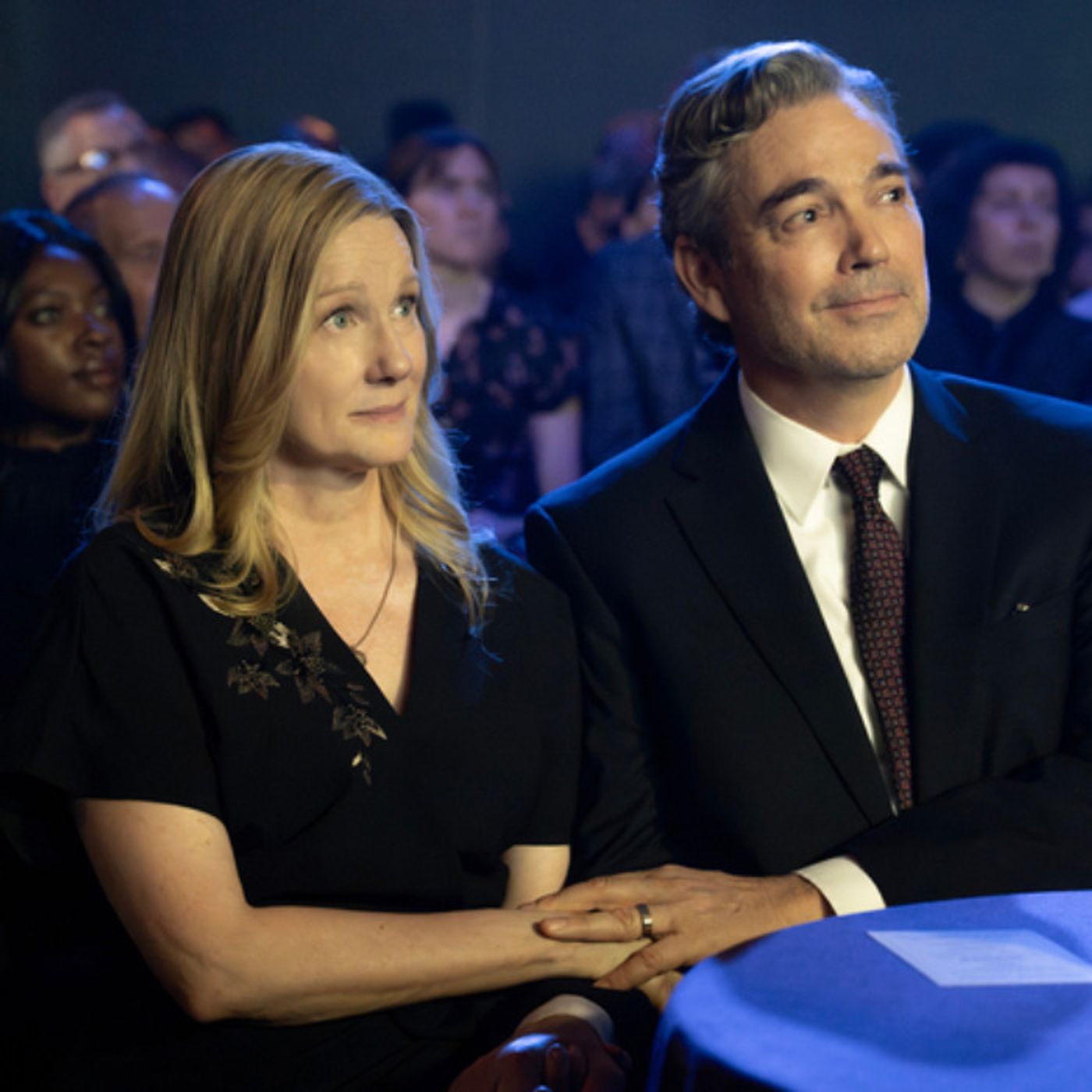
This is all of it. I'm Alison Stewart live from the WNYC studios in soho. Thank you for sharing part of your day with us. I'm grateful you're here. And I'm especially grateful if you've made a donation to WNYC for our winter pledge drive. Your support really matters. Coming up on the show today, Ashley Clark is here to talk about his new book, the World of Black A Journey Through Cinematic black blackness in 100 films. Paul McCartney's life after the Beatles is the subject of a new documentary, man on the Run. Director Morgan Neville will join us to discuss. And attorney and debut author Yosha Gunciera joins us to talk about her new novel, the Midnight Taxi. That's the plan. So let's get this started with actor Laura Linney. The new show, American Classic begins with a meltdown. Kevin Klein stars as Richard Bean, a famous actor playing King Lear, sort of. He has his lines piped into his ear leading to a rather erratic performance. The actor gets into an argument with a critic and it goes viral. To deal with the damage, his agent tells him to leave the city, to go go home and tells the press he had a breakdown. But Richard, he hasn't been home in a long time. And to make matters worse, he finds out his mom has died. And so Richard returns with a mix of ego and grief to Millersburg, Pennsylvania, where he got his start at his family's theater. Now one person who isn't so sure he wants Richard to come home is his sister in law, Kristen, played by my next guest, Laura Linney. She helps run the theater, which has fallen on rough times, and she also happens to be the mayor of the town. Richard decides the only way to sa and the town is to put on a show. American Classic is premiering on MGM on March 1. Actor Laura Linney is my guest now. Welcome, Laura.
- [02:19]
B
Hi. What a pleasure to be here.
- [02:20]
A
So Kristin, she's Millersburg's mayor. She's a sister in law to a narcissistic actor. She's involved in the family town. What interested you in this character when you were offered the part?
- [02:32]
B
Well, it was more the overall story than the actual character. Although I love her and I knew she'd be great fun to play. But, you know, very rarely do you get the opportunity to present the theater in a television context. And there's so much about the theater that I love so deeply and that I feel is so important for people to know about. And this was a really wonderful, entertaining context in which to display all of that.
- [02:58]
A
It's interesting because the show was written by Michael Hoffman and Bob Martin, I believe it is.
- [03:03]
B
It is correct.
- [03:03]
A
And Bob used to work as an actor, right?
- [03:06]
B
I beg your pardon?
- [03:06]
A
Did Bob work as an actor?
- [03:08]
B
Yes, I think we've all worked as actors. Everyone connected to the show has a very profound connection to the theater and all its various incarnations. So. Yes.
- [03:19]
A
What did they get right about the various personalities who love acting in the most pure way and in the most narcissistic way?
- [03:29]
B
Well, I think what the theater does for everyone, regardless of what period of time in your life you experience the theater, is that it introduces you to parts of yourself that you don't know exist. I think it causes a personal evolution that is surprising and refreshing and vitally important. And then also what the theater then does to not only your own inner world, but the world of your family and then of your city and then of your community and of your state. And what the arts do on a larger level is all stuff that I find important, and I'm thrilled if I see it in any work whatsoever. I feel the arts are an incredibly untapped resource for all of our mental health.
- [04:15]
A
Hear, hear. What is your earliest memory of working in a local production when you were young? Because this is, in many ways a love letter to local theater.
- [04:24]
B
Yes, it is. And all theater is community theater. Someone said that to me the other day, and I think that's really, really true. It might be on different levels, might be paid more, and there might be a little more flash, you know, this. But at the end of the day, you know, it's all about connection. And for me, I mean, it started very, very early. My father was a playwright, so I grew up in and around the theater. I, you know, did plays when I was in third grade, and then I was a technical apprentice at the New London Barn Playhouse in New London, New Hampshire, where my father had been an apprentice in the 50s. So I was backstage hanging lights and running lights at a very young age, and then it just sort of went on from there. It took me a long time to admit I wanted to be an actress. I had a little bit of embarrassment about that for some reason, but I finally broke through that.
- [05:14]
A
How much did working on this show bring back those memories for you?
- [05:18]
B
Oh, all of it. Absolutely. Particularly, you know, a sense of belonging. You know, people who sort of venture into the theater, they find a sense of family and a sense of belonging that they've been craving somehow, and. And that. That's from people who have very, very happy family lives and People who don't. But there is, like, I was talking about, like, there's an intimacy that happens in the theater that is safe and good and. And I think once people get a taste of that, it really does. It changes you. It just inherently changes you. So it brings back a lot of those memories, particularly, you know, for thinking about when I was young and just sort of, you know, thank God, found my way there.
- [06:01]
A
I'm speaking to actor Laura Linney. We're discussing her role as Kristen Bean in the new series American Classics, streaming on MGM beginning on March 1st. Richard comes home. The family tells him not to go to the theater. What has this theater meant historically to the family and to Millersburg?
- [06:22]
B
Well, it's a theater that was created by the beans, Richard Bean's mother and father, who were great thespians, and particularly during a time when local theaters and regional theaters really thrived in the United States. When I was growing up, it was where I wanted to be. I wanted to be a member of a company somewhere, hopefully Louisville or Minneapolis or something like that. And so this was. It's the template of what the Millersburg Theater is. It's one of those great thriving theaters that did the classics, that did all of the great repertoires that. That were done, you know, in the 50s, 60s, 70s, before things started to fall apart a bit. So he comes back and like a lot of small town America, things are. The resources are not there and culture has shifted and changed and priorities have inexplicably sort of morphed and the theater has now had to give up its classic repertory sort of approach and is now doing dinner theater to survive.
- [07:25]
A
And it's interesting because in her role as mayor, she's got to think about the health of the town. Yes, but she really still wants to believe in the theater. How are those two positions at odds and how is she dealing with that?
- [07:39]
B
Well, art and commerce have always had a rocky. A rocky kind of relationship. And I think there's fear that each side has of the other, and I think she understands that. And she's really trying, trying desperately to make it work. So she has to play both sides of the fence a little bit, which doesn't feel good. And I think she's someone who really just should have been an actress all the way through. I mean, she became derailed. And so she took all of that desire to connect and make things better, and she willed her way into a state of local politics.
- [08:18]
A
It's interesting because I just remember you said a few minutes ago, and I have to Ask. You said you weren't sure you wanted to be an actress. What was in your way?
- [08:29]
B
Embarrassment and fear, I think. And I think also I was very young when I sort of had this real vocational pull towards a theater. And I think I really felt like I needed to earn it, that it wasn't something I could just declare about myself that I was an actress. I think that was something I needed and felt that I had to really earn. And I didn't have that yet. So I started backstage where I just felt a little more comfortable. And it took me a while to sort of inch my way on. Everyone approaches it in a different way. You know, there's no right way or wrong way. And everyone's relationship to the theater is deeply and sacredly their own, which is what makes it so powerful.
- [09:16]
A
I wasn't going to say this, but I don't know if you remember, but you were my TA in college in acting.
- [09:24]
B
I just heard that it was this. Jim Barnhill's.
- [09:26]
A
Yes. Yes.
- [09:27]
B
Oh, my goodness.
- [09:28]
A
And you were a terrific actor then, which was surprising me to hear, like, I don't know if I could be an actress. You were an amazing actor. You convinced me not to be an actor. Like I could speak in public, I couldn't act. But the amount of emotion you could come up with just as like a 20 year old, 21 year old was unbelievable.
- [09:47]
B
Oh, that's. That's very kind of you to say. You know, and I hope. I hope I was helpful in some. In some small way and not. Not obnoxious and, you know, in a sort of profound collegiate way.
- [10:00]
A
No, you. You and Willis, you guys were great. This is interesting. In the, in the show when Richard is coming home, your character's not at all. Please. She. You say he's going to intone all over the place.
- [10:14]
C
Mm.
- [10:15]
A
Mm. Why doesn't she want.
- [10:16]
B
I love that line. I think that's my favorite line of the whole show. It's pretty funny.
- [10:21]
A
Why does she not want Richard back?
- [10:23]
B
Well, for many reasons. A, you know, she is his old girlfriend. He was her first love.
- [10:30]
A
Yeah.
- [10:31]
B
And they shared a life together and they had plans and dreams together, and none of that worked out. So she gave up on him, gave up on the idea of being an actress in New York City, and she went home to Millersburg, where she marries his brother and then goes back to the work of trying to make that theater viable. So. And he's become very, very famous. And it's always complicated when there's a member of the family who becomes famous and sort of outgrows everyone and everything around them. And he also doesn't handle that success terribly well. So there's. There's. It's. There's. It's complicated. It's juicy and it's complicated.
- [11:08]
A
We have a clip from the show American Classic. I want to play. This is from an early episode when Richard has returned home and is having dinner with Laura. And he and Laura get to talking about their past. She's a little bit salty. Let's listen.
- [11:23]
B
Yeah.
- [11:24]
D
You've changed, Kristen. You have fundamentally changed as a human being.
- [11:30]
B
Oh, no, no, no. You don't get to tell me who I am.
- [11:32]
D
I'm not telling you who you are. I'm telling you who you were. You had very high ideals. You were an artist. You built a theater company with your bare hands in New York. We.
- [11:42]
A
Nothing.
- [11:43]
B
We built a theater company. You just stopped showing up.
- [11:47]
D
You still blame me because my career took off and yours didn't.
- [11:50]
B
Maybe that's because I was too busy taking care of you.
- [11:52]
D
Or maybe it was something else. No. No, I'm not gonna.
- [12:01]
B
What? Say it.
- [12:03]
D
Do I need to say it?
- [12:04]
B
Yes, you do.
- [12:05]
D
Absolutely not. Do not say it. Do not say it.
- [12:07]
B
Say it.
- [12:08]
D
Do not say it. I will say please. You weren't as good as I was.
- [12:13]
B
You are such a dick.
- [12:16]
D
Well, at the time, you weren't.
- [12:17]
B
You want to know why I wasn't able to go to auditions?
- [12:20]
E
Because the entire time I was there,
- [12:21]
B
I was looking after you.
- [12:23]
A
How does their relationship evolve over the show? We don't give too many spoilers away, but how does it evolve?
- [12:30]
B
Well, I think they get to know each other in a different context, you know, and people do grow up and they do have a common love and devotion for the theater. That sort of goes be the transcends. Any. Anything else?
- [12:43]
A
Have you worked with Kevin Klein before? I have. Kevin Moore.
- [12:47]
B
Kevin is a Juilliard alum, as am I. And I did one of my first movies with Kevin, which was a film called Dave. So great movie.
- [12:55]
A
Oh, my gosh.
- [12:56]
B
Yes. You know, it's the president has a heart attack and then he's replaced by a look alike. And I'm the secretary that he has the heart attack on in a compromising position. It was one of my first films. He was incredibly kind to me and I was in awe of him because he is Kevin Klein. And I had grown up not even. I mean, I had seen him for decades on stage and always thrilled by everything he did. So we had been very, you know, fond acquaintances throughout the Decades. And so it's been just a joy to work with him on a more, you know, on a daily basis. And also, John Tenney, who plays my husband, was a classmate of mine at Juilliard. So we all, you know, we're all connected in some way.
- [13:47]
A
At one point, Kristen says that theater saved me when she was unhappy at 15 years old. Do you remember a time that you feel comfortable sharing when theater saved you?
- [13:59]
B
Oh, it certainly saved me. I think I was the one who even encouraged that monologue, because for a lot of us, it does. You know, it's hard to grow up. It's hard. And if you are a sensitive kid and you don't quite know what you're dealing with, and you don't understand yourself and you don't understand other people, the theater is a safe place to go explore through literature, through great writing, you know, that which has come before you and that. That which, you know, there's so much to learn, and it's such an offering of. Of, you know, wisdom and untangling things. So it's certainly, for me, and it's where I learned all the basic, important lessons of life, really. You know, you learn problem solving, you learn grit, you learn patience, you learn how to keep your sense of humor. You learn discipline. And I say this to a lot of parents who have kids who want to go into. And it makes them nervous. And I always say to them, listen, what they will learn in the theater will make them better at whatever road they choose to take. It will only help everything. I mean, just the arts make everything better. They just do. So I'm a huge proponent of theater education for anyone and adults as well. You know, I think it's. It's something that everyone. I want everyone to have the experience of being in the theater at least one point in their life.
- [15:26]
A
I speak to actor Laura Linney. We're discussing her role on the new show American Classic to. Let's fast forward a little bit. In the show, Richard decides to use his fame to star and to put on a show. He chooses Our Town. How does he feel? How does Kristen feel about Our Town?
- [15:49]
B
Well, they. They acted in a. In a production of Our Town together, and they fell in love while they were doing it. So it's loaded. Our Town is also, you know, not. Not unsurprisingly, the great American classic in the American theatrical canon. It is. It is one of the great, great, singularly American plays. And its effect on any audience member, no matter when you see it, is. Is always profound. That play will Just knock you sideways.
- [16:20]
A
Kenny Leon's was really good when he. When he red a year or two ago, it was really good.
- [16:25]
B
It's just, it's. It's a masterpiece of, of a play. So her connection and love for it is. Is hers and hers alone. But then it is also very connected to Richard and the relationship that they had and to the family that she now belongs to. So it's. And. And Our Town has that effect on many people. My grandmother was in a production of Our Town.
- [16:49]
A
Really?
- [16:50]
B
My father wrote a short piece about watching his mother be in Our Town. And it's a. It's a play that tends to stay very close to you if you grew up in the theater.
- [17:00]
A
Have you done it? Have you been in Our Town?
- [17:02]
B
I've never actually acted in it, but I was. There is a famous character within Our Town who is this, who they call the stage manager who sort of narrates the play. But I was the actual stage manager. I was backstage calling lights and doing. I did that in high school. I was, you know, running the lights and calling the cues and, you know, all of that sort of stuff.
- [17:21]
C
So.
- [17:21]
B
That's spectacular. Yeah, that's the closest I've ever been to a production. You were the stage manager of Our Town. That's awesome. I was the real stage manager. It was before I had the, you know, the real desire to get on stage.
- [17:33]
A
Oh, that is so funny. As we're talking about this, we're also talking about the importance of theater and regional theater, like a lot of Broadway is struggling. From your experience, why are regional theaters so important to the ecosystem?
- [17:51]
B
Well, it's a form of intimacy for people to have with each other. And the thing that's been so heartbreaking for me to watch over the past decade or so is that communities are just being pulled apart and dissolved, whether by technology or by just culture. And they're the daily intimacies of life that sort of make for the health of a society. And the theater, you know, just brings people together. It is also something that cannot be replaced by technology. It is. You sort of stick your finger in the light socket of truth when you go to the theater and it is. It is right in your face. It is a shared communal experience. And it can be. When good. When good, it can be transcendent. I mean, when it's terrible, it's terrible and you. Everybody wants to go home. But when it's good, it can be truly life changing and comes from the best parts of us, I think. So it's, you know, I think we all need to start looking towards each other more than looking away from each other.
- [18:56]
A
Yeah.
- [18:56]
B
And the theater is a place where that is. That's a necessity. It's inherent, and it's baked into the experience.
- [19:03]
A
So last night I went home, and my son was watching Ozark. He's 18. He's allowed. And I said, oh, I'm going to interview that actor tomorrow, Laura Linney. I said, do you know she directed? He said, oh, that's really cool. Is she gonna direct anymore? So I'm asking for him. Are you going to do any more directing?
- [19:22]
B
You know, if offered, yes. I mean, I hope so. I certainly hope so.
- [19:26]
A
Did you like the directing? Did you like it? I did.
- [19:28]
B
I had a really good time. It was something I had tried to get out of several times. Jason Bateman was insistent that I direct an episode starting from early on, and I just sort of kicked the can down the road and was polite and sort of, you know, smiled and nodded and said, oh, yeah, we'll see. And without ever thinking I would ever do it. And then we. The last season, and he really sort of forced my hand, and I'm very glad that he did. And he had much more faith in me than I had in myself, and I had a wonderful time. And then he asked me to join him on Black Rabbit, where I did two. Two episodes there, which was an HBO show. And then, no, excuse me, Netflix. Not hbo. No, no, no, no, no, not hbo. And so I'm hoping to, you know, we'll see what happens. One never knows in this business where. Where you end up.
- [20:13]
A
What did you learn from directing after being directed by so many people?
- [20:17]
B
I learned. It sort of just confirmed. What I already knew, is that how many people have your back while you're working, that if you have a good relationship with people, they will step up for you 150%. And if you have a good crew and you have people who are on your side, it is, you know, it is truly a joyful experience. And it also taught me that what Jason was saying to me over and over again, which was, you know more than you think you do. And there is something about being on a set for 40 years that you actually do know more than you think you do. And it's nice to be able then to take all of that sort of unconscious knowledge and have it open up a part of your brain that you didn't know was there.
- [21:02]
A
The name of the show is American Classic. It'll be streaming on MGM beginning on March 1st. My guest has been Laura Linney. Laura, it has been very nice to speak with you.
- [21:13]
B
It's nice to see you again. Lifelock. How can I help? The IRS said I filed my return, but I haven't.
- [21:20]
E
One in four tax paying Americans has paid the price of identity fraud.
- [21:23]
B
What do I do? My refund though. I'm freaking out. Don't worry, I can fix this.
- [21:27]
E
Lifelock fixes identity theft guaranteed and gets your money back with up to $3 million in coverage.
- [21:33]
B
I'm so relieved.
- [21:34]
A
No problem.
- [21:34]
B
I'll be with you every step of the way.
- [21:36]
E
One in four was a fraud paying American. Not anymore. Save up to 40% your first year. Visit lifelock.com Specialoffer terms apply Since WNYC's
- [21:47]
C
first broadcast in 1924, we've been dedicated to creating the kind of content we know the world needs. In addition to this award winning reporting, your sponsorship also supports inspiring storytelling and extraordinary music that is free and accessible to all. To get in touch and find out more, visit sponsorship.wnyc.org.