Loading summary
Transcript65 lines
- [00:08]
A
This is all of it. I'm Alison Stewart live from the WNYC studios in soho. Thank you for spending part of your day with us. I'm really grateful that you're here on today's show. The New York Times has released its annual list of the 100 best restaurants in New York City. Chief restaurant critic Legaya Michonne will join us. A new PBS documentary looks at a scholar and activist W.E.B. du Bois. Director Rita Coburn will here. And we'll also have more poetry from actor, author and woodworker Nick Offerman. That's the plan. So let's get this started with actor and singer Josh Groban. Now it is time for a listening party with Josh Groban.
- [00:58]
B
Let the sky fall. When it crumbles, we will stand tall and face it all together at the Skyfall. When it crumbles, we will stand tall and face it all together.
- [01:23]
A
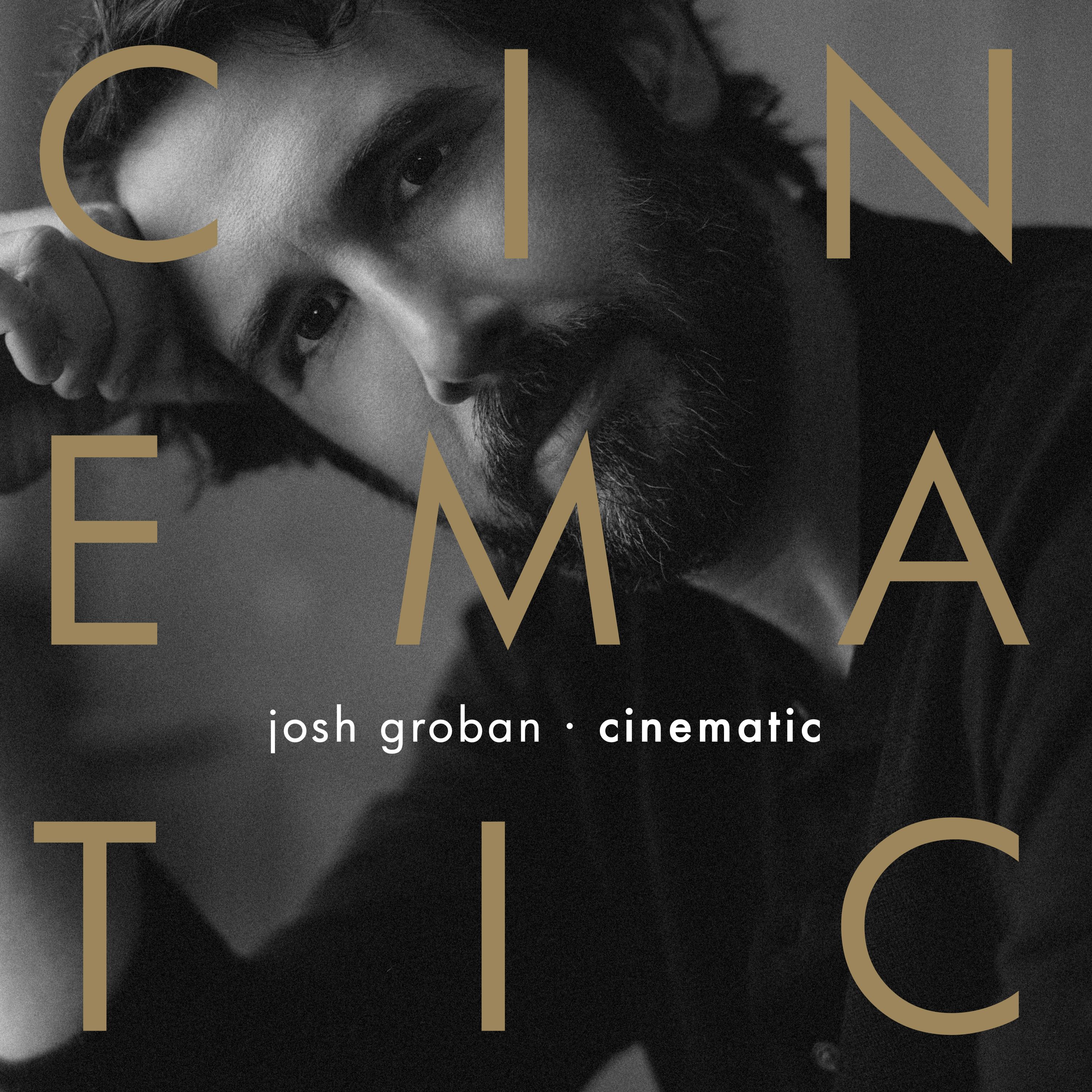
Going for those high notes. That's Josh Groban's rendition of the Oscar winning James Bond theme Skyfall. It's the second track on his latest album which conjures up movie magic, aptly titled Cinematic. Showing off Groban's vibrant vocals, it revisits some classics of the silver screen, including Stand By Me from the coming of age tale of the same name, Moon river from the romantic comedy Breakfast at Tiffany's, a track that features his father on trumpet, and a beautifully arranged duet of Unchained melody from the 90s romantic film Ghost with winner with EGOT winner Jennifer Hudson. Speaking of J Hud Jay Grow will be on tour with her and we'll be making a stop at Madison Square garden on Friday, June 12. Cinematic is out now and joining me in studio is Josh Groban. It's nice to talk to you.
- [02:08]
C
It's always so great to talk to you. Thanks for having me. Allison.
- [02:11]
A
Through the entire history of cinema, you boiled it down to 10 songs.
- [02:16]
C
That was harder than singing it, to be honest. You know, the long list for an album like this is very long. One of the reasons why it took me 25 years to finally do an album of these songs because, you know, I love, I love films. I love what music has done in films and vice versa. And so, you know, and you get requests when people know that you're making an album like this, everybody that you know says, oh, you're gonna do this song right? Or you're gonna have this song. So finding the songs that felt relevant to me, that I felt that I could, you know, use my voice to honor and figuring out the right Arrangements, you know, it wound up whittling down to the 10 that we felt were right.
- [02:51]
A
What was the song that you went
- [02:52]
C
back and forth on that wound up making it? Yeah, you know, I think that probably an example of a song like that was Stand By Me. That was a song that, you know, it is at the end of the album. And it's the only song on the album that doesn't have full orchestra. And the reason for that was I. I've always loved the song and I had a real hesitancy to. To as. As to whether I could honor it with my voice if I really felt like I could bring something to it. I love the original so much and I love the film. I had the opportunity to work with Rob Reiner right before he passed away. We did a concert together at Stonehenge for an as yet to be released concert of a Spinal Tap at Stonehenge, which I was so. Had so much fun being a part of. And I'm glad that we didn't have the chance to do that song with orchestra, because at the time we decided, of course, to put that on there. I wanted to do it as a tribute to Rob. And all of a sudden I had a. Why? I felt like, you know, let's go in and let's just record this. Let's just put a simple guitar and a synthesize and just see what happens. And it was basically a one take. And I like that it had a sonic difference to it. But, you know, in the album making process, that happens a lot. That the best ideas sometimes are right in front of you the whole time and you never realized it.
- [04:04]
A
Yeah, it's kind of an acoustic version of A Little Bit.
- [04:07]
C
It is. And I think that maybe it wouldn't have had as big a punch if we'd done it with the. With the 90 pieces, which we wanted to do for the rest of them, because we wanted to lean into the grandness of that music that we love so much.
- [04:17]
A
So Skyfall, which we just heard, what did you want to bring out in your interpretation of it when you. When you really looked at the song?
- [04:23]
C
Yeah, I mean. Well, first of all, as a James Bond fan, every song that's been written for the James Bond franchise, I think has been inspired to bring a grandness and a drama and kind of a darkness. I like that the songs are almost gothic in nature and kind of apocalyptic. That's one of the things that for Skyfall, I started singing that song. I was doing a residency at Caesar's palace where Adele had Just been. And so I thought, you know what, as a tip of the hat to Adele, I really want to do something that, you know, that would be kind of playful and fun. And so we ended the night with Skyfall. And honestly, it was therapeutic to sing it. It is such a. It is such a cathartic kind of way of just kind of getting out of your system. All the things that you're frustrated about in the world, you know, and the ways in which we're. We're feeling the darkness, but we. You know, we keep moving forward to the light if we can. And so very rarely do I find a song that a. I feel comes from a world that, vocally, I can really sink my teeth into. You got to sing. You got to sing high notes. When the sky is falling. I feel like that is our salvation. And. And also just felt so good singing it and feeling. Know what it is. It is that time, but we can all come together, and. And so I love it.
- [05:31]
A
It's interesting because it's the second song on the album. The first song is Time Goes By.
- [05:35]
C
Yeah.
- [05:36]
A
Written by Herman Hutfield, the pride of Montclair, New Jersey. Oh, yeah. It's really big. It's got lush sound. It's. It's very different from what we're used to hearing in Casablanca.
- [05:45]
C
Right.
- [05:46]
A
How many different versions of songs did you try or did you go into it knowing, like, this is the way as Time Goes by is gonna sound like this is the way Skyfall is gonna sound like?
- [05:55]
C
Sure. It's a great question, because the choosing of the song is one challenge, and then the how and the arrangement is, of course, the. The secret sauce. And. And so we started. Greg Wells, the incredible producer of this album, and I. We would stand at a piano, sit at the piano, and just play lots of things. We would just have fun being fans of these songs, and we essentially would just kind of host our own little karaoke days in the studio and just sing a bunch of things. And, you know, if you get goosebumps singing it with just a piano, generally, that's telling you that your. Your essence feels right for this song, and there is something inside that feels right for you and your voice. I will say the. The arrangers are, you know, a member of the band here, the most important member of the band.
- [06:36]
A
Oh, they're really important.
- [06:36]
C
For a singer like myself, having an opportunity to make albums this way, which is not something that's very usual to. To. To stand in front of 90 people and sing these songs together is such a privilege. And and so when the arranger would also say to us, I have an idea for this, that would be right for Josh and would be right for this song right now, that also told us a lot. There were times when we were all stumped and we'd say, okay, well, maybe this is just. I'm gonna be a fan of this song, but it's not the right time. And you mentioned that song as Time Goes by, the opening horns of that incredible Jeff et Ma Jiang arrangement that told me the moment I heard that coming out of Air Studios in London, I said, this is gonna open the album. Because the essence of what he did there was essentially what I wanted the listener to have the whole album. Close your eyes. The curtains are opening, the lights are going down, and we are gonna, you know, MGM escapism outside. We're all going to experience together, hopefully sonically, what people feel when they watch these movies.
- [07:33]
A
He was Nicole Kidman.
- [07:35]
C
Yes, absolutely. Indeed.
- [07:38]
A
My guest is actor and singer songwriter Josh Groban. We're here to discuss his album Cinematic. It's out now. This is a listening party, so let's listen to another song. This is can youn Feel the Love Tonight featuring the Gay Men's Chorus of Los Angeles. Tell us about the decision to include the chorus.
- [07:53]
C
We, Greg and I were talking about, you know, wondering what, what some meaning could be for these songs for us. I've. I have you. There are so many songs from the Disney canon. I mean, their contribution to music in film is so profound and so picking the right ones was important. You know, we were doom scrolling, we were watching the news and there was some probably some speech or something going on. You know, it just gets worse and worse every day. And we were kind of joking towards, you know, can we feel any. Is there any love right now? And we're looking at this lyric and we're going, what if we just went all in on this as just an anthem of outreach, an anthem of feeling like, you know, yes, it's a question, but it's a question we all need to ask right now. And who can, you know, is there a way that we can subtly show support within this song for a community that really needs to hear it right now? And I had the opportunity to sing with the Gaiman's chorus of Washington D.C. when I sang for Obama's President Obama's inauguration concert and was just so moved by their sound and really missed singing with all of them because they are so incredible. We asked them if their Los Angeles branch would be. Would honor us with joining us. On this track. And. And it was such an amazing collaboration. It was so, so great to perform with them again.
- [09:02]
A
Let's listen.
- [09:04]
B
There's a calm surrender to the rush of day when the heat of a rolling wind can be turned away an enchanted moment and sees me through it's enough for this restless warrior Just to be with you and can you feel the love tonight? It is where we are. It's enough for this wide eyed wanderer that we've gone thus far and can you feel the love tonight? How it's laid to rest. It's enough to make kings and vagabonds believe the very best.
- [10:38]
A
That sounded beautiful. I think this is the first time we've talked since Sweeney Todd.
- [10:43]
C
Yes, it is.
- [10:44]
A
2023.
- [10:45]
B
That's right.
- [10:46]
A
How did you treat your voice differently performing? I asked you. I sound a little froggy.
- [10:51]
C
Talking is harder than singing.
- [10:53]
A
I'm telling you all week of fundraising. When you were. When you're for this record, when you're practicing for this record, rehearsing, how is it different from when you rehearse for a Broadway musical? Because you have eight shows to do.
- [11:05]
C
Yeah, it's a marathon for Broadway. There's a lot more rehearsal, a lot more getting your voice ready for a Broadway show than there ever is getting yourself ready for a, you know, a take in the studio on an album. That's. That's sometimes the challenge. I mean, there's challenges to both. But preparing yourself for a Broadway role is not just getting your voice ready for the singing, but also for, you know, the acting and the speaking and the yelling. If you're doing a role like Sweeney, there's a lot of anger that you have to put in your voice that if you're, you're training your voice to be pure and, you know, do all the things it needs to do. It doesn't want to do that. So finding a way to do that, do Sweeney in a healthy way, was a great challenge. But the thing that's always, sometimes frustrating about recording is that it's very spontaneous. That's good and bad news, because the good news is you're in front of the orchestra. Sometimes you're hearing that arrangement for the first time and you're saying, all right, let's give it a take. And there is something very beautiful and spontaneous that happens when you're going for just gut instinct and working on it. But a lot of the times, like, I'll feel better singing these songs 50 shows into a tour than I will in the studio because I've had so Much time to marinate all of the. All of the nuances and getting it in my voice. And so, you know, the album, I would say, is the sprint. And then being able to sing it for the rest of your life is the marathon. That's really, really fun.
- [12:17]
A
We're going to hear a song from cinematic. Your new album that's in Italian.
- [12:21]
C
Oh, yes. Sicilian.
- [12:23]
A
From the God.
- [12:24]
C
From the Godfather. Yeah.
- [12:26]
A
All right. This is. Talk about the sort about delivering the emotional build up and the intensity in this song.
- [12:33]
C
I'm gonna let you pronounce it Bruce Latera.
- [12:35]
A
Bruce Latera.
- [12:36]
C
Yeah. And even then, I probably didn't fully correctly. I had a Sicilian coach. I did. I got it. I had a wonderful Sicilian coach that worked with her because I'd sung many, many times in Italian, but with the dialect and, and slight changes in. In. In wordage in Sicilian, it is. It is different. And I'd never done that before. So that was a challenge for me. And that was a request of. Of Francis Ford Coppola to have it in Sicilian. I was asked by him to sing this at the American Film Institute honoring him. And I'd never sung this song before. I didn't even know I was going to do a film music album. This was the nucleus that made me told, maybe told me that this was a time for me to do this album, was singing this song for him in front of De Niro and Pacino and him and those guys, and hearing the violin coming in and the accordion, and I'm standing there in my tux and I'm singing this song and, and. And it really hit me as a fan of the movie, as a fan of his work. It. It really was something that was very powerful to be able to honor the movie and honor him in that way. And. And so we decided to kind of take our 13 piece arrangement and add it, you know, add 80 pieces to it and do it exactly as I did it that night. And so, yeah, Bruscha. Later. The earth is burning.
- [13:40]
A
Let's listen. Josh, did your experience with opera help
- [14:53]
B
you with this song?
- [14:54]
C
You know, I sang a lot of songs in Italian and French in Spanish. Doing my original, you know, doing my classes when I was young, I would sing arias and art songs. And my voice was never quite, I think, large enough to tackle full on opera. It was a world that I always admired as a fan, but not something I really ever had the inspiration to do fully. Just because I have so much respect for the grand opera singers. And I always felt my voice is always really kind of fit somewhere in the middle and. But I did a lot of classical voice training when I was younger and certainly getting myself ready to eventually, hopefully do some musical theater one day. I wanted to do the more operatic musical theater. And so, yeah, I think learning those languages early as a singer really helped. Singing in those languages early has definitely helped. And then, you know, being able to explore the poetry of those languages to audiences all over the world is something that I really value and something that I'm really very grateful that I get to do.
- [15:48]
A
We're talking to Josh Groban about his new album, Cinematic. It's out now. You worked with Greg Wells, you mentioned what did he bring it out, bring out in you that you. You didn't know you had?
- [15:59]
C
Well, I mean, I think the nice thing about Greg is, and he's done so many brilliant pop records, rock records, and he's deeply you. He's deeply got his hands in film music. He did the Greatest Showman soundtrack. He just finished all the wicked music. And so he knows the cinematic music landscape and he can do every bell and whistle under the sun. He's an incredible programmer. He's a wizard at the board. What I loved about what he wanted to push me to do in this album was to actually simplify that we're not going to put a lot of toys on this. We're not going to overly saturate demos with all kinds of things that sound great and get demoitis. What we're going to do is we're going to trust, fall into what the pen on the paper is going to do from these arrangers and then we're going to get in front of the orchestra and we're going to sing these, you know, as God intended. We're going to go out there and we're just going to do it, you know, au natural. And I think that, you know, that's easier said than done.
- [16:52]
A
Is that scary for you?
- [16:53]
C
It is scary, yeah, because I'm a bit of a perfectionist and I think you do this for 25 years, you get used to the different ways producers like to do things. And I always like to know, especially if you're scheduling and paying for a very large session like that, to kind of know beforehand, you know, essentially as much as you can about how it's going to sound, how yours going to sound, what you're going to do. And I think that Greg really wanted us to lean into a very old school, old world approach to recording these songs. And so they are primarily just me and the orchestra, you Know, and I've always, in the past, enjoyed and will enjoy in the future, you know, working with more electronic elements and working with beats and working with other kind of more pop elements. And this album, we wanted to let the songs do the talking. And so that is sometimes a deceptively complicated thing to decide to do when you have something of this scope.
- [17:44]
A
This is a listening party for Cinematic. My guest is Josh Groban. We're gonna hear Unchained Melody featuring Jennifer Hudson.
- [17:52]
C
I like these J Gro and J Hud. I'm using that. I'm using that. That's the new poster. Yeah. She's the best. I love her voice. She's so lovely. I've been on her show a couple of times, and we sang together on a Christmas special on television a couple years ago, oh holy Night. And we were holding out that Noel, you know, at the end together, our voices were just. We're looking at each other and it was like we had these cartoon heart eyes coming out for each other's voices. And we met each other backstage and we kind of went, we have to do that again, whatever that was. We have to figure that out. I knew we were going on tour together before I knew basically that we were going to ever collaborate on this album. And I said, you know, we're going to be on tour. Is there anything from this realm that you'd want to sing together? And she said, unchained Melody. She's like, that's one of my favorites ever. I said, mine too. It's always been a solo. It's always been kind of a solitary song of longing. Somebody singing into the ether about somebody that may not even know they're being sung about. And we loved the idea of kind of adapting it to two people longing and finding that way to blend our two voices. And anytime I get to sing with Jen is a privilege. And to be able to do this song with her was something really fun for the both of us.
- [19:01]
A
Let's listen. O
- [19:06]
B
my love My darling I've hungered for your touch Alone lonely time. And time goes by so slowly and time can do so much on you still much. God speak your love to. Me.
- [20:34]
A
We're having a listening party with Josh Grob. His new album is called Cinematic. You also have songs in here from Pinocchio and from Coco.
- [20:44]
C
I know.
- [20:45]
A
What do you think about these sort of. These animated films that it resonates so much with people? The music resonates with so many people across generations.
- [20:54]
C
I think it's an amazing thing that Disney does by introducing young audiences to, you know, this style of music, this style of singing. I mean, I learned about classical music from cartoons, from Looney Tunes growing up. I mean, really, that was my side door into learning about, you know, the magic of orchestral music. And I think what Disney's done is they've created a really, a canon of songs that young and old are singing these songs, and they're directly and indirectly being introduced to this world of music. I had to really kind of check myself because, you know, I wanted to honor the Disney music landscape. I didn't want to make a Disney album. And so it would be very easy to make a double album of just all the incredible songs from that universe. And we picked three that I felt really represented and honored, like three different eras of Disney. When youn Wish Upon a Star from Pinocchio, for me, is like the Disney song. It's the trunk of the tree for all the other songs, in my opinion. And then can youn Feel the Love Tonight? And then we did Remember Me from Coco, which is one that just made me cry just so recently. And a melody that, that is so simple but so beautiful and, and is done in many different ways on the mo in the movie. And so that was kind of a cue for me that maybe we could do our way as well. But, yeah, I mean, it was, that was probably one of the biggest challenges was, was saying no to certain songs from that world because we had enough.
- [22:11]
A
You speak with such reverence about the songs.
- [22:14]
C
I love them. They're, I mean, I really do. And that's, there's a pressure there. I mean, I, I, I, I love them as much as other people love them, you know, and when, when you, you carry the torch for them, for the moment that you're singing them, I'm singing them as just as much of a fan of them as other people. I'm never trying to replace or compete with the originals because I love those first, you know, and it's just, it's just my way of trying to express my appreciation for them as a singer. That's all you can do is you can interpret, you can carry the flame and enjoy when other people continue to do the same. These songs deserve to live on and on. And so to have a project with, having the opportunity to help continue to do that has really been an honor.
- [22:54]
A
How did your dad end up on the album?
- [22:57]
C
Believe it or not, he had to be asked. He wasn't knocking on the door. My dad is the reason I have musical DNA. He is an incredible. He's got an incredible musical ear. He'd come home from work at the office. He's an executive recruiter. He finds jobs for people. And so he'd come home and he'd play jazz on the piano and. But when he was in college, he played trumpet. We have one album of him playing live, and we're going, dad, you could wail like you were amazing. And he's going, yeah, yeah, yeah. He came from a very conservative family that kind of said, you know, look, if you want to have stability for your family one day in the 60s, they said to him, maybe this isn't your full time. This is just a hobby. And so, you know, he put it away, which is so strange to me, because as somebody who even if I was doing something else for a living, I'd still be continuing to do that thing. He said, all right, that's enough of that. I said to him, hey, do you ever play Moon river when you were young? He said, yeah, all the time. Bar mitzvah's, birthdays, you know, weddings, whatever. I said, well, I've got this extraordinary Vince Mendoza arrangement of Moon river, and it's got a spot for an instrumental. And I had a wish list of trumpet players that I had called Wynton, Marsalis, Branford and Terence Blanchard. And they said, hey, send me in. And I said, maybe my favorite trumpet player has been in front of me this entire time. He's going to be 80 this summer. I called and I said, hey, if you rehearse, do you think you still have the lip? Do you think you could still come in and do it? You got three weeks to get ready for this. And he said, let me try. I'd call the house. I'd say, mom, how's it going out here? I said, okay. He's rehearsing, he's doing it. And he gave me the okay. And so we got over to Sunset Sound, which was Louis Armstrong's favorite studio in la, and we set him up. And honestly, to watch my dad flip after 50 plus years back into muso land, and seeing him, that spark of improvisation come back, my whole family watched. It was. You know, I get asked sometimes a favorite collaboration. It's always very hard to choose. Now I have a favorite forever. To have this collaboration with my father on the album is something extremely special.
- [24:56]
A
The album is called Cinematic. Josh Groban will be in our area at MSG on June 12th. Thanks for coming in.
- [25:03]
C
It's such a privilege. Thank you for having me. Alison and Doug, there's nowhere I wouldn't go to help someone customize and save on car insurance with Liberty Mutual, even if it means sitting front row at a comedy show. Hey, everyone, check out this guy and his bird.
- [25:19]
A
What is this, your first date?
- [25:21]
C
Oh, no. We help people customize and save on car insurance with Liberty Mutual together. We're married. Me to a human, him to a bird. Yeah, the bird looks out of your league. Anyways, get a quote@libertymutual.com or with your local agent. Liberty. Liberty. Liberty. Liberty. Hi, I'm Maggie Smith, poet and host of the Slowdown. Each weekday, I share a poem and a moment of reflection, helping you turn listening into a daily ritual. It's five minutes to slow down, pay attention, and begin the day with intention. Find it in your favorite podcast app and make the Slowdown your new daily poetry practice.