← All Of It with Alison Stewart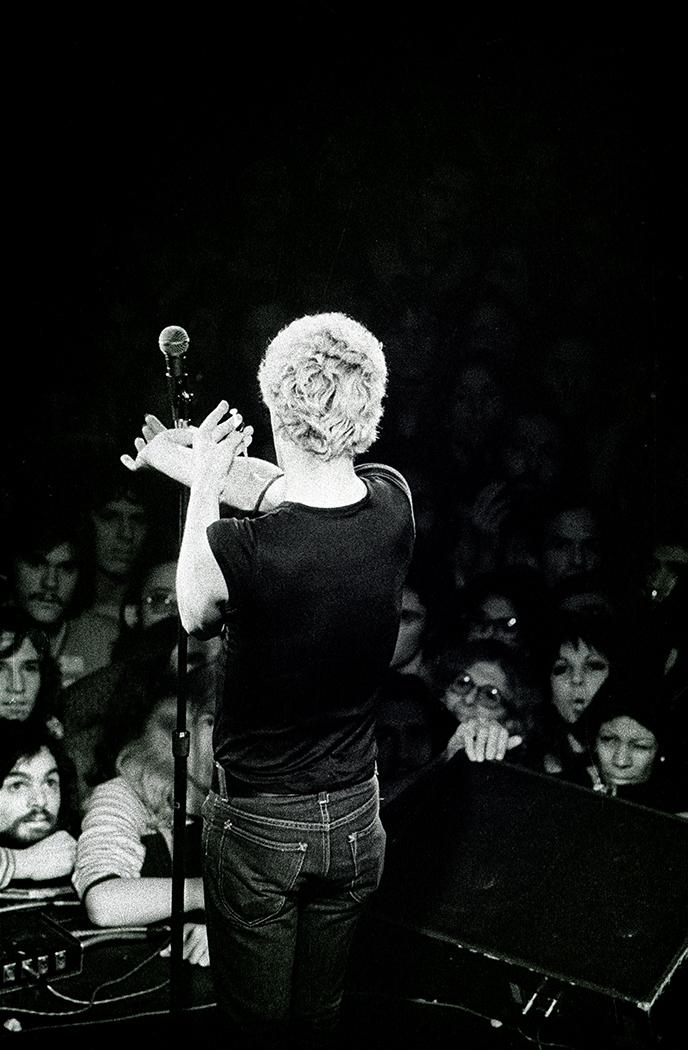
All Of It with Alison Stewart
Lou Reed, Part 3 (Full Bio)
00:26:13
We present the third installment of our Lou Reed Full Bio.
Loading summary
Transcript48 lines
- [00:01]
Will Hermes
Okay, right leg.
- [00:02]
Narrator/Reader
Are you with me?
- [00:04]
Ocrevus Commercial Voice
Hey, hand we doing this? Sometimes life can feel like a constant roll call.
- [00:09]
Will Hermes
Alright, vision looking good today.
- [00:12]
Ocrevus Commercial Voice
And that's why people choose Ocrevus Sunovo Ocrelizumab and hyaluronidase OCSQ for their treatment. See how Ocrevus Inovo can fit in with your life. Ask your doctor about starting or switching to Ocrevus Sunovo and learn more@ocrevus.com today.
- [00:28]
Will Hermes
Ocrevusunovo.
- [00:30]
McDonald's Promoter
I'mma put you on, nephew.
- [00:31]
Narrator/Reader
All right. Un.
- [00:32]
Interviewer/Host
Welcome to McDonald's. Can I take your order, miss?
- [00:34]
McDonald's Promoter
I've been hitting up McDonald's for years. Now it's back. We need snack wraps. What's a snack wrap? It's the return of something great. Snack wrap is back.
- [00:50]
Interviewer/Host
This week on our book series Full Bio. We've been discussing Lou Reed, the King of New York by journalist Will hermes. The nearly 500 page book, the last 50 pages are notes, was researched in part at the New York Public Library, which holds the archives of Reed's papers consisting of more than 220 boxes and almost 41,000 digital files. Hermes also interviewed friends, colleagues and historians. The Atlantic set of the book, A new biography of the Velvet Underground founder Lou Reed considers the stark duality of the man and his music. Today we get into Lou Reed, the man and his relationships with sex, drugs and rock and roll journalists. Lou Reed was at the forefront of sexual and gen fluidity long before the openness and language of today. Hermes writes. Reid claimed his right to identify or not regarding his sexuality, and he lived as he pleased and answered to no one. Reid's drug use could get out of hand. He used meth and heroin. David Bowie's producer Tony Visconti describes in the book the first time he met Lou Reed, saying, quote, he was just sitting in the corner of the floor, kind of nodding off. I just remember kneeling down and shaking his hand and saying hello. And he just looked up and was all glazed over. And then there was Reid's love, hate, cat, mouse relationship with the press. Reid could and would say wild things about other musicians and women on the record. He was often prickly. Many who knew Reid well told Hermes he could be a really good guy. Let's get in today's full bio with Will Hermes, author of Lou the King of New York.
- [02:39]
Narrator/Reader
Holly came from Miami, fla. Hitchhiked her way across usa, plucked her eyebrows on the way, shaved her legs and then he was a she. She says, hey babe, take a walk on the wild side. Said, hey, hon, Take a walk on the wild side.
- [03:10]
Interviewer/Host
So, Will, the theme of today is sex, drugs and rock and roll. Okay, let's start with sex. Plenty of plenty to talk about, right?
- [03:18]
Will Hermes
There's plenty, plenty of all of that in this story.
- [03:22]
Interviewer/Host
Lou Reed was so far ahead of his time in terms of out, in terms of how he thought about his sexual identity. I think now he would identify as queer. In the late 1960s and early 70s, how did Lou Reed challenge away sexuality and gender? How did he challenge it in his real life and then on stage?
- [03:40]
Will Hermes
Well, I mean, there's a lot of. There are a lot of ways to answer that question. I mean, certainly in terms of his, you could point to the songwriting, but, you know, in the Velvet Underground songs, there's not a lot of queerness, per se, that's not coded anyway. I mean, now that we know backstory to a lot of the songs, you can see how a song like Candy Says, which is inspired in part by the trans actress Candy Darling, was ahead of its time. But if you just listen to the lyrics, you wouldn't necessarily know that. Lou sometimes would talk back in the 60s about queerness. And as he moved into the 70s, he talked about it more certainly when he made the album Transformer. That was an album that, with Walk on the Wild side, the song that became his signature, certainly addressed gender identity in a way that had not been addressed in popular, you know, media, popular art form ever. I don't think that was. That was pretty. Pretty groundbreaking. Later on in the 70s, Reed had trans partner Rachel and was very open about that. He would occasionally in interviews speak about being gay, but he was also married to two different women over the course of the 70s as well. So he didn't break this down. He didn't never use the word queer. The language was still kind of being formed around this. And, you know, it's funny. Like, during the pandemic, my wife and I binge watched Please Like Me, Australian comedy with Josh Thomas. Hilarious. And he has a line in one of the episodes, he's exasperated over a boy who's torn between him and a girlfriend. If recall correctly, he says, I miss the old days when straight was straight and gay was gay and bisexuals were lying. And I think that that was kind of the attitude and the fact that you could just. That sexuality was. Was a fluid thing and that you could be attracted to people of different genders and the gender was a fluid thing. Like, now that's something that is, you know, common. It's a lingua franca, but it Certainly wasn't then, but. But Reid lived as he chose, and very often he was in the cultural crosshairs for it.
- [06:22]
Interviewer/Host
I was going to ask how was he impacted by homophobia?
- [06:29]
Will Hermes
You know, the funny thing was, and I know this, like, growing up, like, look, growing up in suburban queens in the 70s, as I did, I was not a straight kid in any sense. Like, my sexuality, my drug use, my dress code, like, the more I got into Reed's music and more I learned about him as an artist and a person, the more. But really about his, like, music, the more I felt scene. And that was, you know, that is a testimony to why I think in part it connected so, so deeply to his music. But at the time, like, he was, you know, he'd kind of. He'd present really butch, like in this very, like, leather butch sort of way, which I think because he was making hard rock music, that kind of passed as just, you know, like butch leather. You know, it just. It didn't signify queer, is what I'm saying, to a non queer audience. And so he was. He was playing both sides of the street and he. It was a. It was a world. The rock world in the 70s was extremely homophobic. And so I don't think that, you know, he. Sometimes he. On occasion he would come out in interviews, and other times he had no interest in discussing his identity with an interviewer. So there's a famous incident that involved a writer who really worshiped him, Lester Bangs. And I write about him a lot throughout the book. He's very famous music journalist and critic. And he wrote a story about Lou during the years that Lou was partnered with Rachel. And it was so transphobic, it was so nasty, so horrible that Lou, who had been friends with Lester over the years, Lester was one of the biggest boosters of the band. He wrote a review of the Velvet Underground in Rolling Stone back in the day. Lou just cut off ties with him across the board.
- [08:48]
Interviewer/Host
Was that the piece called Lou Reed A Deaf Mute in a Telephone Booth?
- [08:53]
Will Hermes
Yes. There were ultimately two pieces, but that was one of them for Cream magazine. It was tricky, but he and David Bowie and a number of other artists at the time, they really kind of paved the way for the moment that we're in now, where artists present as queer in the media and it's no big deal. Back then, it was kind of a big deal.
- [09:19]
Interviewer/Host
Lou Reed had a long list of partners from traditional cishetero relationships and marriages. He had this loving relationship with a trans woman. Someone described his longtime partner and wife, the Great. Laurie Anderson as a true love. They were a couple until his death. Of his songs, is there one you think is quite autobiographical about the way he thought about love and relationships?
- [09:50]
Narrator/Reader
Hmm.
- [09:50]
Will Hermes
I mean, there are a lot of songs where he talks about specific things. He's. He wrote more than one song about Laurie. Beautiful, beautiful latter day songs. He wrote songs about his second wife, Sylvia, that were very, very touching. He wrote a number of songs that reference Rachel, certainly on the Coney Island Baby record where he calls out Rachel by name at the end. If I had to pick one song, it would probably be Some Kind of Love from the third Velvet Underground album, which, frankly, is my favorite Velvet Underground album. If I had to pick, it's very hard. That's the album that has Candy says on it. There's a line in it that puts it simply, no kinds of love are better than others. To me, that just sums it right up.
- [10:47]
Interviewer/Host
My guess is Will Hermes. The name of his book is Lou Reed the King of New York. It is our choice for full bio. Let's move on to drugs. Lou Reed's use of drugs started early in college. You report that he contracted hepatitis from shooting heroin. What?
- [11:05]
Will Hermes
Yeah, that's the story. So. And of course, that's a disease that attacks the liver. So Lou Reed died of liver disease. So in a way, something that he did in college was something that ultimately took him out probably before his time.
- [11:25]
Interviewer/Host
What was the impact of his drug use on his ability to perform and to be a creative artist?
- [11:33]
Will Hermes
Well, you know, like drug use, with a lot of people, there's the myth of drugs and creativity, and it's a myth in part because there's some truth in it that. That. That sometimes, you know, mind altering substances can. Can help you access certain creative paths sometimes if, you know, they don't kill you first. But what was going on with Reid, I think, is two things. One, he clearly liked to get high. He liked to party. He liked to drink. He liked to smoke weed. For a while, anyway. He was interested in heroin in part because he was interested in the writing of William Burroughs, and he was interested in the writing of probably old blues artists who wrote songs dealing with heroin and cocaine. He was a writer, and he craved experience. And when he studied writing with Delmore Schwartz and Syracuse, you know, Delmore would talk about, you know, lived experience and writing. You know, you're drawing from that and you're, you know, using creativity to, you know, have that inform your fiction or your poetry. And I think Lou wanted the experience. So he, you know, he tried all the drugs. And it was the 60s and 70s, so everybody was certainly in the rock world was indulging in all sorts of stuff. But you know, I think the thing that he really loved and this came through his association with Warhol and the Factory crowd was amphetamine. Because Lou Reed really was about work. It's like he wanted to write, he wanted to produce stuff. He, Andy Warhol, he, Lou wrote a song about this and this on the album Songs to Dre, Songs from drella, Songs for drella, Excuse Me. And it was about, you know, the all importance of work. And amphetamine was something that allowed him to work longer and harder and probably helped him with his anxiety issues, his self confidence issues, his depression. And that was the drug he abused. And he also abused alcohol. What happened ultimately is the liver process as these drugs. And his liver was damaged from the hepatitis. And at a certain point he just had to stop drinking. He had to stop using needle drugs. He was, he was using, he was injecting amphetamine at, at a certain stage and really, really abusing it in some ways as, as, as maybe an act to see how he, you know, how he would respond to super high doses and then write about it. But it did not help him physically and it didn't necessarily help his work. But through the 70s, it was a rough time. And more than one person I interviewed told me that during those years, if he hadn't stopped, he would have died. And that his second wife in particular, Sylvia Morales, the former Sylvia Morales, would have, you know, she saved his life basically when he decided he wanted to get clean, was not long after he met her. And I think she encouraged him on that path. And you know, without discounting how hard it is to change your own addictive behaviors, I think that relationship was helpful.
- [15:30]
Interviewer/Host
At one point on stage, Lou Reed was mimicking shooting up heroin.
- [15:37]
Will Hermes
Yeah.
- [15:38]
Interviewer/Host
What led to that? That's a really. We'll talk about risk. He later, and sometimes in life had said he regretted being. I think the word he used was a drug guru.
- [15:49]
Will Hermes
Yeah, he did, but he leaned into it. And I think what happened was, I mean, Walk on the Wild side was successful, but it was not like a massive hit. Like what became a massive hit for him was a live album called Rock and Roll an which in fact was an album that got a lot of airplay on rock stations in New York City, in Long island back in the day when I was growing up. WNEW fm, W L I R wplj. And on that album there's a live Version of heroin. And it came to, you know, it came to this realization that, like, people were into the luridness of the story of heroin when it was presented in a particular way. Like, the original version was him trying to get inside the mind of somebody who used heroin. It was almost like a literary exercise. But what it became on that live album and in live performance was this, you know, was just playing to a crowd of really high rock fans who were like, yeah, Lou, let's see you shoot up on stage. And he would do this sort of pantomime where he would take the mic cord, he'd wrap it around his upper arm, and he'd have a hypodermic and reel, maybe with a needle broken off, I don't know. And he'd pretend to shoot up and do the things that a needle drug user would do to, like, get the drug to circulate in your arm and then release the mic cord. And then he might take the hypodermic and fling it into the audience the way like guitarist would, like, fling a guitar pick after a hot solo. I mean, by today's measures, horrifying, but. But at the time, it was. It was filling theaters. Critics would write disparagingly about it, but that was. It was helping him sell records. So I think in some ways, people he was working with might have been looking the other way. And maybe he was saying, well, well, okay, it's paying the bills. But at a certain point, that. That was not sustainable.
- [18:12]
Interviewer/Host
Let's listen to that live version of Hero.
- [18:33]
Narrator/Reader
I don't know just where I'm going But I going to try for the kingdom if I can Cause makes me feel like I'm a man When I put a spike into my vein Then I tell you things aren't quite the scene.
- [19:36]
Interviewer/Host
The rock and roll press. This was fascinating to me in the book, this sort of sometimes unhinged relationship between Lou Reed and the music press. They loved him and hated him. The reviews could get really, really personal. I would love to know your thoughts as a music journalist. Why were the reviews so personal? Was that just the style at the time, or was there something else that Lou Reed got under people's skin?
- [20:05]
Will Hermes
You know, I think it was both those things. I mean, Lou Reed was incredibly smart. I mean, one of the, you know, one of the greatest minds making rock and roll music, for sure. And he was a writer. And people who were writers, certainly music journalists, who might in some ways have been frustrated by practicing the lowly art of music journalism, as opposed to, like, writing great American novels maybe saw some of themselves in Lou Reed being this, you know, rock and roll artist doing this kind of like heavy metal camp, when really should be doing some higher form of art. But, yeah, the reviews got really personal. The features got kind of personal. People were very, very invasive. There was a lot of. I mean, it was almost all guys at the time in music journalism, not exclusively. There were a lot of pioneering women music writers. I mean, Ellen Willis is just one of them, many of the greats. But as a whole, it was kind of a sausage fest. And, you know, I think Reid's perceived queerness probably got under some people's skin. But whatever it was, Lester Bangs wrote some pretty intense stuff about him. Peter Loughner was a music writer and a guitarist who OD'd ultimately. And he was obsessed with Lou Reed. And it was disturbing to read, but it was. There was something about the intensity of Lou Reed fans that I wanted to get to the bottom of in this book. In some ways, it made me want to write this book. When he passed and I saw the public mourning on social media about him, people really responded to him because Reid was very. He was very naked in his interviews. He was sometimes incredibly bitchy. It almost became his default mode. I mean, it did become his default mode in interviews. And I was, you know, was something that people responded to, the authenticity. And the people who loved his work, really, really loved his work. And that goes for music journalists, for whom, you know, a certain generation of music journalists, and I'm one of them, just sort of saw the Velvets as the, you know, the greatest American rock band. So. And they never. And they never got famous. And the fact that they became a touchstone for the entire punk movement that came out of New York, at least the New York branch and some other branches, and then later the alt rock, college rock movement that came out of the 80s, bands like R.E.M. et cetera, you know, they all look to the Velvets as touchstones because they were all touched by that music. And. And so, yeah, that. It's almost like, you know, it's a tribal handshake sort of thing. A love of the Velvets he had.
- [23:22]
Interviewer/Host
Lou Reed had a reputation for being difficult. And I was reading the book, I was trying to figure out whether him being unpleasant sometime was a characteristic or was the unpleasantness of behavior.
- [23:41]
Will Hermes
It was hard to get to the bottom of that, and I think both things can be true. There was a lot of, like, the whole process of doing this book with somebody like Lou Reed was. There was a lot of well, both these things can be true simultaneously. And that was one of them. I think that from stories that I heard about him as a kid, like he could talk trash, he was fast, he was a wit and he was wicked. And he was a small kid physically. And he was bullied. And I think kids who are bullied become good with words. They use words as weapons. I think he used words as weapons in battling with his dad. And I think that, you know, as he, as he came of age as an artist and he learned a lot from Warhol. But if you listen to the early interviews with Lou Reed when he was in the Velvet Underground, he's very, very unguarded. He'd be pretty open and really kind of congenial. He'd talk about doing yoga and talk about pursuit of Reiki energy and reading Alice Bailey. And he was very loquacious. And I think he got burned by journalists who wrote nasty stuff about him and he became more guarded. You know, I think he was also like an anxious guy who maybe in social situations like that make you a little bit anxious. So there was that. And in the same way that he played to that heavy metal, heroin shooting on stage character, he, the Lou Reed character also became this guy who was just super nasty. He would just say the nastiest things to anybody, like any interviewer for any reason. So I think sometimes it was because somebody might have asked him a question that he didn't want to answer and he just snapped. And he was just a short tempered guy. But I think also that became kind of a role he'd play and it was almost expected certainly later in his life. And the last thing I'll say is that he also had health issues, you know, in, in part involving his liver. And I think he was also just feeling unwell. And I think as a, as a way of, you know, that, you know, that makes you irritable when you're feeling, when you're feeling lousy. And this was an issue for him from research that I'd done really from like the late 90s. He was dealing with, with diabetes and you know, when his blood sugar would drop, his, you know, moods would like off the charts nasty. So you know, probably a natural disposition towards that in addition to health issues is probably behind it.
- [26:49]
Interviewer/Host
Tomorrow we wrap up our full bio conversation about Lou Reed, the king of New York. With Reed's later years, his interest in photography and the influence he had on modern rock music.
- [26:59]
Will Hermes
Okay, right leg.
- [27:01]
Narrator/Reader
Are you with me?
- [27:02]
Ocrevus Commercial Voice
Hey hand we doing this? Sometimes, sometimes life can feel like a constant roll call.
- [27:08]
Will Hermes
All right. Vision looking good today.
- [27:10]
Ocrevus Commercial Voice
And that's why people choose ocrevus sunovo, ocrelizumab, and hyaluronidae's OCSQ for their treatment. See how ocrevus de novo can fit in with your life. Ask your doctor about starting or switching to ocrevus zunovo and learn more@ocrevus.com today.
- [27:27]
Will Hermes
Ocrevus Zoo Novo.
- [27:29]
McDonald's Promoter
I'm gonna put you on, nephew.
- [27:30]
Narrator/Reader
All right, unc.
- [27:31]
Interviewer/Host
Welcome to McDonald's. Can I take your order, miss?
- [27:33]
McDonald's Promoter
I've been hitting up McDonald's for years. Now it's back. We need snack wraps. What's a snack wrap? It's the return of something great. Snack wrap is back.