← All Of It with Alison Stewart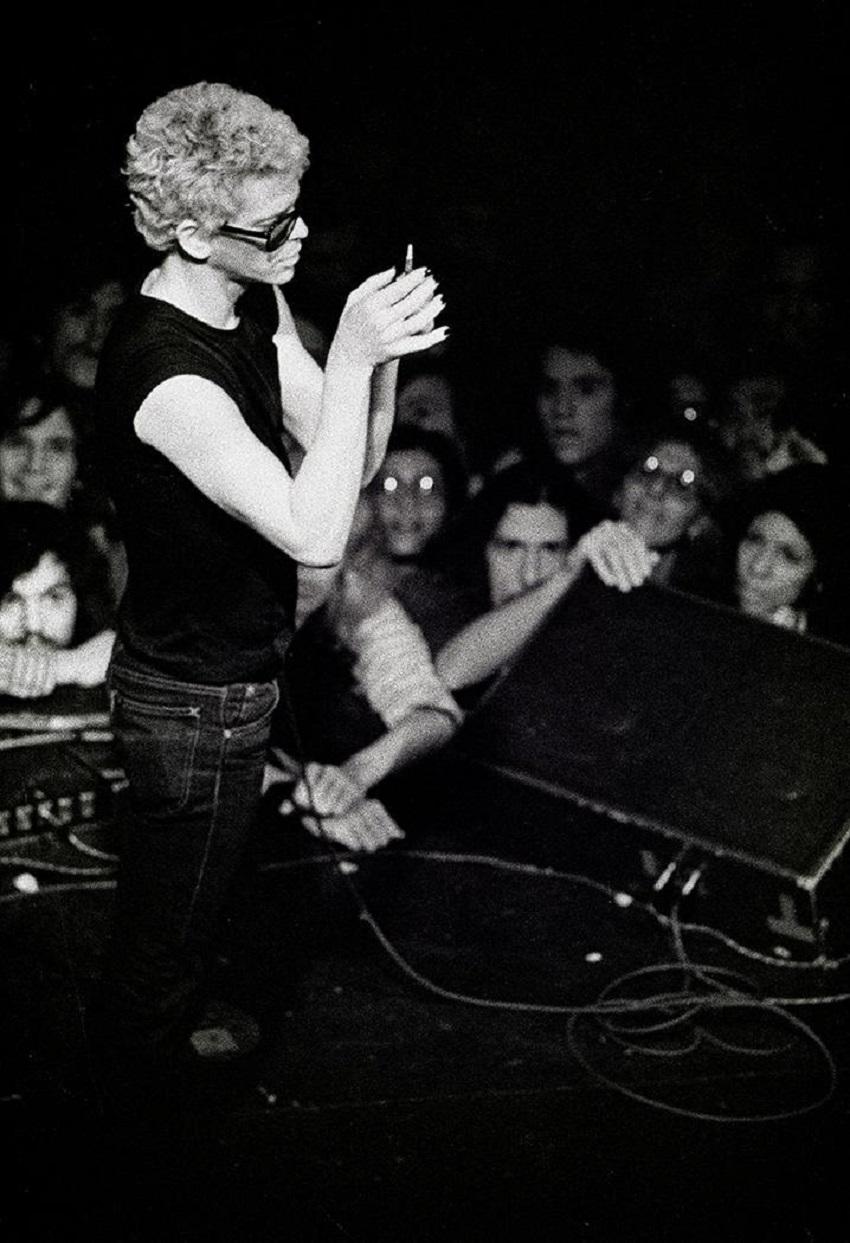
All Of It with Alison Stewart
Lou Reed's Solo Career and Final Years (Full Bio)
00:28:52
For today's final installment, we discuss Reed's solo career and his marriage to artist Laurie Anderson.
Loading summary
Transcript55 lines
- [00:00]
Uncle
I' ma put you on, nephew.
- [00:01]
Nephew
All right, unc.
- [00:02]
Alison Stewart
Welcome to McDonald's. Can I take your order, miss?
- [00:04]
Uncle
I've been hitting up McDonald's for years. Now it's back. We need snack wraps. What's a snack wrap? It's the return of something great. Snack wrap is back.
- [00:15]
Commercial Announcer
For 140 years, MultiCare has been in Washington prioritizing long term solutions, partnering with local communities and expanding access to care. Together, we're building a healthier future. Learn more@mycare.org.
- [00:32]
Nephew
It'S not rocket science. Grayscale has been educating investors on crypto for over a decade. Grayscale invest in your share of the future. Investing involves risk and possible loss of principle. Visit grayscale.com for more information.
- [00:46]
Commercial Announcer
Did you know Tide has been upgraded to provide an even better clean in cold water? Tide is specifically designed to fight any stain you throw at it. Even in cold butter. Yep. Chocolate ice cream. Sure thing. Barbecue sauce. Tide's got you covered. You don't need to use warm water. Additionally, Tide pods let you confidently fight tough stains with new coldzyme technology. Just remember, if it's gotta be clean, it's gotta be Tide.
- [01:19]
Will Hermes
Listener Supported WNYC Studios.
- [01:31]
Alison Stewart
This is all of it. I'm Alison Stewart live from the WNYC Studios in soho. Thank you for spending part of your day with us. If you couldn't be with us each and every waking moment, no worry. There is a podcast for that. It's ours. You can check out our feisty conversation with one of the stars and the director of Candy Cane Lane, currently the number one film on Amazon Prime. Really great holiday film to check out. Also, actor Carrie Coon was candid and so engaging as we spoke with her about her role as Bertha Russell in the Gilded Age, which just wrapped its second season. And after that, you can listen to our conversation about the real stories of New York City in the Gilded Age with the host of the Bowery Boys podcast and the host of the Gilded Gentleman Podcast. You can find those conversations on our website or wherever you get your podcasts. That's in the future. Right now, on we go with Lou Reed and his legacy. This week we have been discussing the book Lou the King of New York by journalist Will Hermes. It was our choice for full bio this month we discussed Reed's family origin from Poland and Russia. And then here's how Lou Reed described growing up to a Central park crowd in 1991.
- [02:47]
Lou Reed
I was born in Brooklyn and then we went out to Long island and I've never hated a place so much in my life, even going past Penn Station makes me nervous because I know the Long Island Railroad's there.
- [03:11]
Alison Stewart
Post Velvet Underground, Reed continued to put me out music as a solo artist, even writing an opera. He also realized he could still hold.
- [03:18]
Interviewer/Host
On to his rock cred while making some money leasing his songs for commercials or for other artists to cover, like the Cowboy Junkie, Sweet Jane.
- [03:39]
Singer
Anyone has ever had a heart wouldn't turn around and break it and anyone who's ever played a part wouldn't turn around and hate it Sweetie.
- [04:03]
Will Hermes
Jean.
- [04:08]
Singer
Sweetie.
- [04:09]
Interviewer/Host
In his later years, he took up photography seriously and had several exhibitions and books. He would marry a third time, the impressive artist Laurie Anderson, and they remained together until his from liver disease a decade ago. On October 27, 2013, Lou Reed was inducted into the Rock and Roll hall of Fame. Two years later, here's our final conversation with Will Hermes, author of Lou Reed, the King of New York.
- [04:35]
Singer
I ain't no Christian or no bone against saint I ain't no cowboy or a mox SDA I ain't no criminal or Reverend Cripple from the right I am just your average guy Trying to do what's that's right I'm just your average guy an average guy.
- [05:00]
I am.
- [05:00]
Just your average guy I'm just an.
- [05:05]
Alison Stewart
Average guy Will once Lou Reed went solo, who stands out to you as a true ally? Someone who wanted to see him succeed and helped him succeed?
- [05:17]
Will Hermes
Oh, my goodness, there are a lot. But I mean, David Bowie is probably the one who, you know, certainly charmed me the most. I mean, David Bowie could be considered like the greatest Velvet Underground Lou Reed fan ever, because this artist was onto the Velvet Underground before their album even came out. He got a copy of the first Velvet Underground album on acetate from a manager before it was released. He recorded a version of Waiting for the man before Lou released the version with the Velvets. And throughout the years, he was a very important figure in Reed's creative and personal life. He. He produced Transformer and produced Walk on the Wild side, produced did the arrangements brought in guitarist MC Ronson. He, he was the reason that that album was so successful and Lou knew it. I think he was a little, you know, initially kind of reluctant to admit it, and they had a falling out years later. David Bowie, even though people might not know this because of the way that history and streaming media collapses everything onto the same level, but like Lou Reed and David Bowie, stars of completely different magnitudes, I was writing about a period in the 70s I believe might have been the early 80s, when Lou had a run of shows at the Bottom Line down on Fourth Street, a venue that holds, I don't know how many hundreds of seats, but it's a nightclub. Great place, much lamented. And the same week, David Bowie had a run of shows in New York City, too, but his run of shows were sold out at Madison Square Garden. So even though they were friends, they were not famous on the same level. And at one point they got into a bad fight and had a falling out for years because one drunken evening, Lou dropped his. As the story goes, Lou kind of humbled himself to ask David Bowie if he would produce his next album. And Lou was kind of at the height of having. Having drug and alcohol problems. And Bowie, who certainly had drug and alcohol problems of his own, was trying to get clean. And he said something to the effect of like, well, Lou, if you clean up your act, sure, you know, I'd be willing to help you. And that just set Reed off. And Reed slapped him. And it was. And they fell out for years, but they got back together as friends. And David Bowie, the title of the book actually comes From David Bowie's 50th birthday celebration at Madison Garden, at which he had a number of artists perform. Younger artists, mostly Sonic Youth and a bunch of other folks, but Lou Reed was the guest of honor. And they played, you know, maybe four songs together, including Queen Bitch, which is a song that Bowie wrote for Lou Reed. And he introduced Lou Reed that night as the King of New York. So that felt like a good place to grab a book title from.
- [08:42]
Interviewer/Host
Did Lou Reed care about traditional markers of success like Billboard charts or radio airplay?
- [08:49]
Will Hermes
Oh, yeah, he sure did. He wanted to make money. You know, living in Manhattan is expensive. Being a rock star is expensive. And he, you know, he was an artist who was really respected and he got record deals because he was kind of a. You know, he was a feathering record label, CEOs cap. Yeah.
- [09:16]
Interviewer/Host
Clive Davis even came looking around for him.
- [09:19]
Will Hermes
Yeah, Clive. Clive and he were friends, and Clive put out a number of great records, including Coney Island Baby. And. And Clive did his best to try and get Lou to, you know, try and get Lou success. And he'd give him suggestions on how to, you know, maybe spin a particular song. Lou was never really that open to his requests. And it's. You know, he was. He was headstrong, but it very. He definitely cared. And he did wind up making. Making pretty good money, but it was not through radio airplay. It was really through the. Through a new Generation of filmmakers and younger musicians who kind of kept his music alive. Filmmakers in particular around the world, who licensed his music for. For films and tv, and also. Also people in advertising who. Not so much in the United States. Although there's a very famous Honda scooter ad that I'm sure some people remember with Lou Reed prominent and Walk on the Wild side used prominently on it. That's something that's pretty common now that artists will lend to advertisers because it's a way to get a paycheck in an era where you can't make a lot of money selling physical albums anymore. But Lou Reed wasn't making that much money selling physical albums, so he was happy to do business with advertisers. And certainly in Europe and other countries, as I found from going through the archives at the New York Public Library, made quite a bit of money. And it's a real object lesson in ways that musicians can earn a living through different routes. In some ways, making money that way, and he even said this in interviews, allowed him to be a little bit less concerned about whether radio was going to, like, play a song from his song cycle about Edgar Allan Poe.
- [11:30]
Interviewer/Host
I did want to ask about A Tribe Called Quest sampling Walk on the Wild side. That seemed like it. It didn't start out well.
- [11:41]
Will Hermes
Is that fair to say? No. I mean, did he not under Lou.
- [11:46]
Interviewer/Host
Reed, not understand sampling? What was the issue there?
- [11:49]
Will Hermes
Well, no one understood sampling. Those were the Wild west years when, like. And they were. I mean, to my mind, I'm old, but, like, that was the most exciting era of hip hop when, like, you know, MCs were just reinventing the art form, like, every week, and producers were taking samples from everywhere. And when I heard Kind of Kick it, that the Tribe Called Quest single that uses the bass line from Walk on the Wild side, I was like, whoa. You know, aside from the great lyricism of those emcees, it was. It was something else. But at the time, you know, as far as I could ascertain, Lou was like, that's my song. That's my biggest song. They're using it, you know, the. Let the lawyers sort this out. And the way it. The way they sorted it out was basically Lou Reed got the publishing, which is the. The lion's share of the money from that song, 100%. He just would not license the song for less than that. And it's a shame on one hand, but, like, I know that fife from. From Tribe ultimately, you know, basically couldn't knock the hustle was he said, like it was his song and that was his right to, you know, to make that call. It's just that for a while anyway, once, once. Things like that, you know, once it. Once everybody got law up in hip hop, sample usage became so expensive that the art of sampling kind of withered, unless you were, you know, unless you could really afford it. And that was Tribe's first record. So they were just coming out of the gate and hip hop was in its relative infancy. So it's a whole new game now. And Reed became a big fan of. Of hip hop as years went on because, you know, that's where the poets were.
- [13:55]
Alison Stewart
Here's Can I kick it?
- [14:26]
Singer
Can I kick it? Can I kick it? Can I kick it? Can I kick it? Can I kick it? Can I kick it? Can I kick it?
- [14:44]
Alison Stewart
My guest is Will Hermes. The name of his book is Lou Reed the King of New Our choice for full bio. I'm so glad you said poetry, because at one point Lou Reed took the stage at St Mark's Church and said, I'm a poet. And that was with, I believe, Allen Ginsberg in the audience.
- [15:02]
Will Hermes
Oh, my gosh.
- [15:02]
Alison Stewart
When did he first start writing poetry? Why was poetry important to Lou Reed?
- [15:09]
Will Hermes
Well, he wrote lyrics from the get go in high school, and he was probably writing poetry apart from lyrics in high school as well. Well, he kept the journal, one of his friends told me. And strictly speaking, I think he began. Began thinking of himself as a poet and practicing the art of writing just for the page at Syracuse. He studied with Delmore Schwartz, who was one of the great post war poets in America. And he's a Jewish poet. And he, he, he was also a fiction writer. And he had a really, really profound effect on Reed Reed. I mean, to the end of his life, Lou called Delmore the greatest man I ever met or the first great man I ever met. And he, he learned, he learned a lot and he aimed high. He even started a poetry and creative writing zine at Syracuse. Even though they had a literary zine there in the creative writing program, Lou thought it was too boring. So he started his own with a bunch of friends. And some of his poetry is in those zines which are in the special collections room up in Syracuse. And he always kind of kept that in his back pocket as, as an identity that, you know, maybe he would go back to college and be, you know, be a poet. Delmore always told him, like, oh, you should go to Harvard. Apply to Harvard. You'll get in. Lou Reed published poetry throughout his years with the Velvet Underground in small journals. And that moment that you described, which is amazing, that part of that reading is preserved on audiotape at the New York Public Library archives. He. He quit the Velvet Underground and hadn't really, you know, figured out what he was gonna do in terms of a solo career. He was seriously thinking about, by all indications, seriously thinking about going back to college, applying to Harvard, writing poetry as, you know, as a creative mode of expression, and putting rock to the side. And he even said that at the. At the reading. And you got a mixed response to that. It seems some of what he read was not song lyrics. Some of what he read were song lyrics. But he never. I don't think he ever stopped identifying as a. As a poet. And he would still, you know, he would still publish things from time to time and speak with great pride about publishing poems on his own and doing other writing too. So it was interesting. He was a multidisciplinary artist ultimately, and I think meeting Laurie Anderson really helped bring that out in him later in life, along with other artists like great playwright Robert Wilson and some other folks.
- [18:42]
Interviewer/Host
Another creative outlet was photography.
- [18:46]
Will Hermes
Yeah, yeah, he. I mean, photography was certainly something that was a big part of Andy Warhol's creative practice and Andy Warhol's, you know, colleague Billy Name, who Reid was close friends with and stayed friends with, and he had other friends who were photographers as well. And he lived in New York, and he got into photography with a passion around the time that he met Laurie Anderson, who was the very definition of a multidisciplinary artist. There's almost nothing creative act that this woman isn't accomplished in and just fearless of, you know, stepping there and. And Reed approached it the way he did. Maybe his guitar playing, it's like he. He had certain technical skills which might not be, you know, the greatest, but, like, working with what he got. He studied the gear. He got the best gear he. Money could buy. And in the same ways that I think that he would. He would experiment with guitar tone and smearing his guitar to. Did that with photography. He did. He did abstract photography that was rooted in street scenes, places that he traveled on tour, kind of run them through some distortion pedals, as you will, the visual equivalent of distortion pedals. And he published three, at least three books of. Of photography during his lifetime, if I'm counting it right. And there's actually a new album coming out, might be out already. It's an ambient guitar music compilation that had been issued through a small kind of a spiritual music label. That he. He composed to accompany Tai chi practice, which was a big part of his later life. And that music. Hudson River Wind Meditations is being reissued with the deluxe edition. Has a lot of Lou Reed's photography in the packaging. So give, give people a taste of that. Or you could just get the books, which are still available.
- [21:28]
Alison Stewart
Let's listen to a clip from an interview with Lou Reed with WNYC's own John Schaeffer about his photography.
- [21:38]
Lou Reed
I've been doing it for what seems like a short time, but that short time is about 15. Between 15, I don't know, plus years. It's really strange, you know, but I also, I did it because most people in my situation, by that, I mean people who tour are constantly, if you have any luck at all, exposed to sights and staying in places where you have view or something or someone wants to meet you. And so you go to this really place most people don't have access to. And the natural question is, I really wish I'd had a camera for this. And after a while it sounds stupid to keep saying it. So on the next trip to Japan, you load up, you know, with the booklet that's in Japanese and not English.
- [22:33]
Alison Stewart
There's one more passion project I did want to ask about, Berlin, and this lasted over the course of decades. How did it come to be staged? It was at rock opera. How did Lou Reed's Berlin come to be staged decades after it was written?
- [22:56]
Will Hermes
Well, he'd always wanted it to be staged as a musical, but he couldn't. Not as a musical, as a rock opera, what have you. He could never get the funding. He tried to get Warhol to produce it at one point. That didn't fly. Years later, Julian Schnabel, great artist, great filmmaker, and Lou became friends because they both knew Warhol and they lived near one another in the West Village. Schnabel loved Berlin. And I guess the men got to talking and they decided that they would produce Berlin. Reed would put the original band together. Schnabel would see that it got, you know, he would help with kind of the art direction for the staging. He did these beautiful panels for the live performances and helped help work filmed and that they would do it on their own dime and issue it as. As a film. And they did. Hal Wilner, who we haven't spoken about, but was another very close friend of Lou's in his later years, was involved in. In producing this project as well. And he. He told me a story when he was alive. He passed shortly after the beginning of The Pandemic, which is. Which is a crushing loss. He's one of the great New York musical minds. Halwelner said that seeing Lou Reed present Berlin on European stages was one of the most beautiful things he'd ever seen. It was like the greatest vindication, because when Berlin came out, which followed Transformer and Walk on the Wild side, up to that point, Lou Reed's biggest success, the album Tank. And it got some very nasty reviews, including one, a famous one from Rolling Stone that just said, you know, this is crap. So it. It was very, very well received. And so, like, a lot of things that Reid did over his life, it was. Was overlooked at first. And people came back to it and saw that, like, hey, wait a minute. Maybe this was before its time.
- [25:18]
Alison Stewart
Before we wrap up, I have to ask about Lou Reed and Laurie Anderson. They were the ultimate cool, artistic New York couple. I mean.
- [25:29]
Will Hermes
Oh, my gosh.
- [25:30]
Alison Stewart
I mean, what was it about the combination of the two of them that worked? It seemed like it was, as someone said, a true love.
- [25:43]
Will Hermes
Yeah, I mean, you know, their friend John Zorn said something like, you know, it was the love story of a lifetime. And it almost, in terms of the narrative arc of Reid's life and thus of this book, it really is like, after all his struggles, I mean, it's a happy ending. It's a boy gets girl, sort of standard issue romance in a way that, like, he would probably have rejected. Rejected that narrative, you know, Five ways to Friday at one point in his life, in his own writing, in his own creative life, is just cliche, but they're neither one of them are cliches. There was nothing about that relationship that I understand that, you know, look, they. They're both. They were both creative equals. My interest in writing the book about Reed also came out of incredible admiration for Laurie Anderson and her art. And I think part of the secret to what made them so cool is what makes any couple cool. Like, whether it's, you know, whatever the gender makeup or the people involved are, it's kind of like a power balance. You know, it's like people encouraging the best in one another. People. People helping each other realize their strengths. I guess you would just see that, like, they were always out seeing art. They were supporting friends. Whenever you would see, it was like they were the king and queen of a particular type of New York arts. Whenever I would go to an event and you'd see Lou and Laurie there, you'd be like, wow, okay. I guess my, like, finger. I've got my finger on the pulse, because if they're here, this is obviously the place to be. But, yeah, it was beautiful to see. And a lot of, you know, I mean, I think that relationship made Lou, you know, maybe a better artist and a better human, you know, in the way that our relationships, if they're good relationships, make us all better humans and better who we are. So I was happy to have a happy ending, even if the end of the biography did involve his passing. So. But music lives on.
- [28:24]
Alison Stewart
The name of the book is Lou Reed, the King of New York. It was our choice for full bio. Will Hermes, thank you so much for all of the time.
- [28:32]
Will Hermes
Alison, it was a pure pleasure. Thank you so much.
- [28:37]
Alison Stewart
The entire full bio conversation about Lou Reed, the King of New York will be available this weekend in our podcast feed and online full bio. Post production was done by Jordan Loff. It was engineered by Bill o' Neill and written by me. Thanks to WNYC archivist Andy Lancet for the audio. Before we leave our subject, we had the pleasure of having Laurie Anderson as our musical guest at our Get Lit with all of it event on October 27, 2022, the anniversary of her husband Lou Reed's death. She dedicated her performance to him. We'll go out on a bit of Laurie Anderson honoring her late husband, Lou Reed.
- [29:15]
Lou Reed
Would you come to me.
- [29:21]
Will Hermes
If I.
- [29:22]
Lou Reed
Was half drowning, but I'm above the last window? Would you come to me? Would you pull me up? Would the effort really hurt you? Is it unfair to ask you?
- [30:16]
Uncle
I'm going to put you on, nephew.
- [30:18]
Nephew
All right, unc.
- [30:18]
Alison Stewart
Welcome to McDonald's. Can I take your order, miss?
- [30:21]
Uncle
I've been hitting up McDonald's for years. Now it's back. We need snack wraps. What's a snack wrap? It's the return of something great. Snack wrap is back.