Loading summary
Transcript77 lines
- [00:00]
Announcer
All of it is supported by Memorial Sloan Kettering Cancer Center. In a small groundbreaking clinical trial, 100% of participants with a specific type of rectal cancer saw their tumors disappear using immunotherapy alone. Researchers at MSK are now studying this approach in cancers of the stomach, liver and more. And a majority of tumors are disappearing. For MSK giving day, all gifts will be tripled. Learn more@msk.org all of it.
- [00:36]
Alison Stewart
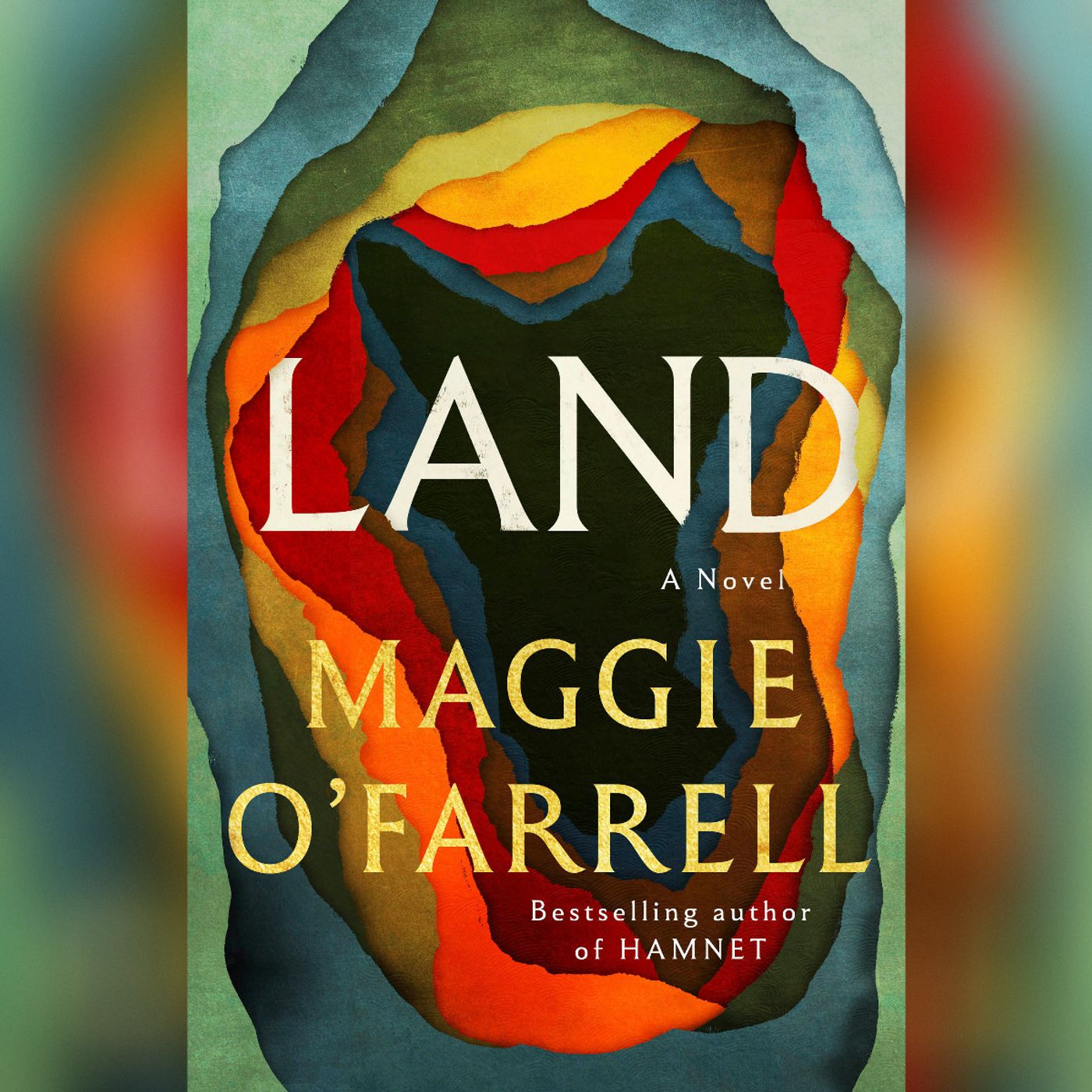
This is ALL OF IT on wnyc. I'm Alison Stewart. Coming up on the show tomorrow, comedian, actor and now Author Roy Wood Jr. Will be here to talk about his new book, the man of Many Life Lessons Disguised as a Memoir. We'll mark the 25th anniversary of Alicia Keys debut album Songs in A Minor. And poet Allen Ginsberg would have turned 100 this month. Well commemorate his birthday with writer Iris Silverberg. Plus, call in and share your favorite Ginsburg work that's on Friday's show. Now let's get this hour started with a novel set in 19th century Ireland. Author Maggie o' Farrell is coming off a big year. She received an Oscar nomination for her screenplay adapting her own novel, Hamnet, into a film. Actor Jessie Buckley won best actress for playing Agnes, the character Maggie created. And now her new novel, Land, is a New York Times bestseller. Author Ann Patchett told us on the show that it's even better than Hamnet. Land begins with a mysterious event in the mid 19th century in Ireland. Tomas and his young son Liam are hard at work creating updated maps of the country for the British. They encounter a mysterious deep well of spring water. Liam is frightened and leaves it alone. But Tomas drinks from the water and is profoundly changed. Suddenly, the previously quiet man won't stop talking. He is convince that his job is evil and doesn't want to do it anymore. He's determined to move his family, his pregnant wife, his son Liam and his daughters from Dublin to the land right by the potentially magical spring. It's a choice that will change the course of the family's lives forever. Land is Maggie o' Farrell's tenth novel. Kirkus calls the book steeped in Irish history and folklore, alive with a sense of wonder. It's out now and Maggie o' Farrell joins me in studio. It is nice to speak to you in person.
- [02:34]
Maggie O'Farrell
It's very nice to be here. Thank you.
- [02:35]
Alison Stewart
For this is your 10th novel. What was something that you wanted to achieve with this novel that you really hadn't tried before?
- [02:44]
Maggie O'Farrell
Oh, lots of things, really. I think it's really important with every book that you write, you set yourself a new hurdle to try and clear. But with this book I wanted to do two things. I wanted to tell the story of a family who are trying to come out from under the long shadow of Angol to Morr, the Great Hunger or the Great Famine as it's sometimes known in Ireland. But I also wanted to try and tell the whole history of Ireland just via one peninsula and all the people who've ever lived on it.
- [03:11]
Alison Stewart
The Great Hunger, as you mentioned, is important to this story. Will you explain to people what it was?
- [03:18]
Maggie O'Farrell
Yes. So in, in the middle of 19th century in Ireland, the crop of the potatoes was affected by a blight. So all those crops were destroyed. And most of the working people of Ireland relied on potatoes as their sole source of nutrition. And absolutely disastrous for those families, particularly in the west of Ireland, because they had not to eat. So in one sense it was a natural disaster, but it was also exacerbated and made a lot worse by Ireland's very complicated history and colonization by Britain and the government. And it was an absolute cataclysm. A million people died of nutrition or starvation related disease and a Further million or 2 million were induced to emigrate.
- [04:05]
Alison Stewart
And that plays into your novel, into why Thomas is making these maps.
- [04:11]
Maggie O'Farrell
I was interested in the story, you know, it's very. The history about history books about that time in Ireland focus, and rightly so, on the million people who died. And I think the narratives of the people who emigrated, quite a lot we are now sitting in those narratives are quite familiar to us. You know, we know that story of immigration, we know the story of starting a new country. But what interested me in writing Land is the people who stayed, people who survived and how they picked themselves up, how they came living. And I just wanted to write a novel about that resilience. Resilience seems to me a very particular characteristic of Ireland.
- [04:49]
Alison Stewart
Why do you think that is a characteristic of Ireland?
- [04:52]
Maggie O'Farrell
Possibly because they haven't had a huge amount of choice, unfortunately. I think they had to be resilient. You know, it was a terrible, terrible thing that happened. And one of the things that really inspired me to write the book was about four or five years ago I read that the population of Ireland has only now reached pre famine levels. So it's taken 170 years just for the population to recover.
- [05:15]
Alison Stewart
Wow, that's mind blowing.
- [05:18]
Maggie O'Farrell
Yeah, isn't it? Yeah.
- [05:20]
Alison Stewart
My guest is Maggie o'. Farrell. We're discussing her new novel, Land. It's about a 19th century Irish mapmaker, his family and the magical spring that changes their lives forever. It's out now. I read that this was inspired in part by your ancestors.
- [05:34]
Maggie O'Farrell
Yes, that's right. So I think all families have their myths. And when we were children we were told that one of our antecedents had. And when I was a child I heard it as drew the first ever map of Ireland. Obviously that's not true, but as a child that was the.
- [05:50]
Alison Stewart
That worked for you as a kid.
- [05:51]
Maggie O'Farrell
That was the narrative that I kind of metabolized. And so when we. I mean as you can probably tell, I was born in Ireland, but I didn't grow up there. You can tell by voice I grew up mostly in Britain, but we used to go back to Ireland every summer. And I used to imagine this ancestor of mine and I. He was kind of visually, I think based on sort of Sunday night costume dramas. So he was definitely wearing a frock coat, probably some kind of cravat. But also he was holding my school issue 30 centimeter ruler which obviously to my child mind that was how you measured a whole country. So. So he's always been somebody that's really fascinated me. And when I got a bit older obviously I realized that all that was total childhood fantasy. So I went to the archives in Dublin. Dublin archives hold the ordnance surve map records. And I wanted to try and find him. I wanted to know how, if this was true, this story. And he was quite hard to find because if you were Irish and you worked for the Ordnance Survey, which was a commission by the British government run by the British army, if you were Irish, you weren't allowed to sign your own work. So all his notes, his field notes, his measurements, his sketches, his draft maps, all were signed not by himself but by a British army officer. But I did find his signature on some kind of Memorandum for Labourers as they were called. And that was really. It was amazing kind of archival thrill, you know, the idea that I was touching a piece of paper that he had touched. But also it was incredible because I realized that there was truth in the family myth that he had. He hadn't been working alone obviously, but he had been working on the second revision to the maps of Ireland.
- [07:25]
Announcer
Do you remember when you had that in your hand?
- [07:26]
Alison Stewart
Because you were obviously by yourself. You're like looking around, you want to
- [07:30]
Maggie O'Farrell
tell somebody at that moment. Yeah, I mean archives are quite quiet but there are quite a lot of people around all researching quite abstruse thing. So I was able to tell a few people.
- [07:39]
Alison Stewart
That's exciting. The story begins with Tomas and Liam, they're working for the Ordnance Survey, the British organization. What's the purpose of the organization? What's the purpose of them drawing these maps?
- [07:53]
Maggie O'Farrell
Well, the Ordnance Survey is a mapping company, and they were commissioned by the British government originally in 1820, earlier in the century, to make a map of Ireland. It was for taxation purposes. It was for a tax called the cess tax. And even now in Ireland today, people, there's a kind of expression which, which is bad sesti, which basically means something much ruder, which I'm not going to say on air. But even now in the vocabulary in Ireland, that tax is a terrible curse even to bring up that name. So originally it was for taxation. And it took them a really long time to make the first map, partly because they decided they weren't going to employ any Irish people. And also, Ireland is a very good. Has a very complicated history with land. You know, lots of people have occupied it, lots of people have broken it up. The plantations originated in Ireland. The sort of plantation system originated there. So it's very complicated. And of course, language is very complicated. The Irish language was banned several times by the British. So place names and who owns what is, is a very fraught issue. And so my great, great grandfather was working on the second revision, which came straight after the Great Famine, because obviously those early maps were made obsolete during the disaster of the famine because the human and physical geography of Ireland completely changed during that massive population loss.
- [09:13]
Announcer
What did you learn about the study of cartography in creating this book that you didn't know before?
- [09:19]
Maggie O'Farrell
Well, I just didn't really know anything about before I wrote this book, but I became really, really absorbed in the idea of it. You know, I think I beforehand I just thought cartography was about measuring and it was about drawing, and that's what a map was. But now, having finished the book and been thinking about mapping for a really long time, it seems to me this really complicated and beautiful discipline which brings together mathematics, algebra, artistry, history, folklore, linguistics, it's incredibly complicated. And the people who worked on it had to be. I mean, they were men at the time. They had to be Renaissance men. They had to be able to do all those things.
- [09:58]
Alison Stewart
My guest is author Maggie o'. Farrell. We're discussing her new novel, Land. It's about a 19th century Irish map maker, his family, and the magical spring that changes their lives. Fore. Would you mind reading a little bit from the book? You can set this up for us, certainly.
- [10:13]
Maggie O'Farrell
So this is from right at the beginning of the book where a father and son mapping team, as you say, have been working on surveying a peninsula out in the west of Ireland. The father loves the work. The boy Liam does not. Liam trudges the distance towards the cluster of trees tucked into a hollow between two hills. He glances back to find out if his father is watching him, but sees only a gaunt outline etched against the shifting liquid sky. In an unaccustomed act of rebellion, Liam tosses a surveying pole to the ground. He's sick of carrying it, sick to his back teeth. He moves towards the copse, talking in his mind to his sister Enda, who is not quite a year older than him. Sick to my back teeth, he tells her. You should see the way he orders me about, like I'm a donkey or a dog. And you wouldn't believe the weather he has me out in. Enda had been acutely disappointed that she hadn't been taken on this mapping expedition, but their father has said it was no work for a girl. Liam will tell her when they get back that she was the lucky one getting to stay at home. He's exploring his own emerging back teeth as he steps towards the first green trees, feeling the hard pearly nubs erupting from his tender pink gums. Then he pauses. Later that night he will wonder why was it that he stopped? Or did something stop him? Which way round was it? The quality of light in the copse is immediately different, verdant and lustrous, glimmering with the trembling of the leaf canopy. The wind vanishes, as does the relentless rain. He is enclosed and enfolded, as if he has stepped inside the secret green house of a giant. Liam looks up. The tops of the trees separate and collide in the breeze, revealing and concealing the opaline sky. He sees the arrowhead leaves of an aspen entangling with the ripple edged foliage of an oak, bending together like conspirators. Underfoot. The ground is spongy with damp. It oozes from the soil, the leaf rot. It sucks and grips at his boot soles. He glances down and sees that there is a thick, luxuriant moss, glistening and emerald bright, blanketing everything. The humps of stone, the long cylinders of fallen branches, the ridge splay of roots, unidentifiable mounds that suggest loaves of bread or animal lairs or tiny graves. Liam's mind reels, flailing desperately away from the thought. Not graves. No, not here. For who would bury a child or many children here in this desolate and soggy woodland? He knows, of course, about the terrible times in this country when the great hunger struck, which happened not much more than his short lifetime ago knows about the countless starved people buried in ditches all over the land. And the rest driven away in coffin ships. These mounds are too small, much too small to be human children. And no one surely would inter their tiny starved younglings in lonely place, would they?
- [12:57]
Alison Stewart
That is Maggie o' Farrell reading from her novel Land. Tomas and his wife are both survivors of the great hunger.
- [13:06]
Announcer
How does the memory of death and
- [13:08]
Alison Stewart
extreme hunger affect both of them?
- [13:11]
Maggie O'Farrell
I think for me, the novel is a lot about the tension between speech and silence and language and being silenced. The first line of the novel was the first thing that ever came to me. I was on a train to Dublin and I'd been thinking about this novel and circling around it for a really long time. And then the first line came into my head and it was his father was ever a man of few words. And I just realized that. I think I just pictured him and his wife actually as people who hold these terrible things inside them. The terrible things they've been through, the terrible things they've witnessed. But they never let them out. They are completely silenced by them. They smother them with silence. But of course silence doesn't mean that it's not there. And all four children are aware of these gaps in their parents story and they're aware of that very, very articulate silence. And it affects them, all four of them in very different ways.
- [14:04]
Announcer
It's interesting because a lot of reviews describe Tomas as taciturn. Do you think that is who he
- [14:11]
Alison Stewart
is or is that.
- [14:13]
Announcer
Is that part of his character or is he behaving that way?
- [14:16]
Maggie O'Farrell
I think in a sense it's his coping mechanism is probably what we call it now. It wouldn't have been called that then, but I think that's the way he has to. He's had to pick himself up, he's had to carry on, he has had to form a life. You know, he's married, he's had children, he's found a job, he's coping really well. He's very, very resilient. But at the same time, yes, there is this terrible dark cloud within him and his only way to carry on is just to keep it silent.
- [14:45]
Alison Stewart
We'll have more discussing the book Land with Maggie o' Farrell after a quick break. We'll talk about the spring next. You're listening to all of it on wnyc. I'm Alison Stewart. My guest in studio is Maggie o'. Farrell. We're discussing her new novel Land it's about a 19th century Irish mapmaker, his family, and the magical spring that changes forever. Would you describe the spring to us?
- [15:20]
Maggie O'Farrell
Yes, it is a sacred well. And it. You find these all over Ireland. I mean, every town, every village will have one, either in it or near it. And some of them are really well preserved and very much part of current communities, often by the sides of roads or in fields, some of them are inside churchyards and some of them are completely neglected and overgrown. And I went on a tour about three or four years ago with my son, who's always up for a weird quest. And we went looking for, and it was specifically the ones that were forgotten about the interest of me. He did say to me on the first night we'd arrived and I was unpacking my suitcase, he said, why have you brought secateurs on this trip? And I said, because we're going to have to cut a lot of brambles, a lot of nettles to find these wells. But they, they have always fascinated me, ever since I was a really young child, because they go right back to pagan pre Christian island when, you know, there were people believed in hydromancy, there were druids, when, you know, it was worshiping the land. And what you could see and what you could touch was very much the. Their religion, in a sense. And these are a link to the island then and now, of course, mostly they're part of Catholicism and Christianity and they have saints names and people will do very complicated devotions. They will walk around them seven times, they'll say a decade, and they will ask for a cure and sometimes drink from the well, sometimes leave a piece of cloth or an offering to the well in the hope of getting some kind of cure or wish or prayer answered.
- [16:55]
Announcer
That reminds me, it's in New Mexico, it's Saint Jamayo.
- [16:58]
Alison Stewart
There's that in the United States as well. Liam. First he approaches this body of water, but he gets really scared. He screams for help. What is it about the spring and the area that it's in that is frightening to him?
- [17:16]
Maggie O'Farrell
Well, to Liam, he senses that there's something at work which he doesn't understand, and it's something powerful. And I really wanted to make a link with this novel to Irish mythology and in those mythological cycles and those stories which I had read to me as a child, but my dad would only ever read them to us. He wouldn't read us anything else. So they are all those kind of battles and giants and abductions and love affairs and wars are really sort of Part of my storytelling bedrock. And I wanted that sense also in those stories, the natural world is the supreme power. You know, humans come a very low second, really. And, you know, you have to really respect the natural world in Irish myth. And if you're ever told in an Irish myth not to cross a river or don't cut a branch from that tree, you really mustn't, because something really bad will happen to you. And I wanted to have to kind of sort of infiltrate as much of that atmosphere of animism, I suppose, and the powerful element of nature into this novel. So Liam feels that when he steps into this copse, because it's a scrap of ancient woodland that's never been cut, and it dates back to very, very sort of pre human habitation in Ireland. And he does not like it at all.
- [18:33]
Announcer
It's interesting. How do you balance the history, which is very important to get that right, with the mythology as a writer, I
- [18:41]
Maggie O'Farrell
mean, in a sense, I find the two really, really deeply intertwined. You know, you take Irish myth, for example, and Irish myth is really populated with a lot of giants. And then you think, well, actually, the Vikings had quite a strong influence in Ireland. You know, they raided it. They also came and they settled and they built Dublin. They intermarried and, you know, think, are those giants actually just Norsemen? Are they Vikings? So there's always. There's always a kind of historical fact, application of myth. And going back to the holy wells, somebody recently did an analysis of some of the water of these wells, and some of them have really strong reputations for curing particular things. There's one in County Cork that's been said for millennia to cure madness. And when they examined the water, it was found it had really high levels of lithium, which even now is used for treatment of mental illness. So I just. I love that fact. Because you think, you know, those druids, they were onto something.
- [19:40]
Alison Stewart
Thomas goes to the spring. He kind of has a revelation that changes him. He won't stop talking, he won't sleep. He has ideas and plans. How does his transformation. What's different about him? What's different about him as a person?
- [19:59]
Maggie O'Farrell
Well, after he has drunk from the well, which I think before he drank now, he would not have believed in any kind of mystical powers that the world has after that. Yes, as you say, he cannot stop talking. He's also happy. He's really delighted to see his son. And his son is very taken aback because his father's being affectionate with him. He wants to talk. And he also Tomas says that he's going to give up working for the Redcoats, as he called them, the British, the ordinance survey. And he does not want to make their maps anymore. He wants to make his own. He wants to make a map of ancient Ireland and all those sacred sites that still exist in Ireland today. So he said, I'm not gonna do the British colonialist map. I'm gonna do my own map.
- [20:39]
Alison Stewart
We're gonna let everybody just have to wait and read the book to find out the end, so we'll stop there. But I did want to talk about your writing about the land. What role does nature play in your writing? Because it's a key part of Hamnet as well. It's a key part of this novel. There are pages, beautiful pages, written about the natural world.
- [21:02]
Maggie O'Farrell
Yes. I think, you know, land. I always knew the book was going to be called Land. And land is a very potent concept in Ireland. You know, who owns it, who's taken it away, what it means to people in Ireland. It's a very, very strong concept and a very fraught concept as well, historically. And, you know, I also wanted to write a kind of contrast in a sense, between the vast timescale of a landscape versus the almost butterfly lives of the humans who live upon it.
- [21:36]
Alison Stewart
There's a difference between land and nature, though.
- [21:39]
Maggie O'Farrell
That's true. I think probably it goes back to the Irish mythology. I wanted to bring in as much as I could of that atmosphere. And the natural world is so powerful in Irish mythology.
- [21:52]
Announcer
What's your relationship to Ireland? Because as you said, you're from Ireland,
- [21:56]
Alison Stewart
but you grew up in Britain.
- [21:57]
Maggie O'Farrell
Yeah. Scotland and then Wales. Yeah. It's a complicated thing. You know, I think when most people ask me where I'm from, I think they're expecting a one word answer, but I always have to give a kind of paragraph. And I think if you. I think if you don't grow up where you were born, or if your accent, as in my case, doesn't match your passport, I think you always do have sense of dislocation or almost a kind of doppelganger or ghost self who walks along beside you as if you know, the person who you might have been if you'd stayed. You know, I often wonder if, you know, what our lives would have been like if we hadn't left Ireland or if we'd stayed. I mean, I'd sound completely different for a start.
- [22:37]
Announcer
Did you go? You obviously went back for this book.
- [22:39]
Maggie O'Farrell
Yes. Oh, yeah.
- [22:42]
Announcer
What area stays with you from your trip, from your research? Trips to Ireland for this book.
- [22:49]
Maggie O'Farrell
Oh, I mean, the peninsula in the book is fictitious. It isn't. It's based on several places, but it is fictitious. I don't name it. And actually the word Ireland and Irish doesn't appear in the novel at all. And the word Britain and British doesn't appear. And it's partly because I wanted to ask readers to imagine a sense of Maplessness. You know, it's so hard for us now when we all have a little GPS in our pockets at all times. We all, you know, when mapping is done by satellite and drone, it's really hard for us to imagine a time when maps did not exist, when we navigated by asking people or by the stars, when we didn't know what was over that next hill unless we climbed that hill to look. So I wanted to ask readers. Readers will vaguely know what they are. They know it's on the west coast of Ireland, but they don't really know for sure where they are because I wanted that sense of slightly disorientation.
- [23:38]
Announcer
The name of the book is Land. I'm speaking with author Maggie o'. Farrell. You were kind enough to offer some suggestions for our all of It Summer Reading Challenge listeners. There's still time to sign up. Head to wnyc.org summerreadingchallenge okay, let's run through the categories. First, a book published in 2026. You could read Land or what would you suggest?
- [24:01]
Maggie O'Farrell
This was a really hard one because there have been amazing books published this year. But I think I would have to go with Tayari Jones's Kin, which is an absolute, I mean, you know, I would read anything. Tara Jones. If she wants to publish a shopping list, I'm there. Kin is a really fascinating, beautiful, interrogative novel about the friendship between two young girls and the different paths their lives take due to partly economic circumstances to do with parental input. But it's, it's just a beautiful evocation of lives and the roads forks. You can take in different roads.
- [24:33]
Announcer
Next, a book about U.S. history or American historical fiction.
- [24:38]
Maggie O'Farrell
I would go for Lonesome dove by Larry McMurtry. A friend of mine who, who's reading tastes I really trust came across a bookshop recently holding this 800 page book about cowboys. And I said really? About cowboy? Cowboys?
- [24:54]
Commercial Voice
Are you sure?
- [24:55]
Maggie O'Farrell
Anyway, I was totally hooked by about page 50. And it's an incredible book about frontier America and the kind of forming of, of a country really. And also about the friendship between two men and the trust between them, which is just really moving Next is a
- [25:12]
Announcer
book set in or written by an author from one of the 48 World cup countries.
- [25:18]
Maggie O'Farrell
We can only do that this year. I am gonna have to go for Scotland because I live in Scotland. And it's a very beautiful novel called Clear by a writer called Carys Davis. And it's about a reverend minister who lands on an almost uninhabited Hebridean island. Interesting things ensue. Wonderful.
- [25:38]
Alison Stewart
Next, a classic.
- [25:40]
Maggie O'Farrell
Again, this was a really hard one to narrow down to one, but I think I'd go for the Color Purple by Alice Walker. It's a good story, an unbelievably brilliant book, and I have to read it about every two or three years. And it's epistolary, which a lot of people slightly forget. All told in letters. And again, it's about resilience, really. The incredible resilience of Seeley.
- [26:03]
Alison Stewart
And, of course, the mysticism is there, too.
- [26:05]
Maggie O'Farrell
That's true. Yeah. It's just stupendous.
- [26:08]
Alison Stewart
Fifth, a work of genre fiction, romance. It could be sci fi. What do you think? Horror.
- [26:15]
Maggie O'Farrell
People call this book Sci fi. I think it's more horror, but it's Kindred by Octavia Butler. I mean, you have to be. I wouldn't read it if you're in on your own in the house. It's really frightening. But it's about a woman who time travels back to her ancestry who are enslaved people, and she finds out what it's like to live day to day as being an enslaved person. And it's just unbelievably brilliant and unbelievably upsetting.
- [26:42]
Alison Stewart
And finally, a book about or set
- [26:45]
Maggie O'Farrell
in New York City, Colum McCann's this side of Brightness, which is a novel, I think, from maybe around 2000, the year 2000, and it's about the men who dug the tunnels for the subway system. Really, really wonderful novel.
- [27:00]
Alison Stewart
That's an excellent suggestion. Thank you so much for doing that. We appreciate it. I want to get this in before we wrap up. We haven't spoken to you since the film adaptation of Hamnet. That's a big deal. Now that you've had a little time to reflect, what was the best part of that experience? Working with Chloe Zhao, watching Jessie Buckley win best Actress or some little thing that we didn't see.
- [27:30]
Maggie O'Farrell
Oh, goodness. It was all. It was a very, very wild ride and not something I ever really expected, but it was all really joyous. I felt like I learned so much. You know, the reason why I said yes to writing screenplay was because I just turned 50 and I thought at this point in life I should be learning new things, I should be trying new things. And I really, you know, working with Chloe was incredible. Certainly. I think, I think watching Jessie win an Oscar was probably the high point for me. So well deserved.
- [27:57]
Alison Stewart
The name of the new novel is Land. It's by my guest, Maggie Arthur o', Farrell, thank you so much for joining us in studio. We really appreciate your time.
- [28:06]
Maggie O'Farrell
It's my pleasure. Thanks for having me.
- [28:09]
Commercial Voice
1, 2, 1, 2, 3, 4. Gimme a break, give me a break? Break me off a piece of that Kit Kat bar? Gimme a break, give me a break? Break me off a piece of that kit? The chocolate crispy taste gonna make your day and wherever you go you hear the people say Give me a break, give me a break? Break me off a piece of that Kit Kat bar Have a break, have a Kit Kat. The colonels cooked up a new $10 bucket of the day just for you. Monday 24 nuggets for $10. Tuesday 8 piece fried chicken for $10. Wednesday 10 wings for $10. Thursday 8 tenders for $10. Friday 24 nuggets for O didn't you $10 finger licking machine the $10 bucket of the day deal every weekday only at KFC it's finger licking goo prices
- [29:04]
Maggie O'Farrell
and participation variable supplies last not available on third party ordering platforms.
- [29:07]
Commercial Voice
Tax extra.