← All Of It with Alison Stewart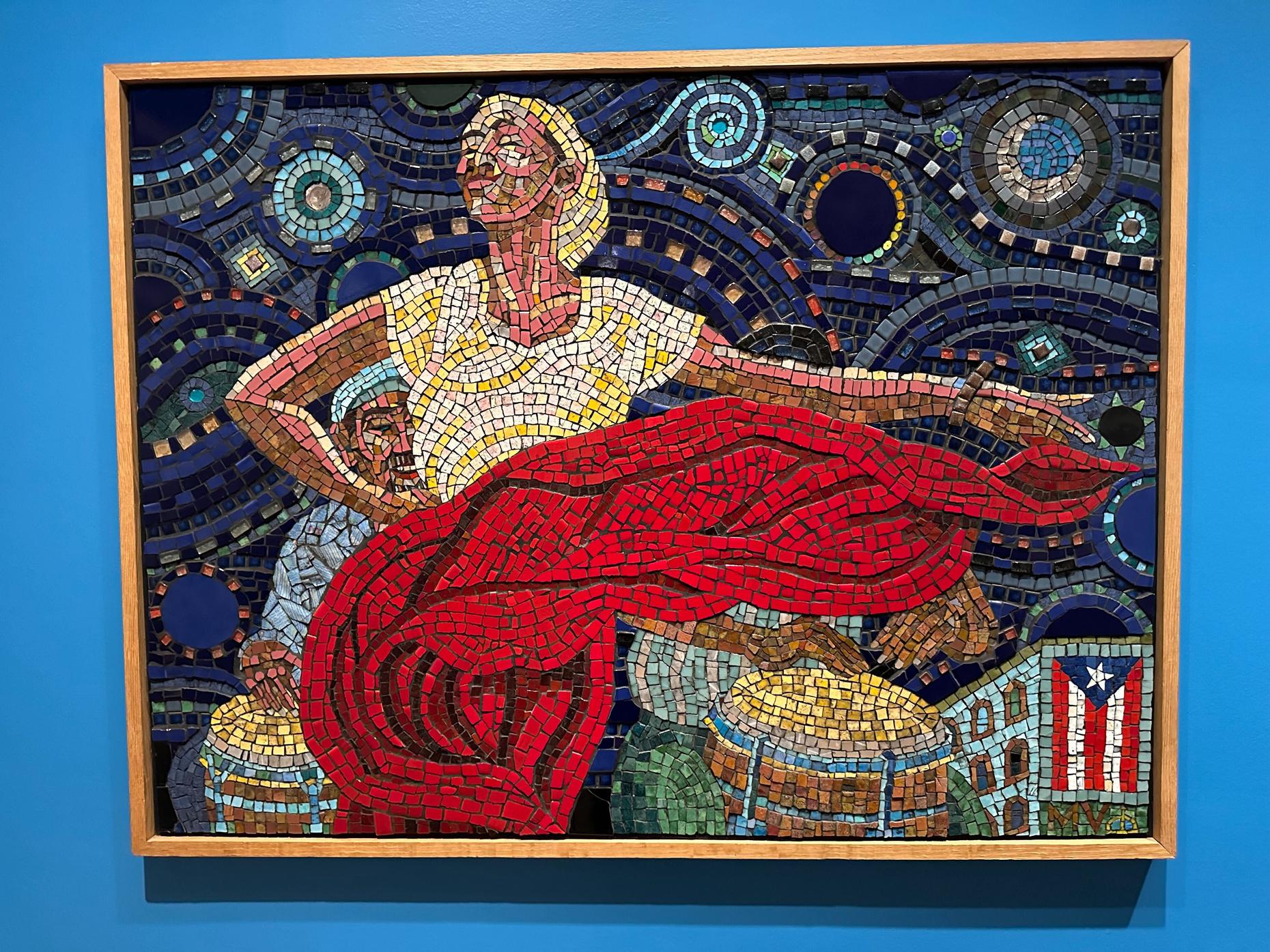
All Of It with Alison Stewart
Manny Vega's Stunning New York Mosaics
00:20:33
Bronx-born artist Manny Vega has been celebrating New York's immigrant and Black and brown communities for decades through his stunning murals, which can be seen all around East Harlem.
Loading summary
Transcript52 lines
- [00:02]
Commercial Narrator
Surprise beach day. No excuses. I'm in. Gimme five. With Bix Soleil Glide Razor, you'll have hydrated, smooth skin that's ready to go on the fly. No shave cream needed. You can prep, shave and hydrate all in one step thanks to moisture bars that hydrate your skin during and after shaving. 5 flexible blades hug your skin for a close shave. Glide into smooth. It's your time to shine with bixsolil. Buy now at Amazon and Walmart. Ready? Your skin looks amazing. So smooth and beach ready.
- [00:29]
Manny Vega
Let's go.
- [00:31]
Casual Friend/Listener
I' ma put you on, nephew.
- [00:33]
Mancho Lopez
All right, unk.
- [00:34]
Alison Stewart
Welcome to McDonald's. Can I take your order, miss?
- [00:36]
Casual Friend/Listener
I've been hitting up McDonald's for years. Now it's back. We need snack wraps. What's a snack wrap? It's the return of something great. Snack wrap is back.
- [00:47]
Old Navy Advertiser
Some days call for sleek and straight, others for slouchy and relaxed. Whatever your vibe, Old Navy has the denim fits to match. From extra high rise to barrel. It's not just a mood, it's a whole style range. And with jeans Starting at just $22, you can collect them all. Snatched waist go extra high rise, straight lived in staple vintage slim, low slung and laid back, slouchy wide. You've got range. Your denim drawer should too. Premium fabric deluxe details your perfect pair or weights. Shop in store or online@oldnavy.com oh my gosh.
- [01:18]
Marshall's Advertiser
Have you been to Marshall's lately? They have all the brand name and designer pieces you love, but without the jaw dropping price tags. Alright, so here's the truth. You should never have to compromise between quality and price. And at Marshall's, you don't have to. Marshalls believes everyone deserves access to the good stuff and that's why their buyers hustle around the clock to make it happen for you. Visit a Marshalls store near you or shop online@marshalls.com.
- [01:49]
Mancho Lopez
Listener supported WNYC studios.
- [02:03]
Alison Stewart
This is all of It on WNYC. I'm Alison Stewart. Manny Vega is a Bronx born artist who has created murals and mosaics that decorate our city. From outside storefronts in East Harlem to the 110th and Lexington subway stop. You know you've seen it. Now in honor of its centennial, the Museum of the City of New York has selected Manny as its first ever artist in residence. And to kick things off, they're displaying some of Manny's work in a special exhibit titled Byzantine New York by Manny Vega. The exhibit, curated by Mancho Lopez, is organized around three of the central themes of Manny's work figures, justice and music. Glimmering and colorful mosaics of icons and symbolic figures and regular old folks are juxtaposed with incredibly detailed black and white drawings and prints.
- [02:52]
Mancho Lopez
All.
- [02:53]
Alison Stewart
All of it joins. All of it draws on the energy, culture, and history of El Barrio and Manny's own Nuyorican roots. You can check out Byzantine Bembe through December of next year. Joining me now to help celebrate the kickoff of the exhibit is curator Mancho Lopez. Mancho, welcome to the studio. Hello. Nice to see you. Saw you on Zoom last time. Nice to see you in person. And Manny Vega. Manny, lovely to meet you.
- [03:13]
Manny Vega
Saludos. Good morning, everyone.
- [03:16]
Alison Stewart
Why is we're going to talk about you like you're not here for a minute. Why is Manny the right fit for the first ever artist in residence?
- [03:23]
Mancho Lopez
Because the museum has turned 100, and all those hundred years, we have been located in El Barrio. It's a very interesting history, our relationship with the neighborhood. And so we decided that to celebrate ourselves, we are going to celebrate El Barrio. And who better than Manny to do that? So it's a pivoting into the streets of our neighborhood.
- [03:57]
Alison Stewart
Manny, what does it mean to you to be selected as the first ever artist in residence?
- [04:01]
Manny Vega
Oh, I'm extremely honored. And not only because of the prestige of this museum, that I've had this, you know, relationships from childhood, but they're saluting me for being me, you know, for just being, you know, in my maniness, you know, and that's a good message, you know, to send out to the art world that, you know, that I'm not chasing, you know, an art scene, that I'm just busy being me, being a happy Buddha in the streets of New York, and that New York is just. Has always been and full of inspiration.
- [04:39]
Alison Stewart
How did mosaics come to be your art form of choice, Manny?
- [04:42]
Manny Vega
Well, that's a good question. I used to do a lot of beadwork, you know, in the early 90s, because it was something that my sisters were doing. But as a public artist, I was interested in the whole theme of permanency, you know, and intrigued with history, that 3,000 years ago, people were clever enough to use little pieces of glass and stone to actually tell stories that become the account of, you know, who they were then. And so in this very wonderful way, embracing history and an old work ethic by creating my work in that same technique from 3,000 years ago. So I'm inviting myself to go back in time, but I'm telling today's stories, and that's why I'm calling it Byzantine Hip Hop. But now for this exhibit, Byzantine Bembe, because it ties into my spirituality.
- [05:39]
Alison Stewart
We'll talk about that in a minute. I want to pivot off of what something you just said, Manny to Mancho. How is it. Why is it that Manny's art feels extremely contemporary, but it also feels timeless?
- [05:53]
Mancho Lopez
Yes, because there is a playfulness. I mean, one of the reasons is because I feel that there is a playfulness to it and a hope. And I often wonder, for example, this idea that mosaics, beadworks, even the type of drawings that Mani does, they are all works put together out of fragments. And there is a playfulness in that. There is a challenge. So those beads and the tiles, they are a kind of puzzle. It's a challenge. And I think that that's very attractive. I think that the fragmentation that becomes one, it's something that invites all of us as spectators of the drama, to really complete the story. It's not something that it's fully and absolutely done. It's something that always invites you. Invites your brain to complete it and to really understand that from all those little fragments, there is something beautiful happening in front of you, and there is a pleasure to it. I think that there is a universal, biological, brainy pleasure to appreciating those types of art forms.
- [07:14]
Alison Stewart
It also feels so much like New York, each little piece by itself, but all together, it makes the whole city. It makes the whole picture. You know, we're all one. Especially like a subway car. We're all one person. Everybody's trying to go where they're gonna go, but together we make up all of New York. And that's what the mosaics make me think of.
- [07:30]
Mancho Lopez
And it's really what Manny was saying. It's also really interesting in the sense that it's a very. Like, we see mosaics around the city. They're beautiful mosaics around many other places in the city. For example, on 8th Street, St. Mark's you can see very beautiful mosaics. At the same time, what man is doing, it's really old. This is not putting together mosaics in this very modern way that we can see around the city. This is the Byzantine style, and it's mind blowing. And Mani went and sat in Ravenna for a long time, learning from the old masters back there. And so it's really interesting that in El Barrio, in the Upper west side, we have someone, Manny, that it's doing that. It's doing something that harkens back for thousands of years ago. And I think that it's also, for me, super interesting the role of the museum in celebrating that type of art form, because it's really like we are the, you know, the proto, super modern city that everybody looks for us, like we are the future of the world. But that future that we represent, it's really anchored in very, very old traditions. And this is one of them. So I think that we are really trying to. Sometimes we are very microscopic in the museum. We zoom in here, we' zooming out with the work of Mani.
- [09:09]
Alison Stewart
The name of the exhibit is Byzantine Bembe, New York, by Manny Vega. My guest is Manny Vega, the artist in residence, and Mancho Lopez, the curator. Manny, what's your process for selecting materials when you decide when you begin a mosaic?
- [09:25]
Manny Vega
So, you know, we as Puerto Ricans, especially New York, we have. We have a culture of hoarding, you know, repurposing, of repurposing, you know, of living with these clutters, you know, because somehow we know that it's purposeful. And so I live, you know, amassing art supplies and having literally a dialogue, a conversation with the materials where the actual materials themselves suggest to me what the next project is going to be. I work with synergy. Synergy, meaning I work with the enthusiasm of the last project that I created. I mainly segue to the next project, and I live that way. And that's why I've been so prolific. I don't look back. And so this, this Moncho, you know, and his curators who came to my apartment, they were intrigued with that, you know, and, you know, they made me stop for a second to turn around and look at this mountain of work that I've been amassing throughout the years. Cause again, I don't create work to be a part of an art scene. I am truly entertained by creating work. You know, it's not hard work. I call it hard fun. I'm just a big nene. I'm just a big kid. My favorite catchphrase to people is monkey see, monkey do. Why? Because I'm self taught. I'm a good observer, I'm a good listener. Okay. And I'm continuously, you know, a student, you know, and New York is, you know, the perpetual university for sure. You know, it all depends on how attentive you are. You know, you could be a writer, a dancer, you could be a painter and be perpetually entertained by what's in front of you. It all depends on what you're paying attention to.
- [11:29]
Alison Stewart
You can absorb so much in the city.
- [11:30]
Manny Vega
The other thing that I want to emphasize is the urgency of me being Manny Vega now, because it's all about reconfigurating this label called America, okay? That New York and El Barrio is a huge contribution to the conversation of homeland and America, you know? And so this is where, like, I'm really doing this with a lot of love, you know, and a lot of just pure. Pure intention, good intention. Because again, we're formulating who we are. We have to remember that we're only 500 years old compared to the rest of the world. We're still a work in progress. And so, you know, this is where I see all this polarity and all the difficulty that we're having as just part of our growth process, but always with a good intention of developing this country to be what it could be.
- [12:29]
Alison Stewart
If you lead with heart, you can have any conversation. I really believe.
- [12:32]
Manny Vega
Well, we are bilingual, we're trilingual. We live under each other's noses. We are living diaspora. I was born and raised in the city, in the projects, and so my relatives are my neighbors. They continue to be. And so that is where I live, celebrating not only in New York, but now everywhere in the world that I. That I did, I go. But New York has always been the source of that.
- [12:58]
Alison Stewart
Yeah, Moncho. The exhibit is organized around three themes. Music, figures, Justice, Musica, Figueras, and Justicia. How did you land on the themes?
- [13:10]
Mancho Lopez
Oh, Mani has so much work in his apartment, and he didn't say, but he storages some of the tiles in his balcony. So when you go out of his apartment to his balcony, there are all these tiles in there. And at some point, I had, as in every exhibition, go through the very painful and taxing process of deciding what to leave out. And what I saw was that there are those three threads. Justicia museke figuras are. You know, you can see them over and over and over. In Mani's work, there is an impulse and an attraction towards the human body, which is figuras. And Mani has a very strict work ethic. He sees the human body as a place where to exercise, in which to exercise. Like his mastery of these art forms that he practices. Like, he's constantly drawing people at the Met, in the streets, the subway. So figuras is there. Like you're gonna see the human body all over his work over and over. Then music. You cannot separate rhythm, particularly from the work that he does, and that's evident all throughout. And then finally, the sense of justice, which is very, very intimately related to his spiritual practice. Mani spends a lot of time also in Brazil. And he has special relationships, I will say, with a few orichas and a few specific people. But I think that what brings them all together is that sense of balance and that sense, again, of freedom, of things happening at their proper moment, waiting for the right time with a sense of balance. And that's a reading of justice.
- [15:20]
Alison Stewart
Manny, someone has texted in a question for you, says Manny. For listeners who are less familiar, like me, could Manny please speak to the term Bembe?
- [15:31]
Manny Vega
Okay. Bembe comes from, right? Our diaspora existence. It's literally like an African word, and it means a celebration connected to your guardian entities, your spirits and your ancestors. The Mexicans, for example, they. The dead, right? They have a big feast in the cemetery. And it's the same thing with Afro diaspora communities, where we have ceremonies, where we're specifically creating a space for not only our ancestors, but the guardian spirits that look out for us, that protect us.
- [16:09]
Mancho Lopez
Bembe is a party also. So when in the Puerto Rican Dominican community, Cubans, they say, I'm going to that bembe, or, hey, did you get to Manny's party? Oh, yeah, I got there late, but there was a bembe already. It's a party.
- [16:26]
Manny Vega
It's a spiritual hipster term because, you know, spirit needs to be hip as well, especially in New York.
- [16:34]
Casual Friend/Listener
But.
- [16:34]
Manny Vega
But there's, you know, there are other themes besides the three that are very prominent in my work. And the principal one that I always gravitate to is, you know, I'm a Puerto Rican male from the streets of the Bronx. You know, very edgy, very New York story. But my contact, especially with my mother and the Brazilian community has made me a champion of the feminine divine, of reminding women of their power of balance, of balancing this country by reminding women to step up into their power and to govern, you know, and to, you know, contribute. So we are healthier as a people, as a nation.
- [17:19]
Alison Stewart
You know, you mentioned it earlier, your spirituality and the importance of it and your faith to you. How do you capture that in your work? How does your spirituality infuse your work or motivate your work in any way?
- [17:35]
Manny Vega
Well, you know, I realized that I've been doing this so long that I'm just a creature of habit. But I'm very brave about, you know, depicting these images that people are reluctant to depict. You know, again, celebrating women, celebrating spirit, you know, because, you know, we are. We're Americans, you know, we want to be pragmatic. I have to remind everybody that for me, two plus two is still four, okay? My spiritual Practice is actually very, very grounded in reality. You know, I demand reality from everybody, and I demand justice from everybody because it's what I provide. Respect, dignity, morale, ethics. You know, back to the simple basics that to me, is spiritual practice. To be polite every day, to say good morning, you know, that's spiritual practice. Very. You know, I'm actually becoming a nerd about it, you know, and it's a good time to do that. You know, I can't ask people to do that. I have to be the first one to do that. Okay. Because when I'm doing that for people and with people, I'm setting the example, especially to children. You know, I'm creating this movement with young folks not only to recognize their capacity, but to recognize the power of grace, you know, of gratitude, you know, of self respect. You know, when does a child, you know, recognize, you know, self respect and justice? When does a child ask for justice? You see, I want to put those. Those configurations in front of them right away, you know, and trust, you know, because that's what people need, is that invitation, you know, and so I'm having this wonderful relationship with this museum and making them the perpetual invitation, especially to el barrio, but the entire city and the country to benefit Manja.
- [19:33]
Alison Stewart
What? You know, so many of us have seen Manny's work in public spaces. Seeing it in a museum setting. How does it. What's unique about it? What's unique about seeing Manny's work in this very specific setting? Or unique about the experience?
- [19:54]
Mancho Lopez
So we worked with a firm of Puerto Rican designers from Marvel Architects, that they went to Manny's apartment so that we could sort of reproduce the experience of his brain and his living quarters in the gallery where the show is happening. Because trying to translate it or to showcase the work in your usual white box wasn't going to work. And so the gallery itself is full of colors, which Manny selected. And he has a feeling of being a workshop. And so it's. When people go there, they need to understand that it's going to feel a little bit like Manny's apartment. And so that's what we were going after, because his work is very contextual. So it's either on the street or it's very intimate. It's part of a meditative practice. So now one thing that I do as a curator and that the museum is trying to do more and more is that this opening that we had is the beginning of this project. We are going to have a year of programming. People should Visit the website mcny.org to. To keep abreast and updated. Of all the programs that we're going to have that Manny is going to be curating, Mani is going to invite other people, other artists into the museum and it's going to be this massive multi generational meditation through art.
- [21:56]
Casual Friend/Listener
Could be Bembe.
- [21:57]
Alison Stewart
Also, the name of the exhibit is Byzantine Bembe, New York, by Manny Vega. It is on view now at the Museum of the City of New York. It sounds like it is evolving and living and breathing throughout the year. My guests have been artist Manny Vega and curator Mancho Lopez. Thank you for coming to the studio.
- [22:15]
Mancho Lopez
Gracias.
- [22:15]
Manny Vega
Gracias, Allison. Gracias, New York.
- [22:18]
Alison Stewart
There's more, all of it on the way, right after the news.
- [22:30]
Commercial Narrator
Surprise Beach Day. No excuses. I'm in. Gimme five. With Bix Soleil Glide Razor, you'll have hydrated, smooth skin that's ready to go on the fly. No shave cream needed. You can prep, shave and hydrate all in one step thanks to moisture bars that hydrate your skin during and after shaving. 5 flexible blades hug your skin for a close shave. Glide into smooth. It's your time to shine with Bixsolate. Buy now at Amazon and Walmart. Ready? Your skin looks amazing. So smooth and beach ready.
- [22:57]
Manny Vega
Let's go.
- [22:59]
Casual Friend/Listener
I'm gonna put you on, nephew.
- [23:00]
Mancho Lopez
All right, unc.
- [23:01]
Alison Stewart
Welcome to McDonald's. Can I take your order, miss?
- [23:03]
Casual Friend/Listener
I've been hitting up McDonald's for years. Now it's back. We need snack wraps. What's a snack wrap? It's the return of something great. Snack wrap is.