Loading summary
Transcript53 lines
- [00:00]
Progressive Insurance Announcer
WNYC Studios is brought to you by Progressive Insurance. Insurance isn't one size fits all. That's why drivers have enjoyed Progressive's name your price tool for years. Now. With the Name youe Price Tool, you tell them what you want to pay and they'll show you options that fit your budget. So whether you're picking out your first policy or just looking for something that works better for you and your family, they make it easy to see your options. Visit progressive.com, find a rate that works for you with the Name youe Price Tool. Progressive Casualty Insurance Company and affiliates Price and Coverage Match limited by state law.
- [00:41]
Alison Stewart
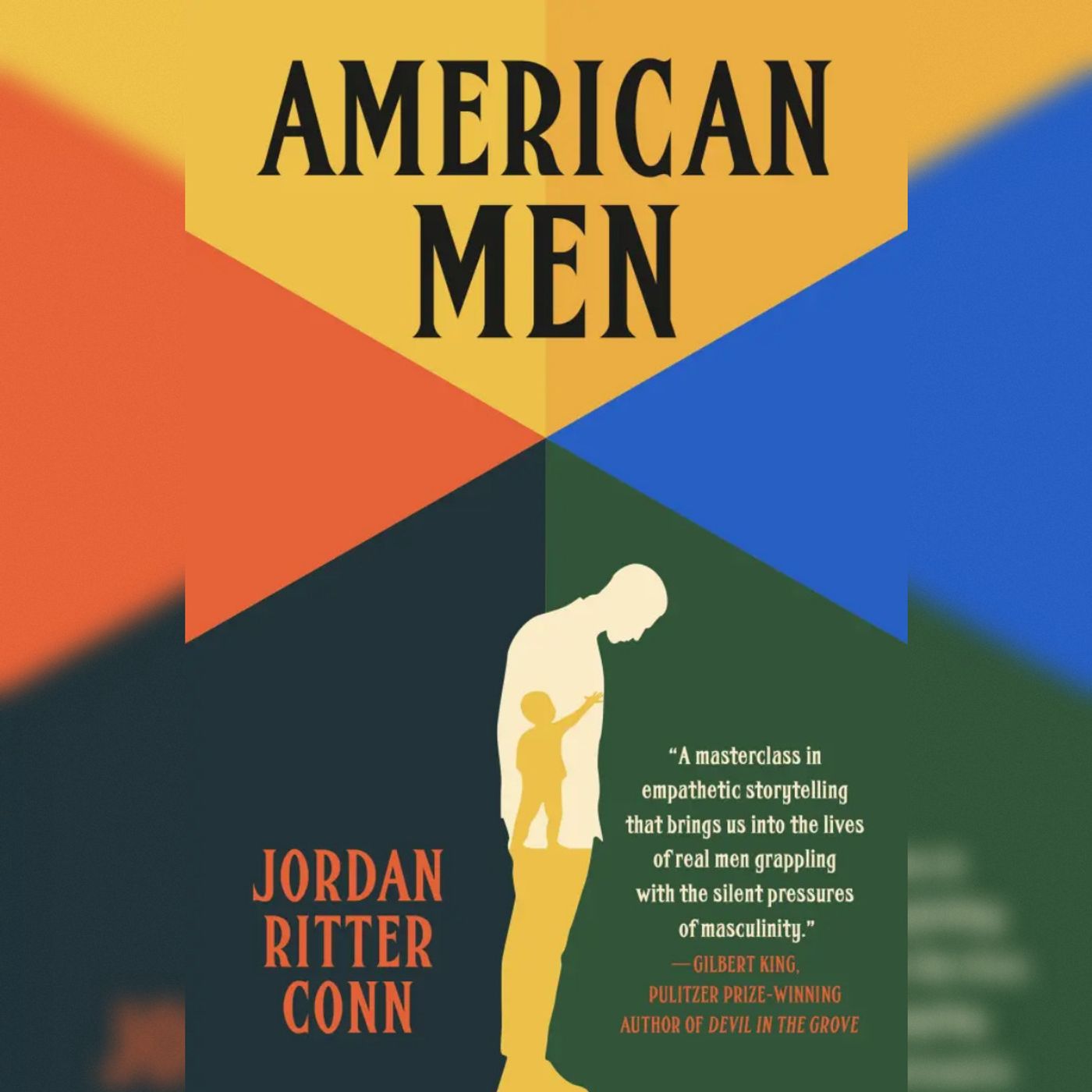
This is all of it on wnyc. I'm Alison Stewart. We continue this hour on masculinity with a journalistic look at the ways different men experience it. Journalist Jordan Ritter Khan decided to follow four very different men over the course of a few years to document what goes on in the average man's life and to understand what lessons they have received about what it means to be a man. There's Gideon, a handsome West Point graduate who is having marital troubles. There's Joseph, a law student grappling with childhood trauma. There's Ryan, a fighter who comes to grips with his sexuality. And then there's Nate, a black trans man who has decided what aspects of masculinity he wants to embrace in his new life. When Jordan joined us to discuss his book American Men, we took calls from listeners. But as a reminder, this is an encore presentation and we're not taking calls today. Here's my conversation with Jordan Ritter. Khan, When did you first get interested in writing about masculinity?
- [01:47]
Jordan Ritter Khan
You know, I've been fascinated by it for almost my entire life. I'm going back to when I was a kid. I had a lot of really close male friendships and would hear often thinking about men, not really men and boys, not having those kind of like that kind of emotional intimacy, not, not being willing to kind of open up, not being willing to be vulnerable. And as I became a journalist, I, I found myself quickly drawn to the kind of stories where you can sink very, very deeply into another person's life. And because I've, I've written a lot about sports. Yeah, I've, I've often found myself writing the stories of men and writing stories where men are open and vulnerable in ways that we're often told they don't like to be. And, and so I found my way to, through kind of that process of telling these intimate stories over and over again.
- [02:32]
Alison Stewart
When did you realize that personal stories were the way you were going to tell this?
- [02:36]
Jordan Ritter Khan
Yeah, I think that that's. As a reader, that's what I love. You know, I love. I want to get swept away by a story. I think that you're reading nonfiction books that grapple with big ideas in a really explicit way can be interesting and paradigm shifting. But I'm moved by story, and I wanted to tell ordinary people's stories. And these four men were willing to kind of let me. Let me kind of tell their story with a level of intimacy and depth that. That I knew that I would respond to as a reader and that I knew that I would love to write
- [03:10]
Alison Stewart
as well as a journalist. What were some of the questions you had about masculinity at this point?
- [03:16]
Jordan Ritter Khan
Yeah, you know, I. I wanted to. I wanted to kind of explore this idea that I didn't really find my way toward until. Until I got going on the book, but this idea of how we all kind of inherit a certain ideal of what a man is supposed to be. And that can look different depending on your family, depending on your cultural context. But we all have these ideas from the time we're very young children around who we're supposed to be, and we all, at some point or another, do not live up to that idea. We all kind of find ourselves grappling with our own failures to kind of meet this. This ideal of what a man is supposed to be. And I wanted to be able to kind of explore what happens in that space. What happens when you are trying to figure out your relationship to the man that you've been taught. Supposed to be from the time you were a very young child.
- [04:03]
Alison Stewart
I have to ask the question. You look at it, you think, really, another book about men. You know, everything is geared towards men. Our healthcare system, our laws, even the current state of politics. Why is this book important now?
- [04:16]
Jordan Ritter Khan
Well, you know, we're about half the population. It feels like there's just that. Yeah, I think that just. Just telling this. Telling stories about us in ways that get at pieces of ourselves that we don't often like to show that. Get at, you know, the ways that we grapple with. With traumatic experiences, the ways that we grapple with kind of power that we have in some situations, with feelings of powerlessness and others, what that does to us, getting into stories in a way that kind of shows some of the softer sides of. Of kind of our. Our experiences that shows the ways in which we kind of long for and grasp our way toward human connection. You fe. It was kind of Exploring a side of men's experiences that sometimes we don't like to show, that sometimes we don't like to tell those stories, but they're so central to who we are.
- [05:10]
Alison Stewart
My guest is journalist Jordan Ritter Kahn. His book American Men looks at four men over the course of many years to consider masculinity in modern times. How did you decide what four men to cover in your book?
- [05:21]
Jordan Ritter Khan
It was a long process. I cast a very, very wide net. I talked to dozens, more than 50. But I knew that I wanted stories that would complement each other. You know, I, I knew that I wanted one man who had some relation, direct relationship to violence. And, and so, and Ryan, he's, he's a, a gay man who, the, the book follows him during a time when he's, he's closeted, but he's also getting in a lot of bar fights and, and kind of navigating, you know, trying to kind of figure out his, his own identity. I knew that I wanted men who had experience with the military, just because that's so much of how we tend to define masculinity in this country. And so two of them, Gideon and Joseph, are, are, are both veterans. Gideon A. West knew that I wanted a trans man. I, I wanted to, to tell the story of, of a man who had kind of embraced masculinity in a way that was, you know, more intentional, that so much of kind of gender is just kind of the waters that we are swimming in from the time we're very, very young children. So much of it is subconscious. And I, I wanted an experience to, to write about the experience of someone who has had to be a bit more conscious in kind of how he wanted to embrace masculinity. I, I also wanted someone in kind of in the evangelical church, just because that in this country is a huge kind of arena for masculine, a certain idea of masculinity to be on display. And, and we have that in Joseph. So it was really, you know, ultimately there was kind of this idea that everyone's story is interesting enough to be told if they are willing to dig into the really deep stuff. And so finding the men who were willing to do that, whose stories would complement each other, was kind of how I found my way to these four.
- [07:02]
Alison Stewart
You were with them for four years?
- [07:03]
Jordan Ritter Khan
Yes, five.
- [07:05]
Alison Stewart
Five years. Five years. What did those five years look like for you as a journalist? How did you go about tracking their lives?
- [07:12]
Jordan Ritter Khan
Sure, you know, it was going to see them often and, and, and just being. When I would be with them, it would just be as much time as you'll give me. I want to be there as much as we can be together. I want to be there as much as I can be interviewing you about your past life, but also kind of following you through your life right now. And it's a lot to ask. I mean, they opened themselves up to, you know, in terms of the amount of time, in terms of the amount of vulnerability. They opened themselves up to an incredible degree. And so it was just checking in, constantly, making sure that when they were ready for me to come and be with them, I could, you know, be on that plane and be there with them in person as much as I could. And we could.
- [07:53]
Alison Stewart
Did you ever see them making a mistake? You saw the mistake coming down the road and you didn't. But you have to kind of be a journalist and watch it happen, you
- [08:02]
Jordan Ritter Khan
know, that's such a good question. I, at times, I certainly. I certainly feel. Feel like that. But also, you know, I. I'm a journalist, but I also. When you are writing about people so intimately, there are moments where you. You come to really care for them. And so I. I would talk with them about, like, what's going on in their lives and. And kind of try to. I wouldn't. To be totally removed from this. Like, they become so. Such a huge part of your life, and you care for them so deeply that you want to kind of. When you see that decision coming down the pike, you want to talk it through in a way that might kind of allow them to see another path.
- [08:48]
Alison Stewart
You allowed the men to look at their. The way you have written about them, and it's not always flattering what you wrote about them. Did you receive any pushback?
- [08:58]
Jordan Ritter Khan
You know, I was surprised by the degree to which I did not. Except there was. There was one moment with one man who. And what I did is I read it out loud to them the first time because I wanted to see their faces when they heard it. I wanted to experience it in the moment. And. But one man at one point was like, I don't know if I can do this. After a particularly difficult moment of, you know, something that he would see as kind of his own failing, a description of that. And. But then we didn't talk for a couple of weeks, and the next time we talked, he said, and. And this is one of the men who's a parent. He said, you know, when my. When I think about my child reading this at age 15, that feels really scary to me. But when I think about my child reading about Kind of this failure of mine at age 40, when I'm an old man and they get to see more fully kind of who I was and, and what kind of made me into the father that I've been to them their entire life, that actually feels kind of nice. And so opening myself up in this way actually is something that. That I. I want to do. And so he. He did not ask me to change a single thing. None of them really asked me to thing.
- [10:01]
Alison Stewart
Did they want you to add anything?
- [10:04]
Jordan Ritter Khan
You know, one of them wanted me to make sure to describe how handsome he was in a certain moment. One of the men ends up kind of walking on the Runway in. In a fashion show, and he wanted to point out that he. He looked good. And so, so, you know, I did because he did.
- [10:18]
Philip from Montclair
He looked great.
- [10:19]
Alison Stewart
Let's talk to Joe from Poughkeepsie. Hi, Joe. Thank you for making the time to call all of it. You're on the air.
- [10:26]
Joe from Poughkeepsie / Chris from Manhattan
Hi, Alison. Thank you for taking my call. I was wondering if your guest had considered at all sort of the economic challenges that men face in today's world in terms of reaching life milestones and how those challenges might affect, you know, expectations surrounding masculinity
- [10:54]
Jordan Ritter Khan
100%. You know, I talked to someone who said he felt like the kind of the US Economy is almost the fifth character in this book.
- [11:02]
Alison Stewart
Oh, interesting.
- [11:03]
Jordan Ritter Khan
You know, and. And these men certainly go through really kind of difficult periods of, you know, financial stress. But the one thing that, that I'll say is that around that is that there's something about, you know, as men, we. We learn about being a provider. It's something that we're. We're taught from, from a really young age. And, and there is something about kind of that terrifying to us. Like, it can be like, if I do this, I have worth. If I provide for myself, if I provide for a family, then I, as a human being, am someone kind of worthy of love and care. And as there have been so, you know, in this country, wages have. Have not kept up with inflation. You know, it has become more and more difficult to kind of achieve some of these milestones that we look to as markers of. Of adulthood and certainly as manhood, yet kind of grasping toward that kind of role and the, the clarity that it gives, the message gives you that you're a person of worth is something that I think a lot of men really, really struggle with.
- [12:01]
Alison Stewart
My guest is journalist Jordan Ritter Kahn. His new book is American Men. It looks at four men over the course of many years to Consider masculinity in modern times. Let's go through the few of the men first. Gideon, how would you describe Gideon?
- [12:16]
Jordan Ritter Khan
Gideon is someone who typifies every single masculine ideal from the time he is a little boy. He is tall, he is handsome, he is smart, he is athletic. He goes to West Point as a baseball. And the world, everything comes easy to him until a moment when it doesn't. His wife has an affair with his commanding officer in the army. And a lot of his story is about kind of the aftermath of that. And it's not really about just what it's like to be cheated on. It's about the blow to his identity as someone who has seen himself as someone for whom this was impossible, as someone who's seen himself as someone who has just gotten everything he's wanted his entire life and has been everything that everyone else has wanted him to be, naturally, and. And now has to wrestle with kind of who he is as a man and as. As a human being. Once that image of himself has been
- [13:08]
Alison Stewart
dashed, Ryan is next. He's a man who's struggling with his sexuality. He has an impulse. Impulse towards violence. He kind of likes it, actually. What made him a compelling subject?
- [13:19]
Jordan Ritter Khan
You know, the first time I talked to him and he told me about the fact that he'd been bullied a lot as a kid. He never fought back. And he was bullied because people could often see, especially through adolescence, they could tell that he was gay before he could tell that he was gay. And when he becomes an. As an adult and as he's beginning to wrestle with his sexuality, he has this moment where he snaps and he gets into a fight and all of a sudden feels. Has this moment of feeling like, oh, now I understand why kids used to bully me. Because it feels kind of great. Like, there's something about the. Like, you know, that feeling doesn't last, certainly. And treating others that way can kind of strip away at you. Strip away at your sense of yourself over time. But that immediate feeling of power is something that he becomes kind of intoxicated by.
- [14:14]
Alison Stewart
It was really interesting because he said when he was younger, he didn't want to learn to fight, but he was told he had to fight. How much of what these men went through and how much of what they told you dated back to their childhood, really?
- [14:29]
Jordan Ritter Khan
I mean, with all of them, you know, because again, it is just like. I think gender is just like the waters we are swimming in without even really knowing it. It's these lessons that we are learning that we don't know anyone is actually teaching us. You know, I think of Ryan and his father after the first time he gets beat up, beaten up as a six year old, his father taking him to the basement, putting on the boxing gloves and telling him to hit the bag again, again, again. You know, I think about Gideon kind of learning that he exists almost as kind of a trophy in his family because he is so good at everything as a child and that, that's what, you know, by performing at a certain level, that's how he kind of has worth. I think of, you know, Joseph who, who experiences some pretty, pretty awful childhood trauma, but for whom kind of the, the currency of masculinity is kind of used as a tool to, to do some really horrible things to him from, from an older Bo, the trans man just being, you know, knowing that he feels like a boy as a small child who the world sees as a girl, knowing that he wants to kind of inhabit, you know, his relationship to gender in a very different way, but not knowing how to do that, that feeling impossible to him. It's just such a hugely formative part of all of them.
- [15:46]
Alison Stewart
Let's talk to Chris in Manhattan. Hey Chris, thanks for taking the time to call, all of it. You're on the air.
- [15:52]
Joe from Poughkeepsie / Chris from Manhattan
Oh, hi. My dad was from another country. He came here, he started his own business. I never saw him care at all what other people thought about who he was and how he defined himself. I have a brother who's still alive. He's nine years older than me. He went through the school system in Manhattan and in Queens and where we also live. And I always felt that he was trying to get everybody's approval even by the way he spoke. He would talk like this and I thought, that's not you. When his wife died, he didn't speak like that. All of that was erased for a time and then he reverted back to it. And I always felt sorry for him because I thought he's always trying to get the approval of other men for his own self worth. And so I had to choose between the two. And with the exception of when I was, I think I went to a private school for a little bit as it as a sixth, seventh and eighth grade. And I learned how to dance because they had dance lessons. And when I went back to the public school, somebody wanted to have a fight with me because I had, you know, I shown that. And that's the only regret I had. If somebody had shown me with boxing gloves how to fight back to this guy, I would have felt A lot better about getting into that fight, but other than that. And, you know, my dad, you know, was disappointed that I lost the fight, but I thought, well, you should have taught me how to do that.
- [17:29]
Alison Stewart
Thank you. Thank you so much. I want to dive in here because it brought up a question for me. Jordan. I thought about nature versus nurture here and how families treated these men as boys because Gideon being a superior athlete, his family expected a certain amount of him. Nate, he talked about the church and what is your take on nature versus nurture?
- [17:52]
Jordan Ritter Khan
Yeah, I think it's, you know, there's one of the men in the story we've had or in this book believe strongly that it's all nurture. I feel like it's both. I just feel like it's both fully 100% all of the time. I mean, we are our genes and our circumstances. And I do think that the thing that we have the most control over with, with the men and boys in our lives is nurture. And so leaning into the ways in which we can impact the shape of. Of a person's life is what we should kind of have in mind as we. As we engage with the world. But certainly so much of this is kind of hardwired into. Into who we are.
- [18:32]
Alison Stewart
This text says, I love so much that you included a trans man. And I also see how that could push men away who actually need to read this book. How do you hope to reach that audience of men that are stuck in their definitions of what masc means?
- [18:46]
Jordan Ritter Khan
Yeah, you know, I. My hope is that for anyone who reads this book, any man, but. But really any person, that you'll see some piece of yourself reflected in each of the four stories. And I know that I see some piece of myself reflected in each of their stories and in Nate's story, particularly the. The trans man. I. I do think that there is, you know, so much of kind of, again, the way that he kind of has to think about this stuff at 10, 11, 12 years old in ways that. That, you know, other boys would not be. Would not be thinking about it so directly. And so my hope is just that men will.
- [19:21]
Joe from Poughkeepsie / Chris from Manhattan
Of.
- [19:22]
Jordan Ritter Khan
Of any kind of ideological persuasion will give it a chance and will be open to the ways in which they can connect to another person's experience, even the experience of someone who is quite different from them, because I think that there are elements of his story that anyone will feel relatable to themselves.
- [19:38]
Alison Stewart
My guest is journalist Jordan Ritter Kahn. His new book, American Men, looks at four men over the course of many years to consider masculinity in modern times. Let's talk to Philip in Montclair. Hi Philip, thanks for calling all of it.
- [19:52]
Philip from Montclair
Hi, yes, can you all hear me?
- [19:54]
Alison Stewart
Yes, I hear you're on the air.
- [19:56]
Philip from Montclair
Fantastic. So my comment is I was curious on what the author's thoughts are on like some of the more traditional male species. So I've been, I, you know, I'm a missionaries kid and I was like in a fraternity and like all the things that are supposed to be bad examples of masculinity, but I've been very lucky and had, have had really positive, meaningful relationships with men over the course of my life. I've been very, very lucky. So I'm wondering if there's like from the book and like things that the author learned to tell like younger, you know, mid-20s, mid-30s men about like how to be positive in these spaces that sometimes aren't always positive because you know, I've had great, great experiences through those. So I'm just curious if that has come up at all in the process of writing this book and talking to these guys.
- [20:47]
Alison Stewart
This goes into your own experience because you are the dad of a son.
- [20:51]
Jordan Ritter Khan
I am, yeah. So I mean that's such a great question, you know, and as I think about my, my son who's, who's almost three years old now, I'll be thinking about, about kind of the spaces that he'll occupy with other boys and eventually with men. But you know, what you talked about about kind of all male spaces, places, you know, I grew up playing sports and, and found kind of on those, on basketball as my sport and in that setting like some of the most like intimate, like close knit relationships, relationships where we were really genuinely vulnerable with each other, where we experienced intense emotions together. But also, you know, some stuff that I'm is look back on and do not think very fondly of, you know, like some real misogyny, especially you know, as a teenage boy, things that I would hear on the bus that you know, that I, I'm not proud to have not like kind of said something against in the moment. And I, I think that in those spaces it is just a matter of like, you know, if we can feel like safe with each other, if we can not punish each other for stepping out of line of kind of the script that we're kind of all taught. If we can just like, like embrace kind of like, like the caller mentioned the closeness that can be fostered in a setting like like a sports team or a fraternity or in the military or other settings like, and give each other permission to be our full selves. I think we'll be kind of working toward, you know, a world for. For ourselves that. That is, is kind of healthier for all of us.
- [22:17]
Alison Stewart
That was my conversation with Jordan Ritter Khan, author of the book American Men.
- [22:23]
LifeLock Announcer
Lots of places can expose you to identity theft.
- [22:26]
Jordan Ritter Khan
Oh, no.
- [22:28]
LifeLock Announcer
That's why LifeLock monitors hundreds of millions of data points a second for threats to your identity, which is way more than anyone can do on their own. If we find anything suspicious, like new loans or changes to your financial accounts, we alert you right away, all through text, phone, email, or the Lifelock app. Get the alerts that could make all the difference. Save up to 30% your first year@lifelock.com podcast terms apply. You're great at protecting your data, but lots of places could still expose you to identity theft.
- [22:58]
Alison Stewart
I thought it was safe.
- [22:59]
LifeLock Announcer
If that happens, LifeLock gives you a US based restoration agent who will stick by your side from start to finish. Phone calls, filing documentation, preparing insurance claims. Your agent handles it all. In fact, we're so confident restoration is guaranteed. Pour your money back. Isn't it nice to have someone like that on your side? Save up to 30% your first year@lifelock.com podcast terms apply.