Loading summary
Transcript188 lines
- [00:05]
Brian Lehrer
From wnyc, I'm Brian Lehrer. This is my daily politics podcast. It's Thursday, June 18th. The Supreme Court is now issuing decisions on major cases as we head toward the end of June and into the first days of July as each year. And we've recruited some of our most diligent legal eagles to stand by and watch out for those cases which are released mostly on Thursday days and mostly at 10am and some of the major cases that we're watching include birthright citizenship, temporary protected status, transgender athletes, and mail in ballots. There are also two major cases concerning the Second Amendment. And the Supreme Court did issue a ruling on one of those cases this morning. It's called United States versus Himani. The court addressed whether denying gun ownership rights based solely on recreational marijuana use or violates the Second Amendment. So joining us now to discuss how the court came down on this, what legal precedent it might set, and to preview at least the other Second Amendment case in front of the justices is Kate Shaw, professor at the University of Pennsylvania Carey Law School, co host of the Supreme Court podcast Strict Scrutiny and contributing opinion writer with the New York Times. Kate, always great to have you on decision days. Welcome back to wnyc.
- [01:29]
Kate Shaw
Hi, Brian. Thanks so much for having me.
- [01:31]
Brian Lehrer
So let's cut right to the chase. Does the Supreme Court think that recreational marijuana use is reason enough to deny somebody a gun permit?
- [01:41]
Kate Shaw
It does not and it does not think that unanimously. So this is one of the rare cases in the big kind of end of term rush where the justices basically agree. So as you said, this is just about an hour ago the opinion in Himani came down and again, the court basically unanimously. There are a couple of concurring opinions, but they all agree with the bottom line, which is that this law that prohibits gun possess by individuals just because they're users of marijuana is unconstitutional under the Second Amendment.
- [02:05]
Brian Lehrer
So is this a coalition of justices who want to support people's rights, who use cannabis and justices who want to support people's right to own guns at almost any cost?
- [02:17]
Kate Shaw
And this is the sort of unusual convergence of those potentially. I mean, I think this is actually given how expansively the court has read the Second Amendment and its right to keep and bear arms in recent cases, really for the last two decades. It's hard to see this case coming out any other way. You have this very central constitutional right. It's hard to see the government being able to infringe it on the basis that it did here. So basically this is a federal law that has lots of you Know, it prohibits people from possessing guns in a bunch of different categories. And some of them the court is actually even in this new second amendment era upheld. So a law say prohibiting individuals convicted of domestic violence crimes from possessing firearms. But here there's a provision that prohibits the possession of guns by individuals who are unlawful users of controlled substances. And himanians in this case was somebody who had a gun and admitted that he used marijuana about every other day. And that was the entire basis for the feds charging him with possession of a firearm. And the court basically said under this historical method that we use to decide whether gun restrictions can survive. But also given the kind of contemporary status of marijuana, right, which is of course decriminalized in many places and many Americans are regular users of marijuana, there isn't a sufficiently strong government interest in keeping marijuana users from having firearms. Nor is there there real evidence that regular users of marijuana are very dangerous as gun owners. And for those kind of both historical and practical contemporary reasons, this basically unanimous court strikes the law down right.
- [03:48]
Brian Lehrer
Some of the particulars of this case, which I haven't followed, but from what I've read, and you can correct me if any of this is wrong, are that in 2022, Ali Hamani, who's a Pakistani American citizen, had his Texas home searched by the FBI for suspected terrorism related activities. He cooperated with the agents, pointed them to a firearm that he legally owned, as well as telling them that he used marijuana every other day. That's the quote that I saw every other day. And so the government attempted to prosecute him under a law that makes it a crime to be an unlawful user of a controlled substance. So there was, I guess the Texas context is that they don't have legal recreational marijuana or didn't in 2022. And that was part of the hook.
- [04:39]
Kate Shaw
Yeah. And you know, it is still unlawful for the most part under federal law, despite the decriminalization in many places. So he, you know, he, he did admit to use of marijuana. And you said Brian, correctly, there was this kind of terrorist investigation backdrop, but none of that resulted in criminal charges. The only criminal charge was based on his having the gun, which he had lawfully and admitting to this every other day use of mari. And the court basically says, well, you know, it sort of puts aside the kind of larger context of this maybe terrorism investigation and said the charge itself is just about this unlawful use. And you know, it uses this historical method. It's kind of an interesting opinion where the court says, well, you know, in order to sustain to uphold a gun law. The government defending the law has to show that it's consistent with the tradition of regulating firearms. And what the federal government had pointed to here was these old laws targeting, quote, habitual drunkards and said, well, government has targeted people for intoxication. That's not really different from targeting people who are unlawful users of marijuana. And Gorsuch, who writes the majority opinion, basically says, no, no, no. So first of all, talking about kind of the history of regulating intoxication, he basically says, at the founding, everyone drank all the time. So he actually quotes scholars saying things like John Adams took a tanker of hard cider with breakfast and James Madison consumed a pint of whiskey every day.
- [05:59]
Brian Lehrer
This was in the OP today, in the opinion.
- [06:01]
Zach
Yep.
- [06:02]
Kate Shaw
Drawing on scholarship about the kind of drinking habits of the founding generation. And I mean, to be clear, like, water wasn't that clean then. So sometimes alcohol was actually a better, safer thing to consume. So there's reasons people drank so much. But basically the point Gorsuch is making is these laws were targeting serious, serious drunkenness that really incapacitated people. And that's not necessarily the case with an every other day user of marijuana. And also those drunkards laws were about things like civil confinement, not disarmament. And so the historical analog just doesn't work for the court. And then there's the kind of contemporary backdrop, which is again, lots of state level decriminalization. The feds haven't totally decriminalized, but they have moved away from enforcement and they have downgraded some marijuana from Schedule 1 to Schedule 3. And given that, you know, like millions of Americans regularly use marijuana, the federal government just can't say habitual users, even if it's, you know, unlawful under federal law, are so dangerous that that use can be used to extinguish their gun rights, which the Court, its majority thinks are really kind of central core constitutional rights protected by the second Amendment.
- [07:05]
Brian Lehrer
But in the ruling, from what I saw, Justice Gorsuch emphasized that this decision is, quote, a narrow one. We do not address efforts to ban addicts or those presently intoxicated from possessing a firearm. What's the distinction he's trying to make?
- [07:24]
Kate Shaw
Right, so this is just this kind of the admission of unlawful use, which is the sole basis basis that the federal prosecutors used. That itself is not enough. But that doesn't mean the federal government cannot prevent people who are right, like currently under the influence of illegal drugs from possessing firearms. And the kind of question of addiction sort of raises potentially distinct constitutional questions, because criminalizing Status as opposed to conduct is something that is at least constitutionally suspect, like if you have an addiction. So, but the court basically says we're putting those to one side and just narrowly ruling that this unlawful use prong of the federal law, that can't be the sole basis for disarming someone or for prosecuting them for unlawful possession of a firearm.
- [08:07]
Brian Lehrer
Interestingly, also, the majority points out that the federal government recently moved some marijuana products from Schedule 1 to Schedule 3, meaning categorized as less dangerous controlled substances. And it uses that against the government's own argument. But in a footnote, the court explicitly says the felon in possession ban and the ban on people committed to mental institutions, that is, you know, gun ownership ban, if you're a felon in possession or if you're committed to a mental institution, those are not in doubt. So can you explain the felon ban issue for us and why the court decided not to touch it this time or even refer explicitly, affirmatively to the fact that it's not touching it?
- [08:54]
Kate Shaw
Well, I think it's right that it's not touching it here. The court says that explicitly. But I wouldn't say it's not in doubt because it, you know, that's another provision of law that says individuals convicted of felonies are categorically prohibited from firearm possession. And there have been a lot of challenges kind of making their way up to the Supreme Court in various federal district courts and appeals courts, courts by individuals convicted of things like nonviolent offenses who are challenging their, you know, prohibition from firearm ownership or their convictions for firearm ownership based on their previous convictions for other, like, nonviolent offenses. And I think they're, you know, the court, I don't know how to kind of game out what the court would likely do with those challenges when, when they're before the court. Lower courts have gone different ways. I mean, they, this court is really committed to the Second Amendment and I think might be willing to, to say that at least some kinds of crimes, you know, conviction for certain kinds of crimes should not render you ineligible from gun ownership. And so I think the court was just saying this case of its own force doesn't invalidate any other, you know, conviction because somebody's a felon in possession. But I wouldn't say that those laws are, you know, totally free from doubt when the court does have a chance to decide them.
- [10:05]
Brian Lehrer
Interesting. And listeners, we can take comments and questions for UPenn law professor Kate Shaw, also co host of the Supreme Court podcast Strict Scrutiny and a New York Times contributor And it can be about this particular case that the Supreme Court ruled on this morning, or it can be about other cases. We have a few minutes before we go to parade coverage, and I mentioned at the top some of the big ones that we are still expecting. And here we are on June 18. The end of the term is supposed to be the end of the month. And, you know, we don't have it yet on birthright citizenship, temporary protected status, transgender athletes, mail in ballots. We're still expecting all of those. Maybe, Kate, they just didn't want to rain on the Knicks parade, literally, by doing a super heavy release today, even if they have it. Or do you think that's reading too much into the timing and their awareness of what's going on in lower Manhattan?
- [11:07]
Kate Shaw
There's a, you know, there's a bunch of New Yorkers on that court. You know, you've got KAG and you got Sotomayor. I mean, people who, I guess not as many as there used to be. But it's a, it's a, it's a strong New York contingent on the Supreme Court. So maybe they did want to give everybody the space to focus on this wonderful celebratory day for the city, but they really are backloading the big opinions, and they always wait until the last week or two of June to issue the most consequential and the most decisive opinions. And, you know, there's a reason for that. The justices are going back and forth with their draft opinions, the dissents are responding to the majority opinions. Sometimes they're tweaking or refining their claims or arguments in response to their colleagues or, or adversaries on the bench. And so, so that they're just not ready. You know, they're not like holding them and releasing them sort of piecemeal for no reason. They just are actually finishing the opinions. But it does feel like an unusually backloaded, a kind of final stretch of the court's term.
- [12:00]
Brian Lehrer
David in Stockton, New Jersey, has a question about this. Hi, David, you're on wnyc.
- [12:06]
Caller
Hi, Brian. Thank you for taking my call. My question for the professor is this. When you get a background check now to buy a firearm, you have to fill out an ATF form. And on that form it specifies that marijuana use is illegal under federal law and then asks you if you are a user or not. So being that it's a crime to falsely fill out a federal form before the ATF issues new ones, what is somebody to do if they're going to do a transfer?
- [12:39]
Kate Shaw
That is a great question. I presume that ATF is now going to redo its forms because this is no longer going to be a disqualifying box check. So, I mean, I really, I am a little bit reluctant to dispense legal advice live on air, but I guess I would probably say to make a note that reference and that says, you know, under the, you know, the court's current cases that the possession of or the regular use or illegal, sorry, unlawful use is the language in the statute of marijuana is not disqualifying for firearm possession, if you even can check that, if there's a way to provide some kind of notation. But I guess I would say if it's possible just to wait for the ATF to produce some new forms, that might be the safest. But but certainly the way a decision like this gets implemented is it just trickles down through federal regulation and paperwork. But it's the caller is right about the kind of underlying thrust of the question, which is that that box, you know, no longer under this ruling, disqualifies you from, you know, lawfully possessing a firearm under federal law.
- [13:42]
Brian Lehrer
Thanks for the interesting question, David. Jessica in Manhattan, you're on WNYC with law professor Kate Shaw. Hi, Jessica.
- [13:49]
Caller
Oh, hi. Thank you for taking my call. Really off subject, but when I heard the discussion of felonies and gun ownership, it reminded me of convicted felons, I believe, are not allowed to vote, which to me has always been a real problem. And I wonder if the professor is aware if there are any cases about that, or does she think it's worth watching a case like that? It seems to me that people are convicted of felonies are really denied the chance to vote. And I forever I mean, Florida might have done something about that, but I just wonder where we are with that in the country.
- [14:31]
Brian Lehrer
I think that's state by state, right, Kate? Different in different states, if you're if you committed a felony but you served your time, you get your right to vote back. But how would you answer the caller's question?
- [14:42]
Kate Shaw
Yeah, I think it's a great question and it does highlight this distinction. So you're totally right, Brian. It's very much a state law, sort of state by state. Florida had the, you know, one of the most extreme felon disenfranchisement laws in the country. The Florida voters actually, you know, enacted a provision that provided broad re enfranchisement, but that hasn't been implemented fully. But there are states where you actually, even if you're currently incarcerated, can vote. So there's actually an enormous range in terms of what felon disenfranchisement looks like across the states that there have definitely been constitutional challenges. If the right to vote is fundamental, it feels as though a state law that forever bars you from exercising that fundamental right might be unconstitutional. The Supreme Court in a case called Richardson vs. Ramirez in the 1970s, basically shut down those arguments. But there are other creative arguments that have been made and that have succeeded in various ways in the lower courts challenging aspects of disenfranchisement. And then there have been, you know, efforts to use democracy and have the voters actually act to provide broad restoration of voting rights. So I, but I think that the caller identifies something really profound which is the court feels much more protective of the right to own a gun than the right to vote in this moment. And I think that that is quite misguided. But I think that's. If that was a kind of a subtext of the question, I think that that is really insightful and it's accurate characterization of where. Yeah, and it is, I think, where the, where the court is. And to my mind, it's profoundly problematic. The court has been under protecting the right to vote in all kinds of ways, not just when it comes to disenfranchisement. And I think arguably overprotecting gun rights against reasonable regulatory efforts to, you know, enact common sense gun restrictions.
- [16:18]
Brian Lehrer
There is one more Second Amendment case still pending this term called Wolford vs Lopez out of Hawaii. I see that gun rights challengers have nicknamed the state law there the Vampire Rule. So let's see if I got this right. Hamani is about who can have a gun and Wolford is about where they
- [16:37]
Kate Shaw
can carry it, basically. And the vampire reference is about, I guess, an invitation. So this is, Hawaii has a law that basically requires. So if you are a property owner, the default is that gun owners cannot carry their guns on your private property unless you have affirmatively provided permission to them. Like put up a sign that says, you know, you can carry here. But the default is that gun kind of carriage on private property is prohibited unless the owner affirmatively acts to allow it. And so I guess the vampire reference is that there needs to be an invitation in the way that some vampire lore suggests vampires need to be invited in. Gun owners need to be invited by property owners to carry their guns on their property. And Hawaii just says it's just a default that says you can't carry on people's property unless those people are comfortable with it. And, and the. But gun owners say that this is a law that is hostile to gun owners and to the Second Amendment and that and the court seemed quite receptive to the challenge when it heard oral arguments in the case. So I suspect that this case, you know, is very different from Hamani, but will also come down on the side of gun owners and broad Second Amendment rights.
- [17:49]
Brian Lehrer
The next Supreme Court decision day is scheduled for next Thursday. But before you go on a kind of broader trend that you've cited, I see you're noticing a trend between the lower courts and the Supreme Court. The Supreme Court seems to be deferring to Trump and undermining lower courts a lot while lower courts are challenging him more. Explain.
- [18:14]
Kate Shaw
Yeah, I mean, I think that one of the big trends of the last year and a half has been the lower courts constraining the president, right, acting as a bulwark against presidential overreach, whether we're talking about violations of statutes or sort of exceeding constitutional authority. And that's when it comes to spending or firing or renaming federal agencies. I mean, the list is, I think, very long of presidential overreach. And lower courts again and again have ruled against the Trump administration. And yet when those cases make it to the Supreme Court, typically on the shadow docket, Trump prevails, often without any real reasoning. So, you know, I think there's an interesting display just over the weekend when a lower court ruled that Trump's name needed to come down from the Kennedy center, and the administration was unsuccessful in getting the appeals court to block that ruling from going into effect. And so it seems that that name has actually come off, although if folks watch this over the weekend, there is like a tarp basically covering the front of the building. And so it's not actually clear that the name has come down, although the lawyers for the administration say that it has. And that's a case where the Supreme Court didn't intercede to essentially assist Trump. But I think there was some thinking that it might over the weekend and in fact did, maybe because they're busy churning out the final versions of these opinions. But I think we'll see if that trend holds in the big cases kind of yet to come, in particular, the ones involving the president's power to fire officials like commissioner on the Federal Trade Commission or a governor on the Federal Reserve Board of Governors.
- [19:43]
Brian Lehrer
Kate Shaw, professor at the University of Pennsylvania Carey Law School, co host of the Supreme Court podcast Strict Scrutiny, and a contributing opinion writer with the New York Times. Thanks so much for coming on today. We always appreciate your analysis of what the court and the courts are doing.
- [20:00]
Kate Shaw
Thanks so much for having me, Brian.
- [20:06]
Brian Lehrer
Brian Lehrer, A Daily Politics Podcast is an excerpt from my live daily radio show, the Brian Lehrer show on WNYC radio 10am to noon Eastern time. If you want to listen live@wnyc.org thanks for listening today. Talk to you next time.
- [23:12]
Alison Stewart
This is all of it on wnyc. I'm Alison Stewart. You know, growing up, Jalen Brunson watched his dad work hard as a of player on the Knicks and then as an assistant coach for the team. Brunson said that his dad's work ethic expired. It inspired his own dedication to the sport. And now Jalen's an NBA champion. This hour we're taking your calls about the best advice and life lessons you got from your own father figure. Call and tell us what your dad or dad like person taught you. Call 2124-3396-9221-2433. WNYC. You can text us as well, but we'd like to hear you about your dad as well, because dads or dad like people are often they're a good source of advice. It can come as a joke. It can be an experience they had, or it can be solid counsel. I'll go first. While you guys are typing in and calling in, my dad taught me a lesson through a joke he told me. Now, you may have heard this before, but if you haven't, it's a good one. There was a priest at home during a terrible storm. There was an evacuation order set set aside for this seaside town. A police car rolled up to his house, knocked on the door and said, father, it's time to evacuate. And the priest said, I'm fine. My Lord and Savior will take care of me. The storm gets worse. The water has breached his house and flooded the first floor. A fire rescue boat goes by and yells at him, father, get in the boat. We're doing one last rounds of evacuation. There's no hope. And the father says, I'm fine, my son. The Lord and Savior will take care of me. The firemen shrug and the boat leaves. Finally, a dam bursts and the father scrambles up to the roof of the house. A Coast Guard helicopter comes and the rescuers scream out, father, this is your last chance. Get in the basket. We can carry you out. The father says, I'm fine. My Lord and Savior will take care of me.
- [25:01]
Caller
Well.
- [25:02]
Alison Stewart
The priest drowns, but he goes to heaven because he's a priest and God is showing him around and finally asked, do you have any questions, my son? The father says, well, I'm dead. Why didn't you take care of me? God waits a beat and he says, I sent you a car, a boat and a helicopter. What the hell else do you want from me? The lesson was, your opportunity might not look like what you expect. He knew from his experience as a black man born in the 20s. And for me, as a woman of color, your opportunity might not look like some other people's opportunity. Keep your eyes open. Look for the cars, boats and helicopters. That's a lesson that my father taught me. What is the best piece of advice that you got from your father? Our number is 2124-3396-9221-2433. WNYC. Call in. You can join us on the air. You can shout out your dad, too. Or if you want to text us, you can call 212-433-TALL or text 212-433. W, N Y C. I wanted to get some advice from some members of Team Olivet about what their fathers have taught them. For people who don't know you. Hi, Sasha.
- [26:09]
Sasha
Hi, Alison. So happy to be here.
- [26:11]
Alison Stewart
So your dad had an interesting career. Tell us about this.
- [26:15]
Sasha
Yeah, so when I was growing up, my dad was a children's performer who went by the name of Dana Banana. You might have seen him perform at my Uncle Pete's store, Morningside Books on 110th street, before it was Book Culture, Shout Out, Montclair Preque. He was a regular there as well. And you can imagine the depth of embarrassment that such a career might provoke in an adolescent. He would travel to schools, libraries, and do birthday parties. And, yes, that included my school. And he would perform dressed as a latke fairy for his Hanukkah album called Banonica I occasionally. You can check it out. It's a great album. Really great, you know, holiday album for the Jews out there. And, you know, I served as his assistant. I would be a mini latke fairy. And, you know, that was truly mortifying in the moment. But I think with age, I have come to appreciate it. And I'm kind of awed by the fact that he was so completely comfortable being out there in this way, being such a character. He really had no shame about it. There was no sense of embarrassment. And I think as an adult, I'm probably a little bit less plagued by embarrassment than I otherwise would be because of his, you could call it shameless creativity. You know, it was like exposure therapy. He just had a lot of confidence in what he did, he loved writing, performing music, and, you know, at the end of the day, people didn't really judge it. I didn't get shamed. You know, one of my friends actually thought he was, like, world famous. He was like Dana Banana, like the most famous, you know, performer of all time. The biggest musician in the world.
- [27:52]
Alison Stewart
I love Latke Fairy. I did not expect to hear that this morning. He also taught you about the value of communication through postcards?
- [27:59]
Sasha
Yes. So one other, I feel like very concrete thing that I have carried with me through adulthood is postcards, the value of sending postcards. My dad was huge on postcards. Whenever we went to a restaurant or like a gallery, anywhere that had those free postcards that they give away, he would take a few and give each one to my siblings and me and say, you have to write a letter to a friend. And I would do it to different friends, depending on where I was, depending who I was thinking about. We always had to write one to my grandma. But it was just like he carried stamps in his pockets. Every time there was an opportunity to send a postcard, we would send one. And then I remember at my college library, there was a section like in the archives that had stacks of free postcards with different sketches of the university buildings. And sometimes when I was procrastinating, I would pick up a little stack of postcards, and instead of writing my essays, I would just send little notes to my friends at different schools, back to my parents, sometimes even to friends at the same college, which I think was, like, fun. And people would be like, what do you do? Like, why do you send that to me? You could go knock on my door and I still send postcards on, like, every trip I take, whenever I'm at a store or restaurant, I carry stamps with me in my pocket or in my wallet. It's. It's. It's nice, it's easy, and it really. It takes 10 seconds to do. You can, if you're in Colorado, that my love for you is as big as these mountains, you can say six words and it'll make someone's day. Way less daunting than letter writing, which I haven't quite delved into with the same passion.
- [29:31]
Alison Stewart
Those are excellent lessons. We're asking you. Thank you. Sasha, what's the best piece of advice that you got from your father? Our number is 2124-3396-9221-2433 wnyc. You can call in and join us on the air. You can shout out your dad too. Or if you want to text us, Our number is 212-433-9692. That's 212433 WNYC. Let's talk to Alan on line one. Hey Alan, thanks for call of it.
- [30:03]
Caller
Thank you so much. I'm pulling over here and turning off the engine. It's an electric car anyway. My dad would have been 102 weeks ago soon for he passed away at the age of 90, 10 years ago. And he was a solo practitioner in law for as long as I've been alive. I'm 74 now. And he seldom gave any kind of explicit advice, either in serious or numerous language. He just did what he did, working hard, being committed to my mom, to us, to his job, to his community as a leader of our synagogue and giving to charity in ways he never bragged about or told about. There were donations that we found out about just when going through papers after he passed away. He was so modest about his donations. And I'm realizing that he gave us most of his advice just by the way he lived and not by what he said.
- [31:02]
Alison Stewart
That's a lovely sentiment. Thank you for calling in. This text says, my dad, a father of eight, taught us always go to the funeral. It means to show up for people, especially in their hard times. Another text says, my dad's advice, tomorrow is important, but not more important than today. We also have in studio Zach, another member of our team. Hi, Zach.
- [31:23]
Brian Lehrer
Hello.
- [31:23]
Alison Stewart
So what did your dad teach you?
- [31:26]
Zach
Well, first of all, he taught me how to go dad like Sasha, you were talking about your. What's Dana Banana?
- [31:31]
Sasha
Dana Banana. It's like a face palm.
- [31:33]
Zach
And my dad was like kind of the mayor of every room that he walked in, like gregarious, like, how's it going? You know. And I just remember growing up and being like dad. And I can only imagine being a, you know, full time performer.
- [31:47]
Sasha
There was a dad element to it. You know, it's like a rite of passage.
- [31:51]
Zach
And also I just wanted to bounce off with that caller. Allen was saying we were having a discussion in the sort of, in the all of it slack about, like how did this advice come? And it was hardly ever like, let me sit you down and like give you, deliver you on a silver platter this piece of advice. It was so often this leading by example. And one of the things that my dad led by example with is this idea of like always never be afraid to be like someone's like the silly, goofy, maybe a little cringy part of someone's day. If it's a stranger, if it's someone that you're trying to get to know a little bit better, you can be a little goofy and silly and maybe embarrassing in the way that makes us go dad. And that's gonna be a story for someone later on and that's worth it. Just a lot of that kind of stuff.
- [32:38]
Alison Stewart
Let's talk to Sherry, who's calling from Princeton. Hey, Sherry, thanks for calling, all of it. How do you remember your dad? What's the best piece of advice you ever got from him?
- [32:48]
Caller
My father always told me, never let dinner spoil a good dessert. Now that can be taken just literally, which is the best I've ever had to be taken in a mother to like her sex. Never let what you have to do spoil your joy.
- [33:12]
Alison Stewart
Yes, that is good advice. Thank you so much. This text says, I watched my father after he was laid off in the 80s and spend nights poring over books. He studied to be a nurse at 40. He was the first person in our family to go to community college, and I was the first of his children to go to college. My son just went to college and I've gone to grad school at 50 this year. My father taught me I will never be too old to learn. Thank you for sending that text. You're listening to all of it on wnyc. I'm Alison Stewart here with Sasha and Zach from team all of it. We are asking you, dear listeners, is what's the best piece of advice you got from your father? Our number is 2124-339692-22433. WNYC. You can call in and join us on the air. You can shout out your dad, too, or if you want to text us. Our number is 212-433-9692. Let's go to Antonio on Staten Island. Hi, Antonio. Thank you so much for taking the time to call all of us.
- [34:19]
Caller
Thank you. My father was a bit of a joker, but he gave me two pieces of advice. I'm 70 years old now that have served me well. And one of them was find the woman you like to sleep with and marry her. And the second piece of advice he gave me was in the 90s, buy as much Apple stock as you can at $5.
- [34:40]
Alison Stewart
Yeah, those. Those were his priorities. Thank you so much for calling, Antonio.
- [34:44]
Megan Hilty
Thank you.
- [34:46]
Alison Stewart
What else did your dad teach you? I'm really cur. I like. I want to have your dad on as a guest.
- [34:50]
Sasha
Actually, I think you'd be pretty had
- [34:52]
Alison Stewart
this list of things. And I was like, this is great. This is great. What else did he teach you?
- [34:56]
Caller
Sasha?
- [34:56]
Sasha
Yeah, he's definitely a pretty idiosyncratic guy. So I had a lot of, like, pinpoints that I could reference. One of the things that we used to do as a kid, I'm not sure if we called it this explicitly, but it was sort of like CD roulette. I'm sure this used to be more common when CDs were more common. But he would take us to the CD area of Barnes and Noble, usually the sales section, and me and my brothers would each get to pick out a CD solely based on the COVID We'd have, like, a listening session in the car on the way home, and we'd listen to it at home, and there was kind of a winner. It's like, who, you know, did the best calculus of what cover would. Would evoke the best music. And I swear, my family got really into Kings of Leon, like, years before they were super famous because he picked up a CD and was like, oh, this looks like a cool cover. And it was like, on our rot for a long time. And I think thinking about how that influences me today, a I have a CD player, and I still do like to buy random CDs just to, like, see what's going on. And, you know, there's so many for really cheap in, like, bins and, you know, thrift stores, whatever. But I think I also take a similar approach to seeing live music and theater. I think I'm pretty down to see anything of any level. You know, the worst case scenario, it's bad. The best case scenario, you're ahead of the curve on something really wonderful. And also sometimes if it's bad, that's a good case too. It's fun to go to something a little weird and get to unpack it. But, yeah, he just had really expansive taste and was always, like, excited to explore different things. He was an opera singer or he's trained as an opera singer. So classical music.
- [36:36]
Alison Stewart
What else does this guy do? Trained as an opera singer.
- [36:39]
Sasha
Yeah, he was trained as an opera singer before he became a children's musician. So definitely classical music is something that he gave me. I don't know if that's advice, but definitely informed.
- [36:48]
Alison Stewart
Is there something that you like, Zach, that your dad sort of made you hip to?
- [36:55]
Zach
Hip and. Yeah, we're talking about dads here. I was gonna say he taught me a lot about human nature, again, by example. Growing up and young children. I watched him do this with my younger cousins and Everything. No smiling on Saturdays. That was like a hard and fast rule with every child he came in across. And no smiling on Saturday. And without fail, they would crack up,
- [37:20]
Sasha
they would lose it.
- [37:21]
Zach
Because that's hilarious.
- [37:22]
Kate Shaw
Whoever heard of this rule?
- [37:23]
Zach
And that made me, it like gave me a sense of like, what is human nature that makes us do that? His other one of those is no matter what the time of day, the greeting is good morning. It's like a very, like, I'm staying, good morning. And I've taken that as well. And it throws people, it throws some people off and some people are down for it. But it changes the dynamic in a way that like leaves them open to it.
- [37:44]
Sasha
It's so odd that it forces connection. Yeah.
- [37:46]
Zach
Yeah.
- [37:47]
Alison Stewart
Let's talk to Jane from Glen Rock, New Jersey. Hi Jane, thanks for calling all of it.
- [37:53]
Caller
Hi, Alison. So my father taught me to be fierce and to follow my dreams being an artist and filmmaker. But most of all, most importantly, he taught me that we should always stay on for the second ride on the Cyclone at Palisades Amusement Park.
- [38:13]
Alison Stewart
That.
- [38:13]
Caller
Okay, tell us why that is the absolute most important thing. Because if you stayed on for a second ride, you could really, really have the best time.
- [38:24]
Alison Stewart
Excellent advice. Thank you so much for calling. This is a really good text. My best friend's father was a Holocaust survivor. He survived by escaping into the USSR the day Germany invaded Poland. When he drove us around, he would always stop the car, turn on the radio and listen intently to the news. When we asked why, he said, you never know when listening to the news will save your life. This is a another one shout out to my dad Tom, who looked up to. I looked up to my whole life and wanted to believe was the best man in the world. He recently taught me an important lesson. Believe that someone is who they show themselves to be, not who you wish they were. My father's best advice to me was to treat my credit card as a 30 day loan and really try to pay it off in full. Who wants to pay interest and fees on things like clothes and meals out with friends? Save your interest for serious purposes. This is from Luke, one of our team members. Hold on, let me get this up here. Luke says about his dad's advice. My dad really values work and working hard. I had no choice but to get a job as soon as I was of age. No matter what we were doing, he always tells my sisters and I that if we show up on time and work hard, good things will come. Whether it was sports, school or a job, there Are no shortcuts to replace good old fashioned hard work. And eventually people will take notice. So I try to apply that to my life. My dad was also a high school principal, so I really didn't have a choice. And Malik says the same thing. His dad was a high school principal. Malik is also on our staff, which means I got comfortable roaming around large school buildings and hung out with a lot of teenagers as a young kid because he knew his students were great people. I participated in so many random after school activities. I once joined an after school boxing club for a week. Now I can't go anywhere without my dad running into his former students. They usually stop him at the mall to say how much he changed their lives.
- [40:24]
Caller
Wow.
- [40:25]
Alison Stewart
Let's talk to Gene on line four. Hey Gene, thanks for calling all of it. What did your dad teach you?
- [40:32]
Caller
Hi, thanks for taking my call. Great discussion. Two things. One, any man too big for a small job is too small for a big job. And the second one that I thought was real important was whenever you travel internationally, be a good ambassador of your country, be a good representative.
- [40:53]
Alison Stewart
Both great pieces of advice. Let's talk to Claire from Mahopac, New York. Hi, Claire. Thank you so much for taking the time to call. All of it. You're on the air.
- [41:03]
Caller
Can you hear me?
- [41:04]
Alison Stewart
Yeah, I hear you. Great.
- [41:06]
Caller
Oh, excellent. So my dad was a firefighter for most of his adult life and he was beloved by the men he supervised. But he had he spoken slogans. And the one that resonated with me most was the difficult is routine. The impossible takes a little longer. And he was a great example of that.
- [41:28]
Alison Stewart
Ah, thank you so much for calling. This says my dad was a Freudian psychoanalyst, but his best advice was only be with people who make you feel good about yourself.
- [41:38]
Zach
Good advice.
- [41:38]
Alison Stewart
That is good advice. Hey, listeners, for Father's Day, we want to know what advice did your dad tell you about that you took to heart? Our number is 2124-3396-9221-2433. WNYC. You can call in, you can join us on the air or if you want to text to us. Our number is 212-433-969221. W N, Y C. You know, it's so interesting because I, I was gonna say this for the end of the show, but I'll do it now because we're run out of time shortly is sometimes you learn about your father after they pass away. My dad passed away a long time ago and I was working for NPR at the time. And I was guest hosting Weekend Edition. And I went on, and it was shortly after my dad had passed away and we were doing sort of a segment like this, but my voice, it caught in my throat and I felt like I had to explain myself to listeners and. And they. I was really moved by that segment. I was saddened by it because it was so close. And then a listener emailed me after. And I have kept this message to this day and it said, alison, I was glad to hear you on the air yesterday. Your dad hired me. It was my second job out of school at the time. He was a board member and was. I was amazed when he came down to reception to collect me instead of sending an assistant for my first interview with him. He was a gem. I did not know he had died. He set me on a path to help the lives of many, many people. For what it's worth, your dad was one of the most influential people in my life. I've watched and admired your career and I know how proud he was of you. Keep up the good works. With kind regards, Jane.
- [43:25]
Sasha
That is so sweet.
- [43:26]
Alison Stewart
Isn't that lovely? I mean, I always knew in my heart that my dad helped as many people as he could and changed so many lives. But somebody would take the time to write that to me when they could tell that I was like sort of so caught up in the moment. That was really sweet of her, I thought.
- [43:41]
Sasha
And it's so cool that, yeah, taking the time and like, you know, having these anonymous people realizing how many people he touched aside from you and your family.
- [43:51]
Alison Stewart
This text is from Diana. She says my dad always believed everything is possible and every once in a while it proved to be true. So it is a piece of advice I tell my children when they are giving up something that is important to them because you never know. This next text says, my father taught us to look up. We would lay out at night and look at the stars and have such wonderful deep conversations when we were children into teenage years. I'm so, so grateful for the space he built upwards and onwards.
- [44:24]
Zach
Beautiful.
- [44:24]
Alison Stewart
Isn't that lovely? Let's talk to Donna from Mount Vernon. Hey Donna, thanks for taking the time to call. All of it. You're on the edge.
- [44:32]
Caller
Thank you. Thank you for taking my call. Yes. What did I learn from my dad? My dad was a young man that grew up on a sharecroppers farm in North Carolina by his grandparents. He didn't come up here till he was about 8 years old. And what I learned from my dad Was to respect everyone. He called everyone friend. He ended up having his own business. He was a contractor, and he hired people that most people would not hire through the chagrin of my mom. But his idea was, you know, give everybody a chance. Chance. Give them an arm up and they'll do better. So I learned from my dad to respect human life, to respect each individual. And he also told me never to leave home without cash.
- [45:12]
Alison Stewart
Oh, yeah, my dad was big on that one, too. Never leave home without cash. A couple nickels in your pocket, he used to say. Let's talk to Alex in Queens. Hey, Alex, thanks for calling, all of it.
- [45:23]
Caller
Hi. How are you doing?
- [45:24]
Alison Stewart
All right.
- [45:25]
Caller
So this is this advice my grandfather actually gave me, but I figured it's close enough. When I was six years old, he caught me trying to steal his moonshine. So he gave me advice on alcohol that's been working for me my whole life. He said to alcohol, there's only two rules. If I follow those two rules, I will never have a problem with alcohol. It will never control me. I will always control it. And the two rules are very simple. Rule number one, never drink alone. Rule number two, only when you're happy, never when you're sad.
- [45:56]
Alison Stewart
That sounds like a good country song.
- [45:59]
Sasha
Pretty wise.
- [46:00]
Alison Stewart
Thanks so much. This text. This text says my dad taught me. One, listen to public radio.
- [46:05]
Zach
Yes.
- [46:05]
Alison Stewart
Two, believe none of what you hear and half of what you see. Also, don't gossip. And three, masculinity doesn't need to look like muscles or guns. Even men who wear purple T shirts and WBGO socks, play multiple instruments and love art and math can be real men.
- [46:22]
Sasha
Kind of like the latke fairy.
- [46:24]
Alison Stewart
A little bit. A little bit. Hang on a second. Let's talk to Mike in Queens. Hey, Mike, thanks for calling, all of it. You're on the air.
- [46:34]
Caller
Thank you. My dad always said he was an entrepreneur. Came from Europe as an immigrant. And he always said if you need a business card, you're in the wrong business.
- [46:46]
Zach
What was. What was his business?
- [46:49]
Caller
He was a cabinet maker, contractor. Kind of an old school craftsman. Furniture maker, cabinet maker from the out.
- [46:56]
Zach
Very cool.
- [46:57]
Alison Stewart
Love that. Let's talk to Ginny from Bloomfield, New Jersey. Hey, Ginny, thanks for calling, all of it. What advice did you get from your father?
- [47:06]
Caller
Oh, wow. I'm so excited. As I told your screener, this may sound negative, but I have to give it a little context. When I was somewhere between 8 and 10, I couldn't go to some fun event because I had a cold. And I said that's not fair. And my dad said, well, life isn't fair. And he said it as gently as possible. And it was such a revelation to me because up until that point I had thought that life was fair, that everything worked out, that everything had a happy ending and. And it was just so eye opening to me. And he was such a good and kind person and it must have been hard for him to say that to me, but I have always appreciated and always thought about it when something isn't fair.
- [48:05]
Alison Stewart
That's really good advice. All advice does not have to be sort of rosy and wonderful as she just said. As Jeannie just said. That was a really good piece of advice that her dad dad gave her.
- [48:15]
Zach
And I think dads in particular, like have this onus of being able to deliver that the harder stuff in a gentle and kind and loving way. It's really special to hear.
- [48:25]
Alison Stewart
Let's talk to Eric on Long Island. Hey, Eric, thanks for calling, all of it.
- [48:31]
Caller
How you doing? Really cool to be on.
- [48:35]
Alison Stewart
Love it. What'd your dad teach you?
- [48:39]
Caller
My dad always taught me to always dance and especially to ask people to dance if you're in a party or an event or even if you're just in your own house. He always taught our siblings you could go out and ask somebody to dance. And it's such a fantastic thing to do between two people, that movement. It's such a fantastic connection. So just wanted to share that. Thank you so much.
- [49:03]
Alison Stewart
That is excellent.
- [49:05]
Sasha
That's really awesome.
- [49:06]
Alison Stewart
I love that Advice.
- [49:07]
Megan Hilty
Advice.
- [49:07]
Alison Stewart
Let's talk to Bill from New Jersey. Hey, Bill, thanks for calling, all of it. What did your dad teach you?
- [49:14]
Caller
Hi. Yeah, Whenever my dad fixed something around the house, he would always make me do it with him, even if I didn't want to. And now I have all his tools. And whenever I pick something around my house, I know why I know how to do it. And when I reach for one of his tools, I act like he's handing it to me and I just say, thanks, Pop.
- [49:33]
Alison Stewart
Oh, that's really sweet. It's funny, I used to go to the. I don't know anybody from this area will know what a channel store was. It was sort of Home Depot before it was Home Depot. It was sort of like all lumber. And my dad had a honey do list on the weekend. You know, honey do this, honey do that. I used to just go with him to the store and I used to get like. He gave me like 50 cents and I could go over to the stationary aisle because they had like pencils and pens and all that kind of stuff. And that was a good Saturday.
- [50:03]
Sasha
Oh, yeah, definitely, you know.
- [50:05]
Alison Stewart
Did you spend any days with your dad?
- [50:07]
Sasha
Definitely.
- [50:07]
Alison Stewart
I mean, the latke fairy.
- [50:09]
Sasha
The latke fairy, Yeah. I mean, we spent a lot of time together. I feel like one of the things that sort of like he showed me and didn't tell me is he's a pretty impulsive guy, a pretty spontaneous guy, is a different lens of looking at it. He would just pull over at like every roadside attraction, like a farm stand, the Button Museum. We were driving through the south. He used to stop at the church where Al Green was a preacher. The giant L.L. bean boot. More often than not, it was a really good time. And I feel like popping in somewhere and getting a little something. Definitely picking up a little swag from the every little spot, including the hardware store, I think was fun. The value of a good pen should never be underestimated.
- [50:54]
Alison Stewart
Never be underestimated. Let's talk to Cheryl on line 10. Hey, Cheryl, thanks for calling, all of it. You're on the.
- [51:02]
Caller
Hi. Thanks for having me on. So my father was a World War II Marine, proud vet. He died when he was 97. He worked up till the day he died and he always had these sayings. And I used to when I was young, I'd always roll my eyes around in my head. But now as I get much older, the three sayings that always stick with me is measure twice, cut once. Yep. The other one is never let a camel get his nose in your tent. And the third one.
- [51:42]
Alison Stewart
I got that. Yep, yep, yep. Got it.
- [51:45]
Caller
And the third one is a leopard never changes its spots.
- [51:49]
Alison Stewart
All good pieces of advice. I want to leave you with this one, guys. This is a really good one. Zach and Sasha and everybody listening. It's important to let your kids know that they are loved, which he did. But it's equally important to let them know that they are liked.
- [52:05]
Sasha
Yes.
- [52:06]
Alison Stewart
So that was a really good way to end the sentence. End this segment. Anything you want to share about your dads before we move on to our next guest?
- [52:14]
Zach
Just happy Father's Day to all the dads out there. The royal dad, you know, everyone, my dad, your dad, and it's pride. Happy, happy Father's Day to the gay dads and the trans dads and all dads.
- [52:25]
Sasha
Absolutely. Yeah. I love you, dad. I'm sure you'll listen now or listen later. But last thing is, thanks for giving me so much Knicks gear in the years leading up to this year because I felt like a Real sort of indoctrinated fan and that served me well in the past few weeks.
- [52:42]
Alison Stewart
Sasha and Zach, thanks so much.
- [52:44]
Zach
Thanks, Alison.
- [52:45]
Sasha
Thanks, Allison.
- [52:49]
Alison Stewart
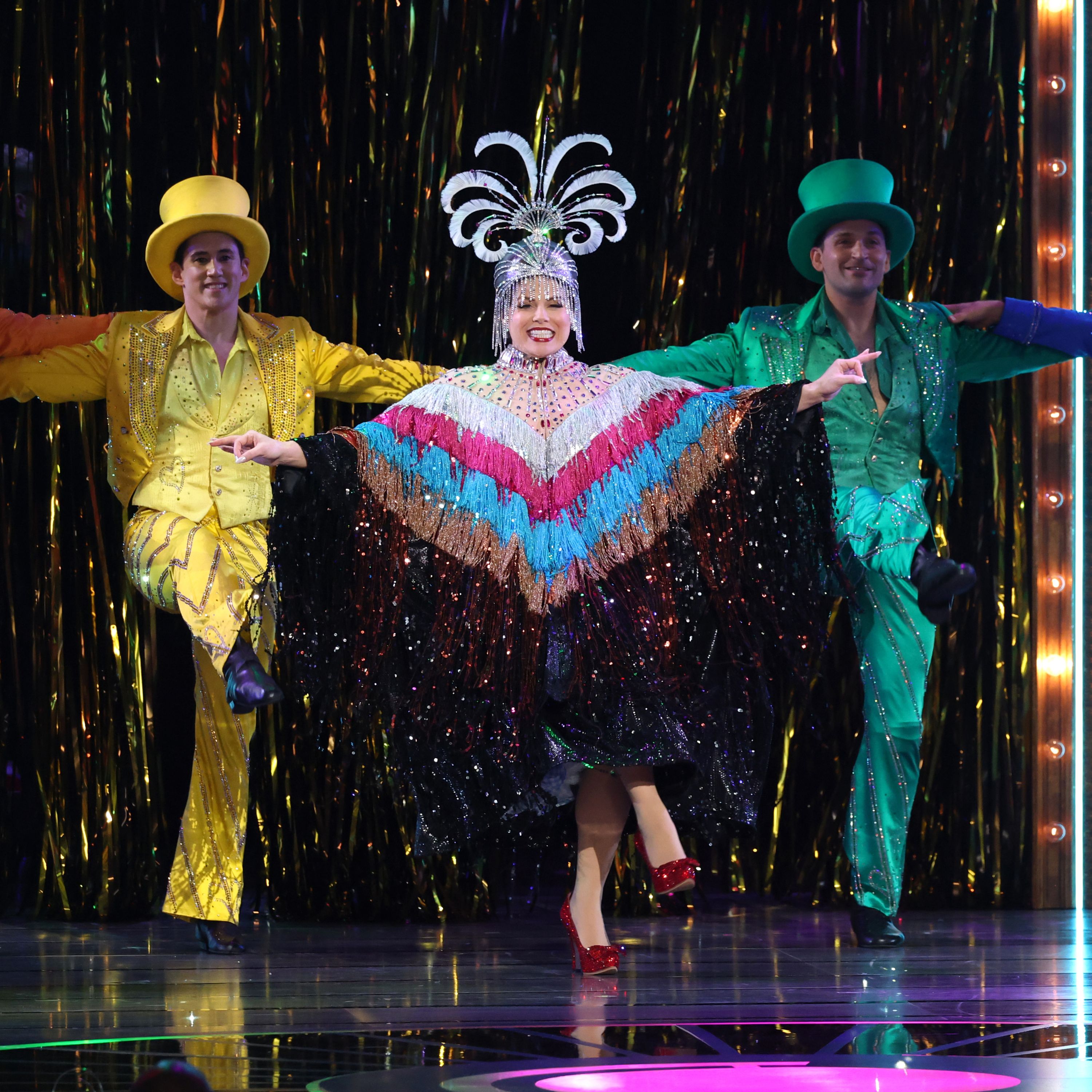
Singer and actor Megan Hilty returns to the Cafe Carlisle for a series of intimate shows running through June 27th. She'll join us to give us a preview. That's next. This is all of it on wnyc. I'm Alison Stewart. My guest Megan Hilty is a Tony nominee, a Grammy nominee, and the recent star of the hit musical adaptation of Death Becomes Her. And you can catch her this week and next as she returns to the stage at the Cafe Carlisle, a venue she's graced many times before. She's even released an album called Megan Hilty Live at the Cafe Carlisle. Here's get happy.
- [78:10]
Megan Hilty
Forget your troubles Come on get happy. You better chase all your cares away. Shout hallelujah. Come on get happy. Get ready for the judgment day. Sun is shining Come on get happy. Lord is waiting to take your hand.
- [78:25]
Alison Stewart
Hallelujah.
- [78:26]
Megan Hilty
Come on get happy. We go into the promised land.
- [78:29]
Caller
Sounds so good.
- [78:30]
Alison Stewart
Megan Hilty's Cafe Carlisle Residency runs through June 27 and she joins me now. Hey, Megan.
- [78:37]
Megan Hilty
Hey, Allison. How's it going?
- [78:39]
Alison Stewart
It's going so great. I was just listening to you singing Get Happy and I was snapping and carrying on. It was so. It just sounds.
- [78:48]
Megan Hilty
I sound so young in that record.
- [78:50]
Caller
Oh.
- [78:53]
Alison Stewart
How does singing at the Cafe Carlisle feel different? You sung on Broadway stages around the world. How is it different?
- [78:59]
Caller
It is.
- [79:00]
Megan Hilty
There is no other place like the Cafe Carlisle. My friend Jim Caruso, who plays Bemelman's the bar right across the hall at the Carlisle all the time, he came up with this amazing quote the other day and I was like, oh, that's so right. It's not cabaret, it's not a concert concert. It's the Carlisle. It is a singular iconic New York experience that like I have never experienced it anywhere else. It's so intimate. I think it maybe seats like a hundred people. You have to dress up. You come in and have a full, beautiful dinner. The servers that work there are amazing. And then I come on around 8:45 and do about a 70 minute set, give or take. And man, you never know who you're gonna run into at the Carlisle Hotel.
- [79:50]
Alison Stewart
It's so interesting cause the Carlisle has a long history of celebrity performers and star studded audiences. It's a glitzy. It's sort of a swanky venue, right?
- [80:00]
Megan Hilty
Very swanky. I kind of love that there is a dress code like you have to because there's something about dressing up. You carry yourself differently when you're forced to dress up and everybody else is dressed up.
- [80:16]
Sasha
We.
- [80:17]
Megan Hilty
We're automatically saying we're treating this event a little bit differently.
- [80:21]
Alison Stewart
So what are you wearing?
- [80:24]
Megan Hilty
I have a. A. I've always worn black. For some reason. It just seems right in this. In this room. It's black and sparkles and a lot of hair. I've got a lot of hair.
- [80:39]
Alison Stewart
I'm speaking with Megan Hilty about her Cafe Carlisle residency. It's running now. Now through June 27th. Now, this is not your first time at the Cafe Carlisle, right?
- [80:50]
Megan Hilty
No, I believe this is our sixth residency there. I was going through a bunch of our old photos from our previous runs there, and I. I actually started to get a little emotional because we have such a deep family history with this venue in particular. I mean, I've been pregnant with both of my kids on that stage. My husband is in my band, so he is always performing with me there. And our band is made up of our best friends, and whenever we perform there, we live there. So we. My kids are asleep. We put them to sleep upstairs, and then we go downstairs and we sing for all of our friends. It's just, it. It's. It's deeply meaningful to our family, more so than any other show.
- [81:33]
Alison Stewart
Now, when did your kids realize that you're a big Broadway star?
- [81:39]
Megan Hilty
You know, they have questions every once in a while, like, why does that person want to take a picture with you? Yeah. And I'm like, oh, they think I'm somebody else. It's usually my answer, no, that they. They're not impressed, which I'd like to
- [81:56]
Sasha
keep it that way.
- [81:57]
Alison Stewart
Smart lady. Yeah, that's a smart lady. When did you start to build out your set list for this residency?
- [82:04]
Megan Hilty
Oh, you know, well, I've. I've been doing these shows for, gosh, I think about 16 years now. So this set list has all. Has been evolving. Every single time we get on stage, we tailor it to the. The place where we're singing, the audience that is there. And the wonderful thing about doing a residency like this is it can change from night to night if something doesn't work one night, we'll change up the set list the next night and see. See if that works better. Yeah, it's. It's a real luxury to get to do 10 shows like this in a row.
- [82:41]
Alison Stewart
When you were thinking about this residency, what was on your mind?
- [82:46]
Megan Hilty
Well, I wanted to. The set list is about half show numbers that I've done before. In other shows and half new tunes. There's one that I do with my husband in particular. We're always looking for a fun duet to do together. And this year we did our world premiere of Islands in the Stream, which has been really, really fun because I did 9 to 5 the Musical. So I have a big dolly section in every one of my shows. And we thought, wouldn't this be fun to tack this on? And the audience is singing along with us every night. Everybody. This, this seems to be a hit. It might, it might last past the Carlisle.
- [83:32]
Alison Stewart
We're talking to Megan Hilty about her Cafe Carlisle residency. It's running now through June 27th. What's the song in your set list that feels the most out there?
- [83:45]
Megan Hilty
Oh, this one I do a number from Death Becomes Her. It's called Tell Me Earnest. And I don't know if you've seen the show, but it's a little wild. It's wild within the context of the show. It's even wilder outside of it. But it's so much fun to pull these, these, these numbers out of these giant Broadway shows and pair them down to a four piece band. And like I said, my husband's a singer, songwriter and my music director, Matt Cuson is a Grammy nominated singer, songwriter, producer himself. So I always forced them to sing and they're singing all over the set. And so I. One of them is playing Ernest and one of them's playing Helen.
- [84:29]
Alison Stewart
Oh my gosh, it's wild. But people like you told Broadway World, I have this one tender moment about three quarters through the show. I have this one spot where I put my special song. What makes a song special?
- [84:45]
Megan Hilty
It has to, well, it has to resonate with me lyrically first for it to like, because if it doesn't mean anything to me, it's not gonna mean anything to anybody else. And what I've found with all of my shows, but really specifically with the Carlisle and is it's all about the setup. I could, I could sing 70 minutes of straight through songs and it would be fine. But what people love about this venue is it's so incredibly intimate. I mean, people are sitting right underneath me and it's the size of like a living room, you know, a very nice living room. But.
- [85:26]
Alison Stewart
And so you're right, the people are right there. I've. I've been to shows. The Carlisle, you are right there.
- [85:31]
Megan Hilty
Yeah. So you know. Yeah. But people want to know why these songs are important to whoever's singing it. And so that's the, the most important Thing is, if lyrically it makes sense. And I did this weird thing that I don't normally do, and I. I went on Instagram and I said, hey, Instagram, what do you want me to sing in these concerts? And I got this resounding answer for this round for a song that I've never done before. I've never been in this show before. It's from Wait for Waitress, and it's this beautiful song that Sara Bareilles wrote called she Used to Be Mine. And wow, is it. It's. It's so beautiful. It's about a woman who. Who unexpectedly finds herself pregnant. And. And in the context of the show, that's what she's dealing with. But when I was looking at the lyrics outside of the show, I was like, wow, you don't have to be pregnant to identify with this, with this emotion, this feeling of, you know, life going so fast and catching a glimpse of yourself in the mirror going, who's that? What has life done to create this person that I don't recognize anymore? So I fell in love with this song yet again, and I've put it in my. In my tender spot for the Cafe Carlisle. I try not to do too many so that you can you really listen to the lyrics because if there's too many ballads, it kind of exhausts your ear. So there's a strategy to the set list and how you structure that energy wise.
- [87:03]
Alison Stewart
I did want to ask you, Death becomes her closed on Broadway the night after your residency ends. What are you thinking? What are you thinking about the show about in retrospect?
- [87:13]
Megan Hilty
You know, I think about it all the time because I love it so much. I mean, I've spent so many years developing the show and being a part of the show and. And it's so deeply a part of me, and I sacrificed so much, happily, gleefully for that show that it does feel like a huge part of me is going to be ending really around that time that we're done at the Carlisle. So, yeah, it's an emotional time for sure. But, wow, was it a great run. And wow, did I get incredible blessings out of that show. Not, I mean, completely including all of the amazing songs that I got to sing.
- [88:04]
Alison Stewart
And you were great in it.
- [88:05]
Megan Hilty
Oh, thank you.
- [88:06]
Alison Stewart
You were terrific in it.
- [88:08]
Brian Lehrer
Thank you.
- [88:08]
Alison Stewart
I have been speaking to Megan Hilty. We've been talking about her Cafe Carlisle residency. It's running now through June 27th. Have great shows.
- [88:18]
Sasha
Thank you.
- [88:18]
Megan Hilty
Alison, I love you so much. I just think you're the greatest. I love the program. I think you are such a wonderful, wonderful interviewer and it's always such a beautiful conversation with you. So thank you, thank you, thank you. Everyone's talking about protein lately, but how do you actually get enough of it? Muscle Milk Muscle Milk has a great
- [88:36]
Kate Shaw
tasting new formula with no artificial sweeteners, flavors or added colors.
- [88:40]
Megan Hilty
It's high quality coffee complete protein designed to support healthy muscles with fewer ingredients
- [88:45]
Kate Shaw
than the previous formula and 26 to 42 grams of protein for when you're stuck in meetings or need a post workout recovery. Available in chocolate, vanilla, cream, cookies and cream, and strawberries and cream.
- [88:55]
Megan Hilty
Try the new great tasting Muscle Milk today.
- [88:57]
Kate Shaw
Available in stores nationwide.
- [88:59]
Megan Hilty
Muscle Milk Protein for all.